
Brown recluse spiders are one of those creatures with reputations that far exceed their actual dimensions. Brown recluses are a small spider species known for their violin-shaped markings and their potent venom. Though quite diminutive, shy, and rarely aggressive, brown recluses can deliver bites capable of untold power. While these bites are usually localized, they can progress to more systemic levels. In rare cases, brown recluse bites can lead to death. Public misconceptions regarding the brown recluse, however, result in more fear than fact. That said, brown recluse spider bites can get pretty serious.
Brown recluses live in specific sections of the central and southern United States. Even though most bites are pretty mild, some can cause serious injury due to brown recluse venom containing a deadly enzyme capable of wreaking havoc on tissue. In this article, we will separate the myths from the facts. We’ll cover brown recluse descriptions, their potent venom, and what to do if you think you’ve been bitten. Brown recluses are one of the more misunderstood spider species. It’s time to give them proper recognition without downplaying their danger.
Characteristics
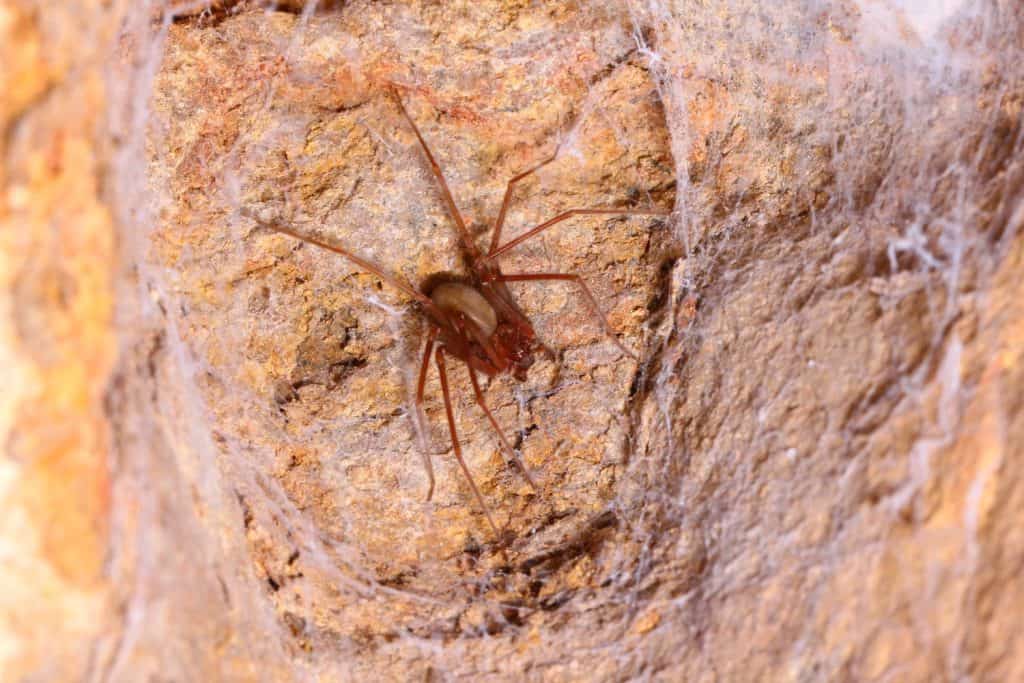
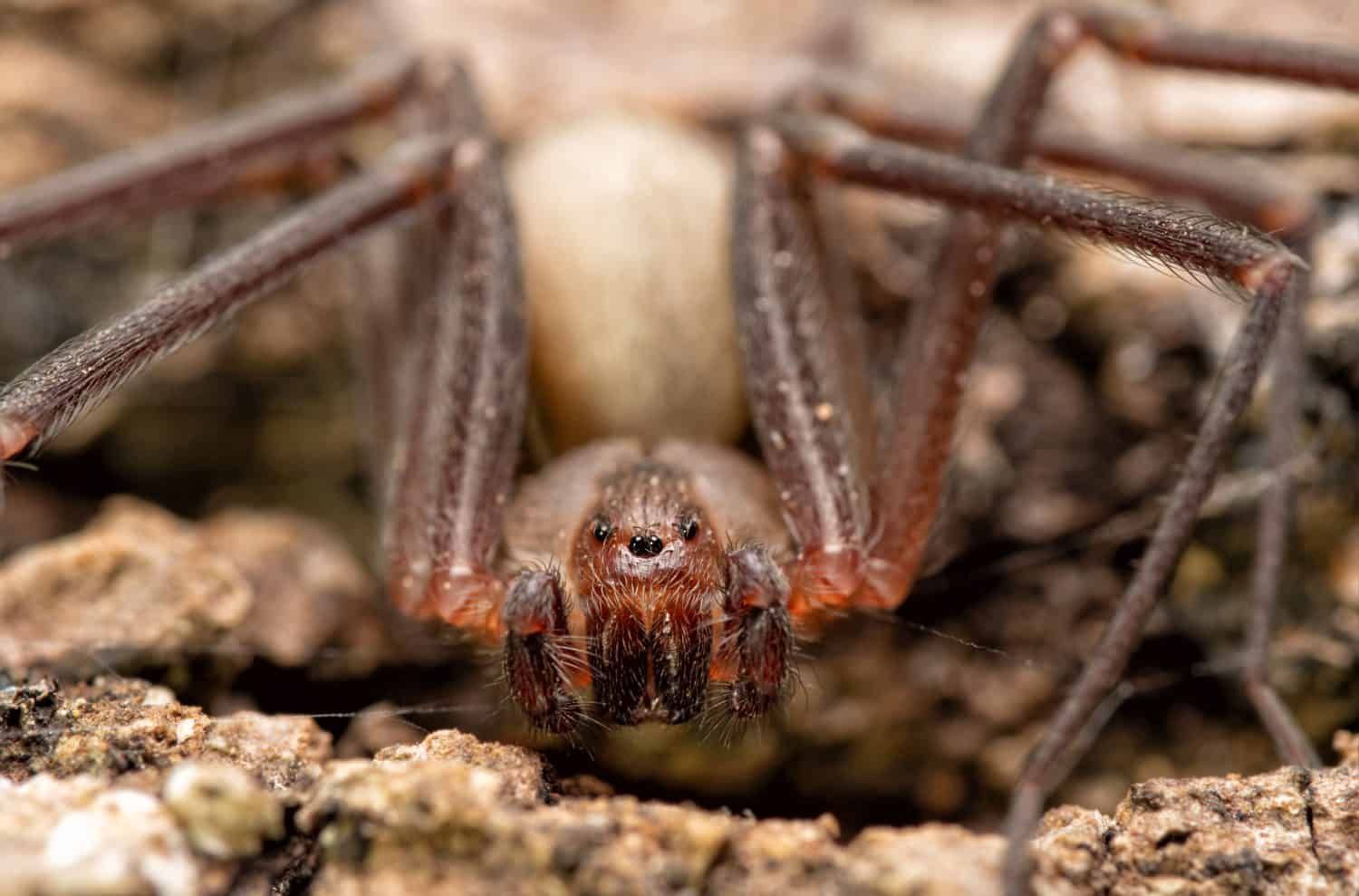
While most spiders have eight eyes, brown recluse spiders have six eyes arranged in median and lateral pairs.
©Pong Wira/Shutterstock.com
Known scientifically as Loxosceles reclusa, brown recluse spiders are among several spider species in North America with venom that can be dangerous to humans. They are small, with lengths ranging between six and 20 millimeters, though some specimens grow larger. They have a brownish to white color and often have violin-like markings. This has earned them the nicknames fiddleback spider, brown fiddler, and violin spider. Even so, not all brown recluses feature violin-shaped patterns on their backs. They are also one of the few types of spiders with six eyes instead of eight. Eyes are arranged in pairs, with one median pair and two lateral pairs.
Despite their dangerous reputation, brown recluses are pretty conflict averse. They usually flee when threatened. If they can’t get away in time, these spiders will often adopt a lifeless position or jump in a horizontal motion. They also display autotomy when attacked physically. If injected with venom from another creature, for example, brown recluse spiders will cast off their affected leg. They don’t regenerate the leg but are able to adjust their gait to compensate.
Habitat
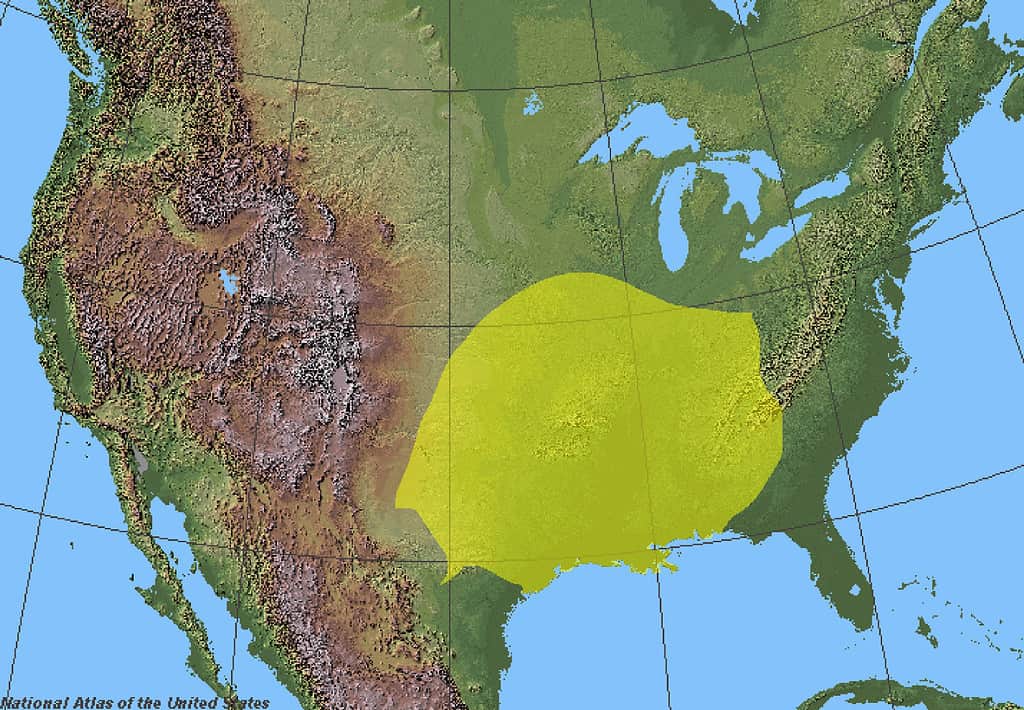
Brown recluses prefer areas with plenty of hiding spots. Geographically speaking, however, they live in a range of the central and southern United States.
©ReliefUSA_map.gif: Public domain, U.S. government. Derivative work: Bob the Wikipedian, CC BY-SA 3.0, via Wikimedia Commons – Original / License
While there have been unconfirmed reports of brown recluses in California, their documented range lies south of a line running between Nebraska, Iowa, Illinois, and Ohio. They are found in the most abundant numbers in the latitudinal area between central Texas and western Georgia.
Brown recluses live between one to two years and prefer habitats with plenty of hiding spots. They take up residence in woodpiles, sheds, closets, cellars, and other places that remain dry consistently and are relatively undisturbed. Cardboard, too, seems to attract them as it resembles the rotting tree bark they use for webs in more natural environments. Wherever they set up shop, brown recluses weave asymmetrical webs. Unlike other web-weaving spiders, brown recluses leave their webs and head out to hunt at night.
They will even resort to cannibalism when food is scarce. While brown recluses are pretty shy, they may make contact with humans in isolated areas but only when they are disturbed or feel threatened. In fact, human-brown recluse contact is pretty rare. As a last resort, however, brown recluse spiders can and will bite, and, as we should all know by now, their venom can be dangerous.
Brown Recluse Venom
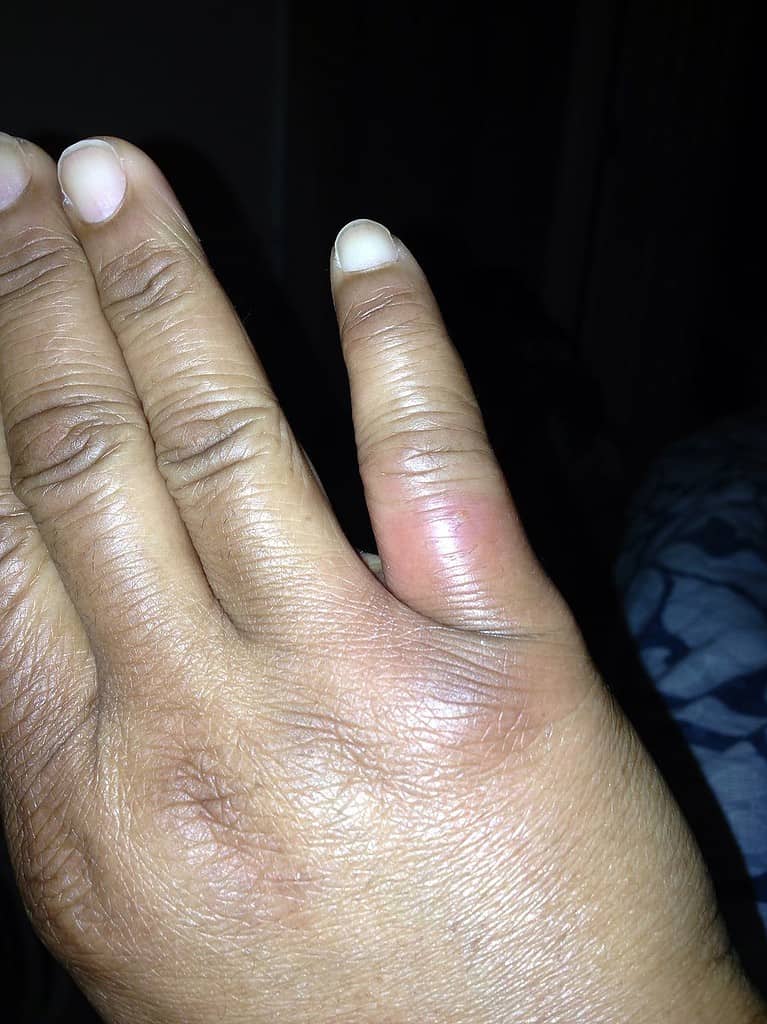
While brown recluse bites are usually pretty minor, they can result in swelling or even tissue necrosis.
As with the other members of the Loxosceles genus, brown recluses deliver a necrotic venom that contains a tissue-destroying enzyme called sphingomyelinase D. When it comes to brown recluses actually hurting humans, however, the odds are stacked against the tiny spiders. Most of the time, they are simply too small and skittish for their toxin to have a measurable effect. Bites from these spiders usually only occur when they are pressed firmly against the skin, such as when tangled up in clothes, bedding, or inside work gloves. Brown recluse fangs are small and may have difficulty penetrating thick or tightly woven fabrics, but they can penetrate thin or loosely woven clothing, and they can certainly penetrate when nothing separates fangs from skin.
The majority of brown recluse spider bites fail to produce any symptoms. In most cases with noticeable effects, the skin around the wound dies. Indeed, cutaneous symptoms are far more common than systemic symptoms. The timeline usually starts with painful and itchy feelings two to eight hours after being bitten. Pain and other local effects grow worse between 12 and 36 hours. From there, necrosis begins to develop. This may result in the wound growing up to ten inches across. The affected tissue eventually becomes gangrenous and sloughs away.
All things considered, brown recluse bites are remarkably rare. A story from 2001 highlights this: over 2,000 brown recluse spiders were removed from a home in Kansas. The four residents had lived with the spiders for years in heavily infested conditions yet were never harmed by the brown recluses. It bears repeating, however, that under the right conditions, brown recluse bites can be quite dangerous.
Loxoscelism
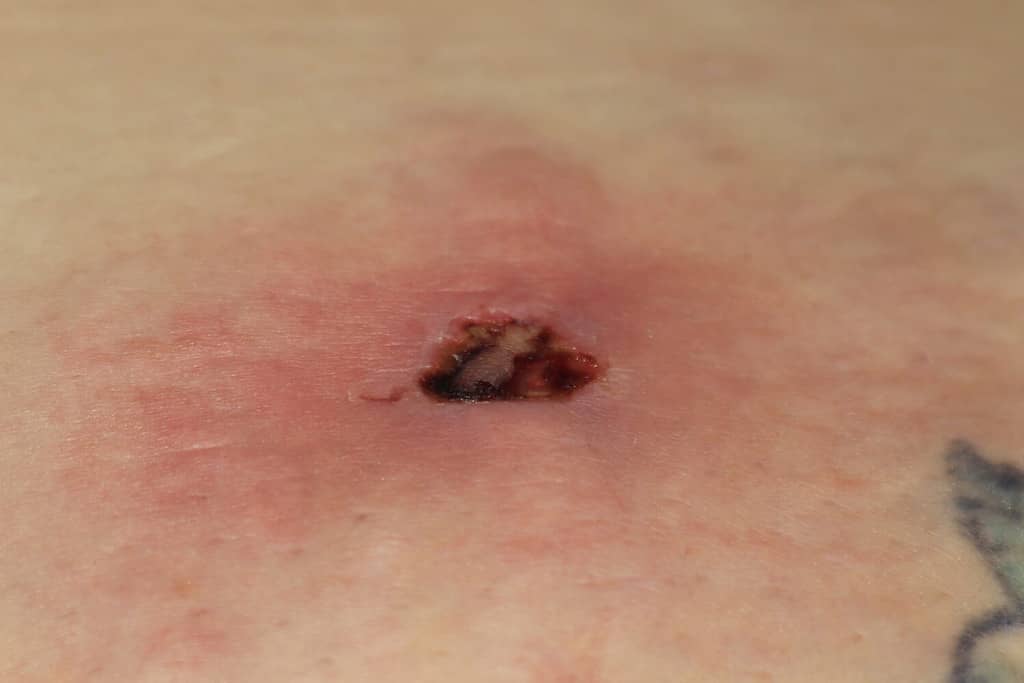
People who die from brown recluse bites usually have a weakened immune system or are children under seven years old.
©Robert D Brozek/Shutterstock.com
Brown recluse bites sometimes produce loxoscelism, which is the aforementioned condition where skin around the bite dies. However, loxoscelism can also cause more systemic conditions. One study suggests that skin necrosis occurred 37% of the time, while systemic illness occurred 14% of the time. In rare cases when both skin and systemic loxoscelism result, it can be very dangerous for those bitten. Systemic symptoms include nausea, fever, rashes, vomiting, and muscle pain. In even rarer cases, bites will result in hemolysis, which is the rupture of red blood cells. This can cause blood clots throughout the body, organ damage, and even death. If this incredibly rare combination of effects does occur, it usually happens in people with a weak immune system or in children under seven years old.
Misidentification and Misdiagnosis
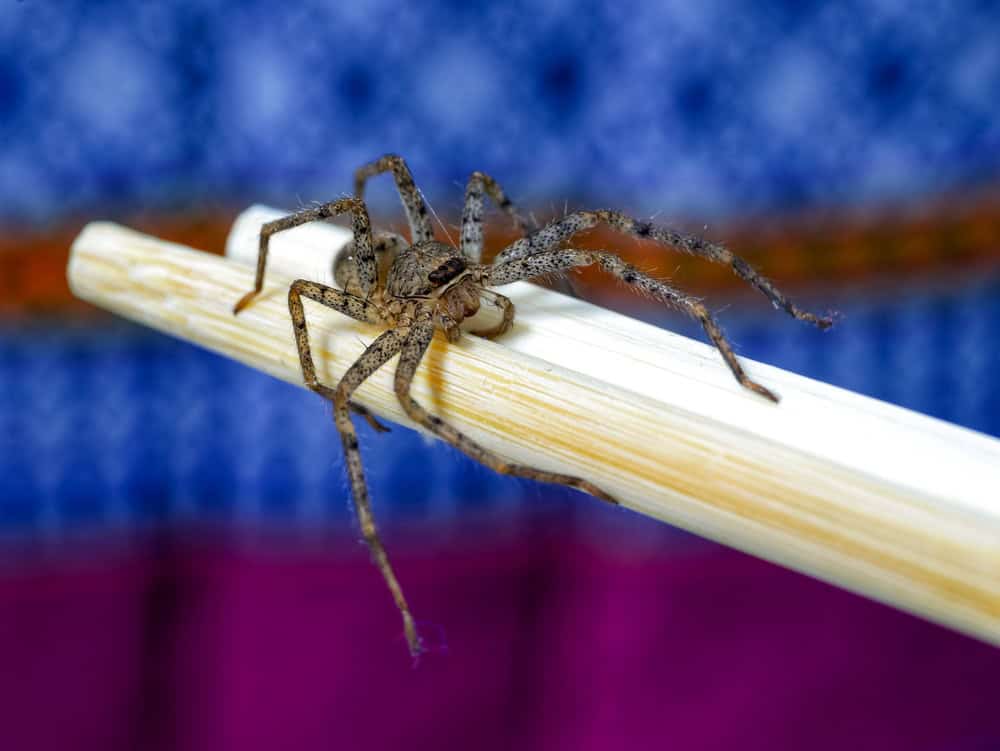
Infections and allergic reactions are often misdiagnosed as brown recluse bites, and other spider bites produce similar symptoms.
©Physics_joe/Shutterstock.com
Brown recluse bites are dangerous, but so rare as to almost be unheard of. Somehow, they have taken the rap for bites from other spiders, or even entirely different conditions. Indeed, medical professionals say that brown recluse bites are often over diagnosed. Many people in California believe their bites are from brown recluses, even though they live at least a thousand miles outside the spider’s range. In fact, several other spider species’ bites produce necrotic injuries. These include desert recluse spiders and yellow sac spiders. The venom of a hobo spider, for example, also produces similar symptoms to a brown recluse.
Sometimes, people show symptoms that may look like brown recluse bites but are actually unrelated conditions or reactions. Similar-looking skin lesions can be caused by MRSA bacterial infections, fungal infections, Streptococcal infections, allergic reactions, bedbug bites, and even diabetic ulcers.
What to Do If You’re Bitten
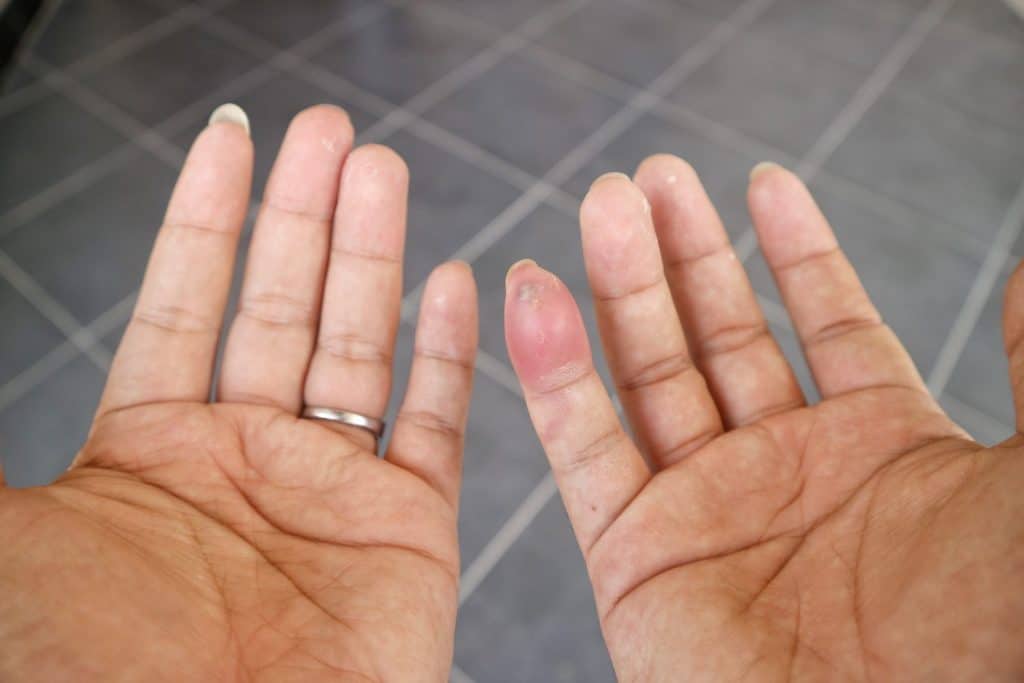
Be sure to clean the bitten area thoroughly and apply a cold compress. Heat will only make a spider bite worse.
©Galih Surya Alam/Shutterstock.com
Their bites may be rare, but it’s still important to know what to do if you are bitten by a brown recluse. If you suspect a brown recluse bite, you should clean the area thoroughly and apply a cold compress. Keep the wound elevated and avoid heat. Then, take over-the-counter pain relievers, but do not attempt to cut, squeeze, or suction the bite. If you managed to capture the spider in the process of being bitten, take it in for identification, but don’t further endanger yourself looking for it. Brown recluse bites are usually mild and rare, but it never hurts to know what to do should they occur.