
Quick Take
- A baby orangutan was born at the Memphis Zoo in December, marking an important milestone for the critically endangered species.
- The baby is named Ruhana, which means essence of life in Sanskrit.
- The baby was born to mother Jahe via caesarean section, which is unusual for orangutan mothers.
- The Zoo’s specialist care team gave Jahe eight days to recover after the invasive surgery, providing round-the-clock care for Ruhana until the pair could be safely reunited.
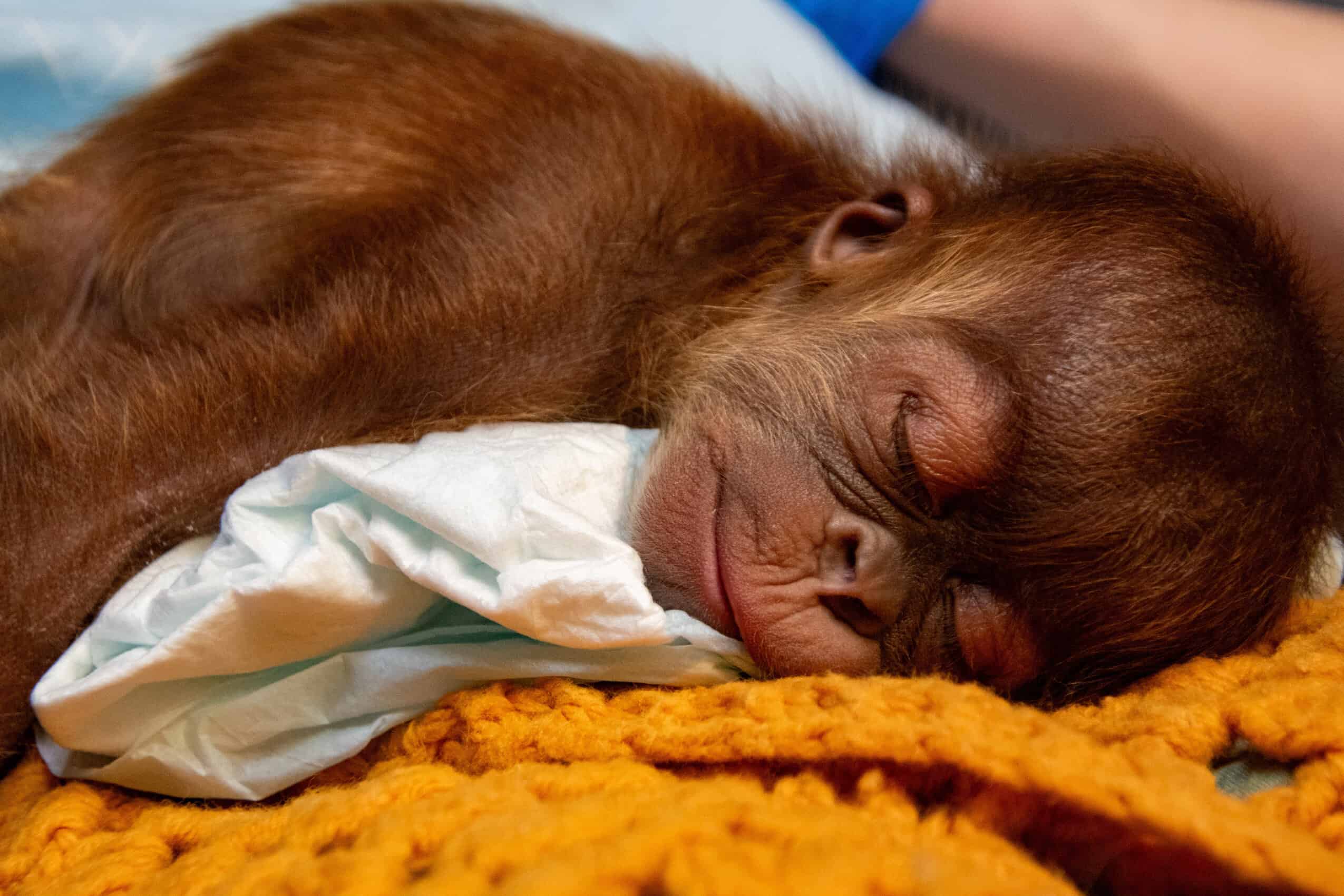
Christmas came early at the Memphis Zoo with the much-anticipated arrival of an orangutan baby, a girl named Ruhana (roo-hah-na). The baby, born in early December, was the second for mother Jahe (ja-hey) and represents a conservation win for the critically endangered orangutan.
The name Ruhana means soul, spirit, or essence of life in Sanskrit, and honors Ruhana Kuddus, the first female Indonesian journalist and a pioneering advocate for women’s rights. The name was chosen to “reflect strength, resilience, and the legacy of powerful women,” according to a statement from the Zoo.
Why Was This Birth Special?
Orangutans are listed as critically endangered by the IUCN. Habitat loss due to palm oil and farming is driving orangutan populations to historically low numbers across their natural habitats in Sumatra and Borneo.
The Memphis Zoo puts significant emphasis on helping reestablish populations of critically endangered species, including orangutans. They participate in the Association of Zoos and Aquariums’ (AZA) Orangutan Species Survival Plan. As part of their efforts, they manage breeding pairs of orangutans, such as Jahe and the late Tombak, who passed away in September 2025.
The Zoo noted, “Orangutans are critically endangered, making each birth in accredited zoological care an important contribution to the sustainability of managed populations, as well as ongoing research and conservation efforts.”
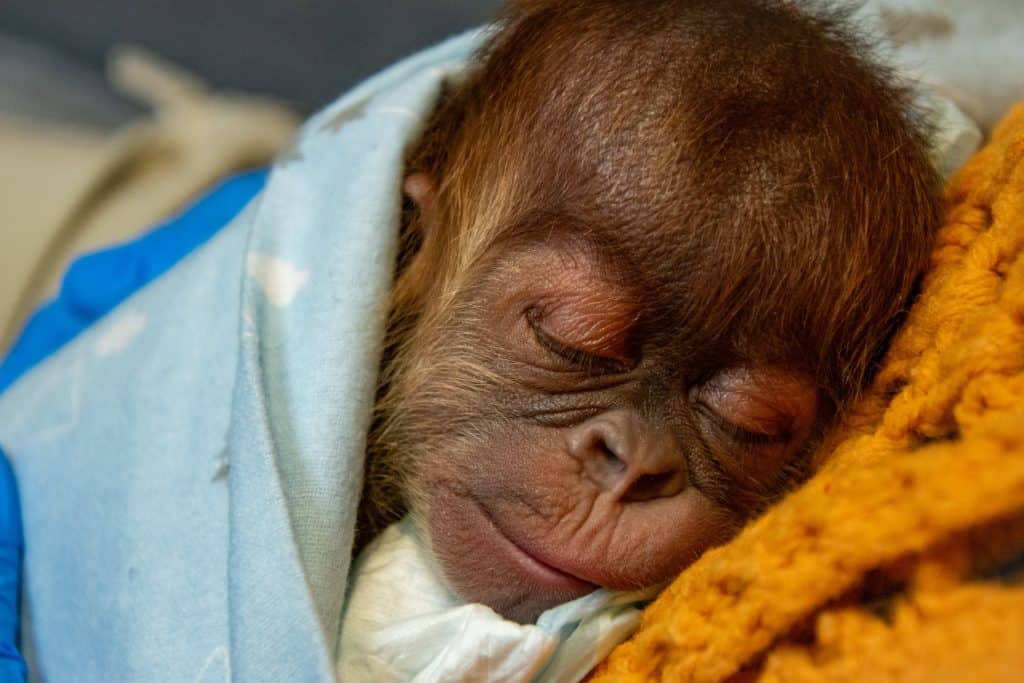
Ru is the orangutan baby born in December at the Memphis Zoo.
Ruhana’s birth (Ru for short) was special for another reason. She was delivered via caesarean section, a birthing method uncommon in orangutans. The Zoo assembled a specialized care team that included veterinary experts, an OB-GYN, and a neonatal nurse to support mother and baby through delivery and the early days of care.
“The birth followed months of preparation, including training and observation focused on building trust and helping Jahe remain comfortable with care routines and veterinary procedures,” the Zoo said.
How Are Mom and Baby Doing?
Immediately after the birth, both mother and baby were closely monitored during the recovery period. Because Jahe underwent an invasive procedure for the birth, the care team wanted to allow her to recover before she assumed daily care duties for her baby.
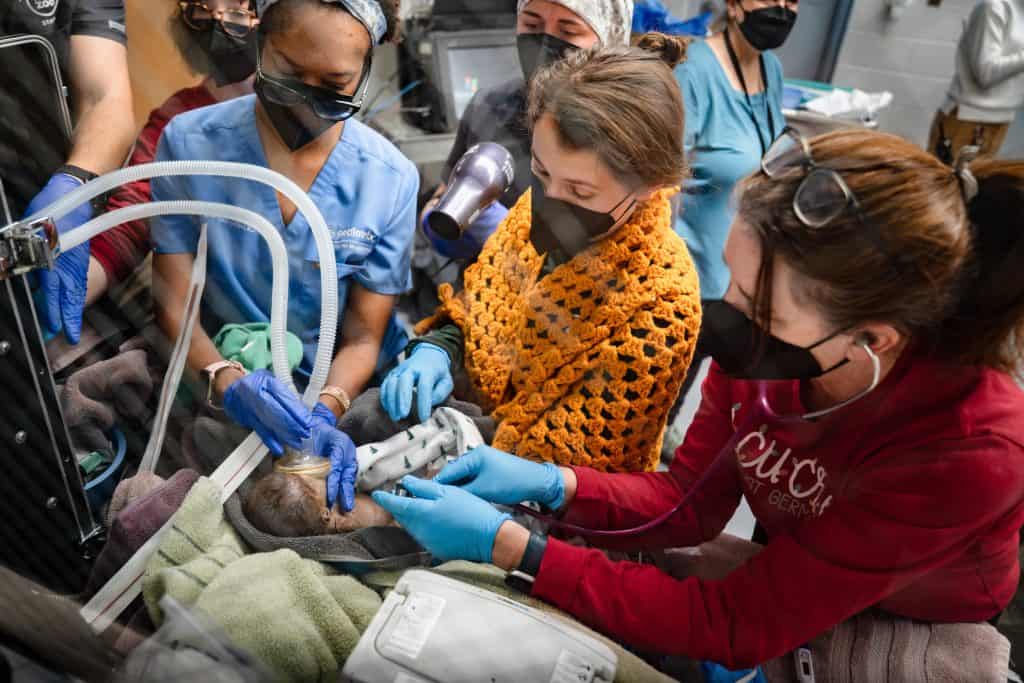
A large team of veterinary experts was on hand to assist with the birth.
While Jahe healed, “Animal Care and Veterinary teams provided temporary supplemental care to support the baby’s health and development,” according to the Zoo. To avoid unintended human imprinting, caregivers wore hand-crocheted shawls, allowing Ru to practice the natural grasping movements of orangutan babies.
After eight days of recovery, Ru was reunited with Jahe, who is doing everything a good orangutan mother should. “Mother and daughter are continuing to bond under close observation from the Zoo’s teams,” confirmed the Zoo.
For now, Jahe and Ru are staying behind the scenes to give them time to bond and heal before exploring the orangutan exhibit area. Until they are available for public viewing, fans can follow their progress on the Zoo’s Instagram and Facebook accounts.
The Zoo posted a special “Happy Ru Year” post on January 2, 2026, updating fans about Ru’s journey so far. It includes a photo collection that captures Ru’s experiences from birth through “baby bootcamp” and beyond. The post also includes a full list of the veterinary team members who have cared for mother and baby throughout the process.
Amanda Moses, Marketing and Communications Manager at the Memphis Zoo, says, “This was a thoughtful, intentional journey from start to finish. Watching Jahe and her baby settle into life together reflects the care, collaboration, and respect our teams bring to every animal, especially those whose future depends on successes like this.”
How Conservationists Are Helping Orangutans Globally
Orangutan conservation groups around the world are working hard to save the species from extinction. Groups like The Orangutan Project, the Orangutan Conservancy, and Orangutan Foundation International each have programs in place to protect the animal and preserve its natural habitat in the tropical forests of Sumatra and Borneo.
For example, the Orangutan Project takes a holistic approach to conservation, focusing on four key areas: legal protection for forests; securing and restoring orangutan habitats; rescuing, rehabilitating, and releasing infant and displaced orangutans; and educating local communities and Indigenous people.
The Orangutan Conservancy sponsors a variety of projects, including workshops, support for local rehabilitation centers, and on-the-ground improvement projects in orangutan habitats in both Borneo and Sumatra.
Orangutan Foundation International supports rescue and rehabilitation efforts, forest protection, and interaction with regional communities in the orangutans’ habitats. The organization also produces educational programs for schools and delivers public lectures across North America, Europe, and Asia.
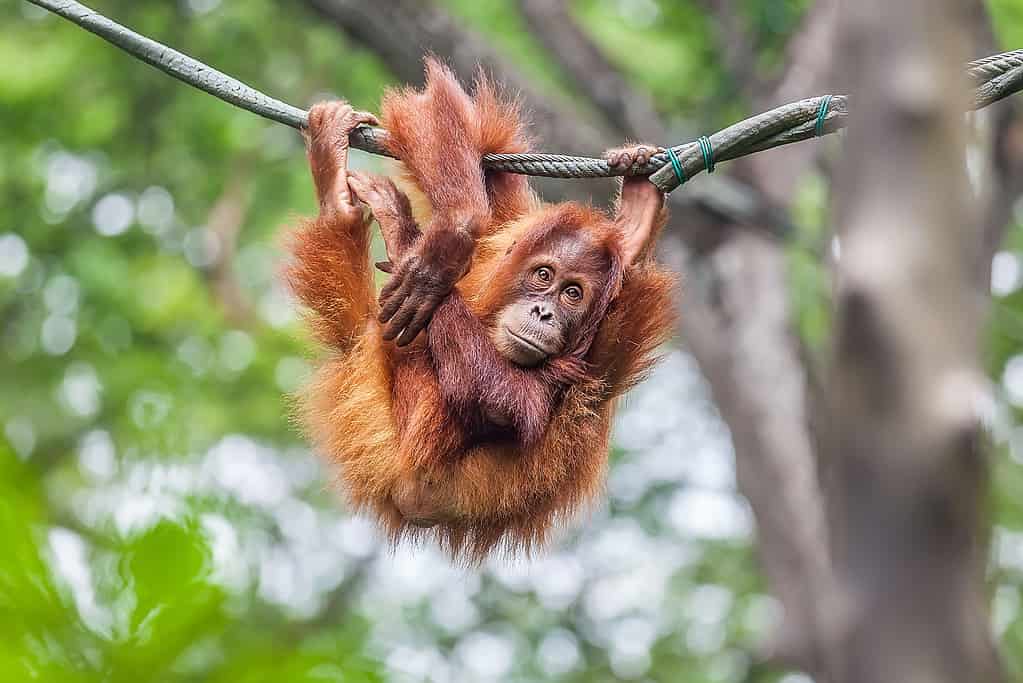
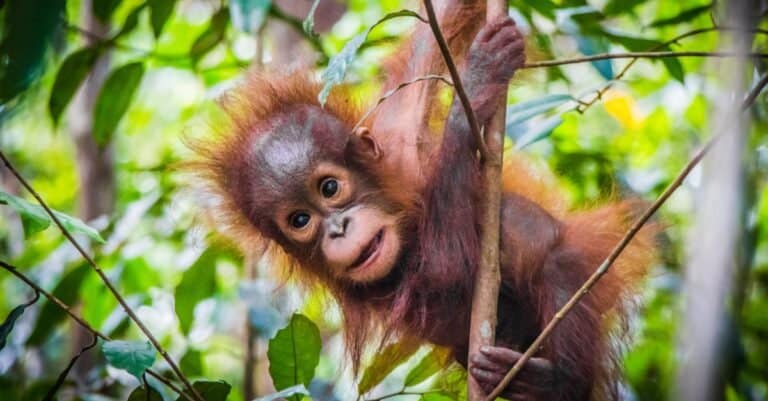
Orangutans are critically endangered according to the IUCN.
©molishka1988/iStock via Getty Images
Other groups focus on supporting and growing captive orangutan populations. Organizations like the Association of Zoos and Aquariums (AZA) use their wildlife expertise to promote conservation efforts, animal welfare, and scientific research. They do this through their Species Survival Program (SSP), in which member zoos collaborate to increase captive breeding for threatened species.
AZA also extends its support for orangutans beyond captive populations. Another of their programs is the Saving Animals From Extinction (SAFE) initiative, focused on public education, fundraising, and field work. The goal of SAFE is to protect and restore wild animal populations.