
Quick Take
- London's royal pelicans went 360+ years without ever hatching a chick, and what finally changed that is the last thing you'd expect. See the 360-year history →
- The chicks look absolutely nothing like their snowy-white parents, and park staff compared their appearance to something prehistoric. See the chicks' appearance →
- Five eggs appeared across three nests, but park officials have no idea which of the six adult pelicans are actually the parents. Meet the flock and eggs →
- Pelicans typically need a specific condition to breed, and St. James's Park has never met that condition in over three centuries. Discover what triggered breeding →
In the middle of busy central London, just steps from Buckingham Palace, is the leafy green respite of St. James’s Park. For hundreds of years, pelicans have called the royal park home, and it’s all thanks to a special gift from one country to another.
How Did Pelicans End Up in Central London?
The original pair of great white pelicans arrived in 1664, a gift from the Russian ambassador to King Charles II. They moved into their new home just before the Great Fire of London destroyed much of the city.
Thankfully, the pelicans and the park survived. But while many hoped the pair would let nature take its course over the years and raise the next generation of London pelicans, it was not to be. At least not for more than 360 years.
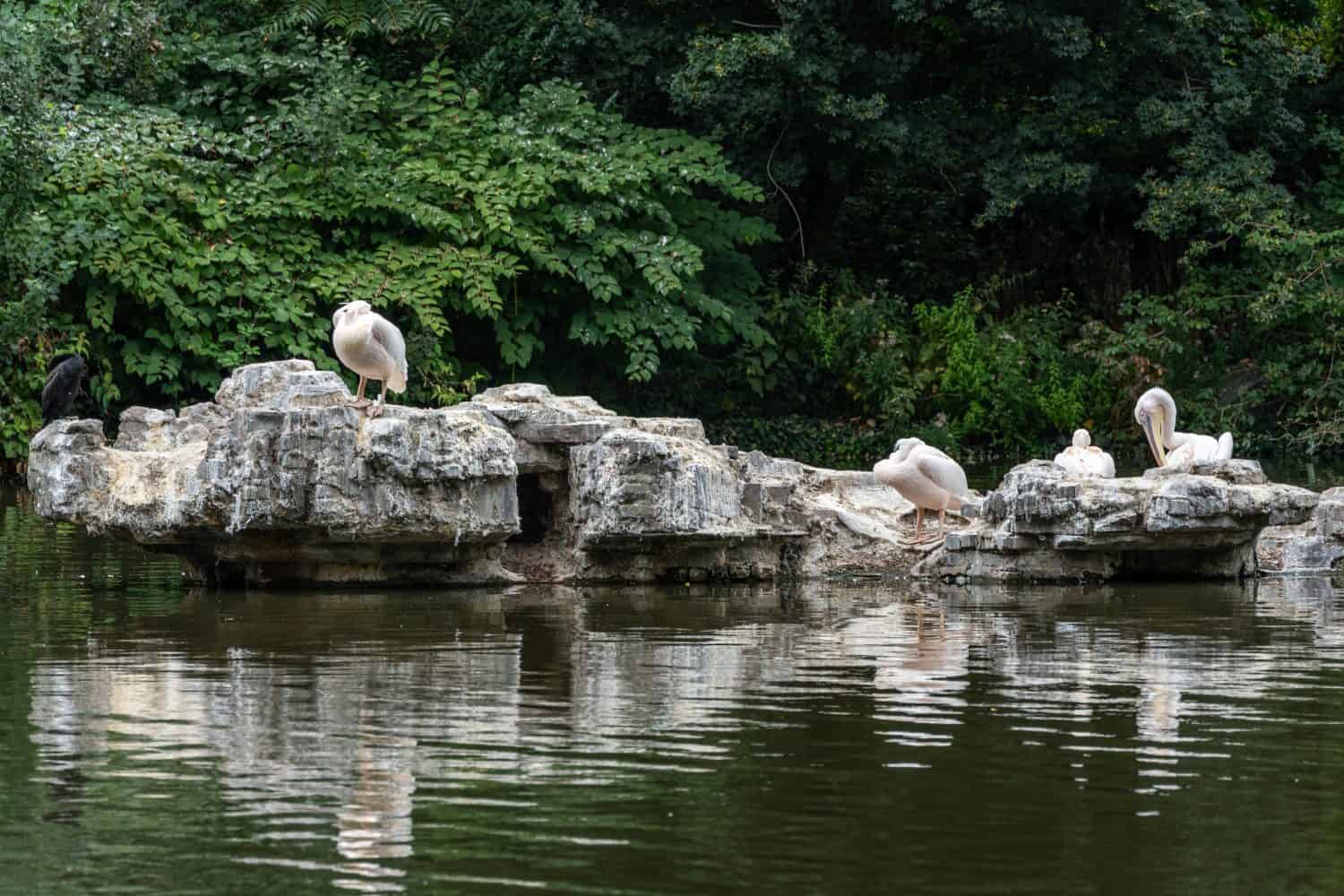
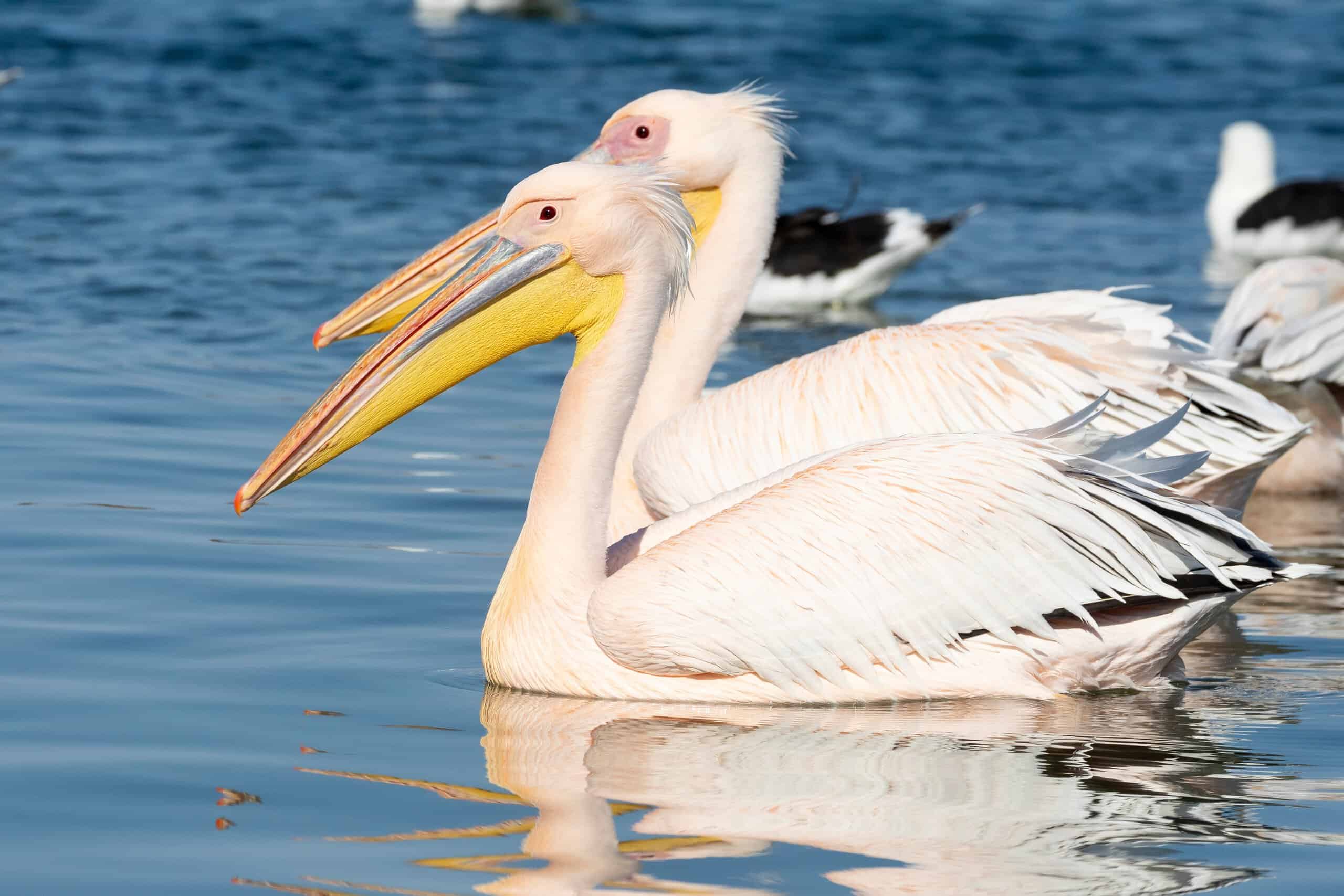
St. James’s Park in London has been home to adult pelicans for more than 360 years.
©Francesco Bonino/Shutterstock.com
During that time, new pelicans were introduced to the flock to replace older birds as they passed away. As Royal Park manager Mark Wasilewski explained to The Guardian, “We’ve always had between two and six – never a great number – and as the pelicans have passed away, we’ve decided when it’s time to bring in some more … just to keep that tradition going, which we think is a really important tradition for St James’s Park.”
So, while pelicans have always been present in the park, none had ever hatched there—until now.
Who’s Who In the Current Royal Park Pelican Flock?
According to Wasilewski, pelicans typically don’t breed unless they’re in larger groups of ten or more. Right now, the royal park’s pod consists of six adult great white pelicans. They include two males called Sun and Moon, along with four females named Star, Isla, Tiffany, and Gargi.
For years, only adults occupied the park.
Everything changed when park officials discovered five eggs laid in three different nests. On May 17th, the first of the eggs hatched. In total, four chicks hatched and survived their first month.
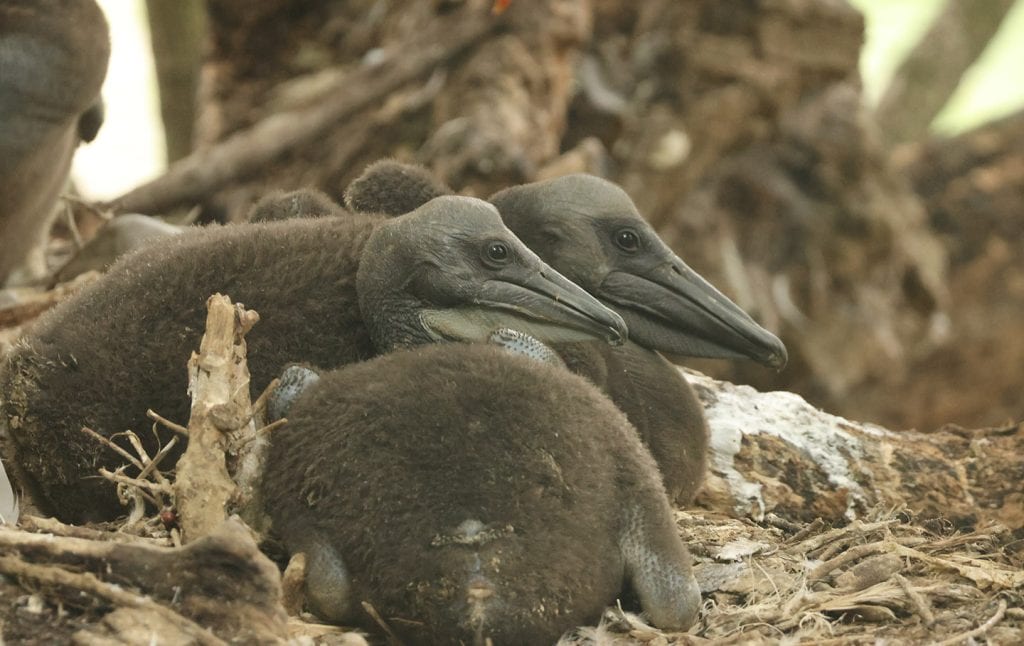
Although the chicks are clear evidence that the pelicans were breeding, park officials could not determine which birds the parents were. According to park officials, both 8-year-old Star and 30-year-old Gargi shared nesting duties on a single nest. “One of the two males must have fertilized one of their eggs, but unfortunately we don’t know which of the two actually laid the eggs,” Wasilewski told The Guardian. “And we don’t know which dad has played around.”
For the time being, parentage remains a mystery.
How Are the Chicks Doing?
Wasilewski has formed a care team that includes experts from Blackpool Zoo, the Zoological Society of London, Wildfowl & Wetlands Trust, and the Royal Veterinary College. Together, the team is focused on ensuring the optimal health and well-being of the four surviving chicks.
While the parents are snowy white and look exactly like typical pelicans, the same isn’t true for the chicks. In fact, when they hatched, they may have had faces only a mother could love. As Wasilewski put it, “They were ever so ugly. Someone said they look a little like dinosaurs. They’re completely black, they’re featherless and already they’ve got the little pointed bills.”
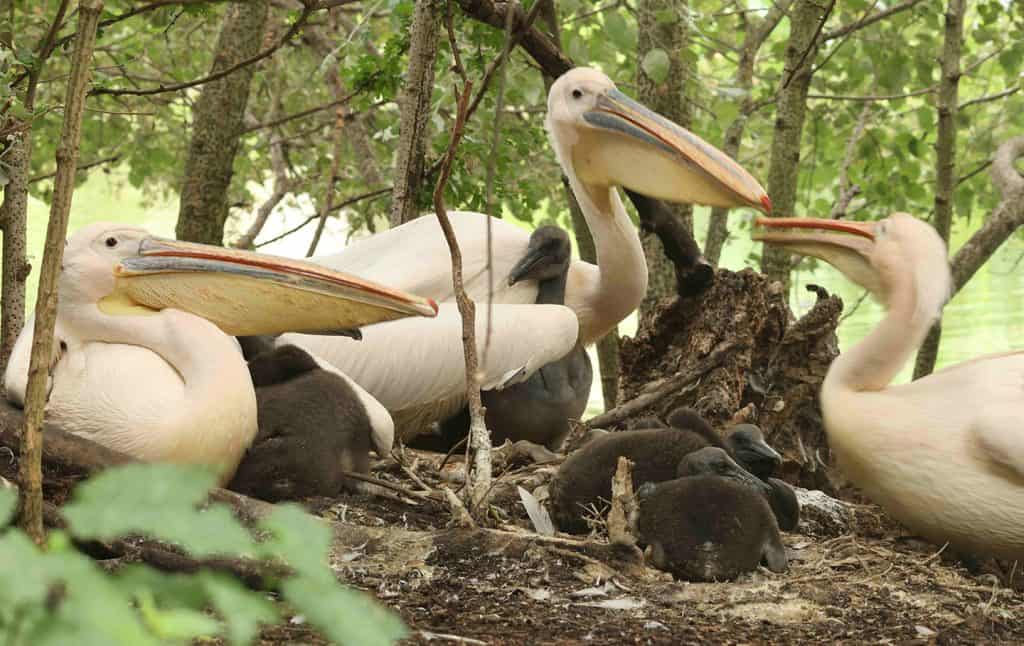
Unlike their parents, who are mostly white, baby great white pelicans are all black when they hatch.
They also have ferocious appetites, according to Wasilewski. As they develop, they are beginning to look less like dinosaurs and more like miniature pelicans. Their black color is quickly being replaced by a soft, chestnut-brown down. The chicks won’t start getting feathers until they are at least two months old.
They are also starting to waddle around on their own. However, they will remain vulnerable until they can get to the water with their parents—something that won’t happen until the chicks are around three months old.
“They’re growing at an enormously fast rate. Week one, they were the size of a pigeon. Week two, they were the size of a very small duck. We were looking at the eldest one and we think it’s probably about 2ft high now already,” Wasilewski said.
Are More Chicks On the Way?
No other nests have been spotted, and park officials don’t expect more chicks anytime soon. However, they do have a theory about why the pelicans finally decided to start a family after more than three centuries.
During the avian flu outbreak earlier in 2026, the resident pelicans were temporarily relocated and kept on Duck Island, a small nature reserve at the east end of the park’s lake. They were released back into the main park on April 9th.
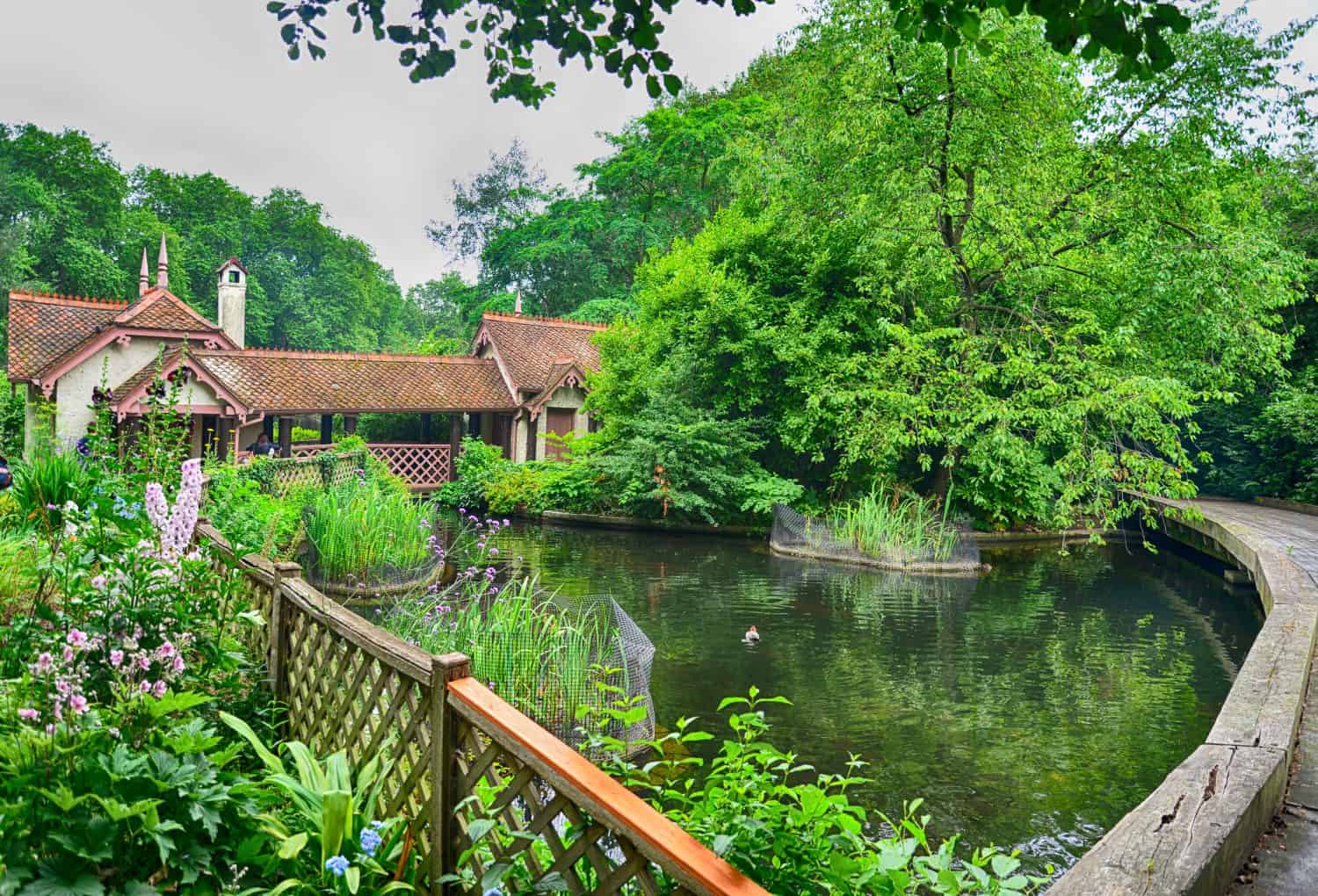
Duck Island is at the east end of the lake in St. James’s Park. It is where the park’s pelicans were isolated during the avian flu outbreak in early 2026.
©Costea Andrea M/Shutterstock.com
“On 13 April, we discovered they were making a nest. So when you’re cooped on Duck Island with nothing to do for several weeks, we know now what they do,” Wasilewski said. “There was no television to watch.”