
Quick Take
- Breech deliveries in captive animals typically demand surgical intervention, yet Rio's birth defied the odds. See the breech delivery →
- The breeding attempt looked unsuccessful by autumn, but a two-day reunion in November changed everything. Read the breeding timeline →
- Rio had shown signs in the past, with no confirmed pregnancy, so zoo keepers were cautiously optimistic about new signs in November. Discover the pregnancy signs →
- Yara being a female matters is very important for ocelot conservation, since most female ocelots in AZA programs are beyond reproductive age. Explore Yara's conservation value →
For the Elmwood Park Zoo in Norristown, Pennsylvania, February 1, 2026, is a day zookeepers and staff will always remember. It was the day a baby ocelot was born.
The Zoo participates in the Association of Zoos and Aquariums’ Species Survival Plan (SSP) for ocelots. This baby ocelot was among the first planned births supported by the Association’s recently enacted SAFE program for the species.
“The ocelot SAFE program was initiated in 2023, and the first program plan was issued in 2025,” says Carlee Redmon, Animal Keeper for Ocelots at Elmwood Park Zoo and Institutional Representative for Ocelots. “We’ve had ocelots at the Zoo since 2016, but began our first breeding attempts in 2025.”
The Challenges of Breeding Captive Ocelots
Redmon and fellow animal keeper Janine Farmer were primarily responsible for managing the breeding process involving Zoo residents, Rio and Mateo. Both adult ocelots were transferred to Elmwood Park Zoo under the AZA’s SSP program. Mateo arrived in 2016. Rio followed in 2024.
The breeding process began officially on March 6, 2025, but it was anything but fast. According to Farmer, an animal keeper at the Zoo, ocelots’ very nature makes captive breeding a challenge.
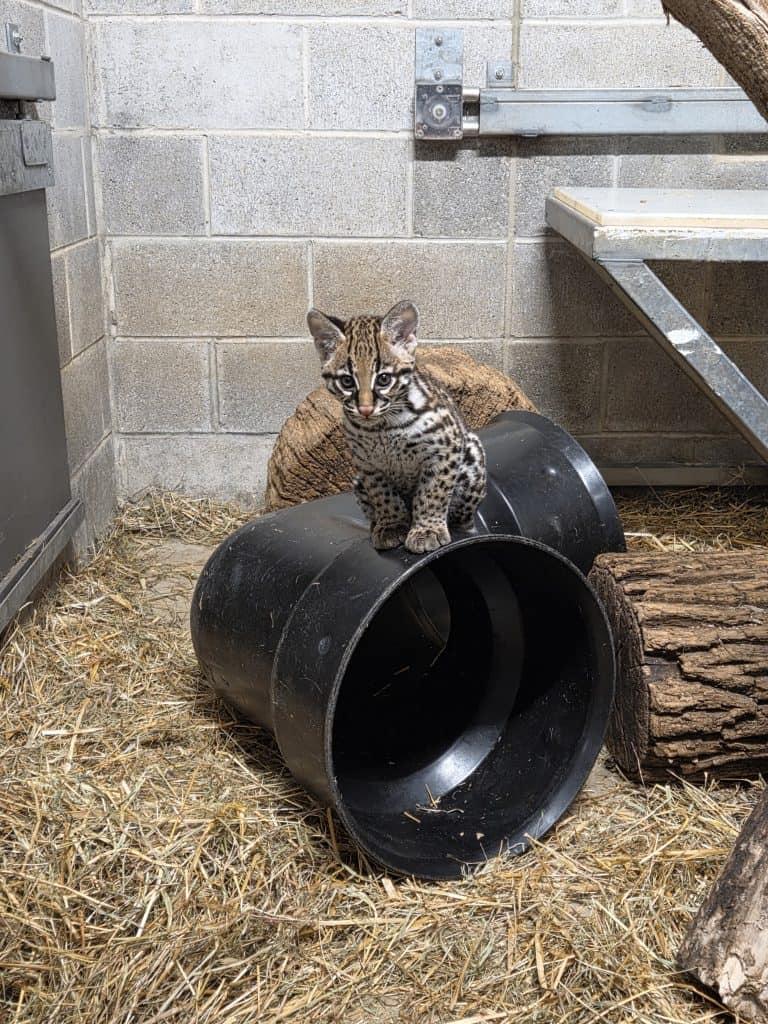
This baby ocelot was born at the Elmwood Park Zoo on February 1, 2026.
“Ocelots are solitary and really only come together to breed,” Farmer says. “We had to start slow.” She explained that the breeding process began with a “howdy” phase that involved introducing Rio and Mateo through a mesh door. The two could see each other but not make any contact. It took several weeks before Rio showed any signs of interest in Mateo.
The pair eventually lived together throughout the summer, but romance didn’t seem to be in the cards. There were no signs of pregnancy, and by the fall, each ocelot wanted to go back to living alone. The process seemed destined to fail.
However, all was not lost. In early November, animal keepers noticed the pair showing renewed interest in each other. They reunited for two days before returning to their separate spaces. This would be the last time Rio and Mateo lived together.
A Surprise Celebration
Zoo staff started to lose hope that the first breeding attempts would succeed. Then, one day during a late November training session, everything changed.
Rio’s handlers had gotten into a routine of checking her belly for signs of pregnancy during every training session.
“I noticed that Rio had very prominent teats that we had not observed in the past,” Redmon says. “I immediately sent the picture to our vet tech and ran to her office to describe what I saw. But because we had gotten excited in the past and it turned out to be nothing, I tried to keep my emotions in check and started my weekend, hoping to know more once x-rays were taken the following week.”
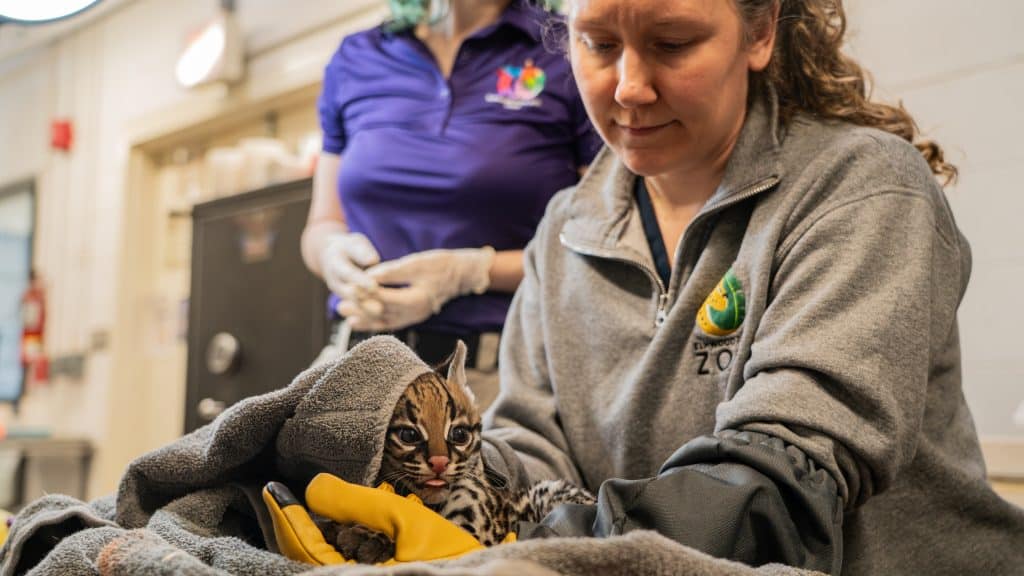
Ocelots typically give birth to just a single kitten in each litter.
Previously, Rio had shown early signs of pregnancy—such as weight gain and mammary development—that turned out to be false alarms. X-rays were the only way to confirm her pregnancy. The team assembled the following week for the X-ray session and immediately confirmed that Rio was indeed pregnant. The Zoo veterinarian verified that there was one tiny kitten inside.
Farmer notes that a single baby is not unusual. “Ocelots rarely have multiple kittens in a litter,” she says.
Preparing for the New Arrival
Rio’s care team got busy getting ready. Ocelots are by nature flighty and easily disturbed, and Rio was going to be a first-time mom. It’s also not unusual for a mother ocelot to abandon her kitten if she feels unsafe. The team wanted to create a sanctuary where Rio would feel absolutely comfortable and relaxed.
Thanks to a grant from the newly created AZA SAFE Program for Ocelots, they had already set up a remote camera system in the ocelot enclosure, built a custom den box fitted with a camera, and baby-proofed Rio’s bedroom area.
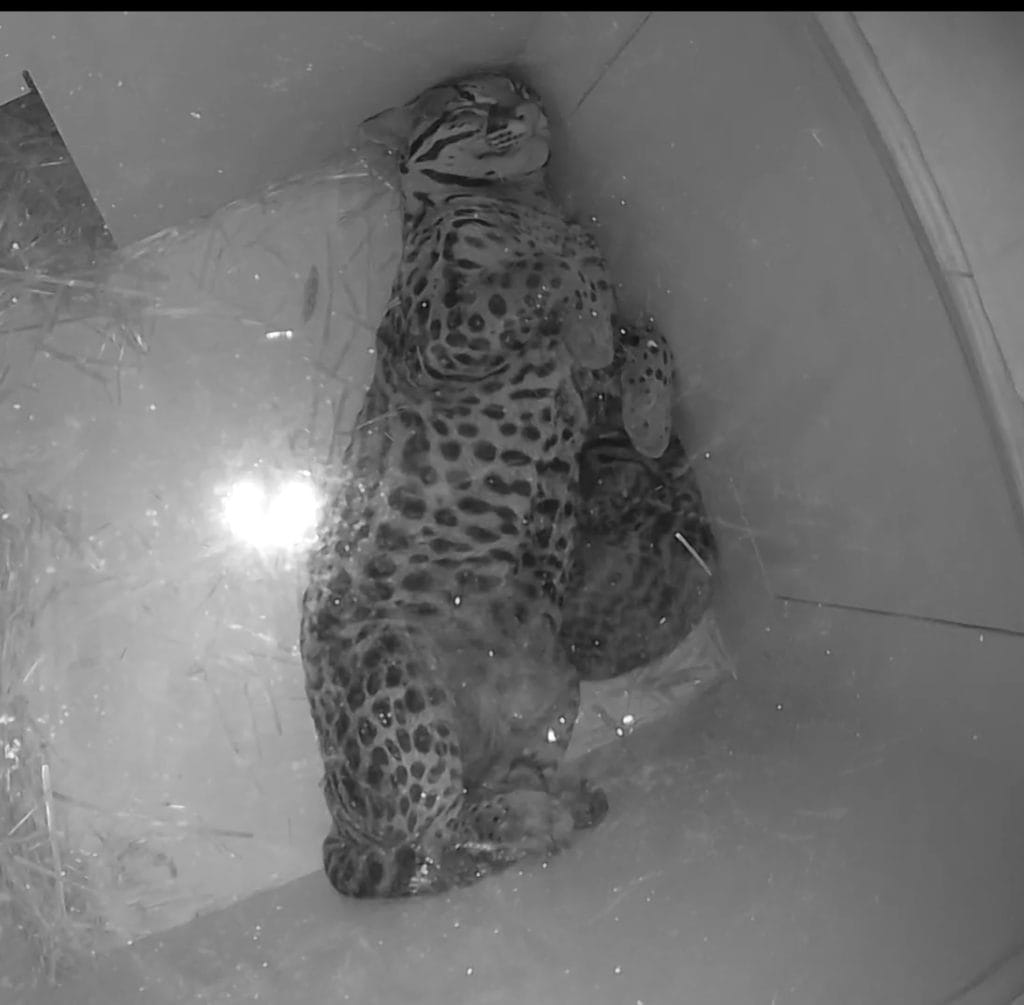
Mom Rio and her new kitten are in their specially prepared den.
Once the pregnancy was confirmed, Farmer and Redmon quickly transformed Rio’s living area into a true maternity suite. It took just two days to install curtains and sound machines, with the goal of providing Rio a calm, quiet space free from human distractions. Then all they could do was wait for the baby’s arrival.
Yara is a fitting name, as ocelots are strong swimmers and found near water sources.
Carlee Redmon, Animal Keeper for Ocelots at Elmwood Park Zoo and Institutional Representative for Ocelots
A Challenging Birth
Typically, a change in behavior signals that a mother is about to give birth, and refusing food often indicates that labor will start within a day. However, Rio showed no signs that birth was imminent until the very morning she gave birth. Early that morning, her handlers noticed she was restless in her den.
Rio went into labor at 8 am, but the delivery was not without drama. The kitten was breech, something x-rays had revealed weeks earlier. Rio’s care team believed the kitten would flip before birth, but that didn’t happen. It caused concern among the team, because breech deliveries typically require surgical intervention. The team was unaware of this ever being successfully done in ocelots. Despite the additional challenge, Rio delivered her healthy, tiny kitten in just 15 minutes.
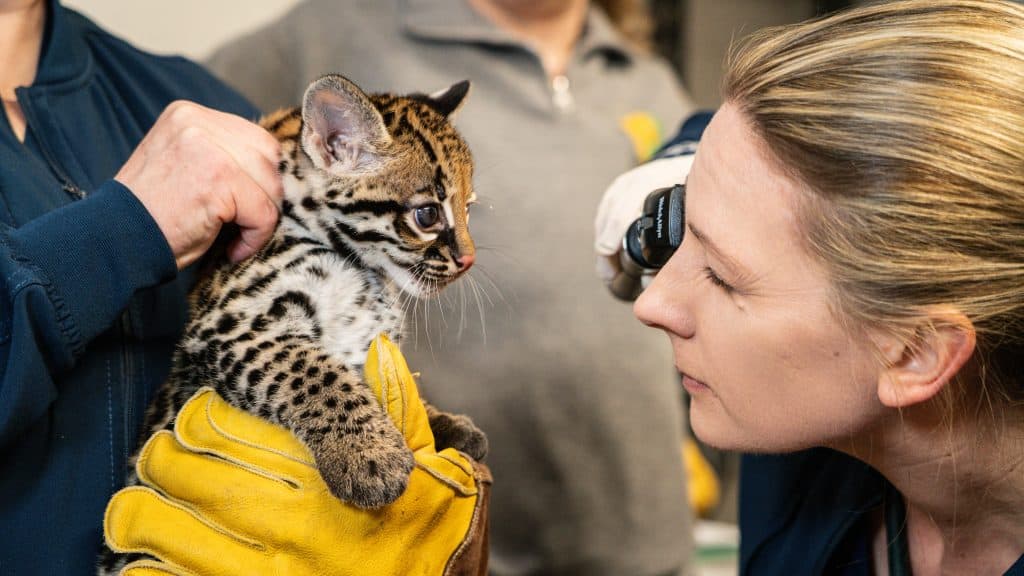
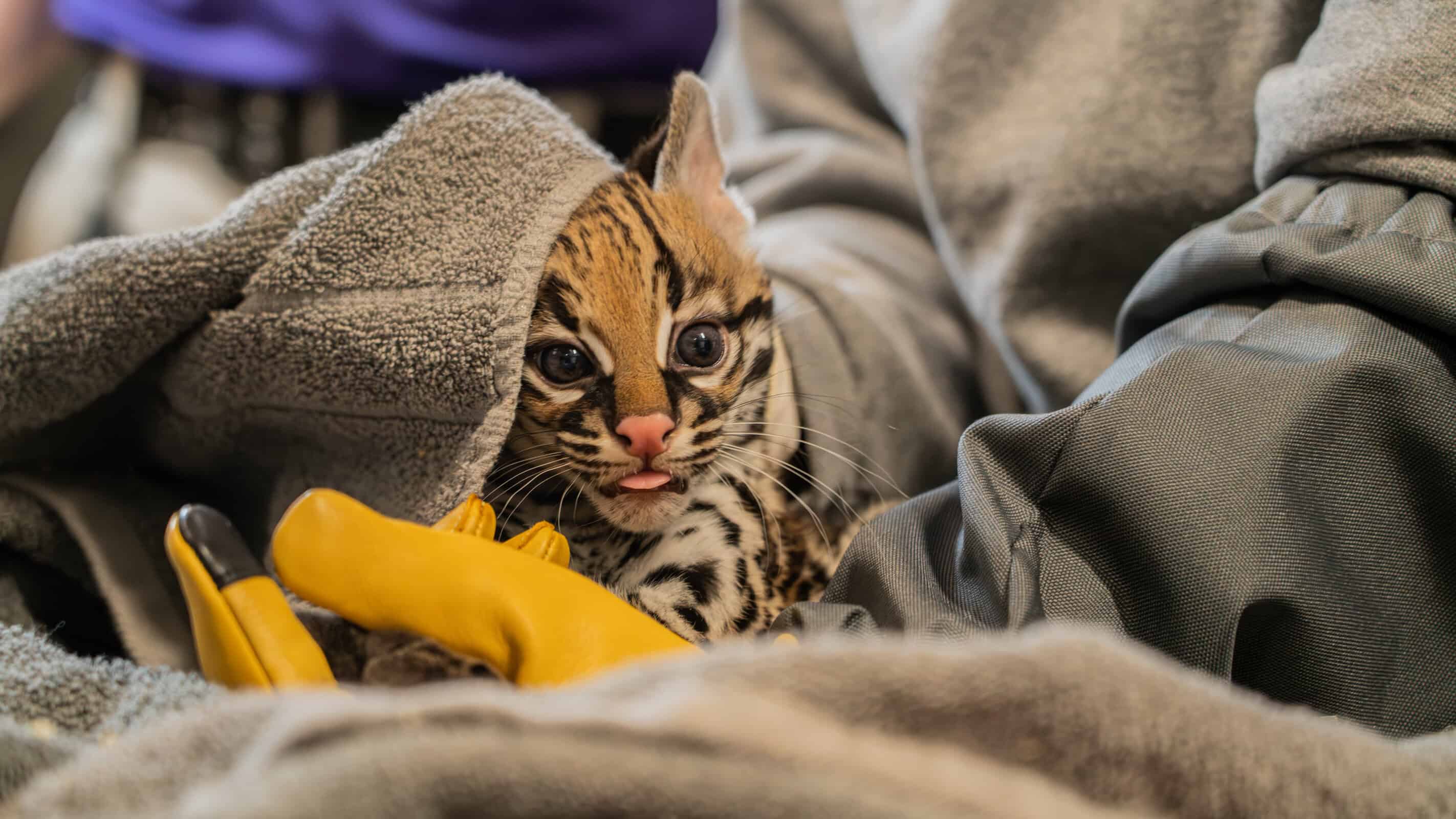
Baby Yara gets her first eye exam.
The team named her Yara, which means “lady of the water” in Portuguese. “Yara is a fitting name, as ocelots are strong swimmers and found near water sources,” says Redmon. “Yara has lived up to her name, too. Since she was very young, she’s loved playing in any water source.”
First Views of the Kitten
For over a month after the kitten’s birth, the care team observed mother and daughter exclusively via camera until the kitten finally emerged from the den. They noted major milestones, like when the kitten opened her eyes or played for the first time. At eight weeks, they conducted the kitten’s first physical exam, which took some planning.
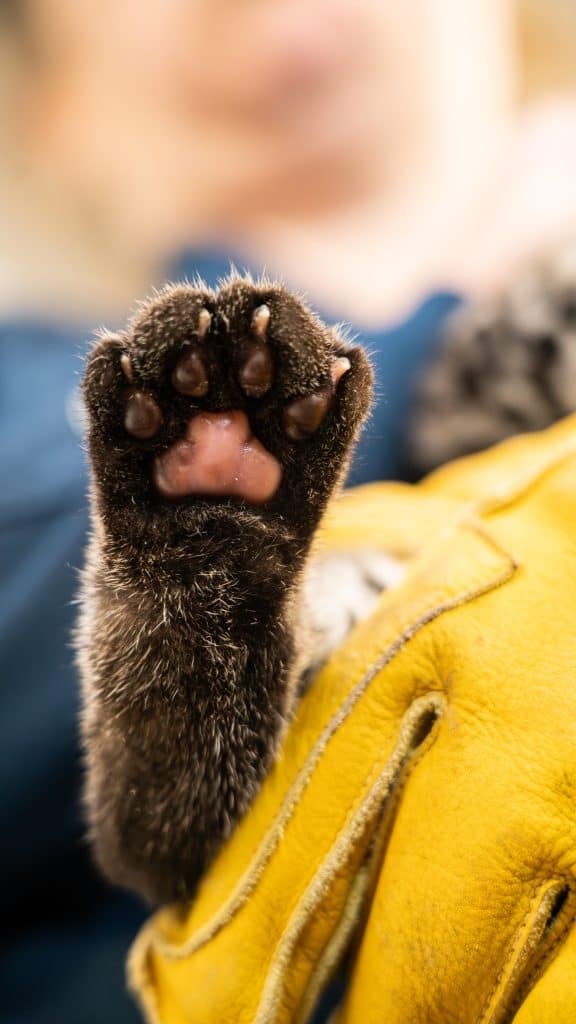
Yara will be a future contributor to the AZA’s SSP Ocelot breeding program.
“We were worried Rio would be unhappy about the separation, but once the vet team removed the kitten, Rio retreated to her den box,” says Farmer. “That’s her and the kitten’s safe space, and she stayed there until we brought the kitten back. As soon as she saw Yara, Rio grabbed her and dragged her back into the den.”
The Kitten’s Importance to Future Breeding Efforts
Having a female kitten is especially important for the future of the AZA SSP for Ocelots. According to Redmon, “The population of ocelots in AZA facilities is almost equal between males and females. However, a large number of females are past their reproductive age, which means breeding is not occurring at a sustainable rate,” she says. “Yara’s arrival offers greater opportunities for breeding success and introduces fresh genetics into the mix.”
The Zoo is well-positioned to keep contributing to those efforts. “This breeding program was built from scratch,” says Farmer. “It took hours of research and so much support from the SSP and SAFE, as well as our management team. All our efforts culminated in this healthy, beautiful girl we are so proud of. We can’t wait to watch her grow up.”