
Quick Take
- In September 2025, animal keepers at Chicago’s Shedd Aquarium noticed an egg mass floating in the Wild Reef exhibit.
- They determined it was a mass of warty frogfish eggs and removed it to a special habitat to see if the eggs would hatch.
- There is no known record of any warty frogfish hatching and growing in a captive aquarium environment.
- Thanks to the ongoing care and attention from the Shedd team, one egg survived and has reached the juvenile stage. The Aquarium says this is a “one in a million” occurrence.
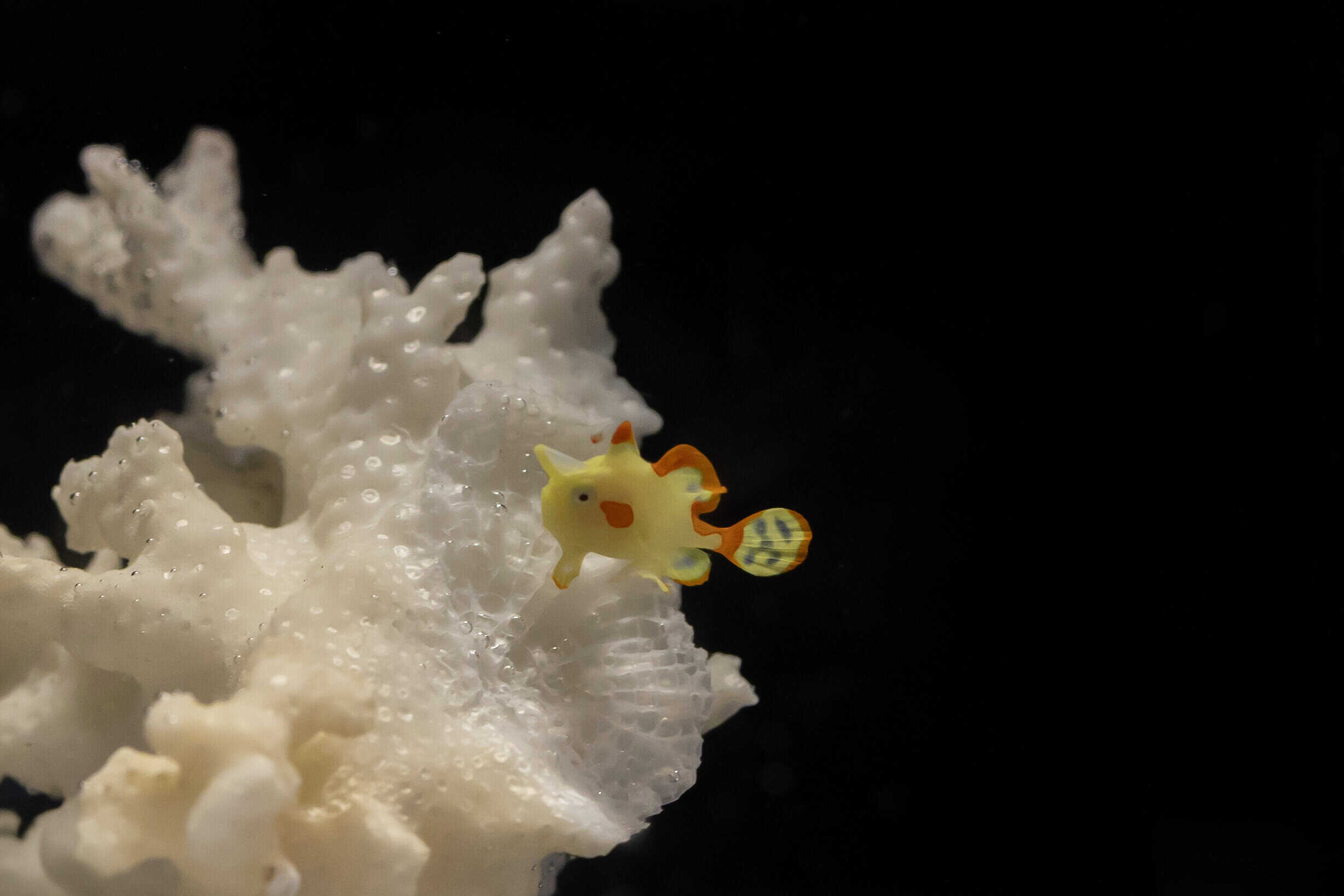
At Chicago’s Shedd Aquarium, a pea-sized fish is making history. The baby warty frogfish, Antennarius maculatus, is not only colorful and unique, but it is also the first of its kind to be successfully born and raised in an aquarium.
This tiny surprise was almost missed entirely. Scientists noticed a gelatinous egg mass drifting in a tank of the Aquarium’s Wild Reef exhibit, home to the Aquarium’s two adult warty frogfish. While that is how fish reproduce successfully in the wild, within the confines of an aquarium the likelihood of the eggs within a mass successfully developing is nearly zero. Scientists didn’t consider the egg mass to be viable at all.
Yet, a single egg from that discovered mass is proving everyone wrong. It not only hatched, but is rapidly making its way towards adulthood. Shedd Aquarium considers the pea-sized warty frogfish to be one in a million.
Get to Know the Frogfish
Frogfish are among the most unique marine creatures found on coral reefs. There are about 50 different species worldwide, each with a remarkable variety of appearances and sizes. Some are as small as 1 inch long, while others can get as big as 15 inches. Most frogfish are about 4 inches long.
Frogfish prefer warm water and are found exclusively in tropical and subtropical oceans. They are masters of camouflage, blending in seamlessly on coral heads, rocks, and even discarded bottles and wrecks on the ocean floor. Some resemble lumpy rocks, while others grow fine hair-like structures to mimic algae or sponges. They are typically found in calmer coastal waters, up to depths of 50 feet.
The most unusual thing about frogfish, though, is how they move and hunt for prey. Unlike their fish cousins, frogfish don’t swim. Instead, their pectoral fins have evolved to function like legs, allowing frogfish to “walk” along the ocean bottom. Although this movement is slow, when a frogfish needs to move quickly, it gulps water and expels it through its gills, propelling itself forward with surprising speed.
To lure their next meal, frogfish use a special appendage on top of their heads called the illicium, which acts like a miniature fishing rod. At the end of the illicium is the esca, a small lure that attracts prey. The frogfish dangles and moves the lure to attract prey such as tiny fish, crustaceans, and even other frogfish. Once the prey gets close enough, the frogfish darts forward with lightning speed to swallow its prey whole. It does it faster than you can blink!
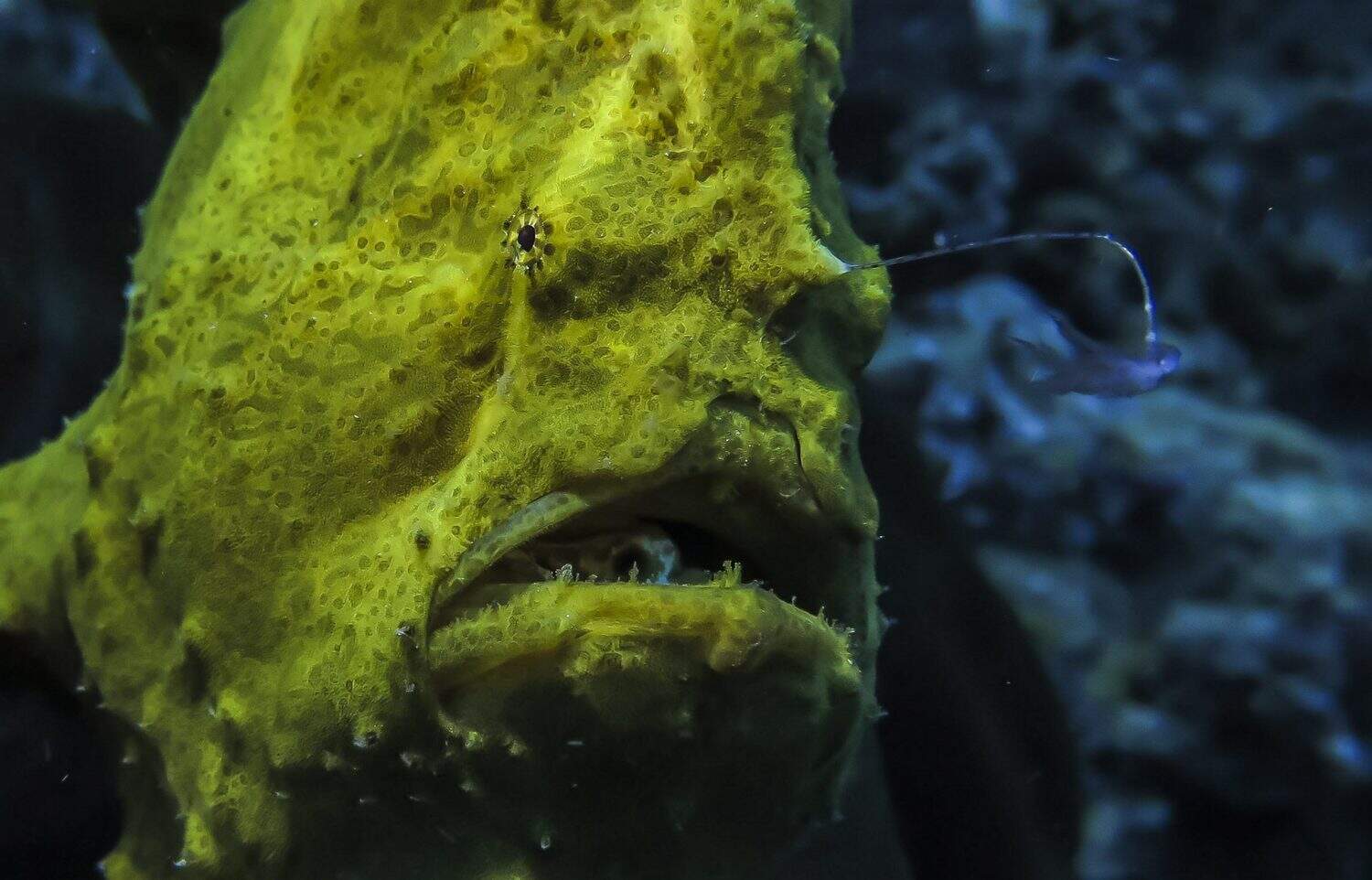
Frogfish have a built-in fishing rod that they use to lure prey close to their mouths.
©Bonma Suriya/Shutterstock.com
It’s no problem if the prey is bigger than the frogfish. The frogfish’s body can expand to digest prey twice its size. Warty frogfish are found in the Indo-Pacific region, ranging from the Red Sea and the coast of East Africa to Japan, Australia, and the Solomon Islands. The Lembeh Strait of Indonesia is a popular place to find them, along with other frogfish species.
Why Is This Birth Such a Big Deal?
Frogfish lay thousands of eggs at a time because mortality rates are extremely high in the wild. If other fish don’t eat the egg mass, the larvae that hatch stand little chance of surviving to become juveniles or full-grown adults.
When animal caretakers at Shedd Aquarium discovered the egg mass, they were unsure how successful they would be at rearing the eggs, but they immediately took action. They carefully moved the egg mass from the larger Wild Reef aquarium to a special habitat behind the scenes. Then, they waited for the eggs to hatch.
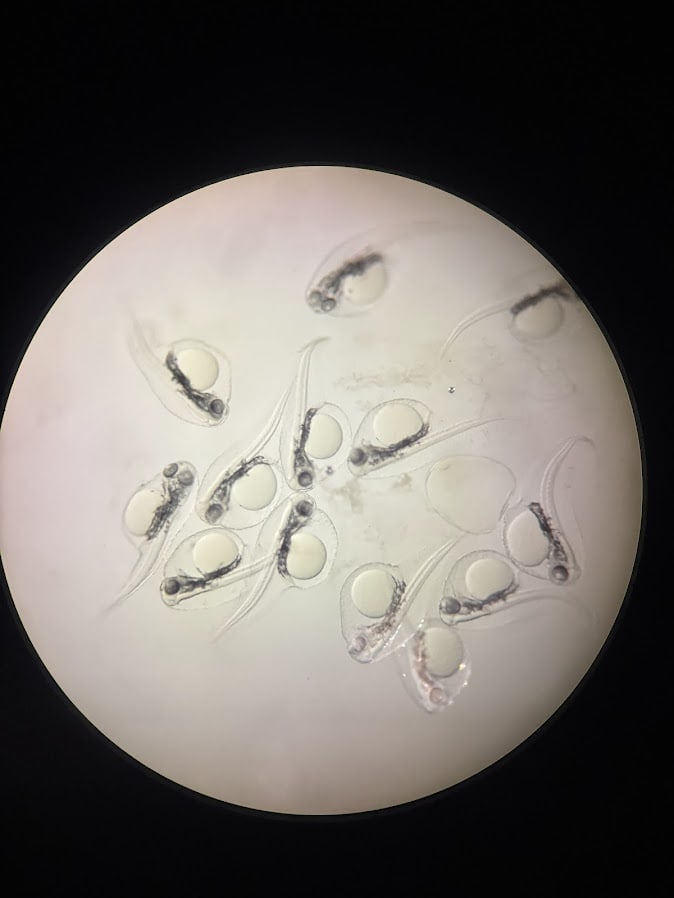
The newly hatched larvae are microscopic.
Once the eggs hatched, things got tricky. Frogfish, like many other marine fish, have extremely complex larval stages. Each stage presents unique and complex needs for food and environment. Successfully raising any of the larvae was even more challenging because there are no other recorded instances of warty frogfish being reared in any aquarium. This would be a global first.
How Shedd Beat the Odds
The Shedd team knew it would have to improvise. Shedd’s marine biology experts applied their knowledge from rearing other fish, like green chromis and round batfish, to guide them in caring for the new baby frogfish arrivals.
They also drew on knowledge gained from previously rearing a mystery fish. When they first encountered that egg mass in the same Wild Reef habitat, they had no idea who the egg mass belonged to. The team embraced the uncertainty and spent months solving the mystery. Eventually, the mystery fish was identified as a yellowtail fusilier.
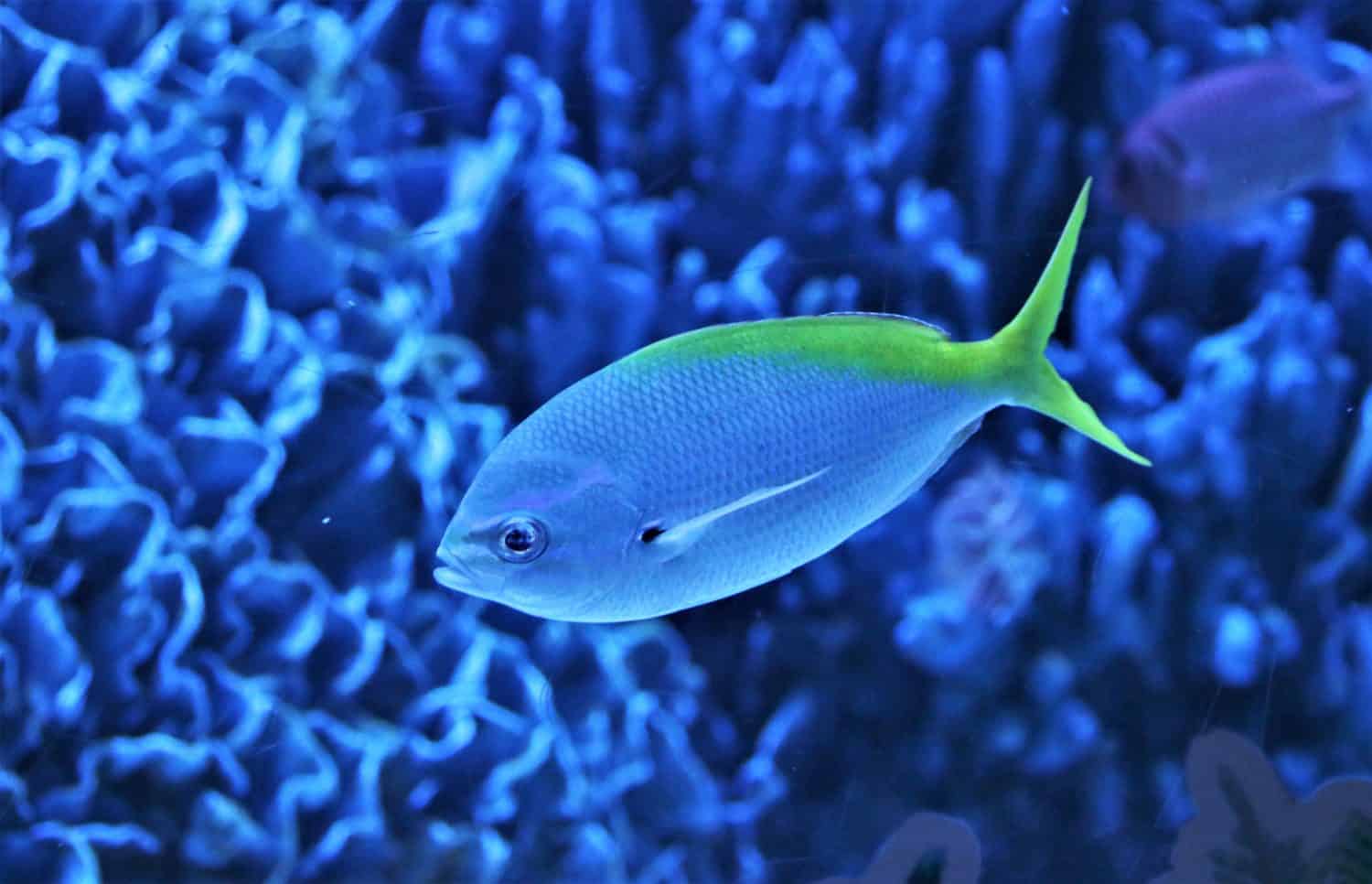
The Shedd team had previous luck raising a mystery cluster of eggs that turned out to be yellowtail fusiliers.
©Arunee Rodloy/Shutterstock.com
That experiment proved very successful, with the Shedd team eventually rearing dozens of fish to transport to other aquariums across the U.S. It also enhanced Shedd’s participation in sustainability efforts through the Association of Zoos and Aquariums (AZA) community. Shedd’s Larval Fish team was instrumental in making those efforts a success.
Faced with the challenge of nurturing the warty frogfish egg mass, the Shedd team used this combined knowledge to determine how best to care for the fragile eggs. They used data to determine the best water temperatures and flow rates, light levels, and diet for the warty frogfish. Their approach worked, and one larva successfully made it to the juvenile stage.
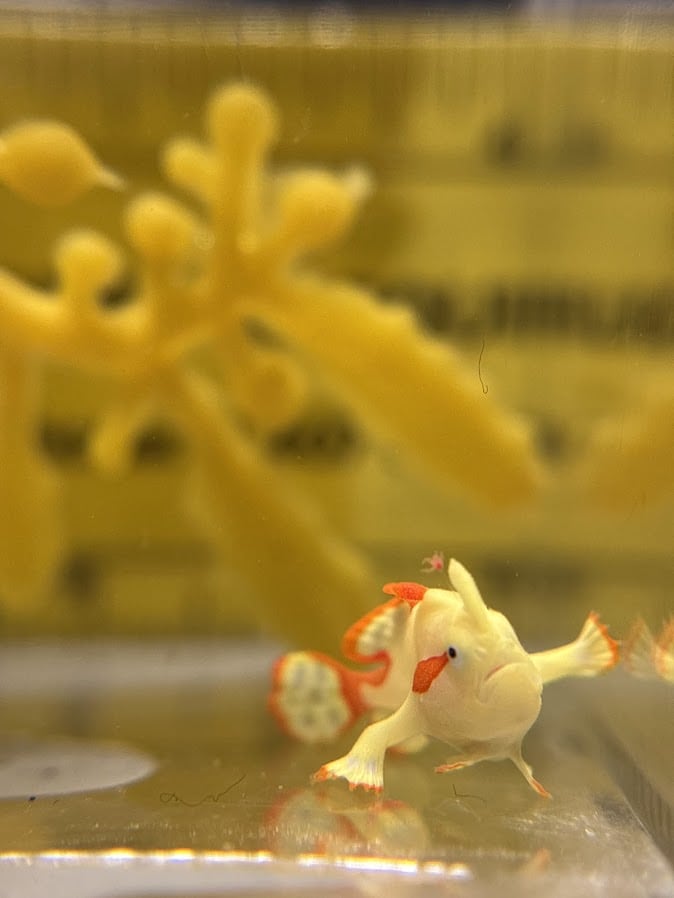
The surviving warty frogfish larvae have grown into juveniles.
The Shedd team is feeding the young survivor a diet of brine shrimp, which are also raised in-house at the Aquarium. Despite its diminutive size, the young warty frogfish behaves just like an adult.
Kayla Melton Rogala, Senior Aquarist at Shedd, said in a recent press release, “Now that the young warty frogfish has settled, the tiny fish behaves just like adults – walking along the seafloor with modified fins, ambushing prey and using their lure – which is adorable for an animal that is less than the size of a dime.”
While the baby remains behind the scenes in a carefully controlled environment, the two adult warty frogfish are still in the Wild Reef exhibit. Guests who want to see them need sharp eyes, as the adults are often camouflaged among the rocks in their habitat.
What This Success Story Means for Conservation
The surprise arrival and survival of a lone warty frogfish at Shedd Aquarium has several positive impacts for conservation efforts around the world. The Shedd team has made significant progress in understanding how to breed and care for unique marine fish in a captive environment.
These findings can help increase captive breeding programs, like the ones that are part of the AZA Species Survival Program. Captive breeding helps create populations of at-risk species that can be returned to natural environments to replenish declining wild populations. This is especially important as wildlife habitats continue to be adversely impacted by human activity and climate change.