Quick Take
- Baby lobsters are surprisingly picky eaters, and that preference may be the hidden force driving Maine's lobster collapse. See their picky diet →
- Scientists had to use forensic DNA analysis just to peek inside a lobster larva's stomach, and what they found in there changed everything. Explore the DNA findings →
- A single sesame-seed-sized creature sits at the center of the North Atlantic food web, and it is vanishing faster than almost anyone realized. Why this copepod matters →
- Researchers have identified a microscopic factor that may be contributing to Maine’s lobster decline. See the overlooked factor →
A billion-dollar marine industry’s future may hinge on something the size of a sesame seed. Researchers have discovered that baby lobsters, which drift in cool Atlantic waters as tiny plankton, have a preferred food source that’s packed with the nutrition the babies need to grow.
But there’s a problem: the same sesame-seed-sized food source is disappearing as Maine’s coastal waters heat up. Is their disappearance responsible for Maine’s lobster industry experiencing significant drops in annual catch?
Researchers think so. Their findings were released in a new study published in the journal Elementa: Science of the Anthropocene.
A Baby Lobster’s Diet
The study found that lobster larvae—the earliest stage of a lobster’s life—are somewhat selective in their diet. They have a preference for Calanus finmarchicus, a tiny, fat-rich copepod (a small ocean crustacean). Despite this copepod making up only a tiny portion of the zooplankton available to lobster larvae, researchers found it present in nearly one-third of the larvae they tested.
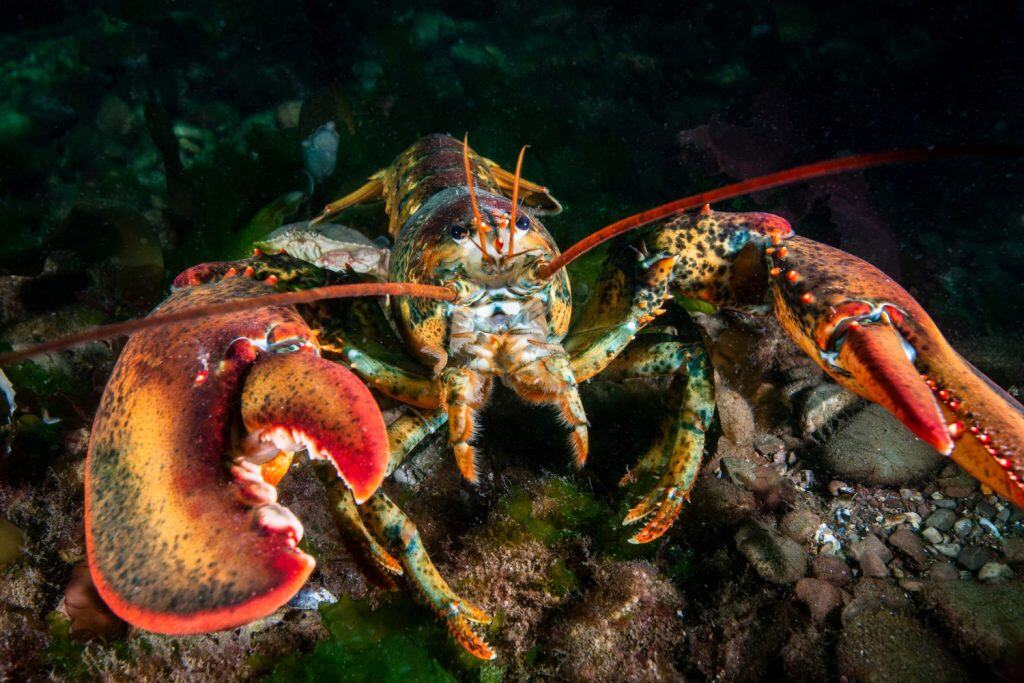
Before reaching adult size, lobsters in the North Atlantic begin life as tiny larvae drifting in cold water.
©RLS Photo/Shutterstock.com
However, because the stomach of a lobster larva is about the size of a pinhead, researchers couldn’t simply examine the contents visually. They used microscopes for traditional inspection and also analyzed genetic material, known as environmental DNA (eDNA), to identify food sources that were not visible under the microscope.
“Combining the two approaches allows us to ground truth visual identifications by comparing them to diet identifications from the eDNA analysis, giving us greater certainty and expanding our coverage,” Alex Ascher, lead research scientist at Quahog Bay Conservancy, who began this work with the University of Maine as part of his Ph.D. thesis, said in the press release announcing the findings.
Why the Sesame-Sized Copepod Matters
Calanus finmarchicus are rich in fatty acids. Lobster larvae need the extra nutritional punch that these tiny copepods provide. These fatty acids help the baby lobsters grow quickly and aid brain development.
After hatching from eggs, lobster larvae drift up to the ocean’s surface and travel with the currents. As they grow to small juvenile size, they settle back down on the seabed to grow to adult size. The entire process takes about six to eight years. The larval stage is the lobster’s most vulnerable.
Lobsters are not the only species that rely on this particular copepod to thrive. Calanus finmarchicus is a keystone species that fish, whales, and other invertebrates up and down the food chain rely on for their own survival. It is also the primary food source for the endangered North Atlantic right whale, a species with fewer than 400 individuals remaining in the wild.
Warmer Waters Are Moving the Copepod North
The Gulf of Maine, where the majority of the state’s lobster fishing industry operates, is warming faster than 99 percent of the world’s oceans. As the local waters warm, Calanus finmarchicus populations are moving north, seeking out colder waters.
As these copepods disappear, lobster larvae in the southern Gulf of Maine lose access to the food they need to reach adulthood.
“We see evidence that larvae are eating Calanus finmarchicus at a greater rate than you would expect if they were just feeding randomly; however, we also know that the geographic range of Calanus is receding northward into cooler waters, making it less readily available,” Ascher said in the press release.
Maine’s Struggling Lobster Industry
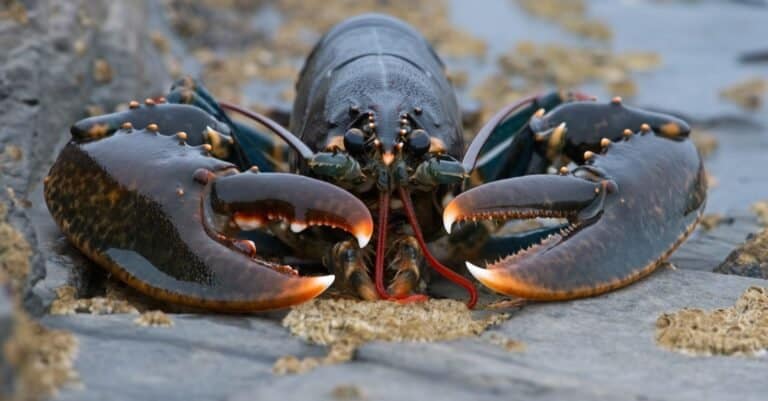
2016 was a banner year for Maine’s lobster industry. That year saw harvest numbers peak at around 132 million pounds. Sadly, annual harvest numbers have fallen ever since. By 2025, only about 78.8 million pounds were brought in. That represents around a 40 percent drop in less than ten years.

Maine’s commercial lobster fishing industry’s annual harvest has fallen about 40% since 2016.
©Arne Beruldsen/Shutterstock.com
Scientists are observing fewer young lobsters surviving until adulthood across the Gulf of Maine. Researchers say the plummeting Calanus populations may be relevant to the declining numbers, including the decreased harvest data, but they are not proof.
According to Maine’s Department of Marine Resources, other shorter-term factors, including inflation, tariffs, fewer fishing trips, and a late molt, are potential contributing factors to the 2025 harvest numbers.
For now, lower Calanus numbers are just one of many possible contributing factors.
What’s Next?
Researchers continue to study the diets of lobster larvae to better understand the correlation to lobster populations. Traditionally, researchers have looked only at the role of egg production as the determinant of upcoming harvest sizes.
This new research angle provides an additional way to gauge future harvest sizes. It provides insights into how diet could determine whether larvae survive into adulthood.
“Understanding these larval diets is a fundamental piece of knowledge that helps us to better understand fluctuations, and potentially also predict fluctuations, in the abundance of lobster larvae and future adult lobsters to be caught,” Ascher said in the press release.