
Quick Take
- In some regions, polar bears now endure fasting periods approaching 180 days due to longer ice-free seasons.
- Exceeding the 1.5-degree Celsius global warming target is projected to significantly reduce spring sea ice, making seal-hunting more difficult for polar bears.
- Land-based diets provide a counterintuitive nutritional void that fails to replace marine-derived fats.
- Researchers utilized satellite telemetry to uncover why Western Hudson Bay populations are collapsing first.
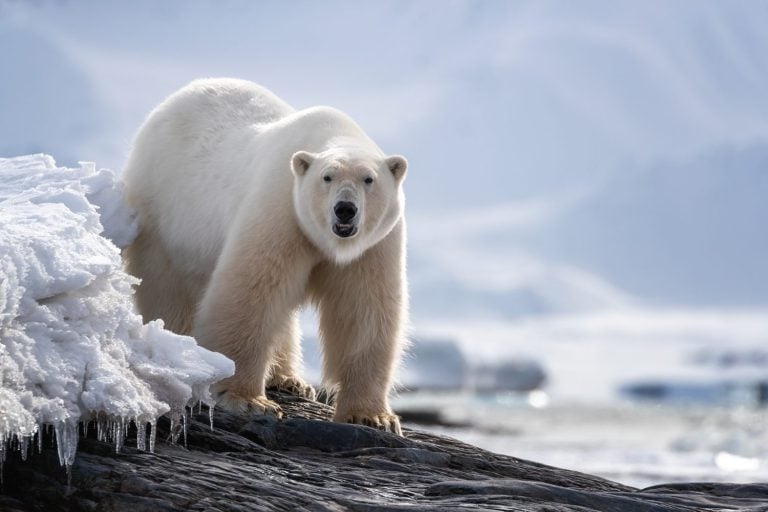
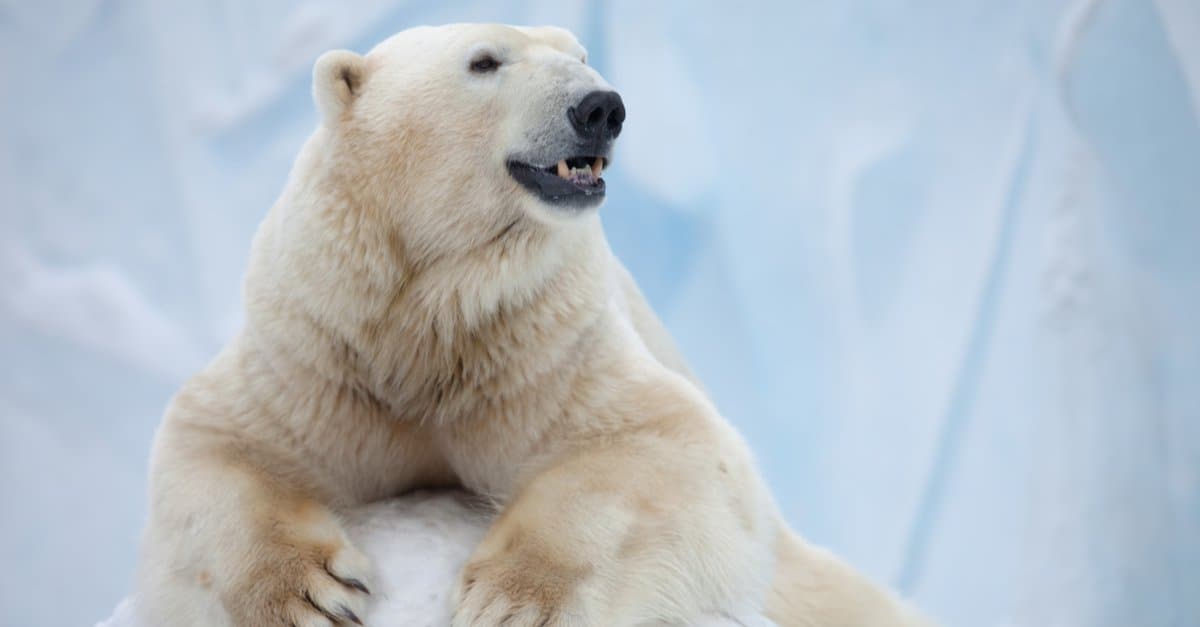
Each year on February 27, International Polar Bear Day draws attention to one of the Arctic’s most powerful predators, the polar bear Ursus maritimus. These large marine mammals rely on sea ice to hunt seals, travel across vast distances, and raise their cubs. As Arctic temperatures rise at roughly four times the global average, sea ice is breaking up earlier in spring and forming later in fall. This shortens the hunting season and limits access to fat-rich prey.
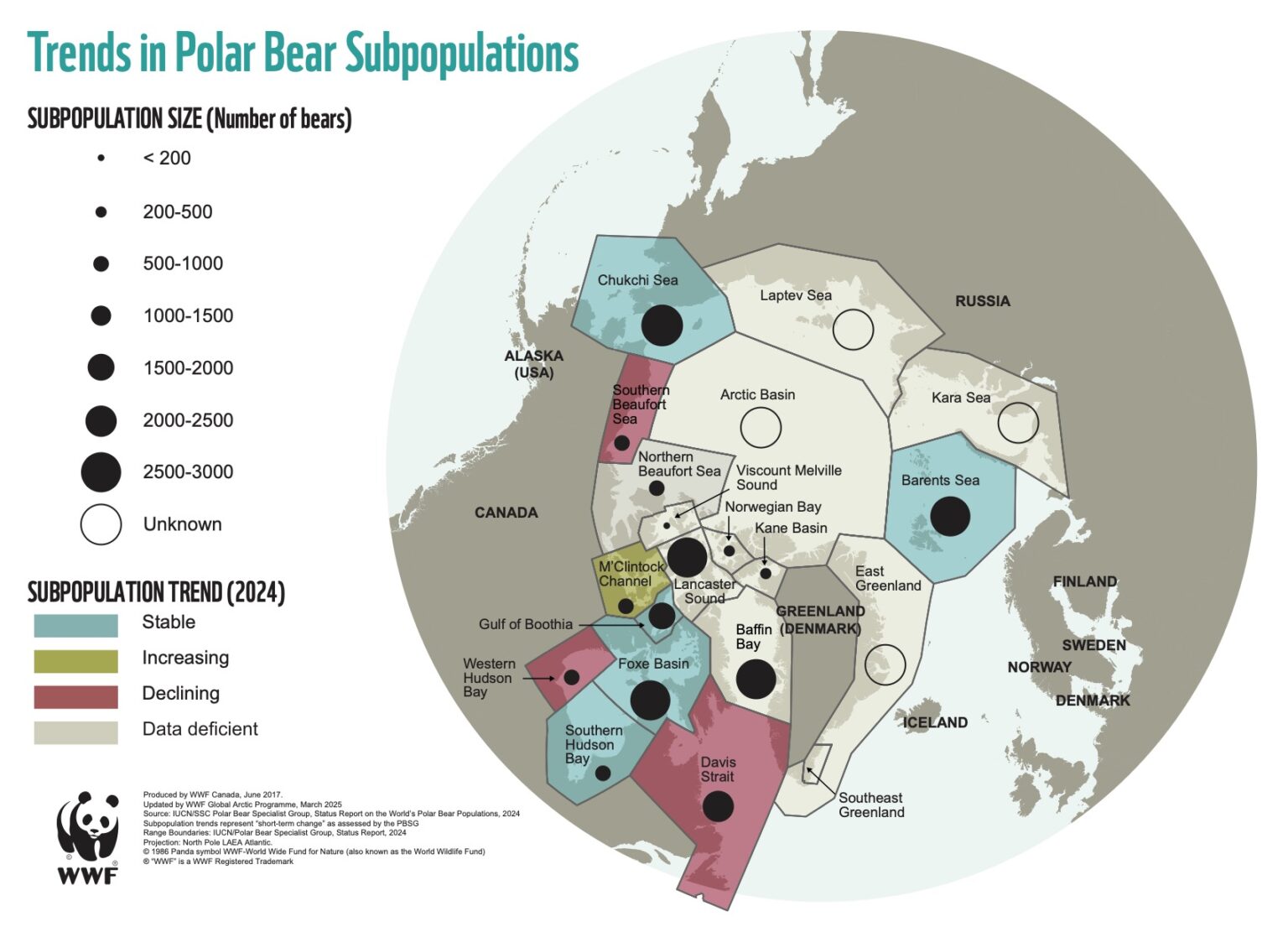
The situation facing polar bears is not uniform, however. The species is divided into 19 recognized subpopulations, with some recent research identifying a potential 20th in Southeast Greenland. Understanding these regional differences is essential for effective conservation.
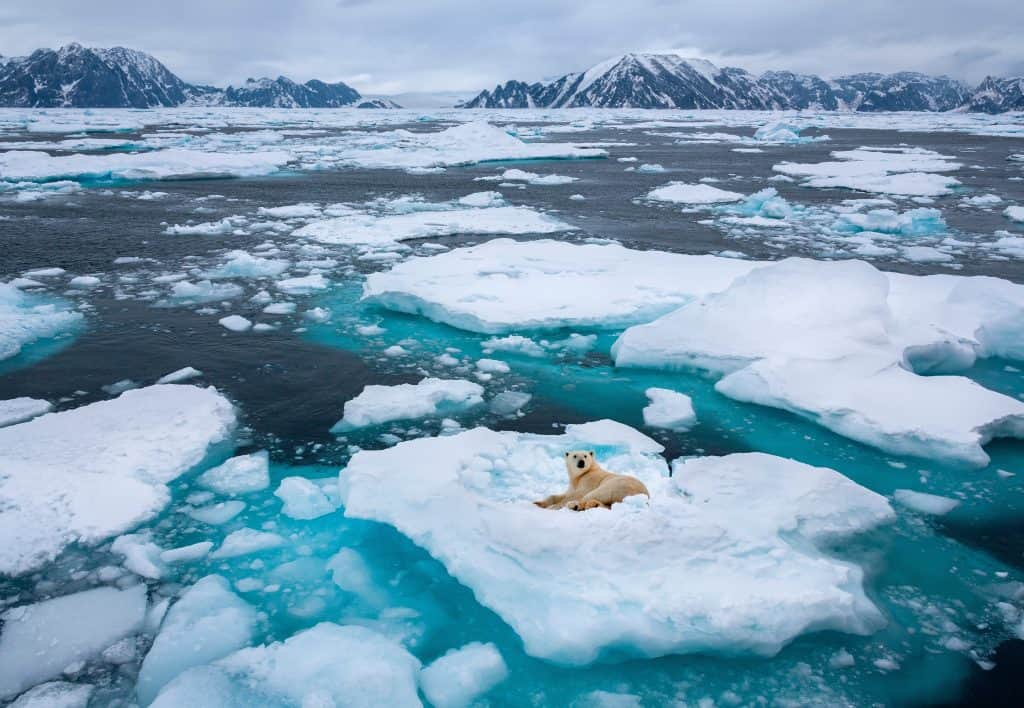
A polar bear rests on fragmented pack ice off Greenland’s coast, where some isolated bears rely on drifting and glacial ice as traditional sea-ice platforms continue to change.
©Steve Allen/Shutterstock.com
Life on the Ice as a Marine Predator
Polar bears are considered marine mammals because they spend most of their lives on sea ice over the Arctic Ocean rather than on land. They hunt mainly ringed seals and bearded seals, often waiting patiently at breathing holes or stalking seals resting on the ice. Thick blubber insulates them from cold water, while dense fur and large paws help retain heat and distribute body weight on thin ice. Polar bears are also strong swimmers, capable of covering dozens of miles when ice is fragmented.
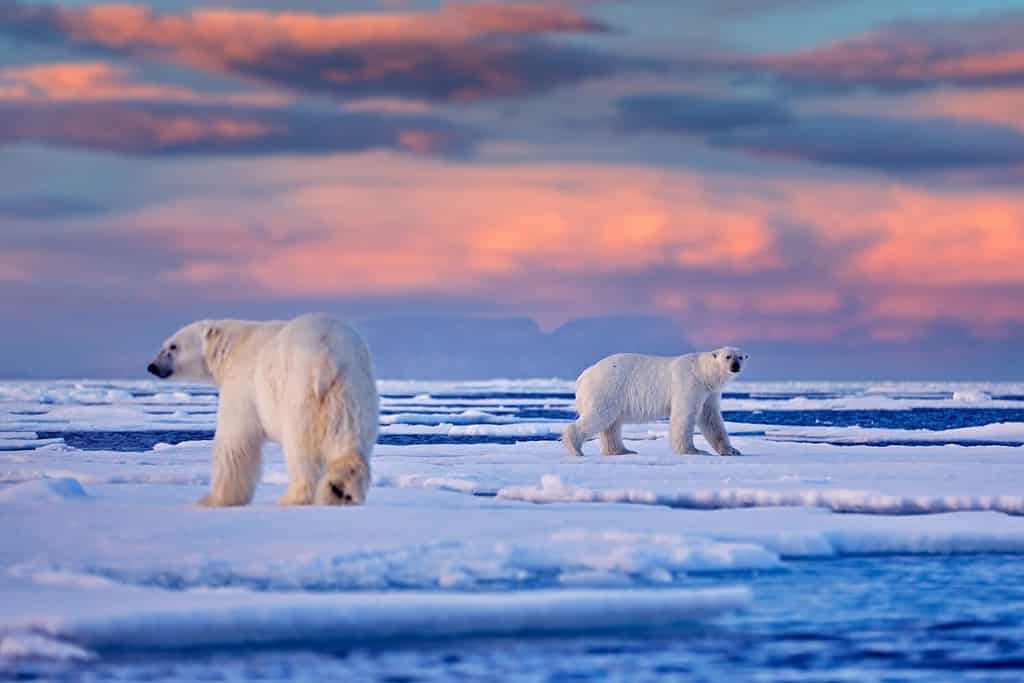
A polar bear and cub move across Arctic sea ice, where these powerful marine predators rely on thick fur, blubber, and long swims between ice floes to hunt seals and survive a rapidly changing environment.
©Ondrej Prosicky/Shutterstock.com
Current estimates suggest there are between 22,000 and 31,000 polar bears worldwide, with 26,000 as a commonly cited midpoint. This total is divided among 19 subpopulations (with a potential 20th recently identified in Southeast Greenland) that experience very different trends. Some groups appear relatively stable, while others show signs of decline in body condition, reproduction, or survival. Because of this variation, conservation efforts increasingly focus on regional data instead of relying solely on a global overview.
Understanding the Subpopulations
Rather than forming one continuous population, polar bears are grouped by researchers into subpopulations based on geography, genetics, and movement patterns. Many of these groups cross national borders, requiring cooperation among Arctic nations. Five subpopulations lie mostly outside Canada, including the Chukchi Sea, Laptev Sea, Kara Sea, Barents Sea, and East Greenland groups. The remaining groups are located within or overlap Canadian waters. The World Wildlife Fund provides a useful map that illustrates these populations.
Scientists use these boundaries to assess population size, trends, and threats. Some subpopulations still benefit from sea ice that persists longer into summer, while others face longer ice-free seasons. Because the risks are unevenly distributed, making broad generalizations about all polar bears can be misleading. Effective management depends on tracking conditions within each region and adjusting strategies as those conditions change.
Subpopulations Showing Declining Trends
Five polar bear subpopulations show well-documented signs of decline, often linked to earlier ice breakup and reduced access to spring hunting grounds.
Southern Hudson Bay bears spend summers along the coasts of Ontario, Québec, and Nunavut after the bay’s seasonal ice melts completely. Earlier ice breakup extends the fasting period on land, leading to greater weight loss and reduced cub survival. In years when food is scarce, bears may approach cabins, camps, or waste sites, which increases the risk of conflict and requires coordinated management by governments and Indigenous groups.
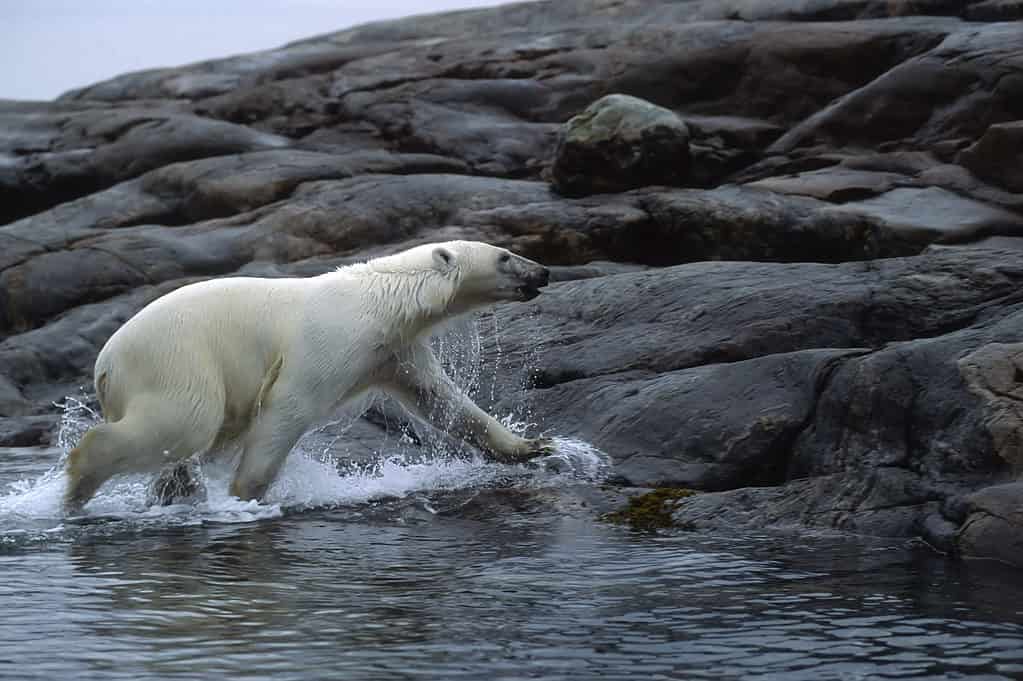
A polar bear moves along a rocky Hudson Bay shoreline.
©iStock.com/JohnPitcher
Western Hudson Bay, near Churchill, Manitoba, is one of the most closely studied regions. Long-term research shows declines in average body mass, cub survival, and overall population size compared with the 1980s. Bears now spend more time on land near town. This has prompted investments in conflict-reduction measures such as bear-resistant food storage, education programs, and temporary holding facilities. Churchill is a popular site for eco-tourism to see polar bears. This is a mixed blessing; while it increases the potential for negative human-bear interactions, the funding generated by tourism also supports management and conservation efforts.
In the Southern Beaufort Sea, shared by Alaska and northwestern Canada, sea ice retreats farther from the continental shelf. As a result, bears have to swim longer distances or remain on land with limited food. Studies document reduced survival and poorer body condition during years of extreme ice loss. Coastal villages such as Kaktovik are increasingly seeing bears scavenging whale remains or passing through town in search of food.
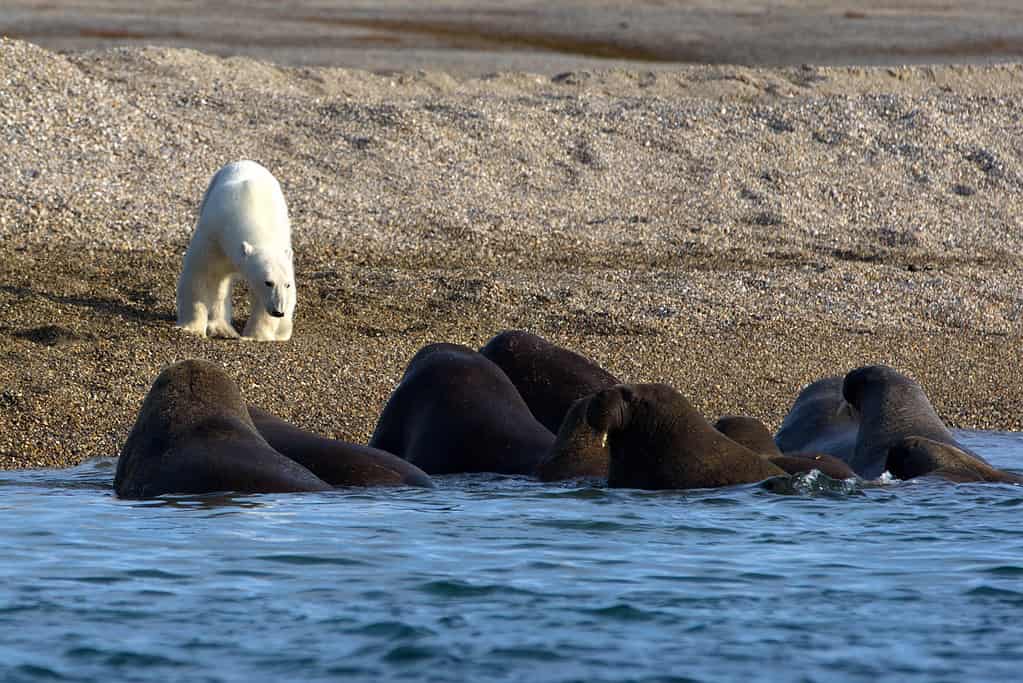
A polar bear moves along a rocky Arctic shoreline as shrinking sea ice pushes many Barents Sea bears toward islands, where scavenging and encounters with wildlife and people become more common.
©Wirestock/iStock via Getty Images
The Barents Sea, shared by Norway and Russia, has experienced some of the fastest sea ice declines in the Arctic due to warming Atlantic waters. Many bears have shifted northward or onto islands such as Svalbard, where they rely more on scavenging and encounter people more often. Despite the existence of protected areas and restrictions on denning sites, the long-term outlook for these bears remains closely tied to global climate trends.
Baffin Bay bears move between eastern Nunavut and western Greenland. Earlier assessments raised concerns about overharvest and habitat loss, and the population has long been considered likely to decline. More recent surveys indicate complex regional variations, so continued caution is warranted. Because this population is shared internationally, coordinated management is essential.
Subpopulations Considered Relatively Stable
Three polar bear subpopulations appear comparatively stable, at least for now, often because local conditions still support reliable access to prey.
The Foxe Basin region north of Hudson Bay includes shallow, productive waters that historically supported abundant seals. For many years, bears here showed good body condition and relatively stable numbers. Although climate projections suggest future risks, Inuit-led monitoring and scientific surveys indicate that this population has so far been less affected than others.
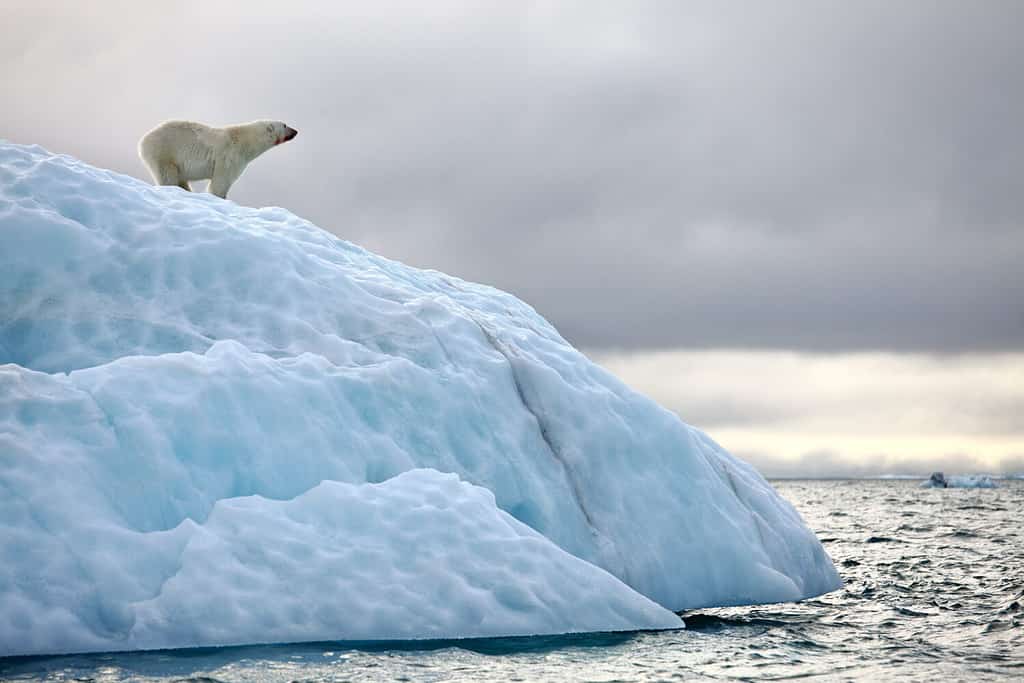
A polar bear stands near thinning Arctic sea ice in the Foxe Basin region, where shifting ice patterns are closely monitored by scientists and Inuit communities to track changes in habitat and wildlife behavior.
©Vladimir Melnik/Shutterstock.com
The Davis Strait population spans Labrador, Québec, Nunavut, and western Greenland. Influenced by both Arctic and Atlantic waters, this group has benefited from access to harp and hooded seals. Although warming waters may change the distribution of prey, the Davis Strait polar bear population has remained relatively stable in recent decades.
Farther east, the Northern Beaufort Sea has shown more stable trends than its southern counterpart in several assessments. Sea ice tends to last longer over productive shelf areas, which may help protect bears from rapid habitat loss. Indigenous observations and scientific surveys together help track ongoing changes.
Subpopulations That May Be Stable or Increasing
Four subpopulations show signs of resilience or recovery, though continued monitoring remains critical.
In the Chukchi Sea, spanning western Alaska and northeastern Russia, marine productivity remains high despite rapid ice loss. Some studies suggest that bears in this region maintain good body condition and reproductive rates. However, reduced summer ice brings bears closer to villages and industrial sites, increasing the risk of conflict.
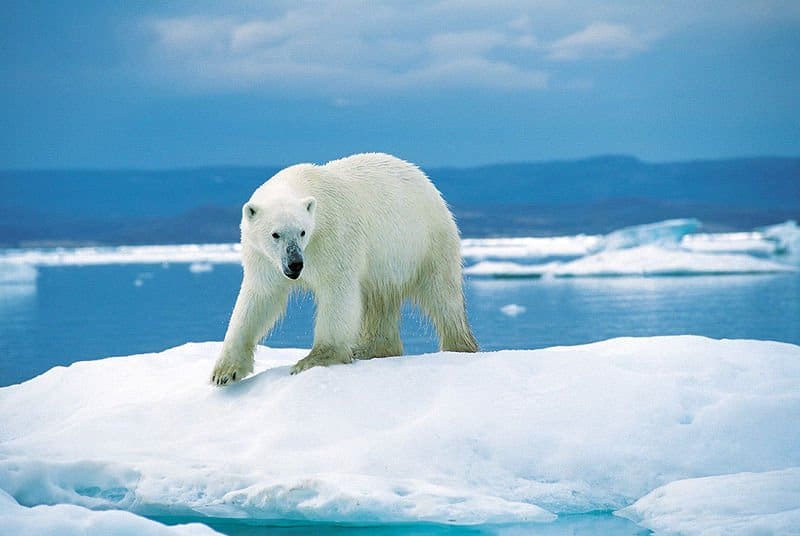
Shifting ocean temperatures and changing seal distribution influence how long bears can successfully hunt each season.
©Ansgar Walk / Creative Commons – Original
The Gulf of Boothia, between Baffin Island and mainland Nunavut, supports one of the highest-density polar bear populations. Narrow channels and productive waters have long provided reliable hunting grounds. Although changes in the timing of ice formation and breakup present challenges, current research has not shown clear population declines.
Kane Basin, located between Ellesmere Island and Greenland, was once thought to support very few bears. More recent surveys indicate improved body condition and survival rates in parts of the region, possibly due to changes in ice dynamics that temporarily increase access to prey.
M’Clintock Channel experienced severe declines in the past due to overharvest, but strict management allowed the population to rebound. Recent assessments suggest relative stability, though future ice loss could reverse these gains.
Subpopulations With Insufficient Data
The remaining subpopulations remain poorly studied, limiting scientists’ ability to assess population trends with confidence.
The Laptev Sea and Kara Sea populations off northern Russia are among the least studied. Satellite data show longer ice-free seasons and more mobile pack ice, but limited field surveys make it difficult to determine how polar bears are responding to these changes.
East Greenland bears inhabit a rugged coastline marked by fjords, glaciers, and drifting pack ice. Genetic research has identified a small, isolated group in southeast Greenland that hunts seals using glacial ice rather than typical sea ice. While this behavior is unusual, long-term trends remain uncertain.

A polar bear walks along a quiet Arctic shoreline where lingering sea ice reflects slower environmental change.
©Erinn Hermsen / Polar Bear International
In the Canadian High Arctic, populations in Lancaster Sound, Viscount Melville Sound, and Norwegian Bay historically relied on thick multi-year ice and recurring open-water areas known as polynyas. As multi-year ice declines, habitats are shifting toward thinner seasonal ice. These regions remain data-deficient, although some signs of stress are beginning to emerge.
The Arctic Basin population, occupying remote drifting pack ice, and the recently recognized Southeast Greenland group also lack sufficient long-term data to determine population trajectories.
Interactions Between Polar Bears and Humans Are on the Rise
Longer periods on land bring polar bears into closer contact with people. Bears may investigate waste sites, camps, and homes in search of food, creating safety risks for communities and bears alike. Lethal control measures are sometimes used when bears pose an immediate threat to human safety.
To reduce conflict, Arctic communities and organizations have developed coexistence strategies. These include patrols, early warning systems, secure food storage, and training in non-lethal deterrents such as noise devices and projectiles. These efforts aim to prevent dangerous situations from escalating while broader climate solutions are being pursued.

A polar bear investigates equipment near an Arctic site, showing how longer ice-free seasons are bringing bears closer to people.
©Thomas Barrat/Shutterstock.com
Conservation Tools and Future Prospects
Despite serious challenges, polar bear conservation continues to evolve. Researchers use a combination of satellite tracking, aerial surveys, traditional ecological knowledge, and climate models to forecast how each subpopulation may respond to future warming. Governments and Indigenous partners use this information to guide harvest management, protect denning areas, and plan marine conservation zones.
International Polar Bear Day highlights the connection between global choices and Arctic outcomes. Reducing greenhouse gas emissions and supporting science-based management are critical steps. The fate of polar bears depends on decisions made far beyond the Arctic, but informed action can still shape their future.