
Quick Take
- Most tiny plankton swim to feed, but eastern oyster larvae break that rule in a way scientists only just figured out. See how gravity feeds them →
- A 1999 experiment raised shellfish in near-weightless conditions and found they suffered, though nobody could explain why until now. Explore the 1999 experiment →
- Ocean acidification may be quietly sabotaging oyster larvae before they ever reach adulthood, and the reason behind it is more indirect than you'd expect. See the acidification link →
- The shell does something beyond protection, and what researchers discovered it actually does changes how we think about oyster survival. Discover the shell's role →
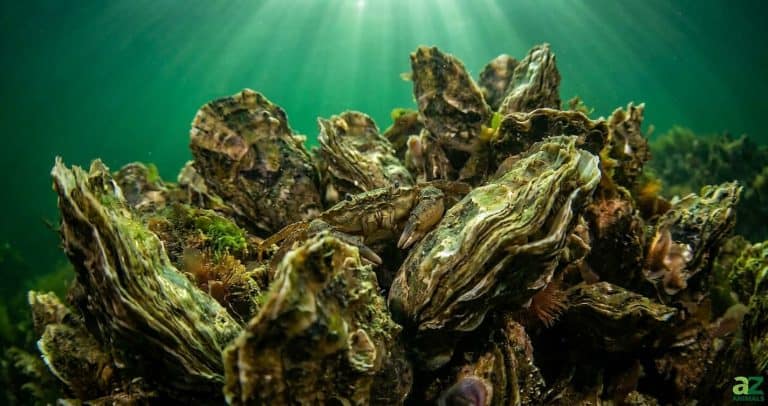
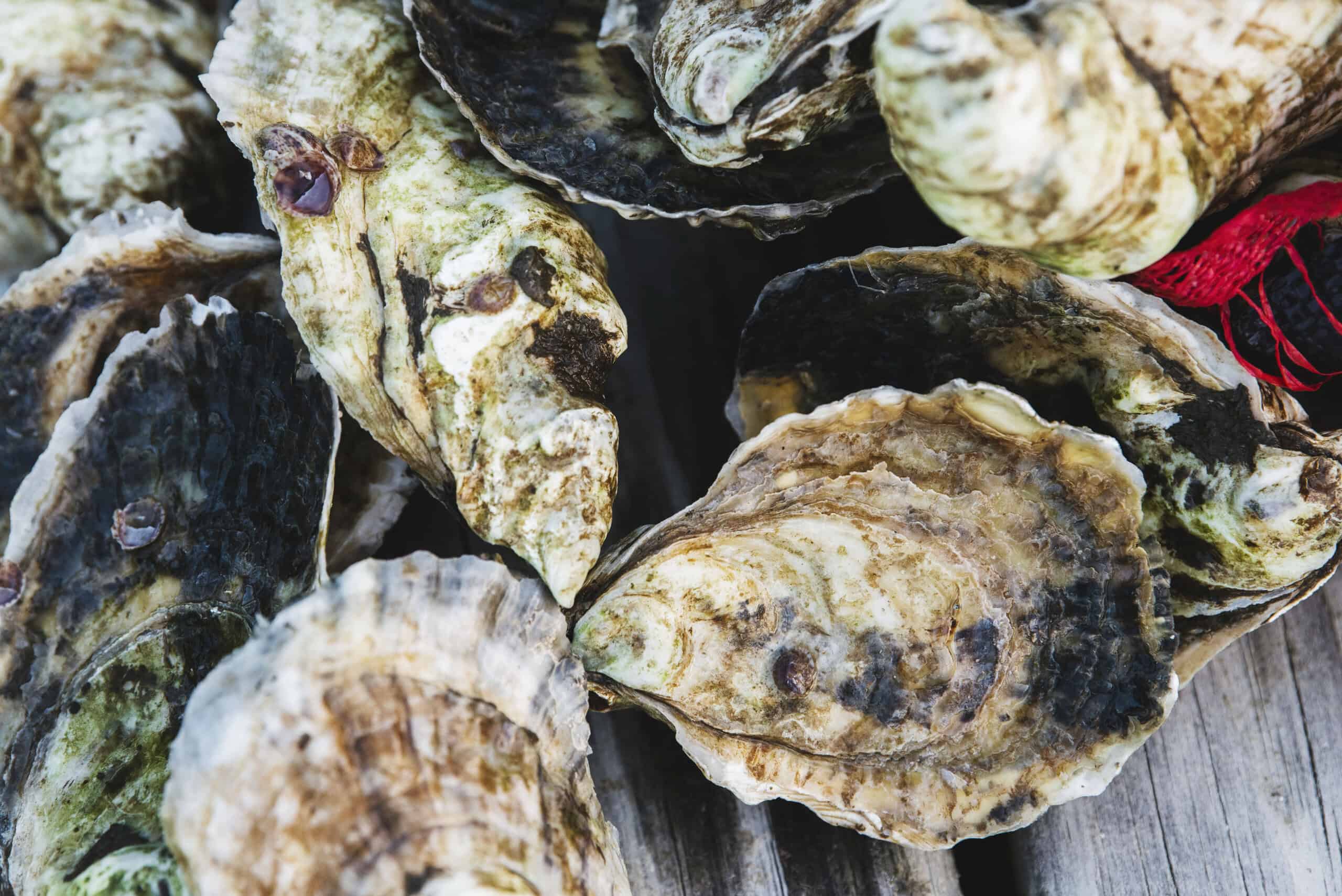
Eastern oyster larvae are tiny, but their dense shells make them heavier than the surrounding seawater they call home. That weight serves an important purpose, according to a new study published in Physical Review Fluids.
Research led by the Woods Hole Oceanographic Institution (WHOI) shows that the excess shell weight helps gravity affect ocean currents and brings food directly to the larvae.
Why the Findings Matter
Eastern oyster larvae have long been believed to rely primarily on the drag produced by their swimming to create the currents that bring their food to them. That is generally how many small plankton get the nutrition they need to grow.
However, this study shows that eastern oyster larvae are an exception to that rule. Instead, they use gravity to draw food to them using gravity. This puts them in the same class of gravity-dominated feeders as bigger copepods. It also shows just how essential their heavy shells are to their growth.
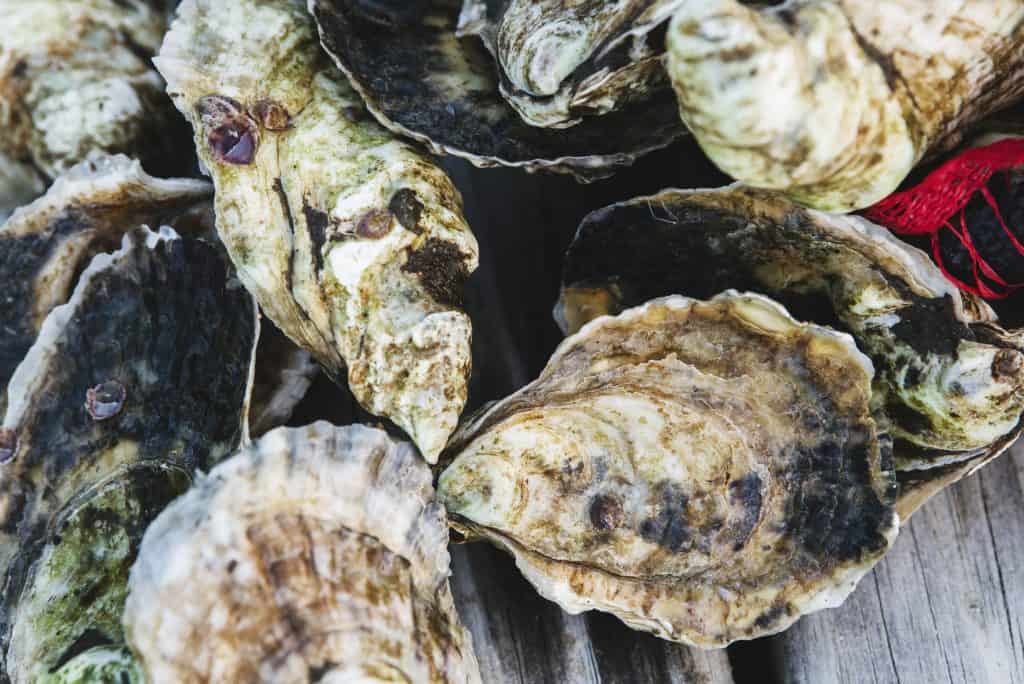
Eastern oysters are native to the Atlantic coast of North America and are an important species for coastal ecosystems and fisheries.
The difference between these two feeding styles is that drag feeding relies on the larva’s movement through the water. Gravity feeding, on the other hand, depends on the density differences between the larva and the surrounding seawater.
“This tells us that the shell is doing more than just protecting the animal,” explained Houshuo Jiang, a senior scientist at WHOI and sole author of the study. “It is actually helping the larva feed. That means anything that changes the shell could also change how the larva gets its food.”
How Did Jiang Capture the Data?
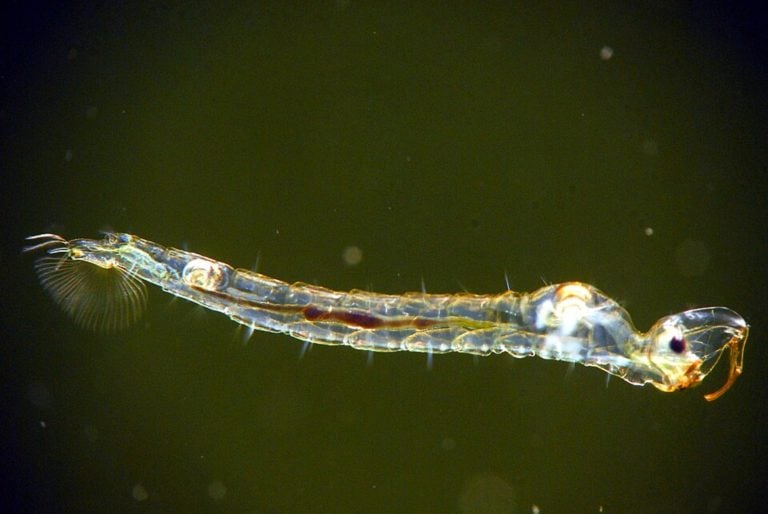
Jiang used a high-speed microscope imaging system (HSMIS) that was developed in his laboratory to capture the data needed for the study. The system uses a high-speed camera and long-working-distance optics to record animals free-swimming in larger volumes of seawater than a regular microscope could capture.
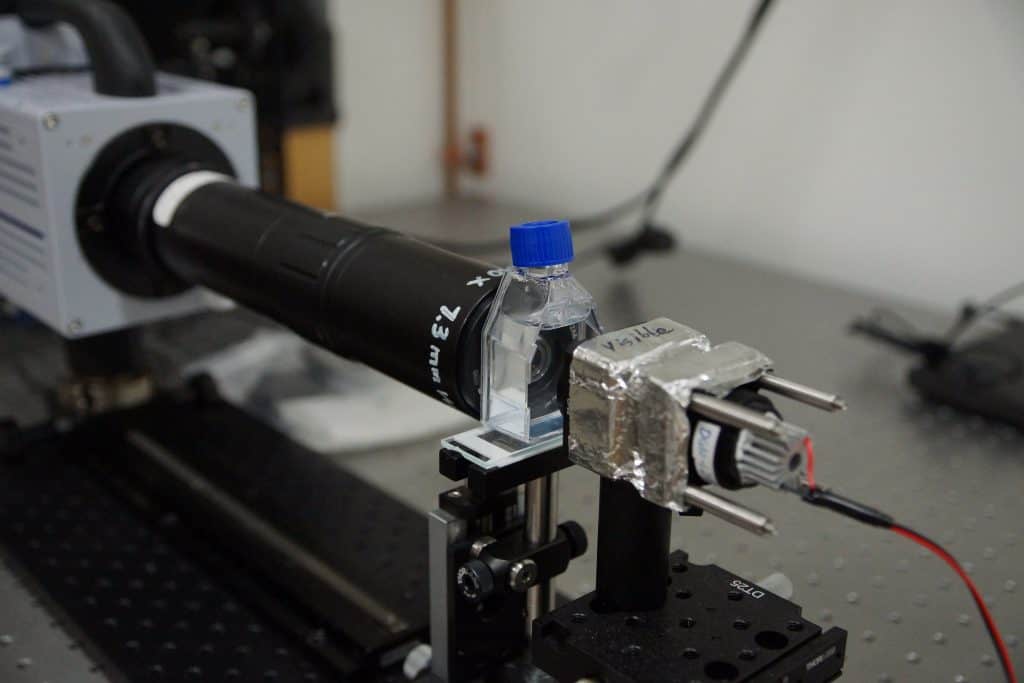
WHOI scientists developed a high-speed imaging system that uses a low-heat red LED and a camera recording 2,000 frames per second to capture the rapid movements of microscopic organisms without heating or disturbing them.
He then added tiny tracer particles to the seawater and used micro-particle image velocimetry to track how the particles moved around the larvae. Tracking that movement allowed him to measure currents invisible to the naked eye, which were generated by the larvae to collect food.
“Usually, when you use a microscope, you need a lot of light, and if you put a lot of light on these tiny animals, you can heat the water and change their behavior,” Jiang explained in a news release announcing the study’s findings.
“Conventional cameras are not fast enough to capture these very rapid movements. So we developed a system that uses a low-heat red LED and a high-speed camera that can record 2,000 frames per second. That lets us watch the larva in a larger volume of water without disturbing it and actually see how the water moves as it feeds.”
Gravity Helps Them Grow
Baby eastern oysters, Crassostrea virginica, drift and swim for about two to three weeks in larval form before settling onto a hard surface. They then spend the rest of their lives on that same hard surface.
During those weeks, the oyster larvae use a sail-like organ called a velum to swim and feed. They eat mostly tiny algae. They use gravity to their advantage, allowing their heavy shells to create the current, rather than swimming for their next meal.
Why Gravity Really Matters
A 1999 study first demonstrated the role gravity plays in bivalve larvae — shellfish with two-part shells, like oysters and clams. Scientists in that study raised bivalve shellfish in microgravity, a near weightless condition similar to what you’d find in outer space.
The larvae in that study tended to eat less, grow slower, and be in worse shape than larvae raised under normal gravity conditions. Despite the stark differences, nobody at the time could explain why.
This latest study sheds light on that decades-old mystery. One possible explanation is that gravity powers the feeding current for eastern oysters, with their dense shells being the mechanism that generates it.
“Thanks to high-speed imaging, we now see that gravity is essential for their feeding,” Jiang said in the news release. “If a larva is dealing with a stressor that affects its ability to build a dense shell, that could also affect the physical force that helps it feed. Understanding that connection gives us a better way to think about how environmental stressors can affect larvae at one of the most vulnerable stages of their lives.”
The Dense Shell Is the Key to Success
Jiang’s point about the stressors affecting shell development is important. Ocean acidification occurs when seawater absorbs carbon dioxide and lowers the amount of available carbonate — an essential ingredient for shell building. When carbonate is unavailable, shells get lighter and thinner.
For eastern oysters, this has already had an impact. One study showed that larvae grown in current carbon dioxide levels had 16% smaller shells and 42% less calcium than those grown in pre-industrial conditions.
Additionally, another study found that larvae grown in higher carbon dioxide levels also had lower survival rates, slower growth, and thinner shells.
An unrelated study actually found that Pacific oyster larvae experienced a mass die-off that researchers linked to highly acidic water in Oregon’s Whiskey Creek Shellfish Hatchery.
Ocean Acidification Is Just One Threat
Eastern oysters face other threats, too. Pollution, disease, and overfishing are just a few. According to NOAA Fisheries’ Commercial Fishing Landings database, the commercial harvest of eastern oysters in the United States fell by about $15.2 million (7.2 percent) from 2023 to 2024.
“Ultimately, this could help us better understand what determines whether oyster larvae survive and become part of the adult population,” Jiang said in the news release. “That matters for fisheries and aquaculture because the number of larvae that survive each year helps determine the oysters available to harvest in the future. If environmental stressors affect both shell formation and feeding, we need to understand those effects to better predict how oyster populations will respond to a changing ocean.”