
Quick Take
- Salmon find their way back to the exact stream where they were born using two separate navigation systems, one of which might be built into their brain. Explore the navigation science →
- A difference no bigger than an eye-color gene decides whether a Chinook salmon returns to spawn in spring or fall, and that single difference changes everything about the run's timing. See the genetics behind timing →
- Coho salmon are picky enough about river conditions that they'll refuse to migrate until something specific happens, and whatever that trigger is, it has nothing to do with temperature. Learn what triggers coho migration →
- One Pacific salmon population quietly shifted its entire migration schedule by nearly two weeks, a change whose underlying reason points to a bigger problem for future runs. See how climate is shifting runs →
When September rolls around, rivers and streams all along the Pacific coast of the U.S. fill with annual visitors. For several weeks, salmon can be seen fighting their way upstream. Their goal? Returning to the place of their birth to start the reproductive cycle over again.
For salmon-watching, September can’t be beat. That’s thanks to the overlap of two major salmon runs — Chinook and coho. Here’s everything to know about the fall salmon runs.
Continue reading
The Chinook Run
Most of the Chinook that take part in the fall run are three to four years old and have spent all their lives at sea before returning to inland rivers to reproduce.
That migration starts in late July, hitting its peak in September as the salmon make their way “home” to spawn from October through December.
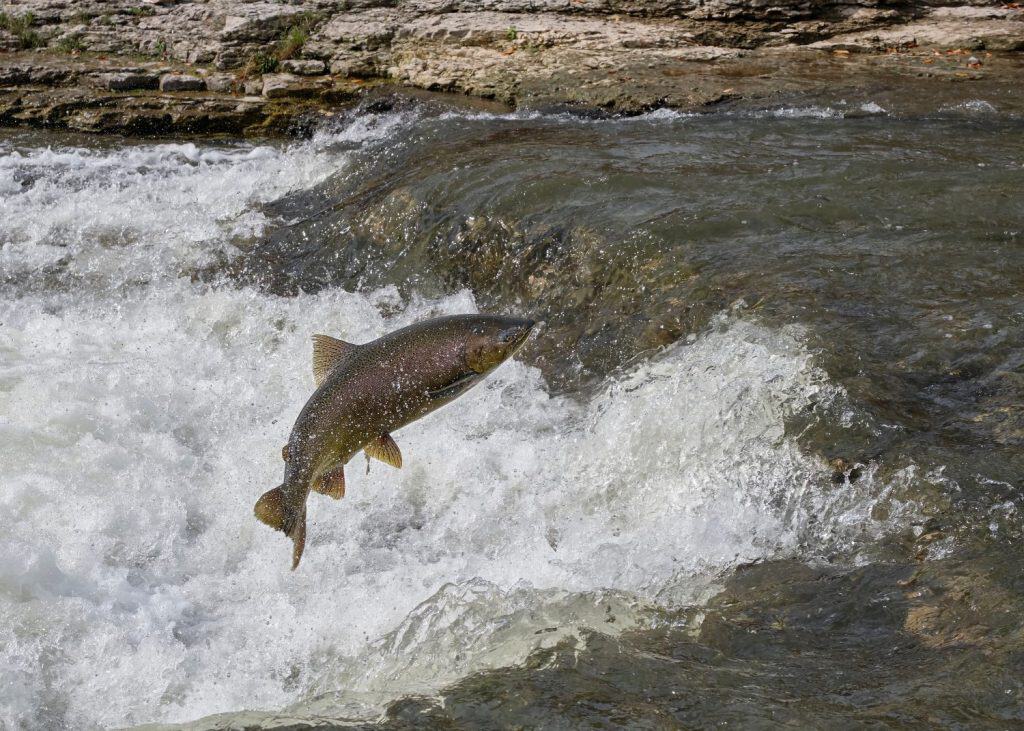
A Chinook salmon jumps up a ledge as it swims upstream in the fall to lay eggs.
©John Fader/Shutterstock.com
One place to see this first-hand is in California’s Sacramento River basin. There, the fall Chinook run peaks in September and October, according to California wildlife officials.
But the timing isn’t the same everywhere. For example, Chinook numbers tend to peak as late as November in other parts of California, like the San Joaquin River basin.
Coho In the Rivers
For coho salmon, it’s a slightly different story. Most of them spend the first 18 months to two years in the ocean before returning to fresh water to spawn. But some come back a bit earlier. Some males, called “jacks,” return after just six months at sea.
No matter how old the coho are, though, they usually arrive slightly after their Chinook cousins.
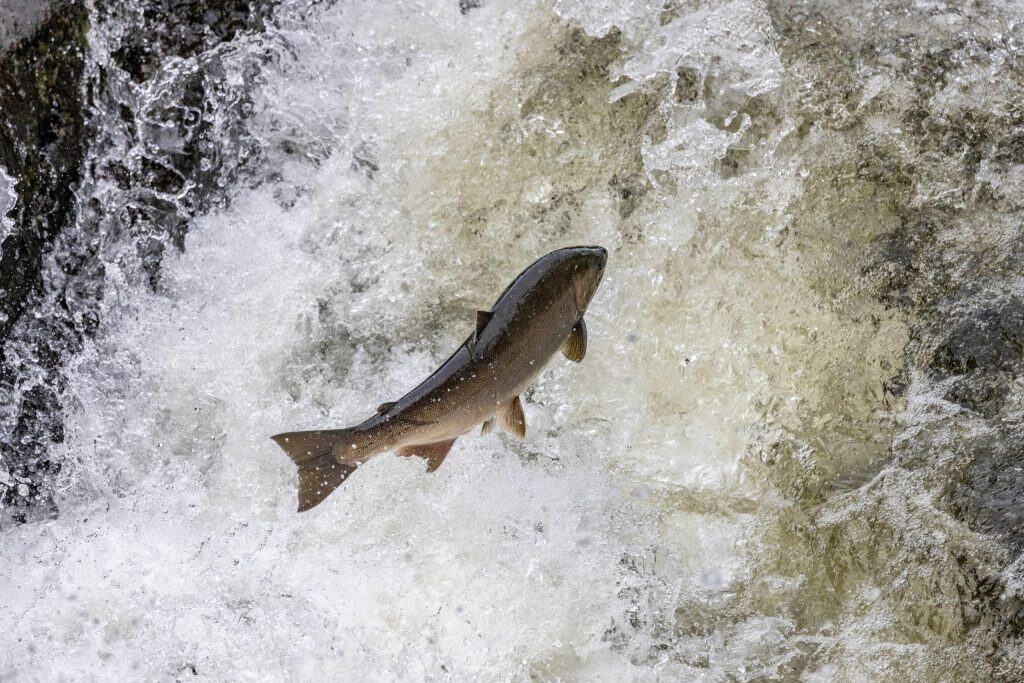
Spawning coho salmon swimming upstream on the Nehalem River in the Tillamook State Forest, Oregon, USA.
©Danita Delimont/Shutterstock.com
Coho migrations typically run from September through December, with most spawning occurring in November and December. This means as the Chinook numbers are winding down, coho numbers are ramping up in rivers and streams.
But the coho are a bit picky about when they start their migrations. They usually wait to enter home streams after heavy rains raise water levels. In some cases, like in Alaska, the coho can begin their river migrations as early as July if weather conditions are right.
How Do Salmon Know Where Home Is?
According to scientists, two key factors influence how salmon find their home waters.
The first part involves Earth’s magnetic field. It starts with long-distance navigation in the open ocean. Researchers believe salmon can sense Earth’s magnetic field as they swim through ocean waters. There are different theories about how this is done.
Some scientists believe there are tiny magnetite crystals in specialized receptor cells in the fish’s nose that function like a built-in compass. When the fish left its freshwater birthplace, its brain imprinted the magnetic reading to create an internal map it can rely on later. Other researchers think as the fish swim, their bodies can detect faint electric signals that are created as they move through Earth’s magnetic field. This provides directional clues.
The second part relies on the fish’s sense of smell. Once the salmon get close enough to coastal waters, they look for the unique chemical scent of their home stream. That scent was imprinted on the fish when they were born — a memory encoded in their very first days of life. Finding home is as simple as following the stream that smells familiar to them.
Timing Varies By Species and Waterways
A couple of factors influence when and where salmon make their way upstream to spawn. It’s why different rivers and streams welcome salmon at different times, even salmon of the same species.
For Chinook, it starts with their DNA. Not all Chinook return to spawn in the fall. Some come back in the spring. The timing of their return from the sea is determined by a small genetic difference. It’s sort of like eye color. Some Chinook get the gene that tells them to return to freshwater in the spring, while others get the gene that has them coming back in the fall.
Water temperatures also influence timing for all salmon. In the summer, river water hits its warmest temperatures. Salmon prefer cooler river temperatures, and have evolved over centuries to avoid heading upstream during the hottest parts of the year. Arriving too early or too late can have a negative impact on salmon survival.
Low water levels also have an impact. By summer, many rivers are running at their lowest levels, especially those not controlled by dams that can manage water levels. Low water makes the salmon’s trip harder. Each river has its own pattern of water flow, and the salmon have adapted to return when river conditions are best for them.
Centuries of evolution also play a role. Each salmon population has adapted to a schedule best suited for its particular waterway. This ensures the adults reach spawning grounds at the optimal time to ensure success for the next generations.
But there is one human influence that is changing how salmon behave. Climate change. It is shifting the clock on when some salmon return. One example is sockeye salmon in the Columbia River. That population shifted its return a full eleven days earlier between the 1950s and 2010s due to warming water trends. It signals that run timing is not fixed forever.
September Remains the Salmon Spawning Month
For now, though, September is the ideal month to witness a phenomenon that has been happening for hundreds of years. It remains the month when two of the Pacific coast’s most impressive salmon runs overlap.
If you’re near a coastal river this fall, it’s a unique opportunity to get a front-row seat to one of nature’s most intense animal migrations.