
Quick Take
- Red foxes aren't always red, and the range of colors they can actually be is stranger than you'd expect. Explore fox color variations →
- A gene mutation is responsible for the black fox near Chicago, and it turns out to be the same mechanism behind some of nature's most iconic dark animals. See the genetics behind melanism →
- The black fox near Chicago isn't just a one-off. Its sighting history reveals something unexpected about how it has been living in the suburbs. See the sighting history →
- Urban sprawl may be the real reason rare fox color mutations are suddenly appearing in your neighborhood. Urban foxes and color mutations →
Red foxes are commonly seen in towns, cities, and rural areas. However, one particular fox in a Chicago suburb is causing a stir because it isn’t red—it’s black. We investigated the science behind this unusual sighting.
Continue reading
Not All Red Foxes Are Red
Despite their name, not all red foxes are actually red. The red fox (Vulpes vulpes fulva) typically has a rusty color on its back and sides. However, they often have black legs and ears, as well as a white belly and tail tip. Foxes living at higher latitudes tend to have darker winter coats.
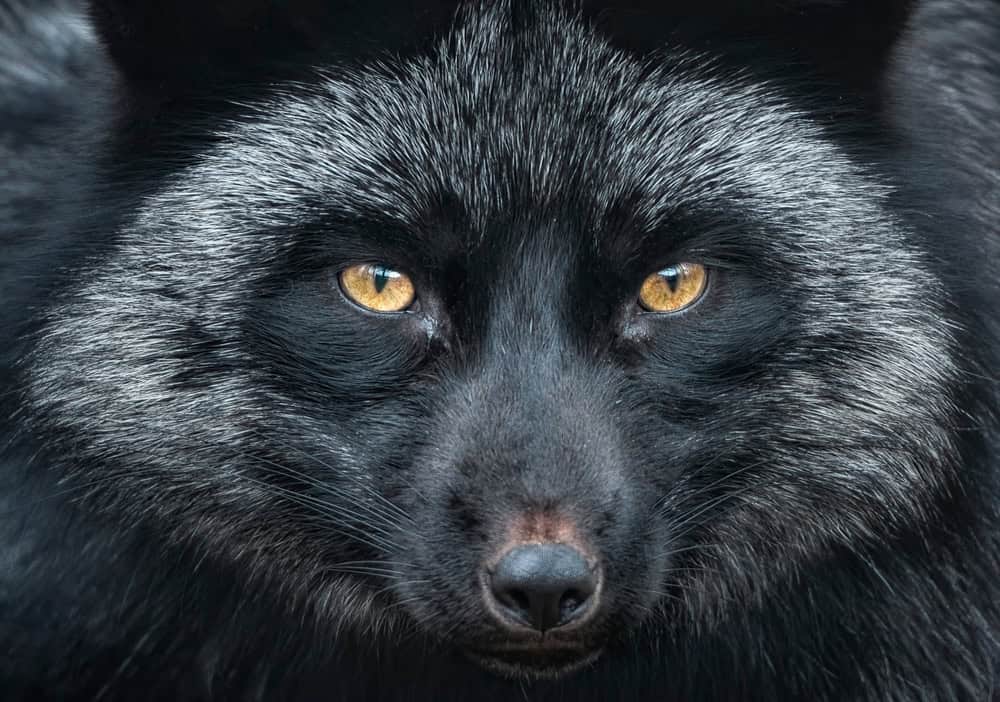
Some red foxes have a black face, a mixed red and orange coat, and conspicuous black stripes down their backs and shoulders. Others are entirely black, known as melanistic foxes. Silver foxes possess silver-tipped guard hairs. Albino foxes are rare, all-white, and have red eyes, while leucistic foxes have white fur.
Where Was the Black Fox Spotted?
Media reports have emerged of a melanistic red fox in Northbrook, Chicago. It is believed to be a male weighing around 15 pounds. There have been a few sightings in different areas over the last two years. During one sighting, the fox had a limp, but it now appears to have healed. Most of the fox’s coat is black, but it has silver trim. Reports also suggest there is another fox in the area that is red with black shading on its back.
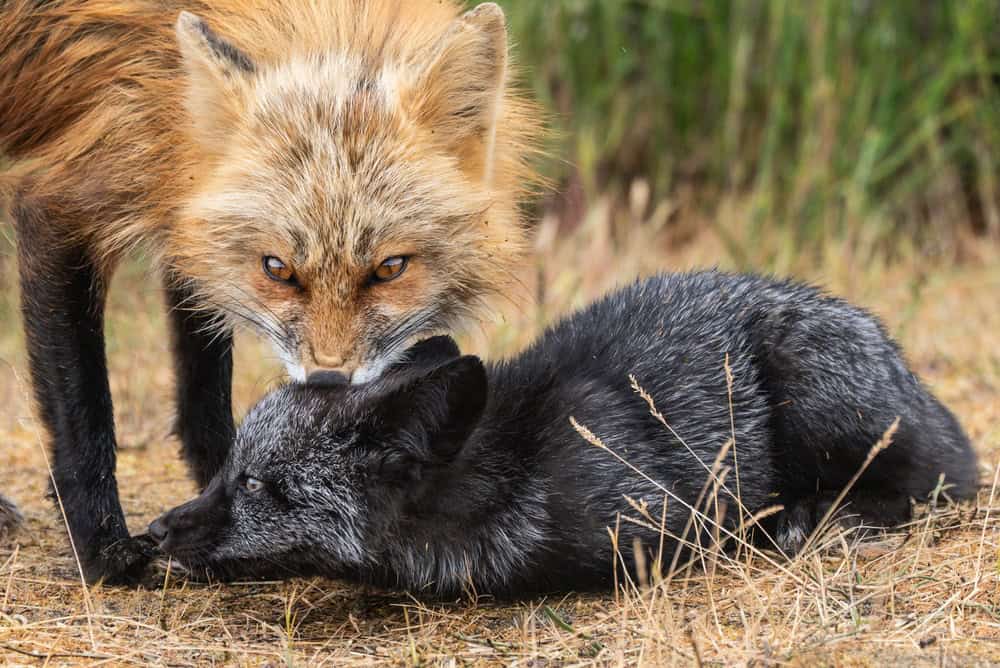
Red foxes can actually be black, silver, and white.
©Dene' Miles/Shutterstock.com
Melanistic foxes have been reported elsewhere in the US. A media report from April 2025 describes a black fox with smatterings of white and silver in its fur. That fox was spotted in Yellowstone.
What is Melanism?
Melanism refers to the occurrence of unusually dark coloration in individuals of the same species. Melanin is a natural pigment found in body tissues such as skin, hair (fur), and eyes. It is produced in specialized skin cells called melanocytes. Its primary function is to protect cells from UV radiation, but it also determines skin and hair pigmentation. In melanistic animals, more melanin than normal is produced. This results in a darker appearance. Melanism is common in vertebrates and can be found in monkeys, birds, big cats such as jaguars, and foxes. It is caused by a mutation in the gene that controls melanin production. As foxes spend more time in urban areas, we are more likely to observe these color variations ourselves.