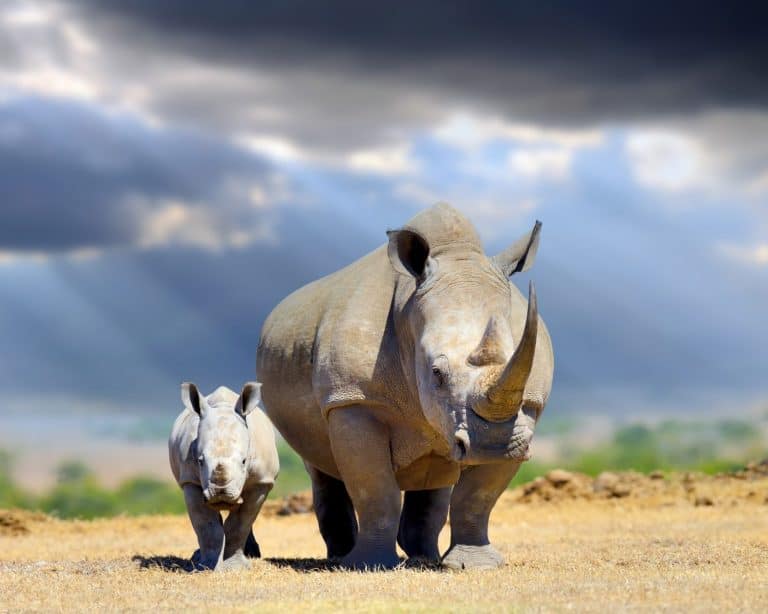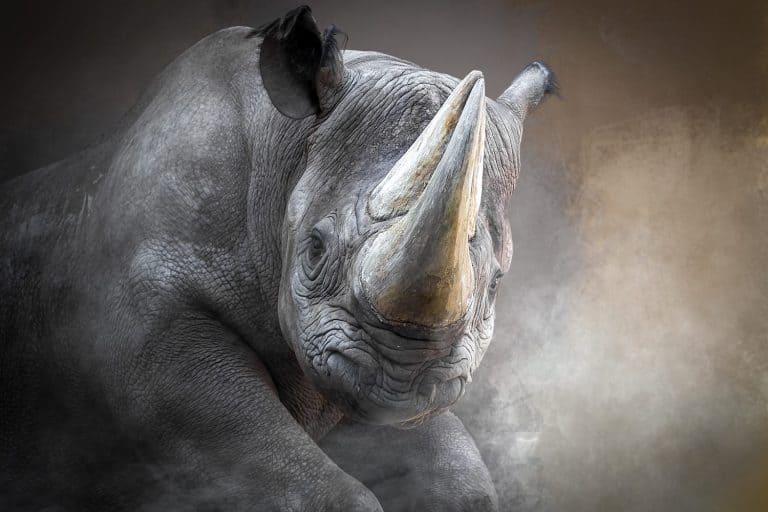

The black rhinoceros, also called the hooked-lip rhinoceros, is one of the most unique and treasured animals in Africa. Long known by Africans, the prehistoric-looking creature was first named in 1758 by Carl Linnaeus in the 10th edition of his Systema Naturae, the first compendium of zoological nomenclature. Named Rhinoceros bicornis, the name means ‘double-horned rhinoceros.’ Back then, these large mammals were relatively widespread throughout southern and eastern Africa. Their natural range extended from Eritrea and Sudan to southeastern Niger. Down south, they were found in considerably dry parts of the Kalahari Desert in southwestern Botswana. Suffice it to say that black rhinos were a relatively common sight in centuries past. Times change, however, and certain species suffer. In recent years, the eastern black rhino, a subspecies of black rhinos, has borne the brunt of human destruction.
Once widespread across Ethiopia, Somalia, Tanzania, and Kenya, the eastern rhino population dwindled to fewer than 1,000 individuals by the 21st century. The IUCN Red List lists this species as critically endangered due to severe rates of poaching and habitat loss. Any win for the species, however small, speaks volumes. Luckily, a black rhino calf was just born in the wilds of Kenya, increasing the number of eastern black rhinos in the Chyulu Hills subpopulation to nine. It’s a small victory for an endangered species, and animal researchers are celebrating. Let’s learn more about eastern black rhinos, this newborn baby rhino, and what its birth means for the species.
About the Eastern Black Rhino
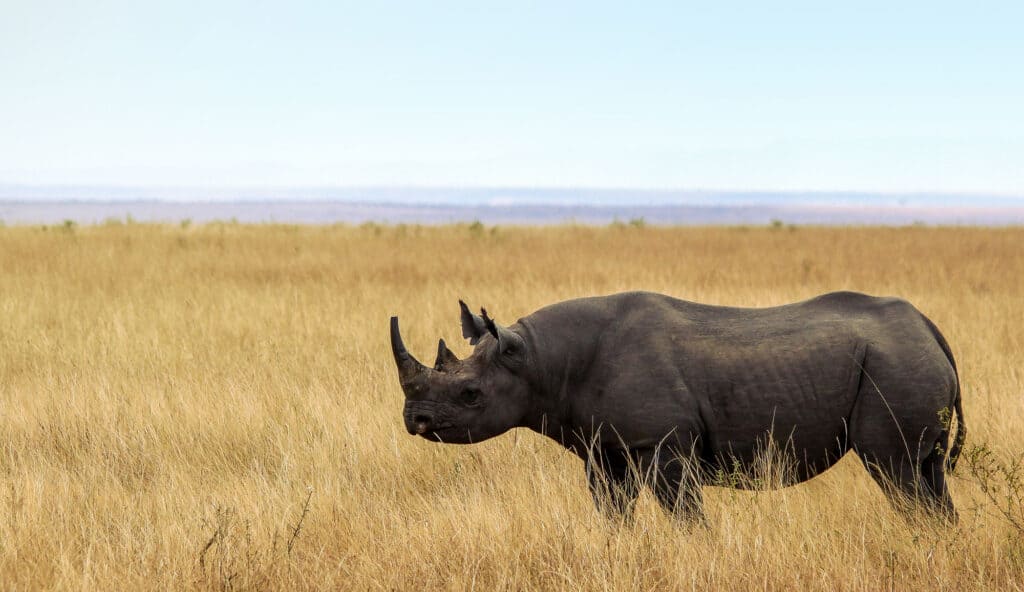
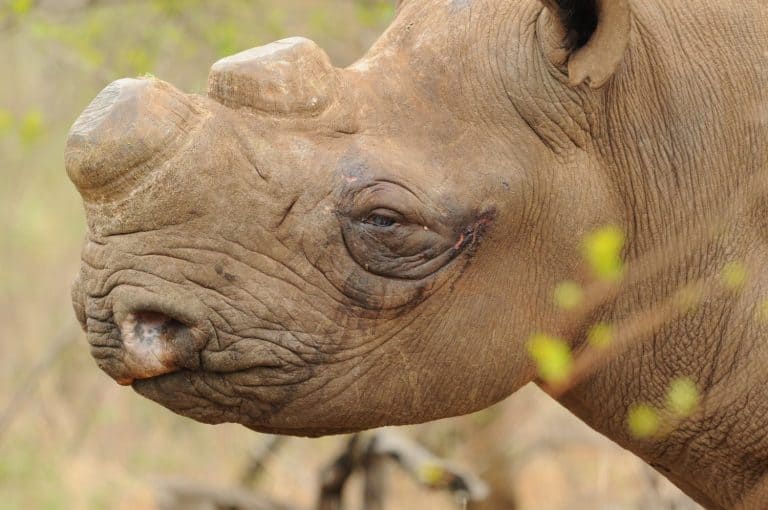
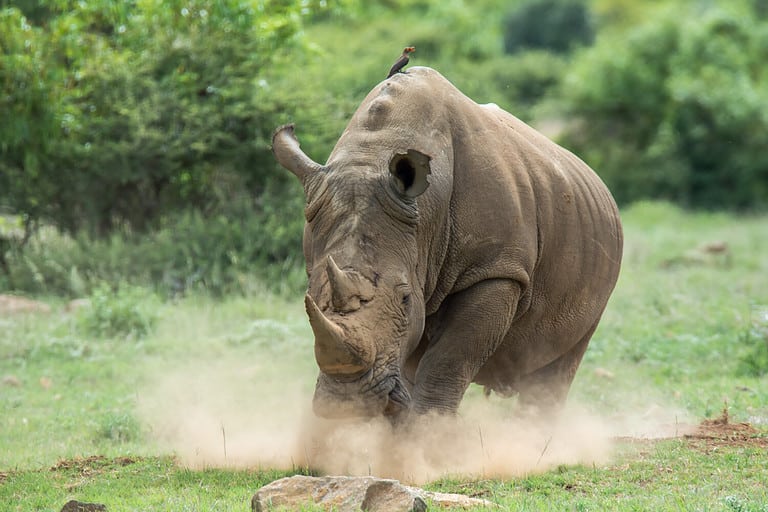
Eastern black rhinos are distinguished from other black rhinos by their horns, which are typically longer, leaner, and curvier.
©iStock.com/Black Rhinoceros, Rhinoceros, Savannah, Tanzania, Animal
The eastern black rhino is a subspecies of the black rhino, or hooked-lip rhinoceros. Native to eastern and southern Africa, these creatures, called black rhinos, come in a range of colors, including brown and gray. It is the only extant species of the genus Diceros. Critically endangered and threatened by both poaching and habitat reduction, eastern black rhinos remain an enduring but fragile symbol of the African animal kingdom. The western black rhinoceros (Diceros bicornis longipes), a subspecies of black rhino, was declared extinct by the International Union for Conservation of Nature (IUCN) in 2011. Like something from a prehistoric era, rhinos almost look like dinosaurs with their squat bodies and massive facial horns.
Size
An adult black rhino reaches about 55 inches on average at the shoulder and grows to a length between nine and 12 feet. They are heavy, too, with mature individuals reaching weights between 1,700 and 3,000 pounds. Some males get so big that they reach over 6,000 pounds in weight. Besides their thick, leather skin, rhinos are best known for the giant horns that protrude from their heads. Black rhinos have two horns on their skulls, comprised of keratin, with the front horn being larger than the back. Sometimes, a smaller third horn develops.
These horns grow big, too, as the largest recorded black rhino horn reached just over four feet in length. Rhinos use their horns for everything: defense and domineering, as well as digging up roots and breaking branches. Compared to white rhinos, black rhinos hold their heads higher but have smaller skulls. Eastern black rhinos, a subspecies of black rhinos, have horns that are leaner and more curved.
Habitat and Behavior
Like other black rhinos, eastern black rhinos are browsers. They usually stick to habitats with plenty of highland forest and savanna environments. Once free to roam the savannahs and forests of countries like Kenya, the eastern black rhinoceros has been hit incredibly hard in recent decades. They have arguably suffered the greatest decline in numbers of any rhino species that has not already been declared extinct. This severe population decline is due to several factors. Let’s explore them.
Critically Endangered
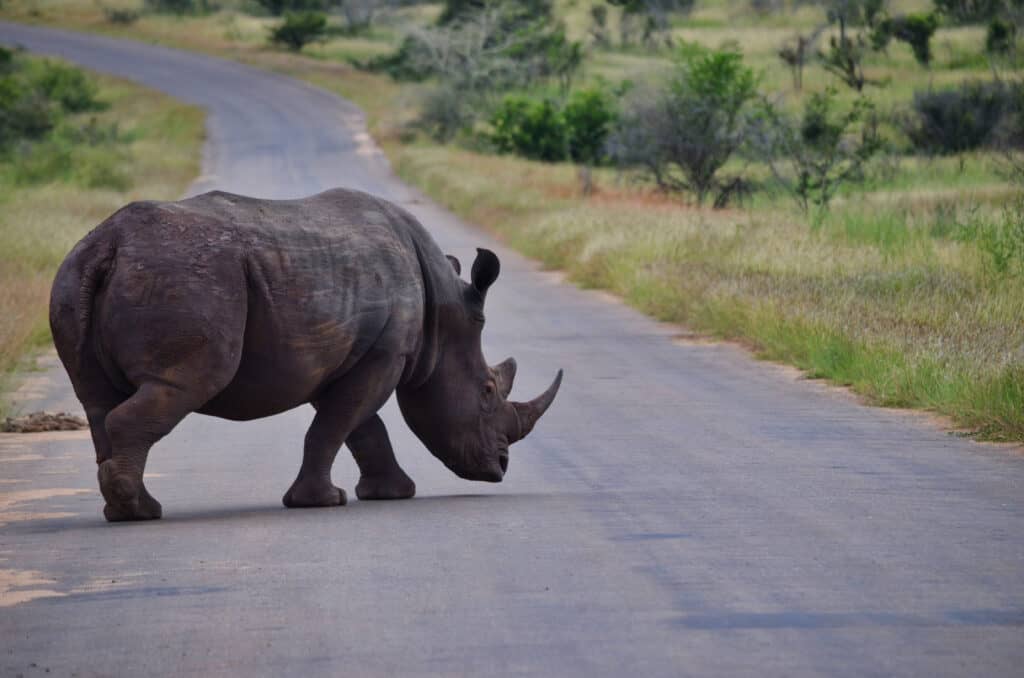
Due to a confluence of factors, including poaching, emigration, habitat loss, and imbalanced sex ratios, the population of eastern black rhinos has declined by 90% in the last three generations.
©Ganz Twins/Shutterstock.com
Once widespread across a region containing multiple countries, including Ethiopia, Somalia, Kenya, and Tanzania, eastern black rhinos have suffered a severe decline. As of 2017, only 594 individuals are left in Kenya. Northern Tanzania, meanwhile, is home to around 80 eastern black rhinos. In an attempt to stave off further decline, wildlife officials maintain a population of about 60 eastern black rhinos (Diceros bicornis michaeli) outside their range in Addo Elephant National Park in South Africa. Regardless of their location, the population of eastern black rhinos has declined by a shocking 90% in the last three generations. This population deterioration is due to several factors.
Humans are the most obvious culprit. As with other rhinos, certain cultures prize eastern black rhinos for their horns. This has led to severe poaching, which has killed eastern black rhinos at a rapid rate. Additionally, habitat loss from ongoing human development has further impacted black rhinos. However, it is not entirely due to human activity. Consistent emigration has threatened black rhino numbers. Additionally, eastern black rhinos often develop uneven sex ratios, with more males than females. This imbalance reduces opportunities for breeding and contributes to population decline.
Conservation Efforts
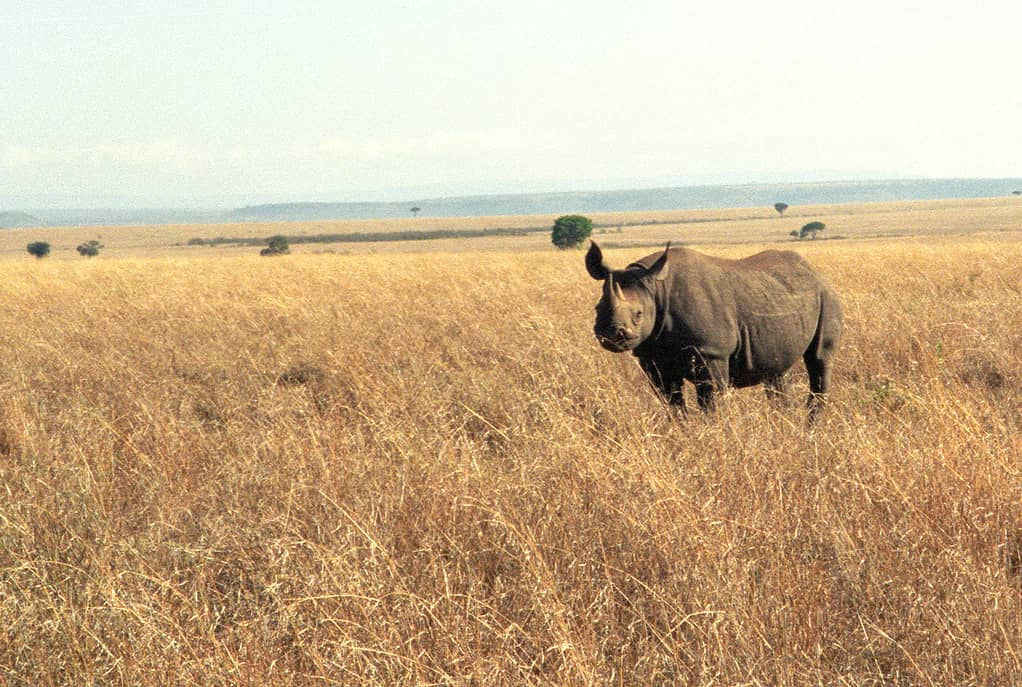
Kenya leads the charge to restore eastern black rhino numbers to stability with protected areas, anti-poaching groups, and target growth initiatives.
©Jerzy Strzelecki, CC BY-SA 3.0, via Wikimedia Commons – Original / License
To prevent eastern black rhinos from disappearing off the Earth completely, several organizations and countries have stepped in to help. As previously mentioned, South Africa hosts dozens of eastern black rhinos in one of its national parks, far outside their native range. This seems to be an effective strategy as high-profile organizations like the World Wildlife Fund endorse transportation of black rhinos from high to low-density areas to both keep them safe and encourage population growth.
Kenya, in particular, is leading the effort to save eastern black rhinos before it’s too late. A look at the numbers explains why: 20,000 black rhinos lived in Kenya in the 1970s. A decade later, however, that number had dropped to less than 400. Before complete loss, the country sprang into action. It established anti-poaching groups, special sanctuaries and protected areas, and developed target goals. By 2024-2025, the number of black rhinos in Kenya had increased to over 1,000. The country maintains a target growth rate of five percent annually. A recently born black rhino serves as a symbol of the country’s commitment to saving the species.
A Huge Win
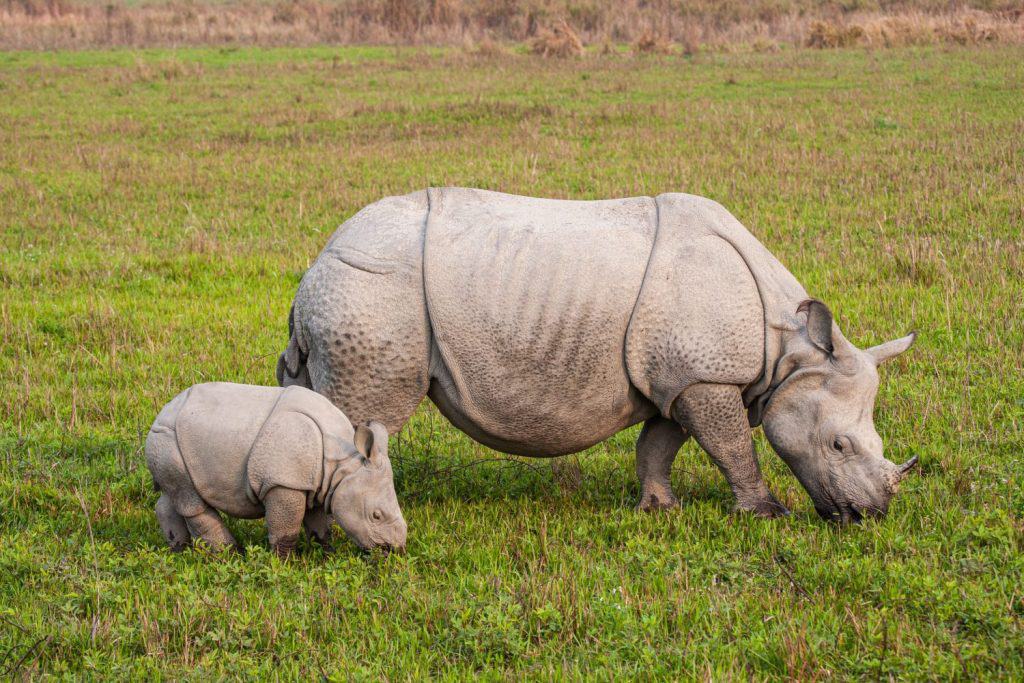
Rangers spotted tiny rhino tracks several months ago before confirming a newborn calf after it was spotted with its mother on a trail camera.
©Wayne Marinovich/Shutterstock.com
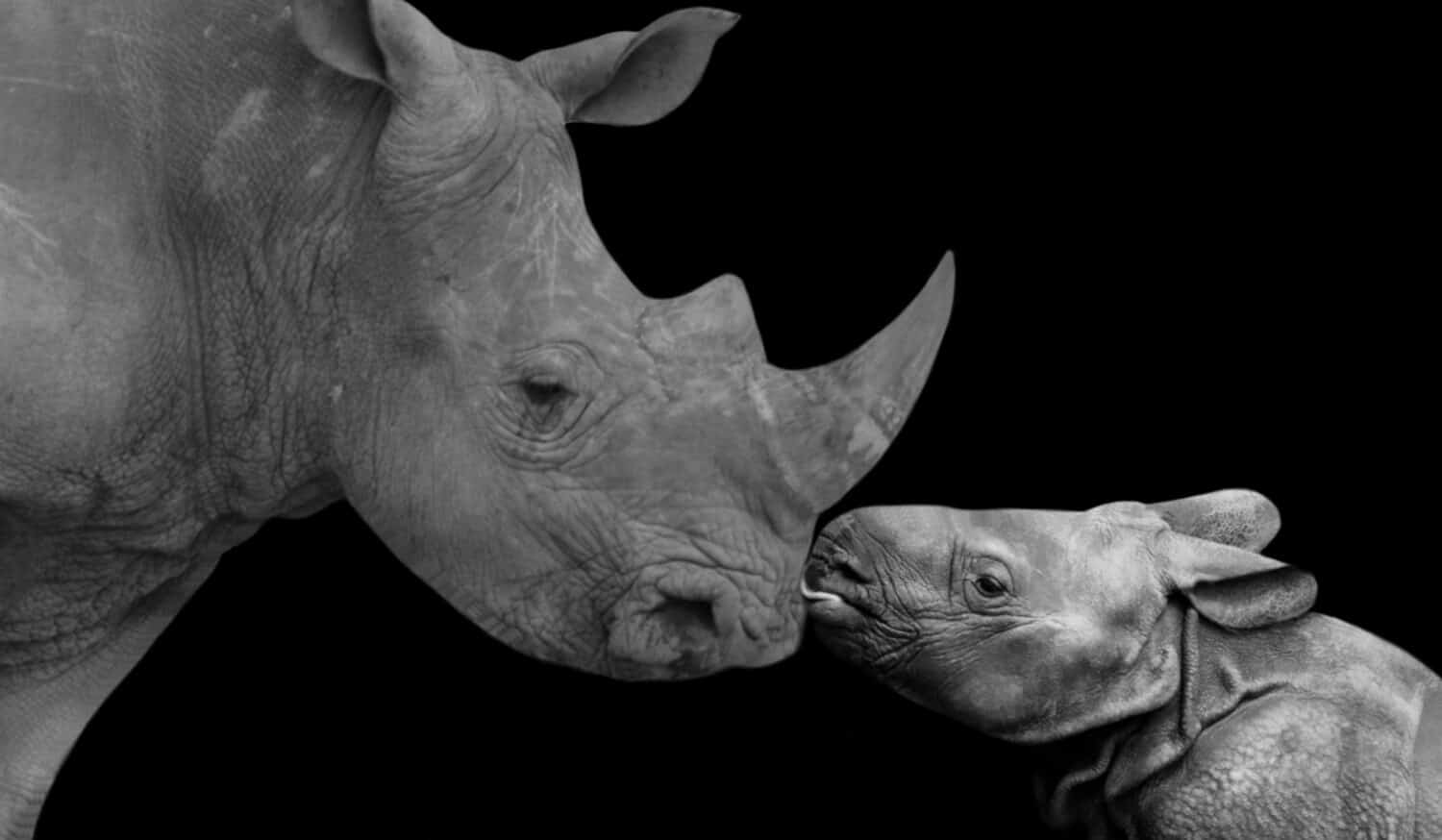
As reported by ABCNews.com, Kenya recently counted another black rhino victory. During the spring, rangers suspected a new black rhino calf was present after spotting distinct, tiny rhino tracks in the dirt following behind an adult. Their suspicions were happily confirmed several months later after the mother and calf were spotted on trail cameras set up by the Big Life Foundation. Rangers saw the little family walking through a remote area in the Chyulu Hills, a mountain range in protected land along Kenya’s southeastern border. They named the calf “Namunyak.” The name translates to ‘blessed’ in Maa, a language spoken by people in southern Kenya and northern Tanzania.
While wildlife officials are not yet certain whether it is male or female, the newborn calf appears to be healthy. This is an important distinction, as baby rhinos are particularly vulnerable to the elements, as well as human threats. So far, however, the baby is doing well. Rangers report seeing the baby acting playfully and interacting with its mother. This not only brings the Chyulu Hills eastern black rhino subpopulation up to nine, but it also marks the second birth of a black rhino in this area in two years. Indeed, another rhino was born in late 2023. It is now almost fully grown and likely preparing to leave its mother. One birth every year or so may not seem like much, but when it comes to the incredibly fragile eastern black rhino population, a single new calf is a miracle.