
The death of any living thing is a sad and sobering reminder that nothing is forever. In the bee world, life is fleeting, and many queens only live for one to two years before dying. Worker bees live much less than that, and many never live past two months. Their lives are devoted to the colony and the survival of future generations. This often makes their short lifespans all the more tragic. However, there is hope and the promise of a future during their limited time on earth.
While posts like this one by @gardenideas686 aim to offer reassurance at the end of a bee’s life, it’s not entirely accurate. The benefits of bees should be celebrated in their life’s work, because the end is not quite as poetic as always dying on a flower. In reality, a bee’s mortality determines where and how it dies–not its preference for a resting place.
The Death of a Bee
Bees, like many other insects, live only as long as their intended purpose. For worker bees, this means carrying out their duties from spring through summer. It’s their job to collect pollen, feed the colony, attend to the hive, and care for the larvae. At a young age, worker bees contribute wax to construct a sturdy home for the colony. This is also when they clean in preparation for the arrival of newborn bees and honey production. As they age, they transition to gathering pollen and water for the colony. This coincides with the changing of the seasons, as early summer is when most plants are in full bloom. The cycle continues until the flowers have reached the end of their season, as do the bees’.
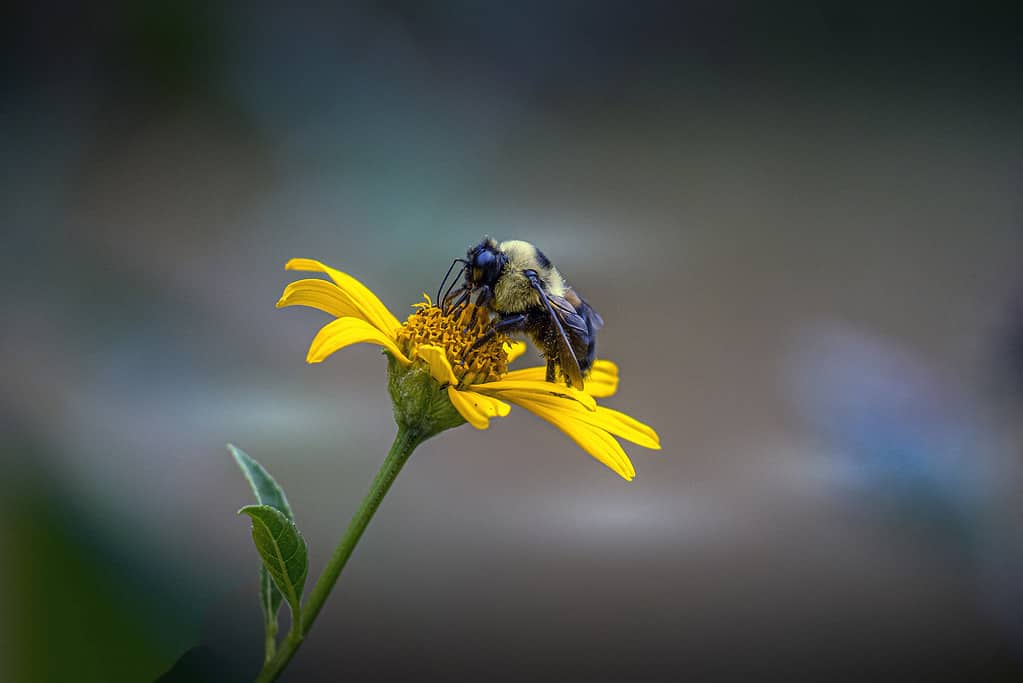
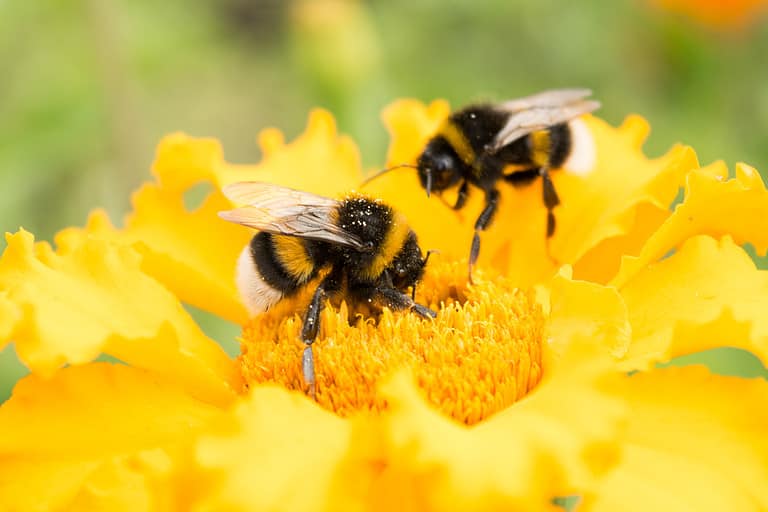
Bumblebees are hard at work during the early summer months.
©johnandersonphoto/iStock via Getty Images
At this point in the late summer or early fall, summer worker bees are in their senior stage of life. If the queen of the colony has lived out her two years, she is also in her final life stage. Unlike the winter bees, whose job it is to keep the queen warm until spring, they will die, having served their purpose. After dedicating their lives from sunup to sundown, their tiny bodies have exhausted all of their effort by this point. While the winter bees vibrate within an insulated, reinforced hive to protect the queen (given she has not died), the summer bees prepare to die off.
Do Bees Really Die in Flowers?
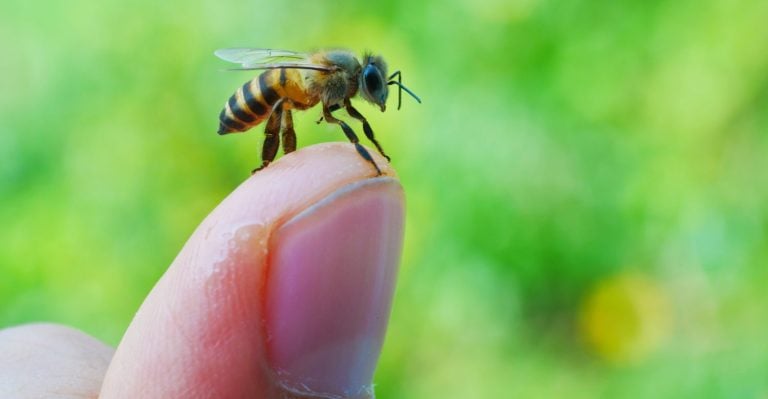
In short, the answer is yes and no. It’s far more complex than stating a bee dies in its favorite place: the blossom of a flower. While it’s beautiful to think of a bee’s death this way, it’s not entirely accurate. There are several factors to consider, including the bee’s energy level, the weather at the time of its death, what it was doing at the time, and the bee’s species. Honeybees are among the hardest workers in the animal kingdom and continue to carry out their duties until they drop dead. This is both admirable and sad, since it means many of them lose altitude while flying and drop out of the air. When this happens, you can often find them on the ground, sometimes up to five miles from their hives.
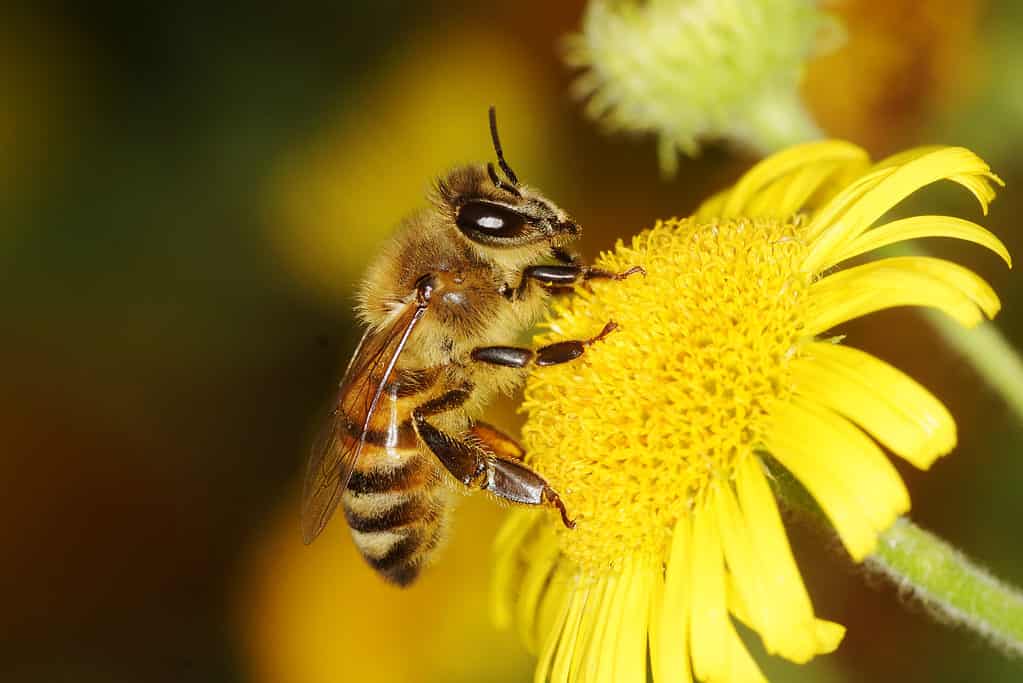
Male worker bees spend most of their lives outside the hive.
©Maciej Olszewski/Shutterstock.com
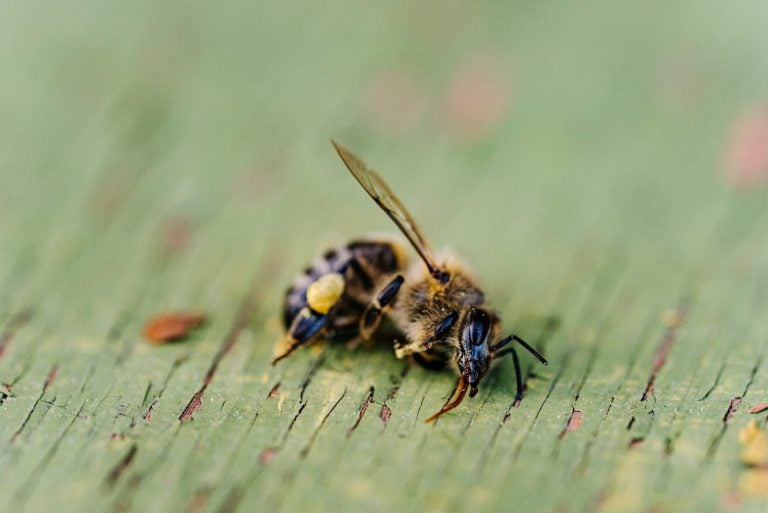
According to Farm Progress, roughly 15 of 1,000 worker bees die within the hive. If you anthropomorphize a bee, this seems even more tragic. While having an audience may seem sad, it is perhaps more unfortunate that the living bees must dispose of the deceased bee’s body. There’s nothing special about this process. A team of undertaker bees carries the body out and drops it far from the hive. These are the same bees responsible for preventing the spread of disease or parasites within a hive. However, their resume also includes the more morbid duty of removing dead bee bodies.
Why Do Some Bees Die in Flowers?
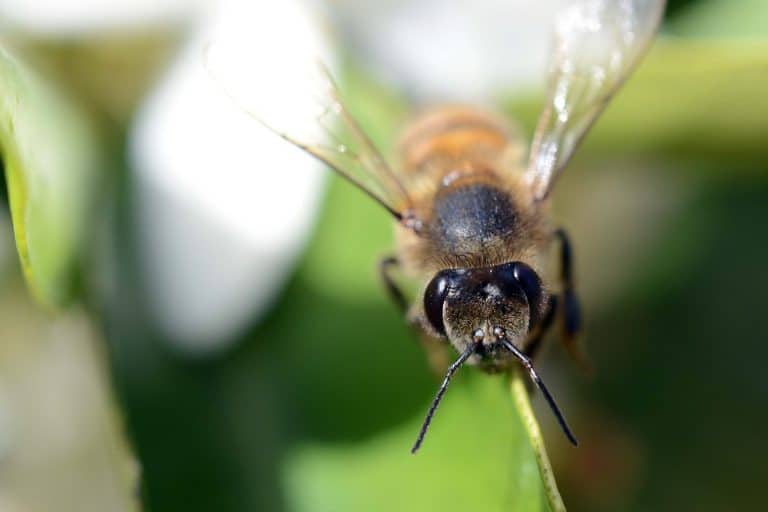
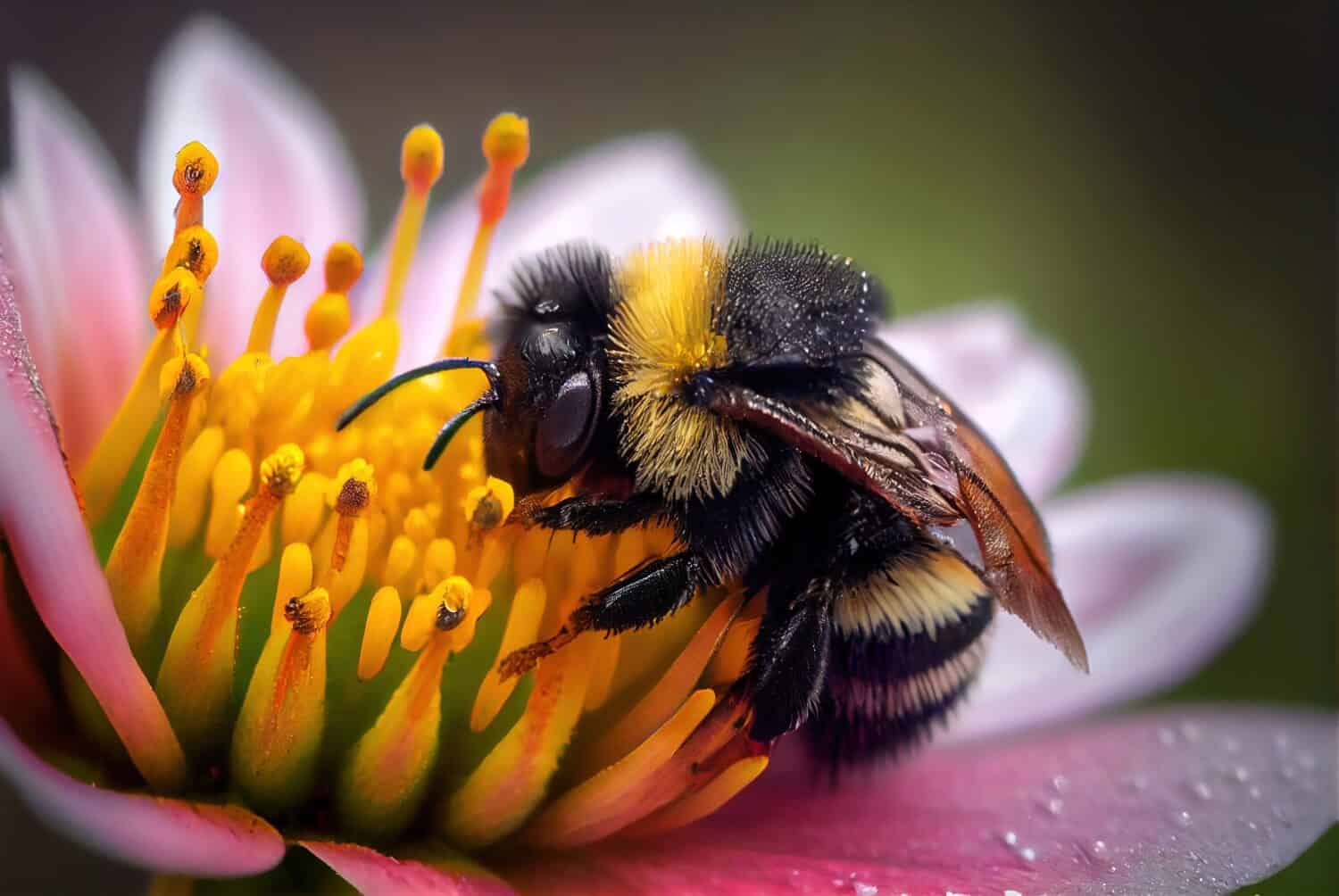
With that being said, many people do find dead bees, particularly bumblebees, in flowers after they’ve passed. The reason for this isn’t because the bee intrinsically knew it wanted to spend its last moments covered in pollen. What often happens is that the bee runs out of energy and dies wherever it happens to be. As the weather turns colder, many of us have seen, or even rescued, an exhausted bee.
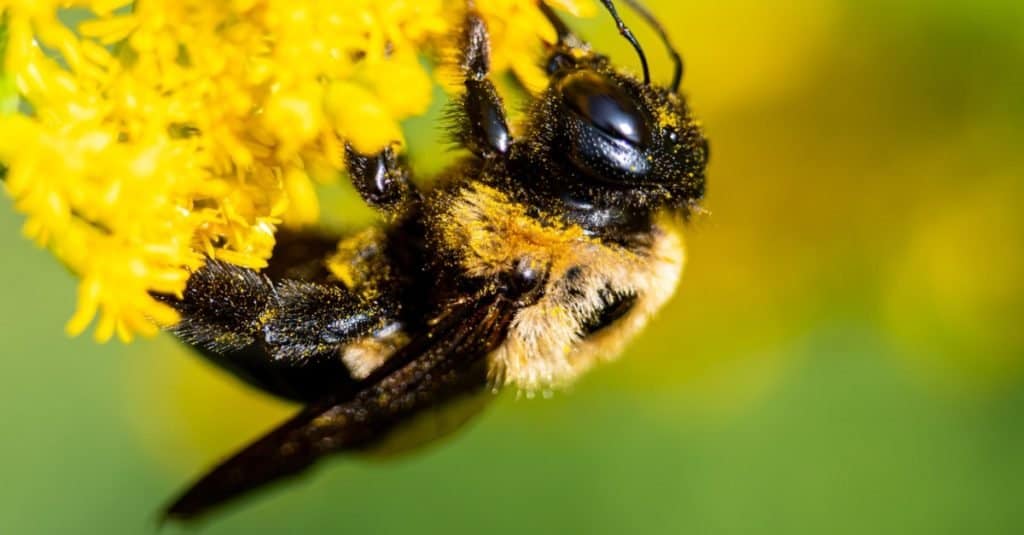
Bumblebees sometimes hang from a flower while they’re sleeping.
©Brier Mitchell/Shutterstock.com
While they may continue flying for some time, eventually, their lifespan comes to an end. Since worker bees continue to forage sometimes until the day they die, they could likely pass while covered with pollen, curled up inside a flower blossom. This coincides with the shift in duties as a bee ages. Senior bees continue foraging until they can’t anymore. And if they don’t die mid-flight, they may die after landing.
Don’t Confuse a Sleeping Bee For a Dead One
It’s not uncommon for a bee to fall asleep inside a flower. This is more common for male drone bees, who spend more time outside of the hive. Male bees leave the hive and spend most of their lives outside, foraging, defending the nest, and seeking out female bees. Some of them travel in groups called leks, but typically a male will fall asleep where he lands once it’s done for the day. According to Honey Bee Suite, Melissodes and wood carder bees are known for sleeping in thistles and herb plants. Both are plants that attract foraging bees with their scent and pollen.
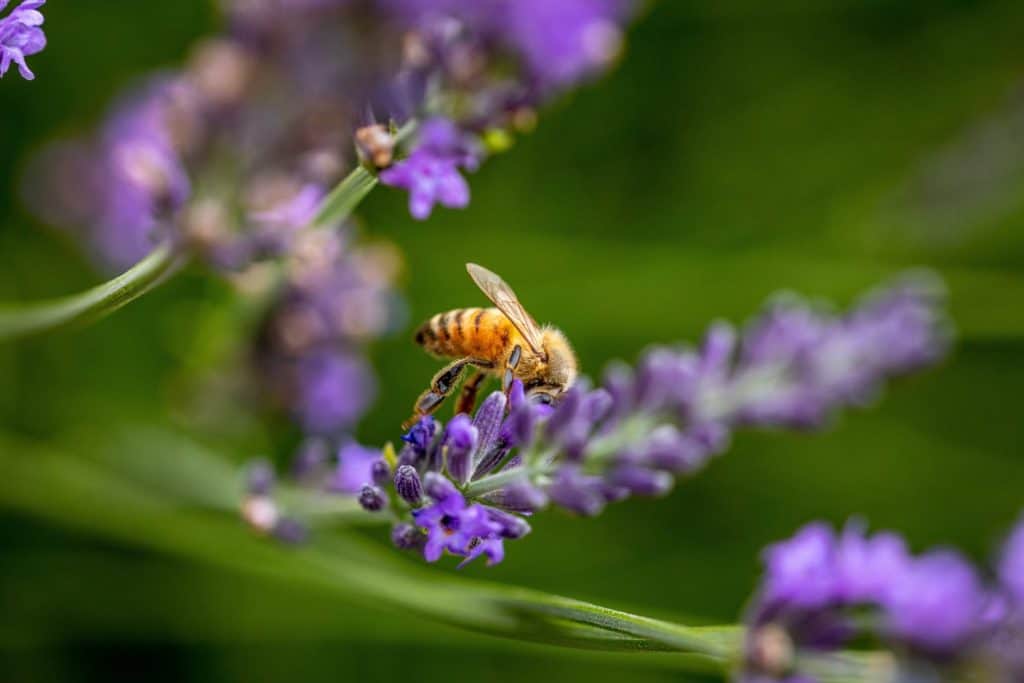
Bees have a long and arduous life, but are one of the greatest workers in the animal kingdom.
©Hrach Hovhannisyan/Shutterstock.com
The difference between a dead bee and a sleeping bee is typically its position. Dead bees are usually curled up within the flower, while sleeping bees hang from petals or leaves. A sleeping bee might also tuck itself away within the plant, creating a warm, cozy space to rest. If a bee is sleeping, it almost always flies away when it’s disturbed. You can find sleeping bees early in the morning, but they fly off at the sign of first light.