
Quick Take
- One critically endangered porpoise has survived something that dooms most species at tiny population sizes, yet the one attempt to save it in captivity ended in disaster. Vaquita's survival story →
- A songbird is disappearing from North American skies, and the government's own response to save it may have made things worse. Bicknell's Thrush decline →
- Scientists studying one of Europe's most mysterious fish are unable to complete a basic step that would be critical to saving it, and no one knows exactly why. Eel breeding mystery →
- One iconic American species has rebounded in one region while collapsing in another at the same time, and the reason behind this reveals a split crisis most people don't expect. A split conservation crisis →
Currently, the planet is undergoing its sixth mass extinction event. While mass extinctions have occurred naturally in the past, this sixth extinction event is primarily caused by human activity. As human civilization continues to develop, an untold number of species are being put at risk. In the United States alone, over 600 species of animals and 900 species of plants are listed as threatened or endangered. In honor of Endangered Species Day, let’s learn about several species at risk of extinction.
Vaquita

Vaquitas have panda-like dark, circular markings around their eyes and lips.
©Vynkdeepi666 / CC BY 4.0 / via Wikimedia Commons – Original / License
In the northern inlet of the Gulf of Baja in Mexico lives a small population of one of the most fascinating mammals on Earth. Meet the vaquita porpoise, a creature as fascinating to look at as it is endangered. Indeed, it might be the most endangered mammal on the planet, with just over a dozen individuals left living in the wild. Vaquitas are the smallest living cetacean species. Interestingly, they have tall, triangular dorsal fins, round heads, no beaks, and panda-like dark, circular markings around their lips and eyes.
Vaquitas are generalists, which means they feed on a variety of prey, including fish, crustaceans, and squid. This diet, however, often makes them a bycatch in fishing nets. Since 1997, the total population has dropped from over 500 individuals to under 20. In response, the Mexican government has enacted legislation to protect vaquitas with mixed results.
Indeed, the programs attempting to protect vaquitas have run the gamut from incentives for safe gear for fishermen to outright felony charges for harming the creatures. Nevertheless, poaching and bycatch continue to this day. Scientists believe that vaquitas overcame a genetic bottleneck long ago, which allows them to avoid the consequences of inbreeding with such a small population. Attempts to initiate captive breeding, however, have been deemed unviable after a fatal attempt in 2017.
Bicknell’s Thrush
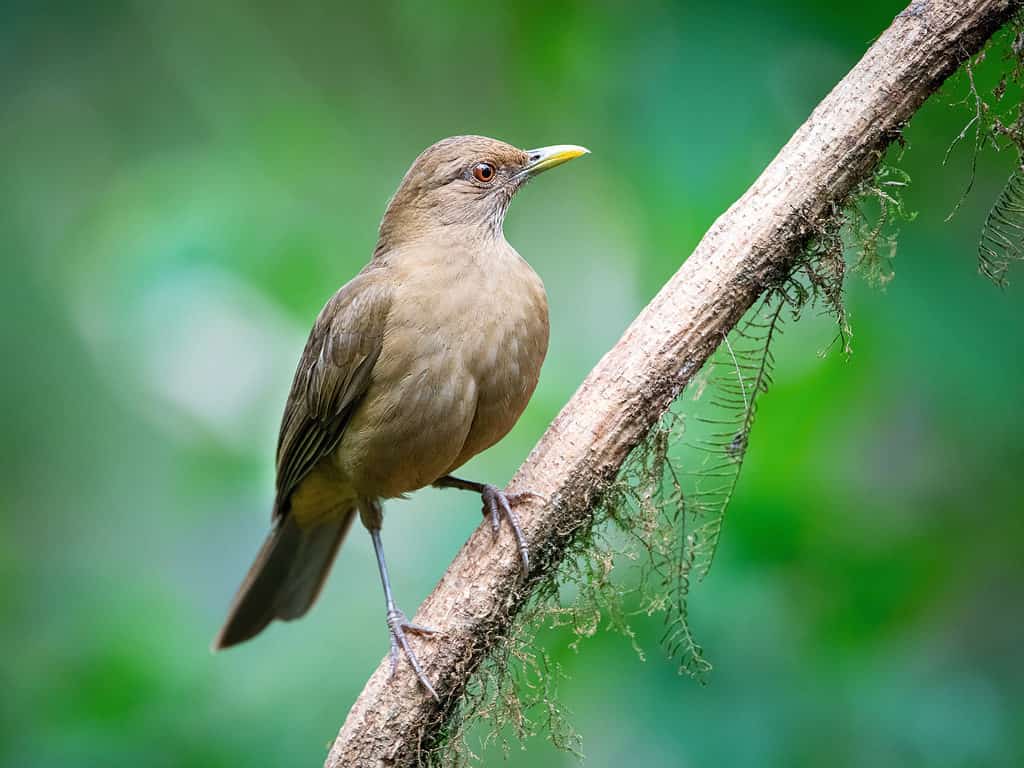
These birds sing melodic songs that sound like the upper-register notes of a flute.
©Petr Simon/Shutterstock.com
Bicknell’s thrush is a bird that once typified the experience of living in certain parts of North America due to its melodious songs. Nowadays, however, it is one of the United States’ most localized and endangered songbirds. They are characterized by medium-sized bodies with olive-brown upper feathers, chestnut-toned tail feathers, and off-white underparts. Typically, they have pink legs and faint grey rings around their eyes. Their mandibles are often yellow with darker coloring on top.
Chances are, you will hear a Bicknell’s thrush before you see it. These birds produce melodic, flute-like songs that often end on a higher note. Once relatively common in a range extending from Nova Scotia down into New York State, Bicknell’s thrush prefers higher elevations. In particular, it likes to live in high-altitude coniferous forests with strong winds and unpleasant ice conditions.
In recent years, Bicknell’s thrush has experienced a severe population decline due to industrial pollution and habitat degradation. They prefer high-elevation forests, which puts them at risk from changing climate conditions and increased airborne heavy metals. Some estimates suggest that these birds could lose over half of their historic breeding habitat within the next three decades. Tragically, little progress has been made in granting them endangered status or organizing conservation strategies. In fact, despite various petitions and advocacy programs for the bird, the government delayed its protection of the species in 2017.
Desert Tortoise
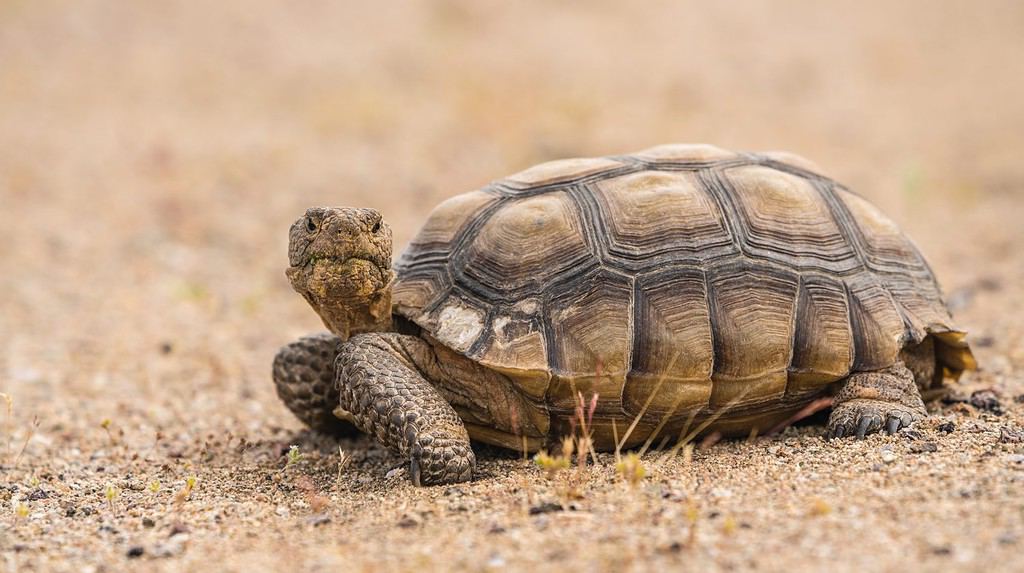
Desert tortoises live between 70 and 80 years on average.
©clayton harrison/Shutterstock.com
No creature symbolizes the American Southwest quite like the desert tortoise. It is even the state reptile in both California and Nevada. These majestic, if slow-moving, creatures live between 70 and 80 years on average. They have large, geometric-patterned shells and retractable limbs. Desert tortoises may grow slowly and reproduce infrequently, but they are perfectly adapted to the inhospitable conditions of the Mojave and Sonoran deserts. They spend most of their time in burrows or rock shelters, where they regulate their body temperature. These reptiles can go without water for days at a time.
Even so, the desert tortoise has plenty of enemies. They have natural predators such as the Gila monster and coyote, which tend to target desert tortoise eggs and young. Increasingly, however, human activity encroaches on these reptiles. Once free to roam the vast desert plains, desert tortoises now run up against civilization. They are threatened by illegal collection, disease, habitat destruction, and an increasing abundance of invasive plants that alter local ecosystems. This has caused some desert tortoise populations to decline by 90% since the 1980s.
In response, the government enacted laws making it illegal to touch or disturb wild tortoises. Furthermore, certain state-run programs allow for the adoption of captive individuals, with monitoring encouraged through the use of microchip trackers. Perhaps the largest desert tortoise conservation project took place in 2008. In March of that year, researchers moved 650 tortoises by vehicle and helicopter to a safer location dozens of miles away. To this day, the Desert Tortoise Preserve Committee protects around 2,000 hectares of desert tortoise habitat.
Pine Barrens Tree Frog
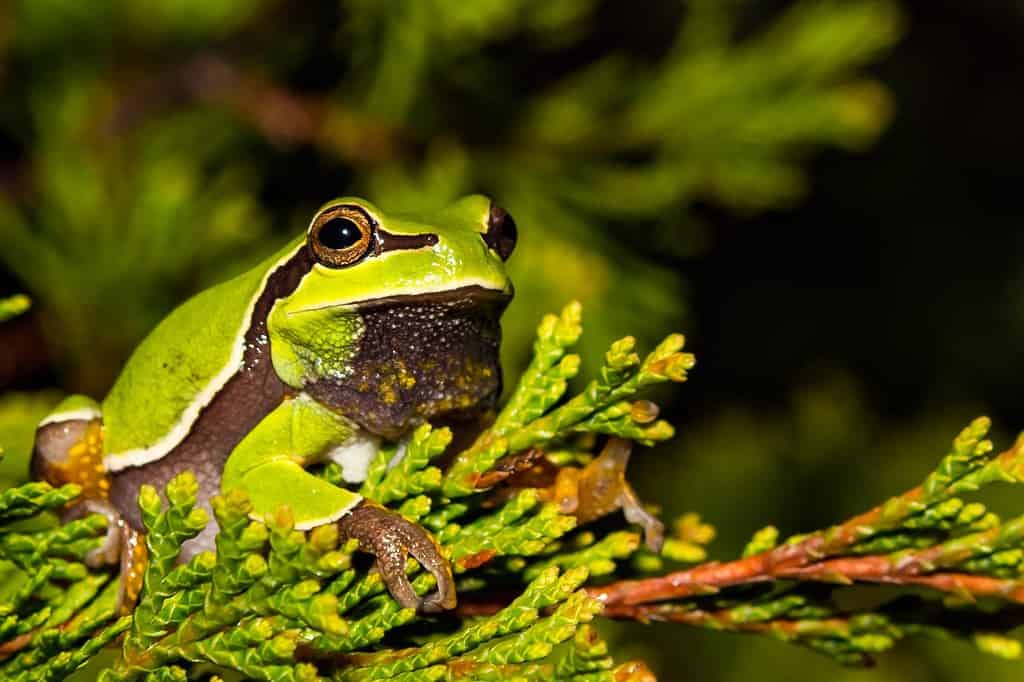
Pine Barren tree frogs look similar to American green tree frogs, save for a white band separating their upper body and midsection.
©Jay Ondreicka/Shutterstock.com
Another species that lives on the brink is the Pine Barrens tree frog. This frog has a predominantly green body, bordered with a white stripe that separates a darker undersection from the green upper body. Their underparts, while typically hidden, are orange to yellow in color. They look similar to American green tree frogs, except for the white band separating their body sections.
These tree frogs typically prefer areas with still or slow waters and an abundance of shrubs and herbaceous plants. For example, they tend to inhabit wetter sections of pitch pine forests and even cranberry bogs. These specific environmental preferences have limited Pine Barrens tree frogs to three disconnected regions: the Florida Panhandle, the North and South Carolina sandhills, and the New Jersey Pine Barrens (hence the name). This limited habitat range has made the Pine Barrens tree frog a species on the brink.
Beginning in 1977, the species was listed as endangered in Florida. The IUCN classified the species as near threatened between 2004 and 2017 before downlisting it to least concern in 2023. However, they remain threatened in their namesake habitat of New Jersey. Ultimately, however, hope remains for this vibrantly colored tree frog. While woody wetland habitats have decreased in southern states like North Carolina, they have increased in New Jersey, suggesting hope for larger Pine Barrens tree frog populations in the future.
European Eel
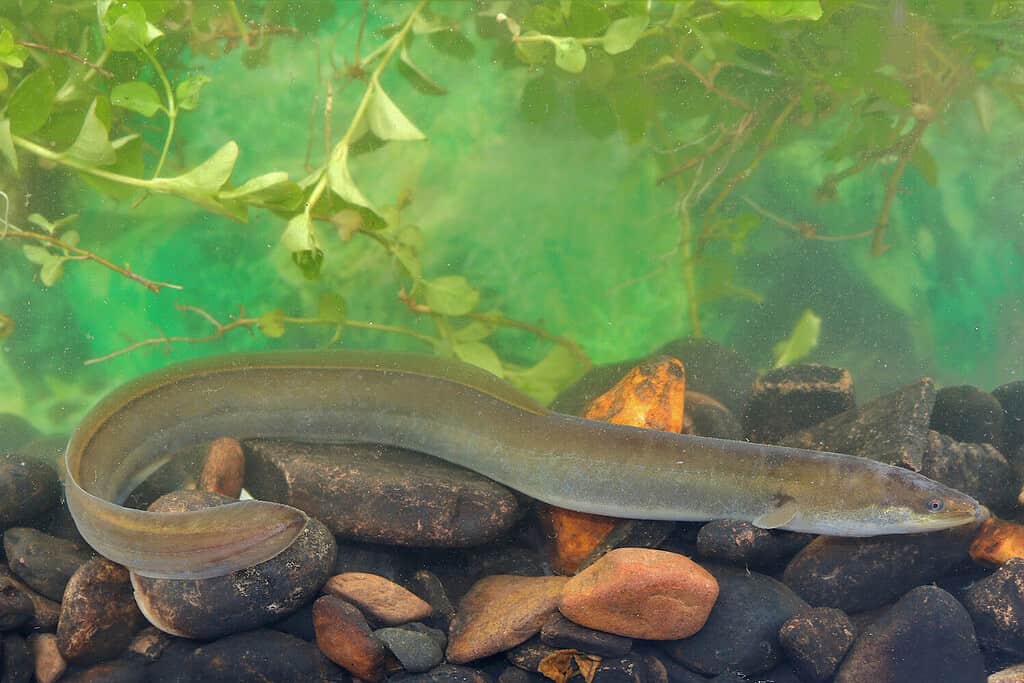
European eels enter such unique life cycle stages that scientists once thought that each stage was a separate species.
©ABS Natural History/Shutterstock.com
One of the most mysterious species on Earth is also one of its most threatened. Meet the European eel, a catadromous fish that spawns in saltwater before migrating to freshwater for a period of growth. They are so poorly understood that scientists once believed the five stages of their development cycle were actually five separate species. These eels spawn in the Sargasso Sea before spreading northwards through the Atlantic Ocean, finding rivers inland. They eat worms, fish, mollusks, and other aquatic creatures.
Despite being widespread and nocturnal, European eels are a critically endangered species. Estimates suggest that the number of eels reaching Europe has declined by more than 90% since the 1970s. Overfishing, parasites, habitat loss from hydroelectric dams, and other factors are to blame. In the past few decades, various efforts have been staged to give this species a better chance at long-term survival. These include captive breeding efforts and deep-water sampling from the Sargasso Sea to identify their food sources. Despite some progress, no facility has managed to raise a European eel through a full life cycle in captivity.
Monarch Butterfly

Monarchs may be listed as a vulnerable species, but some conservationists think they need better legal protection.
©Tom Koerner, U.S. Fish and Wildlife Service
One of the most famous and threatened species is the monarch butterfly. Also called wanderers, these butterflies were once found all across North America. In recent years, however, scientists have noticed alarming downward trends when it comes to this species’ migration patterns. Due to herbicide use in agriculture, which has reduced milkweed, monarch butterflies have declined by more than 80% since the 1990s. However, the eastern migratory population is increasing, even as the western population plummets.
The IUCN currently designates the butterfly as a vulnerable species. Conservationists have proposed listing it at a higher threatened status, and various states have proposed legislation to provide these creatures with further protection. Most recently, in September 2023, the government of Canada listed the monarch as an endangered species under the federal Species at Risk Act. This makes it illegal to kill, harm, capture, or remove monarchs from Canadian federal lands.