
Quick Take
- One animal on this list kills crocodiles more effectively than any other, and the reason has nothing to do with size, strength, or being built for combat. How humans defeat crocodiles →
- Crocodiles rule the water, yet one animal on this list fights them there and almost always wins anyway. Hippos vs. crocodiles in water →
- The crocodile has a deadliest tactic that kills almost everything, yet it is completely useless against at least two animals here.
- One predator on this list is far smaller than the rest, yet it's the only one that could beat a crocodile using pure hunting skill. Tiger's hunting skill explained →
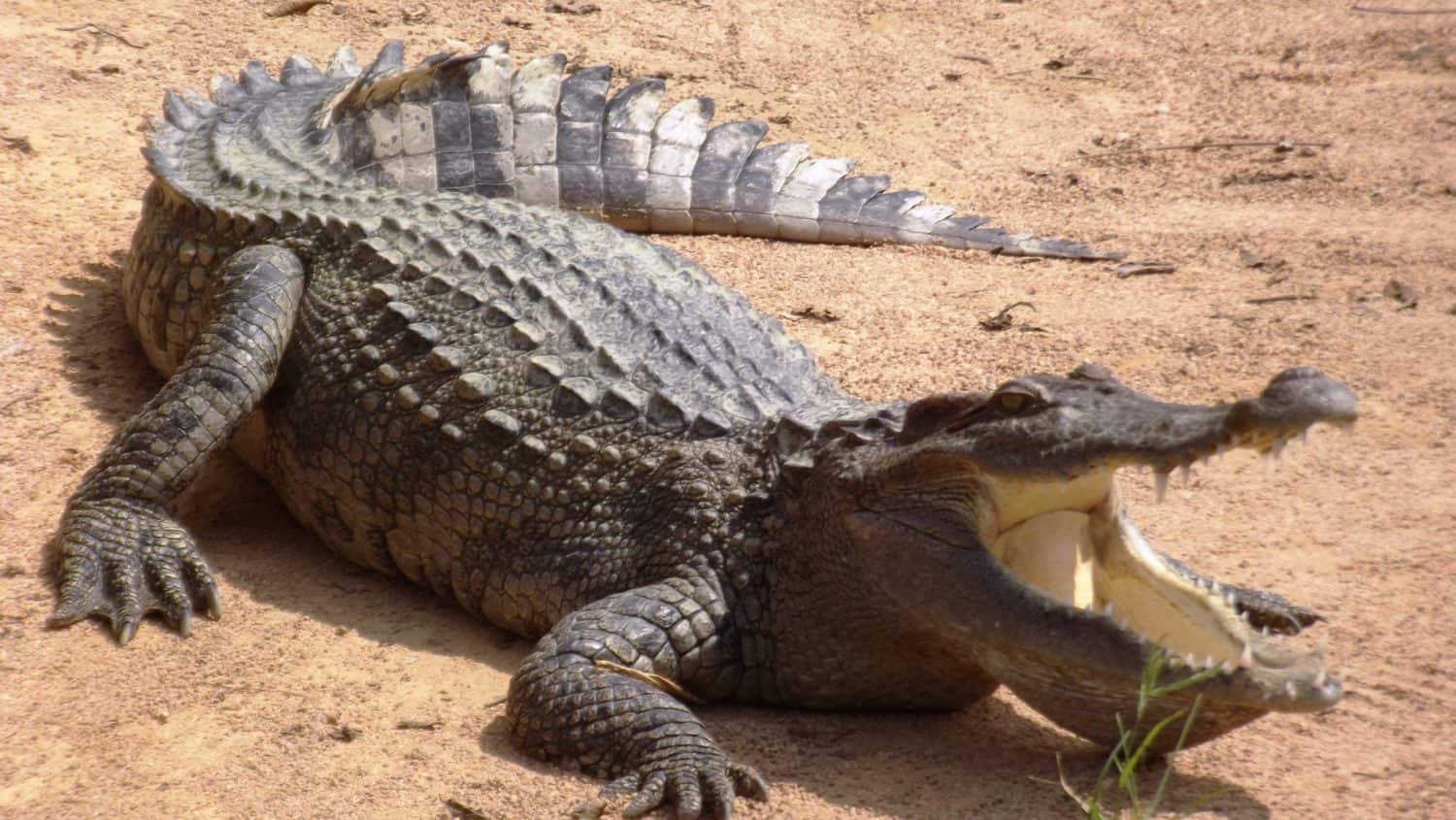
Crocodiles are some of the most fearsome predators alive today. These ancient reptiles have survived for more than 200 million years, outlasting dinosaurs, ice ages, and countless other species that disappeared long ago. With armored bodies, explosive ambush speed, and jaws powerful enough to crush bone, crocodiles are built to dominate the water’s edge. In many rivers, swamps, and wetlands, they sit comfortably near the top of the food chain.
But even an animal this dangerous has enemies. Crocodiles may look nearly unbeatable, but the wild is full of brutal surprises. Under the right conditions, a few powerful animals can fight, overpower, or even kill a crocodile. Some rely on size and strength, while others use speed, teamwork, intelligence, or sheer aggression to turn the tables on one of nature’s most intimidating reptiles.
These encounters are rare, dangerous, and often depend on the size of the crocodile, the species involved, and where the fight happens. A full-grown crocodile in deep water is a very different opponent than a younger crocodile caught on land. Still, there are real animals that have been known to challenge crocodiles and sometimes win. From massive mammals to unexpected predators, these are the animals that can kill a crocodile and actually do in the wild.
1. Human

Happy colleagues having a coffee break in an office. Group of business people having a conversation in a workplace. Business professionals working in a startup.
©jacoblund/iStock via Getty Images
Humans and crocodiles have shared space, and conflict, for thousands of years. In places where large crocodiles live near rivers, wetlands, and coastal areas, encounters can be deadly. Crocodiles are estimated to kill roughly 1,000 people worldwide each year, making them one of the most dangerous large predators to humans. Their ambush style of hunting makes them especially threatening, since an attack can happen suddenly from murky water or dense vegetation before a person has time to react.
There are also dramatic stories tied to human and crocodile conflict, including the often-repeated tale of the Battle of Ramree during World War II. According to one version of the story, hundreds of Japanese soldiers were killed by saltwater crocodiles after fleeing into mangrove swamps. However, the exact number of deaths and the role crocodiles played remain debated. What is clear is that large crocodiles are capable of killing humans, especially when people enter their habitat unprotected.
Unarmed humans have very little chance against the largest crocodile species, particularly saltwater and Nile crocodiles. These reptiles can strike with explosive force, drag prey into the water, and use their powerful jaws to hold victims underwater. A person caught at the water’s edge is at an extreme disadvantage. On land, a human may have a better chance of escaping, but that does not mean they could realistically overpower a large crocodile without tools or weapons.
That said, humans are still one of the greatest threats crocodiles face. With firearms, traps, boats, and organized hunting, people have killed enormous numbers of crocodiles throughout history. In many regions, crocodile populations declined sharply because humans viewed them as dangerous pests, competitors, or valuable sources of hide. Even today, habitat loss, development, pollution, and illegal hunting continue to threaten some crocodile populations.
Humans can kill crocodiles more effectively than almost any animal on this list, but not because of physical strength. The advantage comes from intelligence, planning, tools, and the ability to alter entire ecosystems. When humans move into crocodile territory, they often remove or control the animals they consider dangerous. That makes humans one of the few species that regularly kill crocodiles, even though an unarmed person would be in serious danger against one in the wild.
2. Hippopotamus
©Henk Bogaard/Shutterstock.com
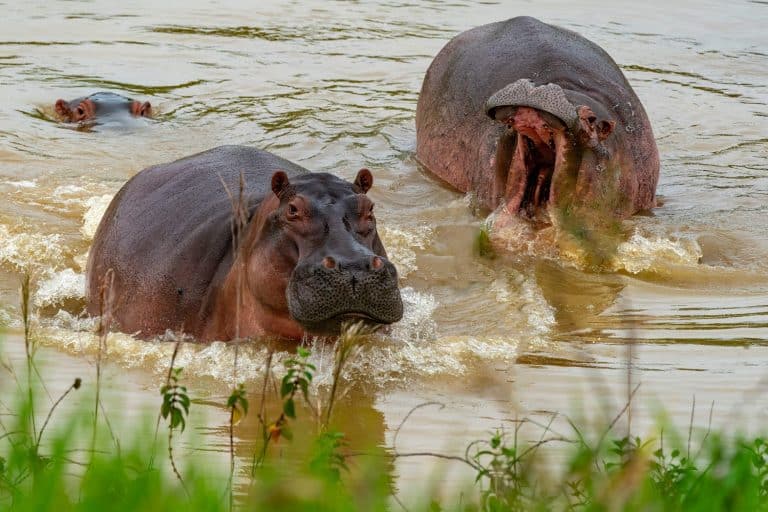
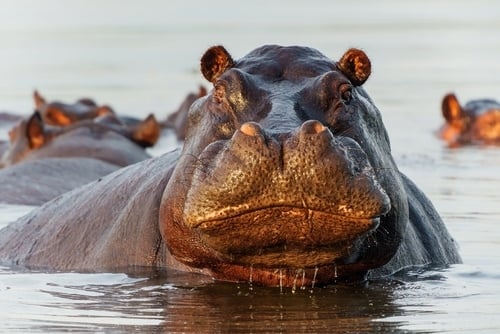
A fully grown hippopotamus is one of the few animals that can make even a large crocodile think twice. Adult hippos can weigh between 3,000 and 4,000 pounds, stand more than five feet tall at the shoulder, and grow up to 16 feet long. They have massive bodies, thick skin, enormous mouths, and long canine teeth that can cause devastating injuries. Although hippos may look slow or awkward, they are powerful, aggressive animals that dominate many African waterways.
Hippos and crocodiles often live side by side, but that does not mean they are friendly neighbors. Crocodiles usually avoid healthy adult hippos because the risk is simply too high. A crocodile that gets too close to a hippo calf, blocks a hippo’s path, or enters the wrong stretch of water can quickly find itself in danger. Hippos are highly territorial in water, and males in particular may attack anything they see as a threat.
In a fight, a hippo has several major advantages. Its body is far heavier than most crocodiles, and its jaws can deliver a crushing bite. A hippo can bite down on a crocodile, toss it, trample it, or seriously injure it with its tusk-like teeth. Crocodiles rely heavily on ambush, dragging prey into water, and death rolling. Those tactics are much less effective against an animal that is too large, too heavy, and too powerful to control.
A crocodile could still kill a young, injured, or isolated hippo calf under the right conditions, especially if several crocodiles were involved. But against a healthy adult hippo, the crocodile is usually at a major disadvantage. The hippo’s size, aggression, and comfort in the water make it one of the most dangerous animals a crocodile can encounter.
That is why hippos belong near the top of any list of animals that can kill crocodiles. They do not hunt crocodiles as a regular food source, but they absolutely can kill them during territorial disputes or defensive encounters. In African rivers, a full-grown hippo is one of the rare animals powerful enough to challenge a crocodile in the reptile’s own environment.
3. Elephant
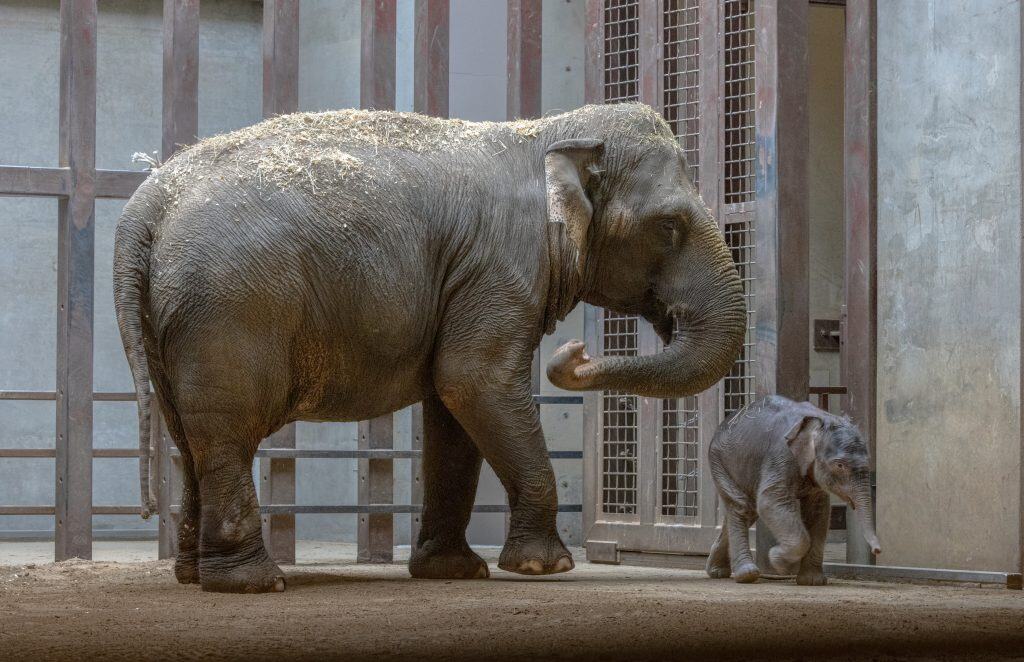
Asian elephant calf Linh Mai explores the Elephant Community Center barn with “auntie” Swarna at the Smithsonian’s National Zoo.
©Brett Kuxhausen, Smithsonian’s National Zoo and Conservation Biology Institute – Original / License
An elephant is so large that most crocodiles simply have no realistic way to kill one. Depending on the species, adult elephants can weigh anywhere from about 6,500 pounds to more than 12,000 pounds. They tower over crocodiles, carry immense muscle mass, and have thick skin, powerful legs, and long tusks that can be used as weapons. Even the largest crocodiles are badly outmatched by an adult elephant on land or in shallow water.
Crocodiles usually depend on surprise when attacking large animals. They grab prey at the water’s edge, clamp down with tremendous bite force, and try to drag the victim into deeper water. That strategy works best on animals that can be pulled off balance or drowned. An adult elephant is simply too large for that tactic to work under normal circumstances. A crocodile might bite an elephant’s trunk, leg, or foot, but holding on would be extremely dangerous.
If an elephant fought back, the crocodile would have very few options. The elephant could stomp the reptile with enough force to crush bones and internal organs. It could also use its tusks to gore or flip the crocodile, especially if the encounter happened on land or in shallow water. A crocodile’s armored body offers protection against many predators, but it is not built to withstand the full weight of an angry elephant.
The only situation where a crocodile might pose a real threat is if a young elephant or weakened elephant entered deep water and could not defend itself properly. Calves are more vulnerable than adults, especially if separated from the herd. Even then, elephants are highly social animals, and adults often defend young calves aggressively. A crocodile that attacks the wrong member of a herd could quickly become the target.
Elephants do not seek out crocodiles as prey, but they are more than capable of killing one if a confrontation happens. Their overwhelming size advantage makes this one of the clearest mismatches on the list. In almost any fair encounter on land or in shallow water, the crocodile would be the animal in danger.
4. Rhino

©YouTube/oregonzoo
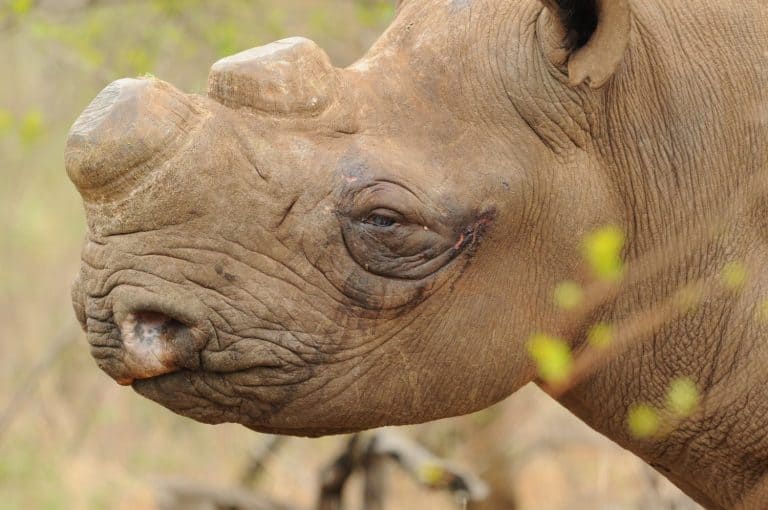
A rhinoceros is another massive land animal that could kill a crocodile under the right conditions. Depending on the species, rhinos can weigh anywhere from around 1,000 pounds to more than 8,000 pounds. They have thick skin, compact muscular bodies, powerful legs, and, in most species, one or two horns that can cause serious damage. Against a crocodile on land, a rhino has a major size and strength advantage.
Rhinos are not predators, and they do not hunt crocodiles for food. However, they can be extremely dangerous when startled, threatened, or provoked. Many rhino species are known for charging perceived threats with tremendous force. A crocodile that ended up too close to a rhino on a riverbank or near a watering hole could be badly injured or killed if the rhino decided to attack.
The fight would strongly favor the rhino on land. A crocodile’s best weapons are its jaws and its ability to pull prey into water. Those advantages are much harder to use against an animal that is far heavier and built like a living tank. A crocodile could try to bite the rhino’s leg or snout, but it would have difficulty dragging such a large animal anywhere. Meanwhile, the rhino could charge, gore, stomp, or crush the crocodile.
Water would change the equation somewhat. If a crocodile attacked a rhino calf or caught a rhino in a vulnerable position, the reptile might have a chance. Crocodiles are far more dangerous when they can strike from concealment and use deep water to their advantage. But against a healthy adult rhino on solid ground or in shallow water, the crocodile is facing an opponent it is not built to overpower.
A rhino killing a crocodile would likely be a defensive or territorial event rather than a hunting behavior. Still, the outcome is easy to understand. A charging rhino has enough mass and force to seriously injure almost any animal in its path, and a crocodile caught in the wrong place would have little chance of surviving the encounter.
5. Tiger
©Savanking/Shutterstock.com
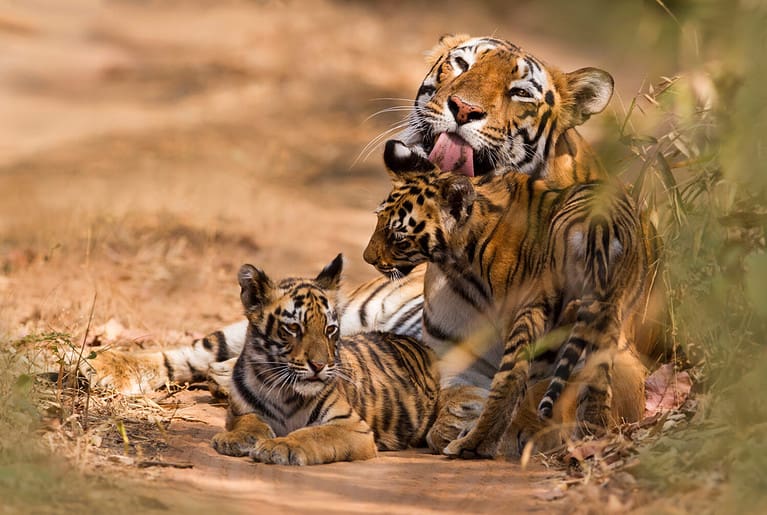
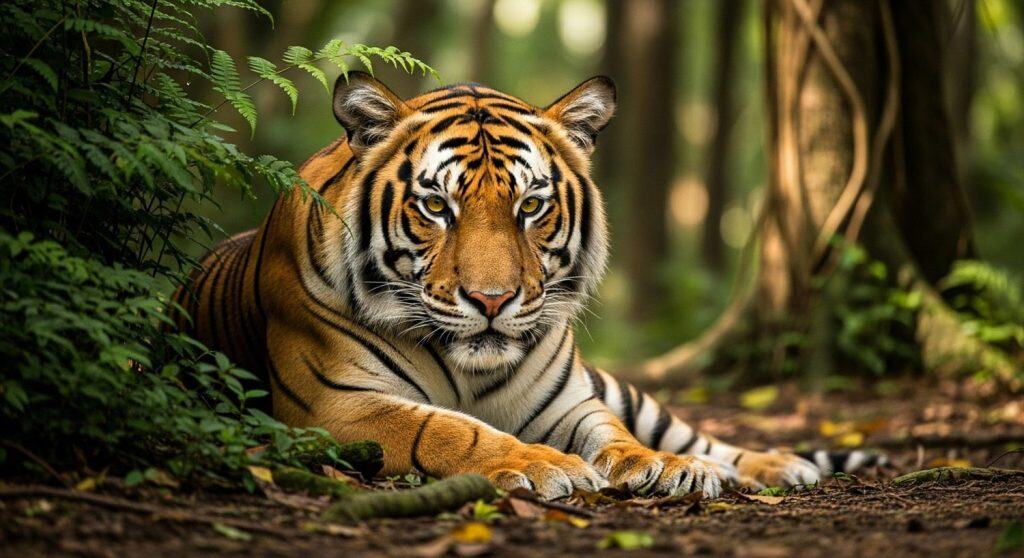
A tiger is one of the few predators agile and powerful enough to challenge a crocodile, especially if the crocodile is small or medium-sized. The largest tigers, including Amur tigers, can weigh several hundred pounds and measure more than 10 feet from nose to tail. They are fast, muscular, intelligent hunters with strong jaws, sharp claws, and the ability to target vulnerable areas with precision. Unlike elephants, hippos, and rhinos, tigers would not win through size alone. They would rely on speed, timing, and killing skill.
Big cats have been known to attack reptiles in the wild, and in some regions, tigers may encounter crocodiles or related species near rivers, marshes, and mangrove habitat. A tiger on land has important advantages over a crocodile. It can move quickly, leap, dodge lunges, and attack from angles that make it harder for the crocodile to clamp down. A tiger could use powerful paw strikes, claws, and a crushing bite to injure or kill a smaller crocodile.
However, this is not an easy fight. Crocodiles are heavily armored, extremely strong, and dangerous even when out of water. One well-placed bite from a large crocodile could break bones or cause fatal injuries. If the fight starts at the water’s edge, the crocodile becomes far more dangerous. A tiger leaning down to drink or crossing through shallow water could be ambushed before it has time to react.
The largest crocodiles, especially adult saltwater crocodiles, would be a serious threat to any tiger. A full-grown saltwater crocodile can be much heavier than a tiger and has the advantage in deep water. If it managed to grab the big cat and drag it under, the tiger would have little chance of escaping. The crocodile’s death roll and drowning strategy are exactly the kind of attacks that can neutralize a land predator’s agility.
On land, though, the tiger has a real chance against many crocodiles. It is faster, more flexible, and better equipped to avoid a frontal bite while attacking vulnerable areas. The outcome would depend heavily on the size of the crocodile, the terrain, and which animal attacked first. Against a smaller crocodile on land, the tiger could win. Against a massive crocodile in deep water, the tiger would be in serious trouble.