
Japanese Beetles, also known as June bugs, arrive all at once and seem to ravage all gardens, trees, and bushes. But what do these shiny green beetles actually eat? Maybe they aren’t actually the pests many make them out to be, or perhaps they are an even bigger nuisance than we think.
In this article, we will look at what makes the Japanese beetle tick and what you should be aware of to avoid plant and bush damage next June when they make their grand entrance once again.
Meet the Japanese Beetle (Popillia japonica)
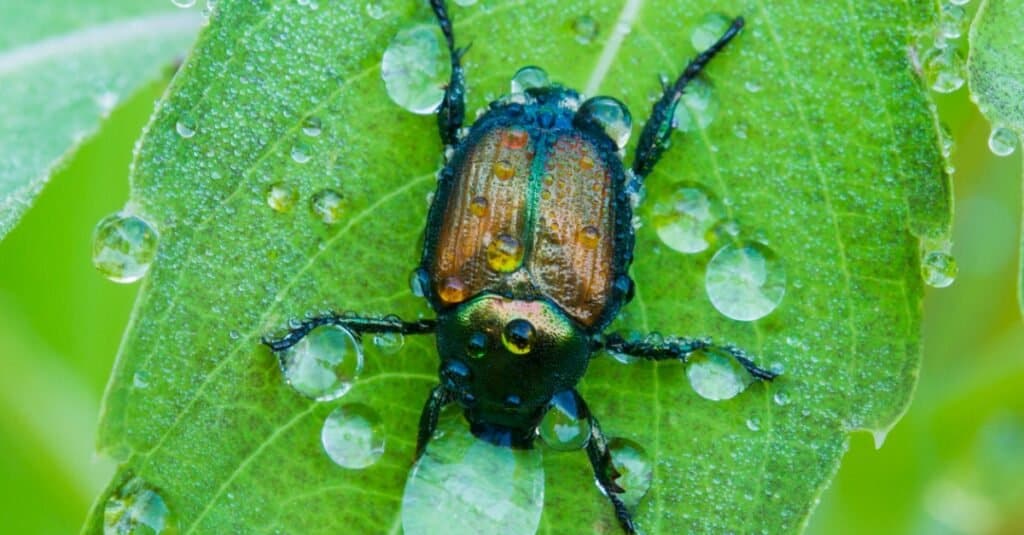
Japanese beetles are creatures like any other. They just want to survive and don’t understand that certain plants have restrictions.
©iStock.com/mirceax
Appearance
The Japanese beetle starts out as a one to two millimeter, oval, white egg buried two to four inches underground in loose soil. The eggs hatch into a two to three-millimeter-long white grub. After the final and third instar, the grub is 30 millimeters long. They have a v-shaped hair arrangement in the center of other hairs found on the underside of the anal segment. The grubs have 3 legs near their heads for digging in the soil, where they spend the winter before emerging as June bugs around June.
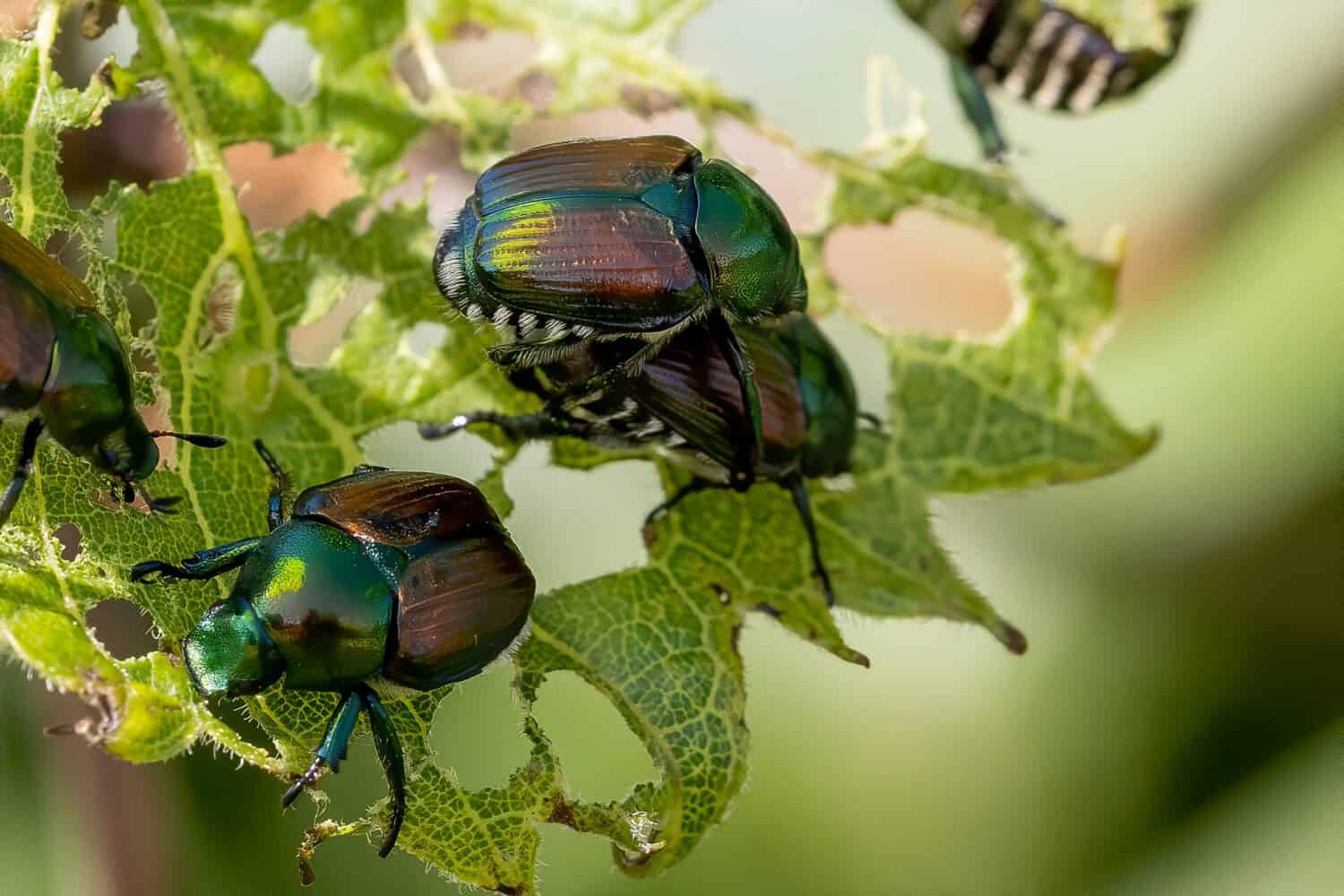
The Japanese beetle, or June bug, emerges in June as a metallic green and brown beetle. They are 13 millimeters long and have a hard exoskeleton. Their head and thorax are metallic green, with the rest of the upper surface copper colored. The beetles have five tufts of white hair on both sides of their underside and a sixth pair on the tip of their abdomens.
Behavior
The Japanese beetles spend most of their lives on the plants of their choosing. They eat and mate on the plants, and then the female burrows into the soil near the plant to lay eggs a couple of inches down. The female beetle will dig into the soil several times in two weeks and lay eggs each time in different locations. She will lay a total of 40 – 60 eggs altogether in her life.
The eggs hatch two weeks later, and since the larvae are near tasty roots, that is what they eat until they reach the third instar. The fully grown larva digs even deeper in the damp soil to avoid freezing in the winter. They will wait until June to pupate and reappear on the surface as adult Japanese beetles two weeks later.
Lifespan
The Japanese beetle grub lives 10 months underground and only 2 months as an adult beetle.
Habitat
The larva of a Japanese beetle typically lives near feeder plants that the mother chooses. They will remain there until they are grown in June or later, depending on what part of the U.S. you live in. Once they emerge as adult beetles, they will find a plant to munch on and meet some other Japanese beetles to mate with.
Japanese beetles are found in farms, cities, forests, and gardens and can live in both rural and urban areas. They are very adaptive and can live in most places as long as the soil to lay eggs in is loose enough.
History Lesson on the Japanese Beetle
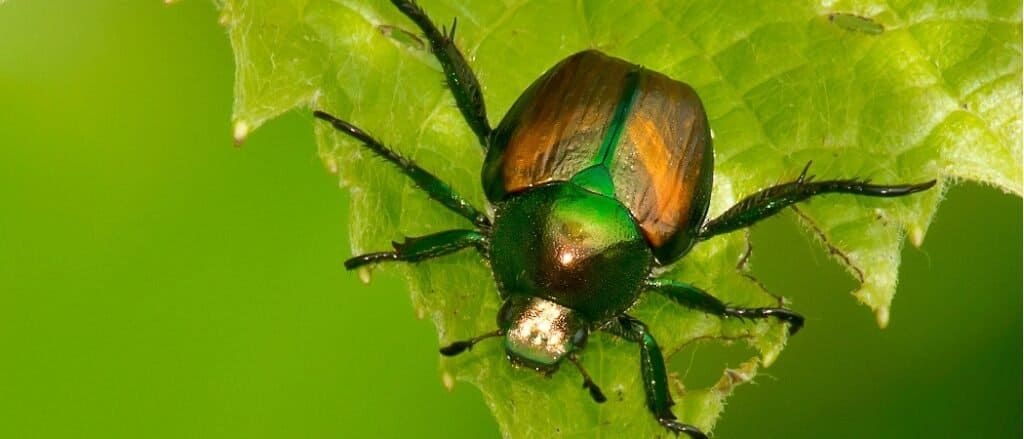
Japanese beetles have been an invasive insect in the U.S. since 1916.
©iStock.com/PaulReevesPhotography
In 1916, the Japanese beetle was first found in a plant nursery in New Jersey. By 1972, the beetles had spread to 22 states, all east of the Mississippi River and favoring the southeast. They had also spread to Iowa, Missouri, and Arkansas. They weren’t finished making the U.S. their home. Since then, the beetles have also moved into the southern and western states. They prefer warmer climates but still live in the colder ones, too. Sometimes, the time they arrive as flying beetles in the northern states is delayed a few months since the soil may still be very cold by June.
Japanese Beetle Diet
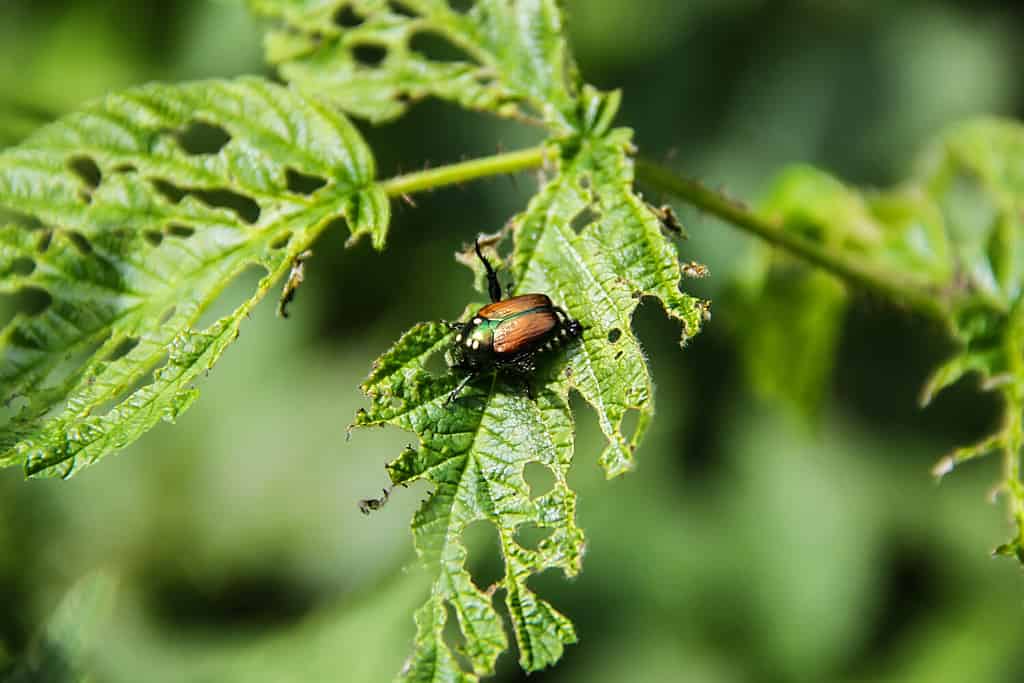
The Japanese beetle is not too picky when it comes to meals.
©Jake Benner/Shutterstock.com
The beetles are herbivores who feed off an array of vegetation. Truly, they aren’t picky about which plants they destroy, but it has nothing to do with not wanting them to feast on certain ornamental or vegetable-producing plants. They don’t make a plan to sabotage your gardening efforts. The beetles are doing what any animal does; it’s doing what it needs to stay alive and make sure its lineage is carried on.
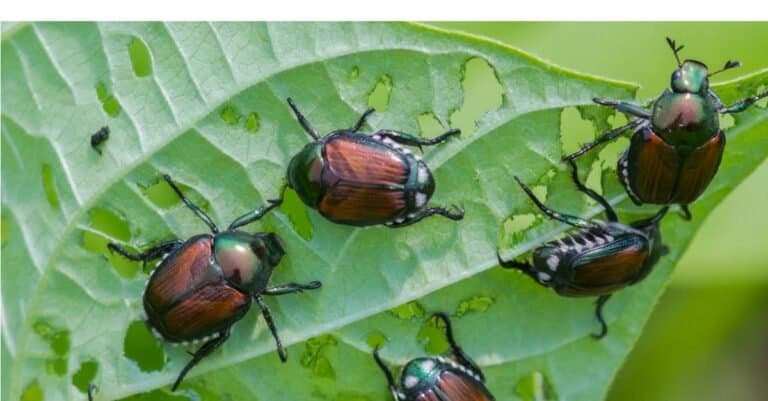
When adult Japanese beetles choose a plant to eat, they will eat all of the foliage between the veins of the leaves, which gives the plant a skeletal look. On rose bushes, they will even eat the veins of the leaves since they are one of the beetles’ favorites. It may be a bit like us eating a vegetable and its stalk or vine or eating a chicken and the bone. Which, by the way, don’t try at home pretending to be a Japanese beetle. There is a long list of trees and plants the Japanese beetles love, which is included below. If you are considering planting some of the below foliage and live in a Japanese beetle-prone area, avoid these if possible. In the next section, we will discuss some trees and plants that are resistant to Japanese beetles and their larva.
Foliage Japanese Beetles Love
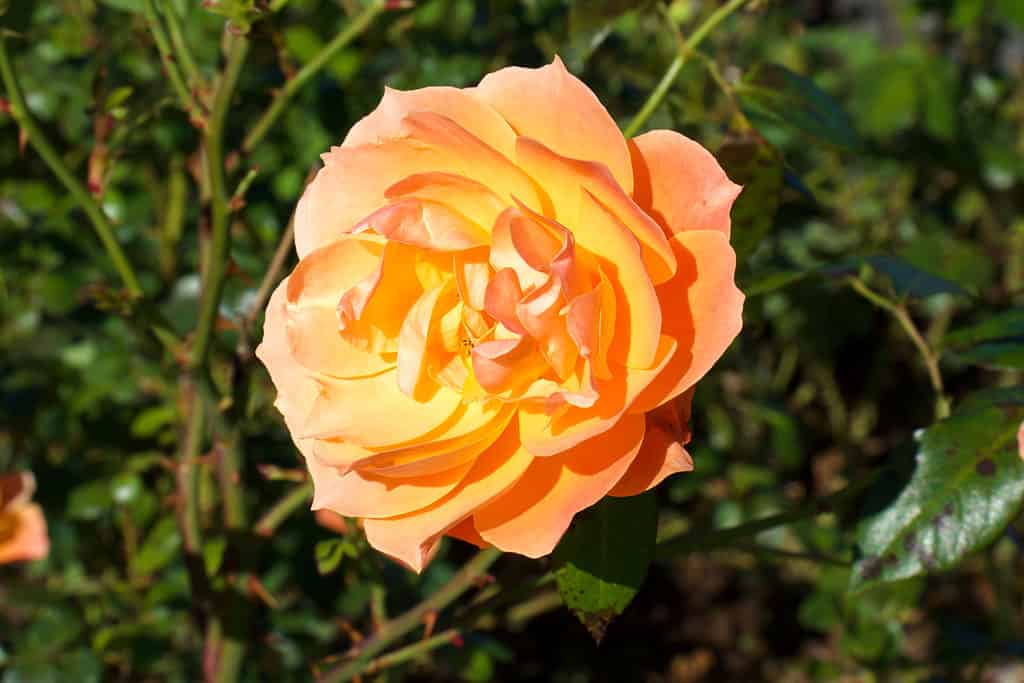
Roses are a top-tier favorite food to the Japanese beetles.
©ChetnaC/Shutterstock.com
Susceptible Trees
- Japanese maple (Acer palmatum)
- Norway maple (Acer platanoides)
- Crape-myrtle (Lagerstroemia indica)
- Apple, crabapple (Malus spp.)
- Virginia creeper (Parthenocissus quinquefolia)
- Plum, apricot, cherry, peach (Prunus spp.)
- Pin oak (Quercus palustris)
- Sassafras (Sassafras albidum)
- American mountain-ash (Sorbus americana)
- Linden (American, European) (Tilia spp.)
- Horse-chestnut (Aesculus hippocastanum)
- Althaea (Althaea spp.)
- Birch (Betula spp.)
- Summer-sweet (Clethra spp.)
- Hawthorn (Crataegus spp.)
- Beech (Fagus grandifolia)
- Black walnut (Juglans nigra)
- Larch (Larix laricina)
- Lombardy poplar (Populus nigra variety)
- Willow (Salix spp.)
Susceptible Plants
- Hollyhock (Alcea rosea)
- Dahlia (Dahlia spp.)
- Hibiscus (Hibiscus moscheutos)
- Common mallow (Malva rotundiflora)
- Evening-primrose (Oenothera biennis)
- Soybean (Glycine max)
- Pennsylvania smartweed (Polygonum pensylvanicum)
- Rose (Rosa spp.)
- Grape (Vitis spp.)
- Sweet corn (Zea mays)
- Clematis (Clematis spp.)
- Gladiolus (Gladiolus spp.)
- Sunflower (Helianthus annuus)
- Morning-glory (Ipomoea purpurea)
- Cardinal flower (Labelia cardinalis)
- Peony (Paeonia spp.)
- Asparagus (Asparagus officinalis)
- Rhubarb (Rheum rhabarbum)
- Red raspberry (Rubus idaeus)
- Zinnia (Zinnia spp.)
What You Can Do About Japanese Beetles
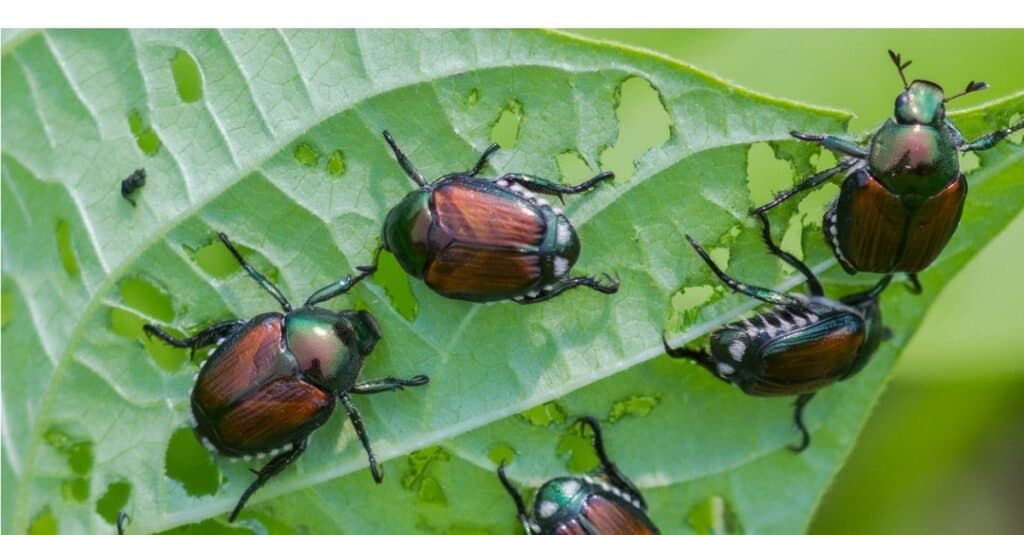
Do you know how to stop these invasive Japanese beetles from eating string bean leaves in a garden?
©Renman1605/Shutterstock.com
Now that you know a bit about the Japanese beetle, it’s likely you also want to know how you can stop them from eating your rose bushes, trees, and vegetables. If you have the ability to plant from the list below, definitely consider it. All of the trees and plants listed below are Japanese beetle-resistant, so you won’t have to worry about their foliage being stripped clean every year.
Another way that is not harmful to the environment is combination oils. Make a mixture of ginger, water, and peppermint oil in a spray bottle and spray on the plants you want to protect. This mixture has proven to work best out of other essential oil mixtures, as found by researchers with the USDA. Cedar oil is also another good one to consider. It keeps many types of caterpillars and insects off plants. Avoid using neem oil if you are near a storm drain or body of water. It is not as free of harm as most people think. Try to avoid pesticides for the bee population and all of the beneficial insects and arachnids. Lots of animals eat insects, and if you poison insects, you are poisoning the entire food chain.
Resistant Trees
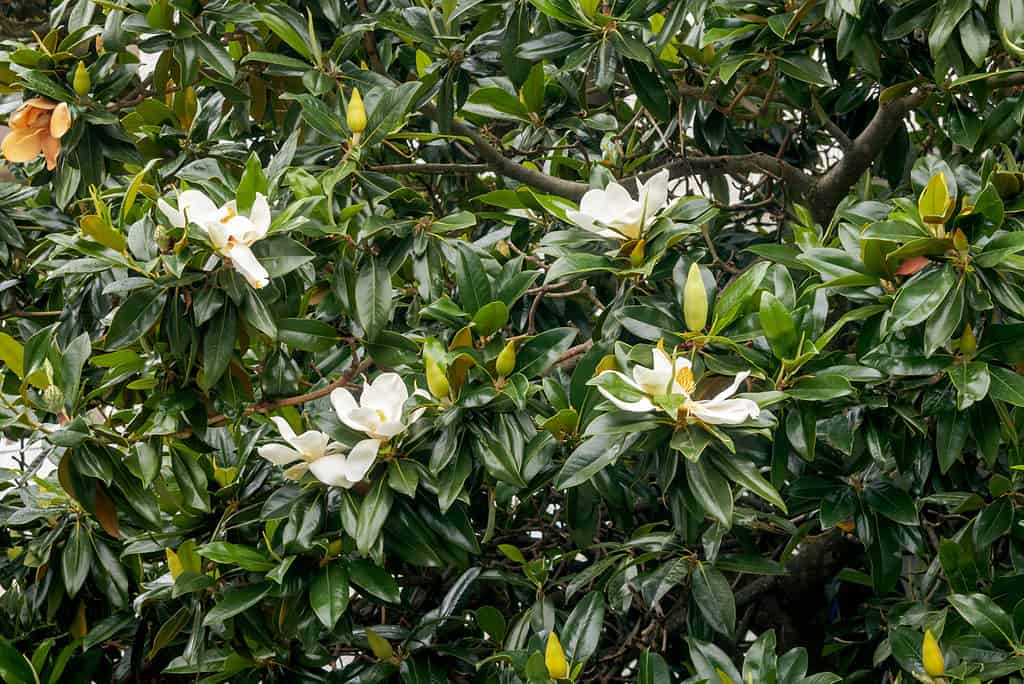
The southern magnolia is known for its fragrant white blooms.
©Nick Pecker/Shutterstock.com
- Red maple Acer rubrum
- Boxwood (Buxus spp.)
- Hickory (Carya spp.)
- Redbud (Cercis spp.)
- Tulip poplar (Liriodendron tulipifera)
- Dogwood (Cornus spp.)
- Burning-bush (Euonymus spp.)
- Forsythia (Forsythia spp.)
- Ash (Fraxinus spp.)
- Holly (Ilex spp.)
- Juniper (Juniperus spp.)
- Sweetgum (Liquidambar styraciflua)
- Magnolia (Magnolia spp.)
- Spruce (Picea spp.)
- Pine (Pinus spp.)
- Northern red oak (Quercus rubrum)
- Lilac (Syringa spp.)
- Yew (Taxus spp.)
- Arborvitae (Thuja spp.)
- Hemlock (Tsuga spp.)
Resistant Plants
- Ageratum Ageratum spp.
- Columbine Aquilegia spp.
- Dusty-miller Centaurea cineraria,
Lychnis coronaria - Begonia Begonia spp.
- Lily-of-the-valley Convallaria majalis
- Coreopsis Coreopsis spp.
- Larkspur Delphinium spp.
- Foxglove Digitalis spp.
- California poppy Eschscholzia californica
- Coral-bells Heuchera sanguinea
- Hosta Hosta spp.
- Impatiens Impatiens spp.
- Lantana Lantana camara
- Forget-me-not Myosotis spp.
- Pachysandra Pachysandra spp.
- Poppy Papaver spp.
- Moss-rose Portulaca grandiflora
- Showy sedum Sedum spectabile
- Nasturtium Tropaeolum majus
- Violet, pansy Viola spp.