
Quick Take
- A groundbreaking fossil discovery didn't come from a museum vault or a field expedition. Its origin is far more unexpected. Discover the eBay find →
- Crab claws and insect legs work in fundamentally different ways, which is why scientists were stunned when a 100-million-year-old bug blurred that line. See how claws differ →
- This ancient insect earned a scientific name inspired by something you'd never expect to find in a paleontology paper. Read the surprising name →
- Nature has invented the same predatory tool in wildly different creatures, yet scientists had never found proof of it locked in amber until now. Explore the rare appendages →
There is a huge variety of life on Earth, but we sometimes see similarities in organisms that live in very different areas and differ in all other ways. This can be due to a phenomenon called convergent evolution, which is when creatures that aren’t closely related evolve the same feature as a solution to the same problem. It is essentially nature inventing the same tool twice. When you come across animals as different as crabs and insects, however, it is startling! Here, we share the discovery of an insect fossil that had pincers just like a crab!
Insects With Grasping Appendages
Many insects have evolved grasping appendages to catch prey. Perhaps the most spectacular example is the praying mantis. Most of them have a jackknife (sub-chelate) arrangement where the front part (usually the tibia, or tibia and tarsus together) folds backwards against the upper part (usually the femur).
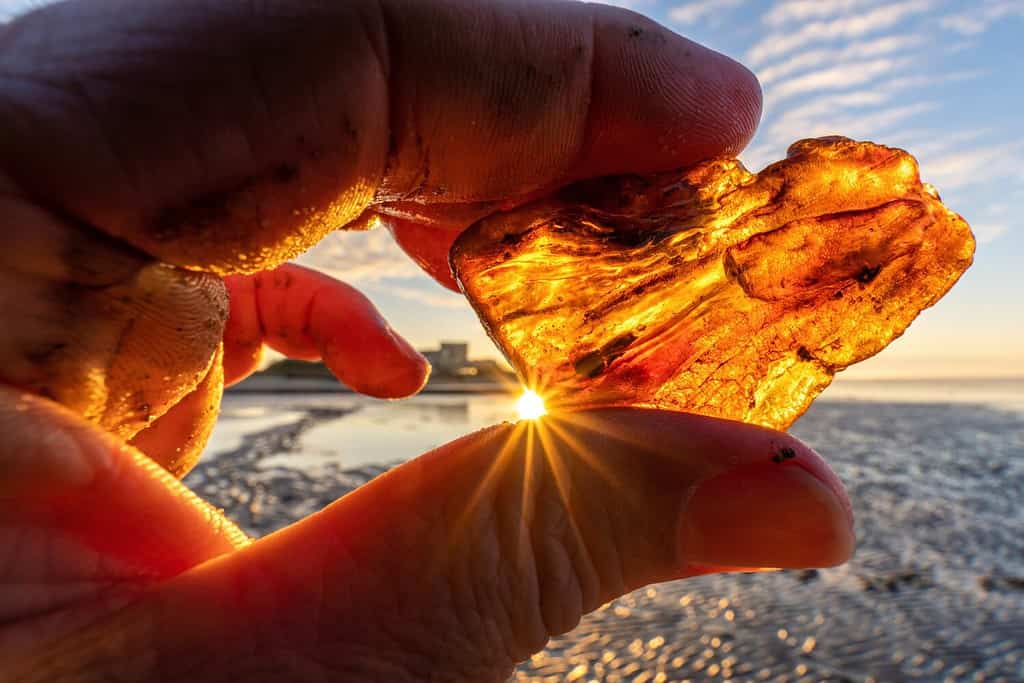
Scientists can study ancient bugs trapped in amber.
©Bjoern Wylezich/Shutterstock.com
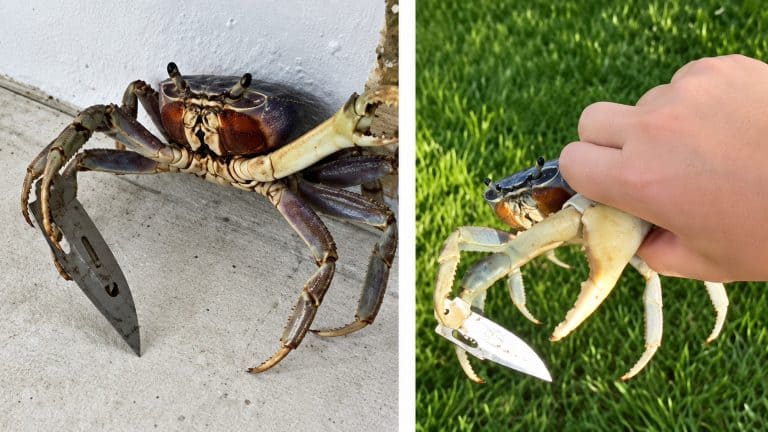
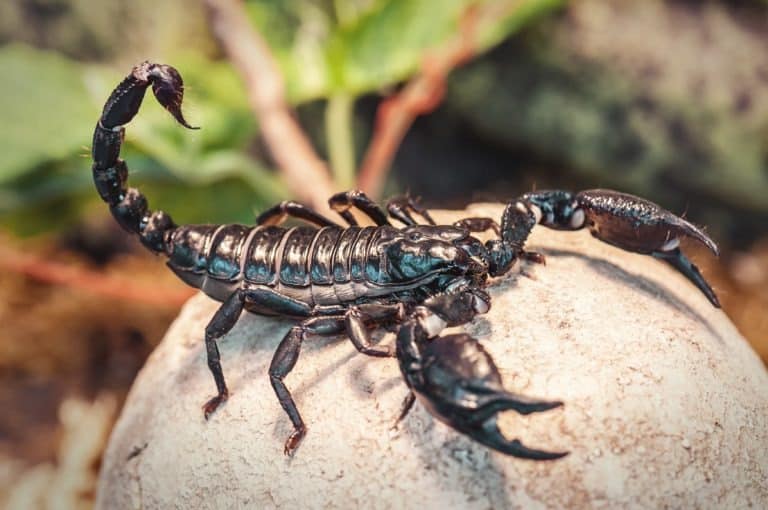
This is different from the grasping appendages of crabs and lobsters (claws) that have one fixed part and one movable part, so that they act like a pincher. Their legs are essentially acting like forceps.
Rarely, insects have appendages like crabs, and these are called chelate appendages. There are examples amongst species of thrips (Thysanoptera), solitary wasps (Hymenoptera), and true bugs (Heteroptera). However, it has not been seen in fossilized insects until now.
100-Million-Year-Old Fossil
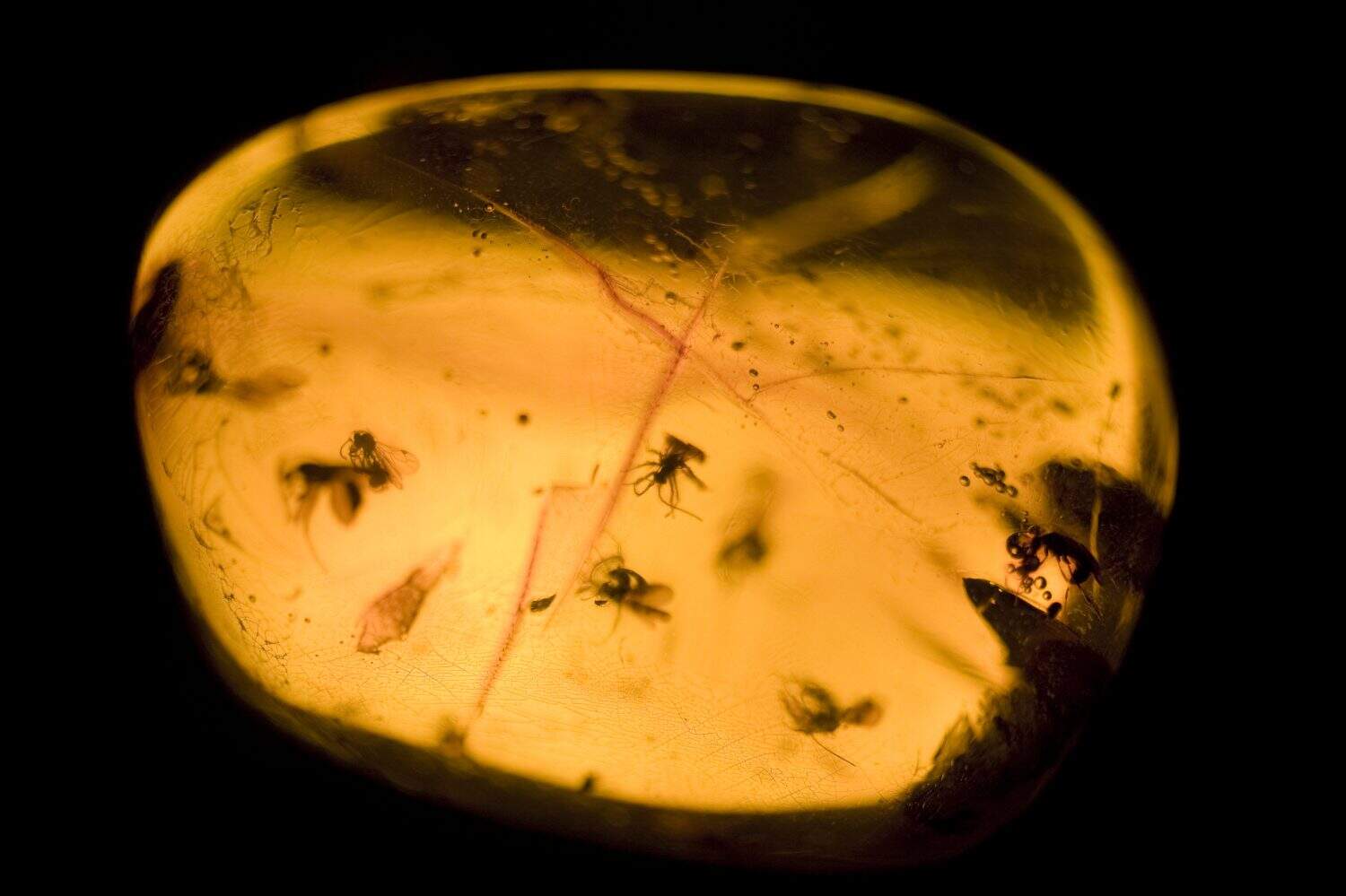
A recently published study reported the discovery of an extraordinary fossil by scientists at Ludwig Maximilian University of Munich (LMU). It was found in 100-million-year-old Kachin amber from Myanmar, in mainland Southeast Asia. Amazingly, it was purchased from a trader on eBay!
The researchers examined it in detail using micro-computed tomography to create 3D images. This enabled them to get a clearer picture of the creature’s anatomy. Most importantly, they discovered that it had chelate appendages. When they compared these appendages to more than 2,000 chelae and similar grasping appendages from both living and extinct insects, they found significant differences. In fact, they looked more like crab claws than the appendages found in any other insect.
What Was the New Clawed Insect Called?
The scientists created a whole new genus for this insect and called it Carcinonepa. The ‘carcino’ part of the word comes from the Latinized Greek term for “crab,” and the ‘nepo’ comes from the true water bug group Nepomorpha.
Its full scientific name is Carcinonepa libererrantes. The species name ‘libererrantes’ is a constructed Latin term meaning ‘those who wander freely,’ inspired by the philosophy and name of the K-pop group Stray Kids, who also use a signature hand sign similar to the insect’s ‘claws’. It was also categorized among the true water bugs, Heteroptera. Additionally, it shares many features with toad bugs (Heteroptera), which are found around the edges of streams and ponds in many parts of the world today. This incredible ancient insect likely used its pinchers to secure prey as it hunted in ancient coastal environments.