
Quick Take
- A fish that thrived in 110°F desert springs had zero natural predators until humans accidentally gave it some. How predators arrived →
- The very act of merging two water systems to build bigger pools didn't just change the habitat. It rewrote the fish's DNA. How merging springs rewrote DNA →
- The Endangered Species Act was designed to prevent exactly this outcome. So why did the Tecopa pupfish become its first extinction? First ESA extinction explained →
- Something built to promote human wellness became the single greatest threat to a species that had survived for millennia. How bathhouses caused extinction →
Desert habitats are extreme. Therefore, it seems odd that fish could survive such environments. However, there are several that not only survive but thrive under these conditions.
One such fish was the Tecopa pupfish, which called the Mojave Desert home. The fish endured harsh weather and lived in hot springs water. It had no problem surviving in the desert, but it could not survive the impact of humans. Consequently, just a few decades after their discovery, the Tecopa pupfish went extinct, becoming a cautionary tale of what happens when humans disturb Mother Nature.
Tecopa Pupfish Lived in Hot Spring Pools in the Mojave Desert
It may seem hard to believe, but long ago, the Mojave Desert was not dry. Instead, lakes, rivers, and streams provided a hospitable environment for aquatic animals.
However, as conditions changed and became more similar to the current Mojave Desert habitat, many of the fish living in the desert’s waterways went extinct. However, those that could quickly adapt survived. One of those fish was the Tecopa pupfish, capable of living in hot springs water where many other fish would perish.
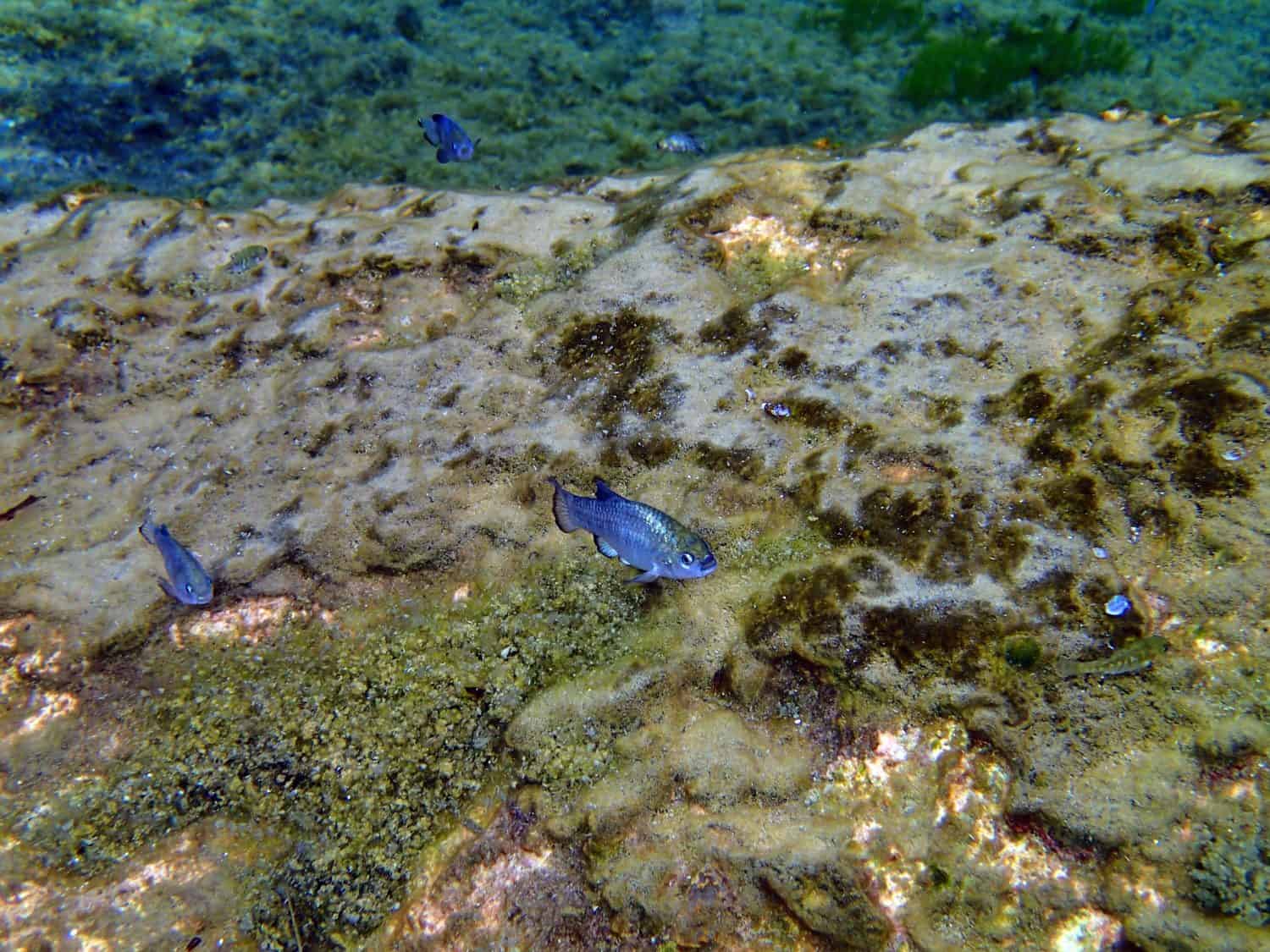
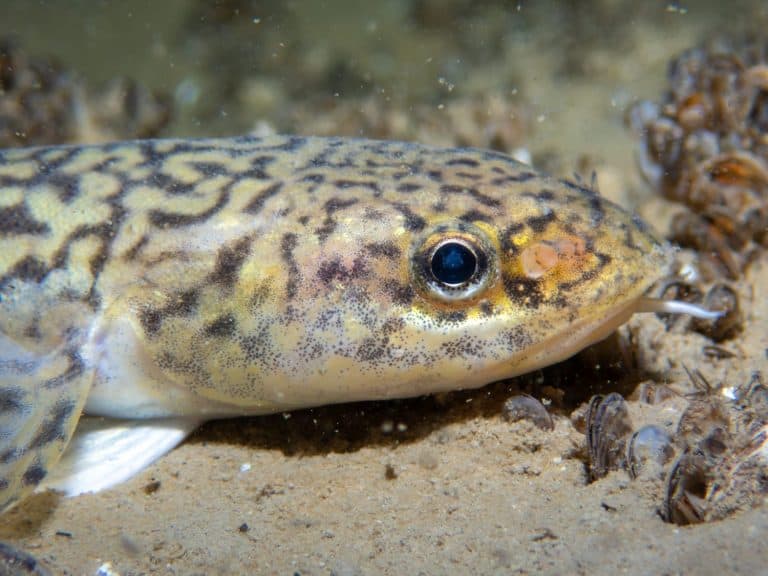
Tecopa pupfish, similar to the Amargosa River pupfish, lived in hot spring waterways in the Mojave Desert.
©nektonography/Shutterstock.com
The Tecopa pupfish lived in the North and South Tecopa Hot Springs waterways, located in the Mojave Desert. The water temperature of 110°F proved ideal for one- to 1.5-inch fish, which consumed the cyanobacteria that grew under warm water conditions.
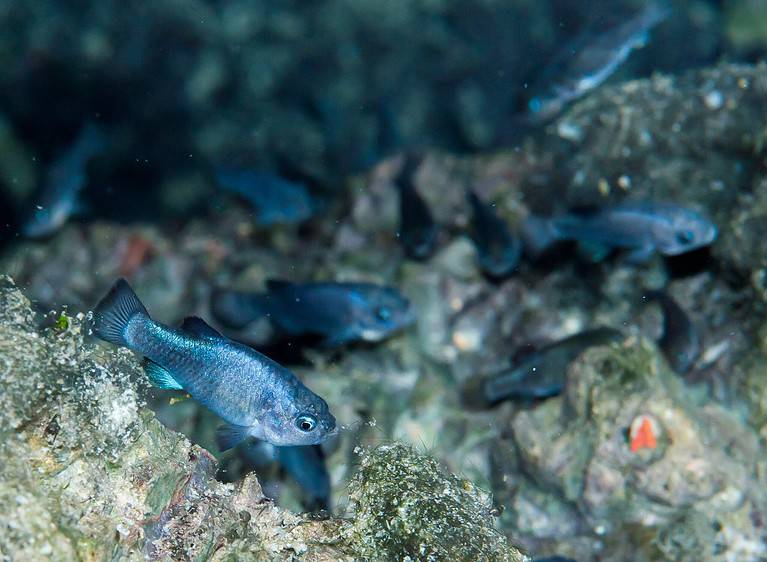
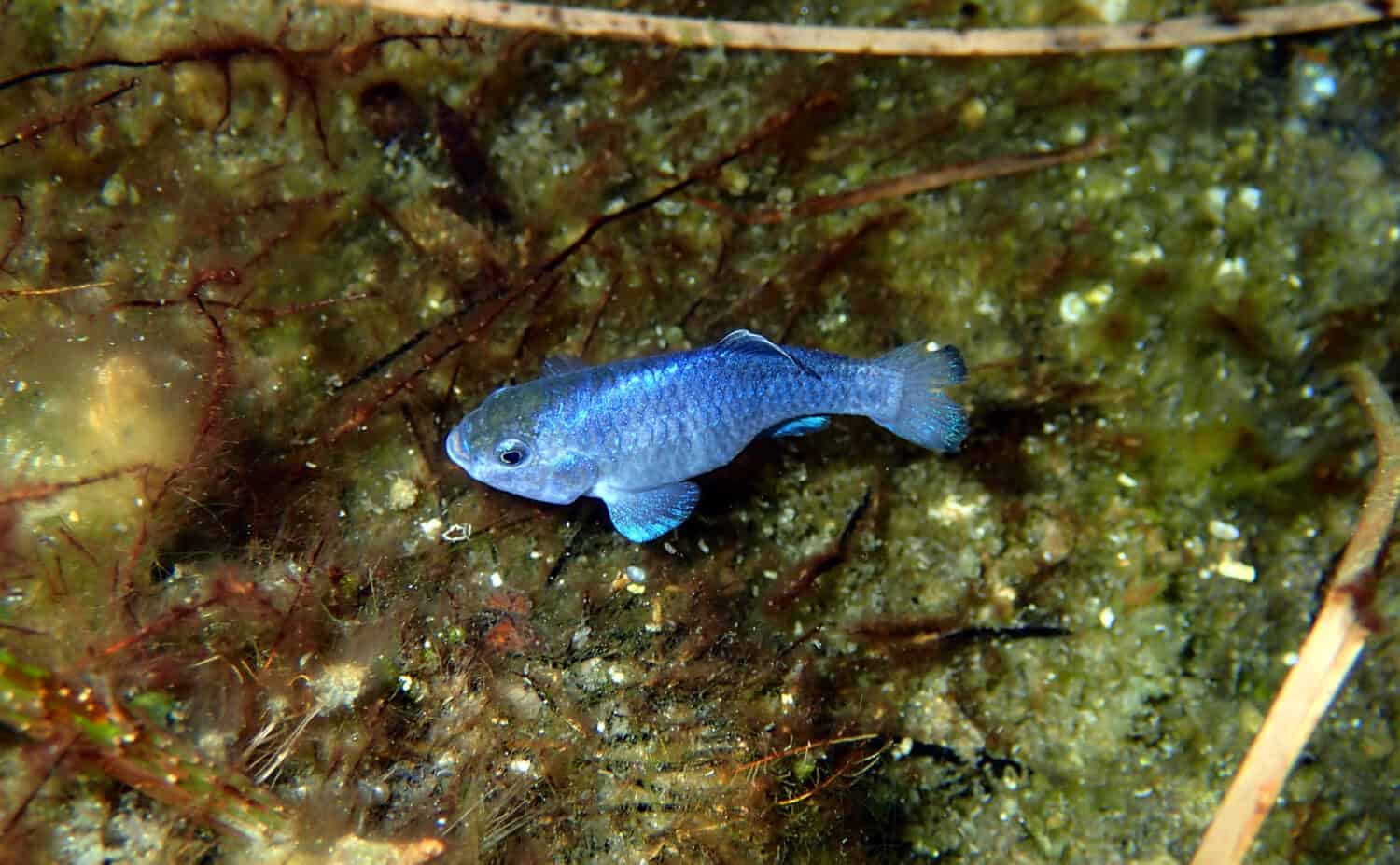
Male Tecopa pupfish were bright blue. Females of the species were striped. They were a subspecies of the Amargosa River pupfish that remained genetically distinct from other pupfish, thanks to the isolated hot-spring pools they inhabited.
The Tecopa pupfish were first described as a distinct species in 1948 by Robert Rush Miller. Shortly after this discovery, the Tecopa pupfish’s fate was sealed. Extinction became inevitable once its delicate habitat was destroyed.
Bathhouses were the Beginning of the End for Tecopa Pupfish
Only a few decades passed between the time the Tecopa pupfish were first described and when they went extinct. This is because, shortly after their discovery, the hot springs in the Mojave Desert became a destination for those seeking their healing properties. Entrepreneurs built bathhouses to turn a profit, altering the flow of the hot springs forever.
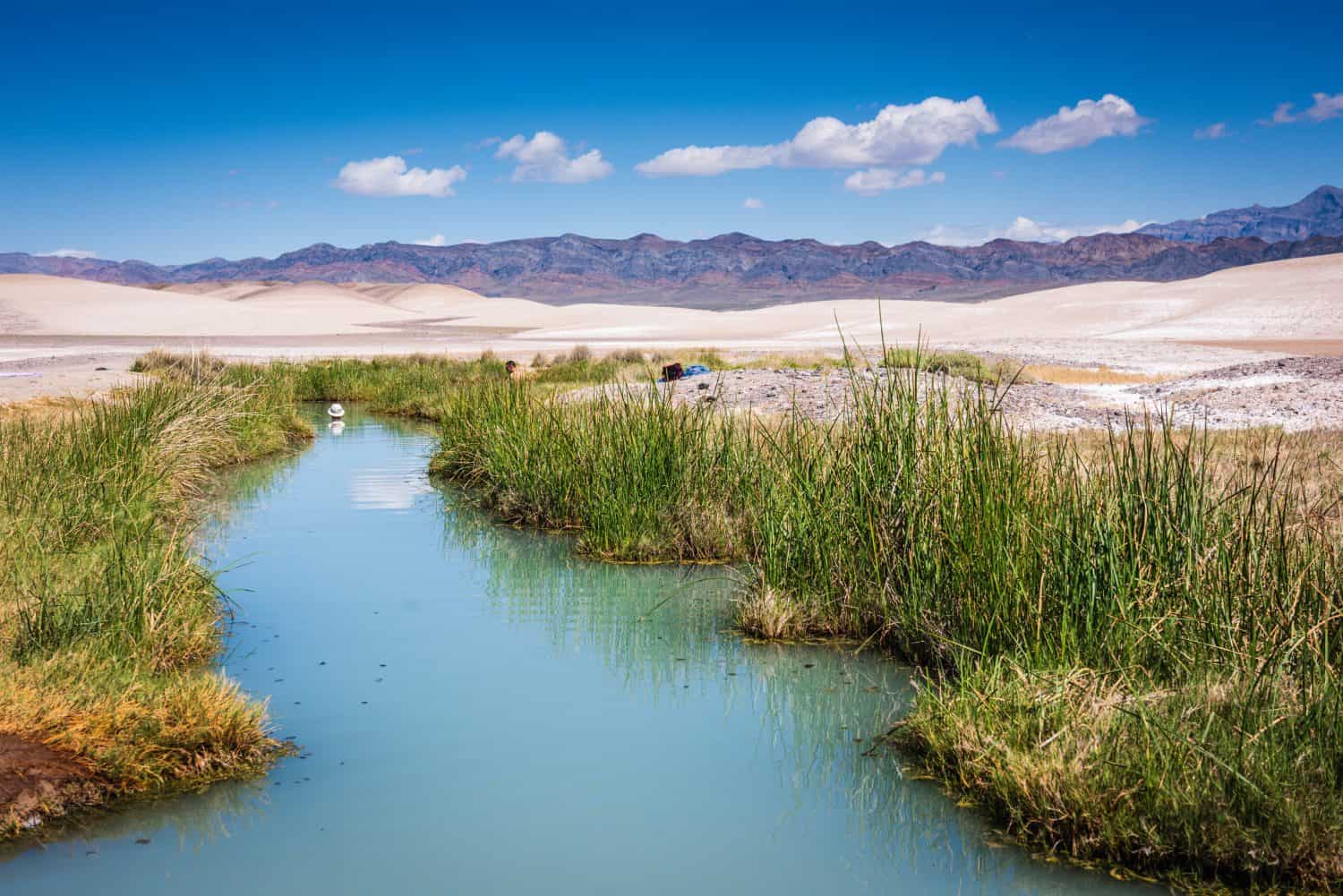
Waterways like this were diverted to bathhouses, ultimately leading to the demise of the Tecopa pupfish.
©Sandra Foyt/Shutterstock.com
Workers diverted desert waterways to supply the bathhouses with hot spring water. When this happened, the water levels that the Tecopa pupfish relied on to keep the water at a consistent temperature dropped. Additionally, the individual hot spring systems merged. Due to rising temperatures and increased water flow, the aquatic habitat became difficult for the pupfish to survive in. Consequently, the construction of the bathhouses largely contributed to the extinction of the Tecopa pupfish.
Hybridization Occurred with Another Pupfish
With the construction of the bathhouses in the 1950s and 1960s, the owners wanted to offer visitors the largest hot springs pools possible. Consequently, this construction altered the water flow, and eventually, the two hot spring systems merged. It was when this occurred that the Tecopa and Amargosa River pupfish inhabited the same pools, further limiting the Tecopa pupfish population.
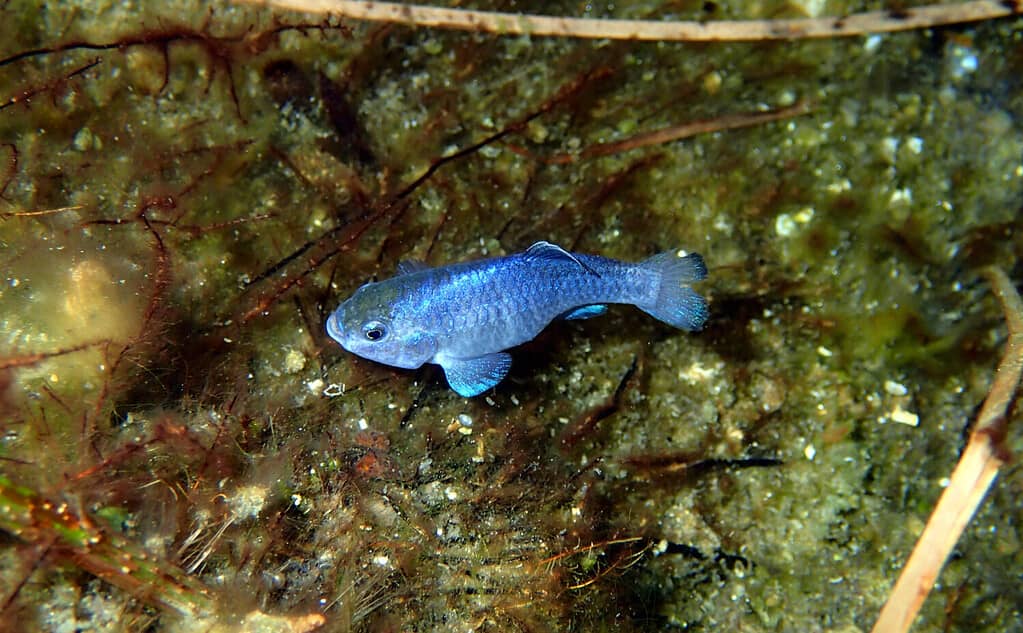
Amargosa River pupfish and the Tecopa pupfish interbred, further leading to the demise of the Tecopa pupfish.
©nektonography/Shutterstock.com
The Amargosa River pupfish were able to adapt to the hot springs’ warming temperatures and faster water flow. This allowed them to thrive in the same habitat as the Tecopa pupfish. As the two lived together, they interbred, creating a hybrid fish capable of adapting to changes in the hot springs that the Tecopa pupfish could not survive.
As the two species interbred, the increasing hybrid population diluted the unique genetics of the Tecopa pupfish, accelerating its extinction.
Invasive Species Decimated the Tecopa Pupfish Population
Because of the extreme conditions the Tecopa pupfish lived in, both in the desert and in warm, hot-spring pools, there is no evidence that the fish had any natural predators. However, with the construction of the bathhouses, this changed as invasive species were added to the environment.
As the hot spring habitat changed with the emergence of bathhouses, two invasive fish species were introduced into the aquatic environment. They were the western mosquitofish and the bluegill sunfish.
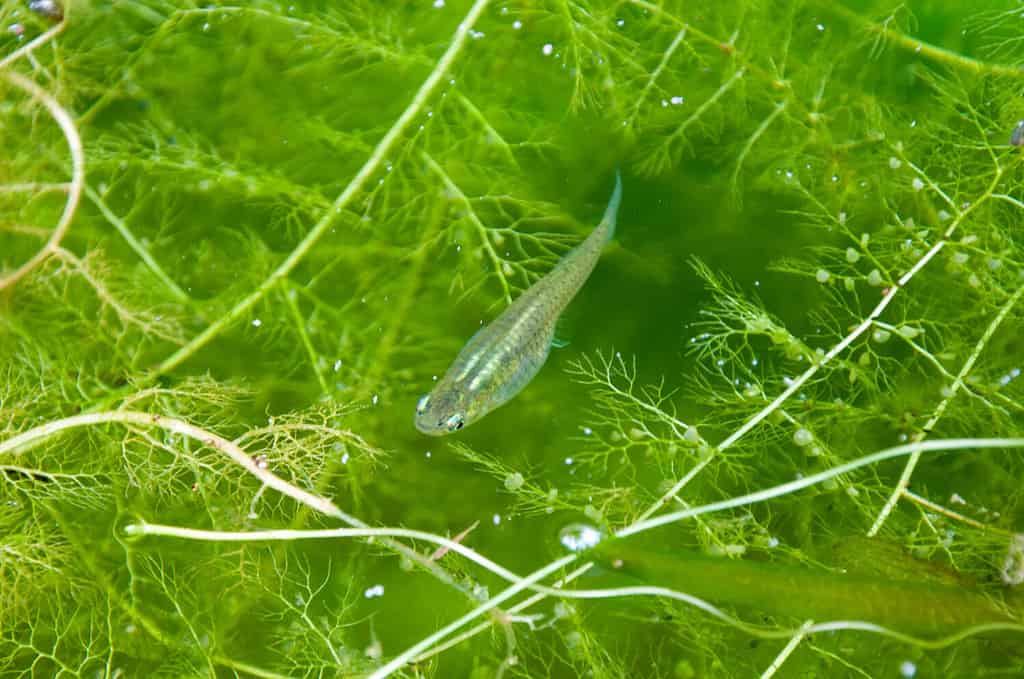
Western mosquitofish is one of the invasive species that led to the eventual extinction of the Tecopa pupfish.
©Lorenzo Sala/Shutterstock.com
There is no particular date when the invasive species began to appear in the hot spring habitat. However, the western mosquitofish was introduced into water systems in California in 1922, including the Mojave and Amargosa Rivers, to control mosquito populations.
The bluegill sunfish were added to reservoirs and waterways as a sport fish. Again, it is not clear whether they entered the hot spring after the hot spring systems merged or were introduced afterward.
What is known is that the mosquitofish competed with the pupfish for food, while the bluegill preyed on the pupfish. Therefore, due to changes to its habitat and the introduction of invasive species, it became impossible for the Tecopa pupfish to survive.
Tecopa Pupfish Was the First Species to Go Extinct After Enactment of the Endangered Species Act
The United States Endangered Species Act was enacted in 1973. Surprisingly, despite researchers finding only a few fish during a 1970 survey, the Tecopa pupfish was not among the first fish added to the ESA list. However, shortly thereafter, the species was added to the list, alongside the pupfish that are still struggling to survive today.
When another survey was done to count the population of the Tecopa pupfish in 1972 and a subsequent one in 1977, there were no Tecopa pupfish to be found. In 1978, the decision was made to remove the fish from the ESA list, declaring it extinct.
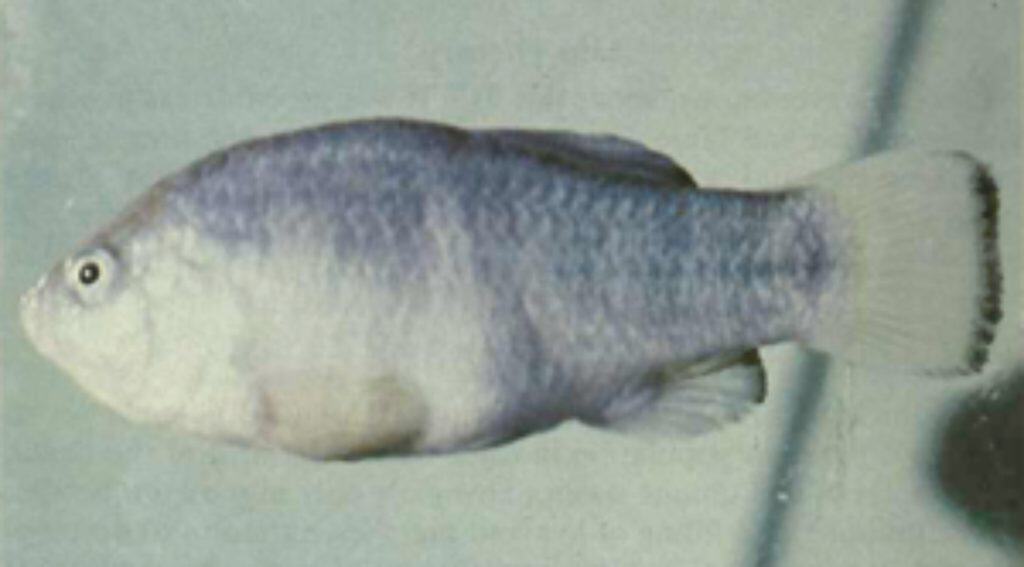
The Tecopa pupfish became the first species on the endangered species list to go extinct.
© – Original
The Tecopa pupfish was declared extinct in 1981. In 1982, the fish was officially removed from the endangered species list, making the Tecopa pupfish the first animal to be delisted from the ESA due to extinction.
The goal of the ESA was to prevent animal extinctions. Yet, each year, more animals are added to the list of endangered species. Some have been fortunate enough to recover, but sadly, many more have not. This fact rests squarely on the shoulders of humans, who have contributed to the demise and extinction of so many species, leaving conservationists and animal lovers alike wondering when the ESA list will be used to save animals rather than simply monitor them before they go extinct.