
Quick Take
- Scientists discovered a rare gynandromorph crab in India showing both male and female traits on opposite sides of its body.
- The crab belongs to Vela carli, a small species found in the Western Ghats and living in tree holes.
- The discovery helps scientists study sex determination and highlights the biodiversity importance of protected habitats.
Deep in the rain‑drenched forests of southern India, scientists climbed into old tree holes expecting to find tiny freshwater crabs. Instead, they met a creature split down the middle into “he” and “she.” The crab they discovered in Silent Valley National Park in Kerala looked almost like two animals fused together. One side carried male features, while the other side carried female ones.
Scientists call this kind of animal a gynandromorph, and it is incredibly rare, especially in crabs. The Silent Valley crab offers a natural experiment for understanding how sex characteristics develop in the animal kingdom. By looking closely at this dual‑sex crab, researchers hope to learn how cells “decide” to become male or female and why those decisions sometimes split in surprising ways.
The Discovery in Silent Valley
The strange crab belongs to Vela carli, a small freshwater species found in the Central Western Ghats of India. Biologists call it an endemic species because it exists in one limited region and nowhere else. Researchers from MES Mampad College and the Zoological Survey of India surveyed crabs in water‑filled tree holes in Silent Valley National Park. During this work, they noticed one individual who did not match the usual male or female pattern.
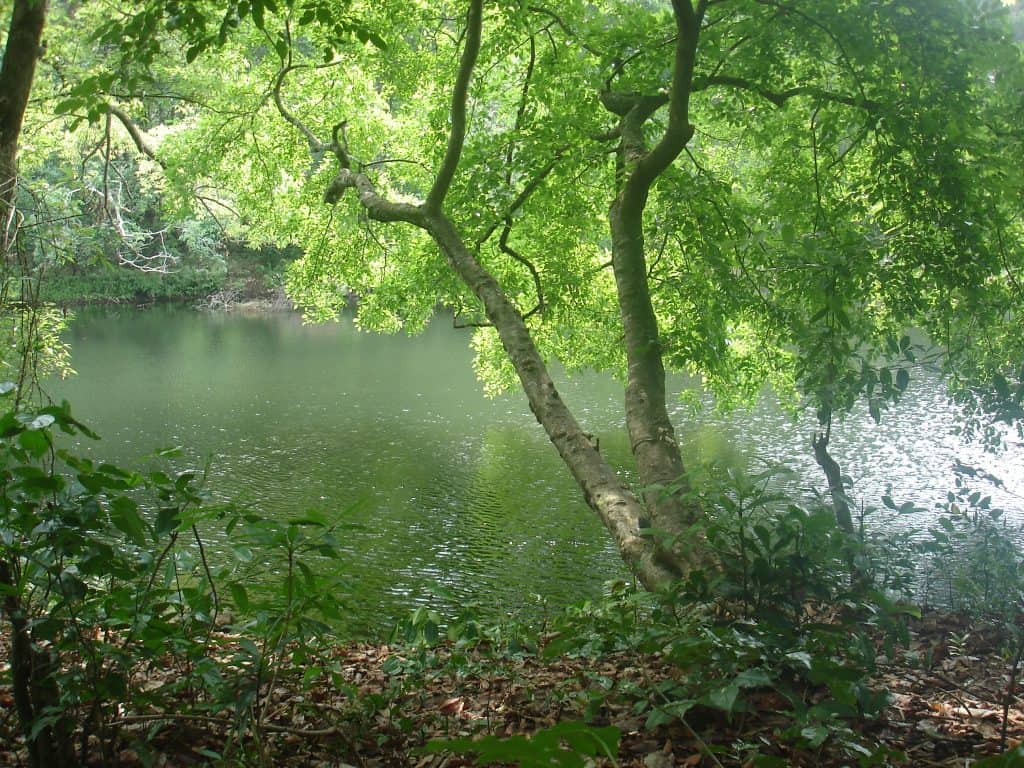
The new type of crab was discovered in Silent Valley National Park, India.
©Athulpj1410, CC BY 4.0 , via Wikimedia Commons – Original / License
On one side of the body, the crab showed the broad, rounded abdomen and female reproductive opening, or gonopore. The opposite side carried the narrower, more triangular abdomen and male reproductive structures typical of males. Its claws and walking legs also revealed a split personality. One claw looked bulkier and stronger, like a male’s chela, while the other appeared slimmer and more like a female’s. Researchers have examined thousands of Vela carli individuals from the same habitat over many years. They have found this dual‑sex pattern in only a handful of specimens, which confirms how rare it is in this species.
What Is Gynandromorphy?
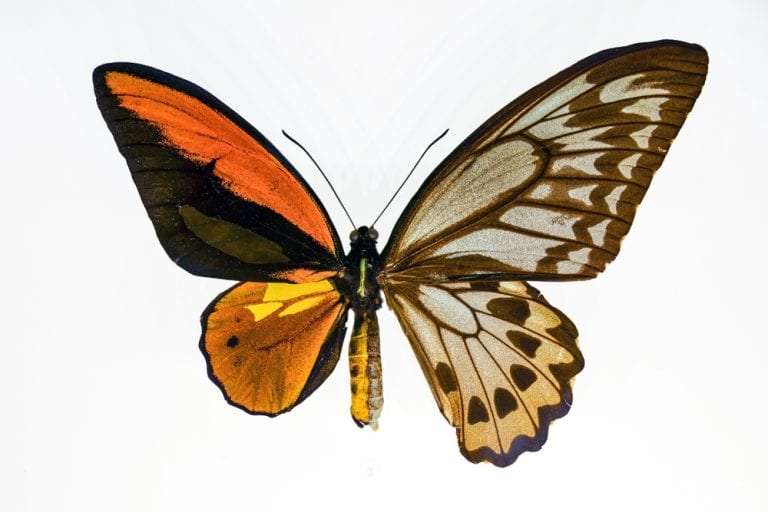
Gynandromorphy is a condition in which a single animal shows a mix of male and female physical traits. Often, the traits appear in clear sections of the body. In many cases, the split forms a sharp line. One half of the animal displays the traits of one sex, and the other half displays the traits of the other sex. Scientists call this pattern a bilateral gynandromorph.
People notice gynandromorphy most often in animals with big differences between males and females. Examples include butterflies where male and female wings show very different colors, or birds like cardinals where males appear bright and females look dull. Because the sexes look so distinct in these groups, a half‑and‑half body stands out immediately.

In many species, like the northern cardinal, differences between males and females are striking.
©iStock.com/Hongkun Wang
In crustaceans such as crabs and shrimps, male and female differences are often more subtle. That subtlety makes confirmed gynandromorphs in crustaceans rare and exciting finds. The Indian crab from Silent Valley stands out even more because it is the first reported case of gynandromorphy in its entire freshwater crab family, the Gecarcinucidae.
How Gynandromorphs Differ From Hermaphrodites
People often mix up gynandromorphy and hermaphroditism, but they describe very different situations.
A gynandromorph is a kind of “mosaic” individual. Different groups of cells carry male or female identities, and those groups build distinct patches or sides of the body. The animal’s external appearance may literally look half male and half female or show a patchy mix of traits.
A hermaphrodite, in contrast, has functional male and female reproductive organs at the same time or at different stages of life. The body usually follows a single overall pattern rather than splitting into obvious male and female halves. Hermaphroditism is normal in many species. Earthworms, many snails, and some fish naturally produce both sperm and eggs, and every healthy adult in those species is a hermaphrodite.
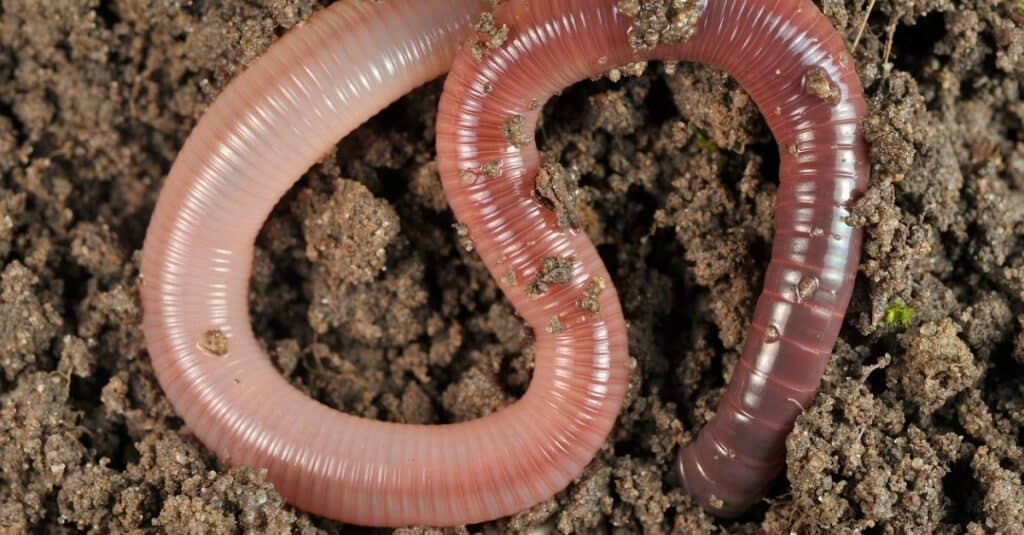
Earthworms are all hermaphrodites.
©iStock.com/K-Kucharska_D-Kucharski
Gynandromorphy is different. It occurs as a developmental accident in species where individuals are usually either male or female. Many gynandromorphs cannot reproduce at all. The Silent Valley crab is therefore not a typical hermaphrodite but an unusual individual whose body literally divides between two sex patterns.
Visible Traits: How Scientists Recognized the Dual Sex
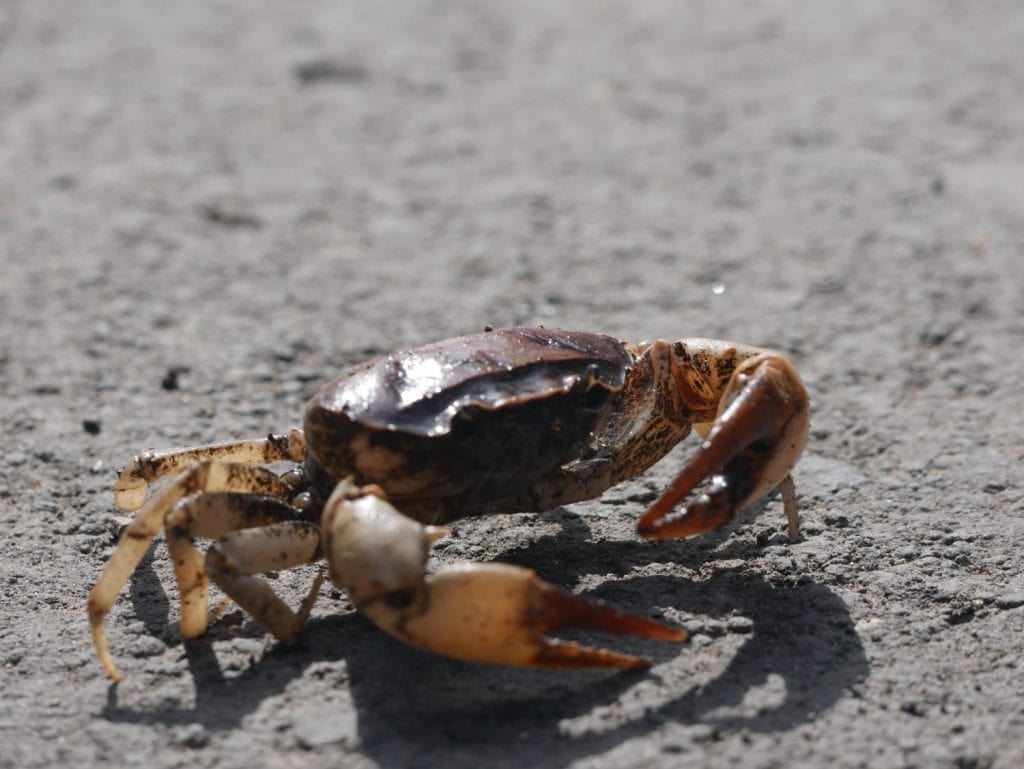
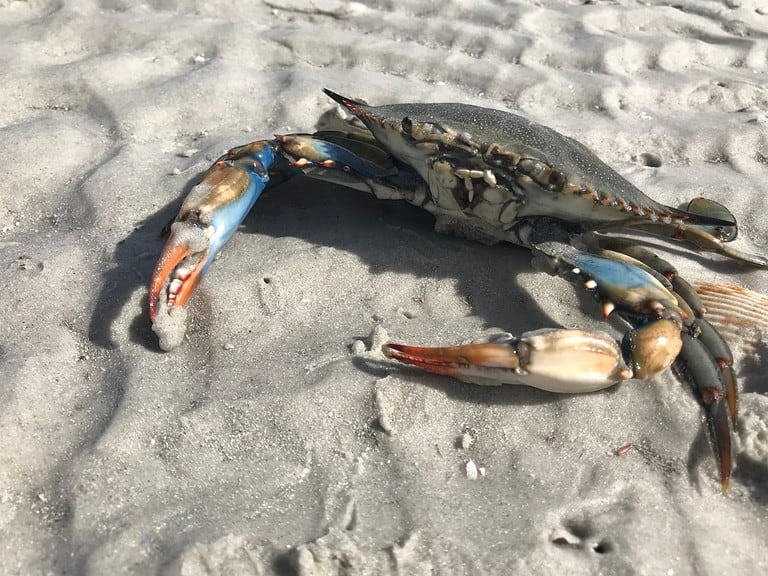
The newly discovered crab is a freshwater species similar in appearance to this one.
©Ted Banias/Shutterstock.com
Scientists recognized the crab’s dual sex by comparing each side with the normal male and female features of Vela carli. On the female‑type side, the abdomen appeared wider and more rounded. The female gonopore, which receives sperm and releases eggs, sat in the position expected in a typical female.
The opposite side showed a narrower, more tapered abdomen—one of the key male traits in this species. This side also carried the male reproductive structures used to transfer sperm during mating.
The claws added more evidence. One chela looked thicker and more robust, similar to the stronger claws males use for competition and courtship. The other claw appeared smaller and more delicate, matching the usual female form. Even the walking legs differed slightly in shape and sturdiness between the two sides. These differences echoed patterns seen in other animals where male and female limbs vary in size or ornamentation. Because these features followed a sharp left‑right boundary, researchers classified the crab as a bilateral gynandromorph rather than a more scattered, mosaic form.
Why Gynandromorphy Is So Rare in Crustaceans
Scientists have documented gynandromorphs most often in insects and birds. Differences in those species are so much more noticeable. In many crabs and shrimps, male and female differences are more subtle, so observers may overlook mixed individuals unless they examine them closely.
Another reason lies in how crustaceans determine sex. Their systems rely on both genetic factors and hormones that act during development. When those systems work normally, they push the body firmly toward either a male or a female pathway. In rare cases, something goes wrong very early in development. A mistake during the first cell divisions or an unusual hormone level can cause different groups of cells to adopt different sex identities. As those mixed cell populations grow, they can produce an animal with male traits on some body parts and female traits on others.
Many embryos with such mixed signals never survive. That early loss would further reduce the number of adult gynandromorph crabs that scientists can find in the wild. The few that do reach adulthood, like the Silent Valley specimen, provide rare clues about what went wrong in the earliest days of their development.
The Science Behind Split Sex Traits
To understand how a crab can end up half male and half female, scientists study both chromosomes and hormones. One classic explanation focuses on early cell‑division errors. If a mistake happens when the embryo divides for the first time or two, some cells may carry chromosomes for one sex while others carry chromosomes for the opposite sex. As the embryo grows, those different cell groups form different regions of the body, which then express male or female traits.
Hormones also play a powerful role. Experiments in crustaceans show that intermediate levels of key hormones, such as methyl farnesoate, can push development into ambiguous territory, though this is not universally established across all species. When hormone levels fall between the normal male and female ranges, individuals may develop intersex or gynandromorphic features.
Scientists have not yet pinned down the exact mechanism for Vela carli. They suspect a mix of genetic and hormonal factors acting during a very early stage, when the embryo contains only a few cells.
By comparing the crab’s internal structures and, in future research, possibly its genes and hormone levels, scientists hope to discover which pathways were disrupted. These studies will not only explain one unusual crab but also reveal general rules about how sex differences appear in many animals.
What Gynandromorphs Reveal About Sex Determination
Gynandromorph animals act like natural experiments that scientists could not ethically create on purpose in most vertebrates. Because different body regions carry different sex identities, researchers can study how local cells respond to sex‑determining signals.
Research on gynandromorph birds shows that cells on the male side of a finch’s brain and muscles behave like male cells even when both halves share the same hormone environment. These findings prove that genes inside each cell play a crucial role in sex identity, not hormones alone.
In crustaceans, scientists use gynandromorph shrimps and crabs to separate the actions of hormones from the genetic blueprint in each cell. This work reveals how both elements interact to shape claws, shells, and reproductive organs. The Silent Valley crab adds a new piece to this puzzle. It shows that even relatively simple‑looking animals can hide complex sex‑determination systems that can split along precise body borders when something goes wrong.
Why This Matters for Conservation and Education
The gynandromorph Vela carli matters not only to scientists but also to conservationists and educators.
Silent Valley National Park protects moist evergreen forests filled with tree holes, streams, and leaf litter. These habitats shelter many rare species, including tiny freshwater crabs that would remain unknown in more disturbed landscapes.

Vela carli thrives in shallow forest pools, streams, and puddles.
©Nicolas Vignot/Shutterstock.com
Finding such a unique individual in this protected area shows that the forests of India’s Western Ghats still hold many surprises. The region is a global biodiversity hotspot, and discoveries like this crab highlight the importance of preserving it. For students and the public, the story of a “half‑male, half‑female” crab provides a memorable way to learn about genetics and development. It also clarifies the difference between common terms such as hermaphrodite and gynandromorph. The crab reminds us that even small creatures can hold clues to big questions about how bodies form, how diversity arises, and why we need to protect wild ecosystems.
A Tiny Crab with a Big Scientific Story
The rare gynandromorph crab discovered in India may look like a curiosity, but it tells a powerful story about development. By carefully documenting the split male and female features in this single Vela carli, scientists can test ideas about chromosomes, hormones, and the origin of sexual dimorphism across animals. The discovery from Silent Valley National Park shows that even a creature small enough to hide in a tree hole can reshape our understanding of biology. It also reveals how much more there is to learn about the hidden diversity of life on Earth.