
For centuries, humans have assumed that our thinking errors set us apart from the rest of the animal kingdom. From misjudging risks to seeing patterns that aren’t there, we like to imagine that our mental quirks are the side effects of a uniquely human intelligence.
But what if they aren’t uniquely human at all?
A new study recently published in Proceedings of the National Academy of Sciences turns that assumption on its head. The research, led by Dr. Andreas Nieder of the University of Tübingen, shows that both rhesus macaques and carrion crows exhibit the same predictable numerical biases that have long been seen in humans. When asked to judge quantities, the animals consistently overestimated small numbers, underestimated large ones, and allowed recent experiences to sway their next decision.
The discovery implies that these “flaws” in reasoning might not be flaws at all, but ancient, efficient mental shortcuts shared across species.
“Cognitive biases are often viewed as human flaws,” Nieder told A-Z Animals. “But testing animals reveals whether these mental shortcuts are uniquely tied to human reasoning or reflect more fundamental, evolutionarily conserved strategies for coping with uncertainty.”
Macaques and crows are ideal for comparison because they are distantly related yet both show advanced numerical cognition.
Dr. Andreas Nieder of the University of Tübingen
Inside the Experiment: Counting Without Words
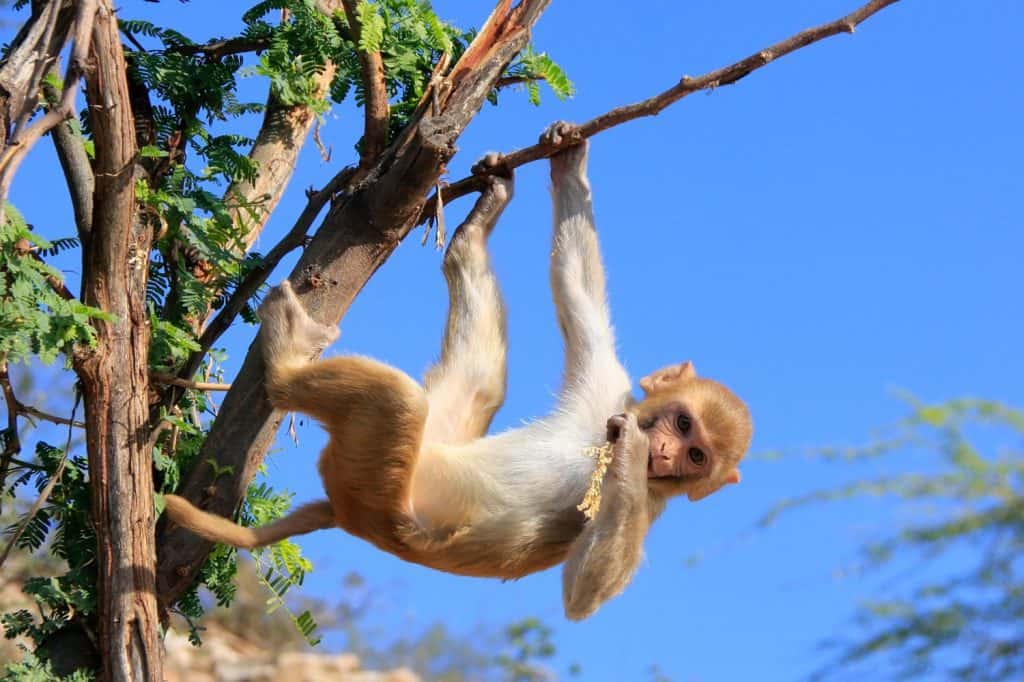
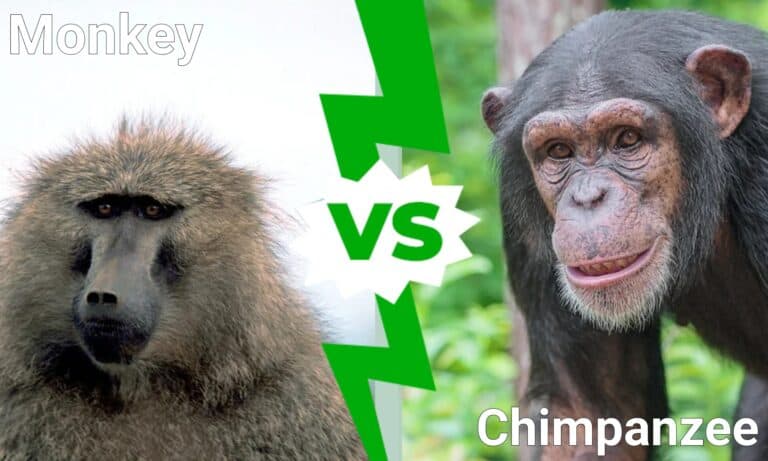
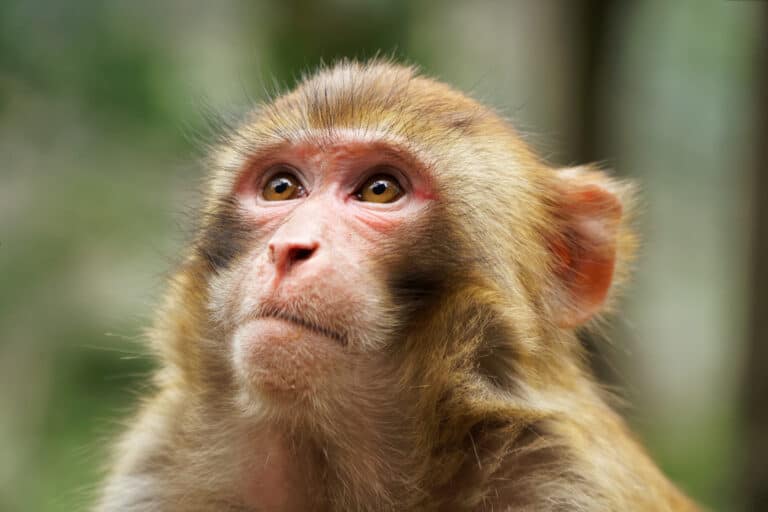
Rhesus macaques were used in Neider’s study.
©Don Mammoser/Shutterstock.com
To explore whether animals share human-like biases, Nieder and his team devised a task that both monkeys and crows could master. On a touchscreen, the animals saw an array of dots, sometimes just a few, sometimes as many as ten. After a short pause, a second set of dots appeared. If the number of dots matched the first display, the animal was rewarded.
This simple game, known as a delayed match-to-numerosity task, allows researchers to measure how the brain encodes, recalls, and compares quantities without relying on language. The team analyzed thousands of trials, tracking not only accuracy but also subtle, systematic drifts in judgment.
Both macaques and crows showed three classic human-like biases. Their estimates became less precise as the numbers grew larger (a phenomenon called scalar variability). They tended to overestimate small quantities and underestimate large ones—a hallmark of regression to the mean. And their judgments were influenced by the numbers they had just seen, an effect known as sequential dependence.
“Both species showed the same core biases: scalar variability, regression to the mean, and sequential effects,” Nieder explained. “That was surprising given how distantly related monkeys and crows are.”
What’s remarkable is not just that both animals showed bias, but that they showed the same biases in the same direction.
Two Very Different Brains, One Mental Strategy
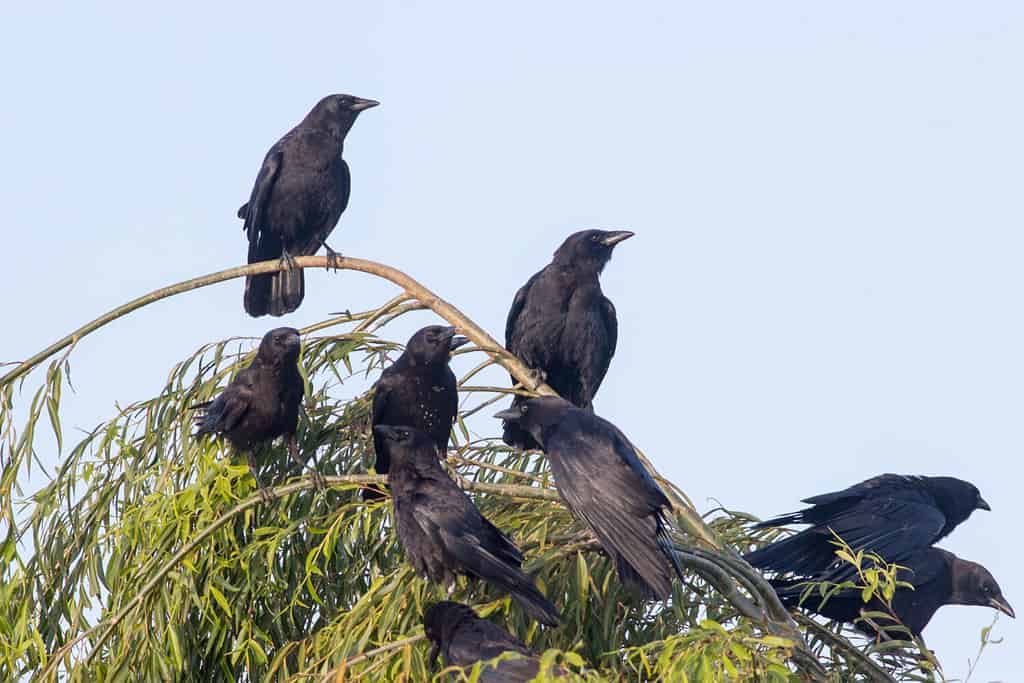
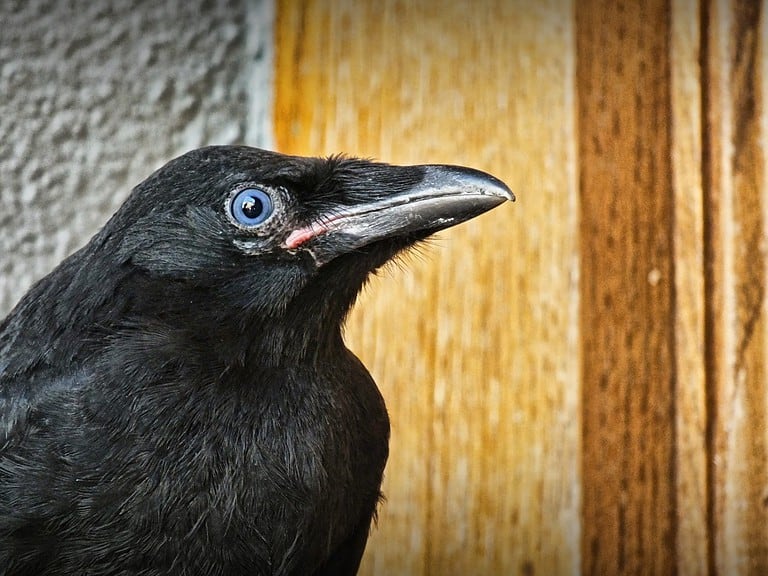
Crows were seen to have the same numerical biases as the monkeys in Neider’s study.
©Elliotte Rusty Harold/Shutterstock.com
At first glance, macaques and crows could hardly be more different. Monkeys are mammals with large, layered brains; crows are birds whose brains evolved along a completely separate path. Their last common ancestor lived more than 320 million years ago.
That evolutionary gulf is precisely what made them perfect test subjects.
“Macaques and crows are ideal for comparison because they are distantly related yet both show advanced numerical cognition,” Nieder said. “Comparing them allows us to test whether similar cognitive strategies evolved independently or stem from a shared ancestral mechanism.”
In both species, the same patterns emerged. As the numbers increased, their precision faltered. Their memories of previous trials nudged their estimates toward familiar territory. The parallel results suggest that, despite their vastly different brain structures, monkeys and crows rely on similar computational strategies for judging quantity
The Bayesian Brain: How the Mind Balances Past and Present
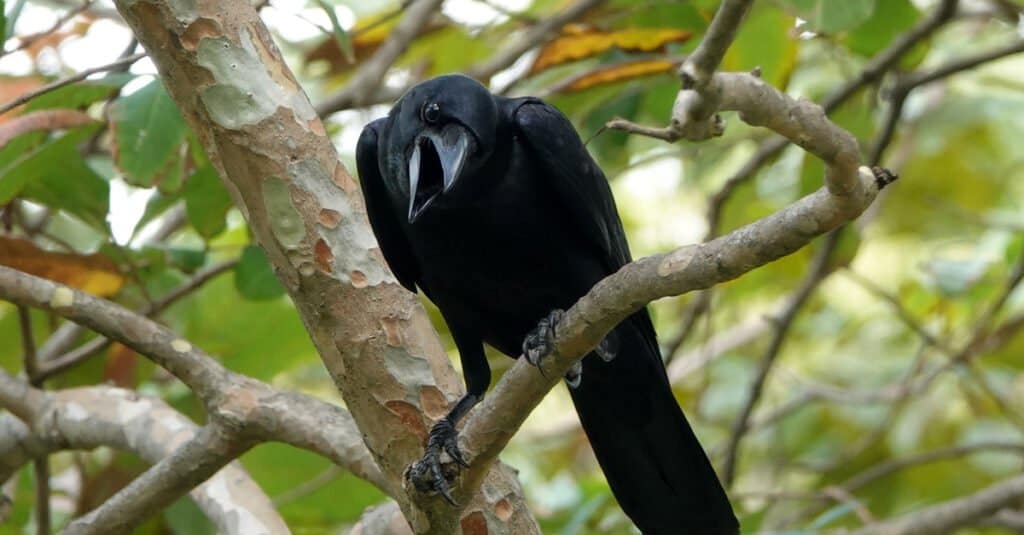
Crows have complex brains that exhibit significant behavioral flexibility.
©Marut Sayannikroth/Shutterstock.com
To explain these patterns, Nieder’s team turned to a powerful mathematical idea: Bayesian inference. In Bayesian models of perception, the brain combines uncertain sensory input with prior experience to make the best possible guess about reality.
When the researchers simulated how a Bayesian observer would behave in the experiment—blending new visual evidence (the current dots) with prior expectations (the recent trials)—the computer model perfectly reproduced the animals’ real-world performance.
In essence, the monkeys and crows were unconsciously using Bayesian logic: smoothing their noisy perceptions by weighing the past against the present. This finding links the animals’ biases directly to an underlying computational rule that governs decision-making across human, avian, and primate domains alike.
Why Being “Wrong” Can Be Right

Biases often carry negative connotations
©fizkes/iStock via Getty Images
In everyday life, bias often carries a negative connotation. We think of it as clouding our judgment. Yet Nieder’s research reframes bias as an adaptive solution rather than a failure.
In nature, information is messy. A foraging crow or a hunting monkey must make quick choices based on limited data: how many fruits remain in a tree, how many rivals lurk nearby, how far away a predator might be. In these situations, leaning on past experience can stabilize perceptions of uncertainty and improve survival odds, even if it introduces minor errors.
“These shortcuts enhance efficiency,” Nieder said. “They can lead to predictable distortions in perception and reasoning, but they also reflect how the brain simplifies complex information to make rapid, useful decisions.”
In other words, what looks like irrational thinking in the lab may be rational behavior in the wild. A crow that slightly overestimates the number of predators might flee too early—but that’s far safer than underestimating and getting caught.
A Universal Rule of Thought
How far back did intelligence evolve across the tree of life?
©sutadimages/Shutterstock.com
If biases like regression to the mean arise in both birds and primates, how deep do these roots go? Nieder suspects they might extend much further.
“If fish or reptiles showed similar biases,” he said, “that would suggest these mental shortcuts originated in early vertebrates, over 360 million years ago.”
So far, similar experiments haven’t been run in those groups, but Nieder hopes future studies will. If those species also show the same distortions, it would suggest that the brain’s reliance on probability and prior experience is a universal feature of vertebrate intelligence.
That would mean the way we—and other animals—perceive the world isn’t a human invention, but a neural law shaped by evolution itself.
From Brains to Behavior, and Beyond
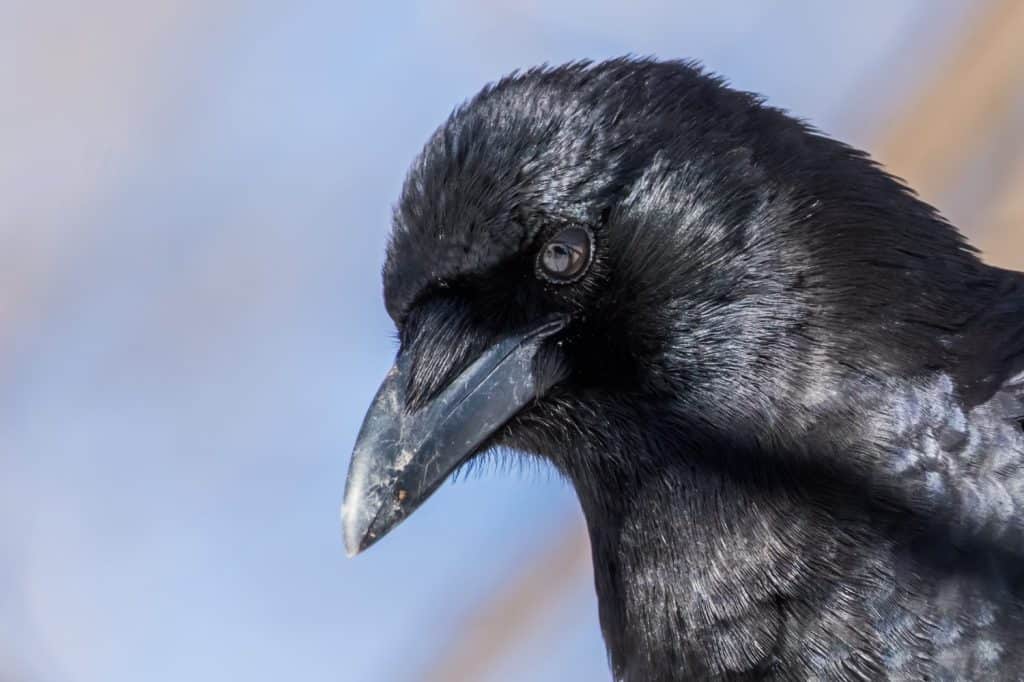
Crows are known for their intelligence and have the brain to match.
©KevinDTiptonPhotography/Shutterstock.com
The parallels between monkeys and crows don’t end at numbers. Nieder’s previous work has shown that crows can count, use tools, and even grasp abstract concepts. Birds achieve these feats using a different brain structure—the nidopallium caudolaterale—that functions much like the human prefrontal cortex.
That convergence highlights evolution’s knack for finding similar solutions to the same problems.
“Numerical cognition involves distinct brain regions in monkeys and crows,” Nieder noted. “But the computational demands are similar. So both evolved Bayesian-like mechanisms to interpret the world efficiently.”
The result is a humbling revelation: two species separated by hundreds of millions of years have independently developed the same mental “tricks” that guide our own reasoning.
The Next Frontier: Finding Bias in the Brain
Neider and his team are now looking at what happens in the brain when crows and monkeys use mental shortcuts.
©Life science/Shutterstock.com
While the behavioral patterns are clear, Nieder’s team now wants to see what happens at the neural level.
“The next step is to investigate the neural basis of these biases, examining how specific brain regions in crows and macaques encode numerical information and integrate prior experience during decision-making,” he said. “After all, behavior originates from the workings of the neurons in the brain.”
If scientists can trace these biases to specific circuits, they may uncover a universal code for how all intelligent brains—bird, primate, or human—turn uncertainty into action.