While both monkeys (infraorder Simiiformes) and chimpanzees (Pan troglodytes) are primates, they have many key differences. Monkeys are not classified within a single family; instead, they are divided into various families within the infraorder Simiiformes, which also includes chimpanzees and humans. Old World monkeys (found in Africa and Asia) belong to the family Cercopithecidae, while New World monkeys (found in the Americas) are divided into five families: Atelidae, Aotidae, Callitrichidae, Cebidae, and Pitheciidae.
The 5 Key Differences Between a Monkey and a Chimpanzee

Chimpanzees are among humans’ closest living relatives, sharing about 98.8% of their protein-coding DNA sequences, though recent research suggests the overall genomic difference is closer to 14-15% when considering the entire genome.
©Edwin Butter/Shutterstock.com
The primary differences between a monkey and a chimpanzee include their family unit, appearance, diet, intelligence, and communication. Both monkeys and chimpanzees are primates. Primates are mammals with sophisticated cognitive development and abilities, grasping hands and feet, and forward-facing eyes.
Family
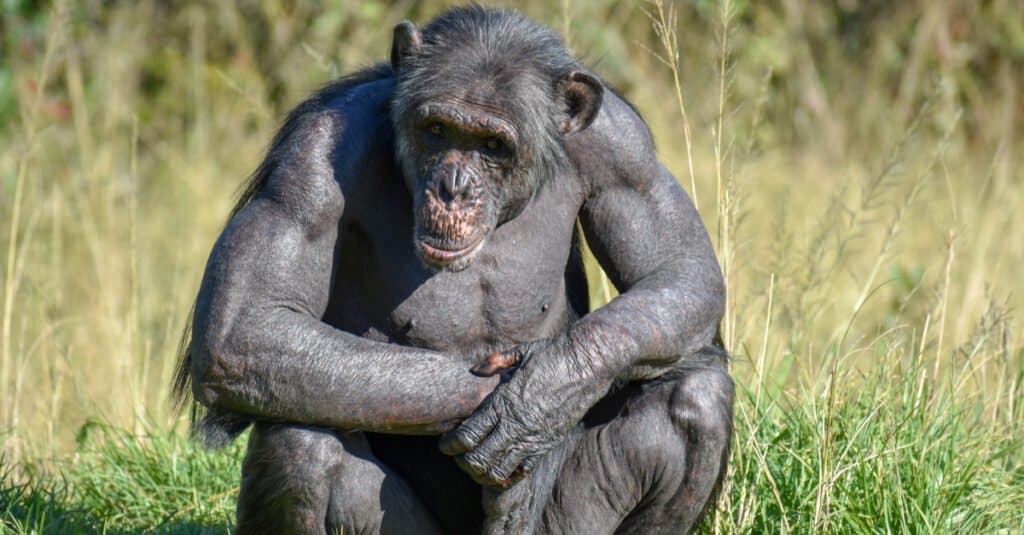
Though chimpanzees are related to monkeys, they are not monkeys.
©Darren Hopping-Mills/Shutterstock.com
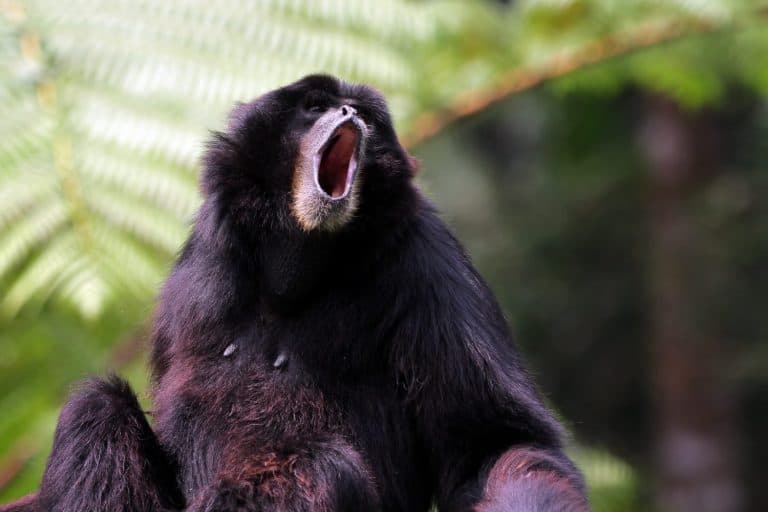
Monkey is generally accepted to refer to two types of primates: New World and Old World monkeys. Some significant differences between these two groups include the presence or absence of opposable thumbs, sitting pads, the shape of the nose and septum, and whether or not they have prehensile tails. Monkey species include baboons, macaques, marmosets, tamarins, and capuchins.
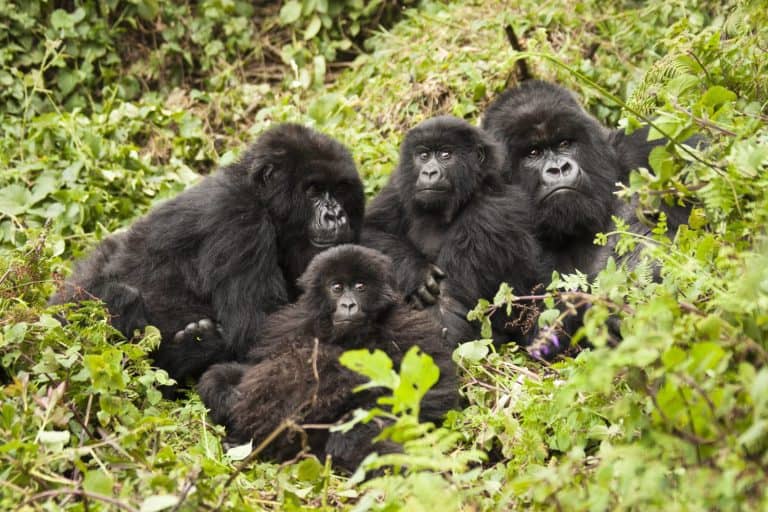
While related to monkeys, chimps are not monkeys at all. Chimpanzees are a species of great ape native to Africa that are known for being highly intelligent and social. They belong to a family of mammals called Hominidae. Other hominids include gorillas, orangutans, bonobos, and humans.
Appearance
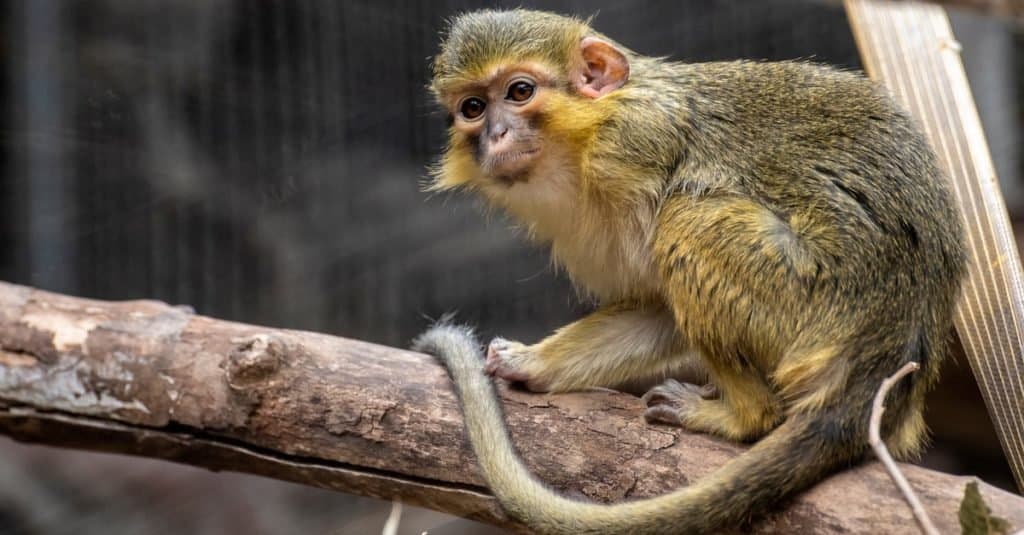
Monkeys have tails while chimpanzees don’t.
©Jossfoto/Shutterstock.com
A simple way to tell the difference between monkeys and chimpanzees is to look for a tail; monkeys have them, and chimps don’t. Old World monkeys have shorter tails than New World Monkeys.
While not all monkeys can, many, including spider monkeys, howler monkeys, and woolly monkeys, swing and hang from trees using their tails like a fifth limb. Their tails are strong enough to support their entire body weight and have a bare, textured underside that enhances grip, allowing for agile movement through the forest canopy.
Because they lack tails, chimpanzees move through the forest canopy using a combination of locomotion techniques, such as brachiation (swinging arm-over-arm), vertical climbing, and sometimes even bipedal movement while holding onto branches for balance. Their long arms, highly flexible joints, and grasping hands and feet, which possess opposable toes similar to their thumbs, allow chimps to move with ease through the trees.
There are over 200 recognized species of monkeys, and they look very different from each other, varying in size, color, and facial features.
Chimpanzees resemble humans in form, although they are covered with long, black or brown hair. Chimps have long, strong arms that are about 1.5 times their body length. They also have opposable thumbs and opposable big toes for grasping. Chimps have hairless faces, hair-covered bodies, and prominent ears.
Diet
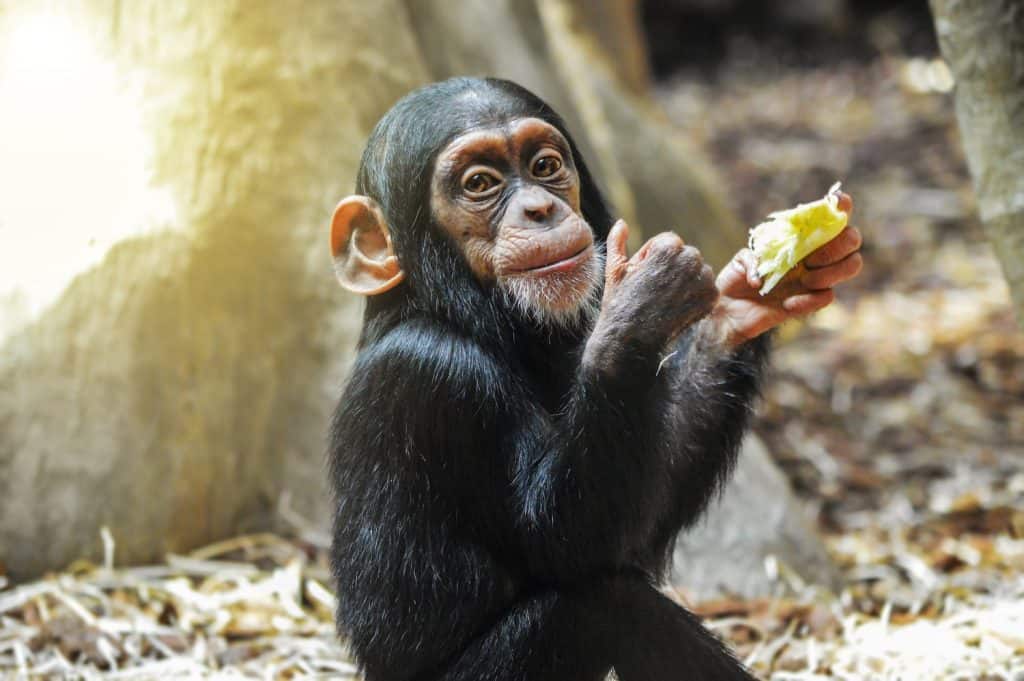
©Michaela Pilch/Shutterstock.com
Most monkeys are omnivores. They eat plant-based foods, such as fruits and nuts, some meat, including lizards, and bird eggs. However, their diets change with the seasons. Monkeys do eat bananas, but not the same variety as those found in supermarkets. The wild bananas monkeys eat have a lot of hard seeds and very little fruit.
Chimpanzees are primarily frugivores, eating fruit, seeds, leaves, flowers, honey, and insects. They will also hunt and eat small mammals such as antelopes, goats, and smaller primates. While meat provides valuable nutrients, the amount of energy expended and the risk of injury during hunting prevent it from being a more significant part of their daily diet.
Chimpanzees make tools from sticks to extract termites and ants from their mounds. Jane Goodall, the renowned British primatologist, ethologist, and anthropologist, was the first to notice and document this behavior. Her groundbreaking observation of the chimp David Greybeard stripping leaves from a twig to use as a tool to extract insects was a pivotal moment, challenging the belief that tool-making was an exclusively human trait.
Intelligence
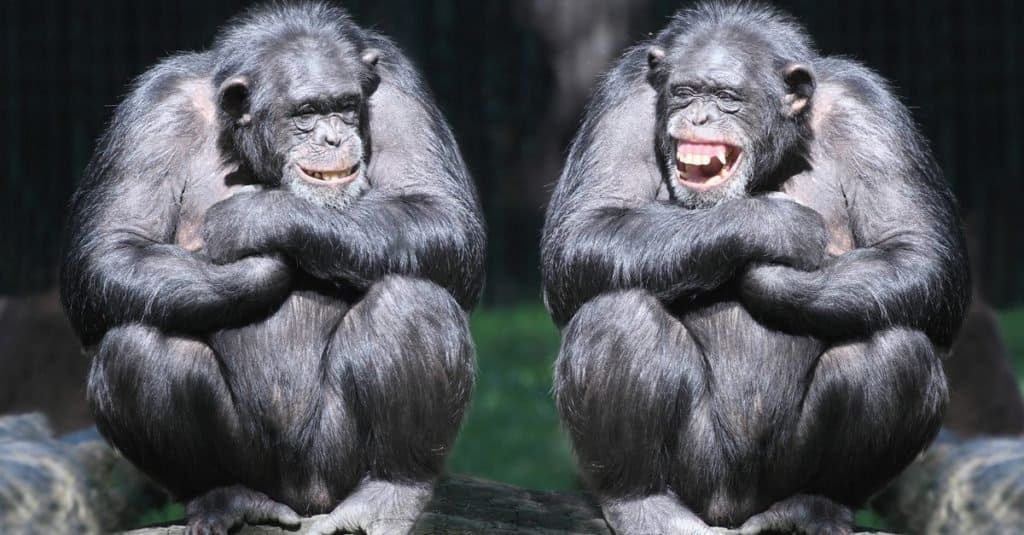
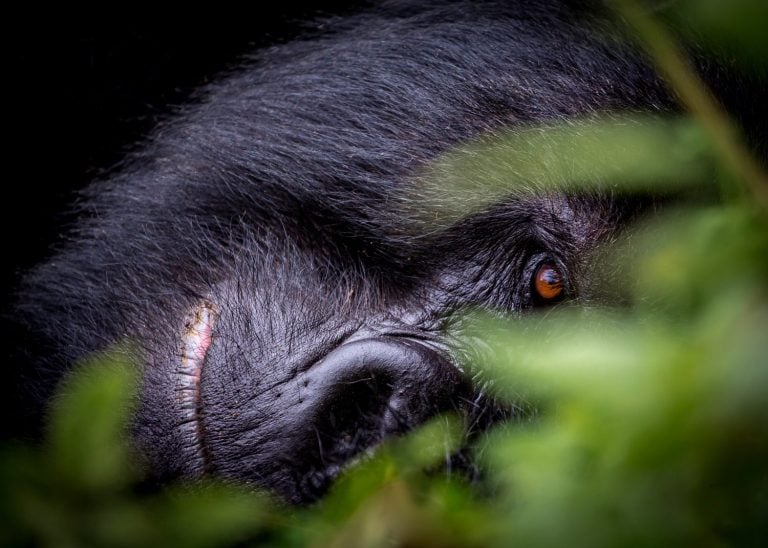
Chimpanzees are more intelligent than monkeys.
©Kletr/Shutterstock.com
The most fundamental distinguishing feature between monkeys and chimpanzees is intelligence. While monkeys are intelligent, their brains are more primitive, and they do not match apes in terms of cognitive abilities.
Chimpanzees generally demonstrate more advanced cognitive abilities than monkeys, though in some specific tasks, monkeys can perform at similar levels. Chimps demonstrate more advanced cognitive abilities, including self-awareness, abstract reasoning, the ability to learn quasi-linguistic communication, and complex tool use. These differences are due to chimpanzees having larger brains and more cortical neurons and synapses than monkeys.
Communication
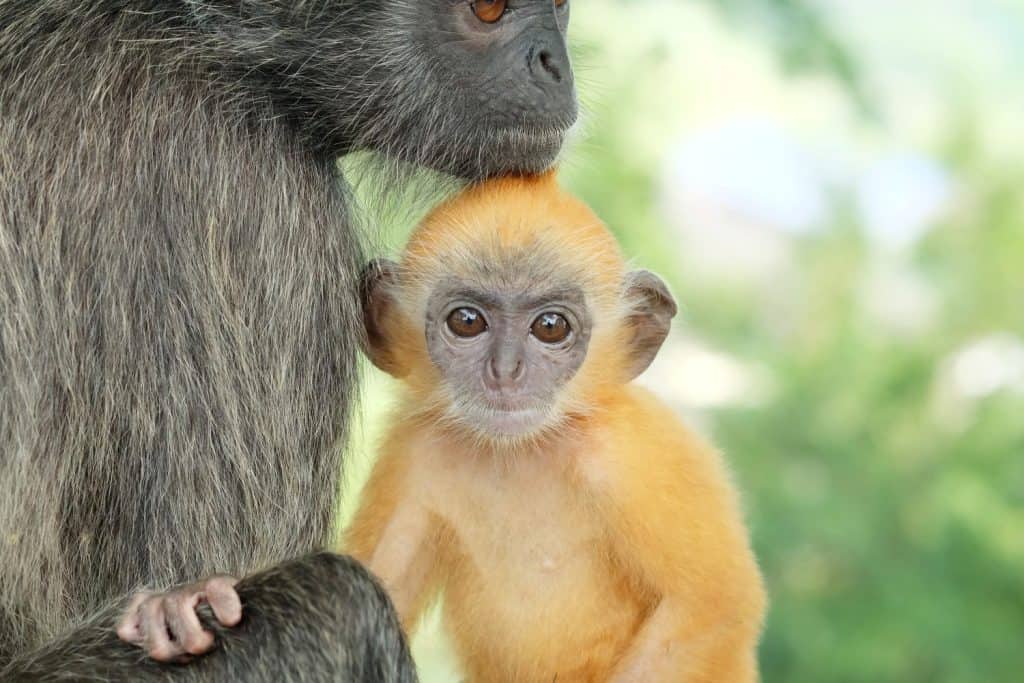
Monkey communication is far less complex than chimpanzee communication.
©Nicholas Toh/Shutterstock.com
Monkeys can interact with one another, but their communication is less complex than that of Chimpanzees. Monkeys use facial expressions, vocalizations, and body gestures to communicate. Monkey family units, known as troops, vary greatly in structure across species, ranging from monogamous pairs to complex multi-level societies with hundreds of individuals. In the primate world, grooming serves as a crucial social behavior that extends far beyond simple hygiene, functioning as a powerful tool for building bonds and resolving conflicts. This process, called allogrooming, is fundamental to maintaining social structure and cohesion within the group.
Chimpanzees are highly social animals. They use vocalizations, hand gestures, and facial expressions to communicate, much like humans use nonverbal communication. They live in loose communities that can range from about 15 to 150 individuals, within which smaller family groups exist. They groom each other, protect their home range from predators, and gather food as necessary. Chimpanzees are good communicators, utilizing a complex system of gestures, vocalizations, and body language to navigate their intricate social lives. Their communication is highly intelligent, allowing them to coordinate activities, resolve conflicts, and express emotions.