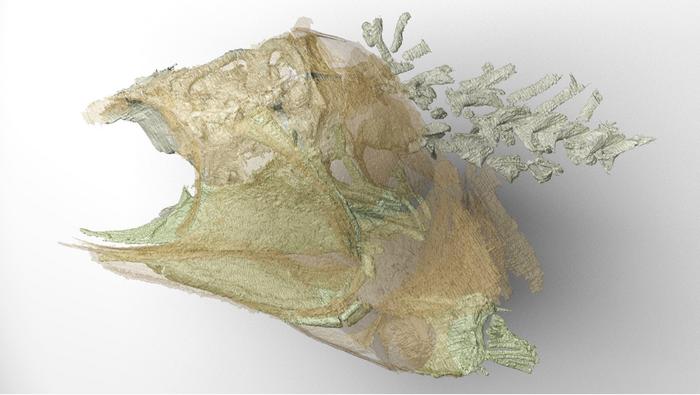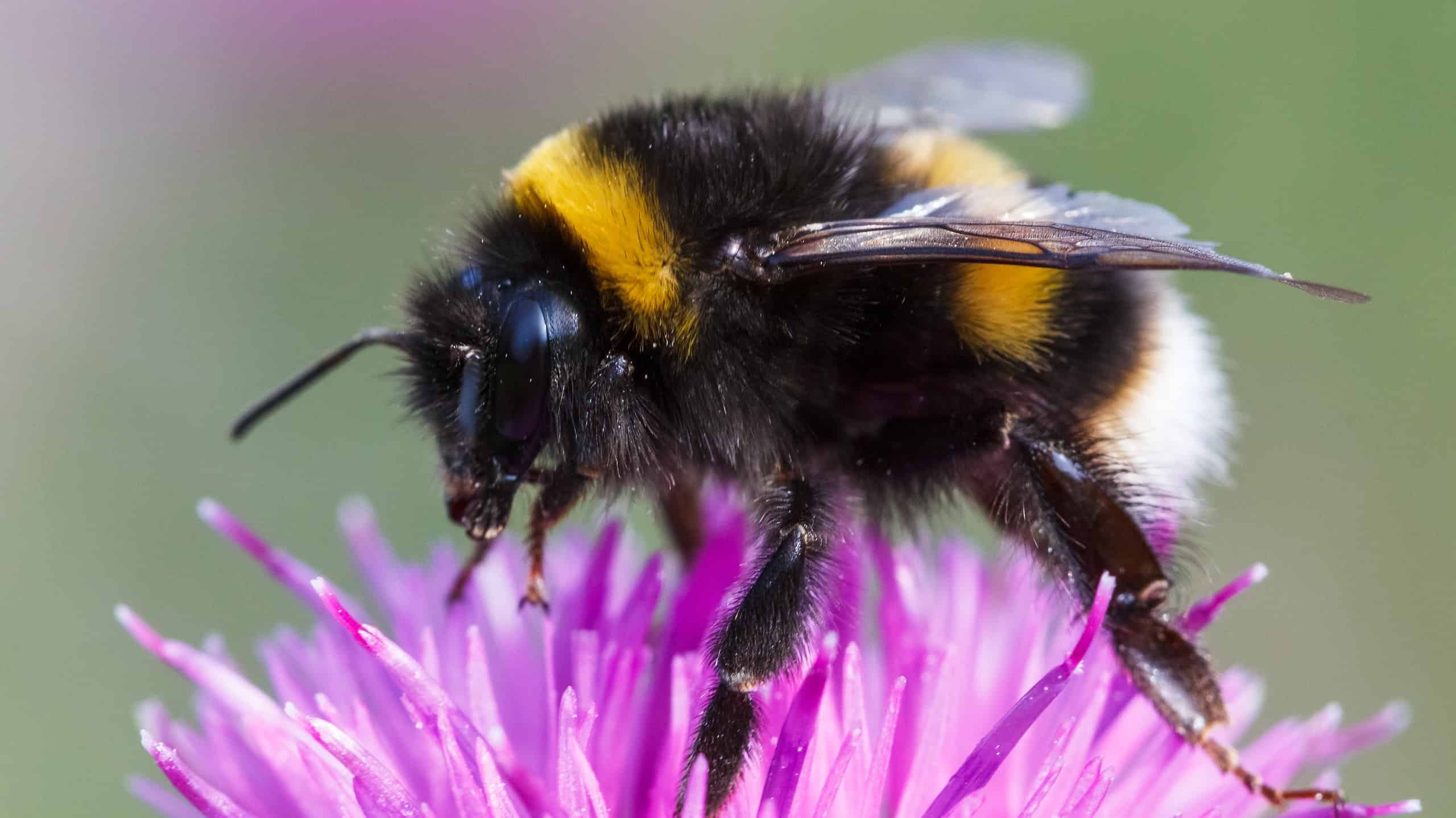

Imagine the tiny bumblebee learning a kind of Morse code, a system built from short and long flashes or beeps. That idea sounds straight out of science fiction, yet a recent experiment shows it can happen in real laboratories. Researchers trained bumblebees to recognize light signals patterned after Morse code and to act on those signals to find food. The study reveals cognitive skills that many people never expected from insects with poppy seed-sized brains. It also raises big questions regarding mental abilities across the animal world, from mammals to tiny pollinators, and how far intelligence can stretch when brains are small but busy.
Why Are Scientists Interested in Bumblebees?
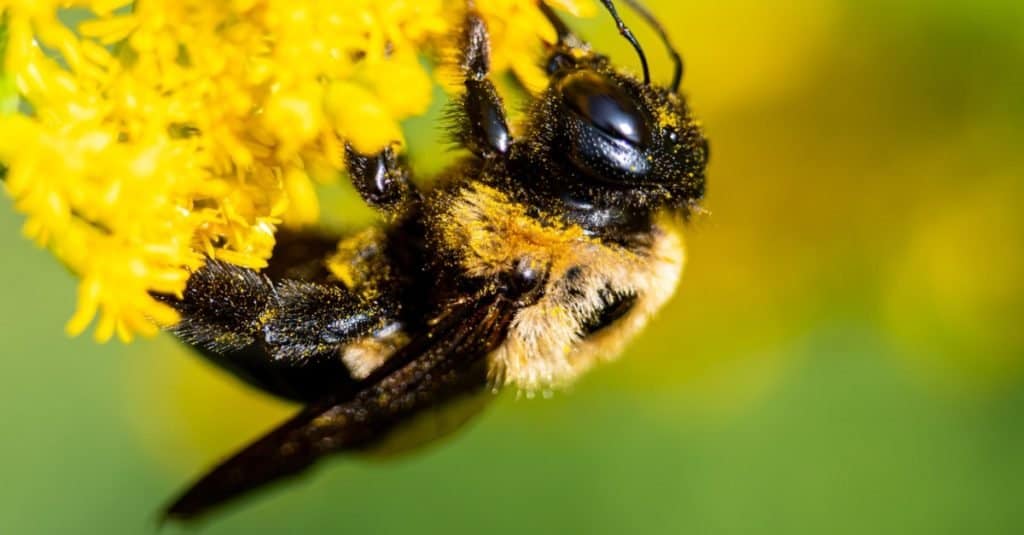
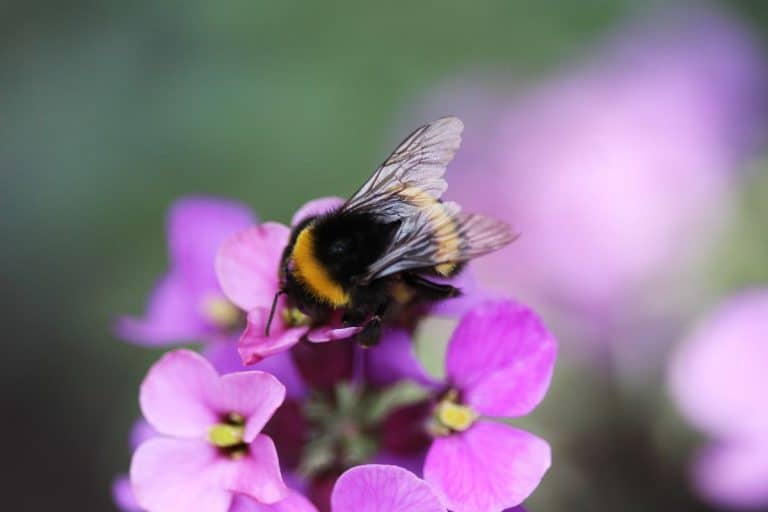
Bumblebees harvest nectar and pollen from flowering plants.
©Brier Mitchell/Shutterstock.com
Modern researchers are keen to understand how animals process information, and insects are a major part of that puzzle. Bumblebees already fascinate scientists because they navigate wide areas, remember flower patches, and coordinate activities inside crowded colonies. And researchers are especially interested in bumblebees because they are vital pollinators, keeping wild plants and food crops alive. Unfortunately, their populations are threatened by habitat loss, pesticides, disease, and climate-driven changes in temperature and bloom timing.
Inside The Morse Code Experiment
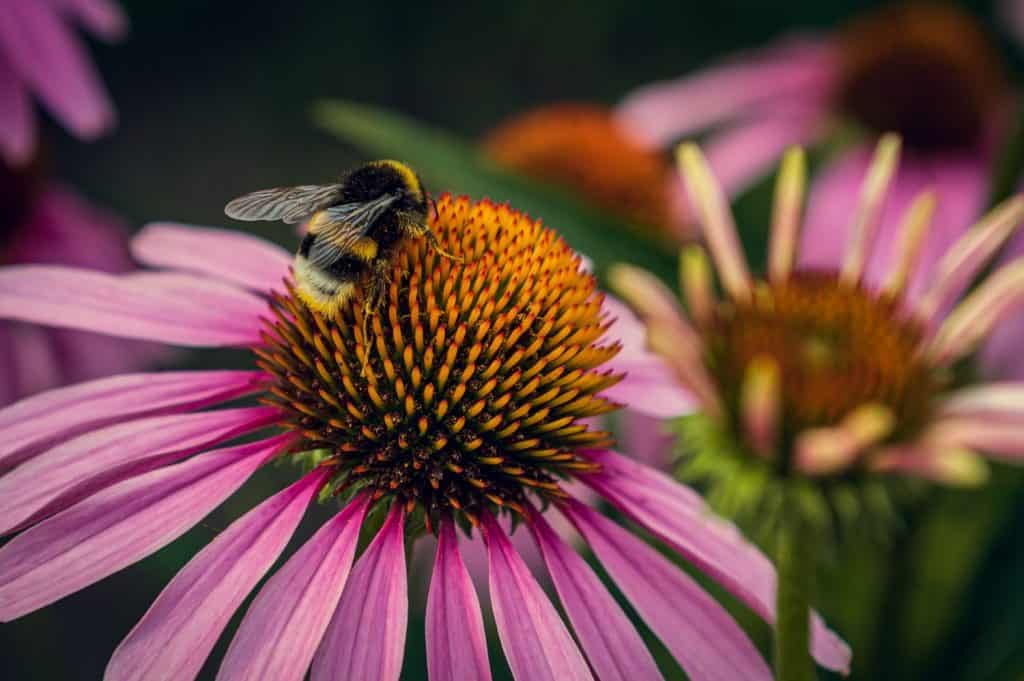
Bumblebees are one of the most important pollinators in many ecosystems.
©DiKareva Vika/Shutterstock.com
Researchers at Queen Mary University of London wanted to know whether bees could handle time-based information, not just colors, shapes, or scents. In other words, could they learn that a long flash meant “good”, and a short flash meant “bad,” or the reverse, and then remember the rule later? Time-based learning is well documented in humans and several vertebrates, such as pigeons and macaques, yet many experts assumed that insects lacked the neural capacity for this type of task. Testing bees with Morse code-style flashes offered a direct way to explore that assumption.
To test the idea, scientists built a controlled foraging arena. Individual Bombus terrestris bumblebees entered the area, where two yellow circles flashed on a digital screen. One circle showed a brief pulse of light, while the other stayed lit for a longer period. In separate runs, the team used pairs such as one second versus five seconds, or half a second versus two and a half seconds. Beneath each flashing circle sat a tiny well. One held a sugar solution, the other quinine, a bitter substance that bees prefer to avoid. The bees sought to discover which duration led to a sweet treat and which signaled an unpleasant taste. They then had to stick with that rule if they wanted to continue to reap the sweet reward.
Learning The Code: From Sugar to Memory

Bees in an experiment learned to associate patterns of light with sweet or bitter liquids.
©Ernie Cooper/Shutterstock.com
Training did not rely on random luck. Each bee made consistent choices. Researchers counted a session as successful only when a bee chose the correct flash at least fifteen times out of twenty. Once a bee reached that standard, the team changed the rules in a crucial way. They removed the sugar from the arena and replaced every liquid with plain water. The light signals stayed the same, but now there was no scent of sugar to follow, no taste to guide decisions. Despite that change, bees continued to visit the flash duration that had previously brought a reward far more often than chance would predict. Their behavior showed real learning of the timing pattern, not simple sniffing skills.
What The Study Says About Bumblebee Minds

Two bumblebees collecting pollen.
©nnorozoff/iStock via Getty Images
The results, published in November 2025, surprised many animal behavior researchers. Before this work, complex time-based learning seemed unlikely in insects, whose brains contain far fewer neurons than those of birds or mammals. Yet these bumblebees tracked the difference between short and long visual cues, linked each cue to an outcome, and later applied that rule with no reward present. Their brains handled duration, association, and recall in a coordinated way.
Scientists now suggest that this type of timing ability may have deeper roots in nervous systems than expected. Rather than being reserved for large brains, precise time processing might arise from basic properties of neurons and circuits that many species share, no matter their size.
Why Timing Skills Matter in the Wild
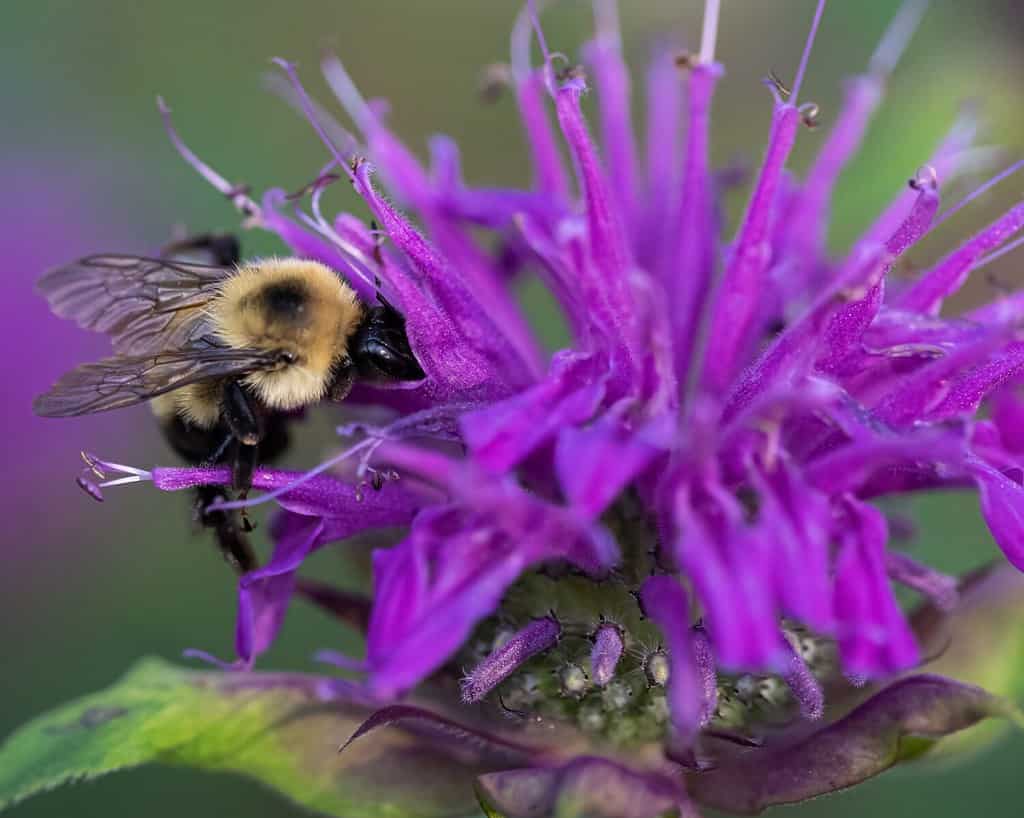
An ability to time their activities to local conditions can give a survival edge to bees.
©Matt Cuda/Shutterstock.com
Although bees do not encounter flashing screens in natural environments, timing still matters in their daily lives. Flowers open and close at particular hours, predators patrol at certain times, and weather changes throughout the day. A bee that can connect time cues with good or bad outcomes gains a clear survival edge. It can learn that one patch of flowers rewards visits at dawn, while another pays off later, or that a perch near a spider web is safer at night than midday.
Timing skills may also support navigation, helping bees match their internal sense of duration to the distance they fly from nest to feeding site. The new study suggests that the same basic ability used in the lab for Morse style flashes could underlie these natural decisions.
Lessons For Science and Technology
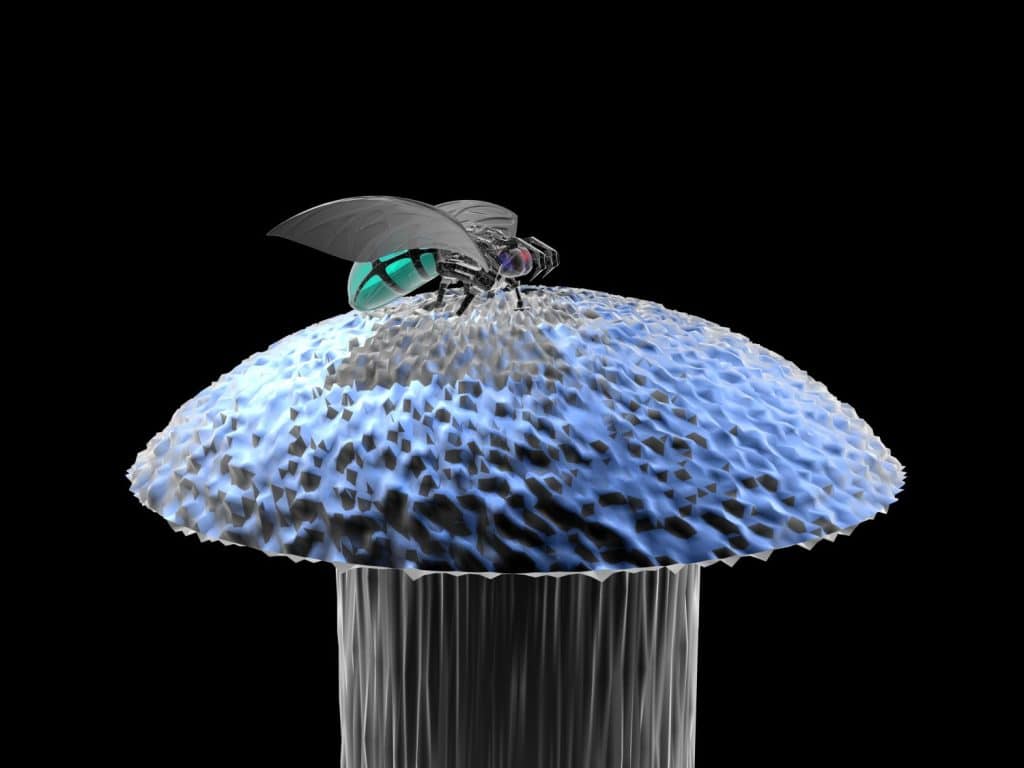
An artist’s concept of a futuristic nanobot perched on the head of a pin.
©Christian Darkin/Shutterstock.com
This research carries weight beyond the hive. For biologists, it expands the field of animal cognition by showing that tiny brains can handle abstract tasks based on duration, not only on simple sensory cues. That finding encourages scientists to rethink how intelligence is defined and measured across species.
For engineers working in robotics and artificial intelligence, the study offers inspiration of a different kind. Bumblebees make solid decisions with compact nervous systems that use far less energy than human style computers. Understanding how they do so may guide the design of leaner algorithms that still adapt, learn, and respond to changing information. In that sense, every trained bee acts as a small, flying model for efficient computation. This is especially valuable research for nanotechnology research, which could one day produce tiny robots able to perform a wide range of work for people unobtrusively.
Beyond Light Flashes: Communication In Bee Colonies
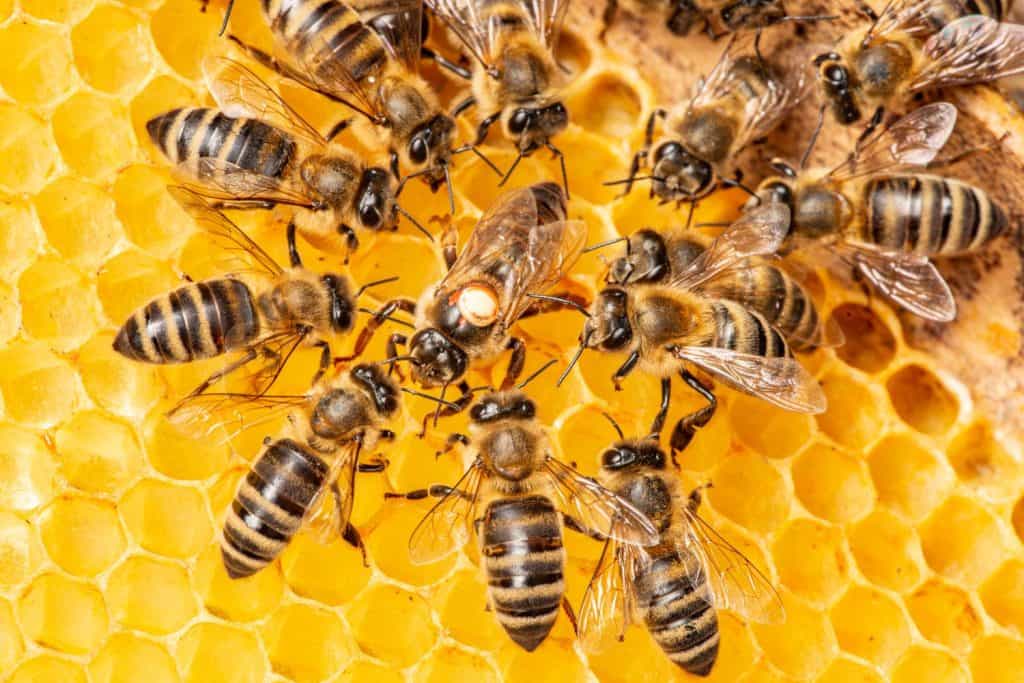
Honeybees communicate with one another through pheromones, touch, vibration, and “dancing” movements.
©Kuttelvaserova Stuchelova/Shutterstock.com
Of course, bees did not evolve under laboratory lights. In nature, bumblebees share information through body movements, vibrations, and scent markings inside their nests. Honeybees, close relatives of the bumblebee, communicate through pheromones that signal everything from danger to a queen’s presence. They use brief buzzes, antennal touches, and subtle wing vibrations to pass along instructions or calm the colony during stressful moments. And they perform a “waggle dance,” a figure eight movement that points nestmates toward distant food sources with remarkable accuracy.
Bumblebees do not use that detailed dance language. Instead, they rely more on excited runs, buzzing, and chemical cues that encourage nestmates to start foraging and to explore promising areas. The new timing study shows that their communication toolkit might support more flexible strategies than scientists once assumed. If bees can learn human designed light codes under experimental conditions, it suggests that their natural signals may also tap into sophisticated timing and memory skills.
The Brainpower of Bees: More Than Meets the Eye
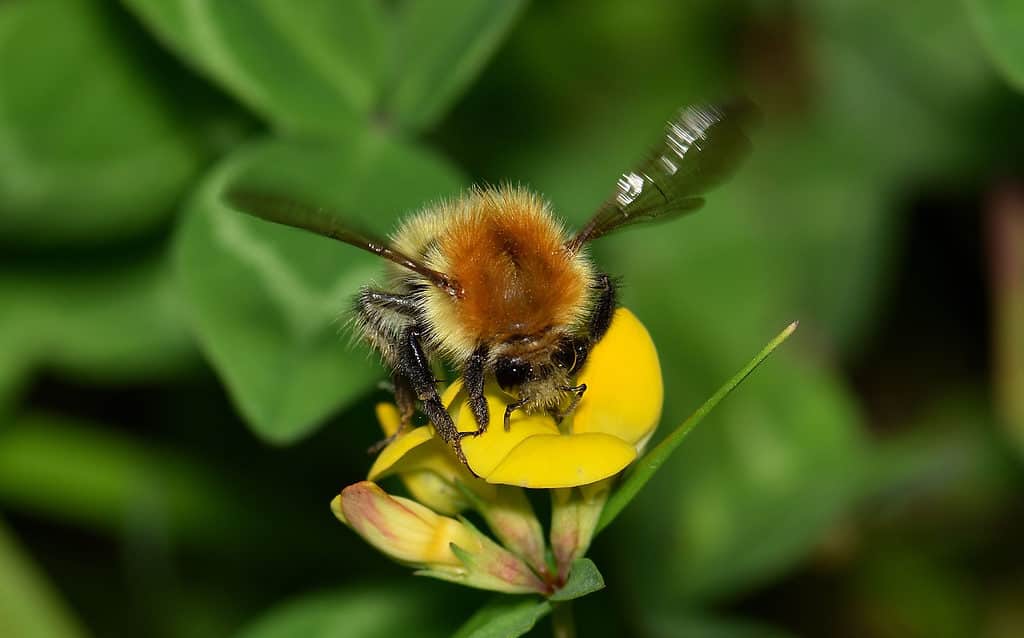
Bumblebees don’t need big brains to do some very smart things.
©iStock.com/Wirestock
A bumblebee brain is scarcely larger than a pinhead, yet it handles navigation, color vision, complex odor cues, and now, as this study shows, fine grained timing. These abilities fit into a growing set of findings that reveals intelligence comes in many forms. Though bee cognition reflects the needs of life on the wing, not human style reasoning, it still involves curiosity, persistence, and adaptation. Foraging workers test new flowers, track changing seasons, dodge predators, and cooperate with nestmates, all under the guidance of that tiny nervous system. By studying how bees learn, researchers gain insight into general rules that any brain might follow when it solves problems in a noisy, shifting world.