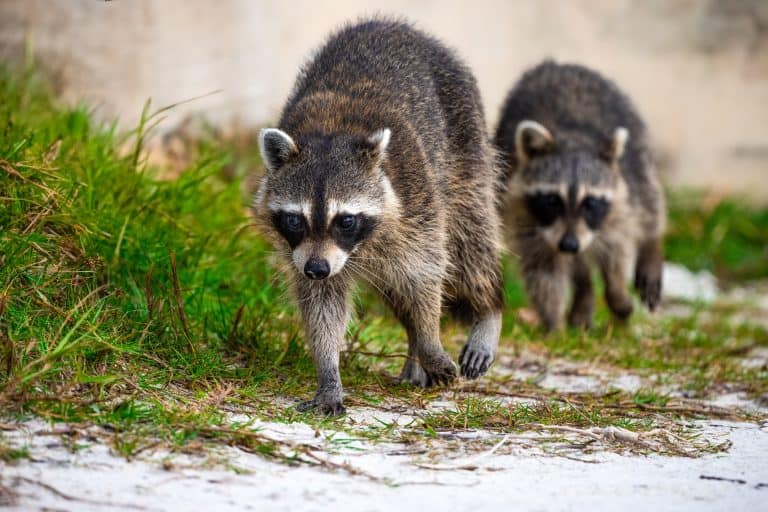

Raccoons have long held the role of adorable bandits in the animal kingdom, and it’s not just because their black “mask” is the right costume for it. They are remarkably adept at sneaking into trash cans, camping tents, and homes to rummage around for edible things. Their mischief is well-documented, but beneath that cuddly facade lies a keen intelligence that rivals even the cleverest household pets. As raccoons adapt to urban environments, their curious behaviors and remarkable problem-solving abilities have fascinated scientists and homeowners, revealing a creature that’s not just cute but borderline brilliant.
My First Raccoon Encounter
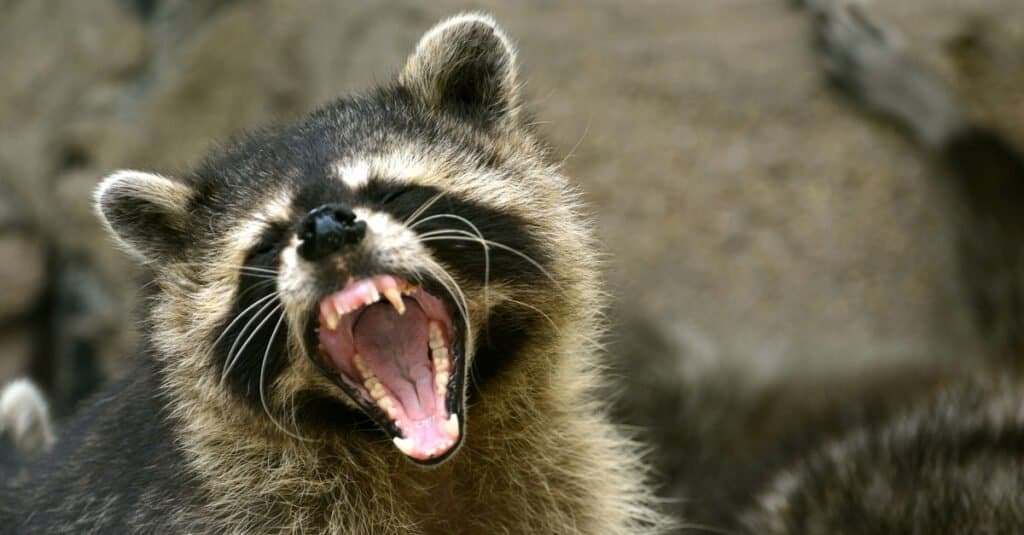
Lesson learned: if you encounter a raccoon, it behooves you to leave it alone.
©dangdumrong/Shutterstock.com
My earliest memory of an encounter with a raccoon was when I was about 9. Driving home one night, my dad hit one on the road, to the consternation of my mom and us kids. We made him stop to see if it was ok. He picked up the limp critter by the tail and shook it a little, then pronounced it “good and dead.” But, to add to the horror—and over Mom’s objections—he put the carcass in the trunk of the car to take it to a taxidermist friend, presumably for practice.
After a silent, stunned ride, we got home, and he opened the trunk. The raccoon was gone! But deep in the recesses of the trunk we heard an otherworldly hissing growl and saw two bright eyes gleaming in the shadows. Mom screamed and jumped back, we kids squealed and stumbled away, and even my dad yelped. Terrified for its life, that raccoon launched itself like a missile into the bushes and off to the woods, having survived being run over, kidnapped, and screamed at by an overly dramatic family.
Raccoons in the Wild
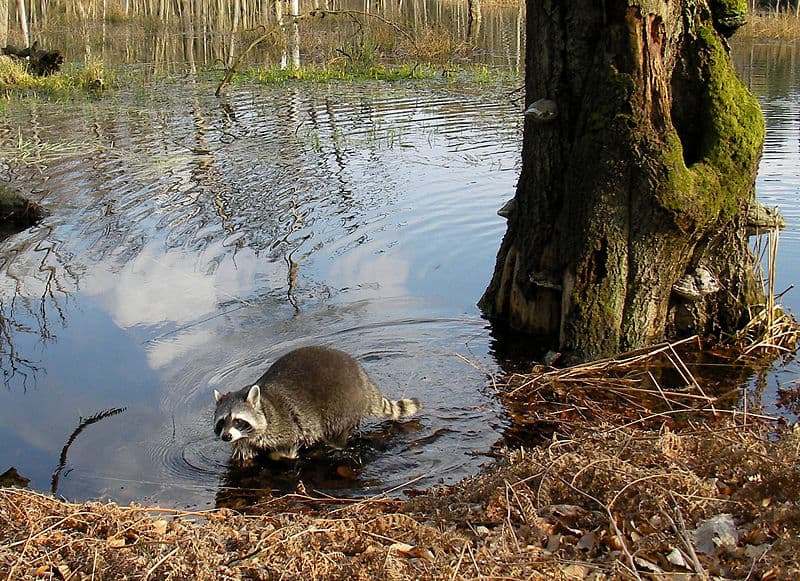
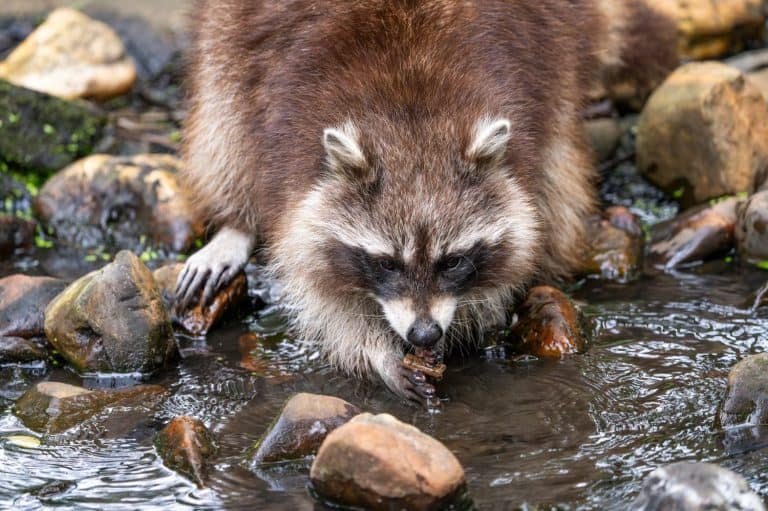
Raccoons eat a wide variety of food. They manipulate their food in water when they can because it increases the sensitivity of their fingers to help them understand it.
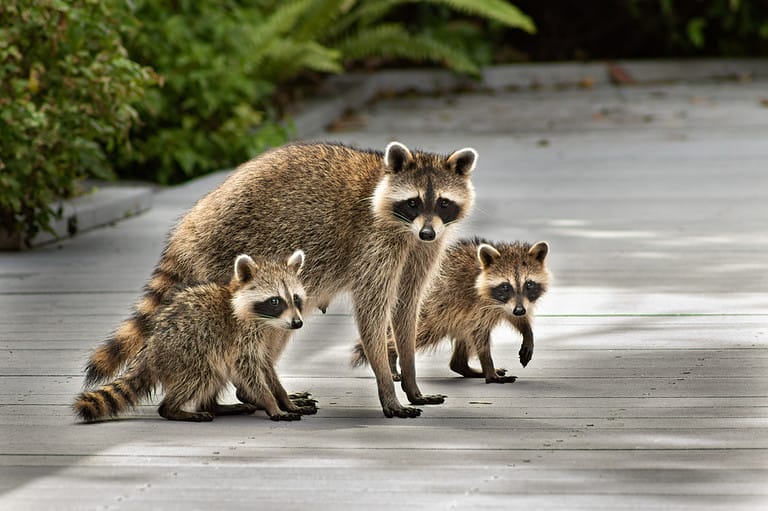
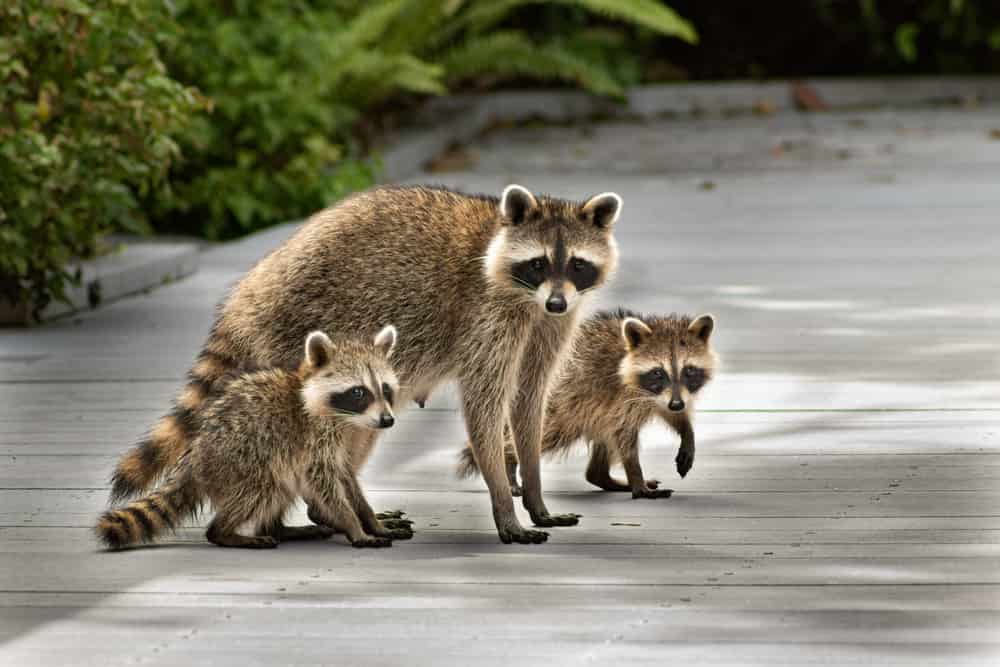
Wild raccoons are nighttime opportunists that grab almost any edible thing in their territory. They eat fruits, nuts, seeds, insects, frogs, crayfish, eggs, small mammals, and reptiles. Adult raccoons usually live alone, although mothers and their litters stay together for many months. In some places, related males share overlapping ranges and forage together in loose bachelor groups. Females usually give birth to two to five kits in a hidden den. When the kits grow stronger, the mother leads them outside and shows them safe paths and hiding places. She teaches them how to climb, explore, and test new foods without getting hurt.
Raccoons’ front paws resemble tiny hands, each with five flexible, touch-sensitive fingers. They hold objects, peel shells, untie knots, and open latches that frustrate many other animals. Near water, raccoons often dunk and rub food because wet paws give clearer information through touch. The food sometimes comes out cleaner, but that’s not the main reason. Raccoons are simply very particular about feeling every ridge, shell, or skin with their sensitive fingers. In the wild, survival pushes raccoons to solve constant problems and remember what works. They test new foods, search for changing territories, and dodge predators. That pressure shapes quick, flexible thinkers who adapt easily when the environment changes around them.
How Does Urbanization Affect Raccoons?
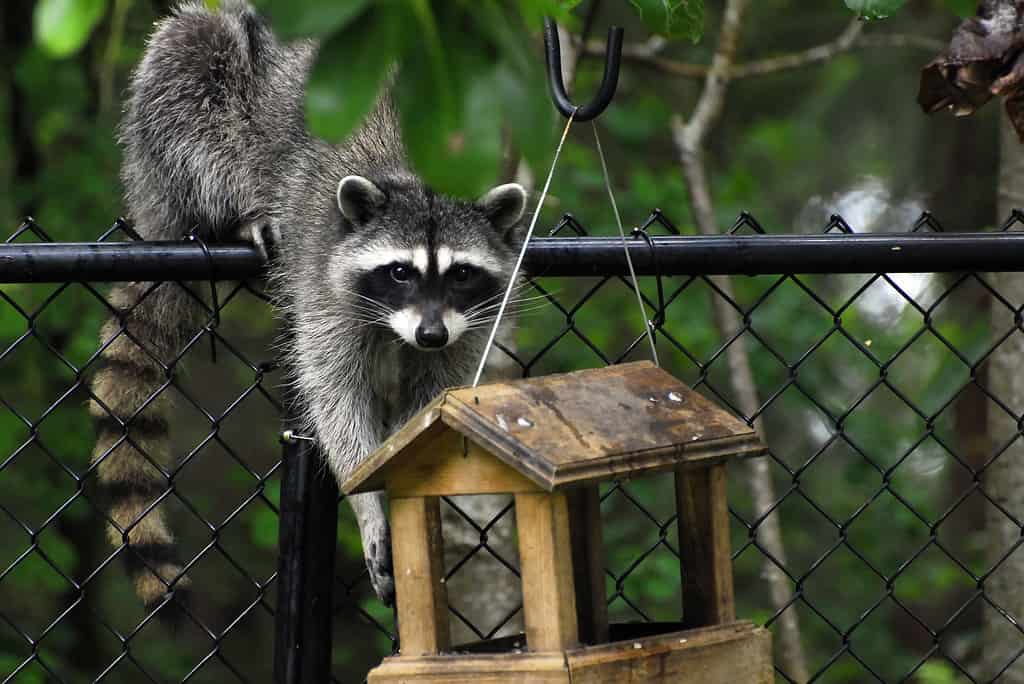
Raccoons are resourceful about reaching all the tasty treats humans seem to leave everywhere they go.
©Edward Palm/iStock via Getty Images
Urbanization and suburban sprawl chop forests into patches, but they also create new food sources for raccoons. They raid garbage cans, pet food bowls, bird feeders, and compost piles, skulking around behind houses and restaurants. Busy roads slice through their routes, and many raccoons die when cars strike them. Loose dogs chase them, and outdoor cats compete for small prey and sometimes injure raccoon kits. On the other hand, raccoons find countless den sites in attics, sewers, sheds, and storm drains. Because food and shelter remain abundant, raccoon populations often grow denser in suburbs than in untouched forests. Their bold curiosity, clever paws, and flexible diet help them exploit human landscapes instead of collapsing under change.
“Trash Panda” Antics
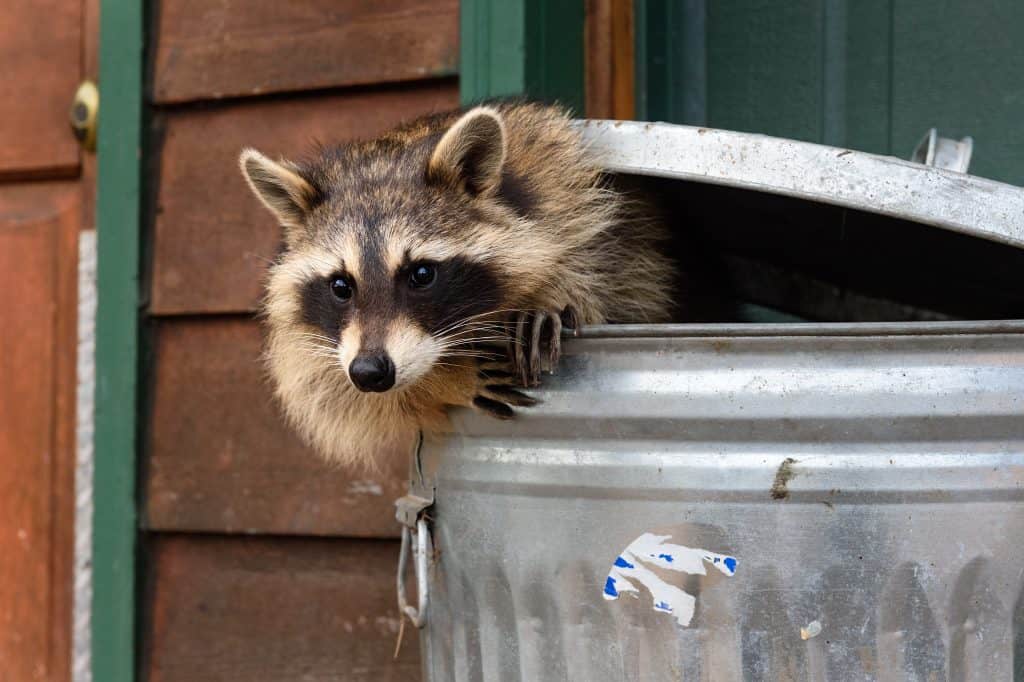
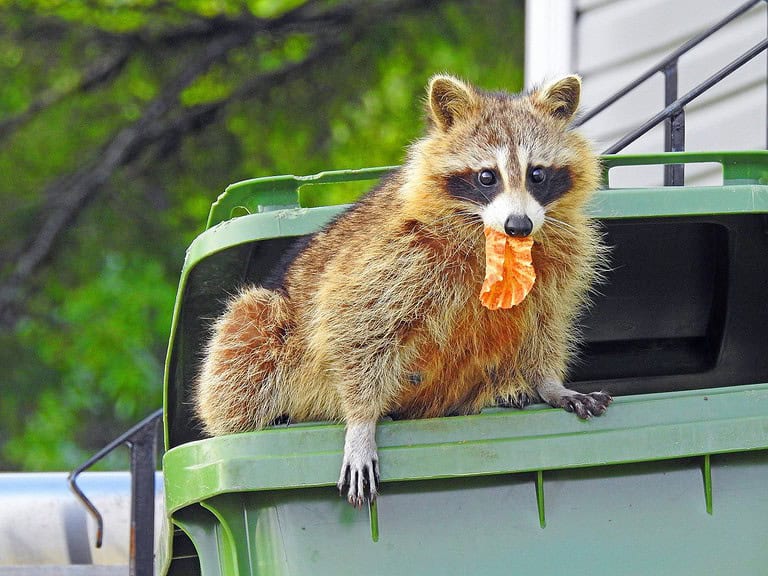
Raccoons are persistent about finding their way into even the most secure garbage cans.
©Holly Kuchera/Shutterstock.com
Raccoons aren’t called “trash pandas” for nothing. In suburbs across North America, residents wage a never-ending battle to keep their garbage cans sealed, only for raccoons to find ingenious ways to defeat the latest “raccoon-proof” locks. The city of Toronto has spent millions of dollars on new trash bins that are still only partially effective against these intelligent creatures and their adept little fingers. It’s common to see evidence of their nighttime raids: overturned bins, scattered garbage, muddy paw prints, and just general mayhem.
Outside of garbage exploits, raccoons excel at breaking into homes through pet doors, loose roof tiles, and cracked basement vents. Homeowners can face hundreds of dollars in repair and replacement costs due to raccoons tearing into walls, making nests in insulation, or raiding pantries. Their ability to climb trees, open simple locks, and navigate high ledges means no potential food source is ever truly safe. Raccoons have been observed unzipping tents, opening refrigerator doors, and even using rocks to access marshmallows in water-filled tubes—a sign of their creativity and determination. These nightly adventures aren’t just chaos—they’re evidence of a clever mind at work.
How Smart Are Raccoons?
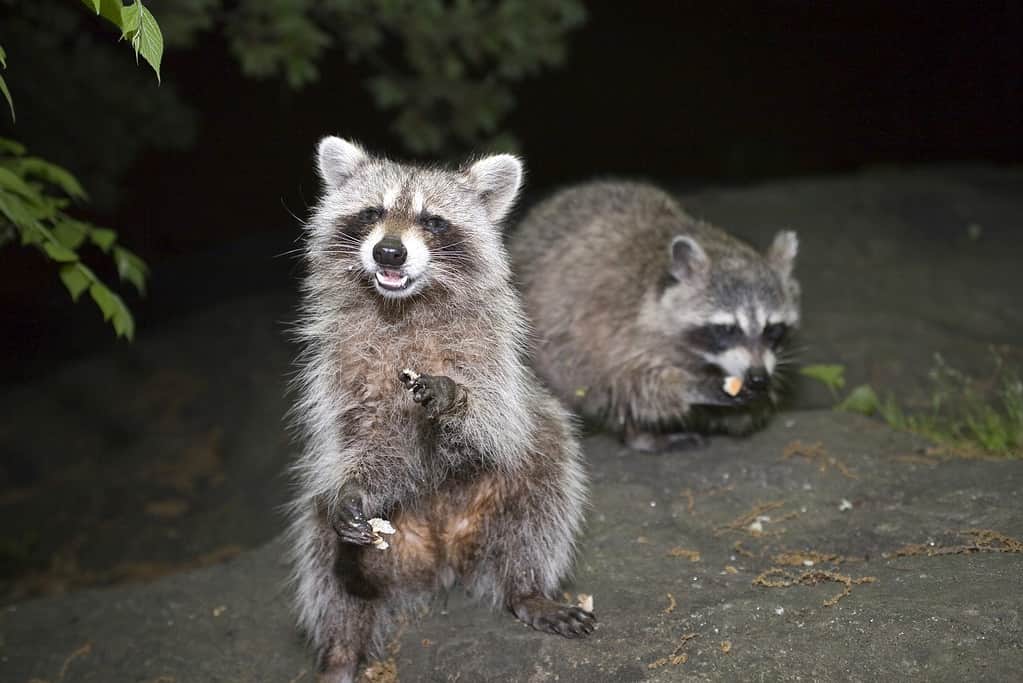
Raccoons at night inside Central Park in New York City.
©iStock.com/eddtoro
Peek past the mess, and raccoons reveal mental abilities that rival some monkeys. Their brains stay relatively large for their bodies, supporting strong memory and flexible learning. In tests, scientists challenge raccoons with puzzle boxes that demand several steps, tricks, and shifting solutions. Many other animals stall on these tasks and loll around in boredom, but raccoons often stay focused and experiment incessantly until something works. Individuals invent distinct tactics; one uses strength, another uses nimble fingers, and another discovers shortcuts. Urban raccoons push these skills further as they learn garbage schedules, door mechanisms, and traffic patterns around neighborhoods.
Raccoon intelligence extends beyond party tricks and quick tests because their long-term memory stays remarkably strong. Classic studies showed raccoons remembering locks and puzzles many months after their last practice session. Recent research shows that urban raccoons demonstrate strong problem-solving skills and behavioral flexibility, allowing them to adapt to new challenges such as different types of trash cans or feeders. They also remember food hotspots, safe den sites, and even specific humans who either feed or chase them. This combination of learning and memory turns raccoons into formidable survivors in forests, suburbs, and dense cities. In many cognition tests, they match small primates and consistently outthink familiar pets like domestic cats and dogs. Homeowners confirm the data when one clever raccoon learns an entry route and returns confidently again and again.
How Do Similar Animals Compare?
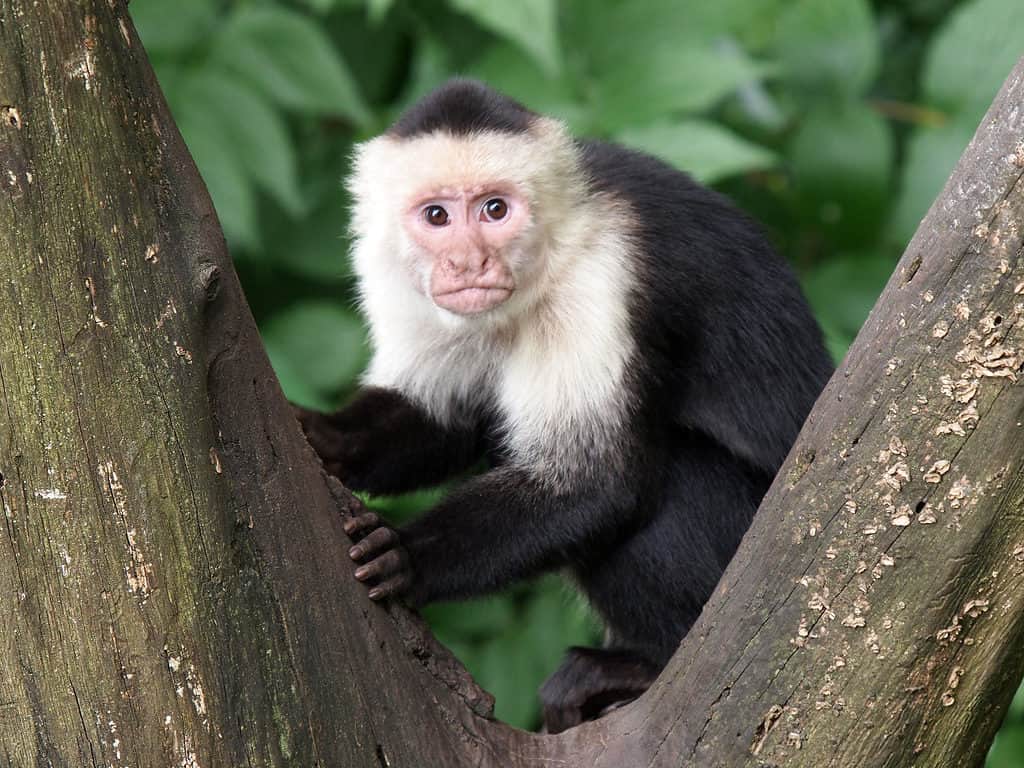
Raccoons and capuchin monkeys are similar in intelligence and overall orneriness.
©Edwin Butter/Shutterstock.com
There isn’t a single official IQ ladder for animals, but we can make rough comparisons. Brain studies from Vanderbilt and other institutions suggest that raccoons have a number of cortical neurons comparable to small primates. Reviews in psychology and behavior journals usually say raccoons outperform cats and dogs on problem-solving and flexibility tasks, and their long-term memory looks comparable to that of small primates. Bottom line: raccoons are highly intelligent—not at the level of great apes or dolphins, but definitely in the ‘surprisingly smart, primate-adjacent trash goblin’ tier.
More Than Mischief
As cities expand and human routines shift, raccoons reveal how problem-solving, memory, and creativity can help a species flourish in a changing world. Far from being mere trouble-makers, these masked bandits remind us of the hidden genius found in the animal kingdom—a genius that’s cute, clever, and resoundingly successful. The next time you spot one exploring your yard, remember: there’s a lot more going on behind that mask than you might think.