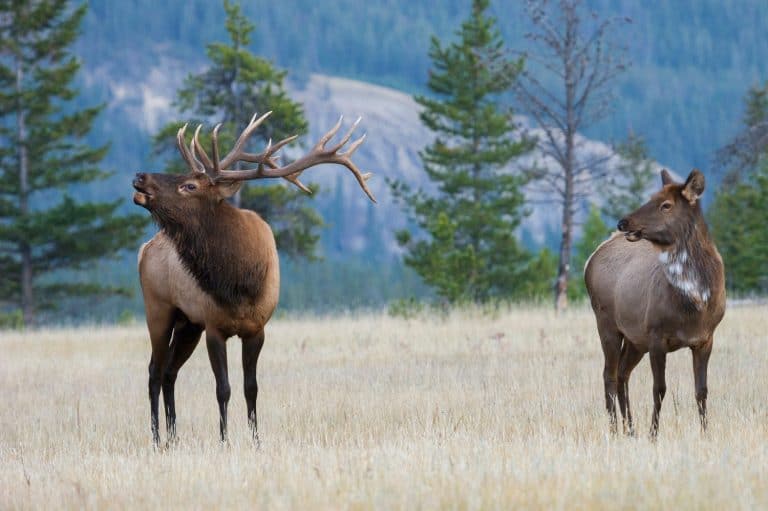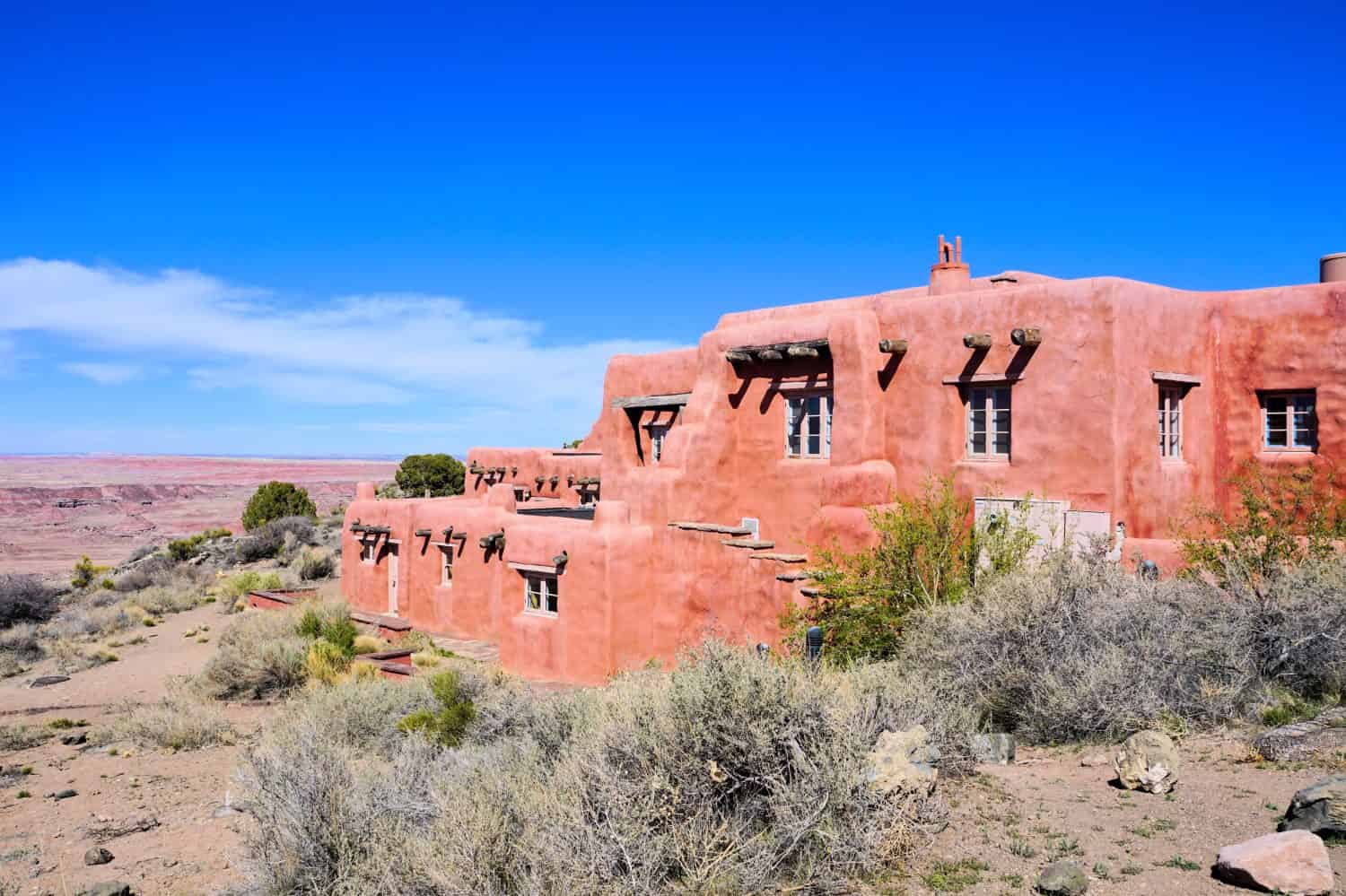

Petrified Forest National Park spans around 346 square miles of semi-desert shrub steppe and highly eroded and colorful badlands in northeastern Arizona. The park is a blend of short grass prairie and high desert habitats. It is named after the fossil logs from fallen trees that were alive in the Late Triassic Epoch. The park’s headquarters is about 26 miles east of Holbrook along Interstate 40. Within the park, you’ll find ranger-led activities as well as maintained hiking trails. You can drive through the entire park in about an hour or spend much longer, lingering and enjoying the scenery. Over half a million people visit the park every year, and many come to see the incredible animals that live there. Let’s meet some of them.
American Pronghorn (Antilocapra americana)
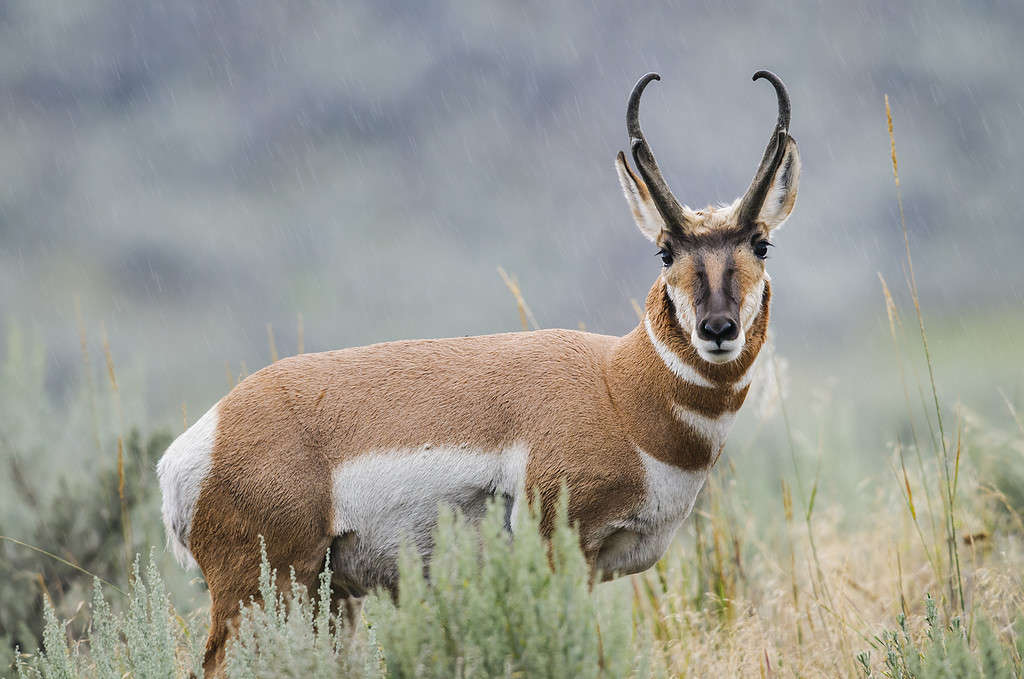
American Pronghorns are related to giraffes.
©bgsmith/iStock via Getty Images
Pronghorns are the fastest land animals in North America. These ungulates look similar to deer and antelope but are their own separate species. American Pronghorns are distantly related to giraffes, sharing a common ancestor within the order Artiodactyla. You can recognize a longhorn by its white neck patches and white rump. They travel around this park in small herds, and you are most likely to spot them feeding on sagebrush and grasses south of Interstate 40.
Bobcats (Lynx rufus)
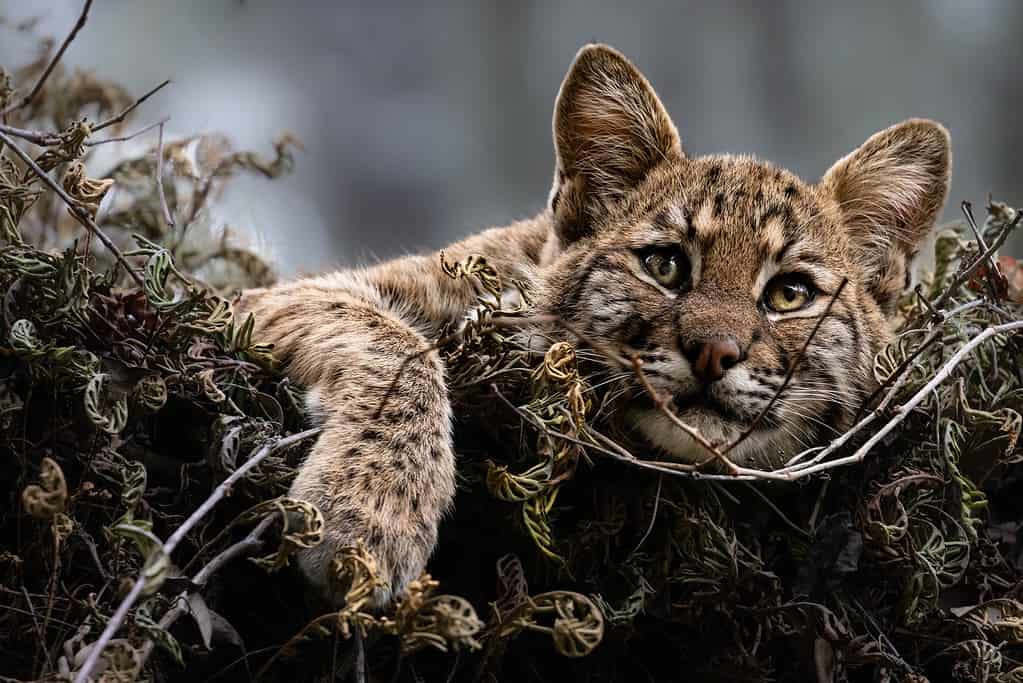
Bobcats are a shy resident of the park.
©WhirlVFX – Pamela Werrell/Shutterstock.com
Bobcats are solitary, terrestrial, and nocturnal, so you are most likely to spot them at night or at dusk. Strictly meat eaters, these kitties are likely to be hunting pronghorns and rabbits. Though year-round residents of the park, due to their reclusive ways, they are rarely encountered by visitors. That said, cameras in the park have captured footage of one bobcat walking through a seep and another amongst brush.
Black-Tailed Jackrabbit (Lepus californicus)
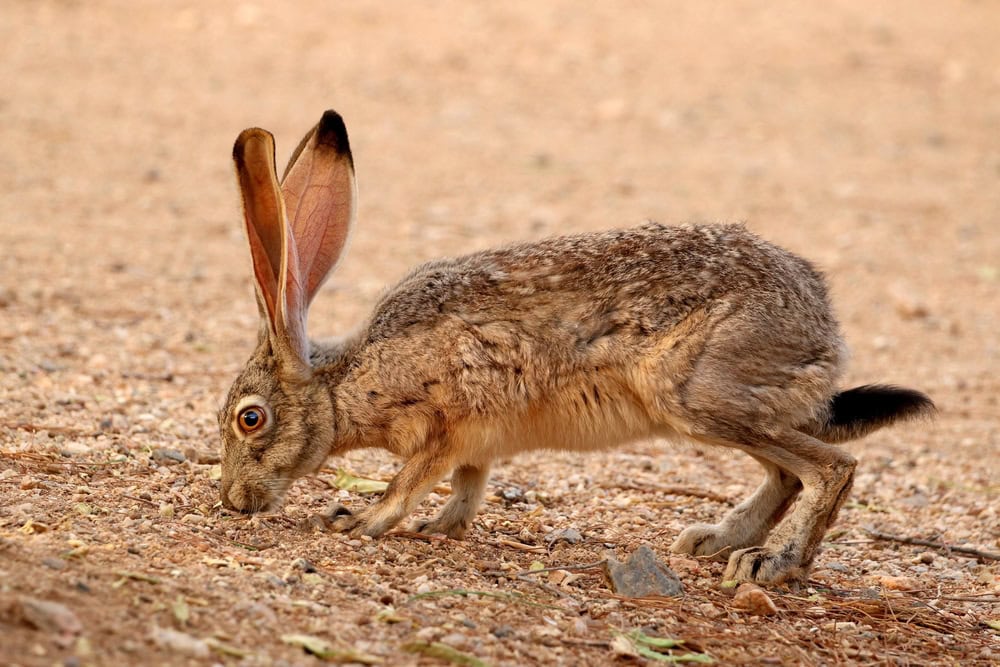
Jackrabbits are seen by roads in the park.
©J Curtis/Shutterstock.com
These primarily nocturnal jackrabbits are found in the prairie regions of the park around the sagebrush. They are lankier and leaner than rabbits, and they have a characteristic black stripe down the center of their back. Rather than living in burrows, they dig shallow depressions in the earth for shelter. If you startle them, they will race away at high speeds with long leaps and bounds. You are most likely to spot them next to roads as they eat roadside vegetation. Unfortunately, they are often involved in collisions, as they frequently run in front of cars.
Desert Cottontail Rabbits (Sylvilagus audubonii)
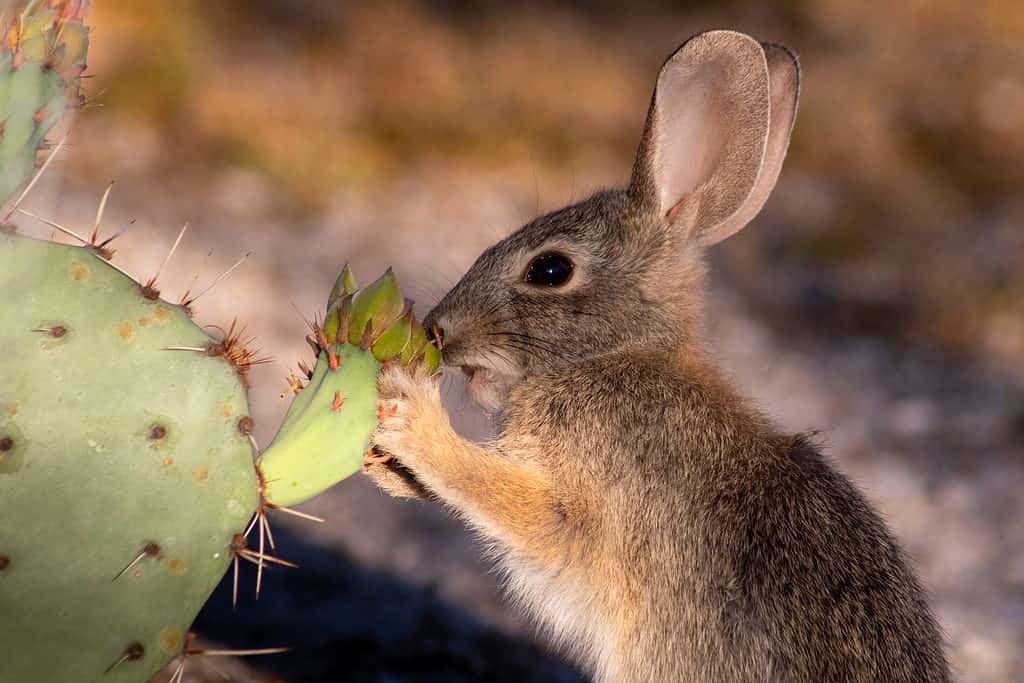
Petrified logs provide shelter for rabbits.
©Charles T. Peden/Shutterstock.com
This rabbit species is a grey-brown color with a broad, white, and rounded tail that is visible as it runs away. Found in the dry, near-desert grasslands of the park, these bunnies feed on a wide variety of plants. Desert cottontails are most active at night, and you are most likely to see them foraging in the early evening and early morning. They are one of the animals that find shelter in holes in the park’s petrified logs, but they also live in burrows.
Coyote (Canis Iatrans)
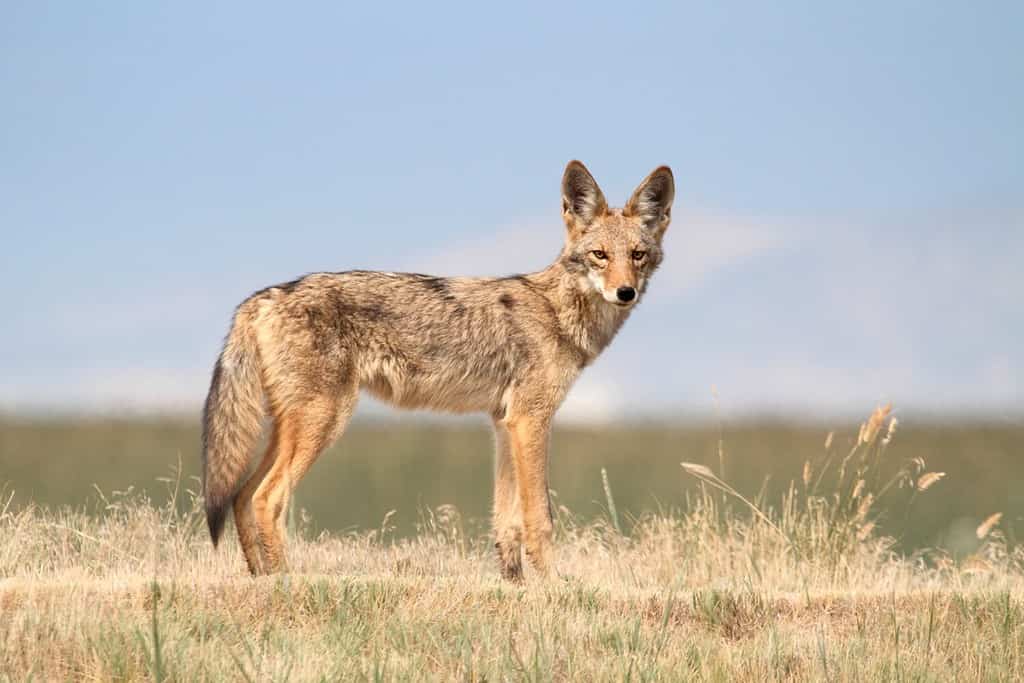
Coyotes are a skilled predator.
©Steve Byland/Shutterstock.com
Coyotes are unpredictable, so it is wise to keep your distance from these wolf-like animals. As medium-sized members of the dog family, they live a mainly solitary life within the park. Even though they can be active at all times of the day and night, they tend to be most active after sunset. Coyotes are not picky eaters but often prefer snacking on vulnerable animals and carrion.
Even if you don’t spot a coyote, you’ll likely hear them calling early in the morning, which can sound quite eerie! Coyotes have been caught on camera digging holes to reach underground water in the Petrified Forest National Park. By doing this, they can hunt animals such as rabbits that are attracted to the water.
Other similar predators in the park are the kit fox (Vulpes macrotis), grey fox (Urocyon cinereoargenteus), and red fox (Vulpes vulpes).
Mule Deer (Odocoileus hemionus)
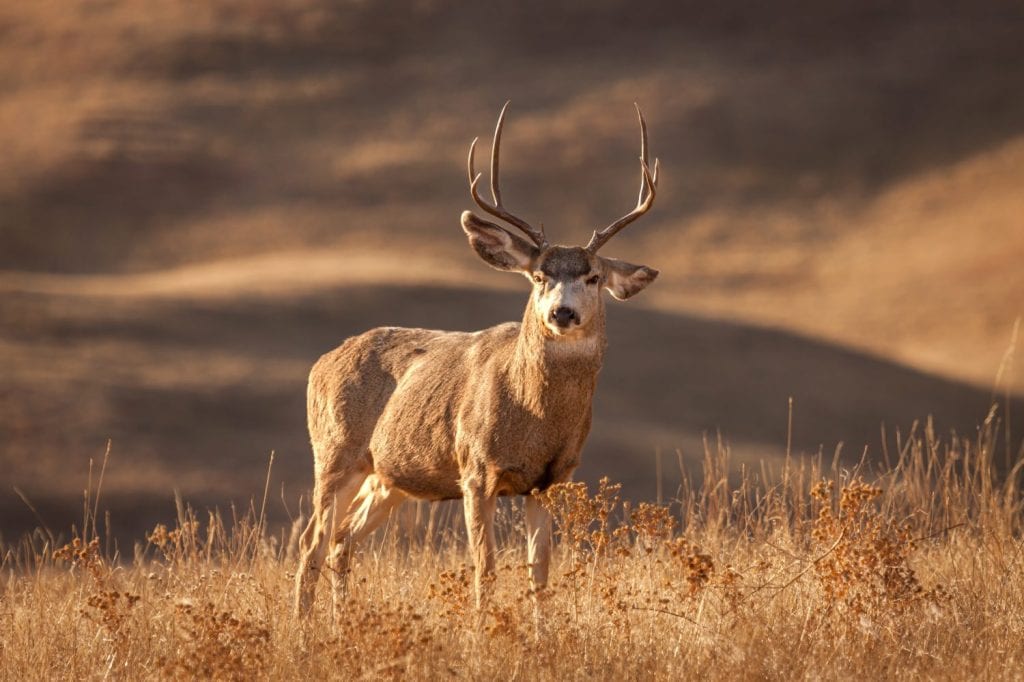
Mule deer bucks have antlers.
©Dennis Laughlin/Shutterstock.com
Mule deer get their name from their mule-like ears. Herds can frequently be seen around the Painted Desert Visitor Center in the winter months. A great time to visit is before the male deer shed their antlers. These deer are well adapted to arid, rocky environments within the park, and you will normally find them in multi-generational family groups. Older bucks, however, live alone. In late summer, you may see the groups combining into larger herds for protection through the winter. These deer are preyed on by the bobcats and coyotes in the park. Only observe mule deer from a distance, especially during the fall rut when males can act aggressively.
Pallid Bats (Antrozous Pallidus) and Other Bat Species
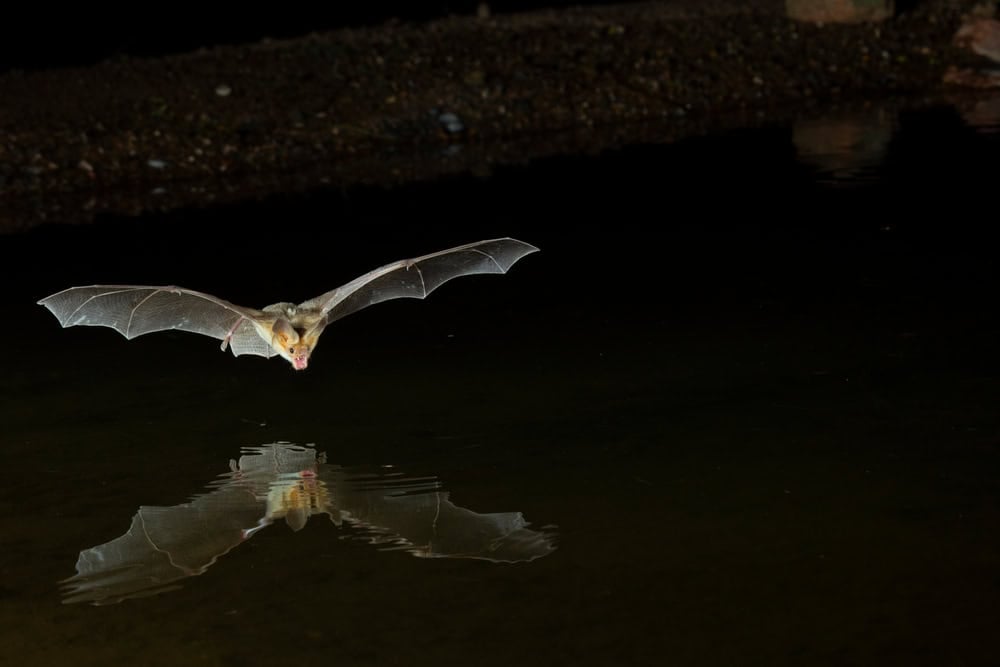
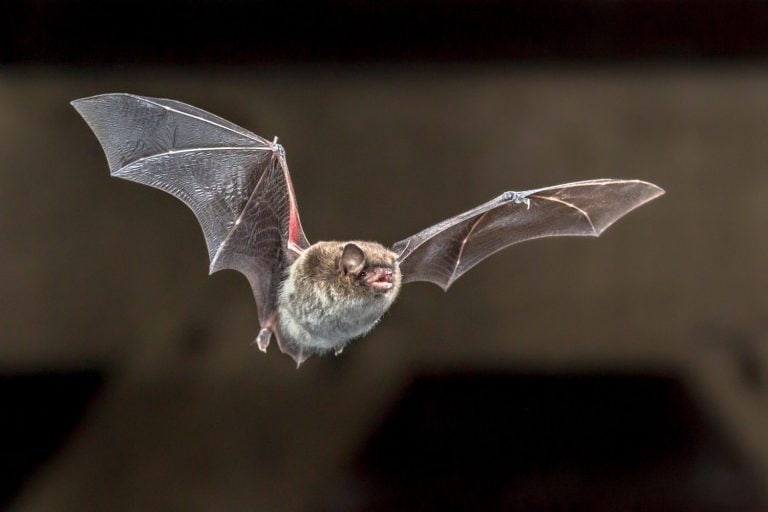
Pallid bats hunt at night.
©Joe McDonald/Shutterstock.com
Pallid bats are year-round residents of the park. Other bat species found here include the Townsend’s big-eared bat (Corynorhinus townsendii), the California myotis (Myotis californicus), the fringed myotis (Myotis thysanodes), and the canyon bat (Parastrellus Hesperus). Bat studies have been carried out in the park since 1998, and acoustic monitoring surveys are ongoing. Blond-furred pallid bats can be seen here searching for scorpions on the ground at night. Tiny western pipistrelle bats (Parastrellus Hesperus), on the other hand, are found darting among the trees, snapping insects out of the night air.
Gunnison’s Prairie Dogs (Cynomys gunnisoni)
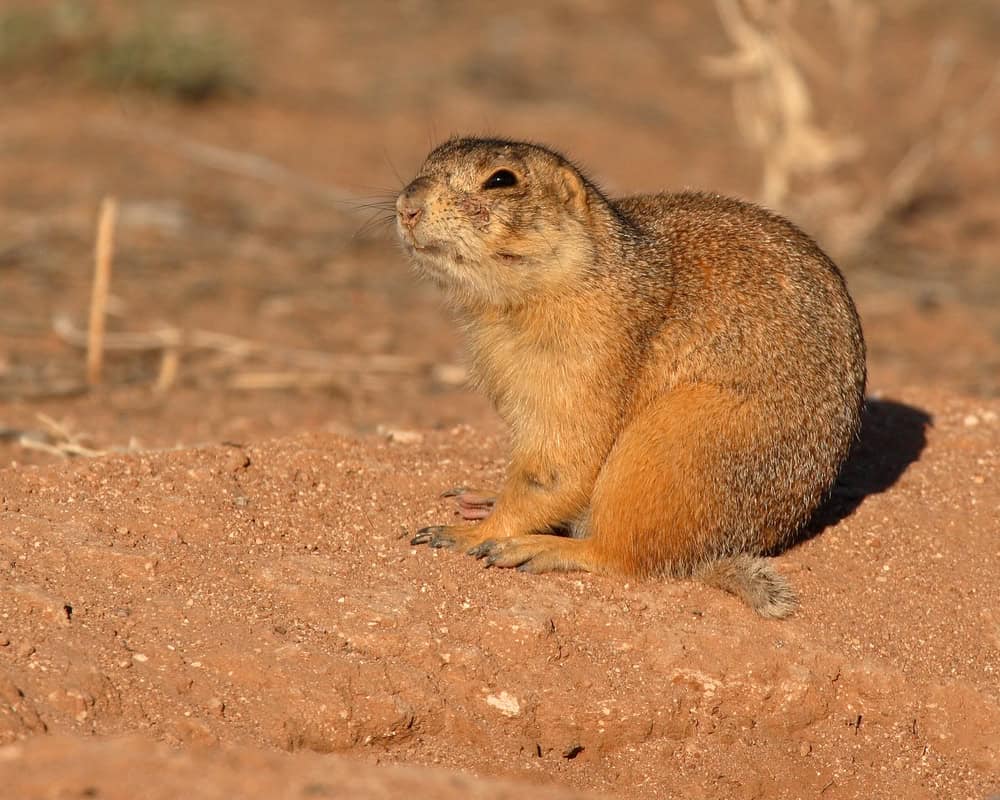
Summer is the best time to see Gunnison’s prairie dogs.
©Max Allen/Shutterstock.com
Gunnison’s prairie dogs are stout-bodied rodents with eyes on the side of their head for scanning the landscape. They live in large communities made up mainly of females and offspring. These animals are strictly diurnal, and their greatest periods of activity occur in the early morning and late afternoon. While most of them are feeding, appointed ‘guards’ are on the lookout for eagles, coyotes, and other predators. You are more likely to spot them in the summer because in the winter, they are mainly underground. Look for prairie dogs standing by the roadsides near Lacey Point and Newspaper Rock.
Badgers
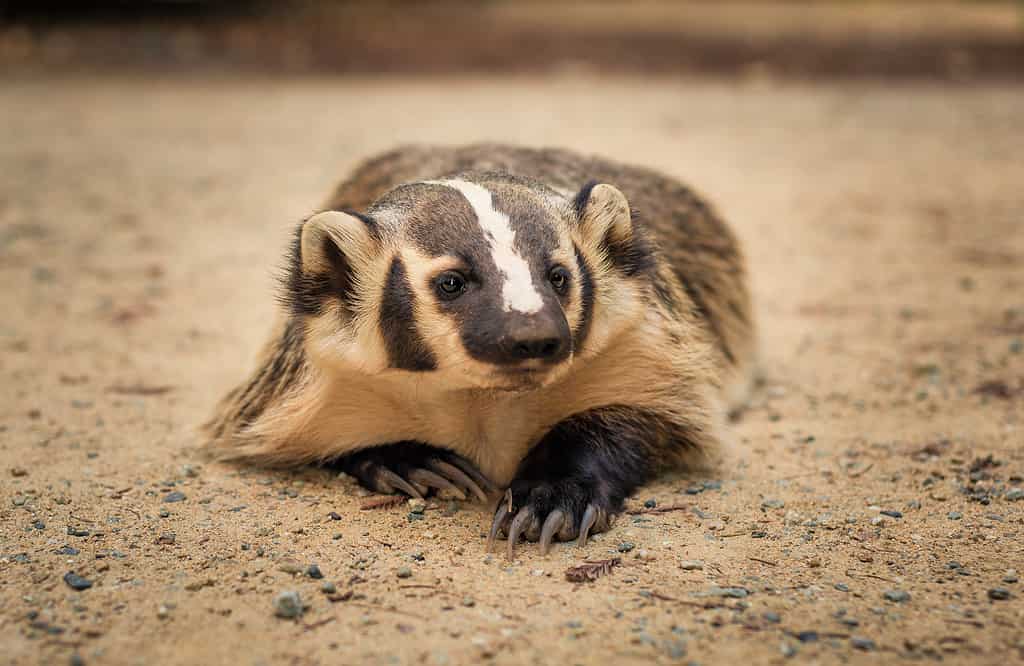
American badgers hunt the squirrels in the park.
©Photography by Adri/ via Getty Images
North American badgers (Taxidea taxus) are broad, heavy mammals with short limbs and a characteristic black and white face mask pattern. They hunt squirrels and prairie dogs within the park and are most often sighted along the Painted Desert rim and near Newspaper Rock. One of the species that badgers commonly hunt is the white-tailed antelope squirrel (Ammospermophilus leucurus), which is a small ground-dwelling mammal. You are most likely to see them in bushes or near piles of rock. There are also spotted ground squirrels (Xerospermophilus spilosoma) within the park.
Woodrats and Mice
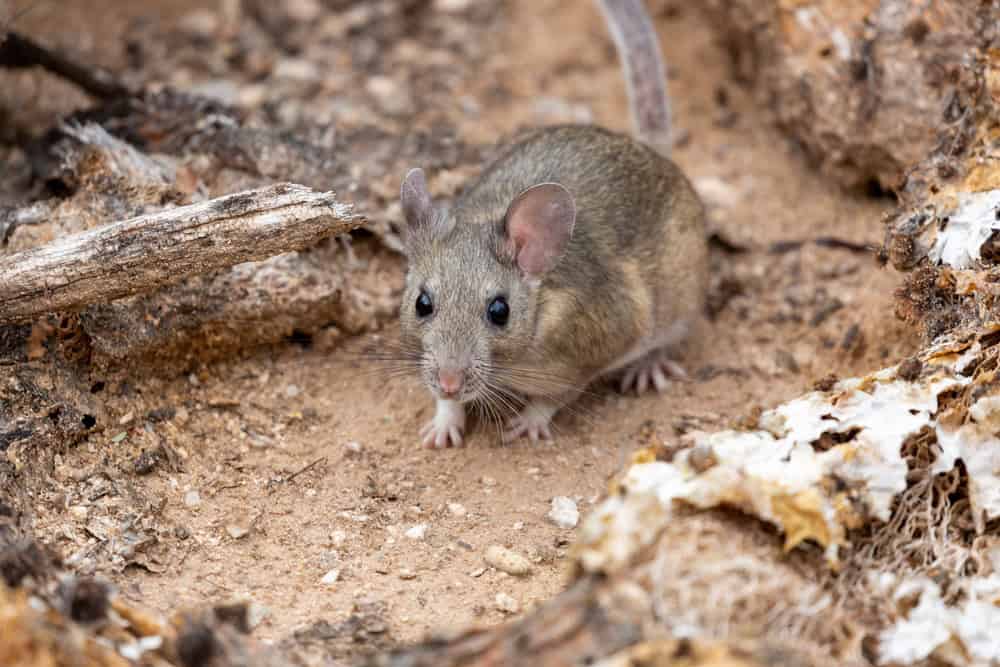
Woodrats hide in rocks and crevices.
©Charles T. Peden/Shutterstock.com
Several species of woodrats and mice are found in the park, including white-throated woodrats (Neotoma albigula), bushy-tailed woodrats (Neotoma cinerea), Mexican woodrat (Neotoma mexicana), silky pocket mouse (Perognathus flavus), and deermouse (Peromyscus maniculatus). Most of these creatures make their homes in rocks and crevices. If you stand for a while in the grassland areas of the park, you may spot a silky pocket mouse desperately trying to evade a kestrel! These creatures are mostly nocturnal and have large eyes that help them see in dim light.
Gopher Snake (Pituophis Catenifer) and Other Snakes
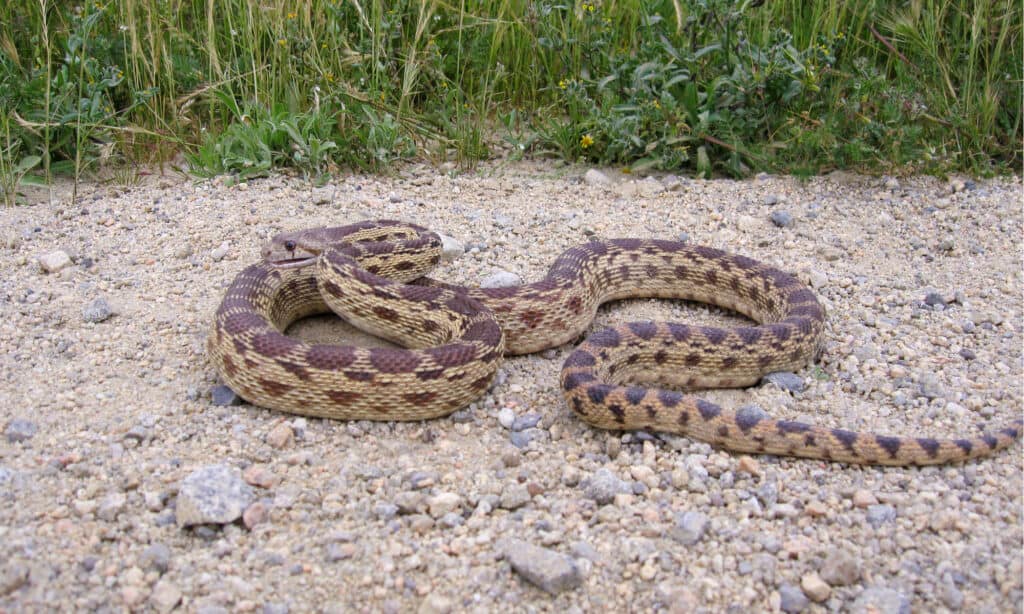
It is best not to approach gopher snakes.
©rawaccess/Shutterstock.com
Gopher snakes can live in a wide variety of habitats and are therefore found throughout the park. In fact, they are one of the most commonly seen snakes here. You may also see western rattlesnakes (Crotalus oreganus) in the grasslands and shrub areas and, less frequently, common kingsnakes (Lampropeltis getula), glossy snakes (Arizona elegans sp), and milk snakes (Lampropeltis triangulum).
If you accidentally disturb a gopher snake while hiking, they may imitate a rattlesnake by hissing loudly and vibrating their tail. They may also strike repeatedly, so backing away slowly is your best option!
Collared Lizards (Crotaphytus Collaris) and Other Lizards
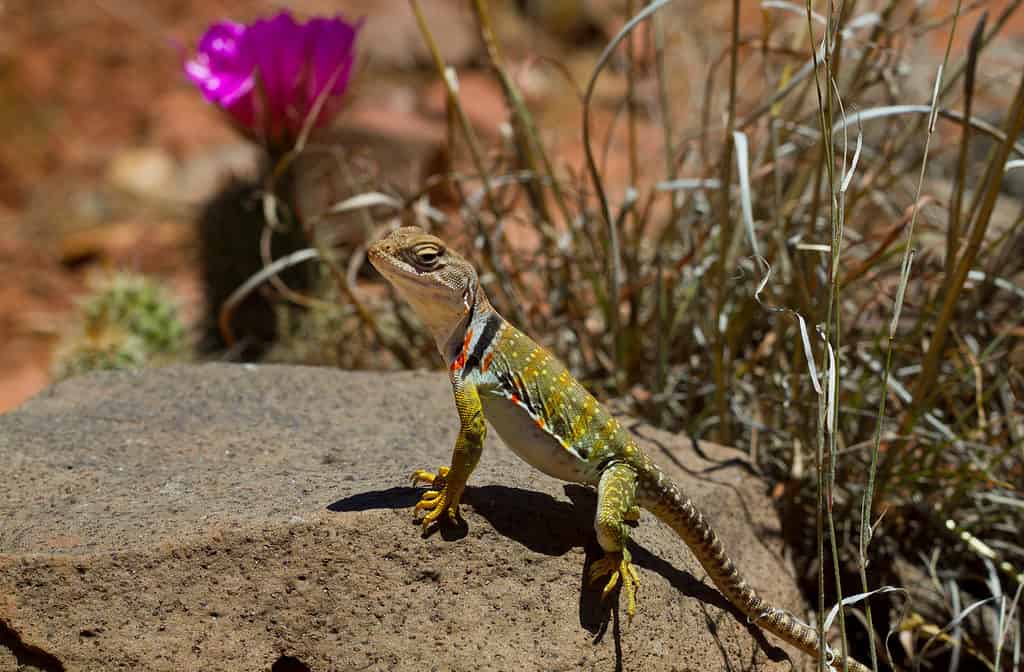
Many lizards have long legs to keep their bodies from touching the hot ground.
©Patricia Bouweraerts/Shutterstock.com
Several species of lizard inhabit the park, including the collared lizard, the side-blotched lizard, the sagebrush lizard, and the little striped whiptail. Of all these, you are most likely to find a collared lizard, and these are also the largest lizards here. You can spot them by their large head and greenish blue to greenish-yellow highlights on their back. Collared lizards are most often seen in the park sunning themselves on rocks and the petrified logs. Don’t be tempted to approach them though, because they have sharp teeth and will bite you if they feel threatened!
Other lizards in the park include the side-blotched lizard (Uta stansburiana), which is confined to rocky areas, the sagebrush lizard (Sceloporus graciosus), and the little striped whiptail (Aspidoscelis inornata).
Tarantulas and Other Invertebrates
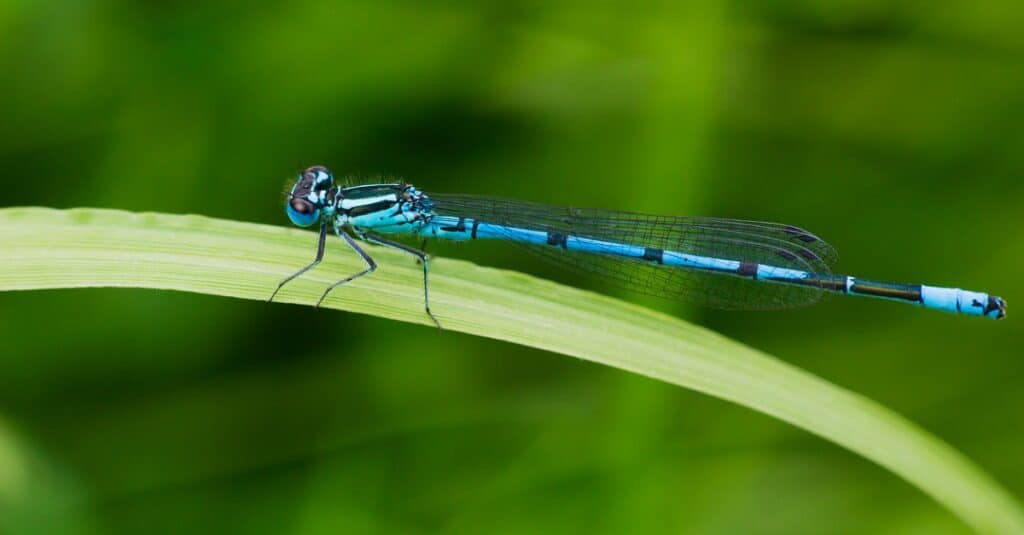
Damselflies hold their wings closed when at rest
©iStock.com/dmf87
Without invertebrates, creatures higher up the Petrified Forest food chain could not survive. Throughout the park, you may see tarantulas, monarch butterflies (Danaus Plexippus), beetles (Omorgus sp.), harlequin bugs (Murgantia histrionica), sun spiders (Solifugae), bee flies (Exoprosopa sp.), the bluet damselfly (Enallagma sp.), and many types of wasps, bees, and ants to name just a few. Each of these creatures will be found in its preferred habitat within the park. For example, the common bluet damselfly will be found near bodies of freshwater. You are more likely to encounter tarantulas and beetles, however, while hiking on the trails.
Turkey Vulture and Other Birds
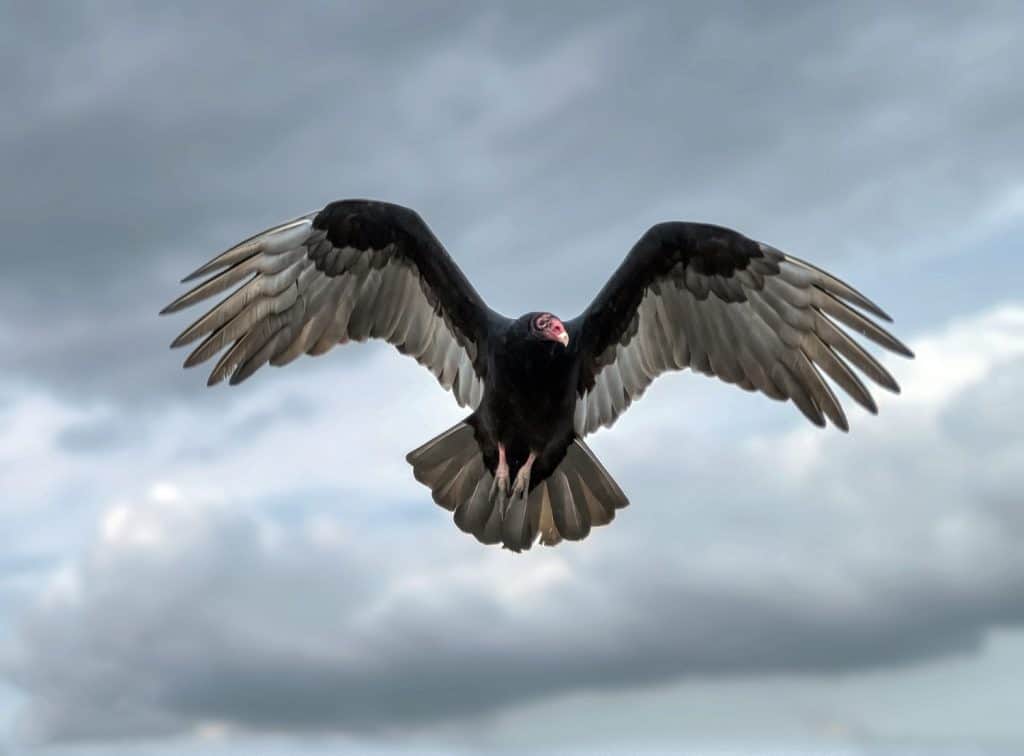
Turkey vultures are a resident bird of the park.
©Fiona M. Donnelly/Shutterstock.com
The petrified forest provides an important habitat for both resident and migratory bird species. They are probably the most diverse class of animals in the park. A total of 258 species can be found in the cottonwood/willow riparian corridor along the Rio Puerco, as well as in the surrounding grasslands, shrublands, and juniper woodlands. One well-known resident bird is the turkey vulture (Cathartes aura), which can be seen all over the park but particularly near cliffs such as the rim of the Painted Desert. Some of the most often seen year-round species are the common raven (Corvus corax) seen scavenging food from visitors, the greater roadrunner (Geococcyx californianus), and the red-tailed hawk (Buteo jamaicensis).
Non-Resident Bird Species
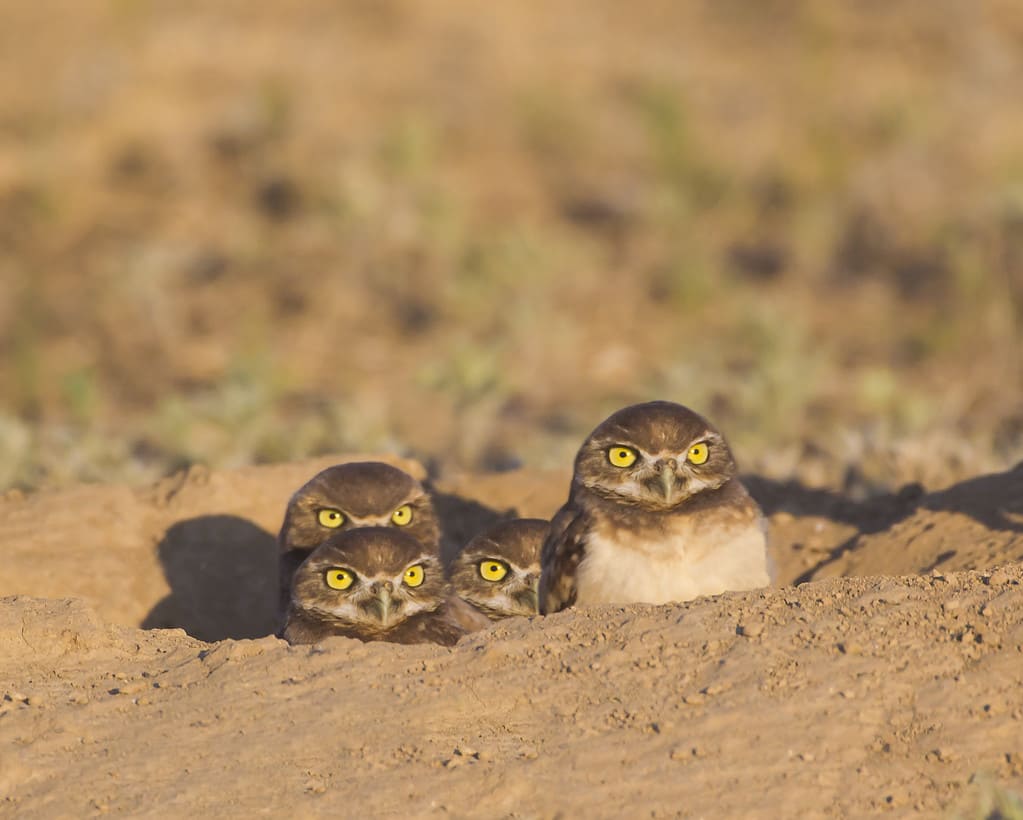
Burrowing owls are in the park in the summer.
©RichardSeeley/iStock via Getty Images
In the winter, you may also come across the dark-eyed junco (Junco hyemalis), the mountain bluebird (Sialia currucoides), and the white-crowned sparrow (Zonotrichia leucophrys). Summer residents, on the other hand, include the barn swallow (Hirundo rustica), the black-headed grosbeak (Pheucticus melanocephalus), and the burrowing owl (Athene cunicularia). If you visit the park in August and September, you can catch migratory species such as the rufous hummingbird (Selasphorus rufus), the cedar waxwing (Bombycilla cedrorum), and the ruby-crowned kinglet (Corthylio calendula), as well as almost a dozen warbler species.
Couch’s Spadefoot Toad and Other Amphibians
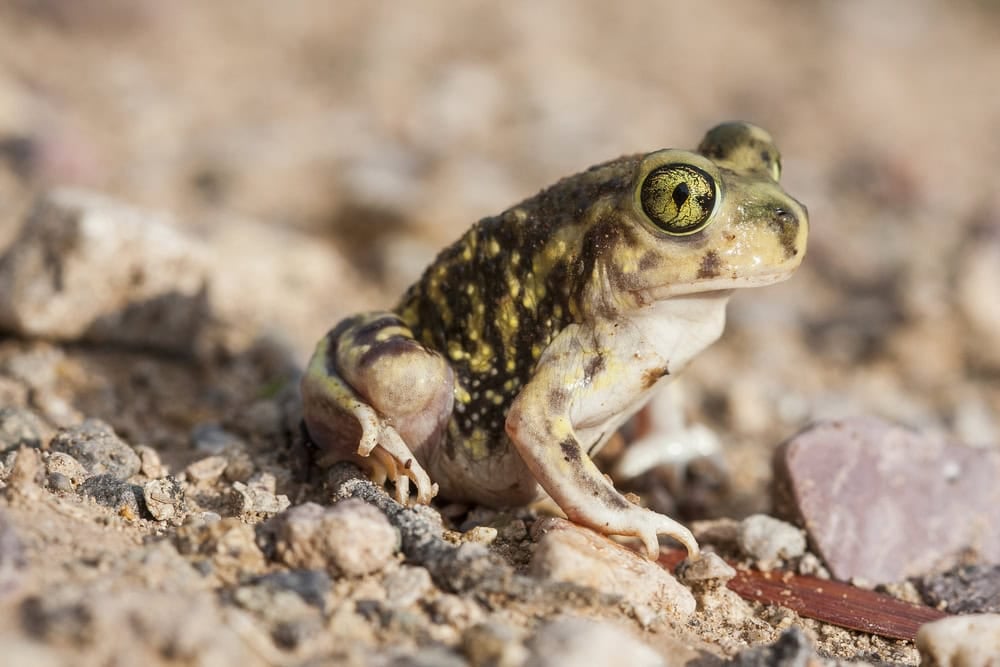
Surprisingly, the arid park is home to several amphibians.
©Viktor Loki/Shutterstock.com
Visitors to such an arid location as the Petrified Forest National Park are probably not expecting to encounter an amphibian. These animals rely on access to freshwater to survive and complete their life cycles. Yet, there are fossilized remains of amphibians within the park, and many amphibians still make their homes here. One obvious example is the couch’s spadefoot toad (Scaphiopus couchii). These incredible creatures absorb water through their permeable skin from the soil in which they hibernate. However, they can also lose water through their skin, which cools them down. You may spot these toads on sunny pavements in the park trying to warm themselves.
Other amphibian residents of the park are the western tiger salamander (Ambystoma mavortium), the Arizona tiger salamander (Ambystoma mavortium ssp. nebulosum), the great plains toad (Anaxyrus cognatus), and the red-spotted toad (Anaxyrus punctatus).