
Quick Take
- Japan once revered the river otter as a supernatural shape-shifter, yet its own government helped hunt the animal to extinction. See how intervention backfired →
- Decades of field surveys, camera traps, and hair samples kept hope alive, so it raises the question of why researchers ultimately walked away empty-handed. Explore the failed rediscovery →
- The creature feared as a shape-shifting trickster in Japanese folklore outlived the real animal in a way nobody anticipated. Discover the folklore survival →
- A species that once numbered in the millions vanished within decades, and fur was far from the only thing driving it toward extinction. Uncover all extinction causes →
For centuries, Japanese folklore warned travelers about the kawauso lurking along quiet riverbanks at night. Locals feared and loved these mysterious river otters as shape-shifting yōkai, ranking them alongside the fox (kitsune) and raccoon dog (tanuki). Capable of transforming into beautiful women, wandering monks, or children wearing oversized straw hats, they stole sake, mimicked human speech, and vanished back into the water before anyone could catch them.
However, while these supernatural spirits still thrive in ghost stories, anime, and regional myths, the real animals behind the legend were far more vulnerable. Once common across Japan’s rivers, wetlands, and coastal waterways, the Japanese river otter suffered one of the most rapid wildlife collapses in the country’s modern history. After decades of steady decline, the last wild otter was seen in 1979, and in 2012, Japan’s Ministry of the Environment officially declared the species extinct.
The Real Japanese River Otter
The Japanese river otter was a sleek, semi-aquatic predator perfectly adapted for life in fast-moving freshwater systems. Adults were typically 25.5 to 31.5 inches long, with an additional 17.5 to 19.5-inch tail. With webbed feet, waterproof insulating fur, and a muscular tail, these aquatic mammals thrived in their watery environment.
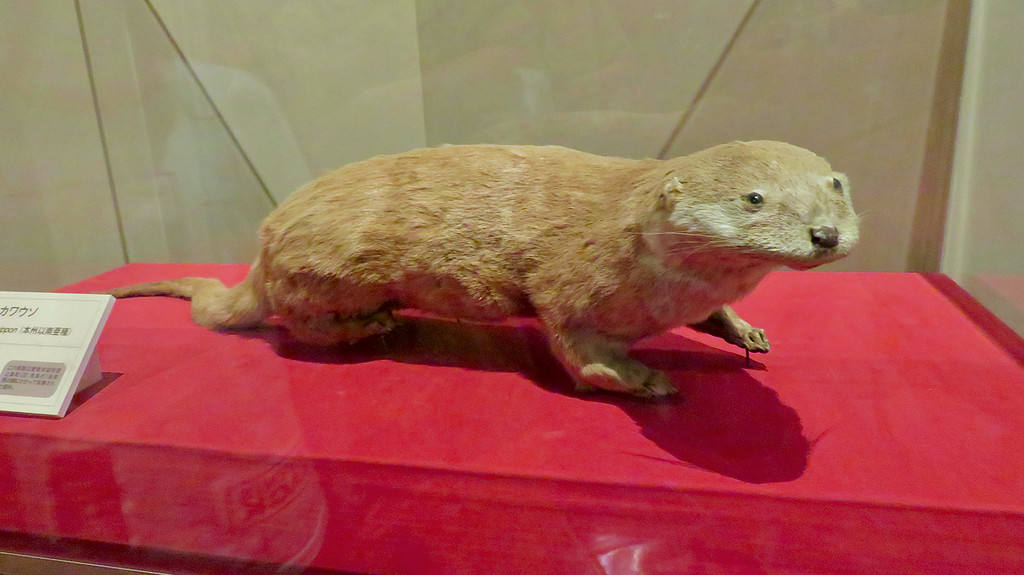
The last Japanese otter was recorded in 1979.
©KKPCW / CC BY-SA 4.0 / Wikimedia Commons – Original / License
As top predators, Japanese river otters played a crucial role in maintaining the health of Japan’s river ecosystems. They were highly active, energetic hunters that needed to consume 15 to 25 percent of their body weight each day. They primarily consumed shrimp, eels, crabs, fish, and beetles, but would occasionally forage on land for sweet potatoes or watermelons.
The Path to Extinction
Until the early 20th century, the Japanese river otter thrived across the country’s vast network of rivers, wetlands, and coastal ecosystems. In the 1880s, the animals were still a common sight — even navigating the bustling waterways of Tokyo — and historical estimates suggest their population once numbered in the millions. However, this historic abundance collapsed with devastating speed in the 1930s, triggering an irreversible downward spiral.
The primary cause of the otters’ population collapse was intensive commercial hunting, driven by the high value of their dense fur. Unfortunately, rather than stepping in to protect the dwindling populations, the government actually worsened the crisis.
In 1929, the state formed an official “Hunters Association” to expand and encourage nationwide culling. Otter pelts became a lucrative export and manufacturers used them for military gear — creating an overwhelming, unsustainable demand that pushed the wild populations to the brink.
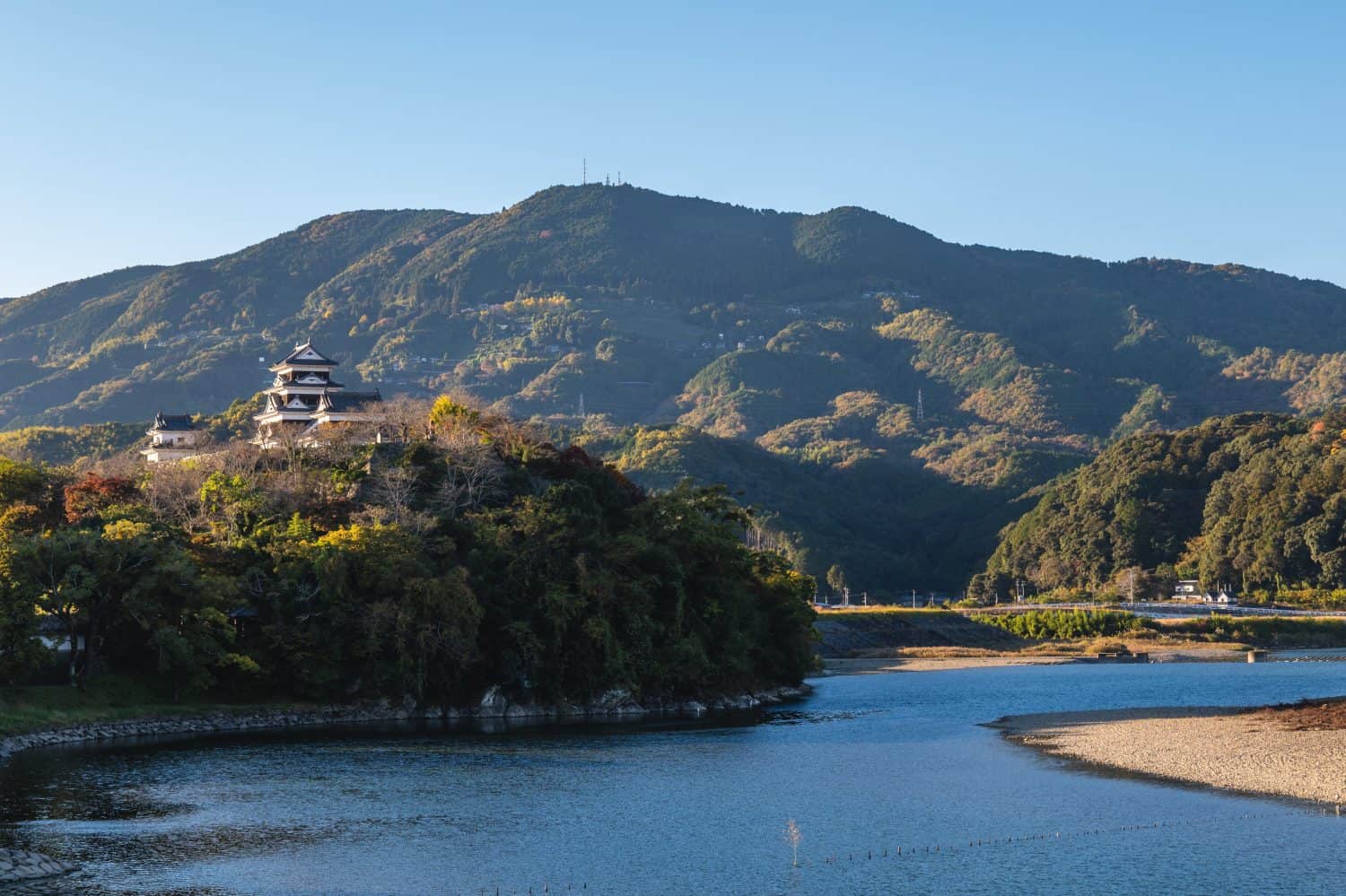
The Japanese otter is the official animal symbol of Ehime Prefecture.
©Richie Chan/Shutterstock.com
Additionally, traditional medicine posed a major threat to the species. Otter body parts became highly sought after as a treatment during a deadly tuberculosis crisis, and this desperate demand fueled a lucrative black market, where a 40-day supply of otter-based medicine could fetch around $300 USD.
The final, irreversible blow to the otter population came after World War II. Japan’s rapid industrialization transformed pristine rivers and wetlands into heavily polluted industrial corridors. Urban expansion and toxic waste severely degraded water quality. This habitat destruction wiped out the fish and crustaceans that otters needed to survive. The remaining otters were trapped in fragmented habitats, facing starvation and poisoning from their own environments. There was simply no path to recovery for them.
The Last Otter and Official Extinction
In 1979, the last Japanese river otter was glimpsed at the mouth of the Shinjo River in Kōchi Prefecture. A local resident managed to photograph the animal — a haunting photograph that became the final visual record of the species. Decades passed without another verified sighting. On August 28, 2012, after more than thirty years of fruitless searching, Japan’s Ministry of the Environment officially declared the Japanese river otter extinct.
The extinction of the Japanese otter was not an isolated event; it reflected a much larger, systemic biodiversity crisis. Other unique Japanese species, such as the Honshu and Hokkaido wolves (declared extinct in the early 20th century) and the Japanese sea lion (declared extinct in the 1970s), had already been lost. Ultimately, the loss of the river otter became deeply emblematic of the tragic ecological toll of Japan’s rapid modernization.

The Eurasian otter is the closest living relative of the Japanese otter.
©JaklZdenek/Shutterstock.com
Lingering Hope and Failed Rediscovery
Even after the Japanese otter vanished, researchers hoped small, isolated populations might still be clinging to survival in Japan’s most remote waterways. This hope sparked a series of coordinated field investigations. In the early 1990s, Japan’s Environmental Agency and local governments conducted joint surveys in Kōchi Prefecture. They uncovered tantalizing clues, including tracks, scat, and hair samples. Microscopic analysis later confirmed that some of these hairs were indeed from an otter. Locals reported potential signs of activity in 1999, but experts could not conclusively verify any of the claims.
To secure definitive proof, researchers deployed infrared camera traps in the mid-1990s, but they failed to capture a single image of the river otter. Large-scale, boots-on-the-ground search expeditions in 1996 similarly came up empty-handed.
Despite the lack of hard evidence, unverified sightings continued to trickle in during the 2000s and 2010s, including a detailed sketch by a local resident in 2009 and eyewitness reports from Ehime Prefecture in 2014. These glimpses fueled a passionate debate over whether the 2012 extinction declaration had been premature.
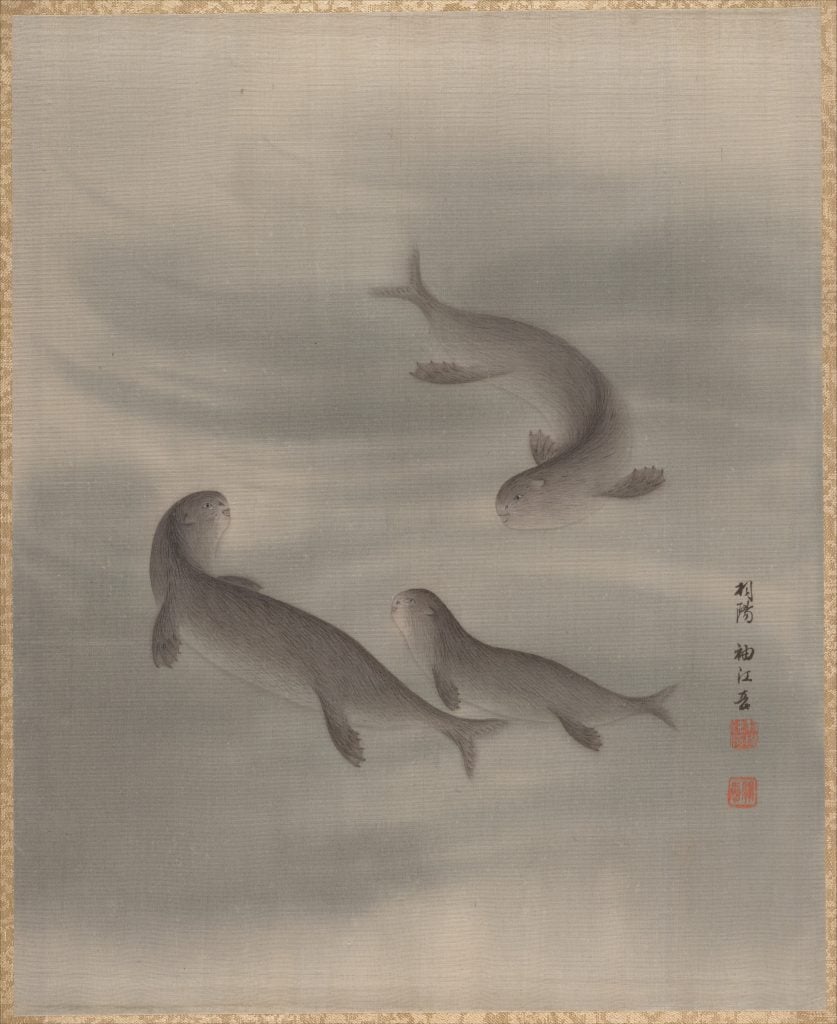
In the late 1800s, Japanese otters were still very common across the country’s waterways.
©Metropolitan Museum of Art / CC0 / Wikimedia Commons – Original / License
Video footage from Tsushima Island briefly reignited public interest when it captured a live otter on camera. However, the excitement quickly faded when genetic and physical analysis ultimately confirmed the animal was a Eurasian otter (Lutra lutra). The otter belonged to a continental population that had somehow crossed the sea, rather than being a surviving native Japanese otter.
Cultural Legacy and Environmental Reflection
While the physical Japanese river otter has vanished, it refuses to disappear from Japanese culture. Today, the kawauso remains vibrantly alive in folklore, anime, and regional storytelling, forever celebrated as a clever, playful shape-shifter.
In traditional and modern tales, the otter is a famous prankster known for mimicking speech and shapeshifting into humans. It might disguise itself as a wandering monk to steal food or trick travelers by extinguishing lanterns along dark riverbanks. Far from a malicious monster, it is remembered affectionately as a mischievous, comforting presence once deeply woven into daily life.
The kawauso also holds a formal place in the modern world. It remains the official animal symbol of Ehime Prefecture, serving as a poignant regional icon. Ultimately, it stands as a cultural monument, ensuring that the river otter is never forgotten despite its physical absence.
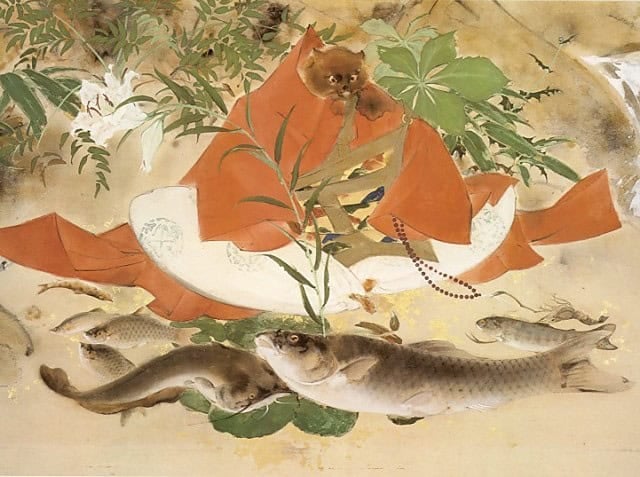
In Japanese folklore, kawauso are playful and mischievous, but rarely dangerous.
©Kawabata Ryûshi / Public Domain / Wikimedia Commons – Original / License
A Warning for the Future
The extinction of the Japanese river otter stands as a stark reminder of how rapidly a species can vanish. The species was driven to the brink by the combined pressures of commercial exploitation, cultural demand, and environmental destruction. Conservationists and researchers emphasize that the loss of the otter is not just an isolated historical tragedy. Instead, it serves as an urgent warning for the present.
This loss underscores a critical lesson: we must actively protect our remaining wildlife before they follow this same trajectory, fading from real-world abundance into mere mythology. Today, in the quiet, empty rivers where the kawauso once hunted, only its memory remains.