
Quick Take
- Urban sparrows have adopted a nesting habit that simultaneously shields and endangers their own chicks, with humans responsible for both effects. See the double-edged habit →
- One sparrow species can function normally on a fraction of its usual sleep, though this is possible only under one very specific condition. Discover the seasonal exception →
- What scientists assumed was a friendly greeting in swamp sparrows turned out to signal the exact opposite. Uncover the real meaning →
- A new sparrow song went viral across an entire continent in under two decades, with females possibly being the reason the old one is nearly extinct. Explore the viral new song →
Sparrows are small-to-medium-sized songbirds with widespread distribution. Belonging to the order Passeriformes (perching birds), sparrows are divided into two major families containing more than 180 species. There are approximately 43 species of Old World sparrows in the family Passeridae, while about 141 species belong to the New World sparrow family, Passerellidae. North America is home to about 40 native and introduced sparrow species, most of which are from the New World sparrow family, with a few familiar Old World species introduced as well. Continue reading to discover eight essential sparrow facts.
Sparrows Are Easy to Attract
Sparrows are easy to attract. They aren’t picky eaters and will eat a variety of different seeds. Sparrows are widely distributed, and many species thrive around humans. Once a sparrow discovers a hospitable environment, it will alert its friends with a special song.
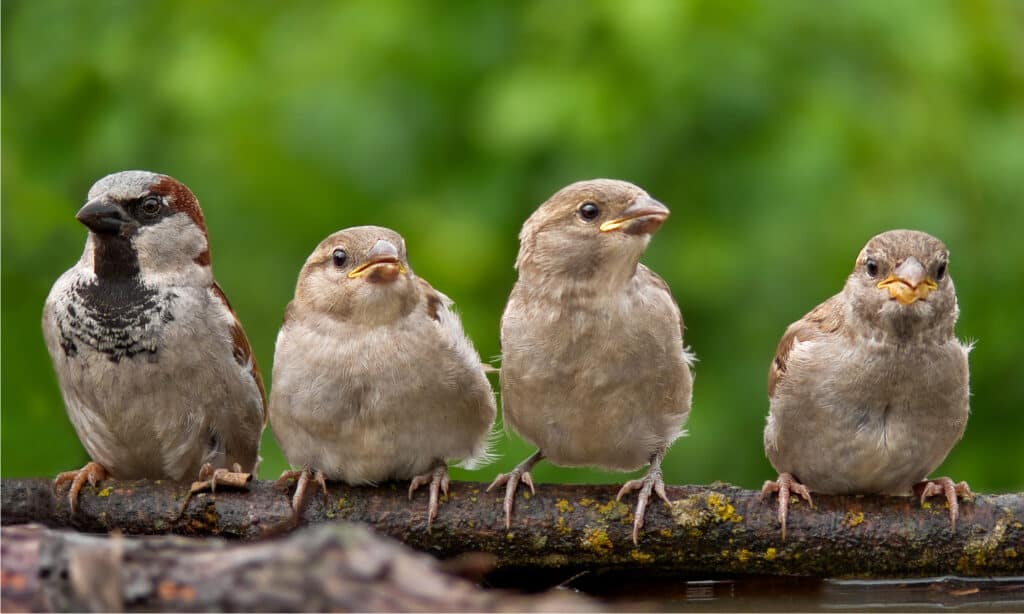
One of the incredible facts about sparrows is their ease of viewing! It’s easy for birders to attract sparrows to their yards.
©Nick Vorobey/Shutterstock.com
Sparrows are also responsive to pishing. Pishing is a technique in which birders imitate an avian alarm or scolding noise, rather than a song or typical communication call, to attract birds.
It’s a valuable technique for birders to master. If the weather is calm and there is minimal human activity or noise, attracting sparrows with pishing is easier.
Other birds that respond to pishing include warblers, wrens, kinglets, jays, finches, and chickadees.
However, because pishing makes birds think there is a threat, it can cause them stress and should never be practiced near active nesting sites during the breeding season.
Sparrows Use Cigarettes as Nest Material
Urban sparrows use cigarette butts as nesting material.
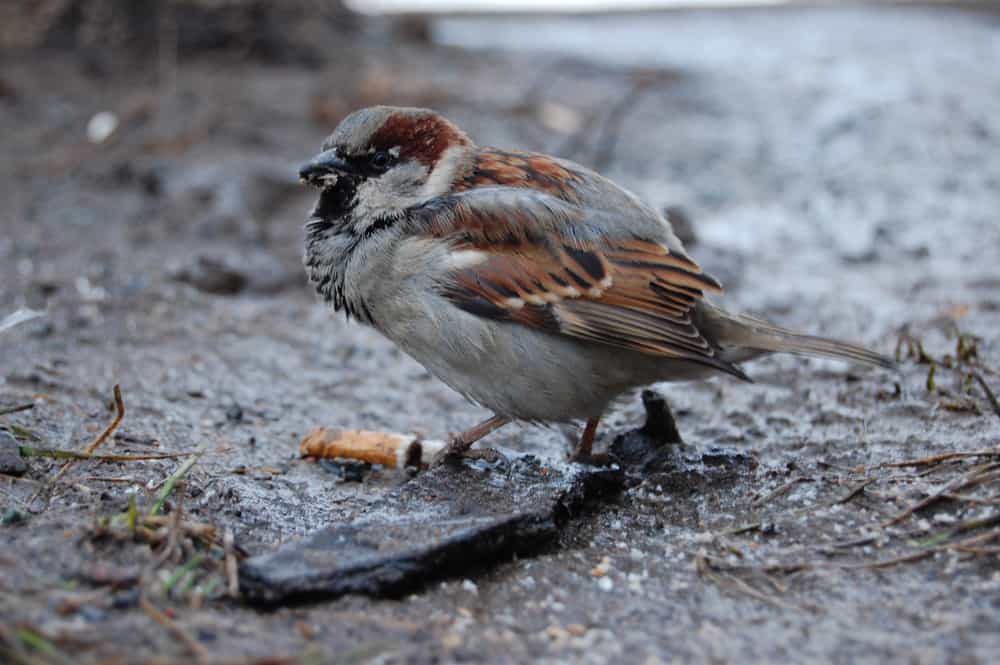
Sparrows use cigarette butts as nesting material to drive parasitic mites away from their nests.
©Kornienko Aleksey/Shutterstock.com
Scientists have determined that the residual nicotine in smoked cigarette butts acts as a natural deterrent against mites, ticks, fleas, and other parasites. Although the nicotine helps repel pests, the cellulose fibers in cigarette filters trap thousands of dangerous chemicals and heavy metals, which can harm hatchlings.
A Sparrow Once Knocked Down 23,000 Dominoes
Can you imagine what it would be like to almost break a world record, only to have a sparrow get in the way? That happened in the Netherlands when a sparrow knocked over a domino exhibit.
The incident happened in November 2005 at an exposition center in the Netherlands. During preparations for the televised event, a cameraman left a window open, allowing the house sparrow to enter the facility.
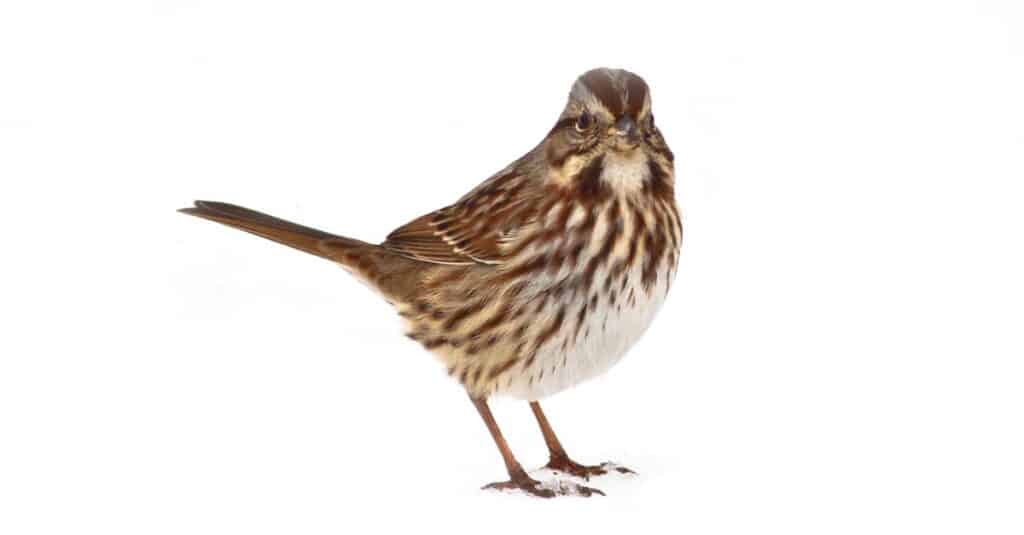
A sparrow flew in through an open window and knocked down a domino exhibit during a competition.
©Elliotte Rusty Harold/Shutterstock.com
The sparrow landed on the massive display, accidentally toppling 23,000 dominoes. However, the event proceeded, and the team successfully broke the Guinness World Record by officially toppling 4,002,136 dominoes.
White-crowned Sparrows Are Seasonally Immune to Sleep Deprivation
A lack of sleep can significantly disrupt our daily routines and productivity, but white-crowned sparrows (Zonotrichia leucophrys) appear to be immune to sleep deprivation.
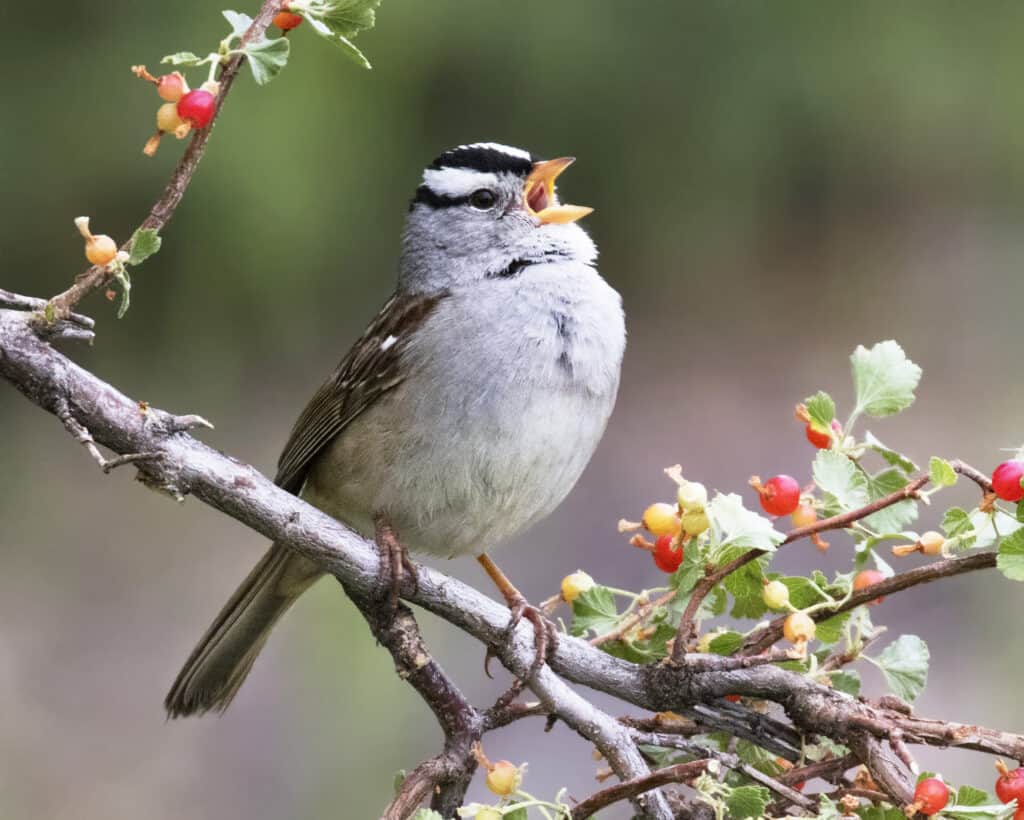
Sleep deprivation doesn’t seem to bother the white-crowned sparrow.
©Rbrown10/Shutterstock.com
During non-migratory periods, a white-crowned sparrow suffers from sleep deprivation just like a human or any other bird. If they are kept awake, their cognitive skills drop, they perform poorly on tasks, and their health declines.
However, when they migrate 2,500 miles between Alaska and Southern California, their brain chemistry completely alters. They suddenly reduce their sleep by almost two-thirds. Despite staying up all night to fly and foraging all day, research shows that their accuracy, learning speed, and problem-solving skills are not affected.
Sparrows Are Getting Wooden Eggs
The practice of replacing house sparrow eggs with wooden ones is a management tactic used by bluebird conservationists and citizen scientists across North America. The non-native house sparrow is an invasive species that frequently takes over nesting boxes, destroying the eggs, nestlings, and adults of native cavity-nesting species like the Eastern bluebird. In the egg-swapping method, monitors gently remove the real sparrow eggs from a nest box and replace them with hand-painted wooden dummy eggs.
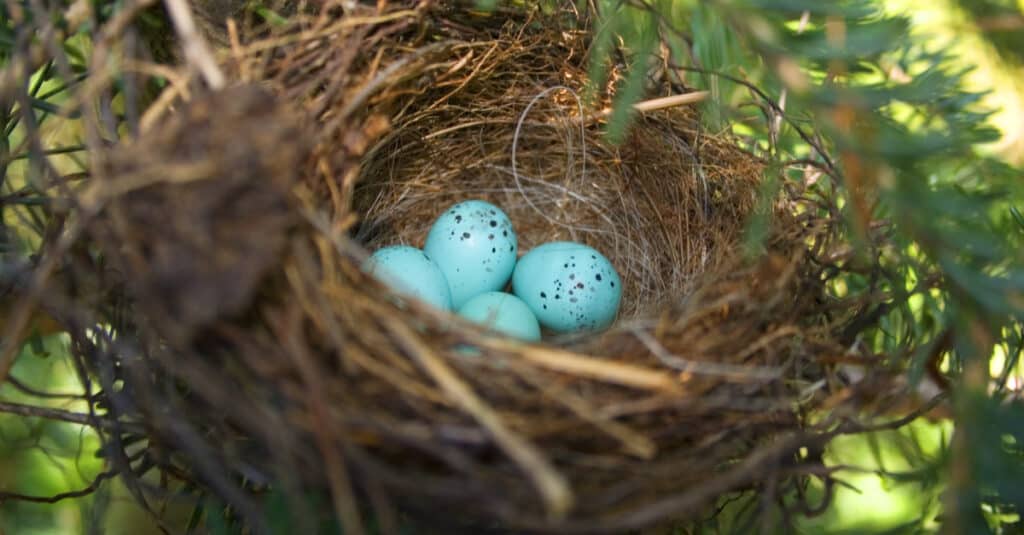
Sparrows that are harming native bird populations are having their eggs replaced with wooden replicas.
©Beth Van Trees/Shutterstock.com
Because sparrows cannot easily distinguish the fake eggs, the female will continue to incubate the wooden clutch for several weeks without success. This strategy offers two main advantages. First, it delays the sparrows’ reproductive cycle.
Since the female spends her energy incubating dud eggs instead of quickly building a new nest and laying more eggs, the growth of the invasive population is effectively slowed. Second, programs like the national citizen-science initiative Sparrow Swap allow volunteers to mail the real, confiscated eggs back to research labs.
Scientists then analyze the shells to map local environmental toxins and heavy metal contamination, turning an invasive pest management chore into valuable ecological research.
This practice originated from grassroots efforts by organizations to combat the massive decline in bluebird populations, up to 90% in some regions, caused by a combination of invasive species, habitat loss, and pesticide use.
Backyard birders and bluebird trail monitors across the United States independently began using dummy wooden or ceramic eggs, a method borrowed from poultry farming, as a non-lethal way to deter sparrows from re-nesting in their boxes
White-throated Sparrows Are Changing Their Tune
White-throated sparrows (Zonotrichia albicollis) across Canada are changing one of their songs. They’re replacing a three-note melody with a two-note melody.
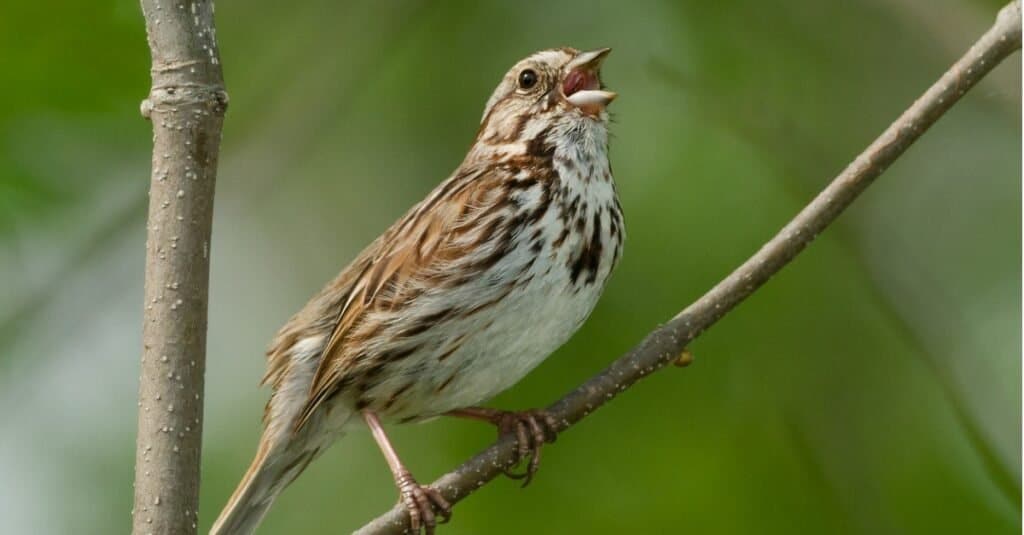
The white-throated sparrow has a new song.
©iStock.com/PaulReevesPhotography
The white-throated sparrow has recently undergone an unprecedented, continent-wide evolutionary shift in its song, effectively altering a vocalization that had remained unchanged for generations.
Historically, the species was famous for a distinct whistling tune ending in a repeated three-note sequence (often translated by birdwatchers as “Oh sweet Canada, Canada, Canada”), but between 2000 and 2019, a novel two-note variant rapidly went viral. Originating in Western Canada, this new dialect swept over the continent, completely wiping out the historic triplet ending across the majority of North America in less than two decades.
Biologists tracking the phenomenon via databases like eBird discovered that this rapid cultural evolution was driven by migration. Juvenile males from different regional populations mingled in shared southern overwintering grounds, where the younger birds abandoned their fathers’ traditional songs to adopt and spread the trendy doublet tune.
Because researchers found no clear genetic advantage or environmental pressure forcing this change, the leading evolutionary theory is that female sparrows simply preferred the novelty of the new tune, driving a massive behavioral shift across the entire continent.
Swamp Sparrows Show Aggression By Waving Their Wings
Swamp sparrows (Melospiza georgiana) wave their wings to communicate with each other.
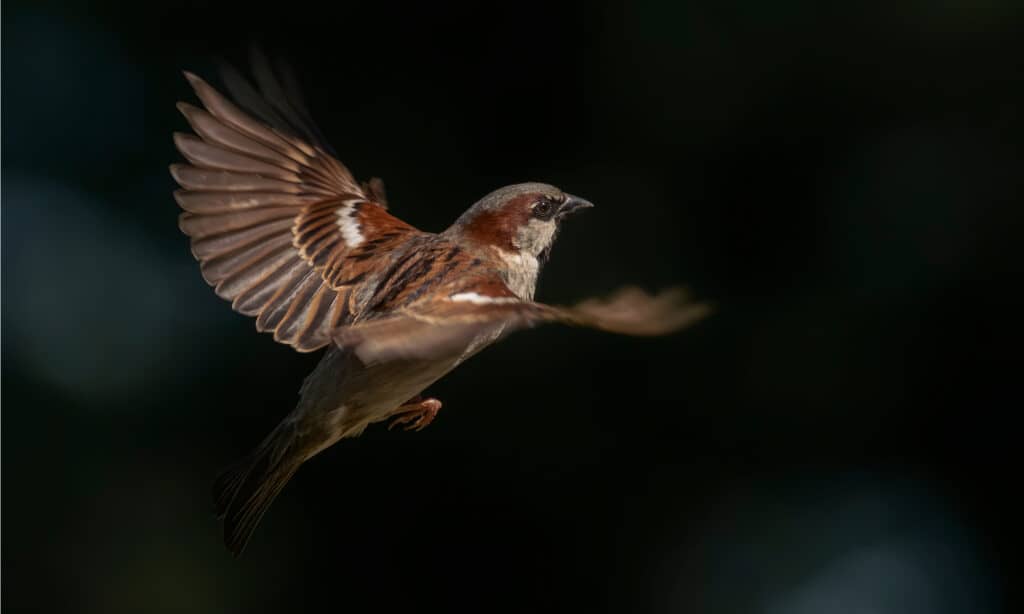
Male swamp sparrows wave their wings to show that they are ready for a fight.
©Albert Beukhof/Shutterstock.com
Scientists used to believe that wing waving was a friendly way for sparrows to say hello or goodbye to friends. However, the opposite is true: wing waving is a display of anger.
Swamp sparrows wave their wings to show strength and willingness to fight. This behavior is most often displayed during the breeding season. When a swamp sparrow starts waving its wings, it’s letting the other birds know it’s ready to fight.