
Birds exhibit a wide variety of fascinating nesting and offspring-rearing behaviors throughout their lifecycle. Against the odds, they protect and guide their young from hatching to leaving the nest and eventually becoming independent adults. These processes occur in a vast array of habitats and climates. Here, we will look at the bird life cycle from hatching to independence and examine the crucial role of timing in this process.
Where Do Birds Nest?
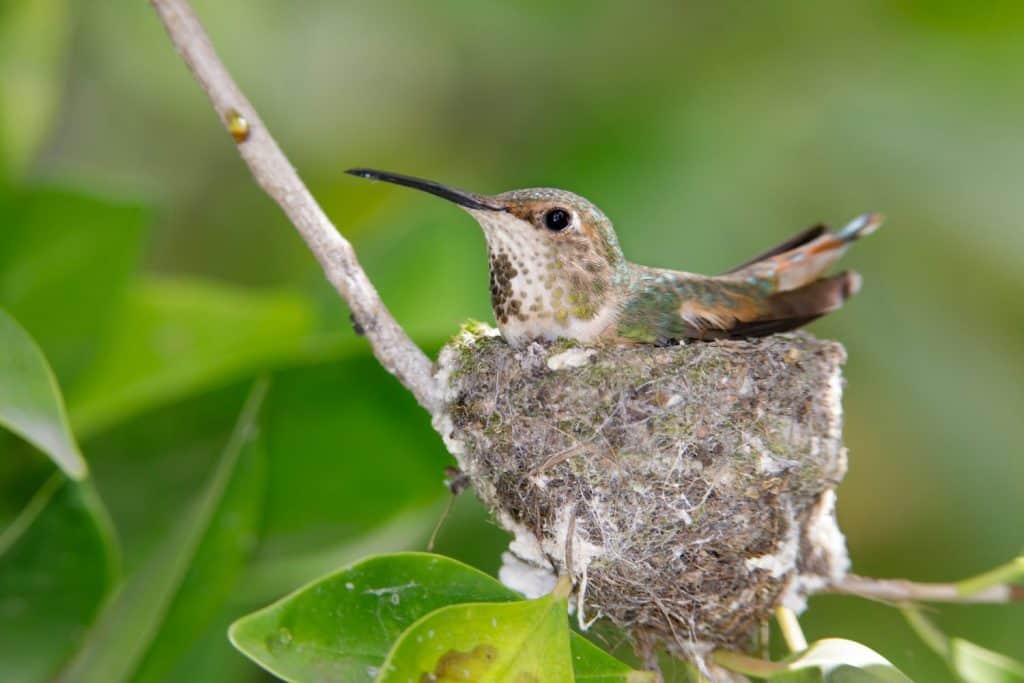
Some nests are elaborate and cup-shaped.
©Agami Photo Agency/Shutterstock.com
The purpose of a bird’s nest is to provide somewhere for eggs to be laid and chicks to be cared for. Each bird species has a preferred location for its nests. Ground-nesting birds, such as the American woodcock and the ruffled goose, nest amongst vegetation. Birds such as robins and crows nest in trees, but others, such as barn owls, have learned to utilize manmade structures. Tree-nesting birds will have a preferred height at which to locate their nests. For example, black-throated blue warblers build nests in the dense understory just a few feet off the ground. Others nest in the midstory (between 6 and 30 feet off the ground) or the overstory (above 30 feet).
The peregrine falcon doesn’t bother with construction and just lays eggs on cliff edges or in high buildings. Many coastal species, such as guillemots, nest precariously on cliffs. All of these nest locations have been chosen carefully to protect the eggs and chicks from the elements and from predators. King penguins, on the other hand, don’t use any type of nest. Instead, they tuck their eggs between the folds of skin on their bellies to protect them.
Nest Construction and Incubation
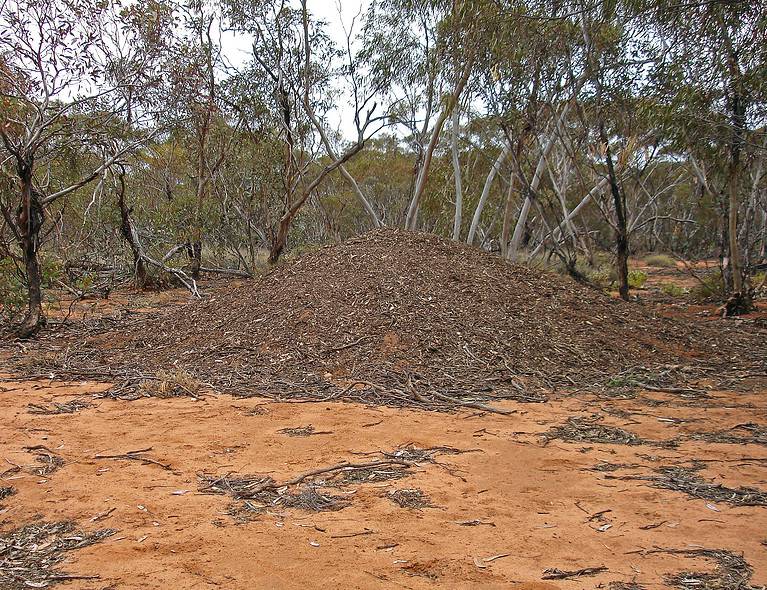
Some birds, such as the house sparrow, go to great efforts to construct elaborate structures from twigs and mud. Nesting materials used by other birds are lichen, spider silk, and bark, as well as manmade materials that they find lying around. Some nests are neat, cup-shaped structures, while others are simply chaotic piles of twigs. Some birds, including many ducks and terns, don’t make much effort at all and just scratch out a depression on the ground (called a scrape). Other birds use an existing tree crevice or even another bird’s nest. At the other end of the spectrum, black-throated blue warblers carefully line their nests with soft moss and even mammal hair.
It is often the female that builds the nest, but sometimes it is a joint venture. Then the female lays the eggs, and either or both parents incubate them until they hatch. In some species, the birds incubate the eggs after the female has finished laying, and they all hatch at the same time. Raptors, herons, cranes, and cormorants, however, begin incubation straight away so that the eggs hatch on different days. Incubation times are variable, but generally, the smaller birds have shorter incubation times. The black-capped chickadee only has to incubate its eggs for 11 days, but the wandering albatross must do this for 85 days!
Hatching
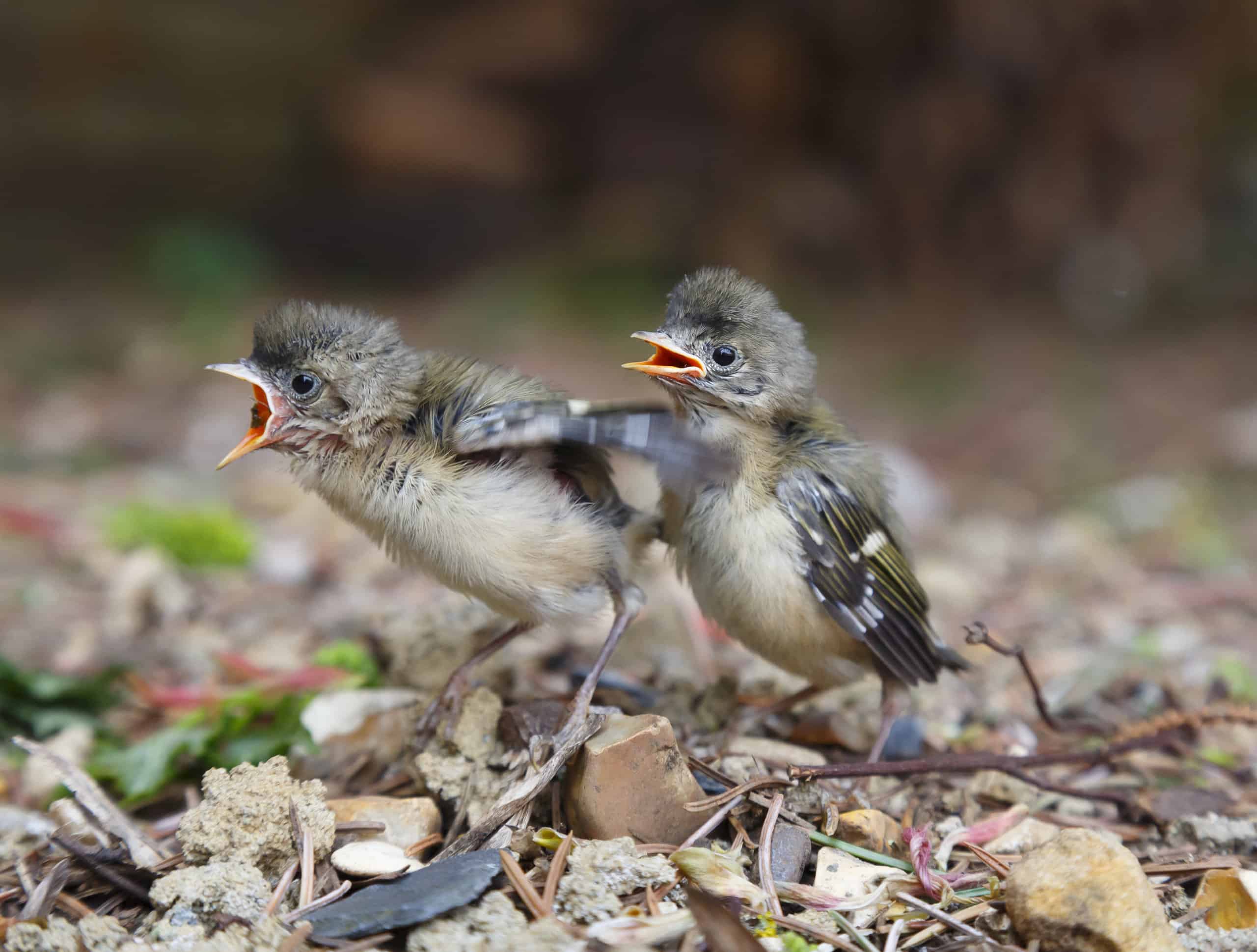
Typically, hatching starts when the baby bird uses its beak to break a small hole in the shell. This process is called pipping. It can take several hours for them to chip away at the shell, and the parents may help. Once the chick is out, the mother bird will often clear the empty shell out of the nest. Hatchlings can either be altricial or precocial. Altricial hatchlings emerge mainly bald, blind, and helpless. Birds such as songbirds, woodpeckers, hummingbirds, and most seabirds fall into this category. Their young just sit in the nest, opening their mouths to receive food. Many cannot even maintain their own body temperature and rely on their parents to brood them for warmth. They go through very rapid growth and development, and most can open their eyes by the end of the first week.
Precocial chicks, such as ducks, shorebirds, and owls, can either walk or swim soon after they hatch. Their eyes are open, and they have a full covering of down. Their advanced motor and sensory functions are due to their longer incubation period. These birds can be ready to leave the nest within just 8 days, but it can take several weeks.
Feeding Chicks
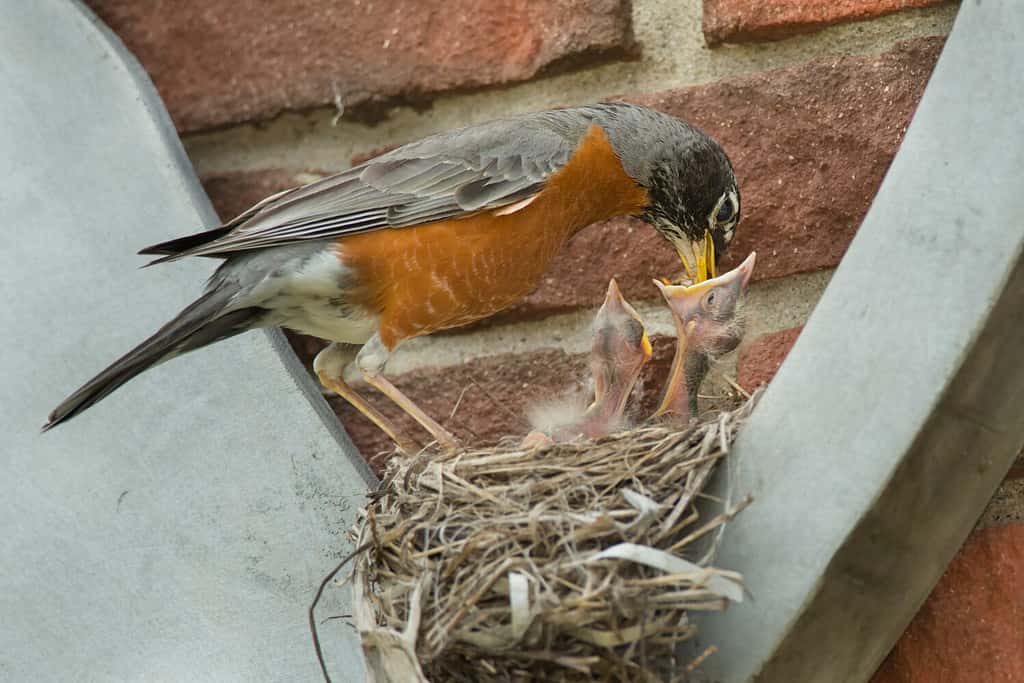
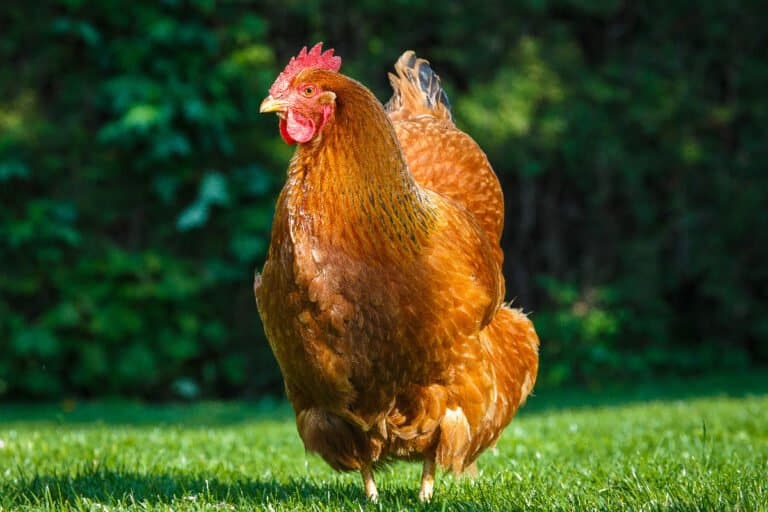
Feeding chicks is an exhausting task.
©Paul Reeves Photography/Shutterstock.com
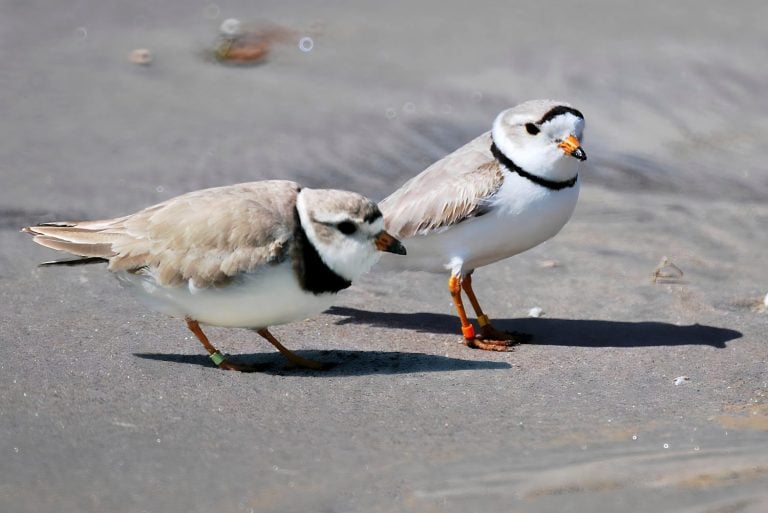
Precocial chicks are less labor-intensive for parents! Hatchlings such as the snowy plover leave the nest and start to forage for food for themselves, with their parents staying nearby to provide protection. Semi-precocial chicks such as least terns and black skimmers rely on their parents for food but leave the nest and move around.
Altricial hatchlings are very different. They are entirely dependent on their parents for food. Birds such as skimmers, terns, and many songbirds bring back one item (such as a fish or an insect) at a time. This is called ‘single prey loading’. Raptors bring larger food items for their chicks and help them to rip it into small pieces so that they can swallow it. Other birds, such as gulls and cormorants, swallow the food and then regurgitate the partially digested meal from their crop. During this time, life is both hectic and dangerous. The increasingly demanding chicks and the repeated food delivery by parents can attract the attention of predators. It is exhausting for the parents. For example, bobolinks have been recorded making 158 food deliveries in a 24-hour period – that’s 86 by the male and 72 by the female!
Plumage Development
Altricial chicks develop down in specific areas of the body. Tufts grow on their shoulders, on the top of their head, and on the center of their back. Precocial chicks have down covering their entire body, and their color and patterns help them blend in with their habitat.
As the chicks develop, juvenile plumage replaces the down. In altricial birds, this happens while the chicks are still in the nest. The pin feathers on the wings grow first, followed by the rest of the body. In precocial birds, the juvenile pin feathers develop under the down. As the down falls off, the juvenile plumage is revealed. These first feathers are not as stiff or cohesive as adult plumage. Juvenile plumage is also a different color and pattern, often helping young birds blend in with their surroundings.
Fledging
Fledging is the name given to the process of the chicks leaving the nest. This happens when they are nutritionally independent of the parents and when they have developed flight feathers and muscles. Even after fledging, many young birds stay close to their parents for a while. Parent birds may continue to bring them food. It’s actually safer for the chicks to be spread out in the branches of a tree than all in one place in a nest. During their first year, young birds are very vulnerable, and many do not survive. The exact process of separation differs between species. In some, chicks wobble out onto branches before they can fly.
How Do Chicks Learn to Fly?
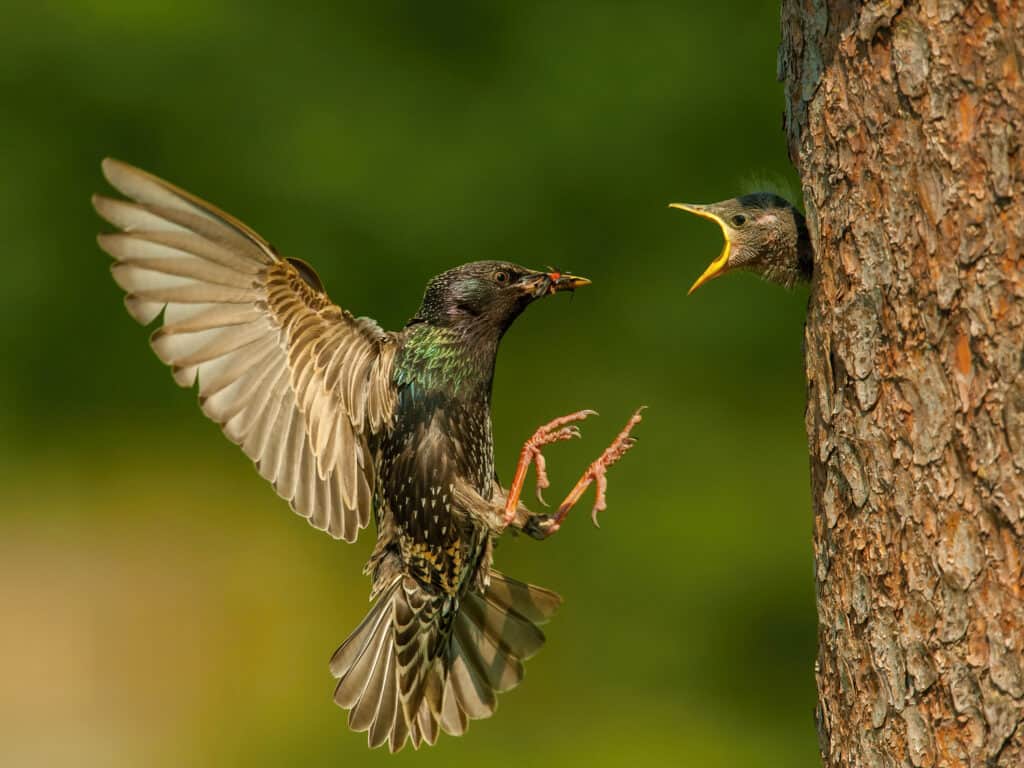
It is risky when chicks try to fly.
©Petr Simon/Shutterstock.com
Apart from flightless birds, all chicks have to learn the crucial skill of flying. They do this through a combination of instinct and practice. It starts when they are very young, and they begin to stretch and flap their wings, preparing their flight muscles for what is to come. Then they start to flap their wings more vigorously while in the same spot, which helps with developing strength and coordination. Next comes hopping around the nest or even onto branches, where they develop balance.
The first proper flight is a nerve-wracking event to witness. These adventures are usually short, often clumsy, and are more gliding than actual flying! Landings are often awkward, and the parents stay close, offering encouragement and demonstrations.
Once the fledglings are in the air, they must fine-tune their skills so that they can use flight to hunt and escape predators. Hawks and other birds of prey must learn to dive at lightning speed. Songbirds need quick and darting movements to evade predators. It can take months to perfect these skills.
Inevitably, some fledglings fall from high nests as they are learning to fly. The sad truth is that some will be killed or severely injured. If they are unharmed, they will hide in vegetation, and the parents will continue to protect them until they have mastered flying. For example, wrens fledge at between 15 and 18 days but cannot fly confidently until they are between four and eight weeks old. Other species, including woodpeckers, swifts, and swallows, emerge from the nest as strong fliers.
How Long Do Chicks Take to Learn to Fly?
This varies a lot between species. American robins fledge very quickly, and the chicks can fly around nine days after hatching! Cardinals fledge between seven and 13 days but stay near the nest. Starlings fledge at about three weeks but hang around near their parents for at least another two weeks.
In general, larger birds take longer to fledge. Bald eagle and golden eagle chicks do not fledge until they are over 10 weeks old. Great blue herons don’t take their first flight until they are 74 days old, and the giant stork takes between 96 and 110 days to take to the skies.
Adult Bird Lifecycles
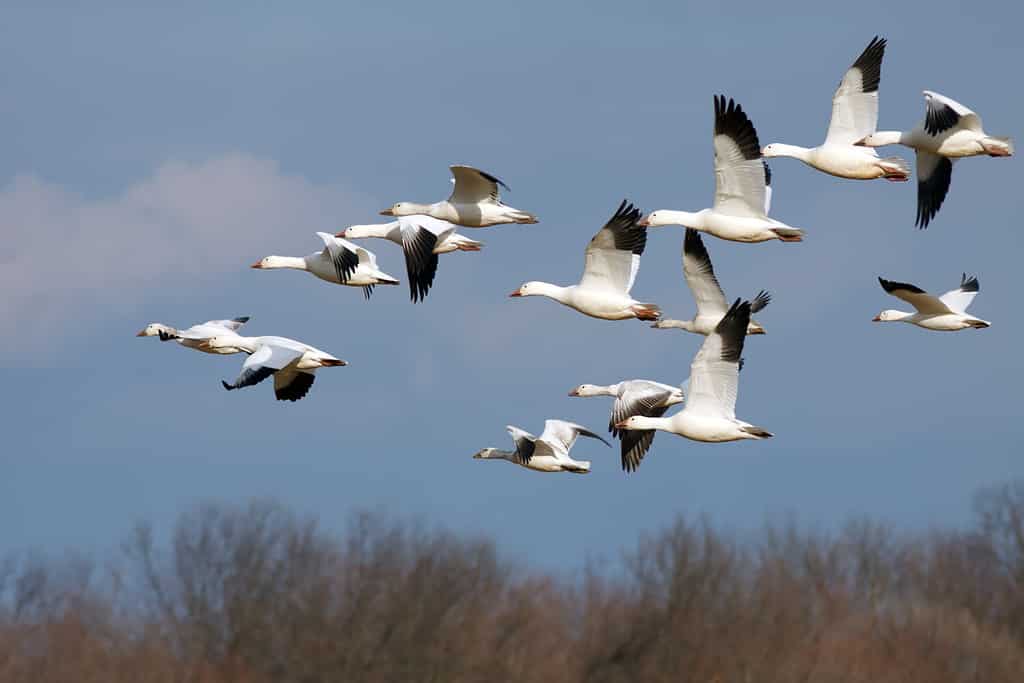
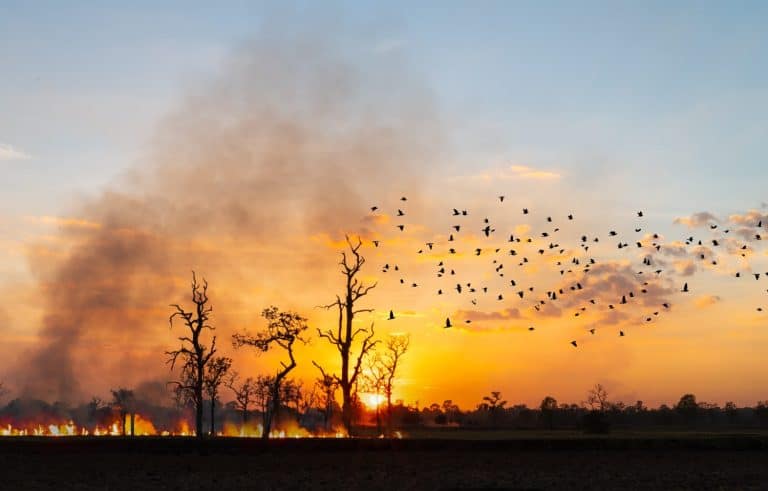
Birds migrate to access resources.
©Delmas Lehman/Shutterstock.com
Even as adults, birds continue through important life stages, particularly migration, molting, and mating.
Migration
Not all birds migrate—some are permanent residents—but those that do travel to areas with more abundant resources, such as food and nesting sites. Northern hemisphere birds tend to migrate north in the spring to access the growing insect populations and nesting locations. Then, they head south in the winter to escape the cold. Around 450 North American bird species migrate. Medium-distance migrants may only travel a few hundred miles, and these include the American robin and the song sparrow. Long-distance migrants travel between breeding ranges in the US and Canada to wintering grounds in Central and South America. However, none of these can match the record-breaking Arctic Tern, which travels around 56,000 miles from pole to pole every year!
Molting
Feathers are similar to our nails and hair in that they are dead structures and contain keratin. When some or all feathers are replaced, it is called a molt. Molting ensures that the bird has a healthy set of feathers but also provides a new appearance, which can indicate age, season, or gender. Molting varies not only between species but also within species, and can be either partial or complete. It is triggered by seasonal changes.
Some bird species acquire their adult plumage in their first year, but others, such as eagles, can take up to five years. Flycatchers, swallows, and thrushes have one complete molt cycle per year. Marsh wrens and bobolinks have two.
Mating
No account of bird life cycles is complete without a mention of the behavior that starts it all off – mating. The timing of mating is crucial as it coincides with there being appropriate nesting sites and plenty of food to feed the young. Some birds also migrate as soon as their chicks are fledged, and the young follow on a few weeks later.
Birds have some of the most colorful, bizarre, and entertaining courtship sequences on the planet. During the breeding season, birds have courtship displays that convey their willingness to mate. Females also have the opportunity to select the strongest and most vigorous male to father their offspring and, in many cases, help raise them. He will do this with amazing plumage, vocalization, physical movements, or all three! If she makes a good choice, her chicks will have the best chance of life, and the bird lifecycle can start all over again.