
Quick Take
- One of Maine's most productive birdwatching spots is almost entirely devoid of trees, and that is no accident. Explore the blueberry barrens →
- Getting to the shorebirds at one popular coastal pool requires a stop that has nothing to do with birds. Find Biddeford Pool shorebirds →
- Maine's puffins don't nest where most visitors look for them, so spotting one takes a specific strategy. Spot puffins at Acadia →
- One location requires arriving before sunrise to unlock access to 250 bird species in a single morning. See 250 species at Gilsland →
Quick Take
- Maine is wonderful state for bird watching due to its coastal areas and ample forests.
- Birders can find 475 different species in the Northeastern state.
- Two notable locations are Acadia National Park and Scarborough Marsh.
Maine offers birders the best of both worlds: an abundance of seabirds nest on its coast, while forest-dwelling songbirds inhabit its mountains and valleys. This unique landscape offers an abundance of birdwatching, depending on where you set up your binoculars. From the beauty of Acadia National Park’s seaside cliffs to the beachy marshlands of Kennebunk, birders can observe 475 recorded bird species.
As a whole, Maine is birder-friendly. Its most popular birdwatching spots offer parking and ease of access. Whether you’re searching for the state’s beloved puffins or the rare clay-colored sparrows, these locations are the best places to start.
Acadia National Park
One of America’s most popular national parks is also one of the best for birdwatching. Acadia National Park is home to a diverse array of native birdlife. Along its rocky shores, birders can observe seabirds such as terns and gulls, as well as shorebirds. Otter Point is home to cliff-loving species, such as black guillemots, Eider ducks, common loons, and long-tailed ducks in the winter. Just to the north, the Precipice Trail follows the Jordan Cliffs, where birders with a keen eye can observe peregrine falcons. Note: In the summer, the National Park Service is available at the trailhead between May and July to help visitors spot the falcons. Mount Desert Island is also home to Down East Bird Watching & Nature Tours.
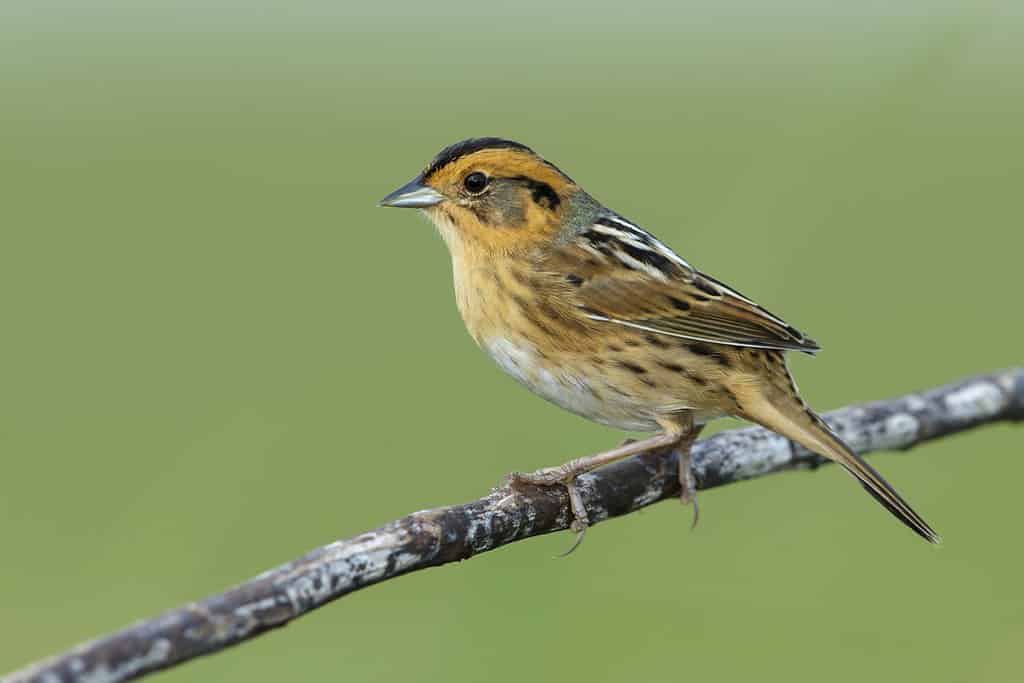
Nelson’s sparrows are recognizable by their yellow plumage.
©Agami Photo Agency/Shutterstock.com
Further inland, the Jordan Pond Area includes a mix of forest-dwelling birds and waterfowl. Birders can often spot nuthatches, vireos, and flycatchers in the woodlands. Nearer to the pond, common loons are popular during the summer when their plumage is at its peak. Bass Harbor Marsh is a good spot to see nesting birds, such as Nelson’s sparrow and, on rare occasions, the least bittern. Seawall Picnic Area, Cadillac Mountain, Schoodic Peninsula, and Isle au Haut are Audubon-recommended to observe migrating colonies, northern gannets, great shearwaters, and spruce grouse.
One of the biggest draws for birders, though, is the Atlantic puffin. These cute seabirds make their homes in cliff crevices around Acadia National Park. While there isn’t a single place to spot them, birders can increase their chances by taking boat tours from Bar Harbor, Winter Harbor, and other nearby coastal towns.
Kennebunk and Biddeford Pool
It could easily be said that there are no bad birding spots in all of Maine. The stretch of coast from Kennebunk to Biddeford proves that well enough. The Kennebunk Plains are particularly captivating for birdwatchers. They’re home to the blueberry barrens, which encompass 2,000 acres of mostly treeless land. This might sound like a strange place to spot birds, but it’s the perfect feeding ground. Upland sandpipers, grasshopper sparrows, the rare clay-colored sparrow, and vesper sparrows can all be found grazing here.
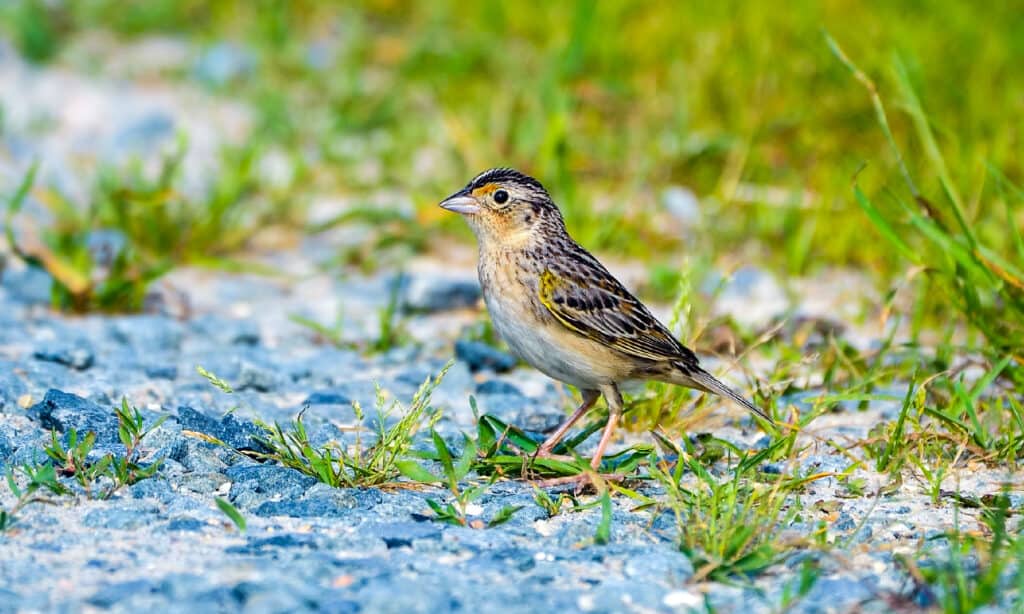
Grasshopper sparrows can be found hopping along the ground, feeding on insects.
©iStock.com/BrianEKushner
According to Audubon, birders can also see wild turkeys, broad-winged hawks, eastern whip-poor-wills, alder flycatchers, least flycatchers, horned larks, chestnut-sided warblers, prairie warblers, Savannah sparrows, bobolinks, and eastern meadowlarks.
At Biddeford Pool, birders are treated to a seabird spectacle. Depending on the season, you can see anything from ducks to shorebirds, including a few rare species. Note: Visitors must ask permission at Hattie’s Restaurant to park and walk to the pool. At East Point Sanctuary, birders can spot long-tailed ducks, red-breasted mergansers, red-throated loons, red-necked grebes, northern gannets, great cormorants, purple sandpipers, razorbills, and black guillemots.
Scarborough Marsh
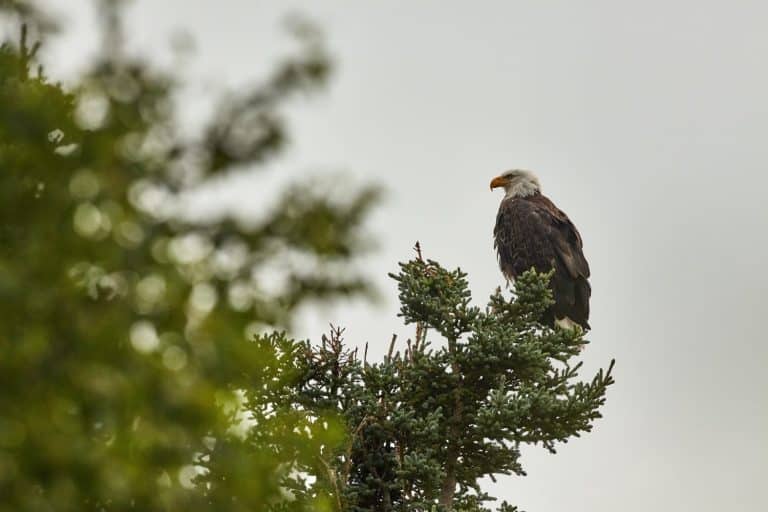
This is the largest salt marsh in Maine and also one of the best birding destinations in the state. Aside from recreational activities, birders come from all over to observe estuary birds year-round. Summer is the most popular time for birding and offers the most for visitors. Potential sightings include great blue herons, great egrets, snowy egrets, little blue herons, tricolored herons, green herons, black-crowned night-herons, and glossy ibises, which are seen here in summer, along with ospreys, bald eagles, Virginia rails, least terns, roseate terns, belted kingfishers, marsh wrens, common yellowthroats, bobolinks, and Nelson’s, saltmarsh, and swamp sparrows.
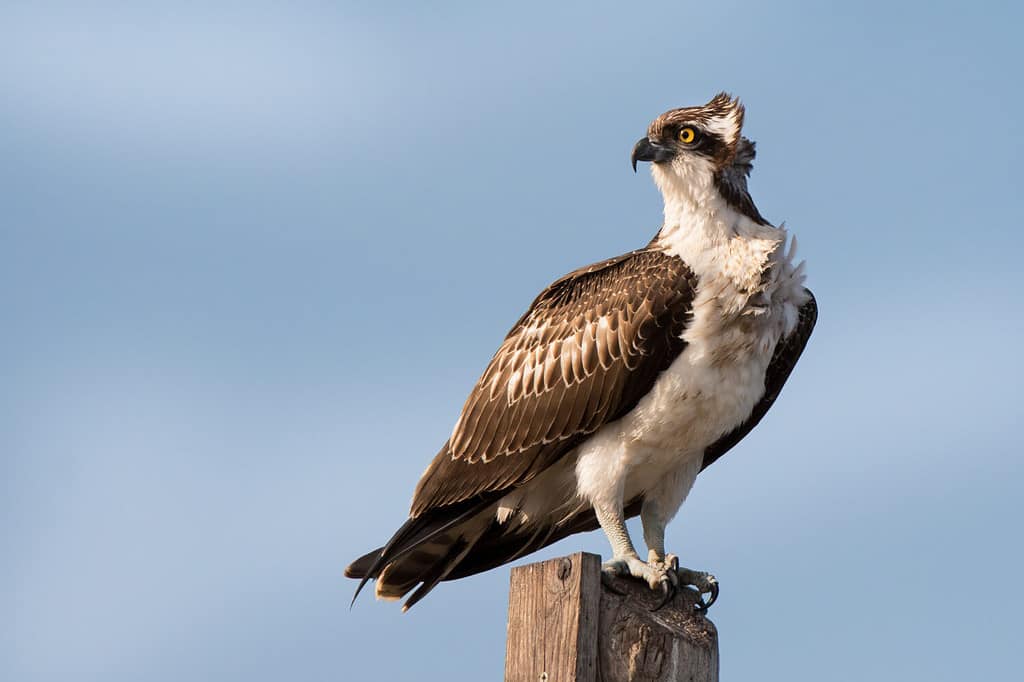
Ospreys are a common sight around Maine’s sea coasts.
©Jesus_Miguel/Shutterstock.com
Birding is quieter in the winter, but equally as enjoyable. Common sightings among Maine’s wintery landscape include diving ducks, grebes, and loons. Those familiar with bird calls have a better chance of hearing these birds more clearly, with fewer crowds.
Western Boreal Forests
Maine’s diverse landscape continues to amaze birders. To the mountainous west lie its boreal forests, which are home to a wide variety of song and forest-dwelling species. This is also home to the great Katahdin, which has its own unique ecosystem at 5,200 feet. The birds that call this region home are hardy and can tolerate tough winters.
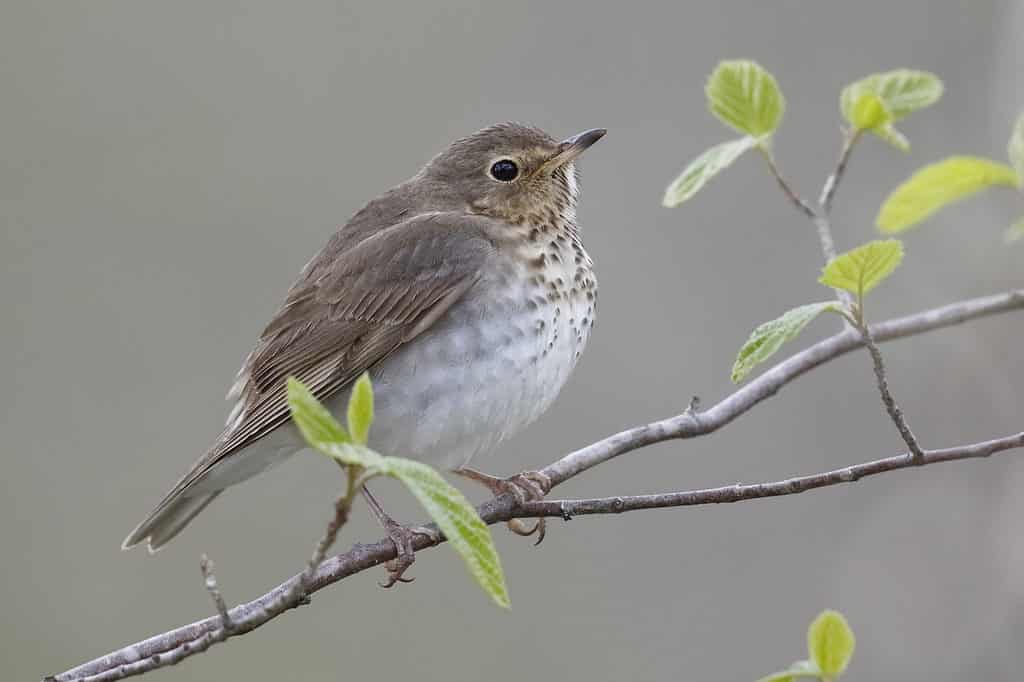
Swainson’s thrush sounds similar to an American robin and is often mistaken for one.
©iStock.com/BrianLasenby
Spruce grouse, black-backed woodpeckers, yellow-bellied flycatchers, northern ravens, Canada jays, boreal chickadees, winter wrens, golden-crowned kinglets, blackpoll warblers, white-throated sparrows, dark-eyed juncos, and Swainson’s and gray-cheeked thrushes are all potential sightings. In the furthest northern corridor of Maine, birders can see additional species. Past Katahdin, neotropical migratory birds are common in spring and summer. Yellow-bellied and olive-sided flycatchers, rusty blackbirds, purple finches, hermit thrushes, evening grosbeaks, and white-winged crossbills are also found here.
Spotting many of these birds requires some work. Good hiking boots, a sense of direction, and a reliable weather forecast are essential.
Gilsland Farm Audubon Center
The headquarters of Maine Audubon is also an excellent place to start, particularly for beginning birders. Here, birdwatchers can observe birds across 65 acres consisting of woodlands and salt marshes. With 2.5 miles of hiking trails, educational programs throughout the season, and scenic overlooks, this is the perfect place to scope out 250 bird species.
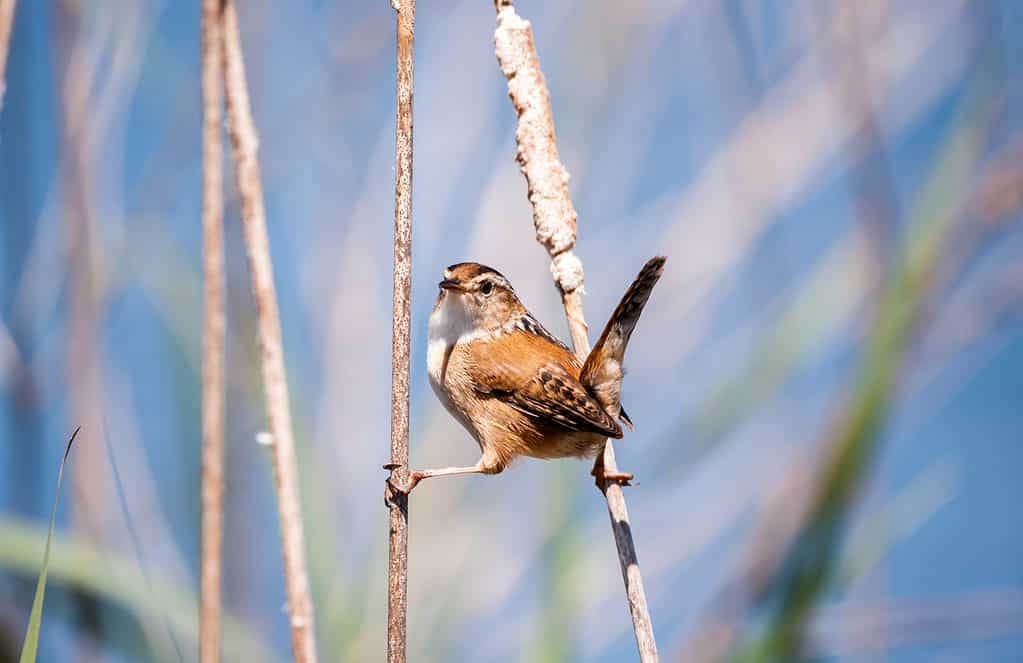
Marsh wrens typically perch on tall reeds but camouflage with their surroundings.
©iStock.com/maiakphotography
Among the frequently sighted are wood ducks, wild turkeys, great egrets, snowy egrets, glossy ibises, ospreys, bald eagles, Alder flycatchers, willow flycatchers, marsh wrens, cedar waxwings, black-and-white warblers, black-throated green warblers, swamp sparrows, bobolinks, and Baltimore orioles. Note: In mid-May, Maine Audubon representatives lead guided bird walks at 7 AM each morning.