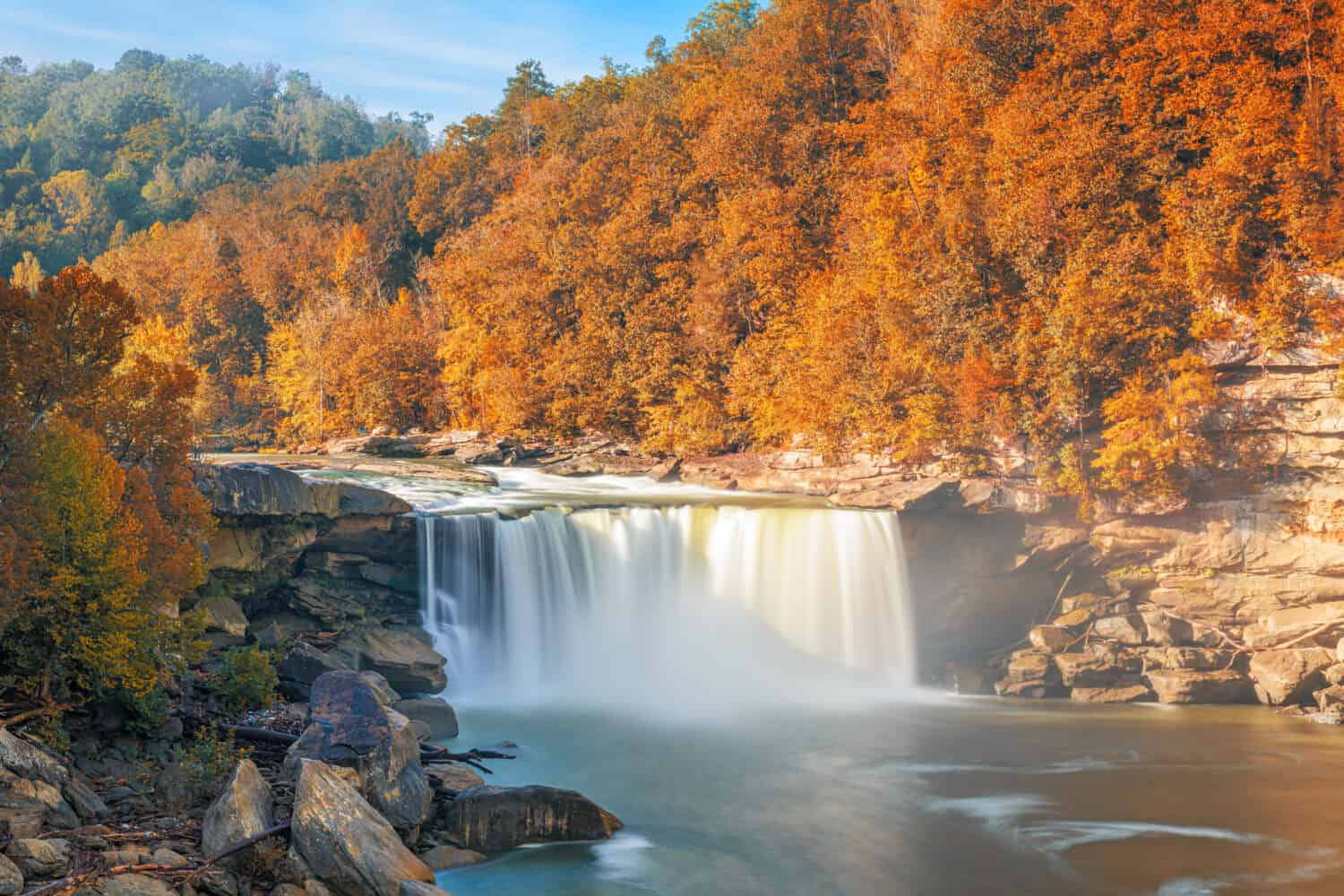

The Cumberland River stretches 688 miles from its headwaters in southern Kentucky, through Tennessee, to its confluence with the Ohio River near Paducah, Kentucky. The river carves a diverse path, flowing over waterfalls, through a deep gorge surrounded by towering cliffs, and across rural plains. The river also cuts through Nashville, Tennessee, serving as a vital commercial shipping route in the region. The river’s fish population attracts anglers, but there’s more than fish in and near the river.
Striped Bass
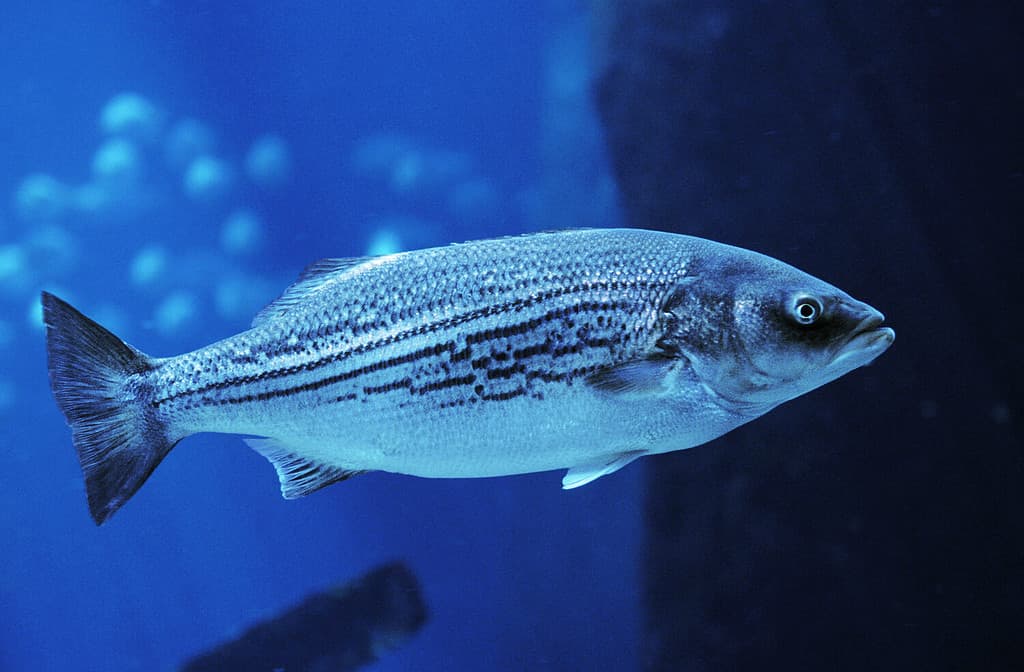
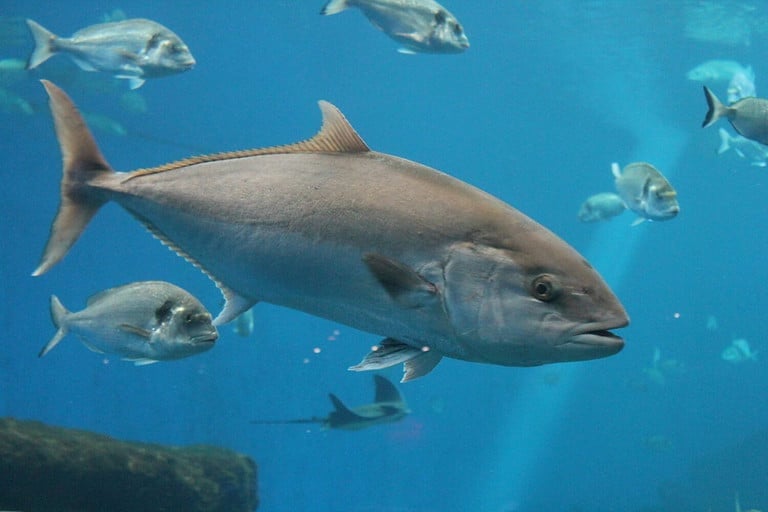
Striped bass are an angler’s favorite on the Cumberland River.
©slowmotiongli/Shutterstock.com
The Cumberland River is a favorite for anglers because of its trophy-sized striped bass population, with “stripers” averaging 12 to 30 pounds and some reaching a massive 40 pounds. Striped bass are not native to the river. They enter the Cumberland from Lake Cumberland, where the Kentucky Department of Fish & Wildlife annually stocks fingerling stripers to keep the population at healthy levels. They are easily identifiable by the dark, horizontal stripes on their sides.
Smallmouth Bass
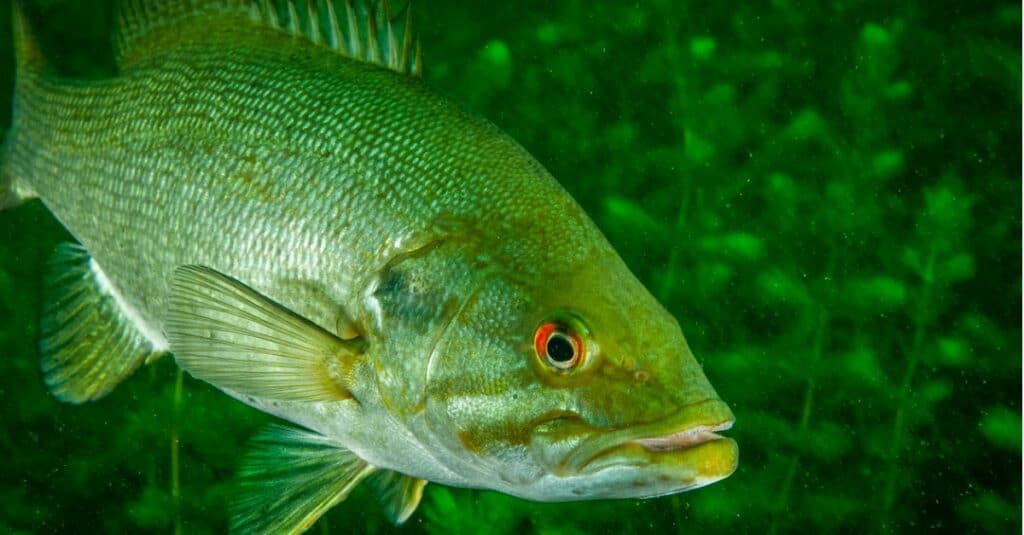
Female smallmouth bass lay more than 20,000 eggs at a time. The male is tasked with guarding the nest.
©iStock.com/RLSPHOTO
Smallmouth bass are slender yet muscular and range in color from olive green to dark brown along the back with a lighter colored belly. Their brown stripes and red eyes make them easy to identify. Males weigh around two pounds, with females averaging three to six pounds. Smallmouth bass eat crayfish, aquatic insects, and tadpoles, so you’ll often find them near the river’s banks hunting their next meal. They put up a fight when hooked, making them a popular game fish for anglers.
Largemouth Bass
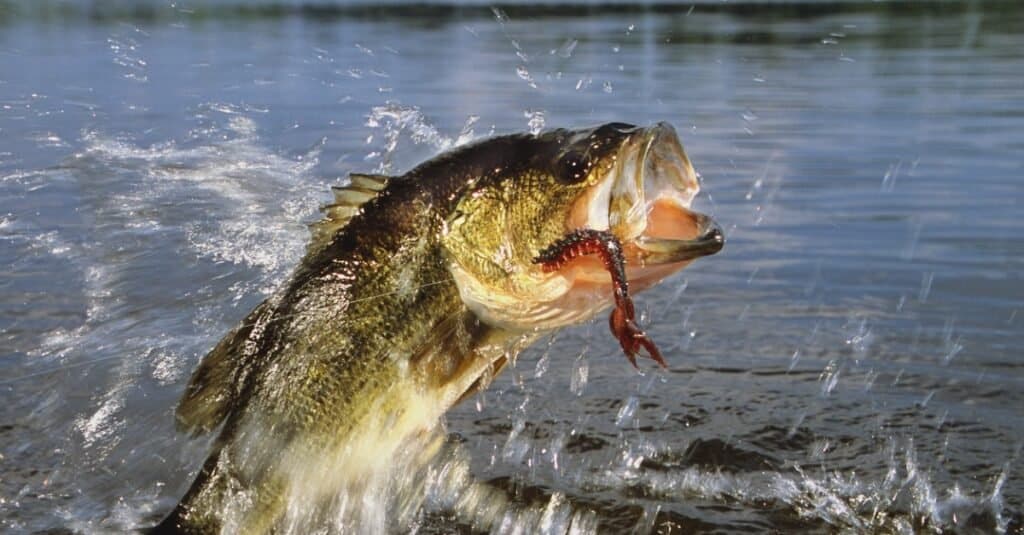
Bass hunt by opening their large mouths and sucking in their prey.
©iStock.com/stammphoto
An adult largemouth bass is usually between 12 to 24 inches long and weighs between two and ten pounds. Like its smallmouth counterpart, the females tend to be larger than the males. Largemouth are carnivorous predators, feeding on smaller fish like bluegills, frogs, snakes, and salamanders. They’ll also eat juvenile catfish, trout, and bass. Largemouth hunt along riverbanks, where they can camouflage themselves in weeds and overhangs. They’re a popular target for anglers.
Walleye
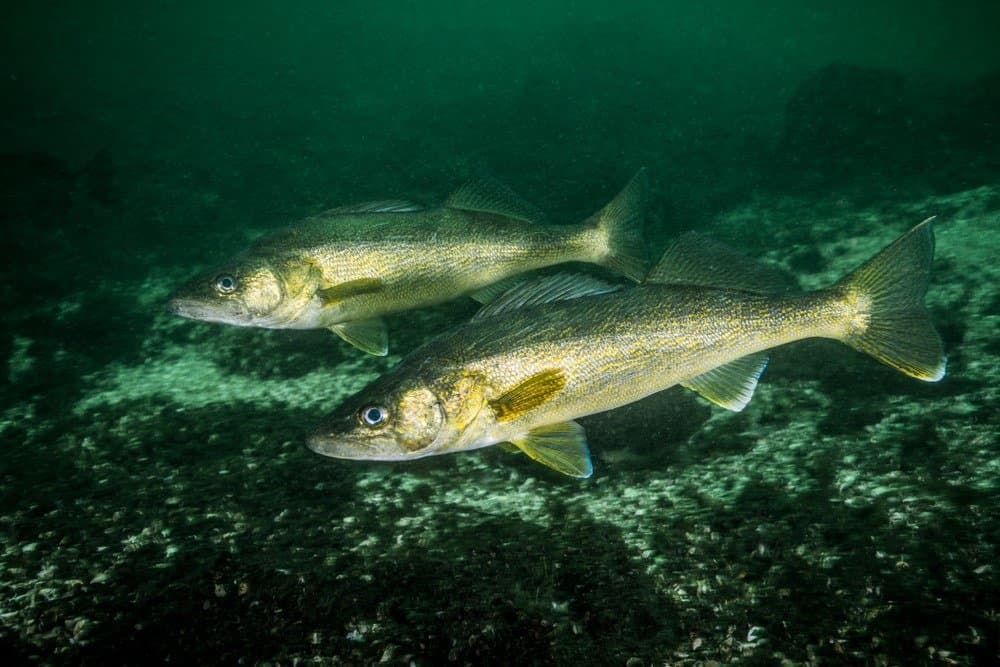
Walleye are a schooling fish, so when you find one, more are usually nearby.
©RLS Photo/Shutterstock.com
The walleye is the largest member of the perch family, growing to an average size of 12 to 30 inches and weighing between one and five pounds. Walleyes have excellent vision, especially in murky water and dark conditions. They are nocturnal hunters that feed on smaller fishlike perch and minnows. Females can lay more than 100,000 eggs at a time, which hatch between 12 and 30 days later. April through October is peak season for walleye fishing on the Cumberland, but these fish can be caught year-round.
Catfish
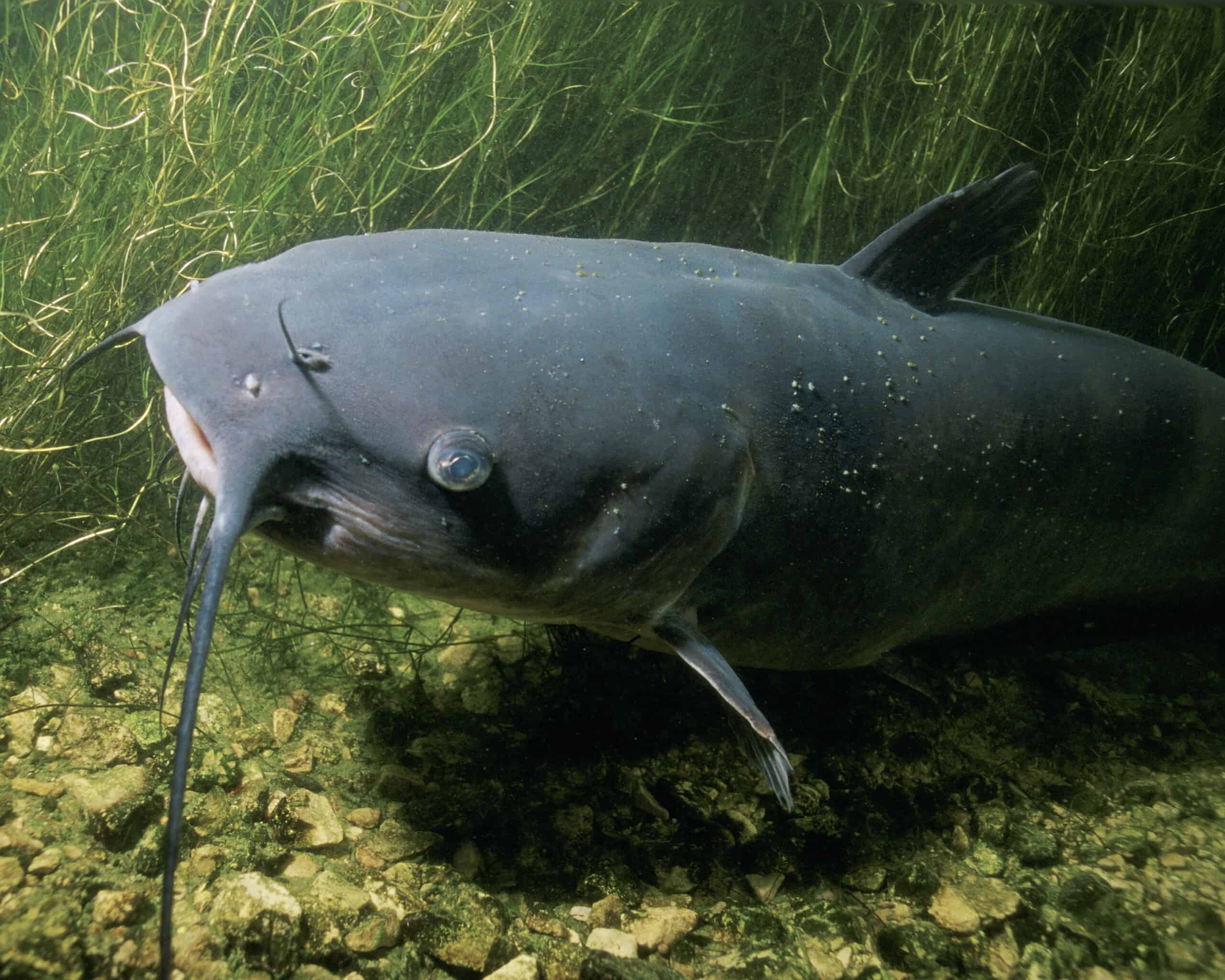
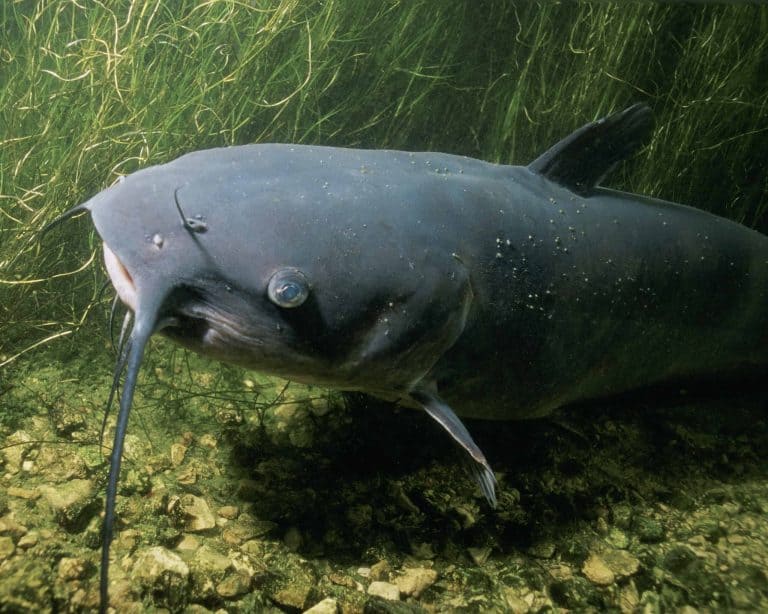
Catfish are easy to identify by their flat heads, long whiskers, and muscular bodies.
©Engbretson, Eric / U.S. Fish and Wildlife Service / Wikimedia Commons
You’ll find several different types of catfish in the Cumberland River, including channel, flathead, and blue. The channel catfish is the official state fish of Tennessee. The blue is the river’s largest catfish subspecies, with a state-record setting 122-pounder pulled from the Cumberland in 2022. Catfish are bottom dwellers with an excellent sense of smell and taste. They use taste buds on their whiskers and bodies to find food like crayfish, mollusks, and small fish in the river’s murky waters.
Crappie
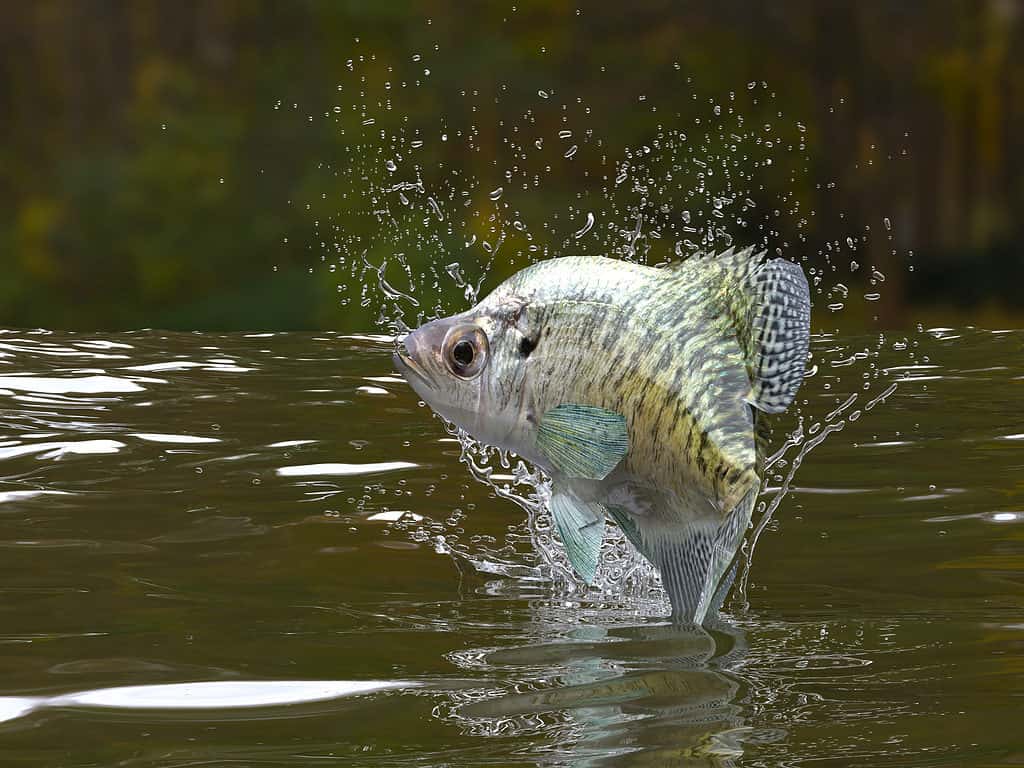
One way to tell the two species apart? White crappie have six pointy spines on their anal fins. Black crappies do not.
©iStock.com/bbevren
Two kinds of crappies, black and white, call the Cumberland River home. Crappies are smaller fish that usually weigh under a pound and are about eight to ten inches long. According to the International Game Fishing Association, the world-record black crappie weighed 5 pounds, 7 ounces, and the world-record white crappie weighed 5 pounds, 3 ounces. Crappies eat insects, small minnows, and crustaceans. They are popular with anglers because of their fighting nature on the hook and for their excellent taste.
Brown Trout

Brown trout like fast-flowing water and can often be found hiding in fallen trees or behind rocks.
©bbevren / iStock via Getty Images
Brown trout are adept predators that feed on small fish, crustaceans, insects, and the occasional swimming vole or other small mammal. They camouflage themselves by changing color to match their surroundings. They are a medium-sized fish, growing up to 24 inches and weighing one to five pounds, on average. Brown trout are aggressive fighters when hooked, making them popular with sport fishers. About 30,000 brown trout are stocked annually in the Cumberland River.
Rainbow Trout
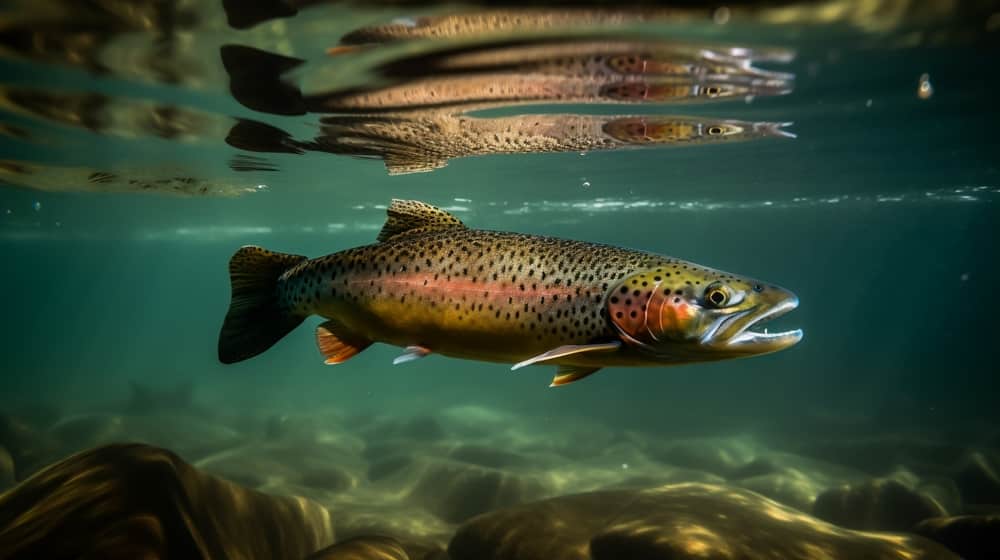
Rainbow trout are easy to identify thanks to their reddish-pink stripe and numerous black spots.
©Henrik A. Jonsson/Shutterstock.com
The rainbow trout is another fish found in the Cumberland River. It seeks out fast-flowing, cold water and likes to seek refuge near log jams and under bank overhangs while it waits for prey to swim by. Rainbow trout thrive on a diet of insects, snails, and small fish. The Cumberland River rainbow trout grow, on average, to between 12 to 14 inches long and weigh between one and four pounds. The Kentucky state rainbow trout record of 15 pounds, 6 ounces was pulled from the Cumberland River.
Other Trout
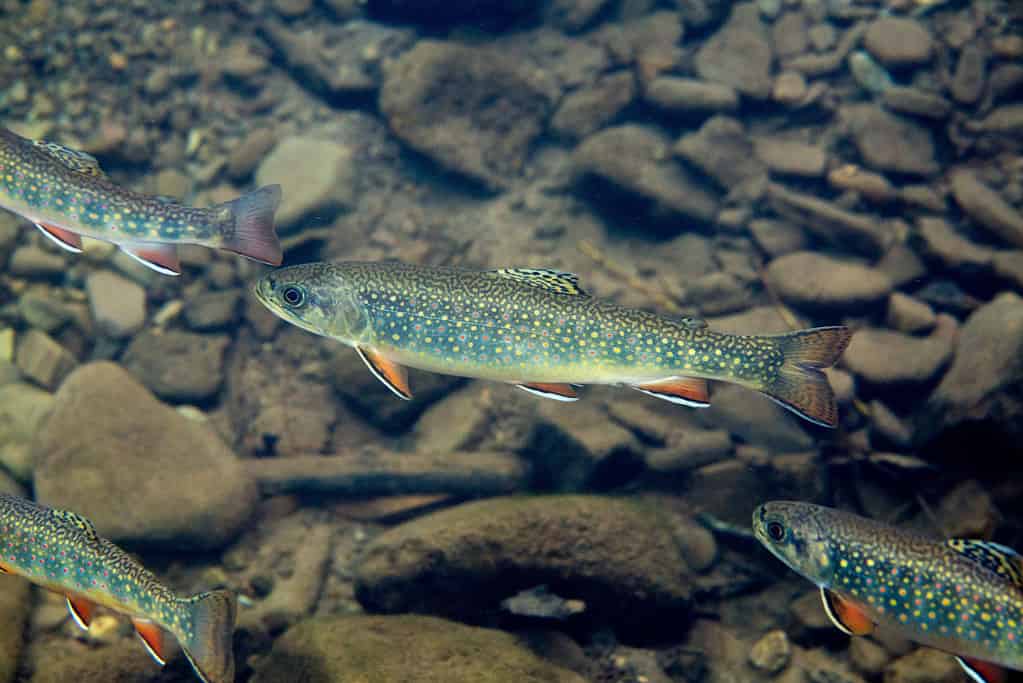
Brook trout have a unique pattern of yellow and red dots that make them easily distinguishable from other trout in the river.
©United States Fish and Wildlife Services / Public domain – Original / License
Brook trout and Yellowstone cutthroat trout are also stocked in the Cumberland River by the Kentucky Department of Fish and Wildlife. Neither species is native to the river, and both are far less common to find than brown or rainbow trout. Their scarcity makes them an extra special catch for anglers. Like other trout, brook and cutthroat eat insects and smaller fish. Cutthroat trout are easy to identify by the bright red slash in the gill area. Brook trout have a distinctive pattern of yellow and red spots.
Lake Sturgeon
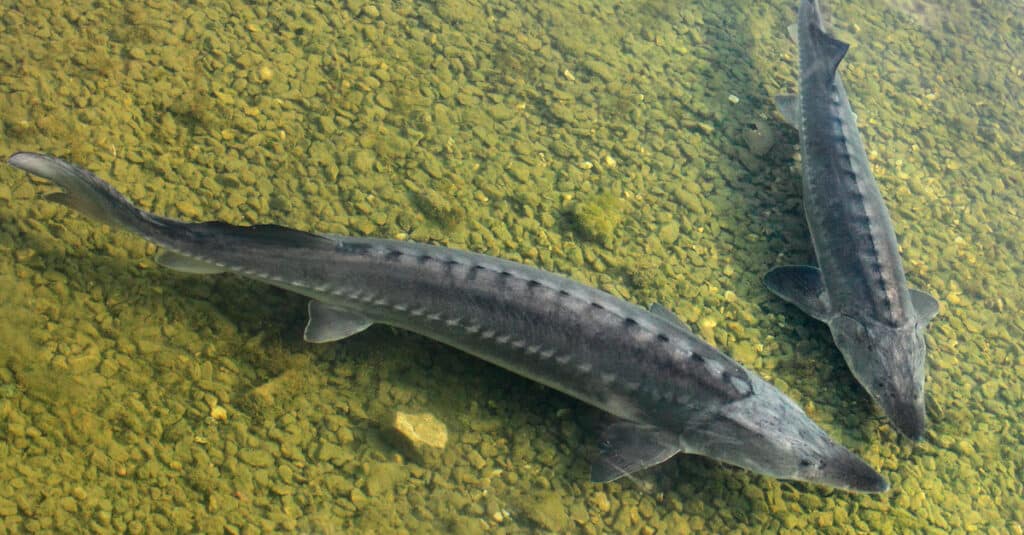
Lake sturgeon look prehistoric with their shark-like tail and armored plates.
©Kletr/Shutterstock.com
Lake sturgeon can grow up to eight feet long, weigh more than 300 pounds, and live up to 150 years. Populations in the Cumberland River were nearly decimated due to habitat loss and overfishing, but Kentucky initiated a restocking program in the early 2000s to help boost the population. Despite an intimidating size and appearance, lake sturgeon are bottom feeders that eat snails, crayfish, and insect larvae. It is illegal to keep any lake sturgeon caught when recreational fishing in the Cumberland River.
Eastern Hellbender Salamander
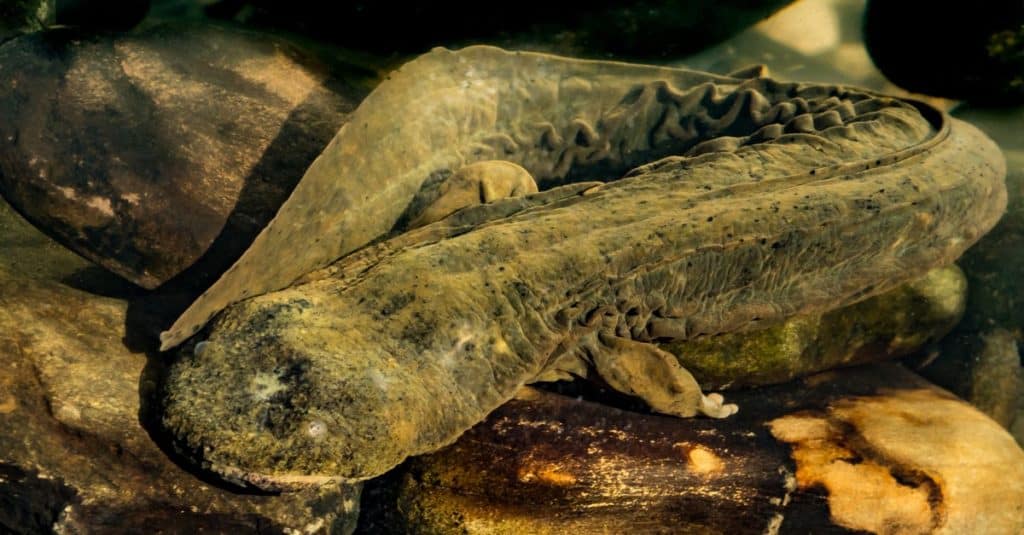
The eastern hellbender salamander thrives in clean, cold, fast-flowing water.
©Jay Ondreicka/Shutterstock.com
The eastern hellbender is the largest salamander in North America. A mature adult can reach up to 24 inches long and weigh up to five pounds. These salamanders are fully aquatic and use their loose skin flaps to absorb oxygen from the water via cutaneous respiration. Eastern hellbenders are carnivores and eat snails, crayfish, worms, and small fish. The Cumberland River Compact adopted the hellbender as its official mascot and even named its annual fundraising event after the salamander.
Cottonmouth Snake

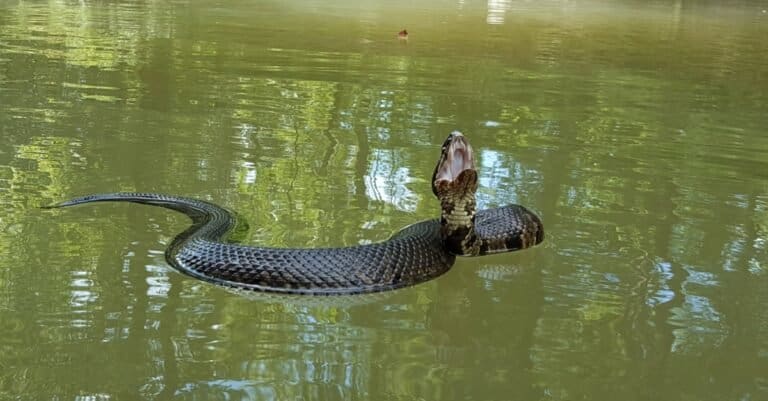
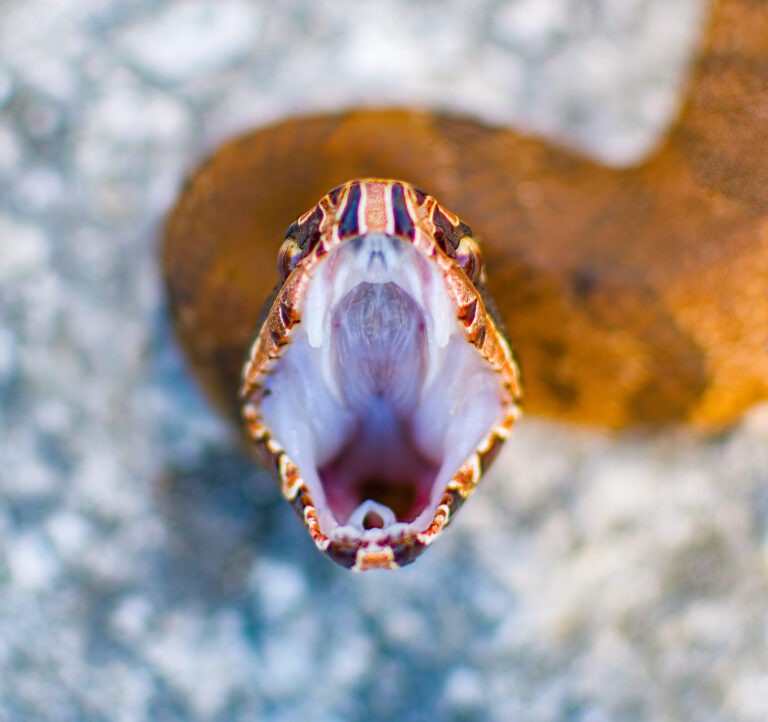
The cottonmouth gets its name from the white color that is visible when the snake opens its mouth.
©Brandon B/Shutterstock.com
Fish aren’t the only Cumberland River residents. You’ll also find all four kinds of venomous snakes that live in Tennessee and Kentucky, including the cottonmouth. They feed on fish, frogs, turtles, small birds, mice, rats, and even eggs. Cottonmouths are identifiable by a black horizontal mark across their eyes and a stocky appearance. Also known as the water moccasin, cottonmouths are the least common venomous snake to spot in the river and on its banks. It’s best to relocate elsewhere if you run into one.
Copperhead Snake
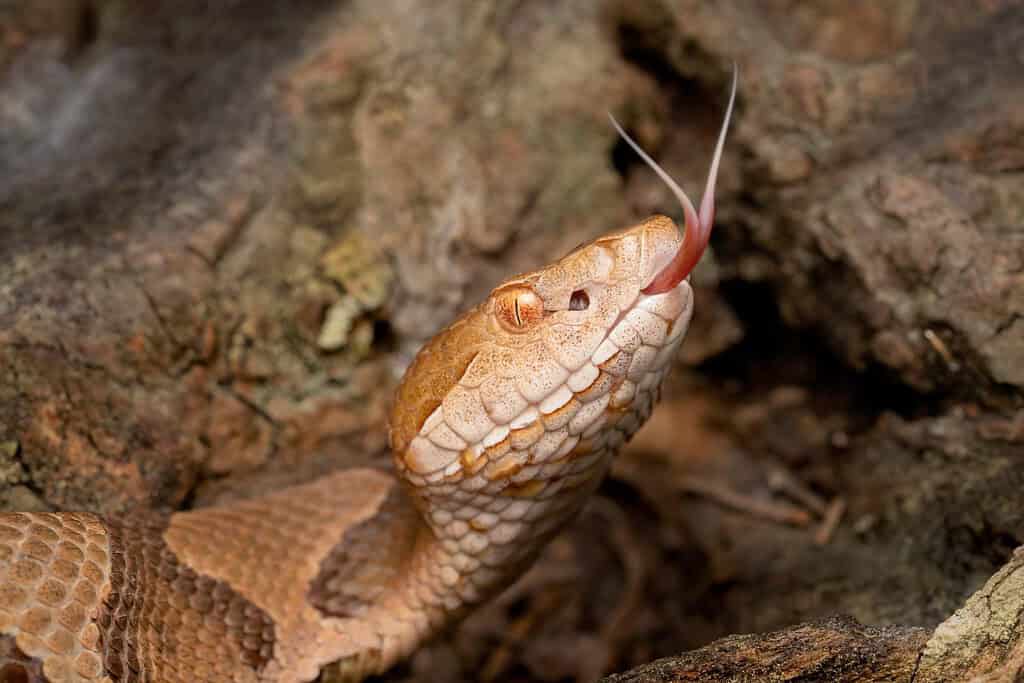
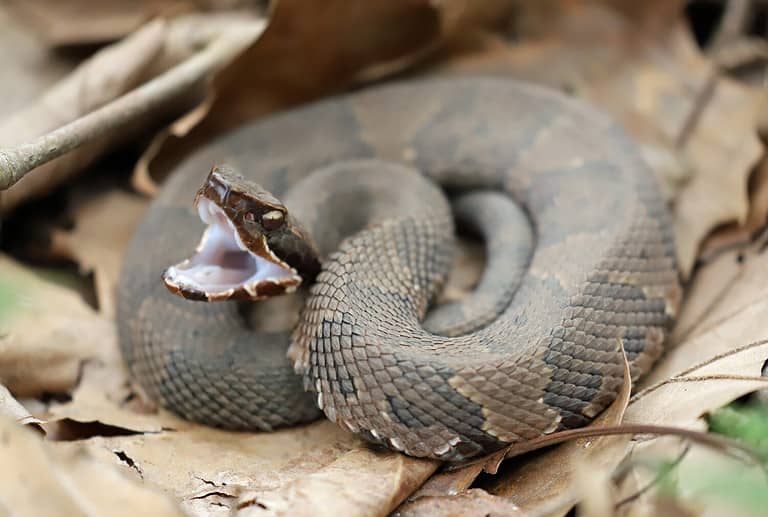
Copperheads have a skin pattern that resembles a Hershey’s kiss along with a copper-colored head.
©Mark_Kostich/Shutterstock.com
Copperheads are another venomous snake found in the Cumberland River. They are distinguishable by the “Hershey’s kiss” shaped pattern on their back. These snakes are often confused with the non-venomous northern water snake, a mistake you don’t want to make. A copperhead’s favorite meal is small mammals like voles and mice, but they’ll also eat frogs, lizards, small birds, insects, and even other snakes. They are ambush predators that wait for prey to pass close by before striking.
Timber Rattlesnake
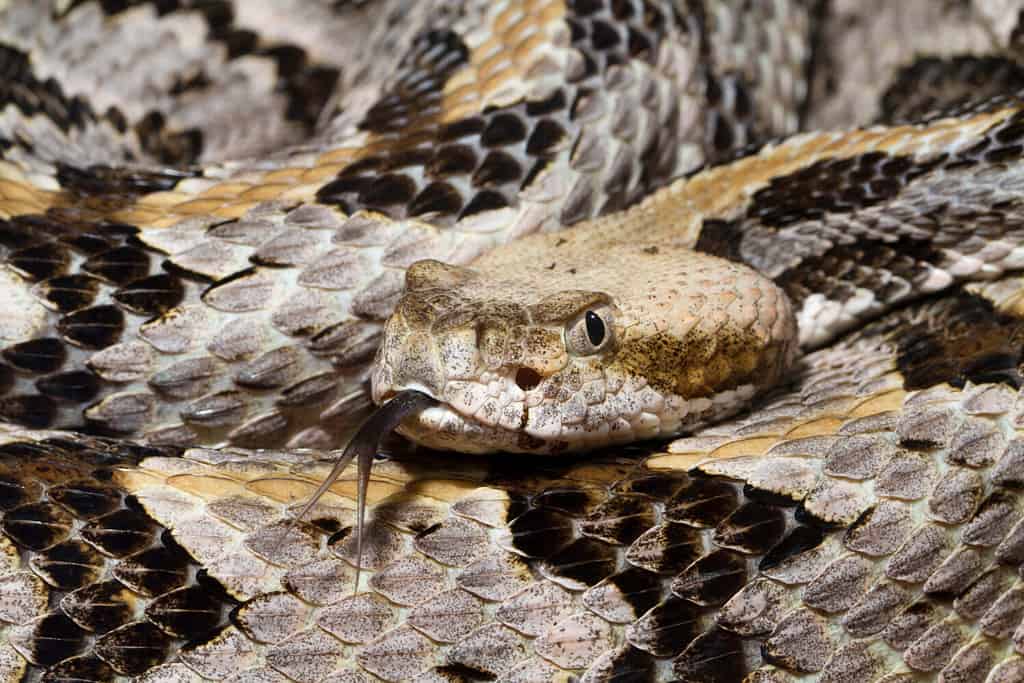
The timber rattlesnake has a tail section made up of keratin that the snake shakes to create a rattling sound.
©Mark_Kostich/Shutterstock.com
You’ll also find timber rattlesnakes along the Cumberland’s banks. This is the most easily recognizable of the venomous snakes, with its crested brow and rattling tail that gives the snake its name. They grow to between 2.5 and five feet on average, and eat small mammals, birds, and lizards. Despite the intimidating rattle of their tails when threatened, timber rattlesnakes prefer to avoid conflict. If you do see one, stay calm, back away slowly, and give them a wide berth.
Pygmy Rattlesnake
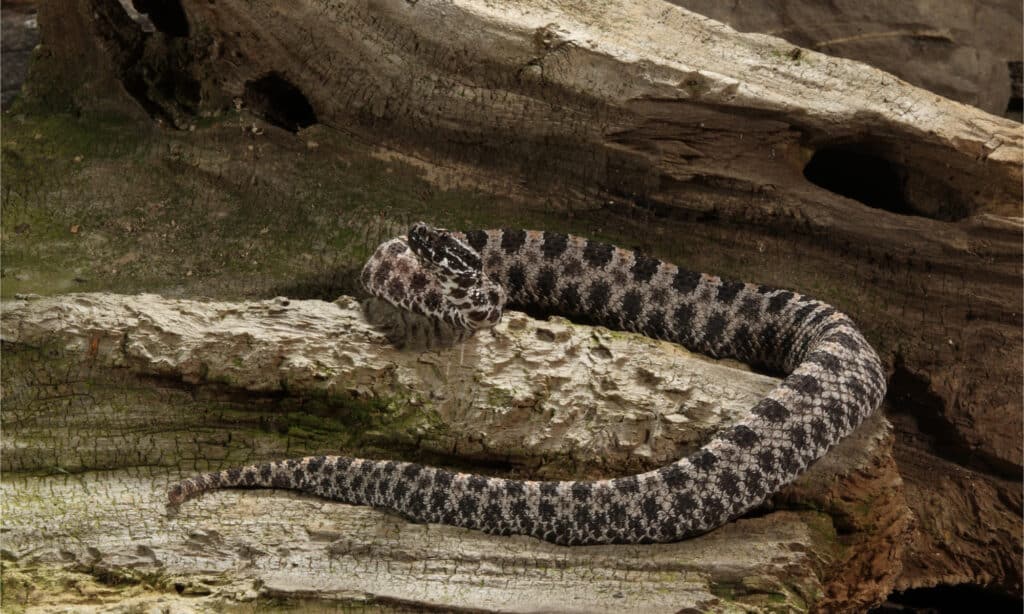
Pygmy rattlesnakes are most often spotted in the western Tennessee areas of the Cumberland River.
©Dennis W Donohue/Shutterstock.com
Pygmy rattlesnakes also have a tail that they can shake to make noise. Unlike their larger cousin, though, the rattle is more of a faint buzz. This is likely why these diminutive snakes, growing only up to 20 inches long, prefer to blend into their surroundings and avoid detection. They are most common in wetlands and forests, living under logs and thick vegetation. It is rare to see a pygmy rattlesnake, but if you do, treat it like any other snake and give it space. It may be small, but it is still venomous.
Northern Water Snake
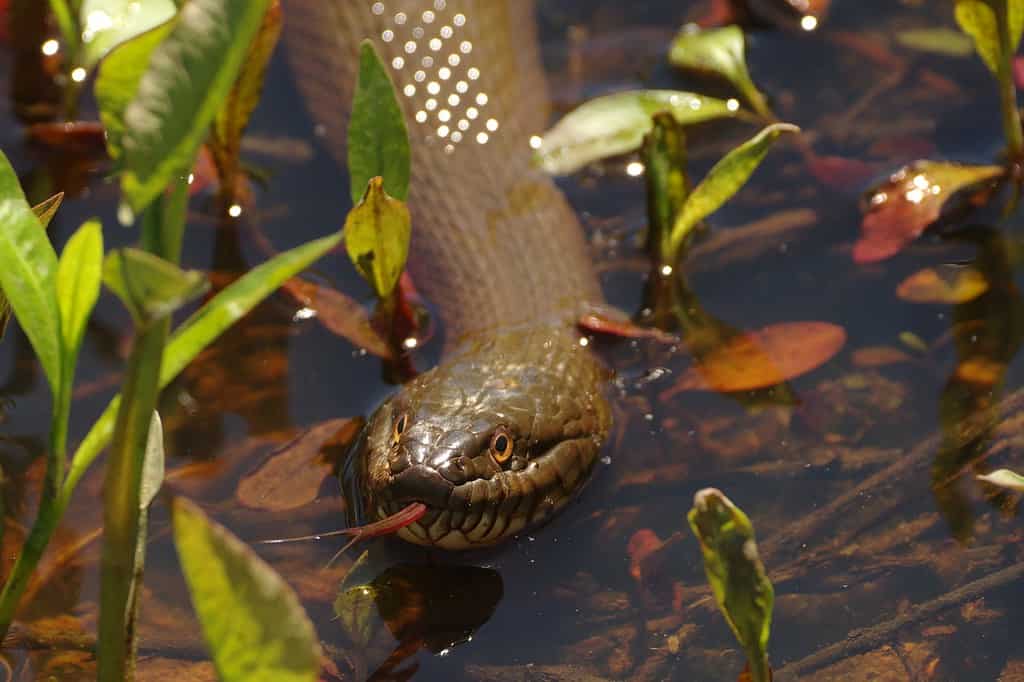
A northern water snake swims along the Cumberland River shoreline.
©Philip Yabut/Shutterstock.com
The non-venomous northern water snake is often a victim of misidentification, because it looks quite similar to the venomous cottonmouth and inhabits the same areas. One way to distinguish the water snake is by its round pupils and wide head which is as thick as its neck. In contrast, the cottonmouth has a triangle-shaped head and vertical pupils. Water snakes are commonly seen sunbathing on rocks or swimming in the river. They eat fish, frogs, crayfish, and small aquatic animals.
North American River Otter
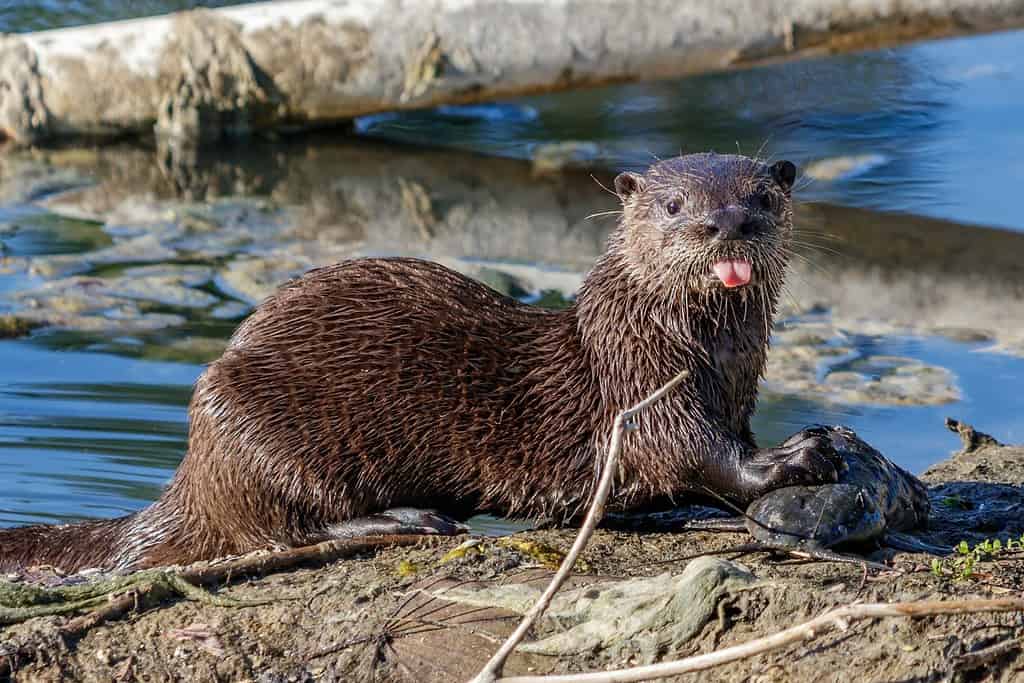
A young North American river otter is a cute sight to see.
©Microfile.org/Shutterstock.com
Don’t let their cute appearance fool you. North American river otters are considered top aquatic predators in and around the Cumberland River. Thriving on a diet of fish, amphibians, and crustaceans, the otter’s streamlined body and webbed feet give it a lethal advantage in the water. They live in burrows along the river banks with access points underwater to minimize their detection as they go in and out. Curious and nearsighted, otters will often approach closely to investigate passing boats and swimmers.
Gray Fox
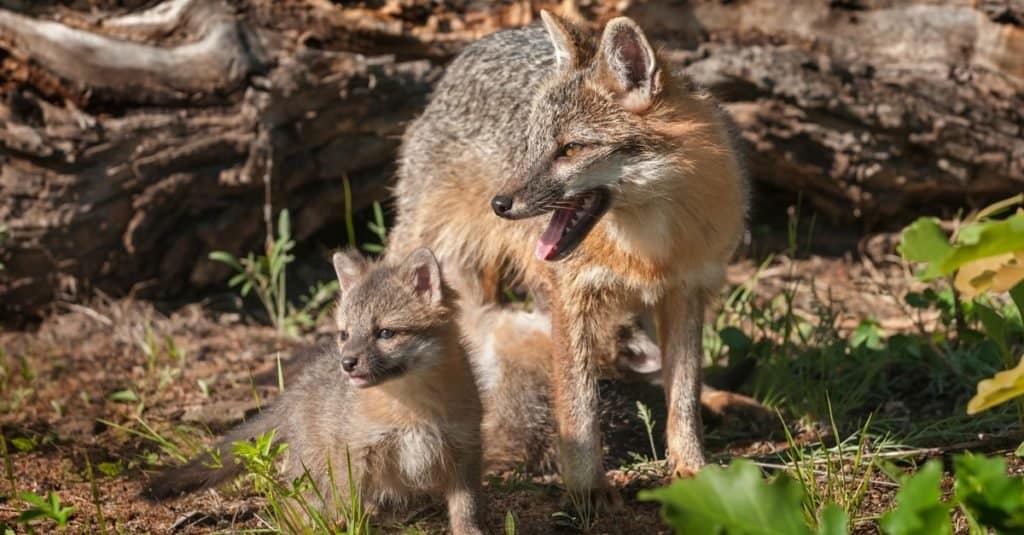
A mother gray fox with her youngster exploring the river bank.
©Holly Kuchera/Shutterstock.com
Gray foxes are a common sight along the Cumberland River’s banks and nearby woodlands. They are most active between dawn and dusk, and spend their days tucked away in dens. As omnivores, gray foxes eat rodents, rabbits, fruits, and insects. Gray foxes grow to between 35 and 44 inches long with a bushy tail tipped in black. They breed between January and mid-May, giving birth to between one and ten pups. By three months old, the pups are ready to hunt with their parents.
Trumpeter Swan
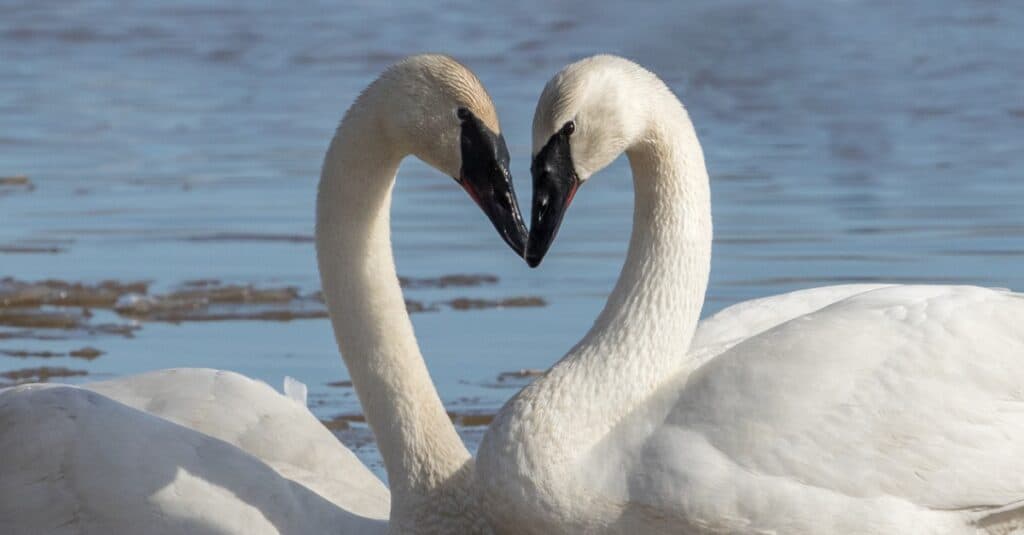
Trumpeter swans mate for life and choose their mate before they’re old enough to breed.
©iStock.com/Dee Carpenter Photography
Trumpeter swans grace the Cumberland River during their annual migrations across North America, appearing from late November through February. They rely on the river to provide food and shelter during their journey. Trumpeter swans are most active in the early morning and late afternoon hours, and feed on aquatic plants along the shoreline. Recognizable by their black beaks and snow white bodies, trumpeter swans mate for life.
Eastern Kingbird
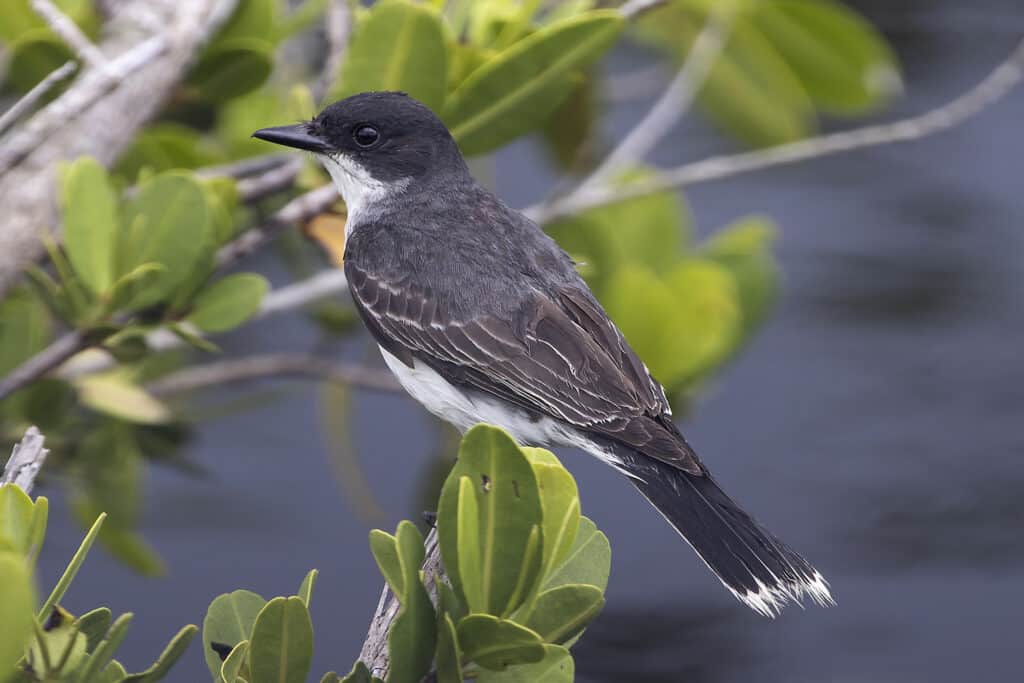
Eastern kingbirds are a common sight along the Cumberland River’s banks.
©iStock.com/6381380
Eastern kingbirds are prolific throughout Kentucky and Tennessee, breeding in regions west of the Mississippi River during the migratory months of April to late August. Their medium-sized gray bodies are about eight inches long with white bellies and white-tipped tails, making them easy to identify. They are a member of the flycatcher family, so it’s no surprise their diet consists mainly of flying insects. They supplement with fruit, especially during cold months when flying insects are in short supply.