
Quick Take
- Achieving wildlife density in a 90-acre park requires balancing 2,000,000 annual visitors in an urban setting.
- The September 2024 DarkSky Missouri study identifies data gaps in traditional bird monitoring.
- 24 warbler species favor the smallest national park during migration.
- Initiating a nocturnal flight call study was necessary to catalog Swainson’s thrushes in the cityscape.
Gateway Arch National Park is popular for its iconic stainless-steel monument and role in America’s westward expansion, but did you know it’s also home to a variety of wildlife? Stretching across 90 acres of the Mississippi River shoreline in downtown St. Louis, Missouri, this is one of the smallest national parks in the U.S. — and the only one set entirely within an urban environment.
More than two million visitors enter Gateway Arch National Park every year to make the trek to the top of the Arch, explore the museum beneath it, stroll the landscaped grounds, and take in views of the Mississippi River. But despite this cityscape setting, you’ll want to keep your eyes peeled for animals that have adapted to life alongside humans.
From birds passing through during migration to mammals moving quietly through the park at night, here’s a guide to what you might see (and when!) the next time you visit Gateway Arch National Park.

Gateway Arch National Park’s location along the Mississippi River leads to a variety of animal sightings — from birds to insects, fish, and more.
©Sean Pavone/Shutterstock.com
Birds
Perhaps the most visible and diverse wildlife in the park is birds. Not only do they stand out for being active throughout the day, but they are also easy to hear as they chirp and sing.
Permanent Resident Birds
Some species can be seen throughout the park year-round. These permanent residents typically nest during spring and summer, and remain in the area through winter. Common species include Canada geese, mallards, and songbirds such as northern cardinals, blue jays, American robins, mourning doves, house finches, and northern mockingbirds.
Several non-native species also call Gateway Arch National Park home, including rock pigeons, European starlings, and house sparrows. These birds are especially common near buildings, walkways, and open plazas. While birds of prey are less common, peregrine falcons are occasionally spotted flying overhead or perched on nearby buildings.
Summer & Winter Residents
Other birds are present only during certain seasons. Summer residents arrive in spring to nest and raise their young before migrating south in fall. This group includes chimney swifts, barn swallows, eastern wood-pewees, warbling vireos, and brown thrashers, which favor shaded trees and thickets.
Winter residents arrive in fall and remain through the colder months before departing north to breed. Park visitors may see birds such as ring-billed gulls along the Mississippi River, as well as small songbirds like dark-eyed juncos and white-throated sparrows.
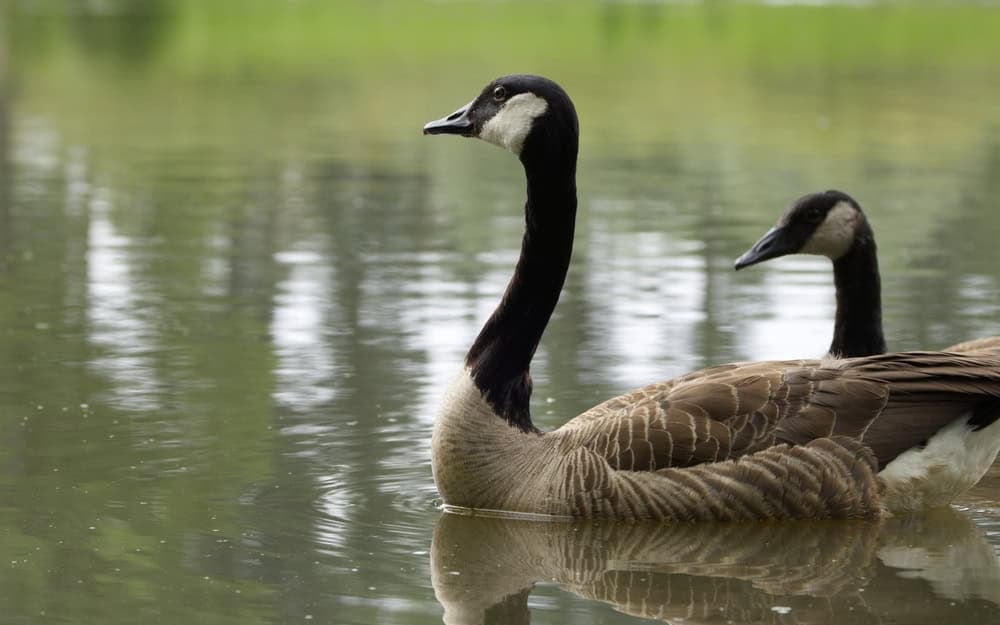
Canada geese are a familiar sight at Gateway Arch National Park, where they frequent open lawns and the Mississippi River.
©ournature_is_amazing/Shutterstock.com
Migratory Birds
The largest group of birds found at Gateway Arch National Park consists of migratory species that pass through during spring and fall. Thanks to the park’s location along the Mississippi River, many birds stop here when traveling between breeding and wintering grounds.
Warblers are widespread, with more than two dozen species recorded during migration, most often in April and May. During this peak season, you may encounter a variety of birds, including sparrows, thrushes, tanagers, orioles, kinglets, vireos, and flycatchers.
Nocturnal Migration & Nighttime Activity
Bird migration at Gateway Arch National Park isn’t limited to daylight hours. In September 2024, DarkSky Missouri conducted a nocturnal flight call study using acoustic monitoring equipment to record migrating birds traveling overhead after dark.
The project recorded species such as American redstarts, Cape May warblers, Swainson’s thrushes, white-throated sparrows, and ovenbirds, highlighting the significant wildlife activity that occurs at night.
Ease of spotting: Easy to moderate (depending on species)
Best times to look: Early morning and late afternoon
Mammals
While mammals are less visible than birds, Gateway Arch National Park is home to several species well-adapted to city life.
Commonly Seen Mammals
The eastern gray squirrel is considered the most frequently encountered mammal in the park. Most active during the day, they are likely to be seen running across lawns, climbing trees, or searching for food near walking paths.
Eastern cottontail rabbits are also common, especially in grassy areas and along the edges of landscaped beds. They are most active at dawn and dusk, and may freeze in place when approached.
Nocturnal & Rare Mammals
Several mammals live in or pass through the park but are rarely seen by daytime visitors. Raccoons and Virginia opossums are primarily nocturnal and tend to stay hidden during the day, often emerging at night to search for food. Woodchucks and coyotes have also been documented, but sightings are rare.
Ease of spotting: Easy for squirrels and rabbits; rare for others
Most active: Dawn, dusk, and nighttime
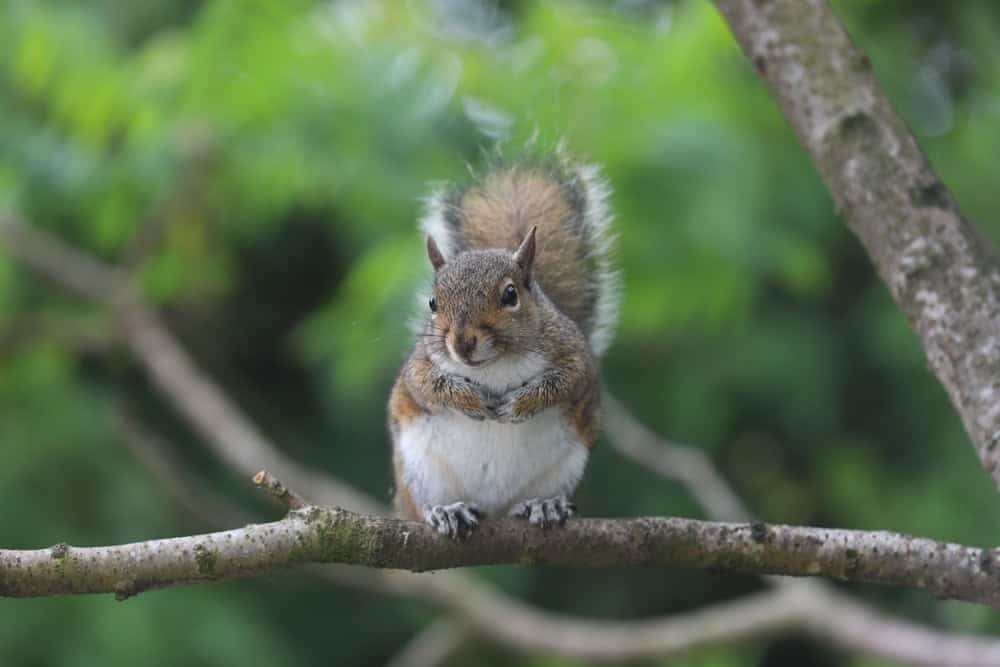
Eastern gray squirrels are among the most visible mammals at Gateway Arch National Park, easily spotted scampering through trees and grassy areas.
©Wirestock Creators/Shutterstock.com
Reptiles & Amphibians
While reptiles and amphibians are sometimes present in Gateway Arch National Park, they are encountered less frequently than birds or mammals. Their secretive nature and preference for specific conditions make sightings relatively uncommon.
Visitors may occasionally see common garter snakes in sunny areas near grass or pavement. These snakes are nonvenomous and typically slither away quickly when disturbed.
After rainfall or in damp, shaded areas, toads and small frogs may also be present. These amphibians tend to be most active during warm, wet weather, and are often heard before they’re seen.
Ease of spotting: Rare
Best conditions: Warm temperatures and recent rain
Bats
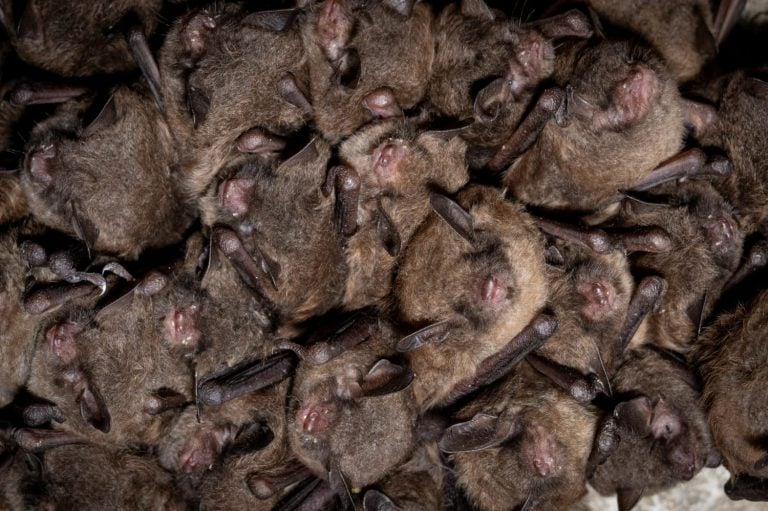
Bats play an important, but often overlooked, role in Gateway Arch National Park. Common species include the big brown bat, eastern red bat, hoary bat, silver-haired bat, and evening bat.
These nocturnal insect hunters help control mosquito and other flying insect populations. They are typically found in trees or nearby structures and emerge at dusk to feed. Visitors walking through the park in the evening may notice bats flying overhead, especially during warmer months when insects are more abundant.
Ease of spotting: Difficult
Most active: After sunset
Insects & Other Invertebrates
Insects and other invertebrates make up the largest and most essential group of animals in Gateway Arch National Park, playing key roles in pollination, decomposition, and maintaining the park’s ecosystem.
Bees and bumblebees are commonly seen in flower beds and landscaped areas as they collect nectar and pollen. Monarch butterflies appear in late summer and early fall, often drawn to patches of milkweed. Swallowtail and painted lady butterflies are also found in sunny garden spaces—keep an eye out for their vibrant flashes of color.
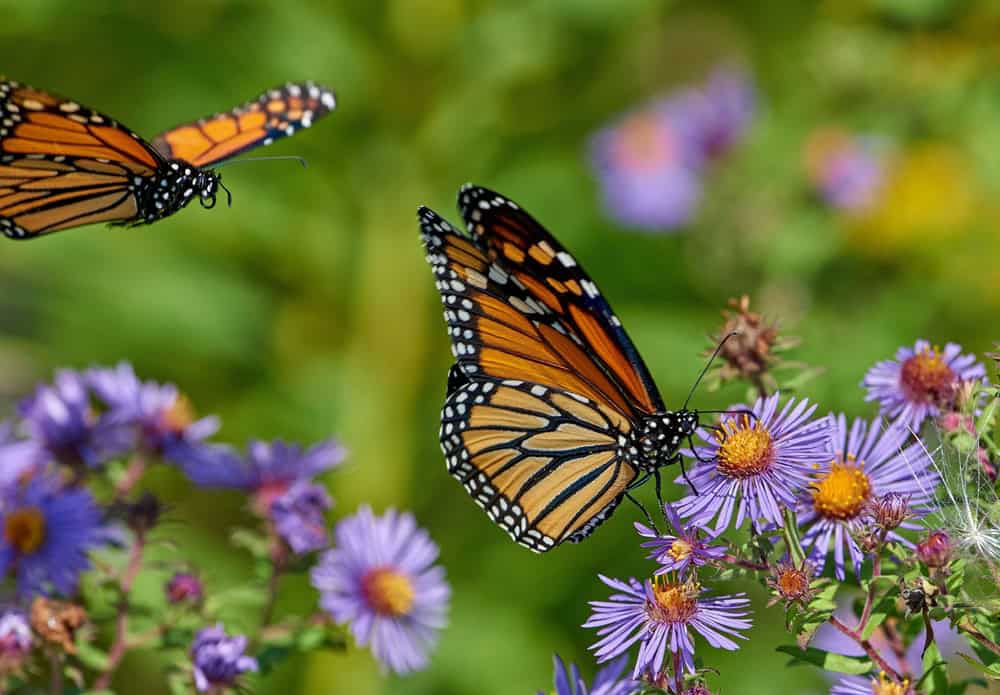
Monarch butterflies are a seasonal but memorable sight at Gateway Arch National Park, especially in open grassy areas and near flowering plants.
©Wirestock Creators/Shutterstock.com
Near the park’s water features and river, you’re likely to spot dragonflies such as the eastern pondhawk and blue dasher. Meanwhile, delicate damselflies, such as the fragile forktail, perch on plants along the water.
On the ground, carpenter ants and ground beetles move through the soil, helping to aerate it and control pest populations, while orb-weaving spiders build webs in trees and shrubs.
Insect activity in the park is highly seasonal, peaking from spring through early fall. During cooler months, most species retreat or overwinter in soil, leaf litter, or plant stems.
Ease of spotting: Easy
Most active: Late spring through early fall
Aquatic & River-Adjacent Animals
Although Gateway Arch National Park does not offer extensive aquatic habitats, the Mississippi River still supports a variety of aquatic and semi-aquatic species.
Visitors frequently see fish such as channel catfish, smallmouth bass, and common carp. Freshwater invertebrates like mayflies, caddisflies, and stoneflies provide critical food sources for both fish and birds.
Along the river’s shoreline, great blue herons and great egrets hunt in shallow waters, and muskrats can occasionally be seen as well. River otters have also been observed moving through adjacent waters.
Ease of spotting: Moderate
Most active: Early morning or late afternoon
Tips for Spotting Wildlife at Gateway Arch National Park
- Visit early in the morning or near sunset, when animals are most active.
- Bring binoculars if you’re interested in birdwatching.
- Move quietly and stay on designated paths to avoid disturbing wildlife.
- Never feed animals, as this can disrupt natural behaviors and create safety issues.
Gateway Arch National Park may be small, but it offers a unique opportunity to observe wildlife thriving in the middle of a bustling city. From migratory songbirds to nocturnal mammals and urban-adapted bats, the park demonstrates how nature can coexist with iconic landmarks and daily human activity. For visitors who want to slow down and look closely, Gateway Arch National Park reveals a side of St. Louis that is often overlooked.