
Quick Take
- A lifelong skeptic mom is now sharing her kitchen with proof she was wrong.
- This animal has a biological party trick that makes it nearly impossible to keep down.
- Someone put it there, and an expert has a theory about why.
- Its wild relatives are vanishing, and the numbers behind that decline are startling.
In April 2026, 10-year-old Evie Hill lifted a discarded mat in the shallows of the River Ogmore in south Wales and found a pale, speckled, nine-inch animal in the rocks, the Guardian reported.
“I went down to the bank and there was this thing with gills on its head. I was like: ‘That’s an axolotl.’ I was: ‘Mum, there’s an axolotl in the river,'” Evie told BBC News. “She went: ‘There’s not. You’re not going back in the water.’ So I went back in the water anyway, because I’d seen it. And then I caught it and brought it back.”
“I’ve been telling Evie all this time that those creatures she watches on YouTube, they’re not real,” her mom, Melanie Hill, told the BBC. Now she had one in her kitchen.
The family was touring Wales in a camper van, and Evie was playing under the Dipping Bridge at the entrance to Merthyr Mawr village, near Bridgend. The animal had damage to its tail and stomach. It’s the first documented discovery of an axolotl in the wild in the UK.
What did Evie find?
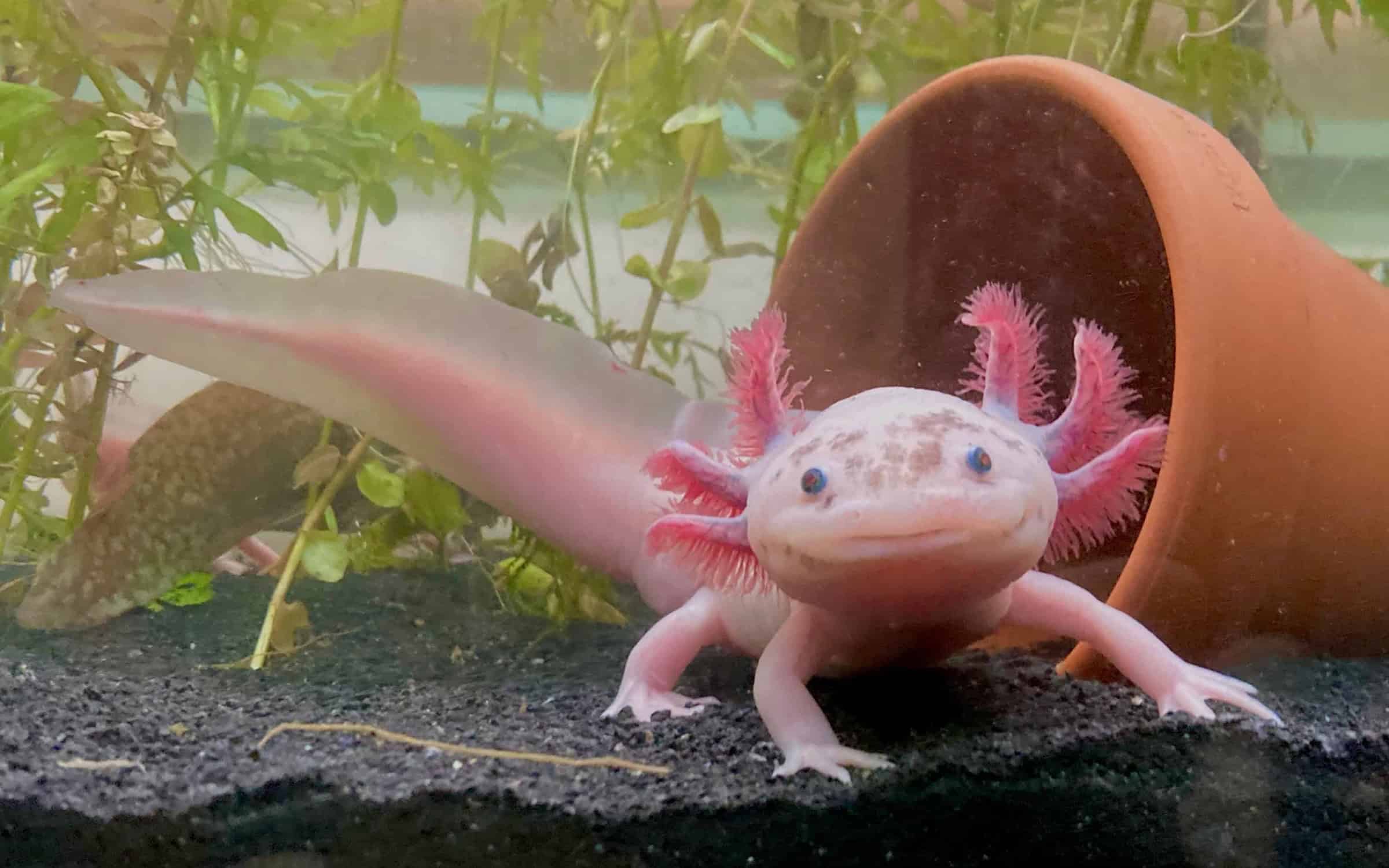
A Mexican axolotl is a salamander that never goes through metamorphosis, according to the Natural History Museum. Most salamanders start life in water, then replace their gills with air-breathing lungs and move onto land. Axolotls keep their frilly external gills and live in the water for their whole lives.
Evie’s was about average for the species at nine inches, and they can reach 12. Axolotls can regrow limbs, eyes and even parts of their brains. One that loses its tail can grow a new one with a new spinal cord inside.
Could it have survived in the river?
Wild axolotls live in one place on Earth: the canals and wetlands of Xochimilco in Mexico City, according to Conservation International. They’re extremely sensitive to changes in water quality, temperature, salinity and food. In a tank, the water should stay cool, ideally about 61 to 64 degrees Fahrenheit, because warmer water causes stress and health risks, the Guardian reported.
The one under the bridge was already hurt. Its injuries were believed to have come from a predator, the Guardian reported, citing the BBC. Chris Newman, director of the National Centre for Reptile Welfare, said it had little chance of living very long without Evie, who “did him a real favour” by catching him.
“They’re quite slippery, so I think she did really well,” he said.
How did it get there?
Newman said the way the axolotl was found suggested its owner had released it after a “change in circumstances.” Releasing a non-native species into the wild is illegal, he added, and “it’s not good from a welfare point of view either.”
Pet axolotls have surged in popularity since games like Minecraft and Roblox began featuring them. Minecraft added axolotls in 2021, along with a bucket to carry them in.
Dr. Ros Clubb of the RSPCA said axolotls aren’t easy pets to keep and that “buying any animal should never be an impulse buy.”
How rare are they in the wild?
In 1998, Xochimilco held an estimated 6,000 axolotls per square kilometer, or about 15,500 per square mile. By 2014 that had fallen to 36 per square kilometer, about 93 per square mile, a 99 percent decrease.
A 2025 survey led by the National Autonomous University of Mexico checked 115 sites across the 6,180-acre Xochimilco Protected Area with fishing nets and caught no axolotls. Environmental DNA, the traces of genetic material animals leave in water, showed they’re still in the canals. Habitat loss, pollution and invasive carp and tilapia, which eat axolotls and compete with them for food and shelter, drove the decline.
Where did Dippy end up?
The Hills cut their holiday short and took the axolotl home to Leicester, naming it Dippy after the bridge. After seeking expert advice, they were told they can keep it.
Melanie said the family “spent hours” researching how to keep Dippy healthy. “We’ve got a much bigger tank and we plan to get that set up so it can be transferred,” she said. Properly cared for, an axolotl can live more than 10 years, according to pet care websites the Guardian cited.
Finds like Dippy should be reported to the government through organizations such as the National Centre for Reptile Welfare, and a pet axolotl should never be released.