
Quick Take
- A refuge built to save elk may now be putting them at risk.
- One fatal disease has wildlife officials nervous about elk crowding together.
- Why do thousands of elk suddenly abandon the mountains each winter?
- Ending the feeding program sounds like the obvious fix. It's not that simple.
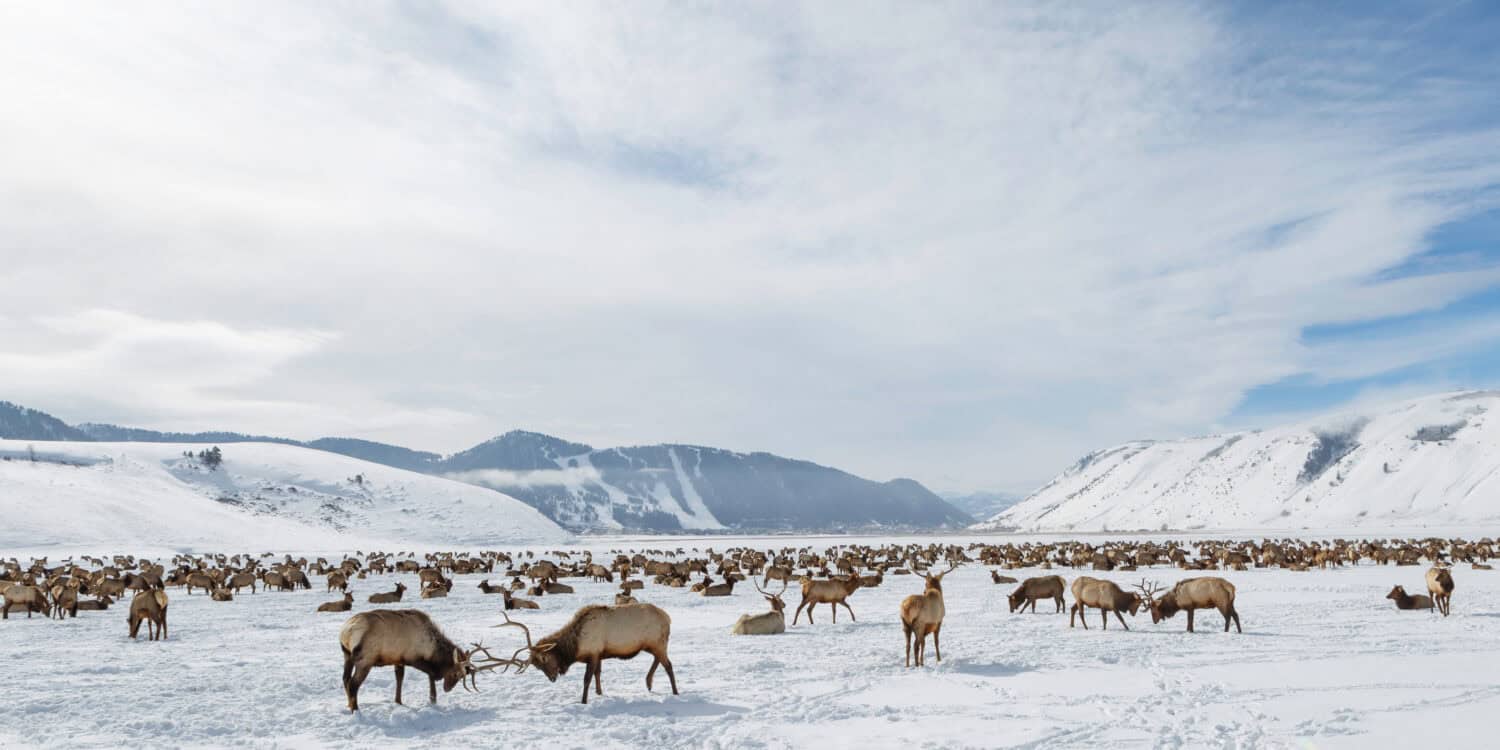
Every winter, one of the nation’s most impressive wildlife gatherings takes place just outside the bustling streets of Jackson Hole, Wyoming. Thousands of elk come down from the surrounding mountains and valleys and gather on a sprawling landscape where visitors can watch them graze, rest, and move across the snow. The display is like something out of a Christmas movie, and it’s something you need to see to believe.
The elk gather at the National Elk Refuge, which was established over a century ago to protect elk and other wildlife. However, there’s more to the story and even a bit of controversy involved. We’ll tell you more about this amazing event and all the details you need to know.
Why This Gathering Takes Place
During the warmer months, elk spread across higher elevations in and around Yellowstone National Park, Grand Teton National Park, and the surrounding national forests. These mountain environments provide abundant grasses, flowering plants, and other vegetation during the growing season. However, everything changes when winter arrives.
Deep snow makes it increasingly difficult for elk to reach the grasses and other plants they depend on. Then the temperatures drop, food becomes scarce, and the animals must conserve energy to survive. At that point, their only solution is to move. That’s when elk travel toward lower elevations where winter conditions are generally less severe.
Jackson Hole is an ideal place because the refuge encompasses about 24,700 acres of grasslands, wetlands, and foothills. Plus, its location provides an important wintering area for elk that spend much of the rest of the year in surrounding mountain habitats.
Founding the Refuge
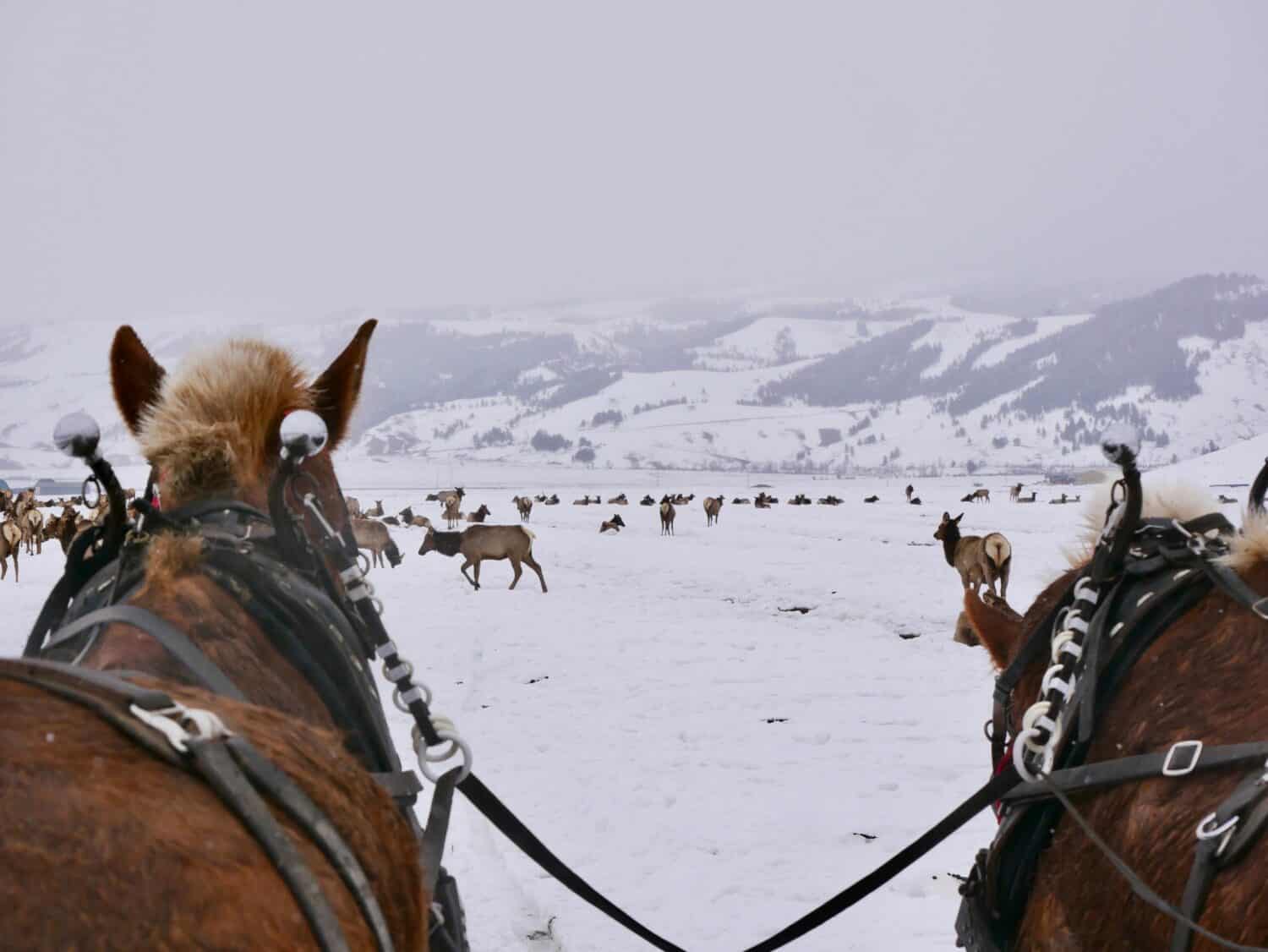
The National Elk Refuge provides a place for elk to roam while also offering tourist attractions like horse-drawn carriages.
©wambchop/Shutterstock.com
Years ago, when local officials noticed elk arriving year after year, they established the National Elk Refuge in 1912. Before that time, elk could move across large portions of the landscape to find suitable winter habitat. Their seasonal migrations allowed them to take advantage of different food sources as conditions changed throughout the year.
However, expanding human development gradually disrupted these movements. Residents and conservation advocates pushed for federal action to protect the animals. Their efforts eventually led to the refuge’s establishment, initially created to provide winter habitat and help sustain the region’s elk population. Today, the refuge remains one of the most recognizable elk conservation sites in the United States.
A Popular Sight for Tourists and Locals
Every year, folks from across the nation come to Jackson Hole to visit the refuge and spend time admiring the elk and other wildlife. Among the most popular events are the winter sleigh-ride tours. During the winter season, visitors can join guided tours that travel across portions of the refuge, bringing them remarkably close to the elk. Unlike traditional wildlife viewing, which often requires binoculars or spotting scopes, these excursions may let visitors observe large herds from relatively short distances.
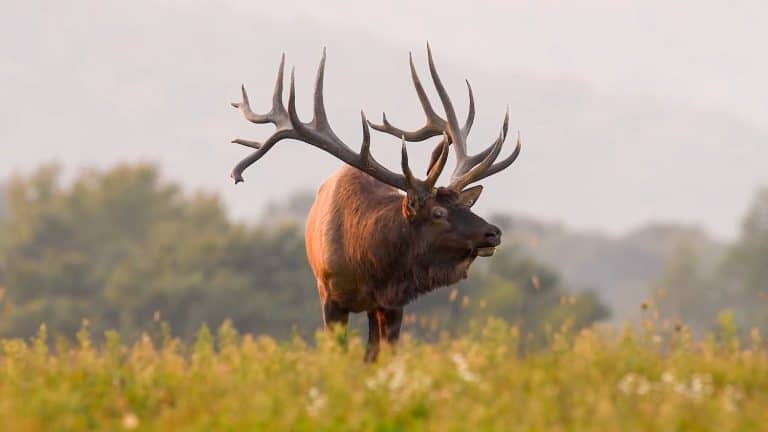
Though it may seem like the elk would be startled by the disturbance, the animals often seem surprisingly comfortable around the horses and sleighs. Because the tours follow established routes and operate under controlled conditions, elk may continue resting or feeding as visitors pass. During a typical excursion, visitors might see cows and calves gathered together, younger bulls resting nearby, or large males carrying impressive antlers.
The sleigh rides typically operate from mid-December through early April, depending on weather, snow conditions, and elk movements. When snow is insufficient, wheeled wagons may be used instead. If this sounds interesting, you can find more information here.
Controversies and Concerns
Though the refuge provides great photo opportunities, the officials’ work there is not without controversy.
Controversial Supplemental Feeding Program
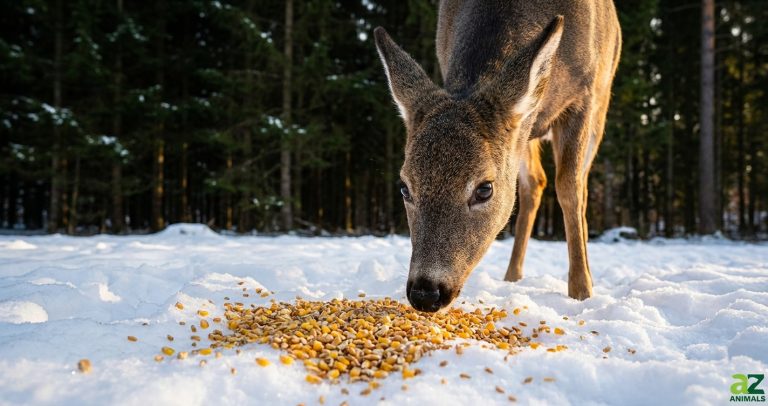
Years ago, officials at the refuge began the supplemental feeding program to ensure the elk had food during difficult weather conditions. The program generally involves distributing alfalfa pellets at designated feeding locations when natural forage becomes hard to find. It sounds nice, but supporters argue that feeding helps compensate for the loss of traditional winter habitat caused by human settlement and development.
Critics also believe that supplemental feeding can cause serious long-term problems. Under more natural conditions, elk would spread across available winter habitat and move in response to snow depth, vegetation, and changing weather. Supplemental feeding encourages animals to gather in unusually large concentrations, which can alter migration patterns and increase dependence on feeding areas.
However, ending feeding abruptly could also have consequences. Elk that have traditionally wintered near feeding grounds may not immediately redistribute to suitable alternative habitats. Consequently, refuge managers face a complicated balancing act between supporting the existing herd and restoring more natural ecological processes.
Chronic Wasting Disease
Perhaps the most serious concern surrounding concentrated elk populations in Jackson Hole and other areas is chronic wasting disease. This fatal neurological disease affects members of the deer family, including elk, deer, and moose.
Unlike illnesses caused by bacteria or viruses, chronic wasting disease is associated with infectious proteins called prions. These abnormal proteins cause damage to the brain and nervous system. Infected animals may eventually develop symptoms like significant weight loss, poor coordination, excessive salivation, and unusual behavior.
The disease presents an especially difficult challenge because prions can spread through bodily fluids and contaminated environments. When elk gather closely around feeding areas, exposure opportunities increase because they may repeatedly use the same patches of ground and eat near contaminated saliva or waste.
Chronic wasting disease has already been documented in the Greater Yellowstone Ecosystem, including in wildlife populations near Jackson Hole. In 2024, wildlife officials confirmed the disease in an elk from the Jackson herd, which intensified concerns about its potential spread.
What’s To Be Done?
Officials at the refuge have been discussing this issue for years. A possible solution is to reduce supplemental feeding over time. That would likely mean that fewer elk would show up at the same time. However, other stakeholders worry that reducing feeding could increase winter mortality, push elk onto private property, or create conflicts with ranchers. Only time will tell whether reduced feeding and federal refuge planning will help.
What to Know Before Visiting the National Elk Refuge
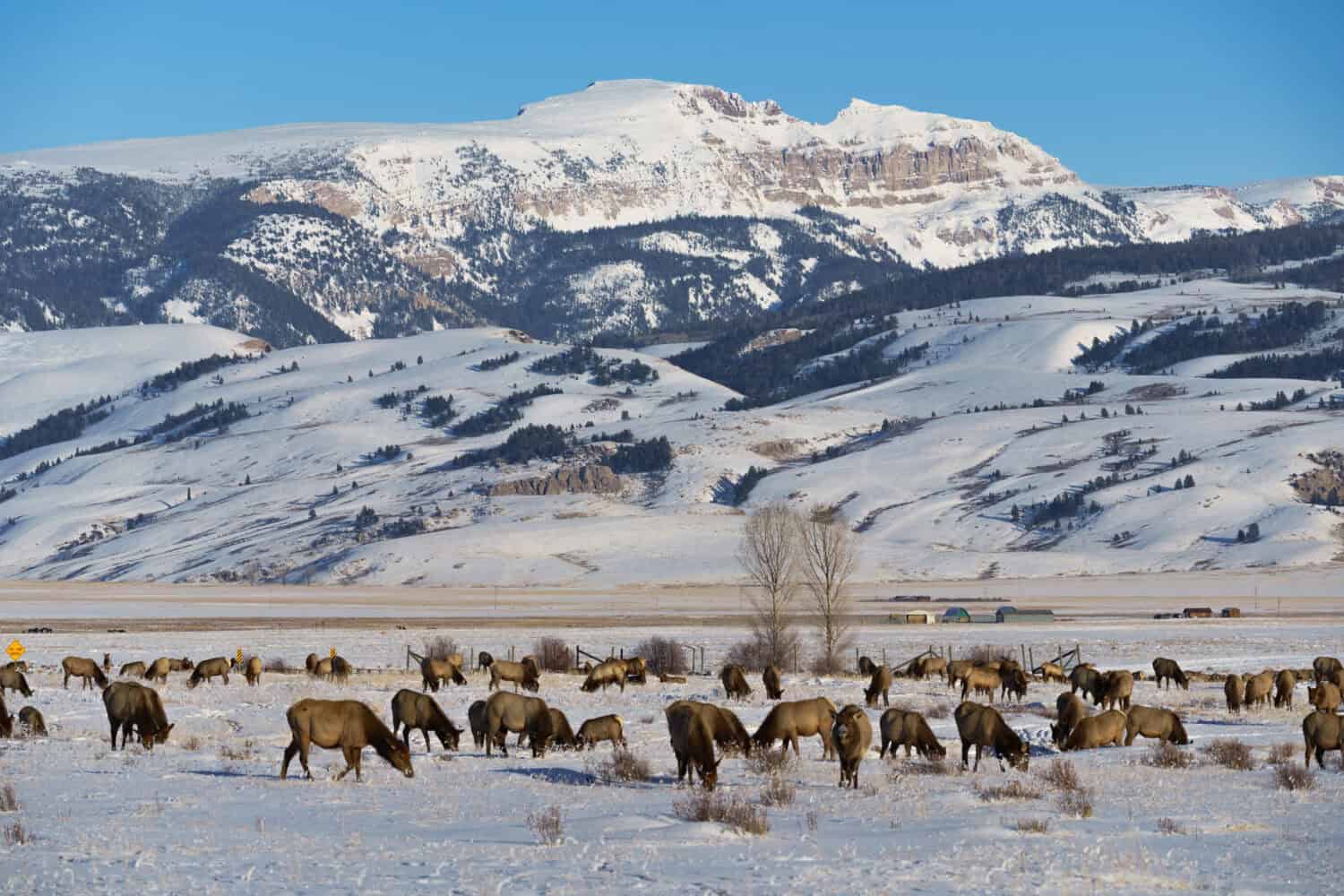
The refuge provides a great place to see wildlife, but like most animals, it’s best to keep your distance.
©Ryan Nubel/Shutterstock.com
There are a few tips to keep in mind if you plan on visiting Jackson Hole during the arrival of the elk. Wildlife viewing is generally best during the colder months, when large herds gather on the refuge.
Also, visitors should remember that the refuge is not a wildlife park or zoo. The elk are wild animals that move freely across the landscape. Remember that even animals that appear calm can become dangerous when startled or threatened. Large bulls are especially powerful, and cows may behave defensively around calves. Just remember to keep your distance. Those interested in photography should consider a telephoto lens as a safer, more effective option than approaching the animals.
The Future of the Jackson Hole Winter Elk Herd
The National Elk Refuge creates mixed feelings among animal lovers. While the elk are a beautiful sight, chronic wasting disease, habitat limitations, and supplemental feeding continue to raise questions. In the end, preserving that migration may ultimately be just as important as protecting the elk themselves.