
Quick Take
- Rescuers thought they'd found a rare wild bird. A volunteer's text message changed everything. See what they found →
- The flock that stood guard over him is still out there, and nobody knows where they came from.
- A volunteer built the wheelchair in a single day, using surprisingly humble materials. See the pipe wheelchair →
- His recovery could change how rescuers treat other big birds hit by cars. Explore the recovery's impact →
Someone in Barrington, Rhode Island, called a bird rescue in October. A turkey had apparently been hit by a car and was lying on his side, with his flock gathered around him. He couldn’t get up.
A month later he was walking again, done with the wheelchair that had been built for him. A farm had agreed to take him in, on one condition: he’d never be anyone’s dinner. Jack Perry of The Providence Journal reported the story after talking with Sheida Soleimani, who heads Congress of the Birds, the Rhode Island nonprofit rescue that took him in.
The Bird They Thought They Had
Wild turkeys roost and forage in flocks, often feeding next to deer and squirrels so more eyes are watching for danger. This turkey’s companions were still beside him when help arrived. That’s part of why Soleimani assumed he was wild, and wild birds are what Congress of the Birds mostly cares for. Then Keri Kearns, the volunteer who went out to catch him, sent her a text: “Maybe it’s leucistic?”
That would have made him a rarity. Leucism is a genetic condition in which a bird’s body doesn’t put its usual coloring into the feathers, so a wild turkey comes out white or a patchy gray.
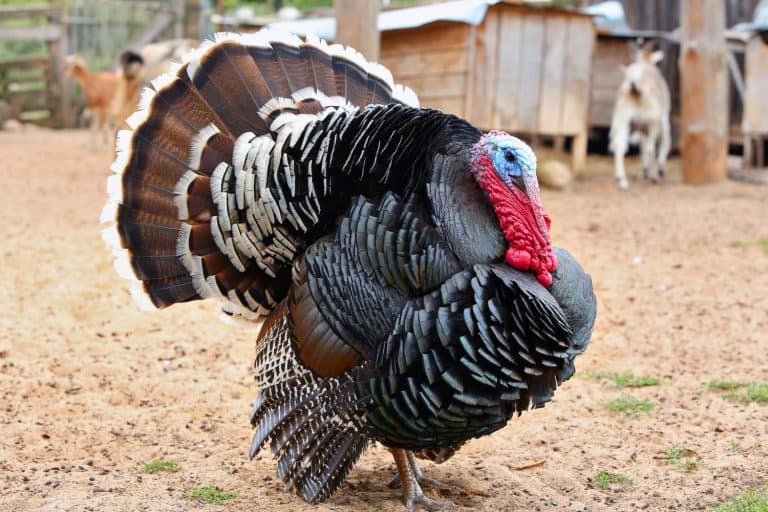
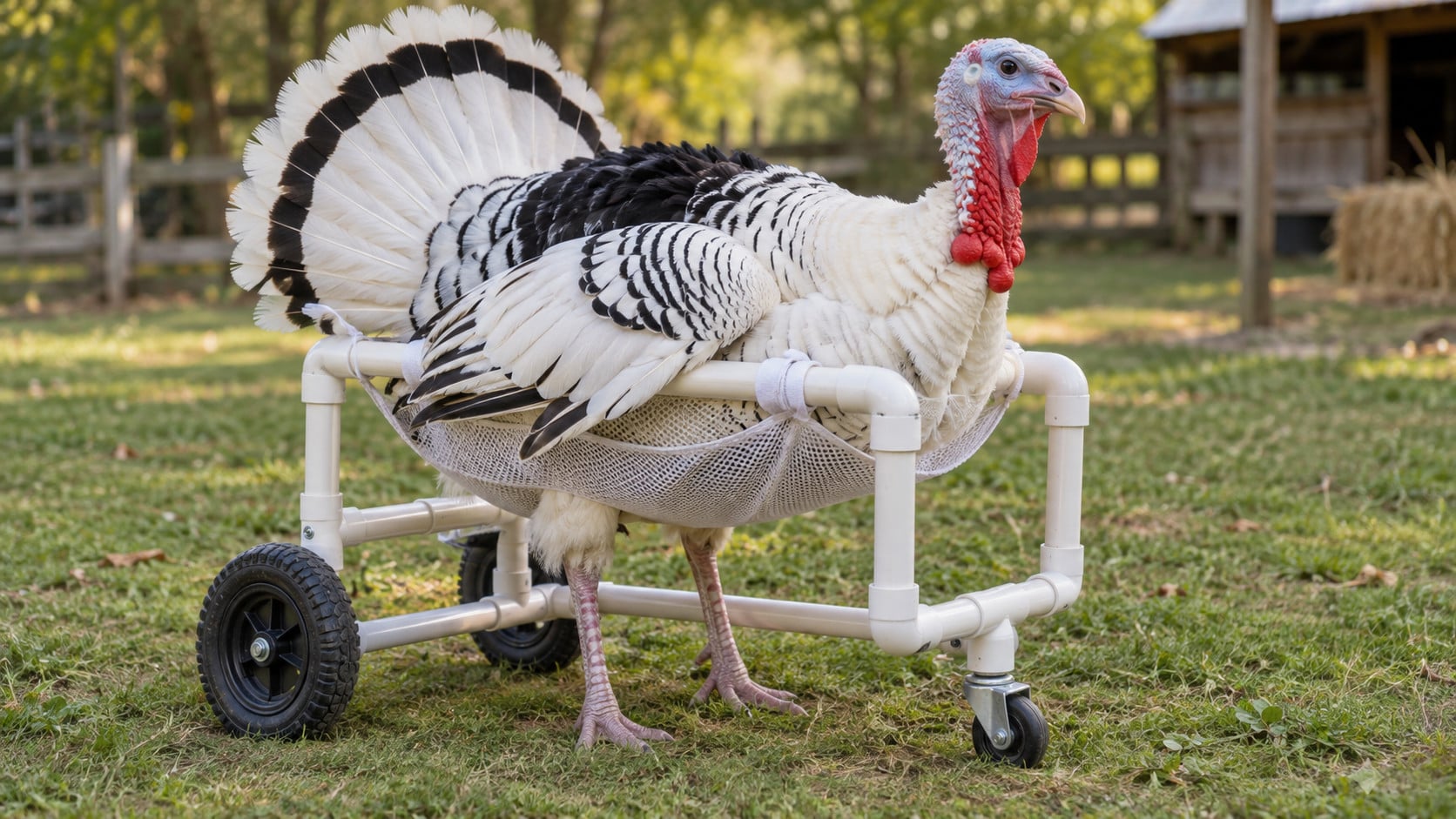
As it turned out, he was a Royal Palm, a traditional farm breed of turkey raised for meat. Royal Palms are white, with every feather edged in shiny black, a black patch across the back, and a white tail striped with black bands. The rest of his flock, Soleimani told The Journal, is a mix of farm breeds that’s been wandering around Barrington for at least a couple of months. There are at least eight or nine birds, in all sorts of colors, and nobody knows where they came from.
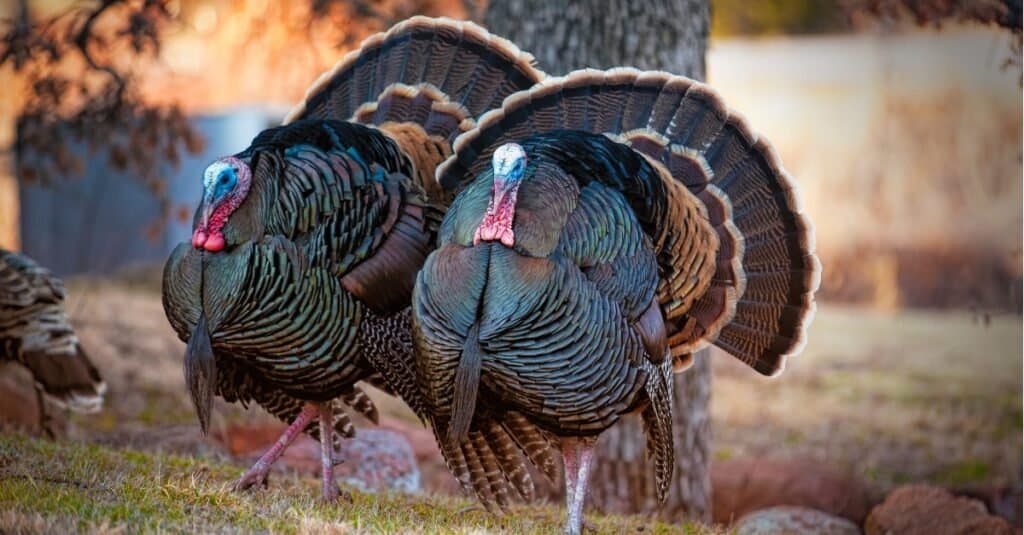
The rescue group usually cares for wild turkeys like these, not the domestic breed it ended up treating.
©iStock.com/davidsdodd
The Livestock Conservancy says Royal Palm males are usually gentle with people, especially if they were handled often as chicks, and that grown birds are curious and like company. This one fits. “He’ll eat out of your hands,” Soleimani said. “He loves to be hugged.”
“Our mission is to care for wild birds, but there was no world in which we were going to refuse him care because he wasn’t wild,” she wrote. “So, we got to work.”
Our mission is to care for wild birds, but there was no world in which we were going to refuse him care because he wasn’t wild
Why Standing Was the Hard Part
His back injury was so bad he couldn’t stand at all. But he could still feel pain deep in his feet, and that gave Soleimani hope that he might recover.
He’s also a heavy bird to hold up. By the breed standard, a young Royal Palm male weighs 16 pounds, and a full-grown one 20 to 22. His legs could still feel, but they couldn’t carry that weight yet, and he couldn’t do much but lie where he was put.
A Wheelchair Made of Plastic Pipe
Soleimani thought a wheelchair might help, so she asked a volunteer, Ray Hirst, if he could build something. She guessed it would take a couple of days. He finished it the same day.
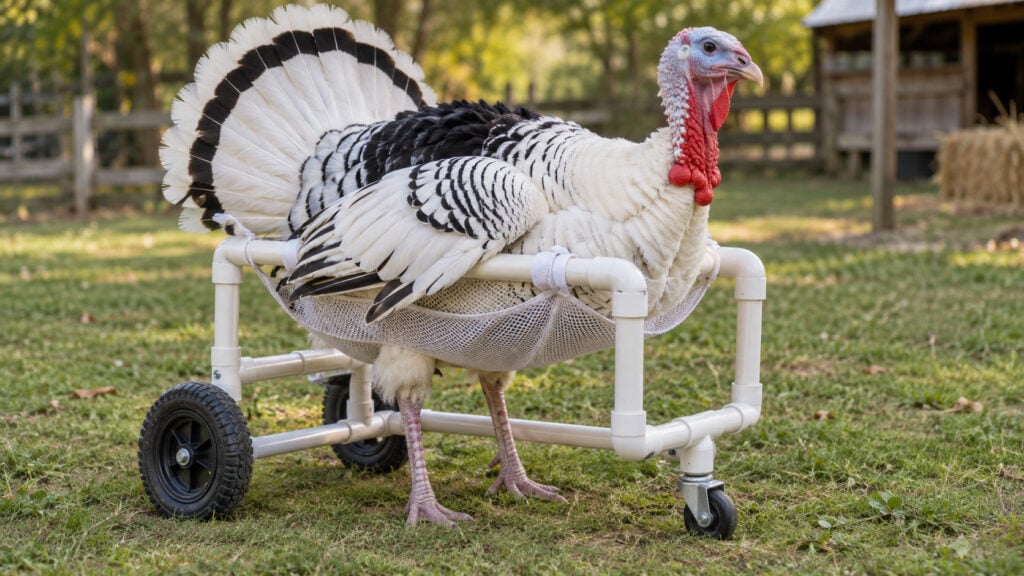
He made it from plastic plumbing pipe, sized to this one turkey’s body. A hammock-like sling held him up while his feet still touched the ground. At first he wouldn’t put any weight on his legs. Then came medicine to ease the swelling, and physical therapy, which Soleimani says works much the way it does for people. “We want to make sure they’re moving those muscles,” she said. For about a week, she and others held up his weight and walked him along several times a day. Then he started walking.
One Condition
Soleimani posted the appeal on Facebook on Tuesday, November 17. “We’re looking for a farm home where he can live out his life with one very important condition: he will never be someone’s dinner.” A home turned up within a day. Pickup is set for two days before Thanksgiving, she told The Journal, and he’ll share his new place with a single turkey hen who needs a friend.
His recovery may help other birds too. “Not only is this an incredible outcome for him, but it gives us a possible path forward for treating other large-bodied birds with spinal injuries, particularly turkeys and geese struck by cars,” Soleimani wrote.
He spent the wait in the turkey run at the rescue’s Chepachet facility, where the local wild turkey flock drops by to see him most days. The flock that stood over him by the road in October is still out wandering Barrington, unclaimed.