
Quick Take
- One of these insects is called the 'caviar of the desert' and fetches premium prices at high-end restaurants, though it's probably not the one you'd expect. Discover the desert caviar →
- Eating a scorpion sounds dangerous, but there's a specific preparation step that makes even the venomous stinger completely safe to eat. See how venom is neutralized →
- Some of these insects taste nothing like you'd imagine, and one variety is said to taste exactly like bacon. Find out what they taste like →
- Before grasshoppers can be cooked, they must go through a waiting period. Skipping it puts both flavor and safety at risk. Learn the preparation steps →
Eating insects, known as entomophagy, serves both as a vital source of nutrition and as a culinary delicacy in many cultures. Nutritionally, insects are packed with protein, healthy fats, vitamins, and minerals like iron and zinc. Beyond mere survival, many societies treat insects as premium culinary experiences, from deep-fried crickets (ching rit) and ant larvae (escamoles) to soy-glazed grasshoppers (inago). Continue reading to learn more about entomophagy and seven insects that you can eat.
Ants
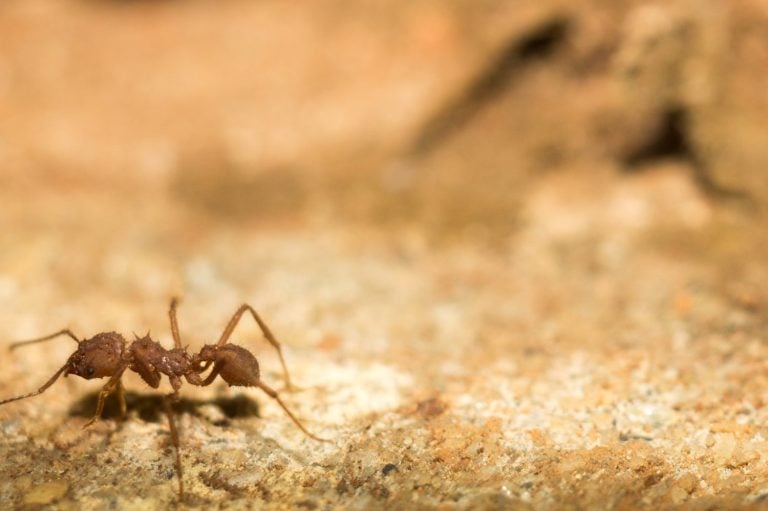
There are many edible ant species. Leafcutter, honeypot, and lemon ants are some of the more well-known edible ant varieties. In many cultures, ants are recognized as a nutrient-dense food source. These tiny insects are packed with protein and essential amino acids, and offer a surprising variety of distinct flavors, many of which are influenced by their natural defenses. Many species contain formic acid, which they use as a defense against predators, to subdue prey, and to maintain hygiene. Formic acid gives ants a sharp, citrusy taste, making ants an excellent natural seasoning.
Different cultures use ants for everything from basic subsistence to high-end dining. In Mexico, the larvae of velvety tree ants, known as escamoles, are called the caviar of the desert.
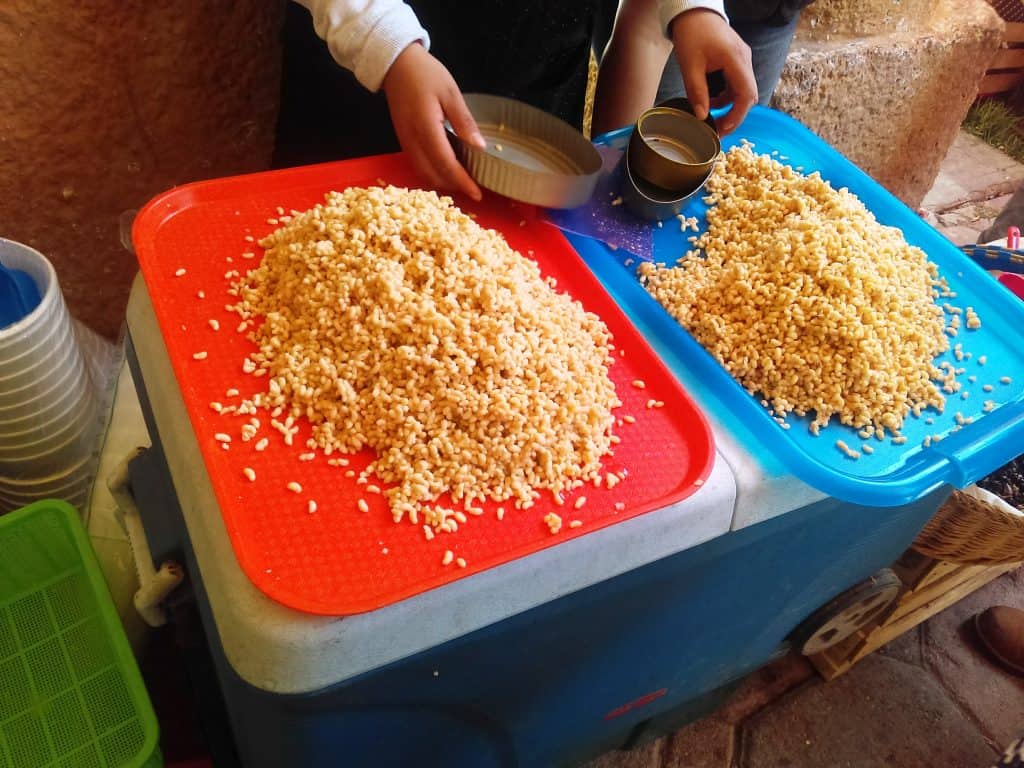
The larvae of velvety tree ants, escamoles, are considered a delicacy in Mexico.
Escamoles are prized for their smooth texture and nutty flavor when sautéed in butter and epazote, a pungent, aromatic herb. In Colombia, leafcutter queens called hormigas culonas (big-bottomed ants) are toasted with salt and eaten like popcorn. They are said to taste like bacon. In Southeast Asia and parts of Australia, green tree ants and weaver ants are used to add a sour punch to soups and salads.
Cicadas
Cicadas are a seasonal culinary dish in various parts of the world, particularly across Southeast Asia and parts of China. Although annual cicadas are eaten yearly, the most anticipated varieties are the periodical cicadas, which spend between 13 and 17 years underground.
The nymphs, the soft, newly emerged cicadas that have just shed their hard outer shell, are considered the tastiest. They are succulent, easy to digest, and lack a tough exoskeleton.
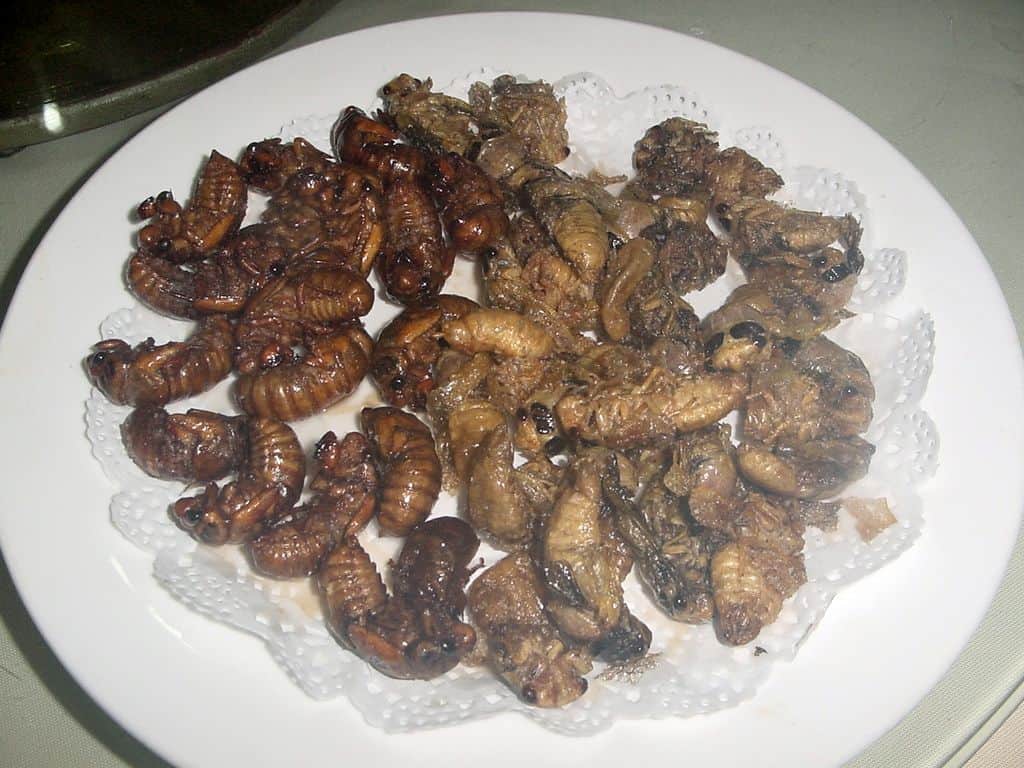
Because cicadas feed exclusively on clean underground plant xylem and tree roots for over a decade, they develop a unique flavor profile.
Cicadas are incredibly versatile and can be pan-fried in butter with garlic and wine, tossed into a crispy stir-fry, deep-fried in a crunchy tempura batter, or dry-roasted to be crushed into baked goods.
Grasshoppers
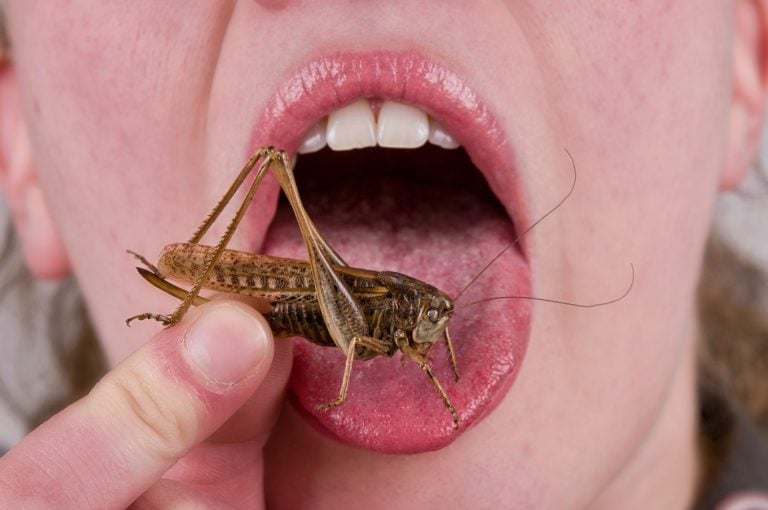
Grasshoppers are among the most widely consumed insects globally, serving as a staple and street-food delicacy across Mexico, Central America, Southeast Asia, and parts of Africa. The most famous culinary varieties are chapulines (primarily genus Sphenarium) in Mexican cuisine and nsenene, the long-horned grasshopper (Ruspolia differens), in Uganda.
Before cooking or processing grasshoppers, it is standard practice to keep them alive without food for 12 to 24 hours. This allows the insects to fully digest and eliminate any remaining food in their systems, which significantly improves their taste and safety.. Before cooking, they are stripped of their wings and scratchy hind legs.
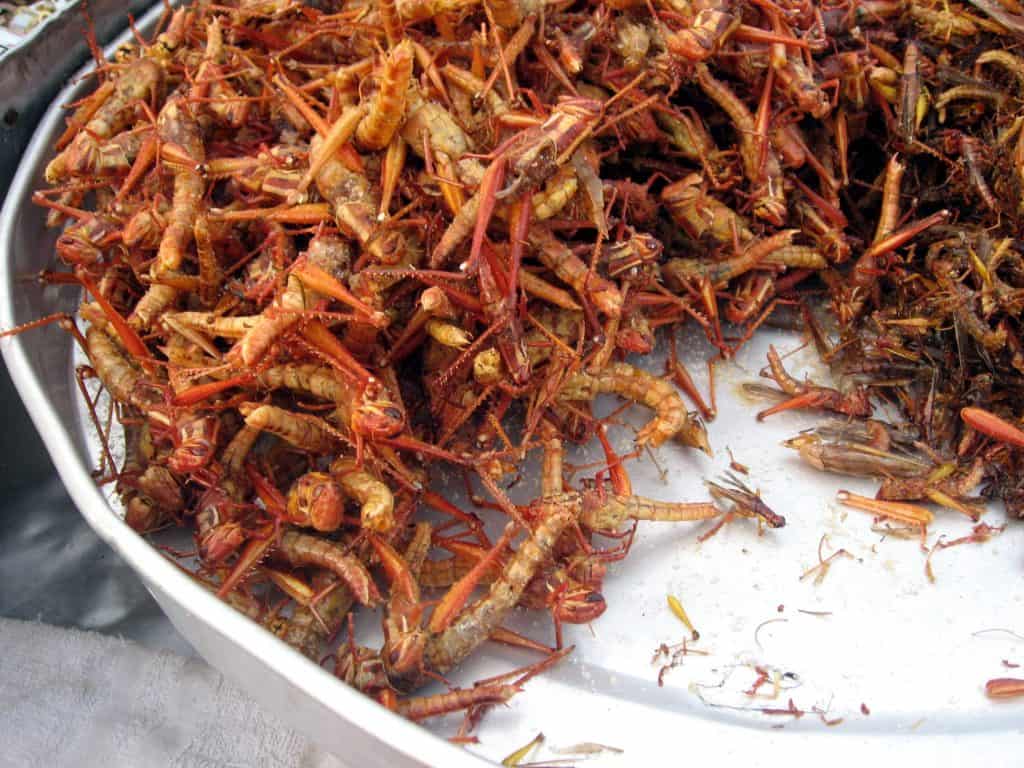
Because grasshoppers can carry parasites, they must always be thoroughly cooked.
In Mexico, they are traditionally toasted on a flat griddle and seasoned heavily with garlic, lime juice, salt, and chili flakes. In Uganda, nsenene are frequently sautéed or deep-fried in their own natural oils alongside onions and chili peppers to create a savory, crunchy snack sold by roadside vendors.
While many regions still rely on wild-harvesting, countries like China, Thailand, and several African nations such as Uganda and Kenya are now leading the world in high-volume, commercial grasshopper farming.
Crickets
Crickets are another of the most widely eaten insects, serving as a traditional street-food staple in Southeast Asia and parts of Mexico. The primary varieties raised for consumption include the house cricket (Acheta domesticus), the field cricket (Gryllus bimaculatus), and the banded cricket (Gryllodes sigillatus). These species thrive in high-density environments, mature in just six to eight weeks, and are exceptionally efficient at converting feed into complete protein. Before cooking, crickets are typically frozen to end their lives, thoroughly washed, and sometimes blanched to ensure cleanliness. In Thailand, deep-fried crickets (ching rit, or jing rit) are a popular treat, while in Mexico, they are dry-roasted.
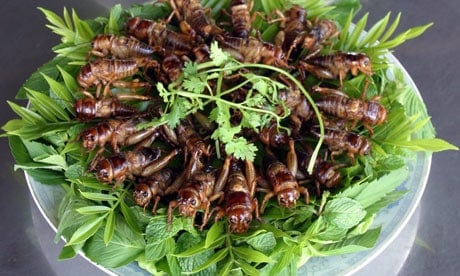
Connoisseurs target adult crickets just before they develop wings, when their bodies are at their plumpest and most nutrient-dense.
Scorpions
Scorpions are a popular street-food snack and traditional delicacy primarily consumed across China, Thailand, and Vietnam. They are valued for their crispy texture. The most common varieties prepared for consumption include the Manchurian scorpion or Chinese golden scorpion (Mesobuthus martensii) and the larger Asian forest scorpions (Heterometrus longimanus), which are frequently raised on farms.
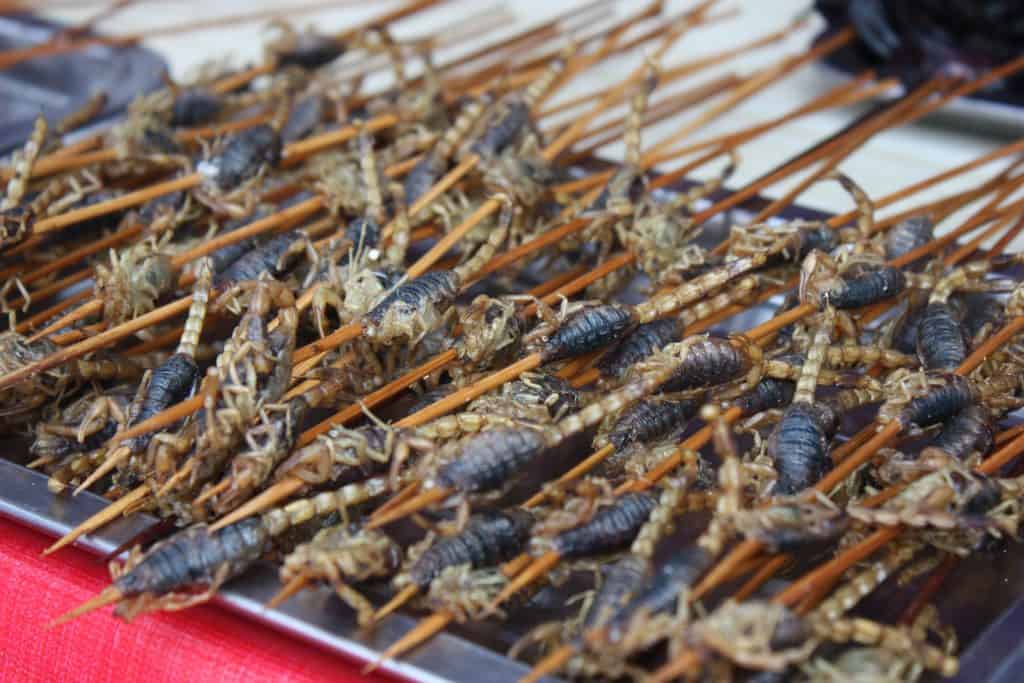
Scorpions must be thoroughly cooked to make them safe to consume.
To safely consume scorpions, cooks typically flash-freeze, clean, and boil them, which neutralizes the protein-based venom in the stinger and renders the scorpion, including the tail and claws, safe to eat.
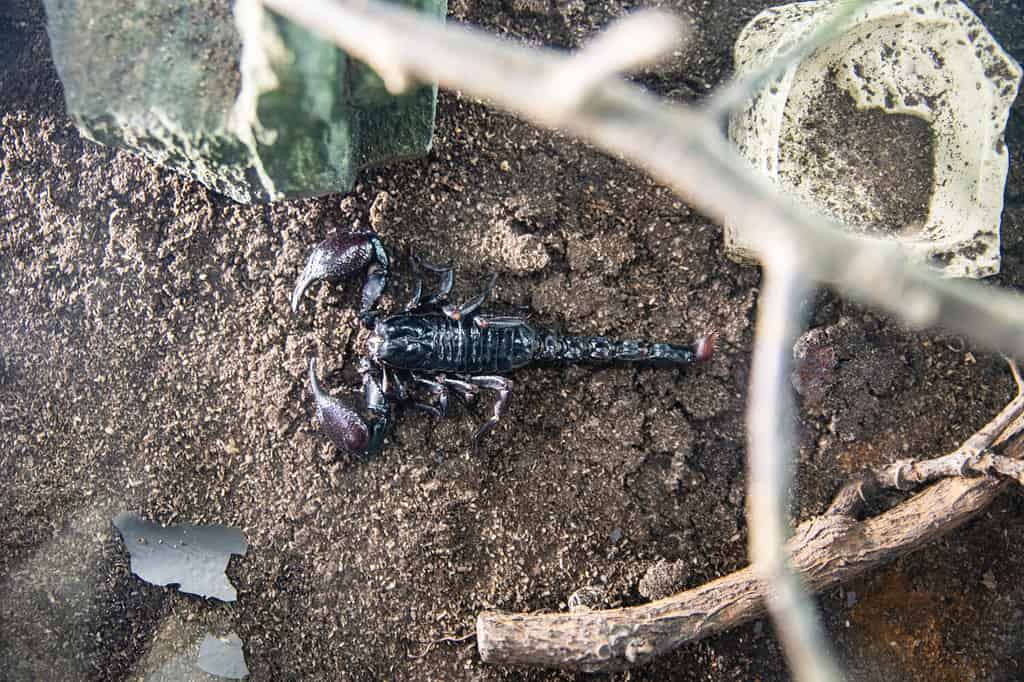
Asian forest scorpions are sometimes captive-bred on farms for consumption.
©letspicsit/Shutterstock.com
Termites
Termites are a seasonal food source and culinary delicacy eaten extensively across sub-Saharan Africa, Southeast Asia, and South America. While massive, nutrient-dense queen termites are occasionally dug out of mounds as a rare treat, the most widely harvested variety is the winged reproductive alates, or flying termites. Foragers traditionally collect alates during the rainy season by placing basins of water beneath outdoor lights, which trick the swarming insects into dropping directly into the water.

Termites are a seasonal delicacy.
Termites are most commonly dry-fried in a pan without oil, as they release their own natural fats while cooking to become crispy and nutty. They can also be boiled, steamed, or roasted over hot coals, and are frequently seasoned with salt, peppers, onions, ginger, or garlic. To preserve them for long-term use, termites can be sun-dried or smoked, after which they can be eaten as a snack or ground into a nutrient-dense flour.
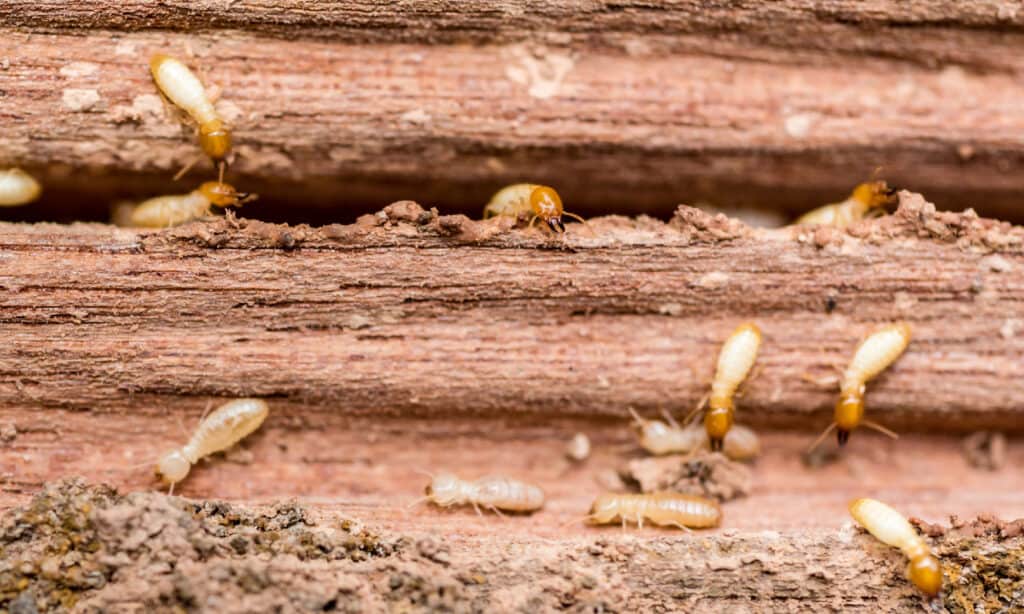
All termites are edible.
©iStock.com/viiwee
Termites are frequently consumed all throughout the world, particularly in regions where termite mounds are present and they are simple to capture. Termites are relatively toxin-free because they feed on wood. Adults with wings have the ability to fly. In their larval stage, they are simpler to catch. The queen is regarded as a delicacy in various cultures. Termites, like ants, can be consumed raw, roasted, boiled, or baked.
Grubs
The larval stage of beetles, grubs are an important staple in some cultures and a delicacy in others. Grubs are consumed in Australia, sub-Saharan Africa, Southeast Asia, and parts of the Amazon rainforest. The most iconic variety is the witchetty grub (Endoxyla leucomochla), traditionally harvested from the roots of witchetty bushes by Indigenous Australians. In Southeast Asia and the Pacific, the sago grub (Rhynchophorus ferrugineus) is collected from rotting palm trunks. In Africa, the larvae of the rhinoceros beetle (Oryctes monoceros) are on the menu.
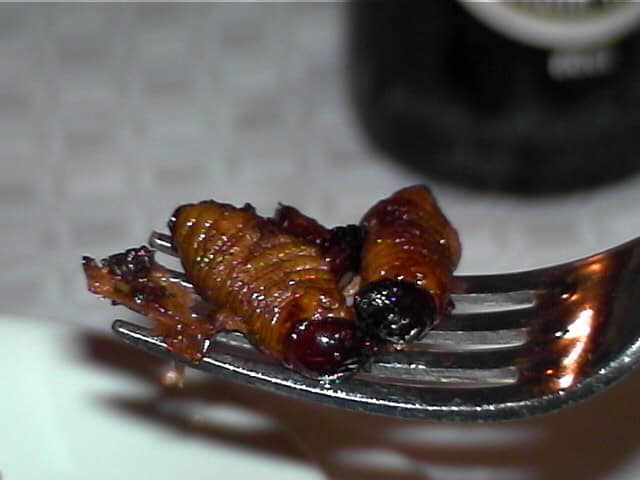
Grubs are rich in heart-healthy monounsaturated fatty acids.
Foragers seek out grubs because their thick, soft bodies lack a tough exoskeleton, making them incredibly tender and rich in healthy fats and proteins. To prepare grubs, cooks often gently squeeze them to purge any internal wood pulp before cooking. They are most commonly roasted over open charcoal embers, pan-fried in their own rich fat, or stir-fried with simple aromatics like garlic and chili.
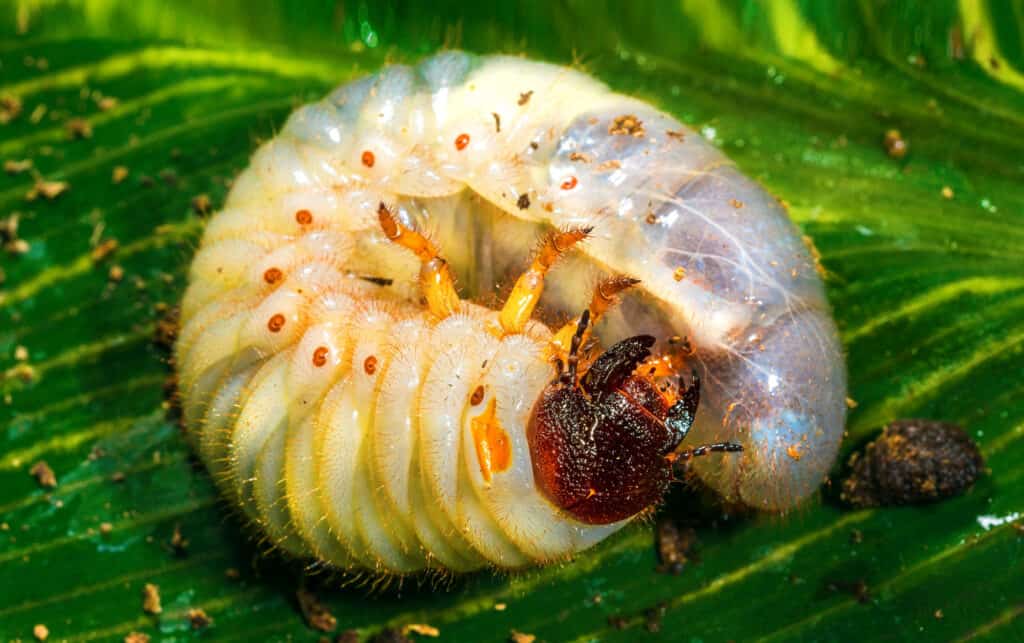
Although they may not look particularly appetizing, grubs are considered a delicacy in some cultures.
©GypsyPictureShow/Shutterstock.com