
Quick Take
- Consuming toxic plants is something Koalas are highly adept at.
- Rabbits consume their own feces to sustain their health.
- Some animals, such as the grasshopper mouse, consume highly venomous creatures.
Of all the mammals in the world, humans by far have the strangest diets. As omnivores, we have the most variety of any other animal in the food we consume. We also delight in the culinary arts, transforming fruit, vegetables, and meat into dishes that are unrecognizable yet delicious. To top it off, we can choose if we want to be herbivores (vegetarian or vegan), carnivores, pescatarian, or a mixture of each.
But even with all of these options, there are some mammals in the animal kingdom that still surprise us with their diets. From toxic plants to their own feces, here’s what other mammals are snacking on for dinner.
Aye-Aye
The aye-aye (Daubentonia madagascariensis) is a lemur from Madagascar. Its unusual features are part of what makes its diet so unique. Aye-ayes are primarily insectivorous and frugivorous, consuming insect larvae as well as a variety of plant materials such as fruit, seeds, and nectar. The former consists of insect larvae, primarily wood-boring beetles, which are preferred over any other. The aye-aye also eats nectar, nuts, seeds, and fungi, but the thrill of the hunt for larvae is what makes its eating habits stand out.
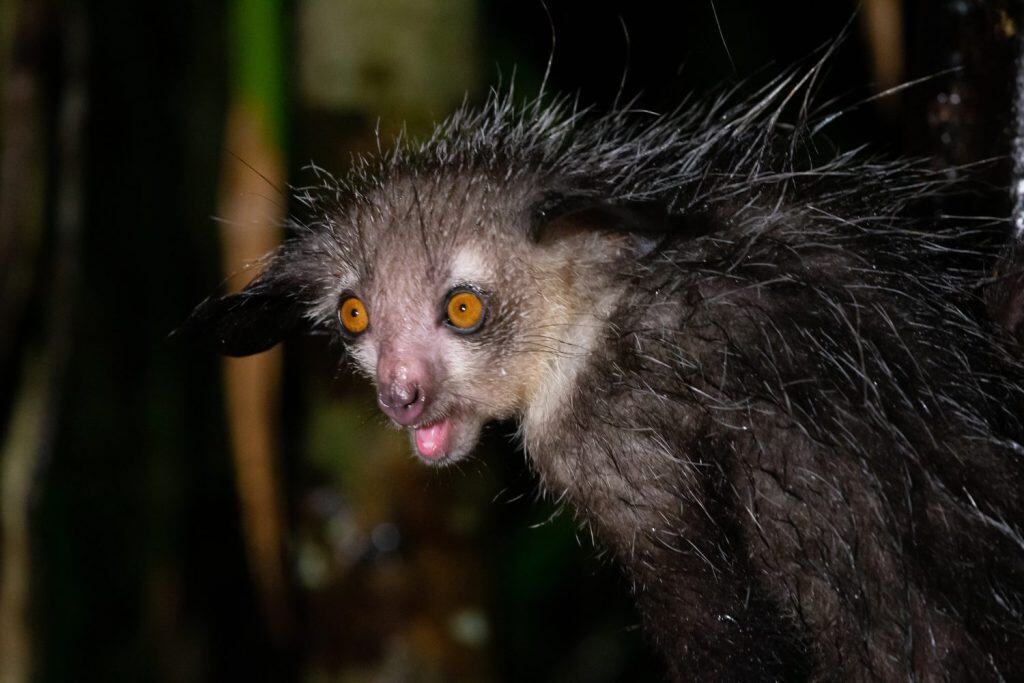
Aye-ayes have long fingers that help them scrape out hollow tree crevices.
©Eugen Haag/Shutterstock.com
The aye-aye uses its elongated middle finger to tap on tree trunks and branches. Its goal is to find hollow spaces where insects hide to lay their eggs. To the insect, the aye-aye appears like some type of horror movie giant once it finds a hollow cavity. With a few gnashes of its large incisors, it easily exposes the hollow space beneath. The aye-aye then uses its middle finger to scrape out the larvae, indulging in its meaty findings.
Grasshopper Mouse
If mice weren’t already a fear for some people, then the grasshopper mouse (Onychomys leucogaster) is the stuff of nightmares. This carnivorous mouse is found throughout North America, from the Southwest to Mexico. They’re small but fierce, primarily consuming insects and small vertebrates. Occasionally, they snack on seeds, but it’s not their preferred meal.
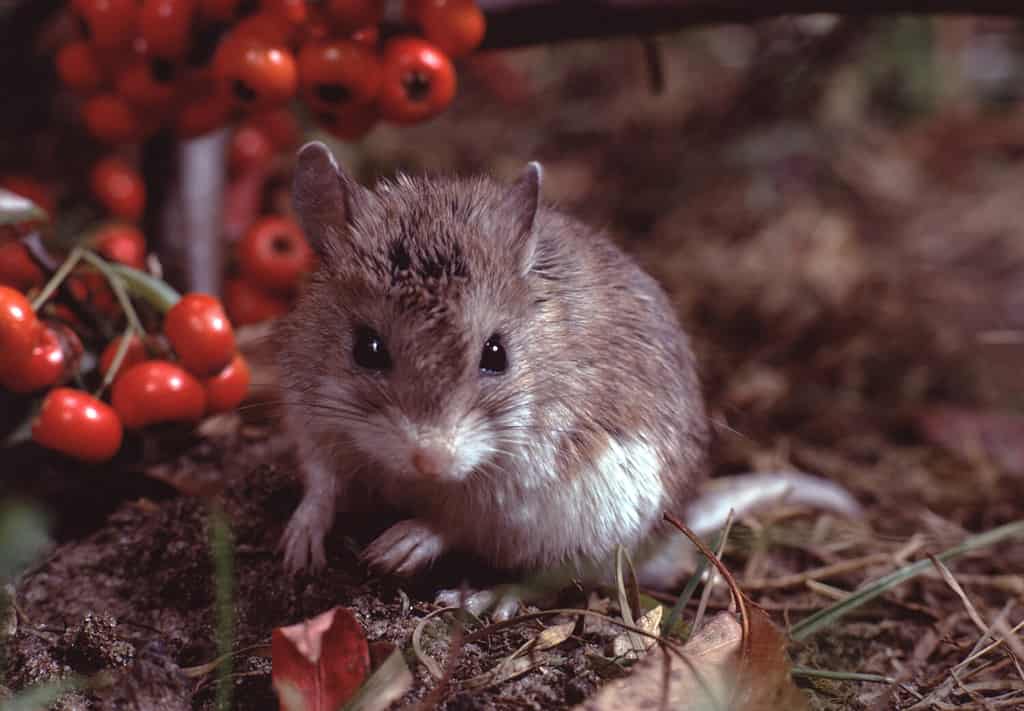
Grasshopper mice are intimidating hunters despite their small size.
©Liz Weber/Shutterstock.com
The grasshopper mouse also has a reputation for taking down venomous insects such as bark scorpions. Its stinging tail is not an issue for this mouse, a seasoned hunter skilled with pointy teeth for tearing into prey. Interestingly, grasshopper mice are also biologically adapted to be immune to the scorpion’s venom. As sodium in their nerve cells binds to the toxins, it blocks pain receptors, which is surprisingly beneficial for the mice. They also consume crickets, beetles, and, as their name implies, grasshoppers.
Gelada Baboon
In stark contrast, the gelada baboon (Theropithecus gelada) is predominantly herbivorous, though it occasionally consumes insects or small animals. They’re only found in Ethiopia, and their diets are seasonal. Like many other primates, the gelada baboon has opposable thumbs, which help it consume plant matter. They use these strong digits to pick the grasses that make up more than 90% of their diets during the summer. In late fall, their opposable thumbs help them pick seeds, while in winter, they dig for grass rhizomes, tubers, and grass blades.
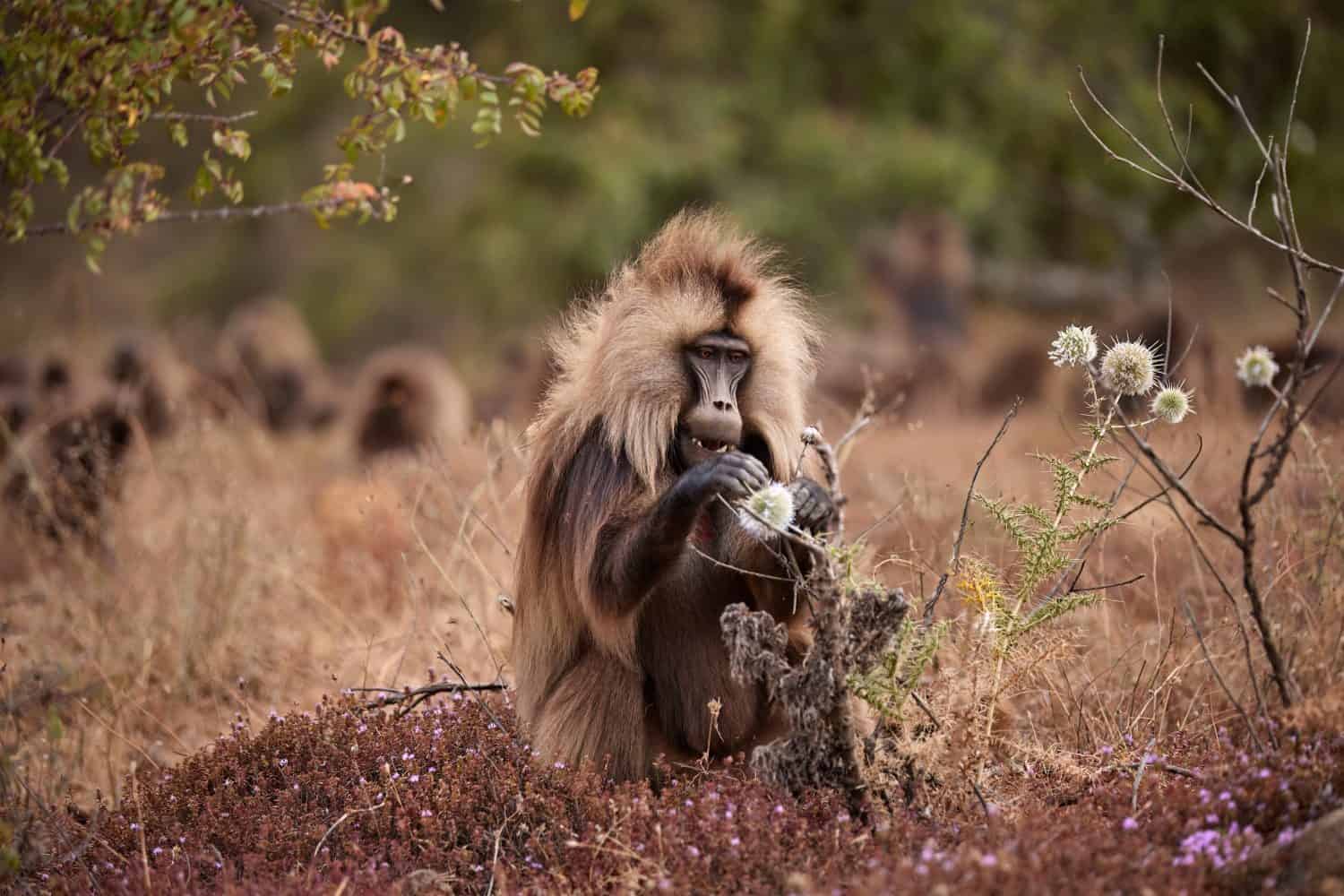
The diet of a gelada baboon changes depending on the season.
©Martin Mecnarowski/Shutterstock.com
Gelada baboons also consume fruit and flowers, and are not picky about the vegetation in their diets. They stand apart from many other baboon species, which are primarily omnivores. While their closely related cousins eat insects and eggs, some have been observed hunting small mammals and birds.
Pika
Despite its small size, the American pika (Ochotona princeps) is built for survival. At first glance, they appear to be your typical rodent, consuming grasses, flowers, lichens, and other low-lying foliage. These plants keep the pika hydrated, with most of its water intake coming from vegetation. However, the pika doesn’t immediately consume all the plant life it finds. In wintering piles known as haypiles, you’ll also find some toxic, typically unsavory, plants.
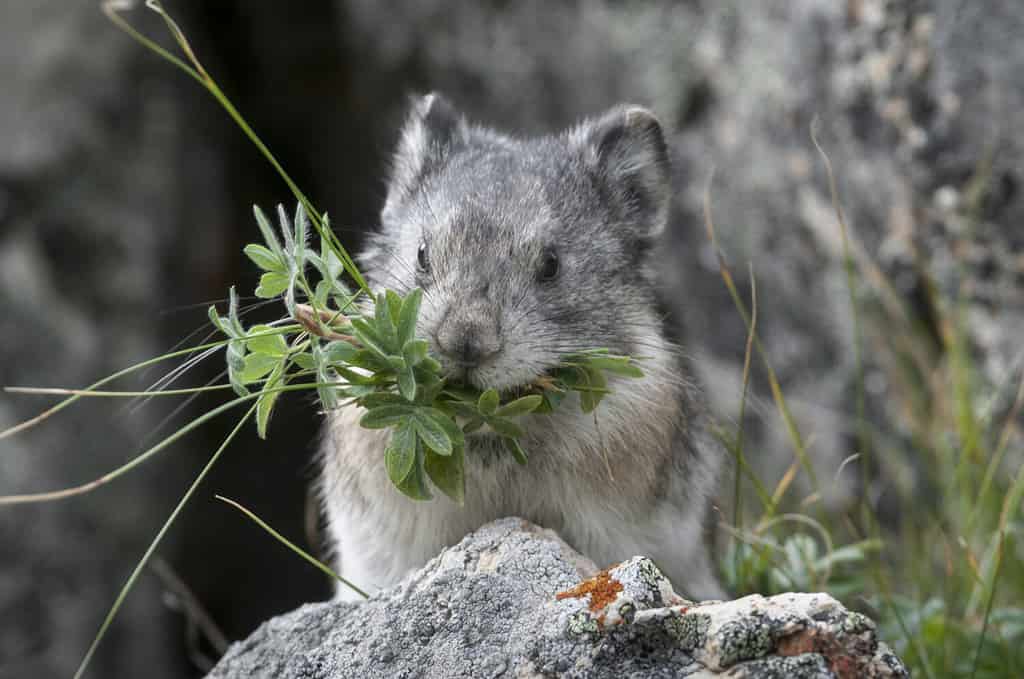
The collared pika is well-adapted to the cold weather and doesn’t hibernate.
©NancyS/Shutterstock.com
As the pika squirrels away food for times when it’s scarce, it also tucks away toxic plants such as mountain thistle and false hellebore. Both of these contain toxins that would sicken, if not kill, an animal this small. The pika knows this and saves these plants to consume later in the year after the toxins have broken down to a safe level. Doing this ensures the pika will have plenty of meals in the winter, and also diversifies its diet from other rodents that forage for similar things.
Pen-Tailed Tree Shrew
When humans drink fermented beverages, such as beer, the unfortunate side effect is inebriation. But if we had the same biological adaptation as the pen-tailed tree shrew (Ptilocercus lowii), we’d be able to knock back more than our fair share of brewskies. This tiny mammal inhabits parts of Thailand, Sumatra, Malaysia, and Borneo. In all of these regions, nectar is abundant in lush rainforests. While many enjoy it fresh from the plant, the pen-tailed tree shrew prefers to let it sit.
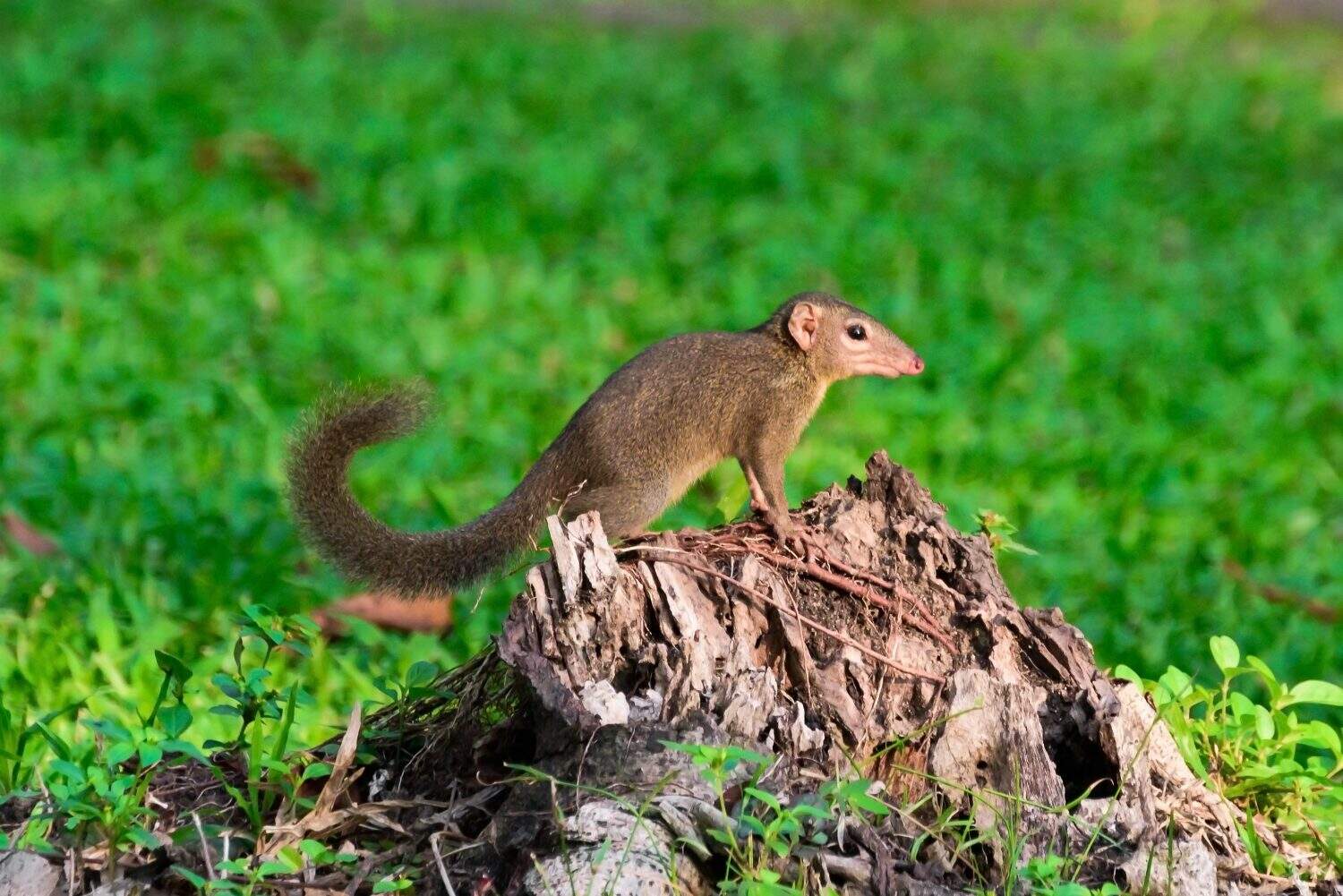
Tree shrews thrive in tropical climates, where there’s plenty of vegetation.
©Thitiwat.Day/Shutterstock.com
As an omnivore, this shrew consumes large insects, tropical fruits, and even lizards from time to time. However, its diet is most unusual due to its high consumption of fermented nectar, specifically from that of the bertrum palm. Despite its alcohol content, the pen-tailed tree shrew does not become intoxicated thanks to its body’s ability to process these alcohols at a high rate. It makes up a significant portion of the shrew’s diet and provides efficient energy boosts.
Rabbits
Some might be surprised to see rabbits on this list. Found in most parts of the world, the diet of these mammals is typically what you’d expect. Wild and domestic rabbits both consume a steady diet of grass, hay, leafy greens, and, at times, fruit. Domestic rabbits also consume nutritional pellets that are high in fiber, which makes up a small portion of their diet. But these arent’t the only “pellets” rabbits often eat.
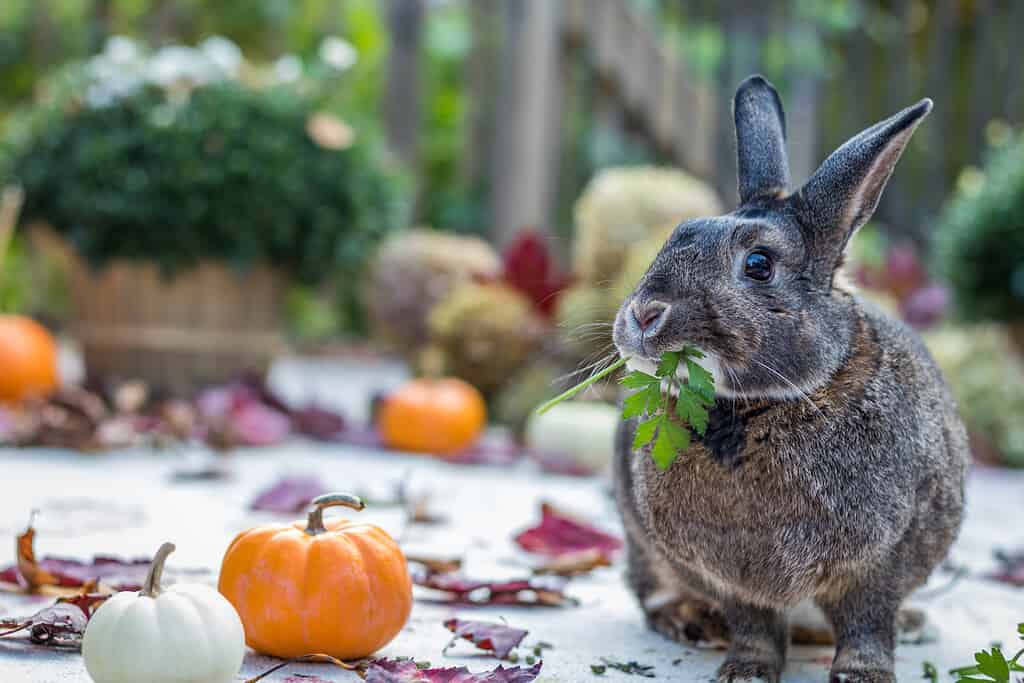
A surprising part of a rabbit’s diet is its own fecal pellets.
©Rabbitti/iStock via Getty Images
Their feces, which are also pellet-shaped, constitute a portion of a rabbit’s diet. That’s right: the same high fiber that comes out of them goes right back in. These highly nutritious fecal pellets, called cecotropes, are produced by the cecum. Whereas it can be harmful in other animals, which risk introducing more bacteria into their bodies, it’s highly beneficial for rabbits.
Vampire Bat
Not unlike the legendary Dracula, vampire bats (Desmodus rotundus) also survive on a steady diet of only blood. These blood-sucking mammals are found from Mexico down through South America. They feed on animals such as livestock, deer, and sea lions. In rare instances, they may also feed on snakes and other reptiles, given the opportunity. Despite the fear its name evokes, the vampire bat steers clear of humans.
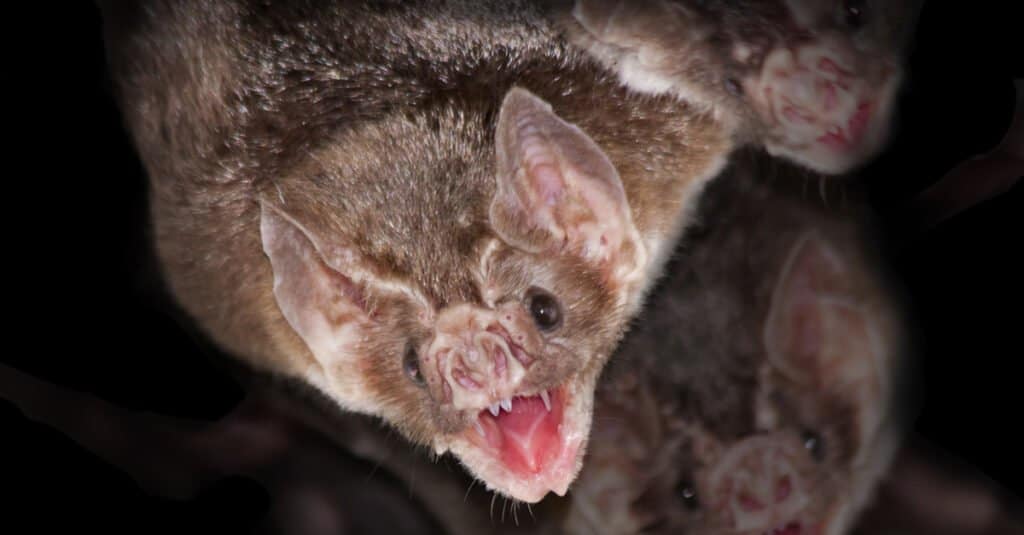
Contrary to popular belief, vampire bats do not prey on humans.
©belizar/Shutterstock.com
Some subspecies, such as the hairy-legged and white-winged vampire bats, also feed on birds. Similar to other bat species, they use echolocation to locate sleeping prey. After catching a meal, vampire bats use sharp incisors to pierce soft skin, and the anticoagulant in their saliva prevents blood from clotting as they drink. Their saliva also contains a local anesthetic, which allows them to feed on the same prey for extended periods.
Koala
The koala (Phascolarctos cinereus), Australia’s famous marsupial, is known for its cute face and tree-climbing nature. It’s also known for surviving on a diet of only eucalyptus leaves. Most people know eucalyptus due to its menthol-like qualities. It’s a common plant used for respiratory issues, and is found in many all-natural congestion remedies. Koalas, however, don’t consume this plant for its breathing aid compounds.
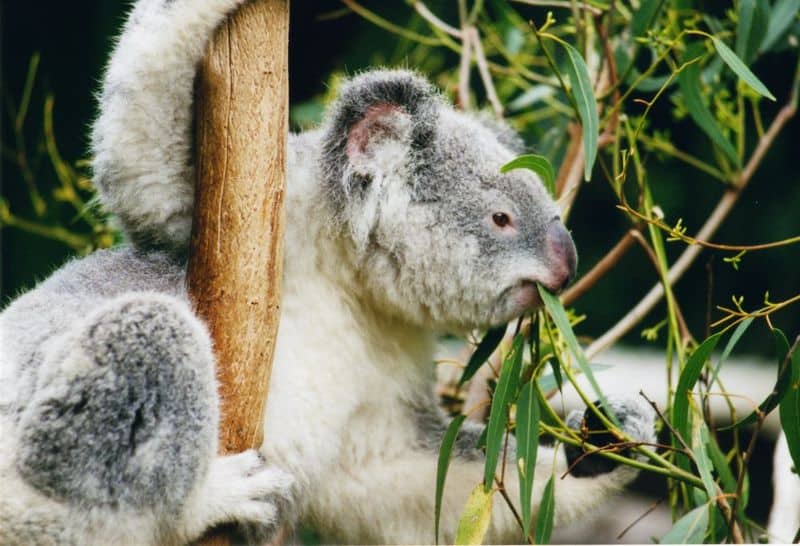
Koalas look innocent but consume a highly toxic plant.
©Arnaud Gaillard (arnaud () amarys.com), CC BY-SA 4.0, via Wikimedia Commons – Original / License
The preferred eucalyptus leaves for koalas are also known as gum leaves. These have high levels of tannins and oils, which are typically toxic to other animals. These toxins don’t affect koalas because they possess specialized liver enzymes and a unique gut microbiome that help detoxify the compounds, in addition to their slow digestive rate and metabolism. While these marsupials sleep for up to 22 hours a day, their bodies slowly digest gum leaves, purifying the toxins they contain. This same digestion allows koalas to eat such fibrous material without harming their systems.
Aardwolf
The aardwolf (Proteles cristatus) is a member of the hyena family (Hyaenidae), but its diet sets it apart from more carnivorous hyena species. This African nativ survives purely on insects, making it an insectivore among other savannas and grasslands. Luckily, its preferred meal, termites, are in high supply in these parts. Aardwolves can sense a termite colony from a considerable distance thanks to the defensive terpenes excreted by the insects.
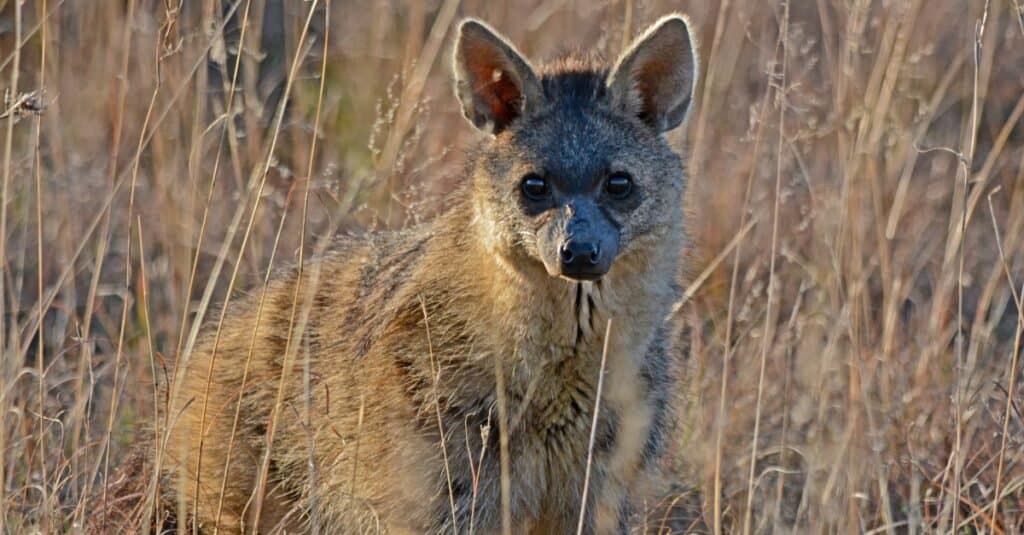
It looks like a hyena, but the aardwolf only has sharp teeth for defense, not hunting.
©iStock.com/Catherine Withers-Clarke
Once a colony has been sniffed out, aardwolves then use their long, sticky tongues to scoop up termites. They can eat hundreds of thousands per day, decimating an entire hill in a matter of hours. The aardwolf still has a fearsome set of teeth for defense, but its tongue is its primary tool for consuming termites and other insects when they are scarce. This unusual combination makes it an animal with one of the most unique diets in all of Africa.