
Although we know of over 1.2 million species of plants and animals, scientists believe there are many more yet to be discovered. One study suggests that we still haven’t identified 86% of species on land, and another 91% in the ocean. One of those newly discovered species is a fuzzy little tarantula living in the trees of southern Laos. A team of Thai and Laotian scientists recently announced the discovery of the Southeast Asian dwarf tarantula in the journal ZooKeys.

Southern Laos is full of lush jungles and diverse wildlife, including many species of insects and spiders.
©Ghing/Shutterstock.com
About the Khampheng Dwarf Tarantula
The Khampheng dwarf tarantula (Phlogiellus khampheng) was found near the city of Pakse in southern Laos. Pakse is known as a tranquil city at the meeting point of the Xe Don and Mekong Rivers. The region has a tropical climate, with waterfalls, jungles, and national parks. The nearby Dong Hua Sao Protected Reserve is home to a variety of wildlife, including Siamese crocodiles, green peafowl, gibbons, and numerous bird species.
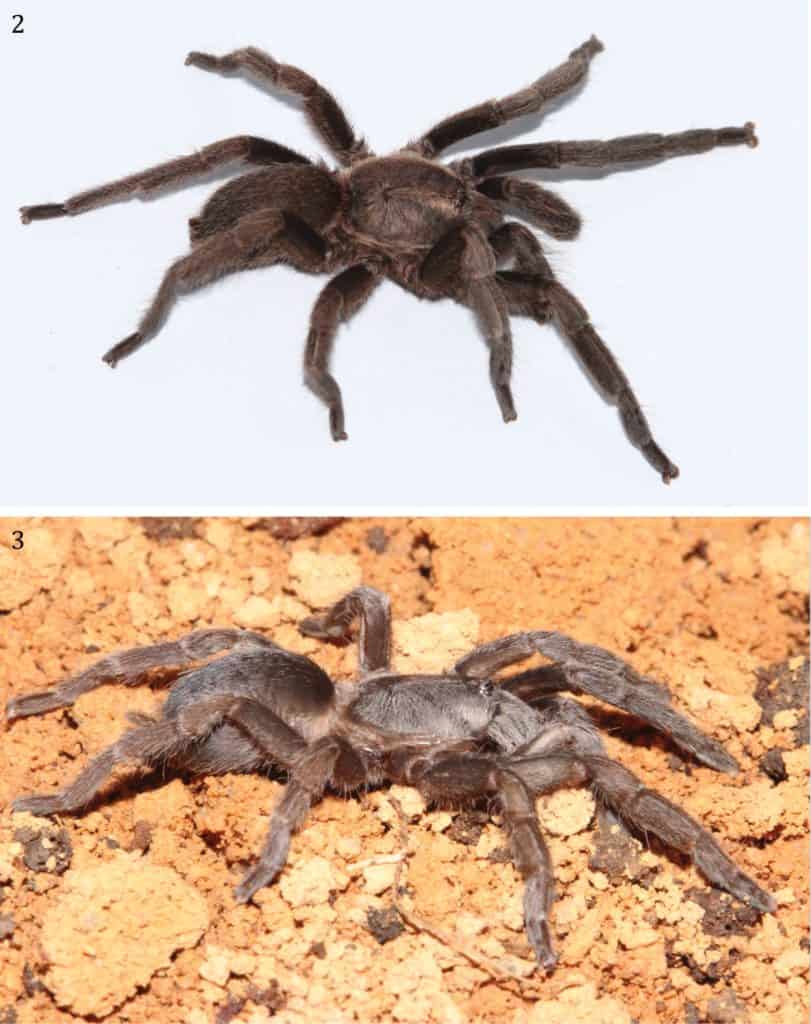
Phlogiellus longipalpus
©Chomphuphuang N, Smith D, Wongvilas S, Sivayyapram V, Songsangchote C, Warrit N (2017) New species of Southeast Asian Dwarf Tarantula from Thailand: Phlogiellus Pocock, 1897 (Theraphosidae, Selenocosmiinae). ZooKeys 684: 57-73. https://doi.org/10.3897/zookeys.684.12558, CC BY 4.0, via Wikimedia Commons – Original / License
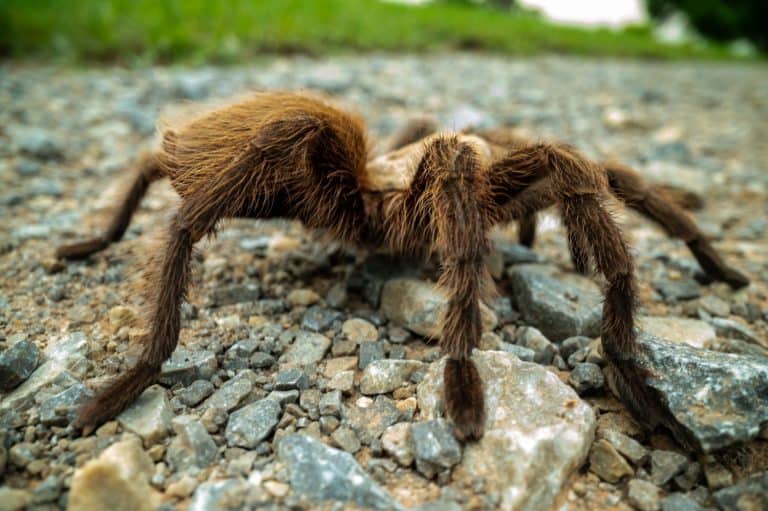
Scientists studying small tarantulas in the area noticed the spiders didn’t resemble any documented species. What they had found was the Khampheng dwarf tarantula (Phlogiellus khampheng). Khampheng dwarf tarantulas are very small, reaching only half an inch in length as adults. For size comparison, the Texas brown tarantula (Aphonopelma hentzi), commonly found in the American Southwest, can reach five to six inches in length. However, the dwarf tarantula is not the smallest in the world. That would be the endangered spruce-fir moss spider (Microhexura montivaga), which is only around an eighth of an inch in length.
Scientists identified the Khampheng dwarf tarantula as being in the Yamia group of the genus Phlogiellus due to their not having a maxillary lyra. Maxillary lyra are rows of spines located near a tarantula’s fangs. The presence or absence of maxillary lyra can help scientists classify spiders.
What’s the Habitat of the Khampheng Dwarf Tarantula?
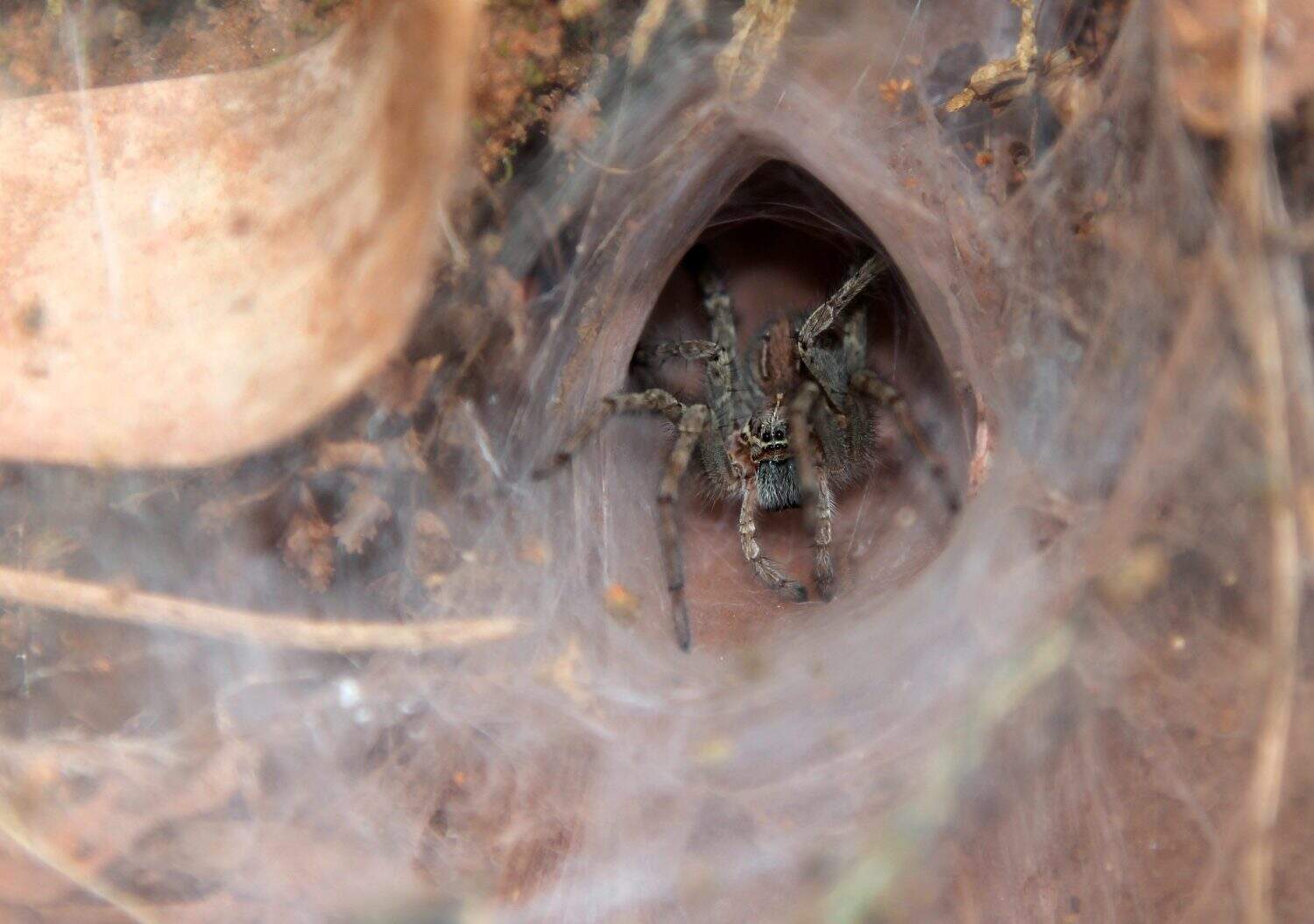
Scientists found the new species living in a forest habitat at an elevation of 870 feet. The tarantula builds a silk structure at the entrance of its burrow. Their homes are located in various places, including tree hollows, under rocks, and in cracks in logs.
What Does the Khampheng Dwarf Tarantula Eat?
Tarantulas are carnivores, with most species eating a diet of invertebrates, such as roaches, caterpillars, grasshoppers, beetles, crickets, and cicadas. Larger tarantulas also eat small animals, including rodents, frogs, bats, lizards, and even birds. Scientists believe the Khampheng dwarf tarantula’s main diet is made up of termites and ants. The team found the tarantulas living near colonies of ants and termites. They also discovered the remains of ants and termites in the spider’s burrows.
How Did Researchers Choose the Name?
The researchers who discovered the species explained that they chose the name Khampheng, which “originates from the Lao and Thai languages, particularly in the Northeastern region, where it is used as a term of endearment to refer to someone who is cherished and precious to the speaker.” Also, “By choosing this name, the authors sought to convey the special and valuable relationship between Thailand and Laos, the two countries that collaborated closely in the discovery of this remarkable new tarantula species.”
Old World vs. New World Tarantulas
Tarantulas in the Phlogiellus genus, including the Khampheng dwarf tarantulas, are known as Old World tarantulas. New World and Old World tarantulas are identified by their geographic location. Old World tarantulas are from the eastern hemisphere, while tarantulas originating in the western hemisphere are referred to as New World.
In addition to their geographic location, Old World and New World tarantulas differ in temperament and behavior. In general, Old World tarantulas are often more territorial, quicker to become defensive, and have stronger venom. For this reason, beginning tarantula hobbyists are encouraged to start with the typically calmer and less potent New World species.
What Are Some Other Similar Species?
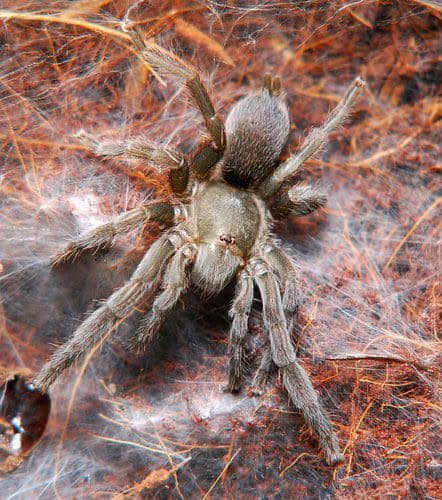
The Philippine dwarf tarantula is a little larger than the Khampheng dwarf, reaching up to two inches in length.
The newly found tarantula is in the genus Phlogiellus. This genus currently contains 28 other species that have been found in various Asian locations, including Singapore, Hong Kong, Cambodia, and Thailand. In 2017, researchers discovered a similar species, the Phlogiellus longipalpus. This Southeast Asian dwarf tarantula was found in Thailand, living near villages. They were found in a variety of places, including people’s homes, as well as under rocks and logs. Another similar species is the Philippine dwarf tarantula (Phlogiellus baeri). This Philippine dwarf tarantula is commonly found in the Philippines and is also kept as a pet. Tarantula owners describe it as a nonaggressive tarantula that would rather flee than fight.