
Quick Take
- Kenya's rhino conservation worked so well it created a new problem.
- A drone with its lights switched off hunts for a mother and her newborn before dawn.
- Some children and elders lined a road to witness something most had never seen.
- The herd has grown since the first arrivals, and a new species has joined it.
Before dawn at Loisaba Conservancy in Kenya’s Laikipia County, David Saruni, then a security administrator there, sent a drone up, switched off its flashing lights and steered it toward thick brush. He was looking for an eastern black rhino and her three-month-old calf, The Nature Conservancy’s magazine reported in its Issue 2, 2025 feature. On the infrared feed, the pair appeared as two white shapes of body heat.
Mother rhinos are fiercely protective of their young. Rangers gave the family space and checked on both animals by sight every day, the magazine reported.
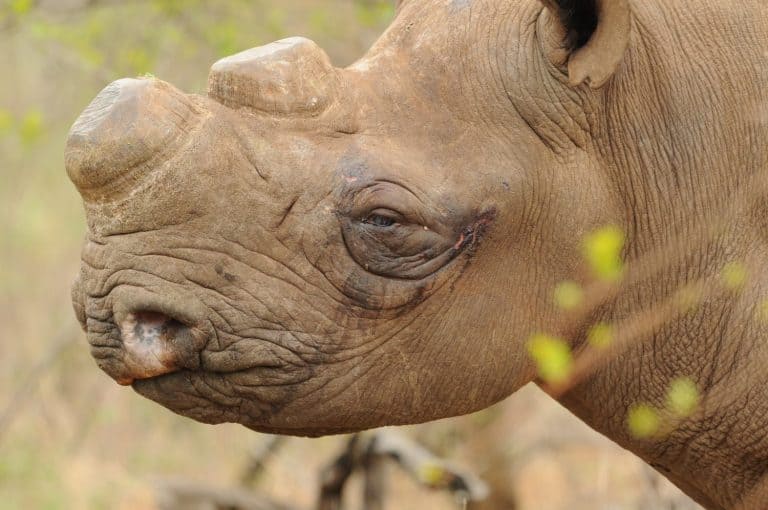
Black rhinos disappeared from this land in the 1970s and stayed gone for about half a century. In early 2024, 21 came back, and six calves have been born since, according to Loisaba’s rhino page.
The rhinos were moved because Kenya’s older sanctuaries ran short of room. Conservation there had been “almost too successful,” Tom Silvester, then Loisaba’s CEO, told The Nature Conservancy’s magazine in 2025.
Crowded sanctuaries mean more fights and fewer calves
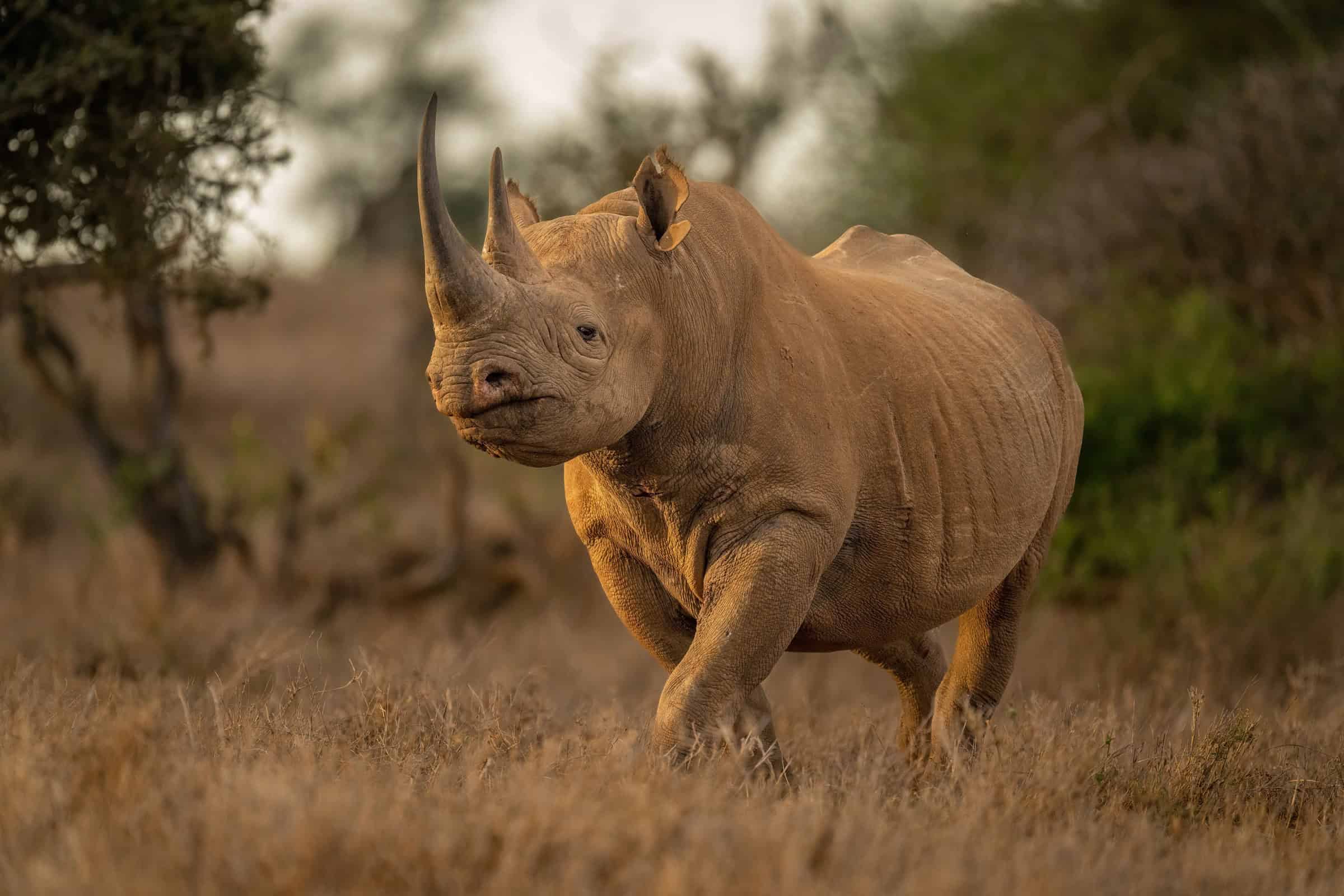
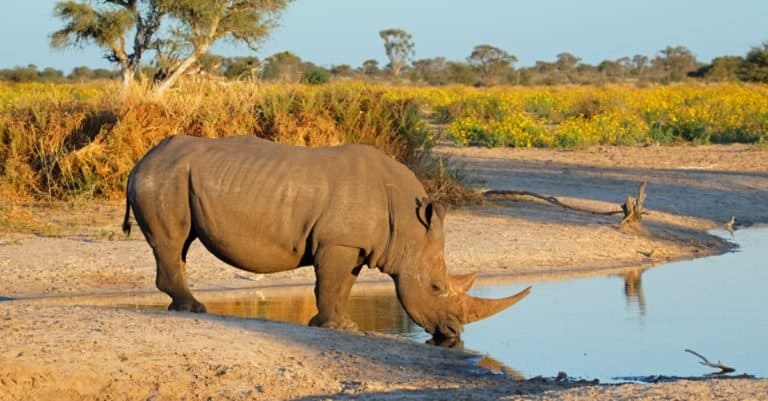
A black rhino walks through a clearing. In crowded sanctuaries, territorial fights become more common. ©Nick Dale Photo/Shutterstock.com
©Nick Dale Photo/Shutterstock.com
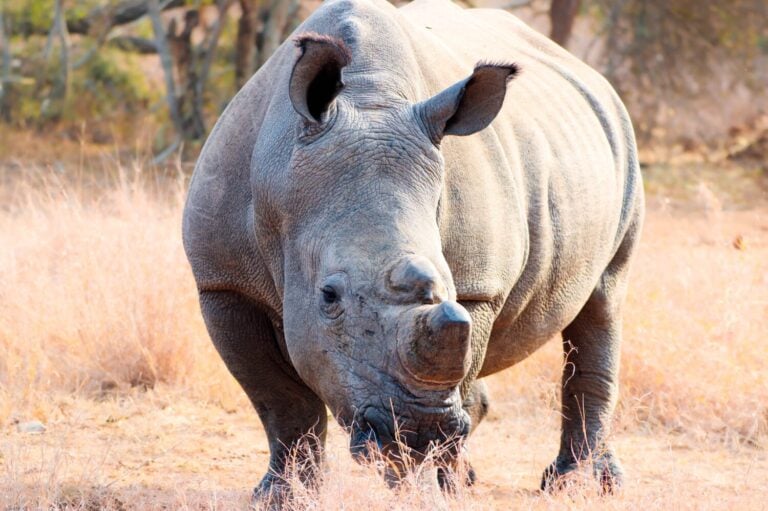
As of 2025, Kenya had 17 rhino sanctuaries holding more than 1,000 eastern black rhinos, and Silvester told The Nature Conservancy’s magazine they were overcrowded. That brought competition for resources, territorial fights and stress.
Once a rhino population reaches a certain size, it’s limited by the food, water and space available, Save the Rhino International wrote in February 2024. Fewer calves are born and fighting can increase, which stalls growth and sometimes shrinks the population. At the time, the Kenya Wildlife Service was aiming for black rhino numbers to rise 5% a year, toward a long-term goal of 2,000.
Kenya’s black rhinos filled those sanctuaries after coming back from a collapse. Some 20,000 eastern black rhinos roamed Kenya before the 1970s, and poaching for horn cut them to fewer than 400 by the mid-1980s, according to The Nature Conservancy’s magazine. The horn is mostly keratin, the same protein in human hair and nails. Loisaba’s rhino page puts the global number at fewer than 7,000.
21 founders came from three reserves
The Kenya Wildlife Service took the rhinos from Ol Pejeta Conservancy, Lewa Wildlife Conservancy and Nairobi National Park. Experts picked a mix of healthy females and males in advance, Save the Rhino International reported. One was a female named Ushindi, darted by a ranger at Ol Pejeta before her trip, as photographed for The Nature Conservancy’s magazine.
Members of the Ewaso community lined the road to welcome the convoy, The Nature Conservancy’s magazine reported. At the time, most children in northern Kenya had never seen a wild eastern black rhino, and many elders hadn’t seen one in more than 50 years.
Loisaba was a cattle ranch when Silvester arrived in the early 1990s, according to The Nature Conservancy’s magazine. He leased it in 1997 and began turning it into a wildlife conservancy. Its rhino sanctuary covers 45,000 secure acres inside the 58,000-acre property, according to Loisaba’s rhino page.
Valentine was the first calf
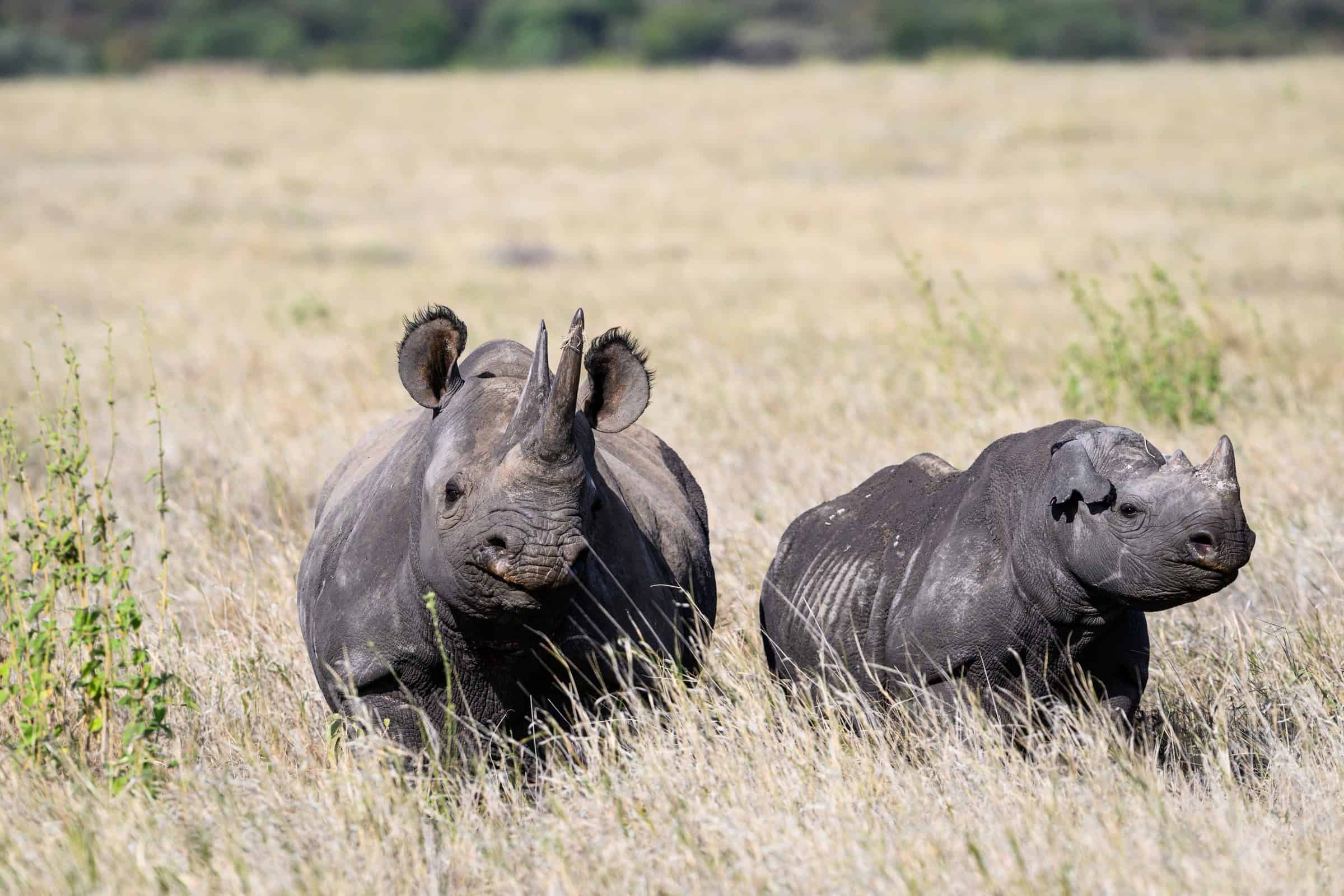
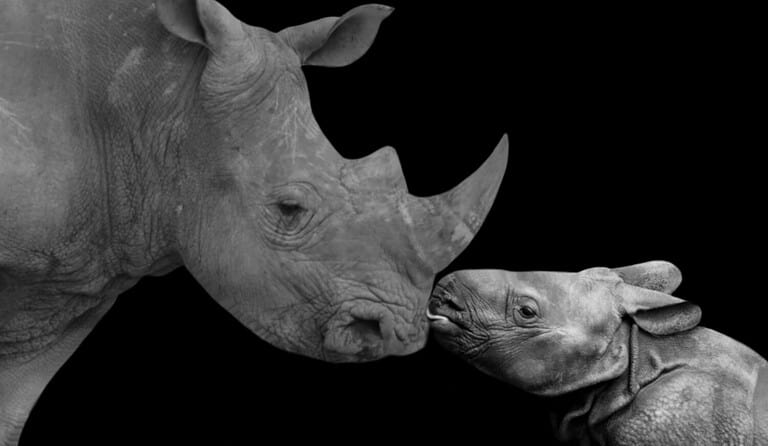
A black rhino mother and calf (not Kibou and Valentine). ©knelson20/Shutterstock.com
©knelson20/Shutterstock.com
The first birth came on Oct. 16, 2024, according to Elewana’s November 2024 newsletter. The mother was Kibou, then eight years old and originally from Ol Pejeta, and the calf was named Valentine. That made 22 black rhinos.
More followed. Loisaba’s page lists the herd by name, with pairs such as Akitam and Lakira, Sussanah and Leif, and Seiya and Roz alongside Kibou and Valentine. The page credits Leif’s name to Stina Lundström.
37 rhinos by November 2025
In August 2025, the Kenya Wildlife Service moved 10 southern white rhinos to Loisaba from Lewa and Meru National Park in a 10-day operation, according to Loisaba’s rhino page. Loisaba became Kenya’s 12th southern white rhino sanctuary.
Elewana’s November 2025 newsletter gave a full count. Four calves were born that quarter, and rangers were monitoring 37 rhinos daily: 26 black and 11 white. The quarter passed with no poaching incidents, and one young dog in the anti-poaching K9 unit followed a track for about 12 miles. A “Name a Rhino” program was also introduced that quarter to support ranger patrols and veterinary care.
Loisaba’s rhino page lists a female named Nang’uro with an unnamed calf and asks anyone interested in naming it to email [email protected]. The Nature Conservancy’s 2025 feature said the group and its partners would like to see a connected corridor created across Laikipia’s conservancies, so the rhinos can roam as they used to.