
Quick Take
- A fish built for permanent darkness showed up in full sun. Scientists have three theories for why.
- The 'first ever' claim comes with a catch. A decade-old robot dive complicates it.
- Only one sex of this species carries the glowing lure. The other looks nothing like it.
- The team kept the encounter going for hours. What happened next sent the fish to a museum.
On Jan. 26, 2025, marine biologist Laia Valor was heading back to port on Tenerife’s west coast when she saw a dark shape in the water about 1.2 miles off Playa San Juan. Valor, of the NGO Condrik Tenerife, had been out studying pelagic sharks, Canarian Weekly reported on Feb. 7, 2025.
“We were returning to port when I saw something black in the water that didn’t look like plastic or debris. It seemed unusual,” Valor told the EFE news agency.
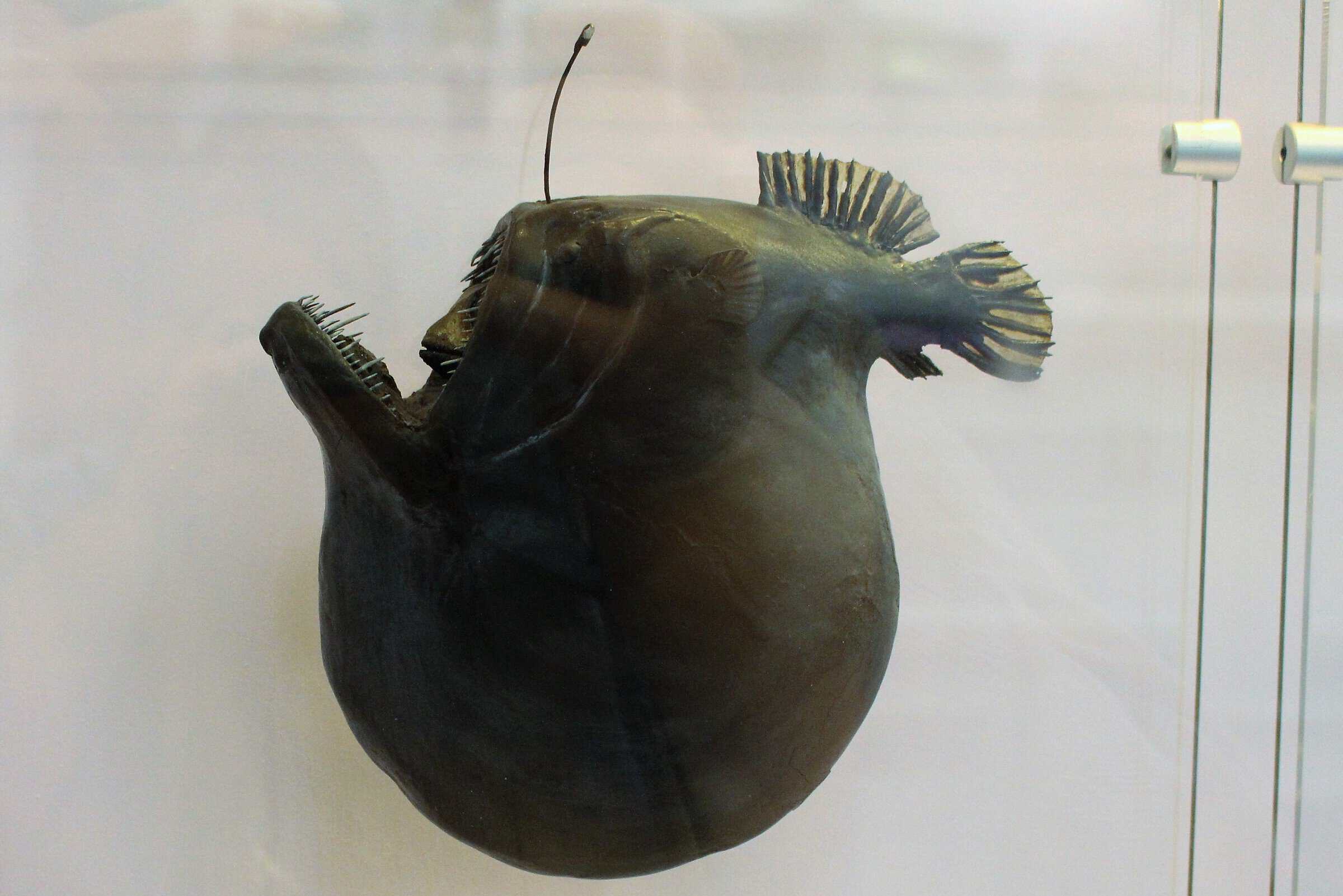
It was an adult female humpback anglerfish, also called a black seadevil (Melanocetus johnsonii), a species that usually lives between about 650 and 6,500 feet down. The team and marine life photographer David Jara Boguñá filmed her swimming near the surface in daylight, CBS News reported. “This could very well be the first time it has ever been filmed in these conditions,” Valor told EFE.
The fish survived only a few hours
“We spent a couple of hours with it. It was in poor condition and only survived for a few hours,” Valor told EFE.
Condrik Tenerife and Boguñá wrote in a joint Instagram post that it could be the first recorded sighting anywhere of an adult of the species “alive, in broad daylight and on the surface”. Earlier records had seemingly included only larvae or dead adults, and live ones had been seen only from submarines, the post said.
A robot sub filmed one 1,900 feet down in 2014
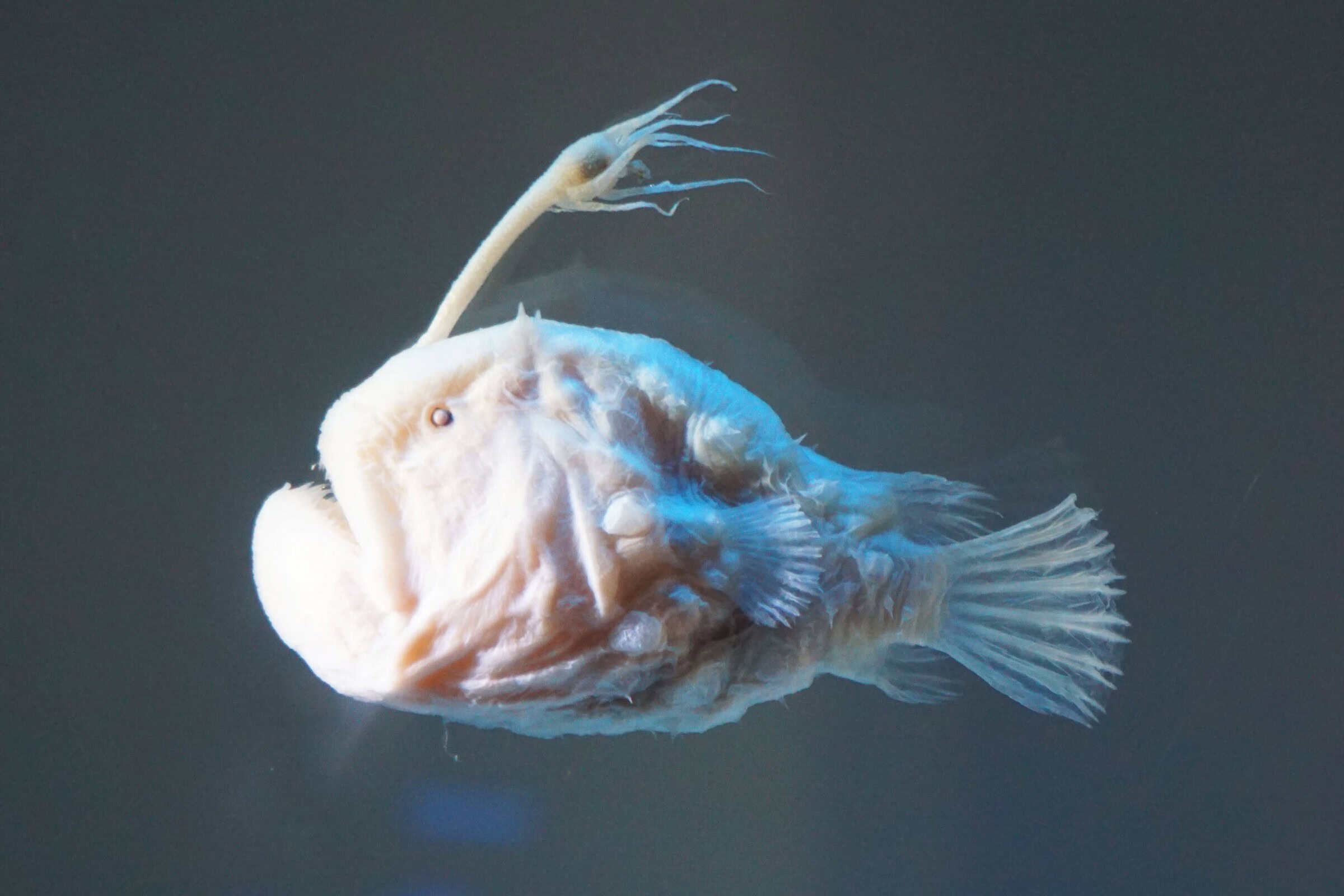
A preserved deep-sea anglerfish of a different species, with its lure raised. ©panparinda/Shutterstock.com
©panparinda/Shutterstock.com
The deep-water footage came a decade earlier. On Nov. 17, 2014, senior scientist Bruce Robison of the ocean research institute MBARI was leading a dive with the remotely operated vehicle Doc Ricketts when he came across a black seadevil of the same genus about 1,900 feet down in Monterey Bay, according to MBARI’s Nov. 22, 2014 release.
“This is the first time we’ve captured this fish on video in its habitat. Anglerfish, like this Melanocetus, are among the most rarely seen of all deep-sea fishes,” Robison said in that 2014 release.
That makes the Tenerife claim a narrow one: an adult, alive, at the surface, in daylight.
Only females carry the glowing lure
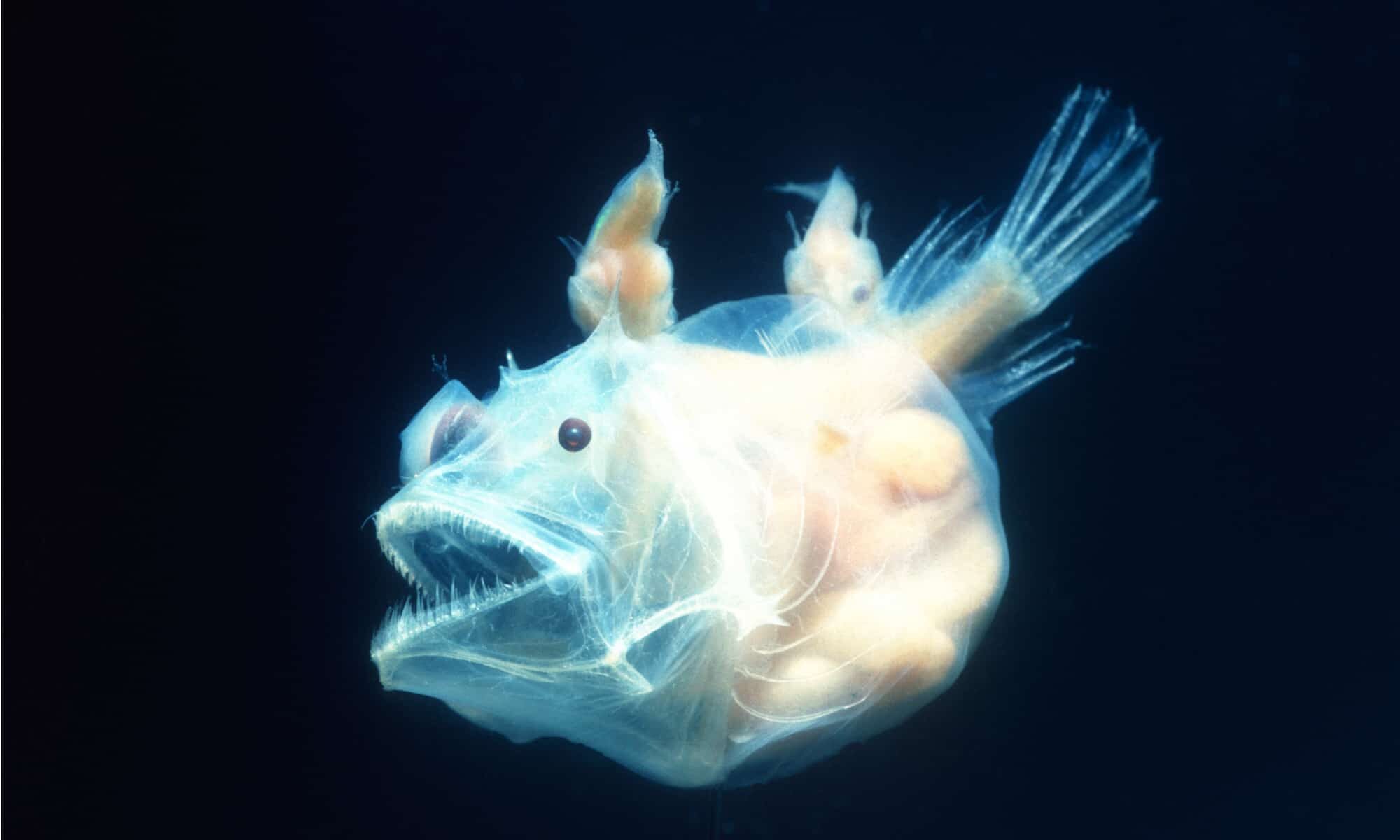
A female deep-sea anglerfish of a different species, with two far smaller males attached. In many anglerfish, males are a fraction of the female's size. ©Neil Bromhall/Shutterstock.com
©Neil Bromhall/Shutterstock.com
The Tenerife fish looked the way she did because she was female. Female humpback anglerfish grow to about 7 inches, with a large head, pointed teeth and a fishing rod-like structure tipped with light, while males reach about an inch and have no lure, according to the Australian Museum.
The bioluminescent lure is filled with symbiotic bacteria, and prey swim toward it in the dark. “The shining spot at the tip of the ‘fishing pole’ projecting from the fish’s head is a glowing lure. The anglerfish uses its light to attract prey in its deep, dark habitat,” Robison said of the 2014 fish.
That habitat is the bathypelagic or “midnight zone,” where animals live in constant darkness and the only light comes from bioluminescence. A predator that can grow to 7 inches and hunts with a glowing lure was swimming in full sun.
Why she surfaced wasn’t clear
The team offered three possibilities: illness, an upwelling current, or an attempt to escape a larger predator.
“There could be thousands of reasons why it was there,” Valor told EFE. “We simply don’t know. It’s an extremely rare and isolated sighting. While we can’t say it never happens, if it were more common, we would see it more frequently.”
After the fish died, the team carried her in a water-filled container to the Museum of Nature and Archaeology (MUNA) in Santa Cruz de Tenerife for further study. As of the Feb. 11, 2025 CBS report, researchers still weren’t sure why she came up.