Quick Take
- Two rhino species are actually bouncing back from near-extinction, and the strategies behind their recoveries are nothing like what most people expect. See the recovery story →
- The 'white' in white rhino has nothing to do with color, and that is just the first of several misconceptions the article dismantles about these animals. Unpack the white rhino myths →
- One entire rhino species exists in a single location, and one specific natural event could erase it overnight. Meet the most vulnerable species →
- Removing a rhino's horn sounds like a drastic measure, yet a 2025 study revealed it cuts poaching by a striking margin that's reshaping conservation strategy. Explore the dehorning findings →
World Rhino Day (September 22, 2026) highlights an urgent crisis: rhinos are being poached faster than they can reproduce, leaving only about 26,700 wild rhinos worldwide. Organized crime syndicates continue to drive this decline by feeding the illegal black-market demand for rhino horn.
However, the crisis looks very different by species. For example, black and greater one-horned rhinos are bouncing back thanks to strict law enforcement, protected habitats, and strategic relocations. In contrast, white and Javan rhino numbers are dropping, and Sumatran rhinos are on the brink of extinction.
All five surviving rhino species are living ecosystem engineers, shaping their habitats and landscapes through their daily activities and supporting countless other species along the way.
Continue reading
Meet the World’s Five Remaining Rhino Species
To understand the rhino crisis, it helps to know the five distinct rhino species. While all share the iconic horns and massive builds, each species has unique traits, habitats, population levels, and survival challenges.
1. White Rhino (Ceratotherium simum)
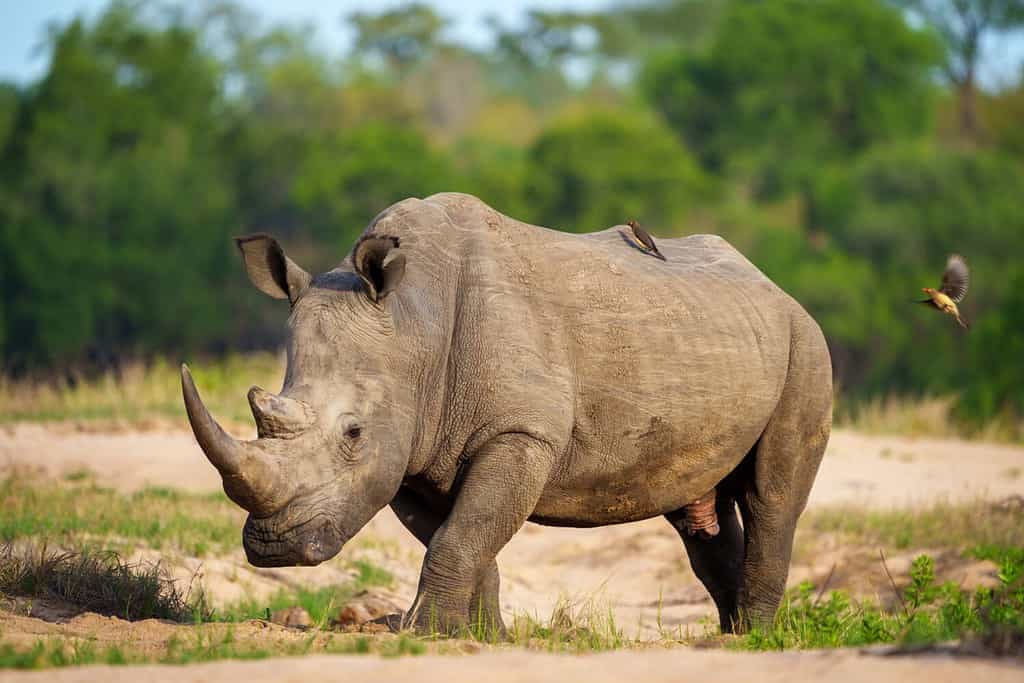
White rhinos are also known as square-lipped rhinos.
©Roger de la Harpe/Shutterstock.com
The white rhino is the largest rhino species, weighing 4,000 to 6,000 pounds and standing 5 to 6 feet tall. It has two horns, with the larger front horn reaching up to 79 inches, a broad square lip for grazing grass, and a noticeable shoulder hump. The “white” in its name refers to this broad square lip and wide mouth, coming from a mistranslation of the Dutch/Afrikaans word wyd, meaning wide.
White rhinos are relatively social, with females and calves often gathering in small groups. As of 2024, approximately 15,752 white rhinos roam the wild (down from 17,464 in 2023), making it the most numerous rhino species. White rhinos are found across 11 African nations, though about 98 percent live in just four countries (South Africa, Namibia, Kenya, and Zimbabwe), leaving them highly exposed to targeted poaching.
There are two subspecies of white rhino. The southern white rhino (Ceratotherium simum simum) is part of a major conservation success story, having recovered from fewer than 100 individuals in the early 1900s to form almost the entire current population. The northern white rhino (Ceratotherium simum cottoni) is functionally extinct, with only two non-reproducing females left on Earth as of 2026.
2. Black Rhino (Diceros bicornis)
Smaller and more agile than the white rhino, the black rhino weighs 1,750 to 3,000 pounds and stands 4.5 to 5.5 feet tall. Despite its name, its skin is actually dark gray. It has two horns, with the front horn measuring 20 to 55 inches, and it has no front teeth. Instead, it uses its flexible, pointed upper lip to grasp and strip leaves, twigs, and branches from shrubs.
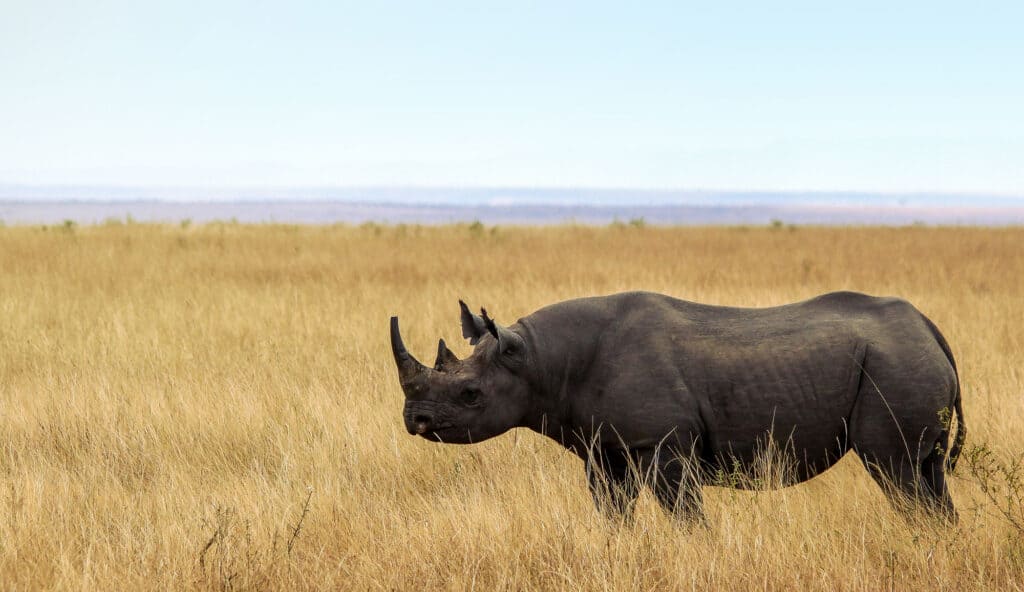
Black rhinos are sometimes called hooked-lip rhinos.
©iStock.com/Black Rhinoceros, Rhinoceros, Savannah, Tanzania, Animal
Black rhinos are Critically Endangered, with around 6,788 in the wild living across 12 African nations. However, their numbers are growing, with a 5.2 percent increase since 2022. This increase is remarkable given the species’ devastating history. Poaching wiped out 96 percent of the population between 1970 and 1993. Aggressive protection, translocations, and community involvement have helped reverse that catastrophic decline.
Three subspecies of black rhino remain today: the south-western black rhino (Diceros bicornis bicornis), with approximately 2,646 individuals; the southern black rhino (Diceros bicornis minor), with approximately 2,720 individuals; and the eastern black rhino (Diceros bicornis michaeli), with approximately 1,471 individuals remaining. Tragically, a fourth subspecies, the western black rhino (Diceros bicornis longipes), was declared extinct in 2011.
3. Greater One-Horned Rhino (Rhinoceros unicornis)
Like its name, the greater one-horned rhino has a large, single horn that measures 8 to 24 inches long. Also called the Indian rhino, this species is one of the largest rhinos on Earth today, weighing 4,000 to 6,000 pounds with thick, heavy gray skin and rivet-like bumps that give it an armored, tank-like appearance. Greater one-horned rhinos live in northern India and southern Nepal, typically in river woodlands, marshes, and floodplains. Despite their enormous size, these massive animals are excellent swimmers and commonly submerge themselves to cool off and snack on aquatic plants.
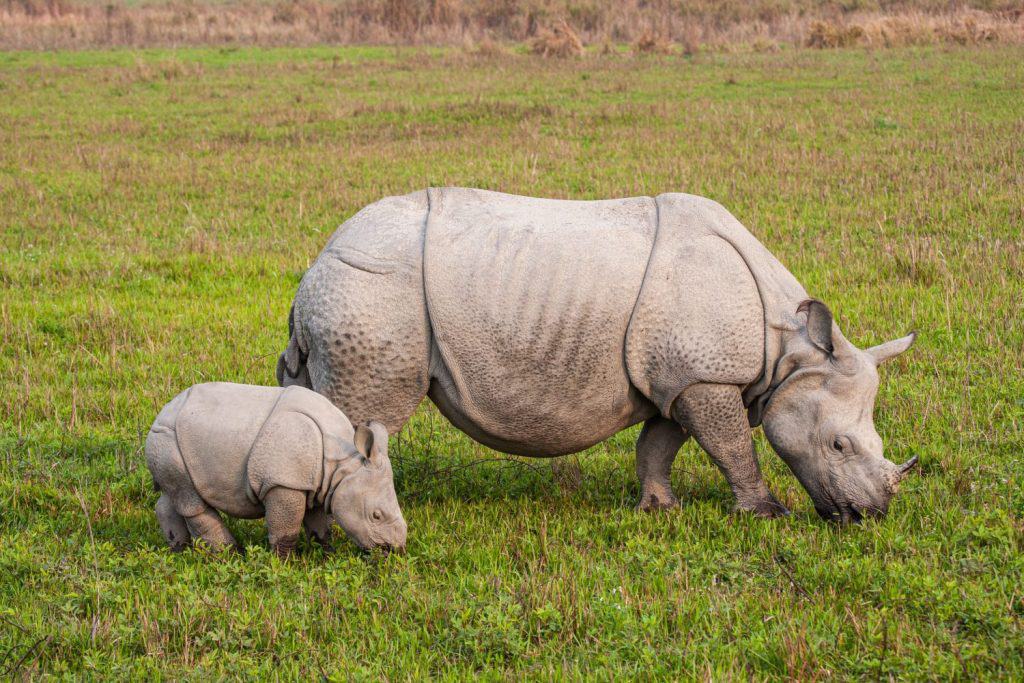
Greater one-horned rhinos have a semi-prehensile upper lip that allows them to grasp food.
©Wayne Marinovich/Shutterstock.com
Listed as Vulnerable, greater one-horned rhinos are part of another incredible conservation success, having recovered from fewer than 100 individuals in the early 20th century. As of 2026, there are approximately 4,075 greater one-horned rhinos thanks to strategic relocations, habitat protection, and strict law enforcement.
4. Javan Rhino (Rhinoceros sondaicus)
Sometimes called the Asian lesser one-horned rhinoceros, the Javan rhino is one of the rarest large mammals found on Earth. Listed as Critically Endangered, there are only around 50 Javan rhinos left —down from 76 in 2022, with poaching syndicates suspected of killing up to 26 rhinos between 2019 and 2023. The entire global population of Javan rhinos is confined to a single sanctuary: Ujung Kulon National Park in West Java, Indonesia. This creates an especially dangerous situation, as a single localized disaster, such as a volcanic eruption from nearby Krakatoa, a tsunami, or a disease outbreak, could wipe out the entire species. In addition, low genetic diversity coupled with an unbalanced sex ratio (about two males for every female) adds further complications to the species’ survival.
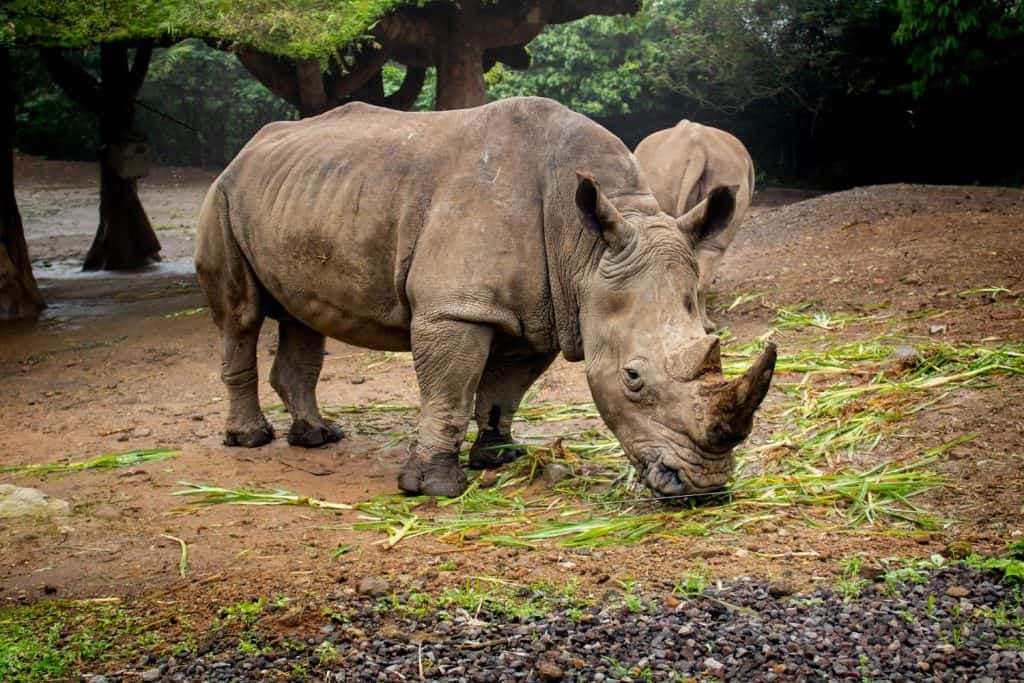
Javan rhinos can weigh up to 5,070 pounds.
©Jose Krishnawan/Shutterstock.com
5. Sumatran Rhino (Dicerorhinus sumatrensis)
The Sumatran rhino is the smallest and the oldest living rhino, weighing 1,300 to 2,000 pounds and standing 3 to 5 feet tall. Covered in sparse, long, reddish-brown hair with fringed ears, it looks strikingly different from its larger relatives. Sumatran rhinos are solitary browsers that live in dense tropical rainforests. They lack sweat glands and rely on mud wallows and rivers to regulate their body temperature.
Sumatran rhinos are the most endangered of all five rhino species, with only 34 to 47 individuals remaining in the wild as of 2026. Listed as Critically Endangered, these rhinos are scattered across several fragmented subpopulations in Sumatra and Kalimantan, Indonesia. This extreme isolation makes natural mating nearly impossible; currently, only one population is considered viable. Semi-wild conservation breeding at the Sumatran Rhino Sanctuary may be the species’ best chance at avoiding extinction.
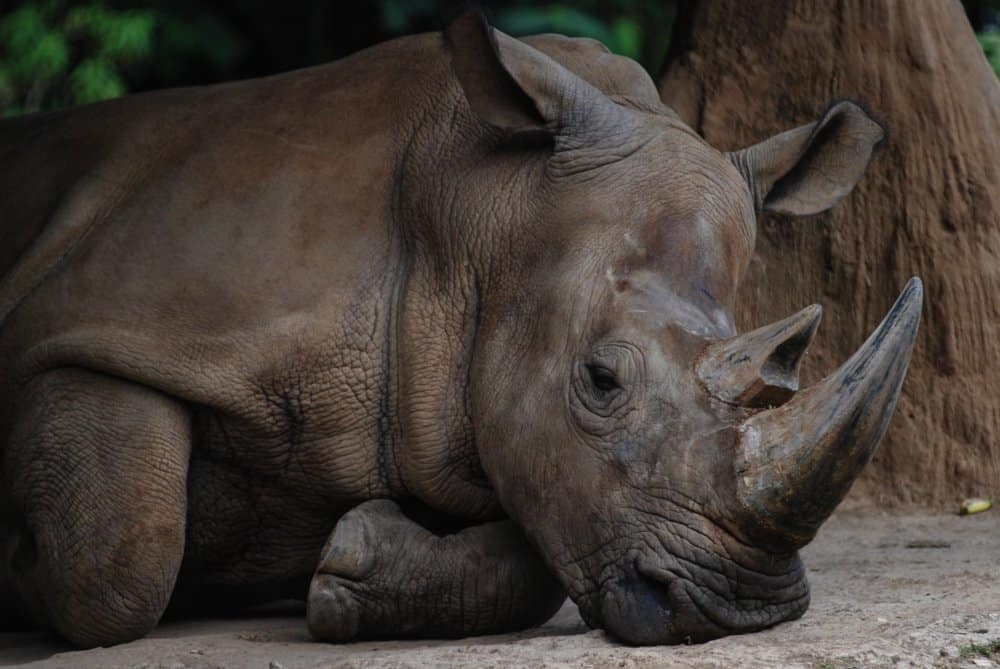
The Sumatran rhino weighs 1,100 to 2,200 pounds.
©Raiyani Muharramah/Shutterstock.com
Why Rhinos Matter: Ecosystem Engineers
Rhinos play a vital role in their habitats as their daily behaviors actively shape, nourish, and sustain entire ecosystems. By eating heavy vegetation and clearing dense brush, they create forest paths and sunny clearings, allowing light to reach ground plants and opening up feeding grounds for smaller herbivores like zebras and gazelles. Rhino dung also enriches the soil and fuels insect life, providing food for birds and reptiles. Rhinos also ingest seeds from over 100 plant species and spread them in their droppings as they travel across vast distances.
Rhinos even modify water features. Their wallowing and digging create shallow mud pits that trap rainwater, providing vital drinking spots for other wildlife. Mud wallowing helps rhinos cool down and shed ticks, which in turn feed oxpeckers and maintain balanced parasite-predator relationships.
What Happens When Rhinos Disappear?
Removing a major ecosystem engineer like a rhino can trigger a destructive domino effect that affects an entire ecosystem. Without rhinos grazing and browsing, grasslands become dense and overgrown, choking out short-grass habitats and reducing plant diversity. Selective grazers like zebras and antelopes lose their food source and vanish, leaving apex predators without enough prey. Unmanaged brush also chokes forest paths, reducing sunlight and access for smaller species.

Rhinos can run up to 30 to 40 miles per hour for short distances.
©Volodymyr Burdiak/Shutterstock.com
Not only do rhinos play a vital role as ecosystem engineers, but they also function as umbrella species. Because rhinos require vast territories, protecting their habitat automatically safeguards thousands of coexisting species, including orangutans, tigers, birds, and insects in regions like Indonesia.
Rhinos also provide socioeconomic benefits. As iconic wildlife, they drive global ecotourism in nations like South Africa, Kenya, and India. This revenue funds national park security, boosts local economies, and supports surrounding communities.
South Africa’s Poaching Crisis
South Africa is the heart of global rhino conservation, housing over 15,000 rhinos as of 2024 — including most of the world’s white rhinos and about half of Africa’s black rhinos. However, it is also the epicenter of the poaching crisis, accounting for more than 80 percent of all African rhino killings.
Poachers kill nearly one rhino every day in South Africa. Heavy security and dehorning programs in Kruger National Park have pushed crime syndicates toward private and provincial reserves, making KwaZulu-Natal (especially Hluhluwe-iMfolozi Park) a major target.
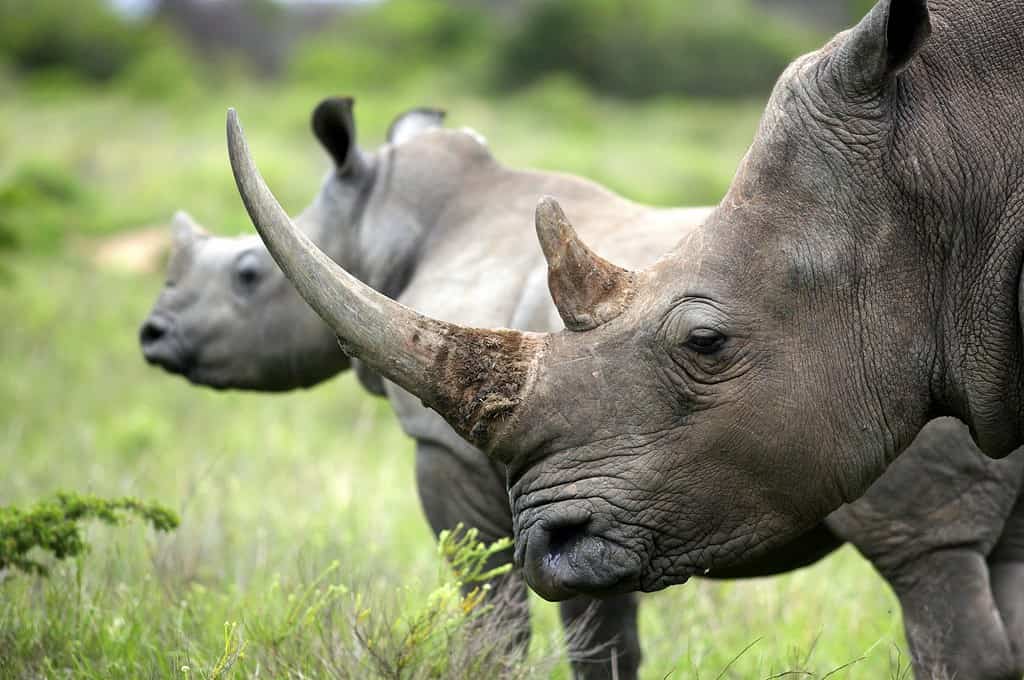
Rhino horns are sold as trophies and, in some cultures, for traditional medicine.
©JONATHAN PLEDGER/Shutterstock.com
Poaching and habitat fragmentation split rhinos into small, isolated groups. This isolation reduces genetic diversity and severely threatens successful reproduction.
Meanwhile, transnational syndicates constantly change their trafficking routes, establishing new transit hubs in countries like Qatar and expanding links into emerging markets like Mongolia.
Fighting Poachers With Technology
As poachers use increasingly advanced tools, conservationists are fighting back with cutting-edge technology — including artificial intelligence, thermal cameras, drones, and preventive dehorning.
AI-supported camera traps, thermal sensors, and surveillance drones monitor vast, rugged terrain. They automatically send instant alerts to control rooms when threats are detected, allowing rangers to stop poachers before they strike. High-risk areas like South Africa’s Greater Kruger region and Zimbabwe’s Mid-Zambezi Valley are top priorities for these deployments.

Protecting rhinos in the wild requires an interdisciplinary approach.
©EF Stock/Shutterstock.com
Teledyne FLIR thermal cameras detect heat signatures from people, vehicles, and wildlife in complete darkness. Combining aerial drone coverage with truck-mounted gear gives night patrols exact location data to safely intercept suspects.
The Kifaru Rising Initiative deployed AI thermal systems across multiple high-risk reserves, including key populations at the Ol Pejeta Conservancy and Solio Game Reserve.
Beyond anti-poaching operations, this surveillance technology helps local law enforcement track livestock theft and prevents human-wildlife conflict by alerting communities when dangerous animals wander near villages.
Making Rhinos Less Profitable Targets Through Dehorning
Dehorning removes a rhino’s horn before poachers can target it, directly cutting off the financial incentive to kill the animal.
A 2025 study in Science found that dehorning reduced poaching rates by up to 75 percent across reserves, with some reserves reporting reductions of up to 78 percent. Leaving only a small horn stump drastically lowers a poacher’s payout, making the high risk of confronting armed patrols and tracking dogs unappealing to poachers.
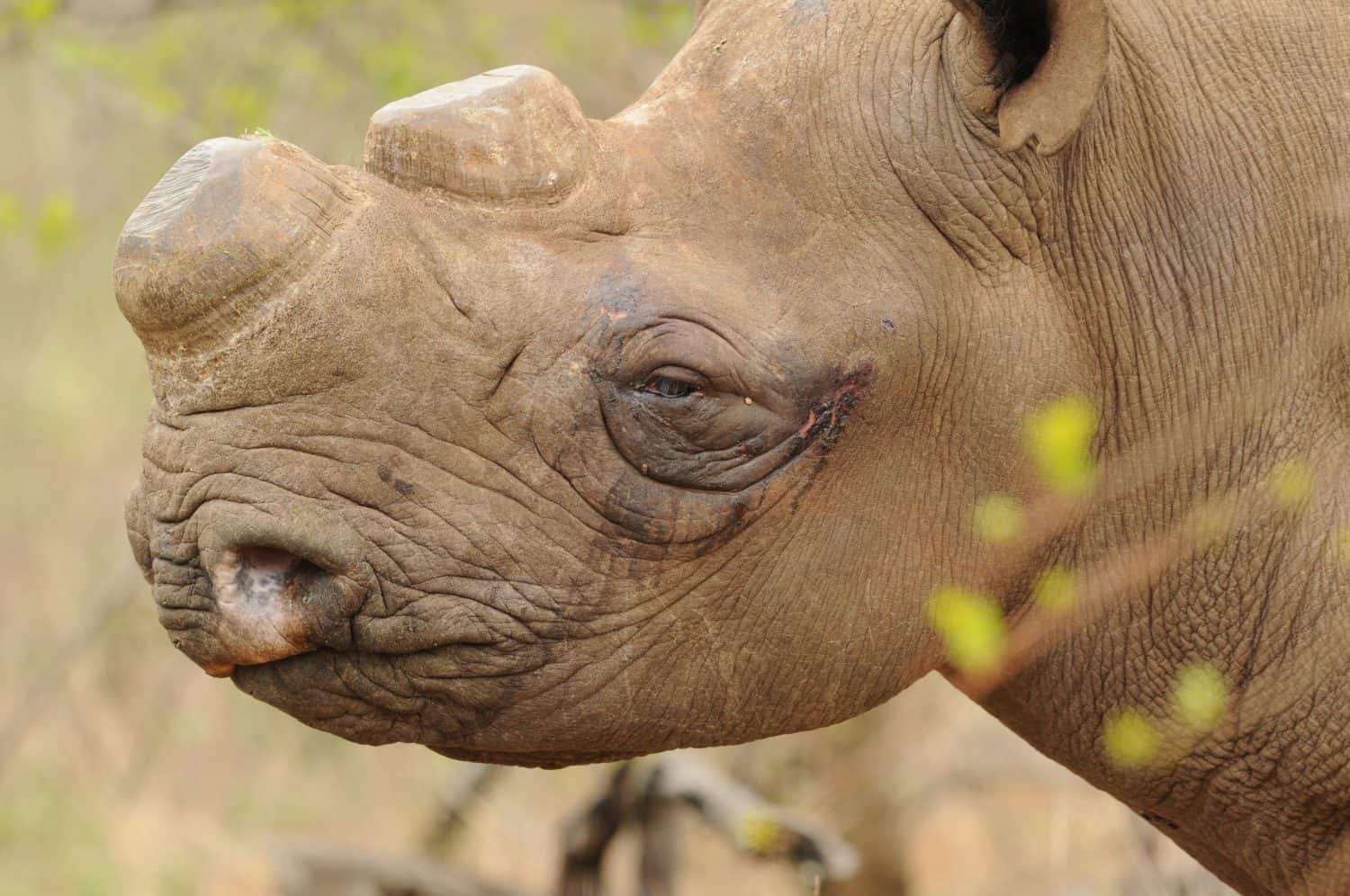
Veterinarians perform dehorning procedures on rhinos.
©Steven_Seager/Shutterstock.com
Rhino horns are made of keratin — the same protein as human fingernails. Veterinarians trim the horn above the nerve endings without damaging living tissue or causing pain to the animal. Horns grow back continuously, meaning rhinos must be re-trimmed every 1.5 to 2 years to stay protected.
While highly effective at deterring poachers, dehorning works best when combined with active ranger patrols, secure fencing, and local community support.
The People and K9s on the Front Line
While high-tech tools are vital, on-the-ground rangers and specialized dogs remain the backbone of rhino protection. Organizations like Save the Rhino International support rangers with essential gear, uniforms, rations, and communications. The job is extremely dangerous — over 870 rangers have lost their lives in the line of duty in the past decade.
Highly trained tracking dogs pursue poachers across rugged, difficult terrain that human patrols cannot easily navigate. Specialized sniffer dogs intercept illegal wildlife products at key transport and transit checkpoints before horns can be smuggled overseas. In dense Indonesian rainforests, detection dogs help researchers track elusive Sumatran rhinos by locating rare biological traces left behind in the wild.
Breeding, Biobanking, and the Race Against Extinction
When wild populations drop dangerously low, active intervention is necessary to preserve genetic diversity and prevent extinction.
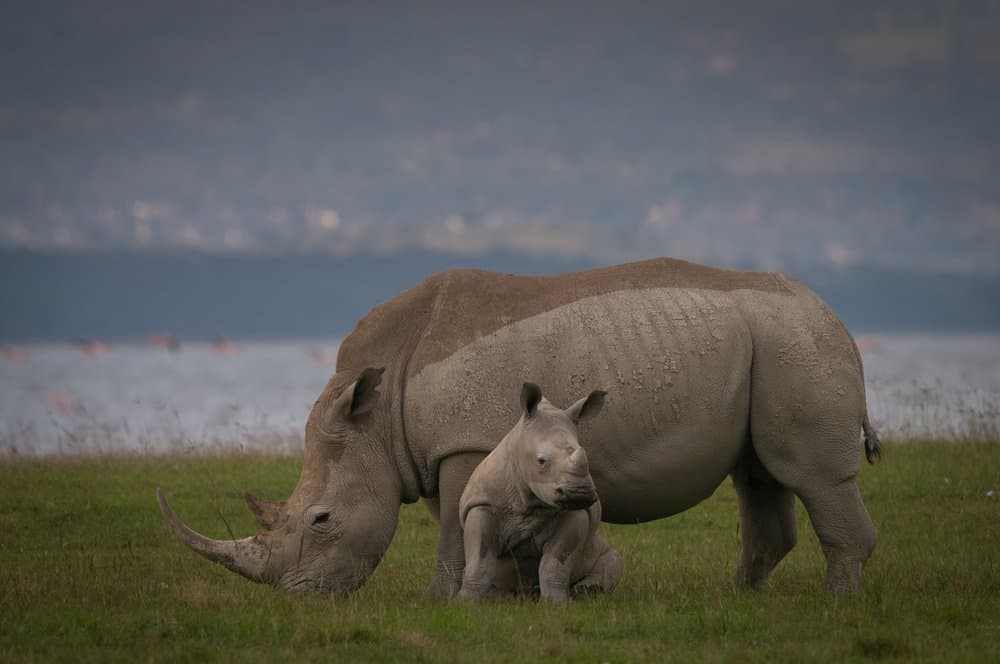
Zoos and animal sanctuaries help preserve vital rhino genetics for the future.
©Bartosz Budrewicz/Shutterstock.com
Protected, semi-wild sanctuaries allow isolated rhinos to mate naturally. Indonesia’s Sumatran Rhino Sanctuary in Way Kambas National Park recently doubled its facility size, resulting in five calf births that serve as critical genetic insurance.
Breeding programs supply rhinos to repopulate safe, natural habitats. The non-profit African Parks acquired a facility housing roughly 2,000 southern white rhinos (12 percent of the world’s population) to rewild them across Africa over a 10-year period. Similar reintroduction efforts are restoring black rhinos to historical ranges in Zimbabwe and Zambia’s North Luangwa.
Initiatives like South Africa’s Hemmersbach Rhino Force CryoVault collect and freeze sperm, eggs, and tissue samples obtained during routine veterinary procedures. Stored genetic material supports cutting-edge procedures like IVF (in vitro fertilization) and ICSI (intracytoplasmic sperm injection). This technology helps restore genetic diversity in small populations and offers a lifeline to functionally extinct groups like the northern white rhino.
A Multi-Pronged Approach to Saving Rhinos
Protecting rhinos requires a combination of hands-on medical care, local community empowerment, and international cooperation. Veterinarians provide life-saving treatment and rescue orphaned calves for future rewilding. During checkups, they attach tracking tags to monitor overall population health across vast reserves.
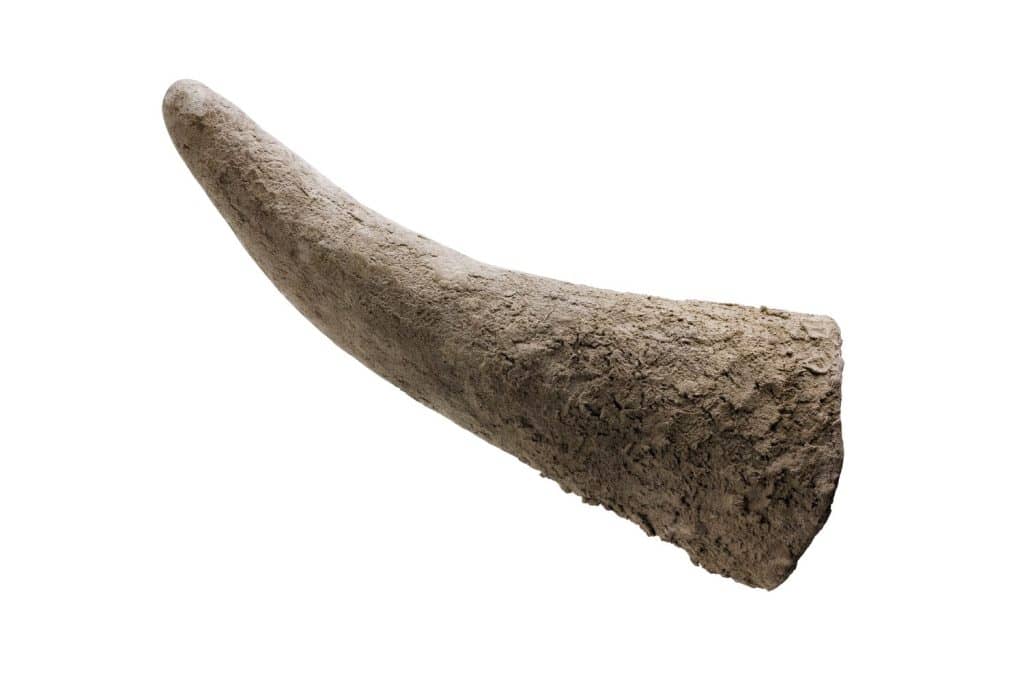
Rhino horns are made of keratin and do not offer any medicinal properties.
©Etienne Outram/Shutterstock.com
Because poverty often drives individuals into illegal networks, organizations provide job training, education, and direct employment — offering sustainable alternatives to poaching. Anti-poaching tech also protects neighboring villages. Thermal cameras track animals before they damage crops and help stop livestock theft, while maintenance training creates skilled local jobs. International organizations like CITES and the IUCN coordinate cross-border enforcement to dismantle smuggling syndicates, cut off illicit trade routes, and direct funding to high-risk habitats in Africa and Indonesia.
Recent recoveries in black and greater one-horned rhino populations prove that combining law enforcement, breeding programs, habitat protection, and community support can successfully reverse extinction trends.
A Future for All Five Rhinos
Saving the world’s five remaining rhino species is vital to maintaining the African and Asian ecosystems they help shape and sustain. Rhinos play a critical role in their environments by enriching soil, dispersing seeds, creating water access, and clearing dense vegetation. Through these actions, they help prevent destructive ecological collapse.
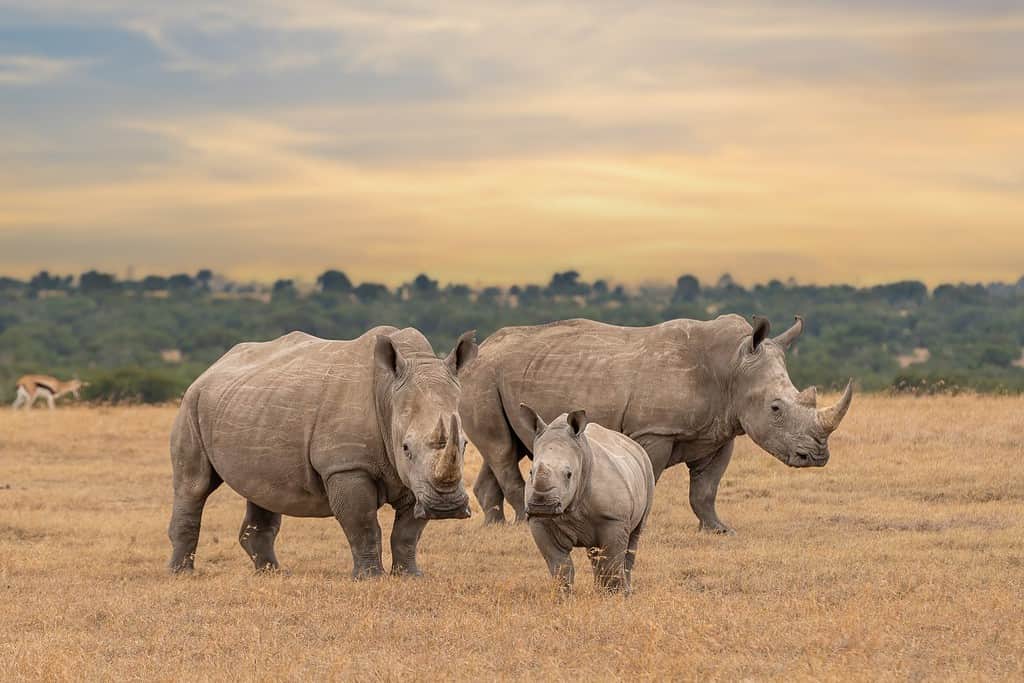
Rhinos play an irreplaceable role in their ecosystems.
©Tomas Drahos/Shutterstock.com
Effective protection requires combining frontline rangers, K9 tracking units, AI-driven thermal technology, surveillance drones, strategic dehorning, and local economic development. Captive breeding, biobanking, field veterinary care, and rewilding initiatives provide essential lifelines for critically endangered species facing extinction.
World Rhino Day reminds us that the goal is not just to admire these animals today, but to ensure all five species survive for generations to come.