
Quick Take
- Aposematism occurs when animals have distinct colors or patterns that warn predators of their unique dangers, such as the toxins within poison dart frogs.
- Aposematism can result in discomfort or even lethal consequences for predators that ignore or fail to recognize these visual warning signals, such as bright colors.
- Poison dart frogs become toxic from consuming certain insects, something that is more common in wild frogs rather than captive ones, given their differences in diet.
- Sequestration refers to the process by which frogs store alkaloids in their skin, and they have evolved unique proteins that bind and transport these toxins to prevent self-poisoning.
In a rainforest, small animals survive by hiding. By blending in with their environment until danger passes, many unique creatures are able to make their way in the world. However, this effective camouflage strategy isn’t used by all animals. For some species, like the poison dart frog, standing out is the name of the game.
Poison dart frogs are actually trying to be noticed in an ecosystem that rewards hiding for others. The bright colors utilized by these amphibians take center stage, and they aren’t the only animal with eye-catching colorations like this. Despite being counter-intuitive to much of what we know about survival, this “in-your-face” strategy isn’t entirely uncommon and actually has a name.
Some animals possess a form of warning coloration, known as aposematism. Through vivid shades, these animals advertise that they are likely toxic or otherwise not worth messing with. By simply being unmistakable and obvious, these animals actually gain greater protection compared to species that use traditional camouflage. What is aposematism, and how do poison dart frogs and other animals make the most of this unique feature?
Let’s dive into the details of aposematism, using poison dart frogs as a classic example. Utilizing scientific research and real-world evidence, we investigate this fascinating feature shared by multiple distinct species.
What Is Aposematism?
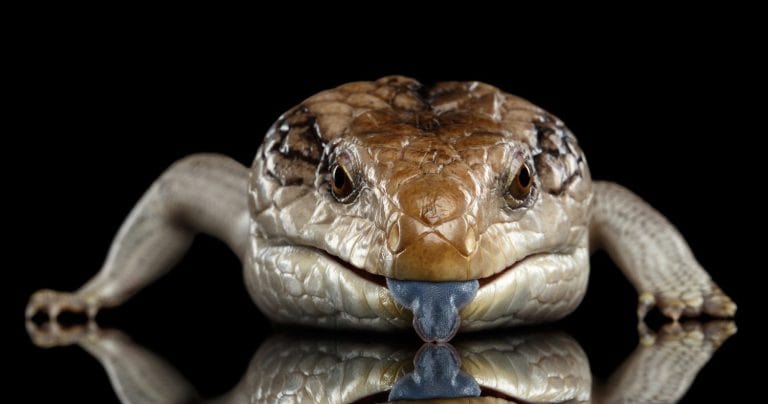
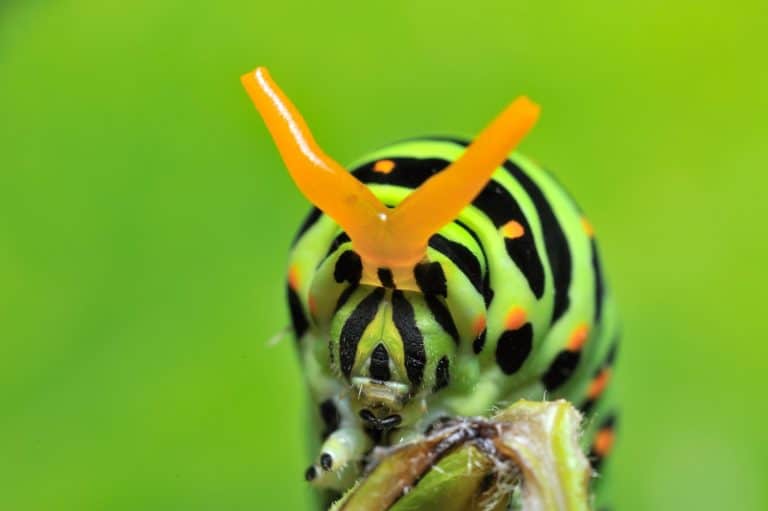
Aposematism is the opposite of camouflage, and animals that utilize it are often extremely brightly colored. While camouflage allows animals to hide in plain sight, aposematism keeps certain species safe by “announcing” a warning to predators.
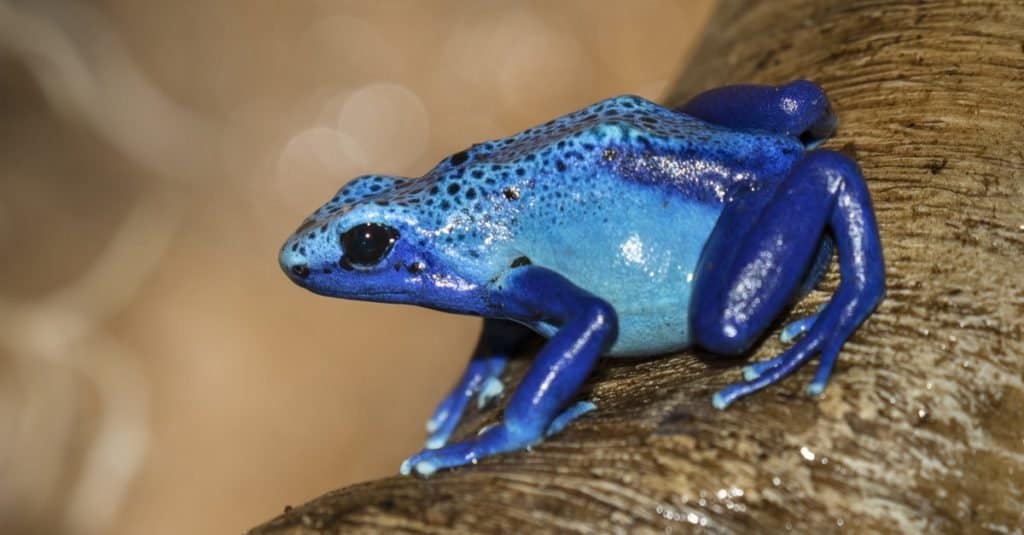
In order for aposematism to work, predators have to learn that certain colors mean danger first.
©Natalia Kuzmina/Shutterstock.com
For aposematism to work, the predator has to understand the message being conveyed to them. Bright coloration only becomes protective when predators learn that certain colors or even patterns predict a negative or unwanted experience. Once that learning happens, predators start avoiding these animals entirely.
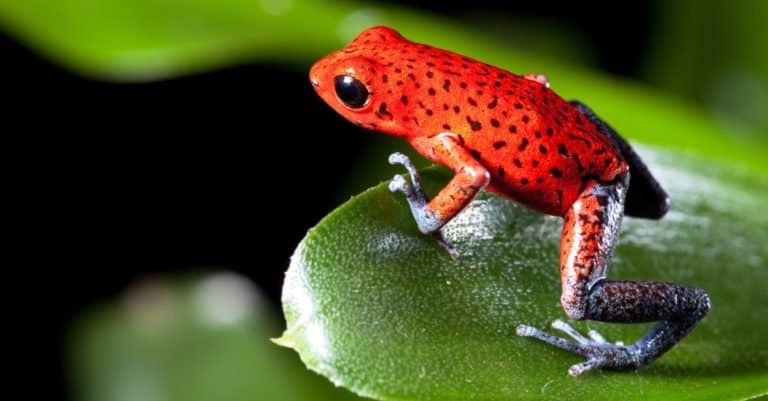
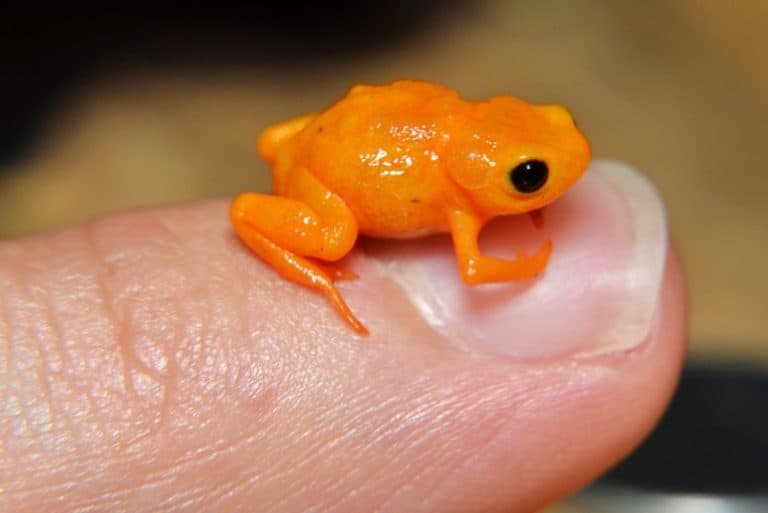
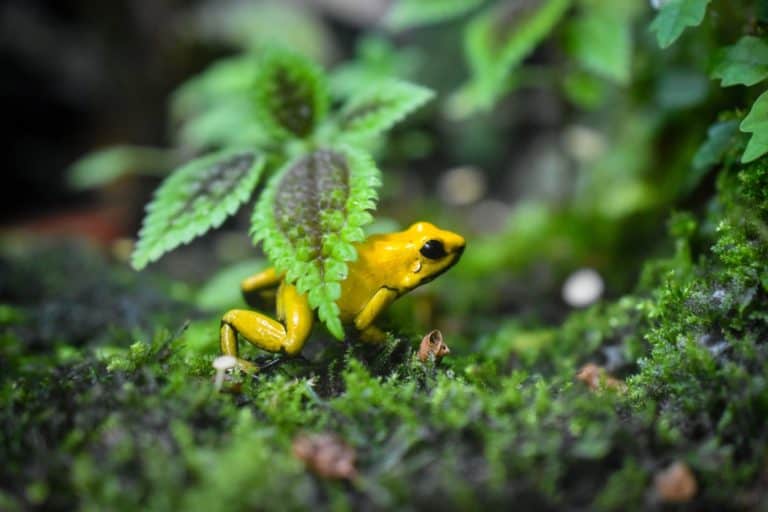
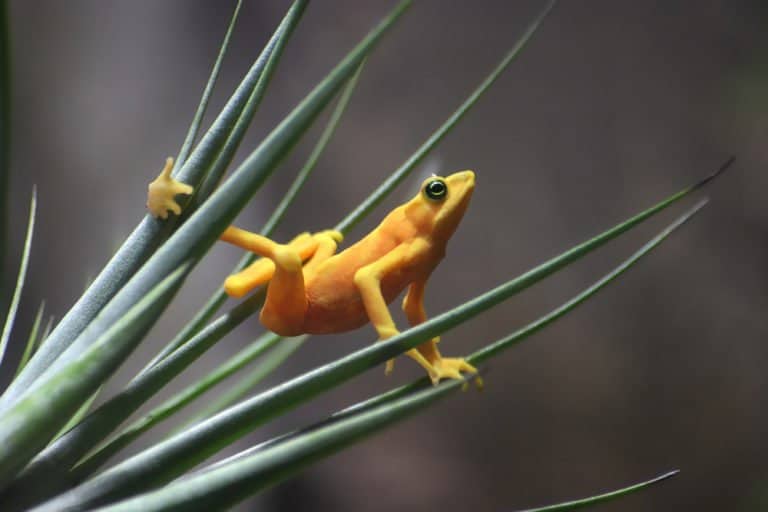
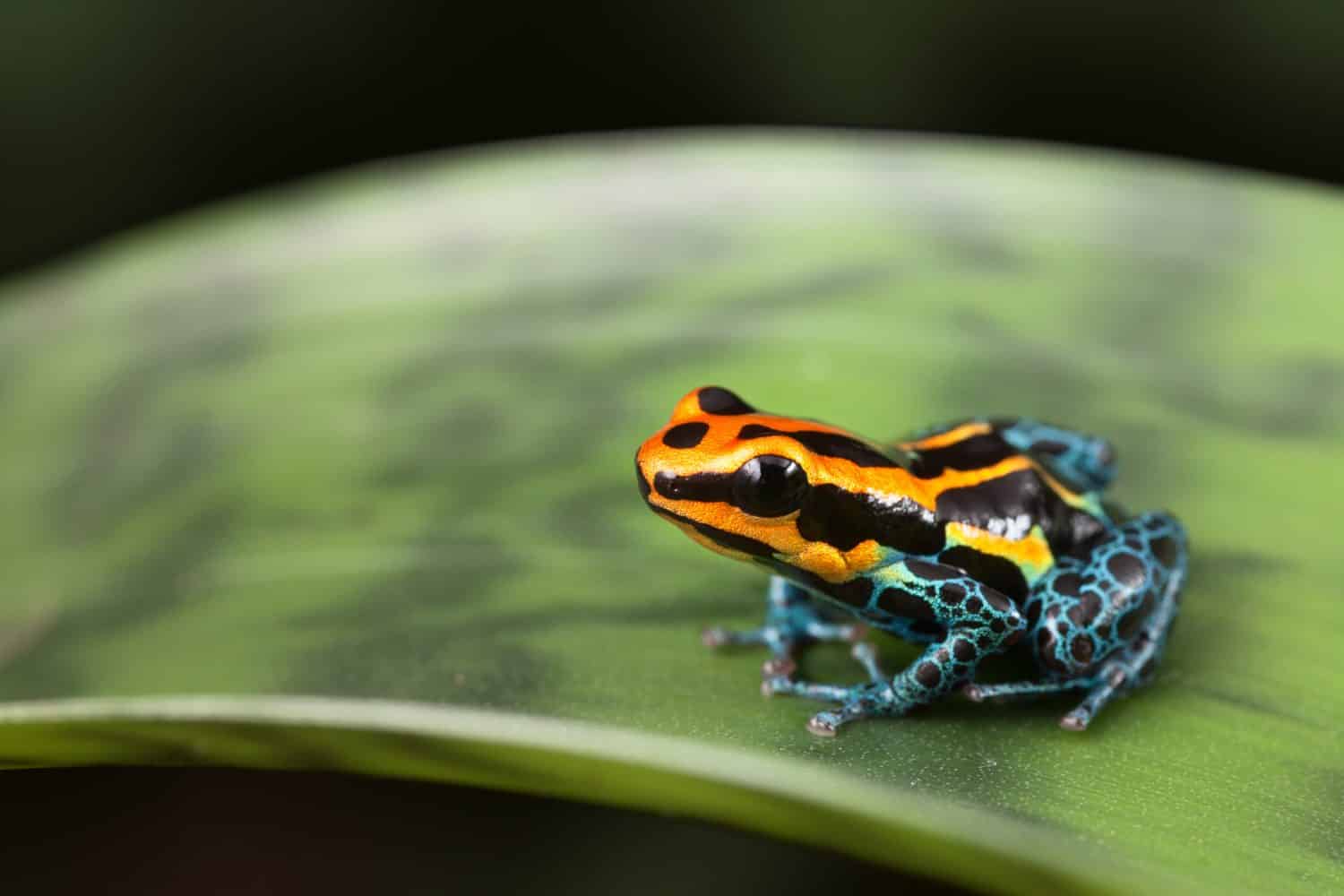
Dart frogs are small and diurnal, making them easy prey for birds, snakes, reptiles, and larger predators that hunt using sight alone. Behind the flashy shades of these tiny, colorful frogs lies a dangerous defense mechanism; these little guys are actually quite toxic, hence their name.
The Toxins of Dart Frogs
One of the most surprising truths about poison dart frogs is that their toxicity is typically diet-derived. Instead of synthesizing all their defensive chemicals internally, many species acquire alkaloids from prey items and actually manage to sequester these toxins in their skin.
Toxin ecology work has uncovered evidence that frog alkaloids are accumulated from leaf-litter insects in particular, especially ants. Additional work has shown that mites can be a major source as well, acting as significant repositories of alkaloids. Some species of mites may even surpass ants in alkaloid availability.
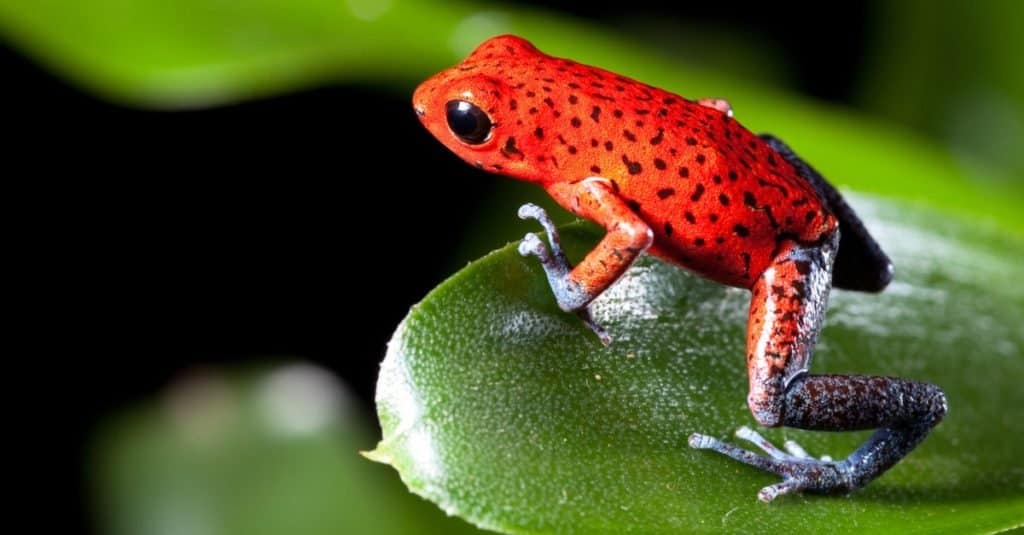
The diet of the poison dart frog directly influences their toxicity.
©Dirk Ercken/Shutterstock.com
With such a targeted diet, poison dart frogs often feast heavily on these alkaloid-bearing insects. But this is only the case for poison dart frogs in the wild, in locations where predators prove to be routine and real threats. Captive dart frogs raised on typical feeder insects like fruit flies and crickets often lose their chemical defenses because the feeder insects don’t carry the same alkaloids.
The Smithsonian’s National Zoo discusses this diet-to-toxin relationship in detail, showing that the aposematism of dart frogs doesn’t automatically mean that they’re inherently toxic. However, a predator in a particular region will learn based on experience. But, if poison dart frogs deal in, well, poison, how do they keep themselves safe?
How A Frog Steals Toxins Without Poisoning Itself
If a dart frog is storing potent and toxic chemicals in its skin, two important facts need to be true at the same time:
- It needs to move alkaloids through its body and into skin glands efficiently
- It needs to avoid being harmed by these same destructive chemicals
Research is increasingly focusing on the physiology of sequestration, particularly in dart frogs. A 2021 study in Molecular Ecology describes how poison frogs can actually organize alkaloids rapidly within them, as well as how that process shifts protein abundance across their internal and external tissues.
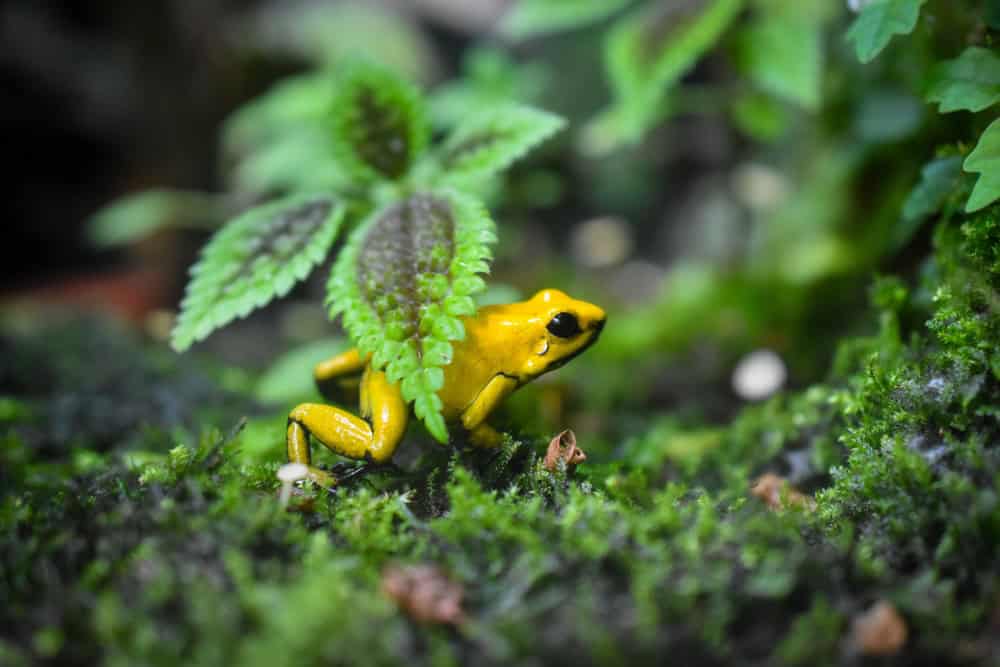
Certain bodily functions within the dart frog allow it to secrete the toxins it absorbs from insects without harming itself.
©lunatic.sadistic/Shutterstock.com
Another line of work has actually identified plasma proteins as major players in binding and transporting these alkaloids, which could help explain how frogs process various toxins without harming themselves.
The Concept of Honest Signaling in Dart Frogs
In evolutionary biology, an honest signal is basically a trait that reliably correlates with a real quality, whatever it might be. It doesn’t have to be a quality that’s impossible to fake, but it has to be reliable often enough that predators believe it and remember it for the long haul.
In the case of poison dart frogs, the honest-signal claim works like this: brighter or more conspicuous frogs tend to be more toxic, at least in some ecosystems and for some predator types, which makes the bright colors a credible and fearsome warning.
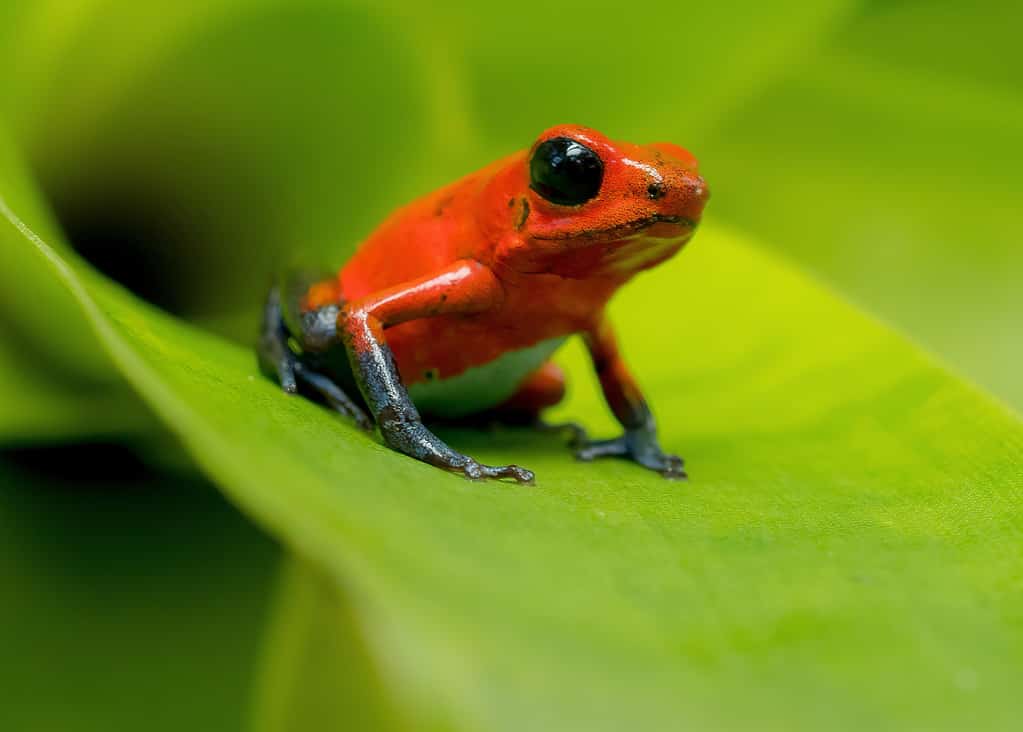
Honest signals are essentially animal traits that correspond to actual and learned consequences.
©Pavel Russe/Shutterstock.com
In an American Naturalist study on toxicity and conspicuousness, researchers argue that poison dart frog colors function as honest signals, especially for bird predators. There are multiple strong and positive relationships between toxicity and conspicuousness in bird visual models, supporting the idea that some predators really do experience the colors as an honest, believable warning.
An Arizona State University interview on poison dart frogs and their warning signals mentioned how strange it is that an animal so dangerous can look attractive to us as human beings, even though the colors are meant to communicate stay away to predators. In the animal world, these colors are communicative, and poison dart frogs aren’t faking their warnings in any way.
Other Animals That Use Aposematism
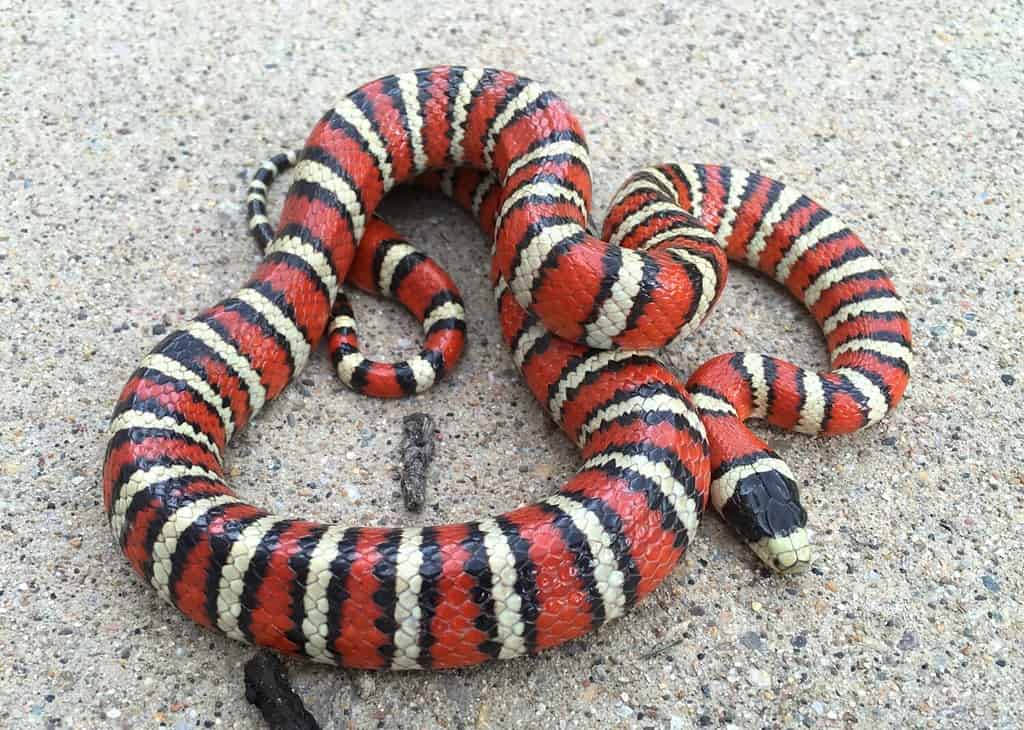
Coral snakes are another animal that use aposematism to protect themselves.
©Matt Jeppson/Shutterstock.com
While poison dart frogs are arguably the most notable animals to utilize aposematism, there are others in our world that utilize it, too. This trait is used both on land and in our seas. Some other brightly colored and honest-signaling species include:
- Poisonous and toxic marine species, like nudibranchs or sea slugs, flash electric colors that signal chemical defenses or stolen stinging cells, especially on exposed reef surfaces.
- Monarch butterflies advertise their toxicity with bold orange-and-black wings, since their caterpillars pick up defensive chemicals from milkweed that can make predators sick.
- Ladybugs (ladybird beetles) use red, orange, or even yellow shells with striking black spots as a warning, and they can ooze foul-tasting chemicals when threatened.
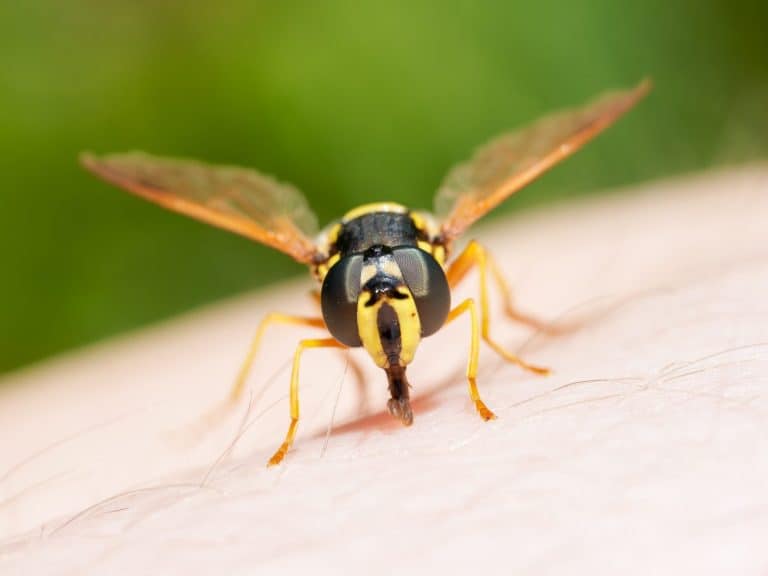
- Wasps, hornets, and bees rely on high-contrast yellow-and-black striping alongside their stereotypical stings.
- Coral snakes use bright banded patterns to signal their potent venom, which is why many predators learn to avoid that color scheme entirely should they survive a bite.
- Skunks aren’t brightly colored in the usual sense, but their stark black-and-white pattern functions the same way by warning predators about an immediate and stinky chemical defense.
- Fire salamanders and other toxic salamanders often display vivid yellow or orange markings that advertise skin toxins predators learn to avoid, much like dart frogs.
Why Predators Believe These Brightly Colored Warnings
Aposematism ultimately works because predators experience consequences, without which the process would fail.
These consequences can vary drastically, including immediate illness, mouth irritation, numbness, an aversive taste, or even death. Over repeated encounters, predators evolve or learn avoidance behaviors for their own well-being and survival.
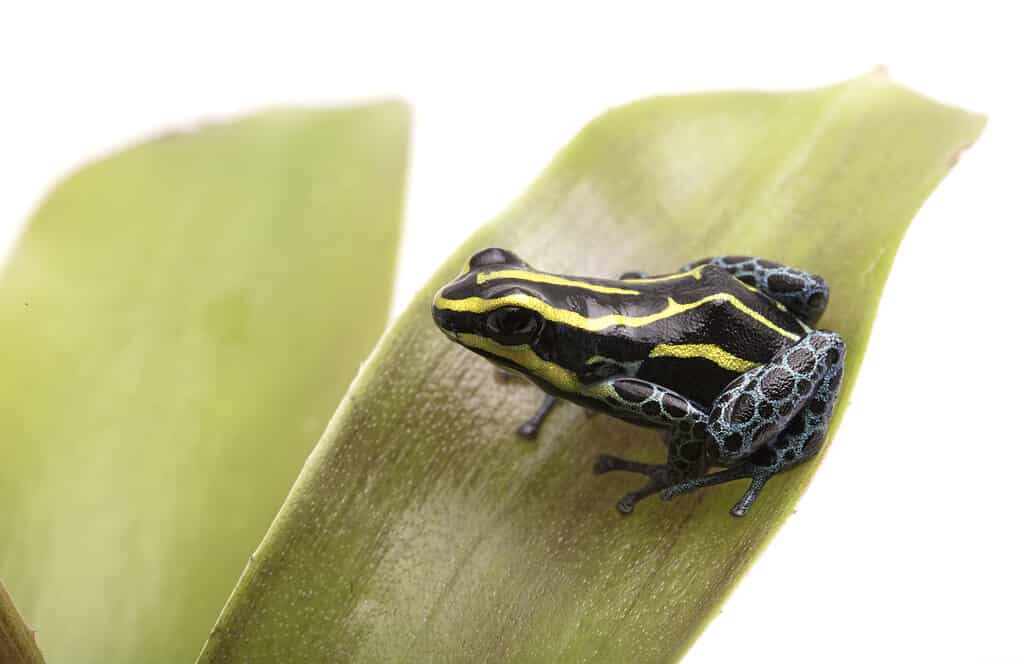
Both patterns and coloration can contribute to other animals understanding the threat of a poison dart frog.
©iStock.com/kikkerdirk
This is also how mimicry happens in certain species, including dart frogs. Once predators learn to avoid a particular warning pattern, other species may evolve to resemble it, which creates a whole ecosystem of visual deception and the reinforcement of these deceits. Poison dart frogs have been used extensively to study this dynamic, including predator-driven selection on color polymorphism in species like the strawberry poison frog.
What Poison Dart Frogs Tells Us About Colorful, Evolutionary Communication
Aposematism is ultimately a form of cross-species communication shaped by natural selection. When these warning signals align with real defenses, both prey and predator benefit in the long run. The predator avoids discomfort, while the prey lives to see another day.
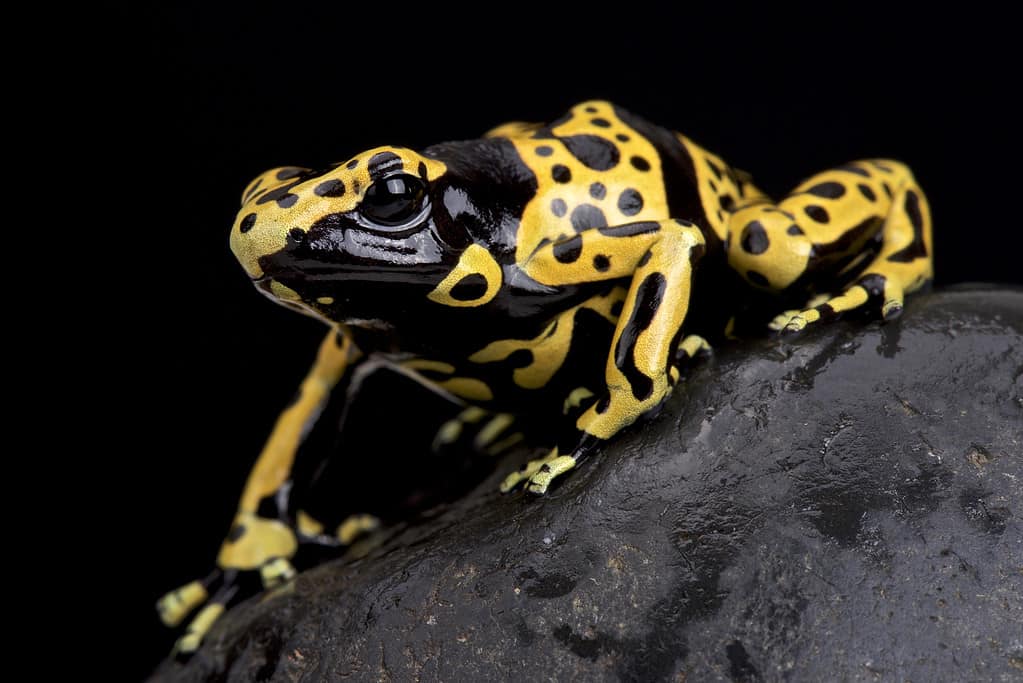
Aposematism keeps poison dart frogs safe from multiple predators.
©iStock.com/reptiles4all
Poison dart frogs remind us how aposematism can be both simple and sophisticated at once. The message behind their bright colors is easy to read, across a variety of species, particularly predators. However, the system behind their toxic message is deeply ecological and advanced, built through unique dietary preferences and evolution. This fascinating ability is how these tiny frogs manage to stay alive in a habitat that threatens them each and every day.