
Quick Take
- Most of these animals carry zero blue pigment, and yet their color is among the most vivid on Earth. The reason why is stranger than you'd expect. Blue without blue pigment →
- One creature on this list steals its enemy's weapons and turns them against the next predator that comes along. Stealing stinging cells →
- One of these stunning blue animals can make its dazzling color completely disappear in a split second, and that trick helps it survive. Color that vanishes instantly →
- The most spectacularly blue reptile in the world was nearly extinct, and what saved it is worth knowing. Recovery from near extinction →
Blue is one of the most peaceful and beautiful shades. True blue pigments in the animal kingdom are exceptionally rare. Most animals that appear to be this special color actually owe their hue to microscopic structures that scatter light, creating the illusion of blueness. This visual phenomenon makes bright blue species especially fascinating and striking no matter where they appear, be it forests, oceans, or skies. The animals on this list glow and shimmer in vivid shades of cobalt, aqua, and deep sapphire. Beyond being absolutely gorgeous, these colors often serve an evolutionary purpose. They can be used for communication, camouflage, or as warning signals to other creatures. Here are some of the most brilliantly blue animals found in the wild.
1. Blue Jay
©FotoRequest/Shutterstock.com
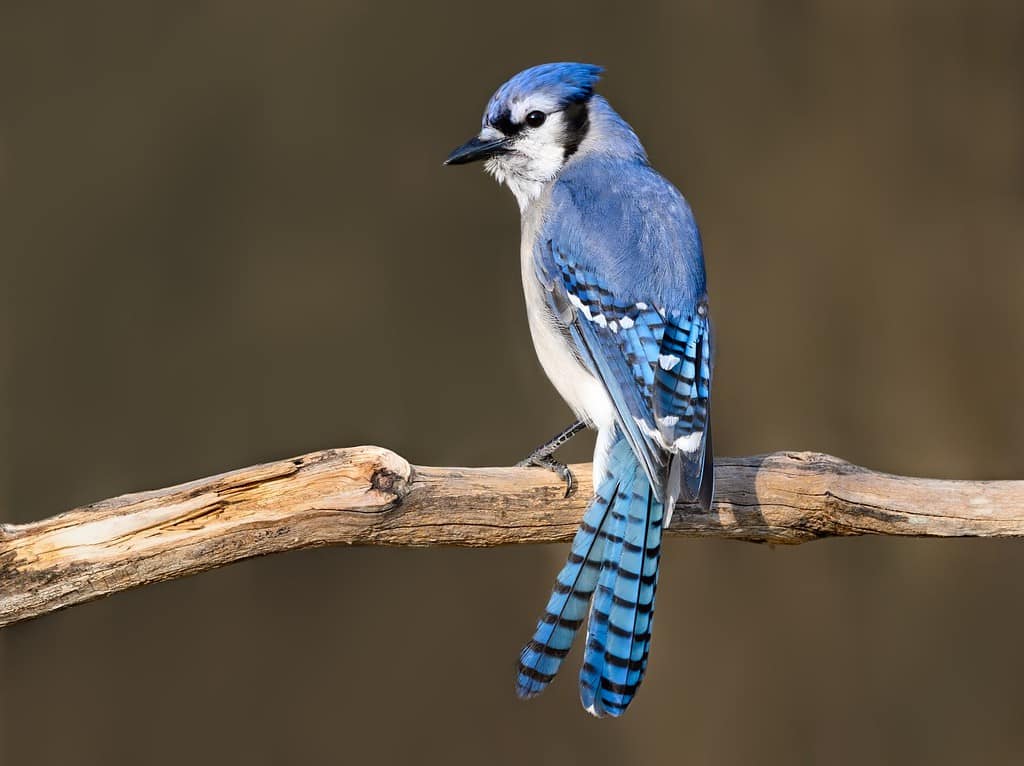
The blue jay may be the most familiar blue animal in the world. Thanks to its bright blue feathers and assertive nature, it is also one of the most beloved birds in North America. Rather than utilizing blue pigments directly, the birds get their characteristic color from feather structures that scatter light. These bold birds are highly intelligent and cleverly mimic hawk calls to scare away other birds. As with other brainy bird species, they are known for complex social behavior and strong family bonds. Their bold personality and deep coloration make them especially fun to watch.
2. Blue Morpho Butterfly
©Cristian Gusa/Shutterstock.com
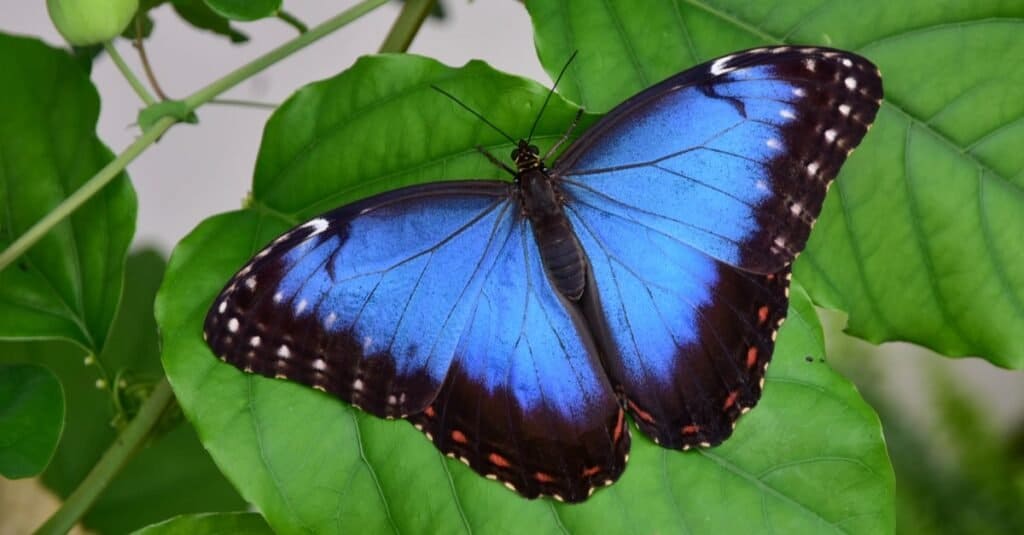
The blue morpho butterfly is famous for its brilliant blue wings that almost seem to glow in the daylight. These insects seem to flash as they flit through their rainforest habitat. This effect is created by extremely small reflective scales on their wings. Interestingly, this spectacular butterfly can also quickly transform into a rather dull insect; when its wings are closed, the underside is brown, helping it blend in and avoid predators when necessary. Their enchanting blue color is often described as one of the most spectacular shades in the animal kingdom.
3. Poison Dart Frog
©Natalia Kuzmina/Shutterstock.com
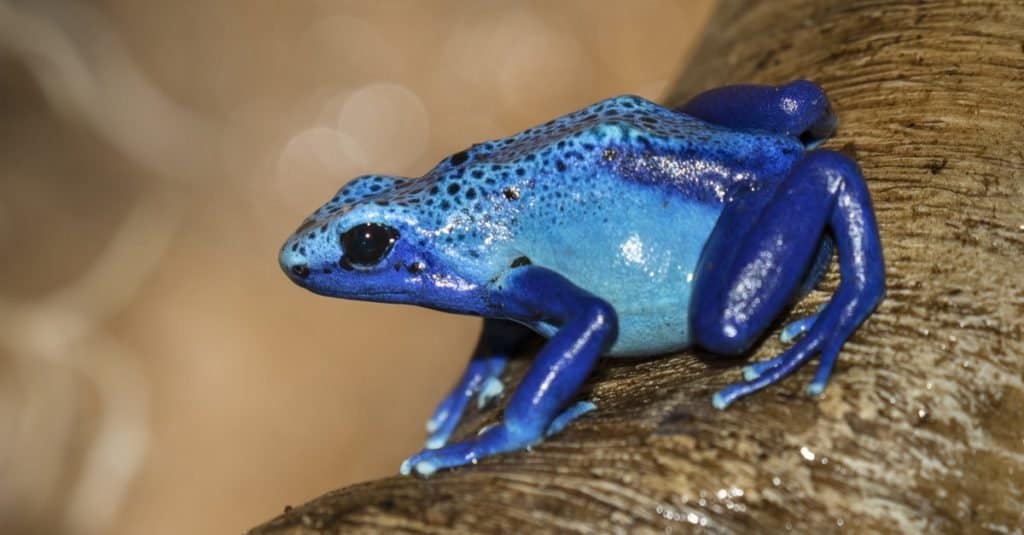
The poison dart frog is a small amphibian known for its toxic effects when eaten. Its bright skin comes in various primary colors, including cobalt blue. It serves as a warning to predators who dare to target these tiny, vivid frogs. They are native to Suriname, where they hop along the forest floor. Due to their natural diet, they secrete harmful toxins through their skin in the wild.
4. Hyacinth Macaw
©Erika Kirkpatrick/Shutterstock.com
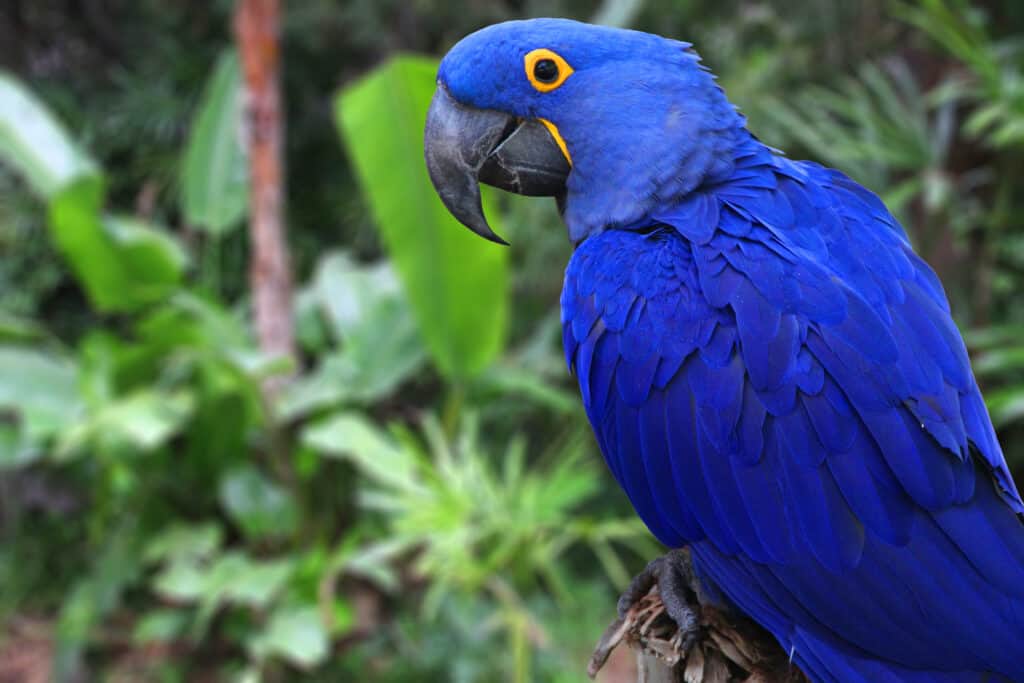
The Hyacinth macaw is the largest flying parrot species in the world. Aside from their impressive size, these birds wow observers with their deep royal blue feathers. This intense blue color pairs nicely with bright yellow markings around the eyes and beak. These birds are native to South America, particularly Brazil’s Pantanal. These highly intelligent parrots stay with a single mate for life. They are vulnerable to habitat loss, though conservation efforts have helped stabilize some populations.
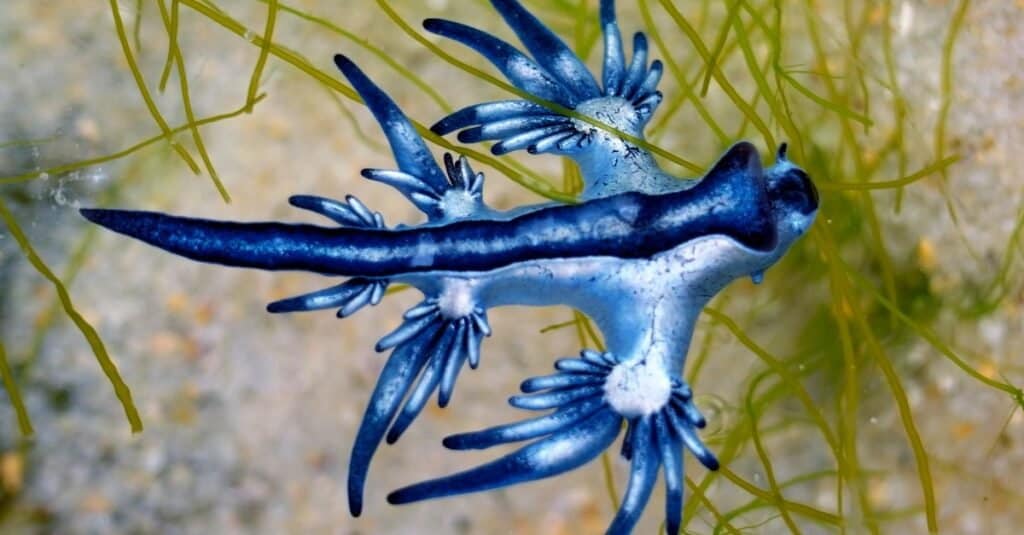
5. Blue Sea Dragon
©iStock.com/S.Rohrlach
The exceptionally tiny blue sea dragon is one odd creature. So strange, in fact, it almost looks mythical. This ocean animal floats upside down on the surface of the water. Its electric-blue underside helps it blend with ocean light when seen from below, allowing it to avoid predation. It eats venomous prey like jellyfish, stealing their stinging cells and storing them for their own later use. Its alien-like appearance and ability to deliver painful stings make it one of the most fascinating blue animals in the ocean.
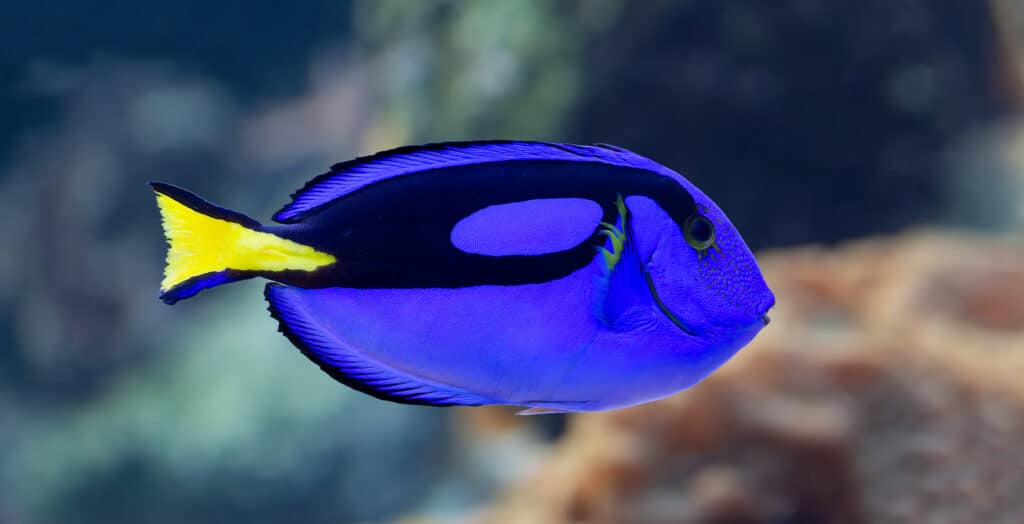
6. Blue Tang
©Henner Damke/Shutterstock.com
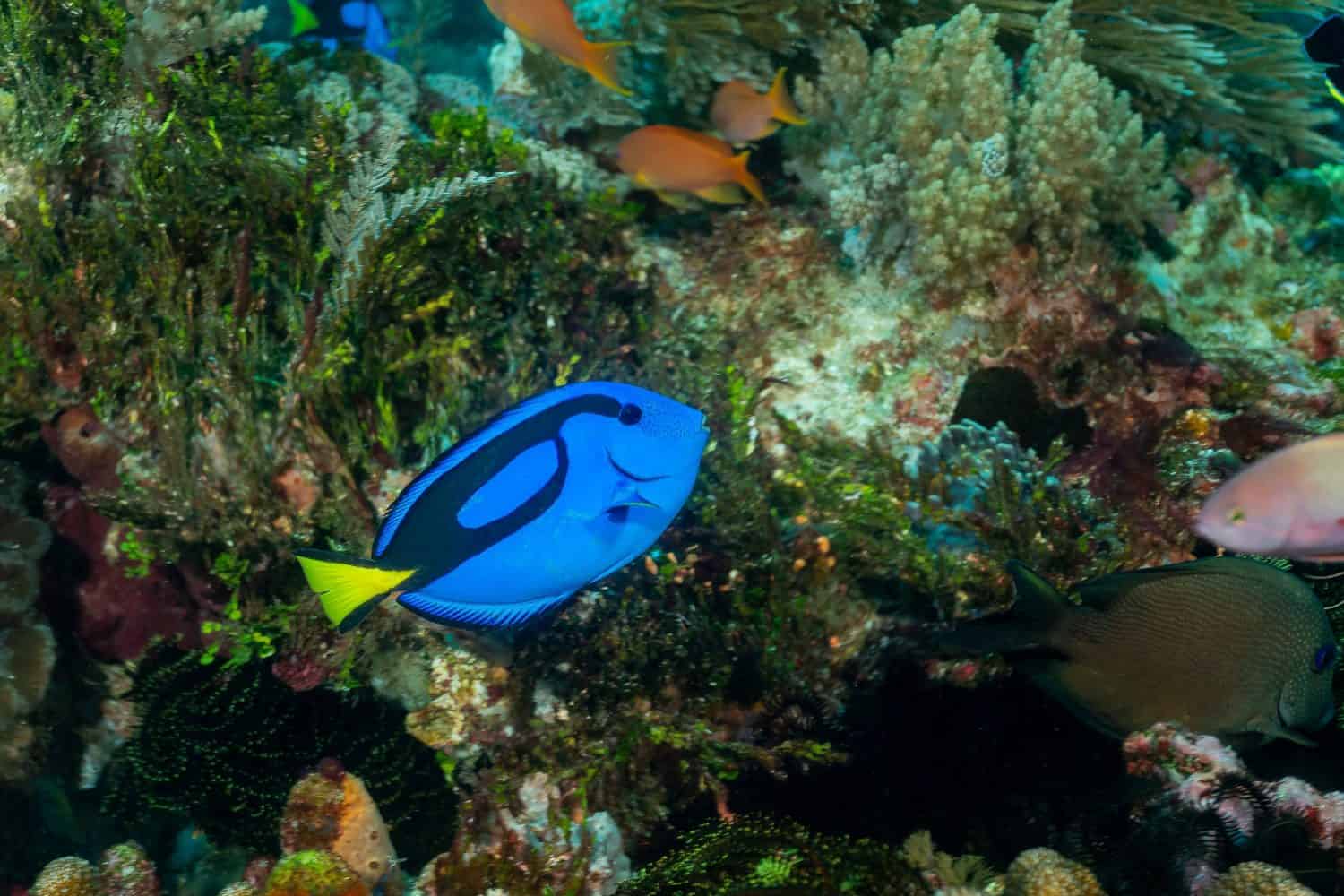
The blue tang is a reef fish known for its vibrant-blue body and bright yellow tail. It commonly inhabits coral reefs of the Indo-Pacific, where divers catch glimpses of the pretty royal blue fish. These fish spend a great deal of their time consuming algae. Scientists believe their unique color aids species recognition. They are widely recognized after appearing in popular ocean documentaries and as characters in animated films.
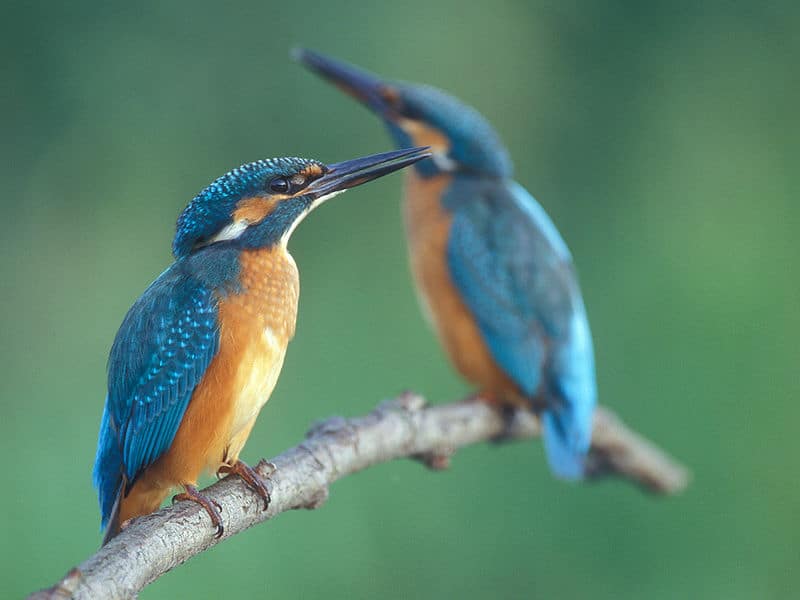
7. Common Kingfisher
©Lukasz Lukasik / Creative Commons – License
The common kingfisher is a small bird with dazzling turquoise feathers on top and an orange underside. It is found near rivers, lakes, and wetlands in both Europe and Asia. As with other blue-toned animals, the blue color comes from structure rather than pigment. These cute birds are swift hunters, efficiently diving into water to catch fish. Their two-toned coloration makes them one of the most visually impressive birds in freshwater areas.
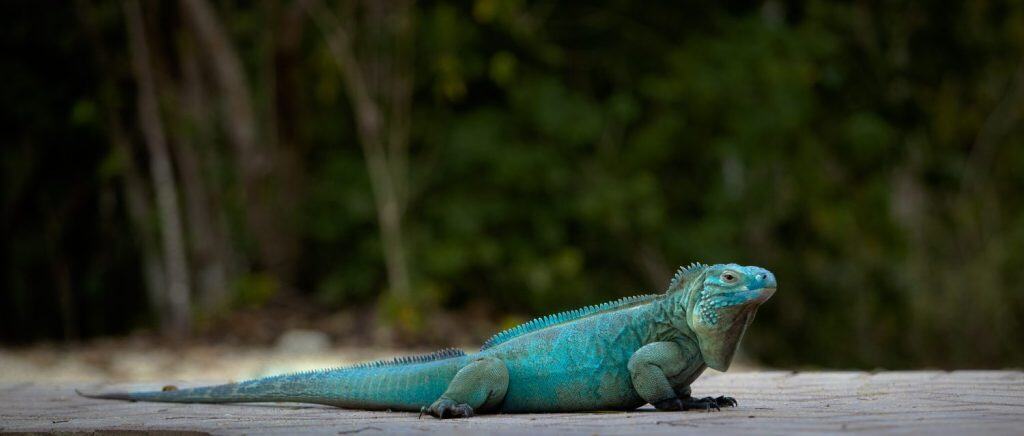
8. Blue Iguana
©Blue Sky imagery/Shutterstock.com
The blue iguana might be the most spectacularly colored reptile on the planet. Native to the Cayman Islands, this large lizard is almost entirely blue from head to tail, ranging in shades from powder blue to true turquoise to steel blue. During the breeding season, males often become even more vibrant, making their coloration especially stunning. Their gorgeous hues stand out against the dry forests and rocky terrain of their territory. Though once critically endangered, conservation efforts have helped the blue iguana make an amazing recovery. Future generations can continue to enjoy one of nature’s most beautiful reptiles.