
Quick Take
- The blue-tongued skink uses a precise, two-stage optical trick to escalate its bluff as a predator closes in. Explore the tongue's optical trick →
- Birds have sharp eyes and sharper instincts, yet they often abort a dive at the last second over a lizard that can't actually hurt them. See what stops the dive →
- The skink's full defensive routine looks less like survival instinct and more like an unhinged, multi-step performance, with every piece of it serving a calculated purpose. Follow the full defense display →
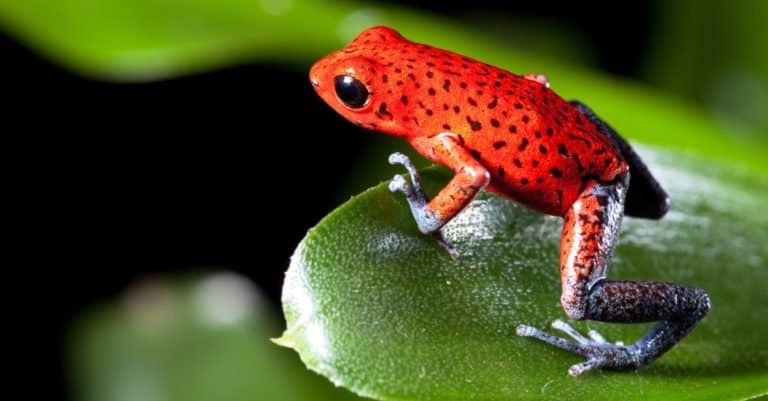
Mother Nature is capable of fashioning an incredible variety of creatures, but She’s especially adept at creating highly skilled tricksters. A handful of species employ aposematism (the use of bright warning colors) to deter predators. For example, the neon shade of the poison dart frog tells would-be predators to stay away, helping protect them from harm. But while this warning system is genuine in the poison dart frog, in other species, that bright coloration is only a bluff.
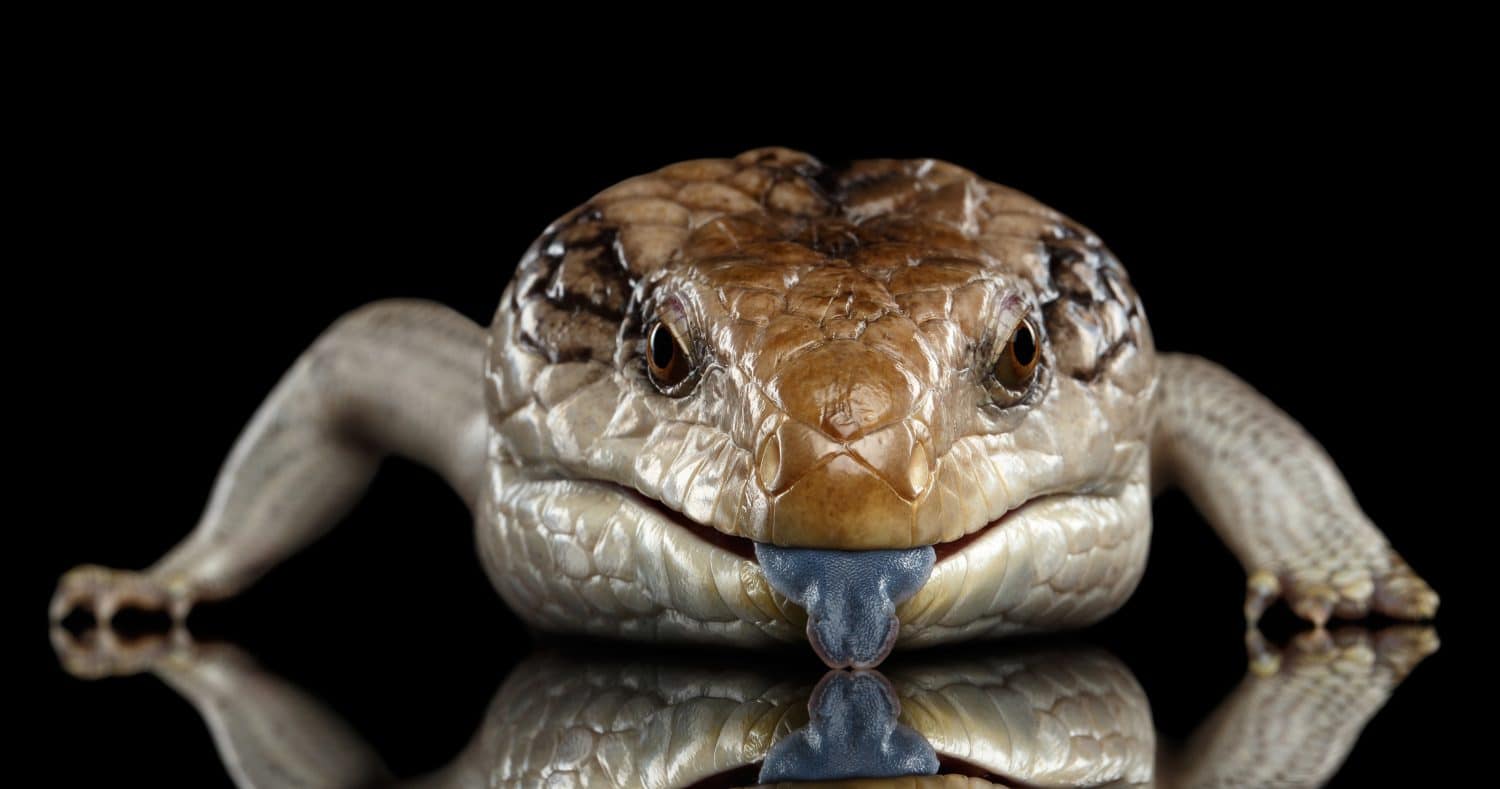
The blue-tongued skink is perhaps the biggest liar in the South Pacific. Its electric blue tongue signifies danger, but there’s nothing harmful about these reptiles. This small lizard is a master of deceit, and its colorful mouthpiece is nothing but a facade to spook predators. The kicker? The fib actually works.
A Small Skink with a Big Ego
Typically, animals that exhibit aposematism are poisonous, venomous, or generally unpalatable to predators. This is nature’s way of labeling them as “bad to eat.” Bright, neon colors might represent toxic slime, stinging needles, or another type of natural weapon. It tells predators that if they even attempt to make a meal of the animal in question, they’ll be sorry. The blue-tongued skink mimics this natural warning, giving the lizards an intimidating appearance.
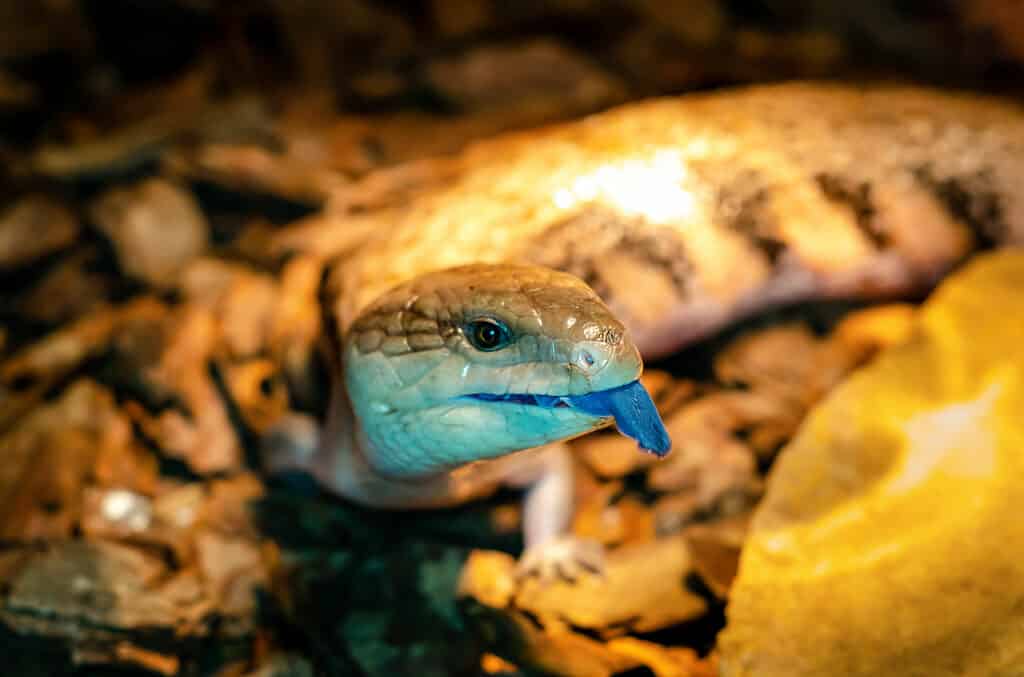
Its blue tongue might look toxic, but the blue-tongued skink is harmless.
©Lutsenko_Oleksandr/Shutterstock.com
In reality, the skink is going for shock value. It can’t actually poison anything and lacks venom or any harmful excretions. Though the skink has a few defensive tricks, like the ability to make itself appear larger than it truly is, it primarily relies on its intensely blue, UV light-reflecting tongue to ward off predators. The defense mechanism is relatively effective at fooling predators such as birds. Even mid-swoop, birds stop and think twice before clamping their beaks around this little guy.
A Puff and Bluff: How It Works
The blue-tongued skink is borderline unhinged in its defensive behavior. When a predator homes in, the skink immediately jumps into action. Its first move is to puff up its body, making it appear more like a pufferfish than a lizard. Add to this a threatening hiss and the ability to detach its tail, and you’ve got something out of a horror movie. Before even flashing that blue tongue, the skink already looks like a deranged creature. For the skink, it’s simply survival.
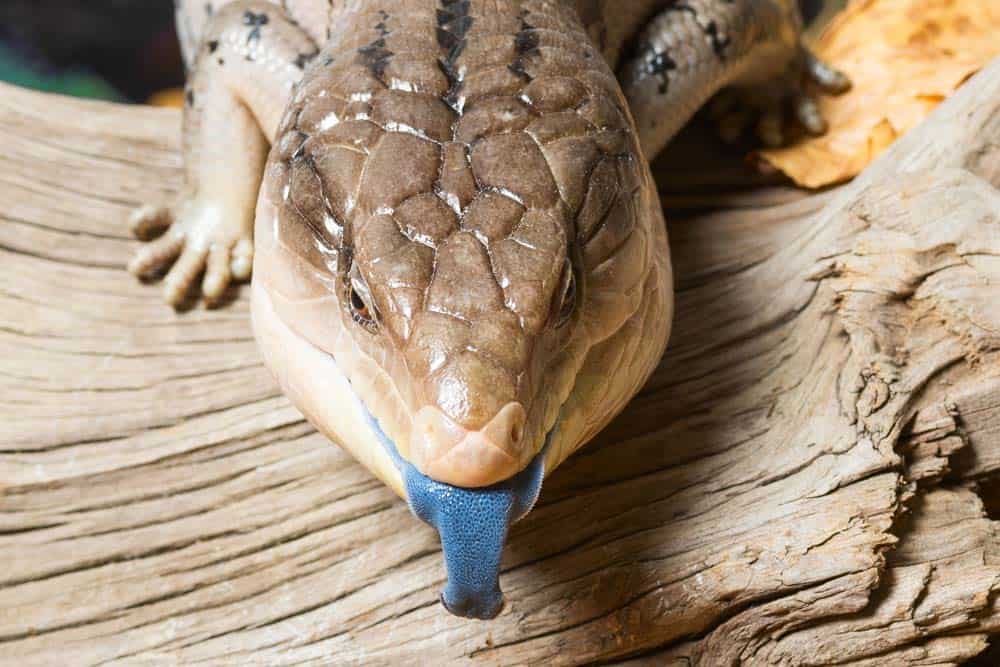
This skink comes with a warning label in the form of a UV-reflective tongue.
©LesPalenik/Shutterstock.com
As the bird gets closer, the skink opens its mouth to reveal its final strategic play. Its blue tongue is not just a brightly colored hue, but it also reflects UV light, making for a jarring sight. Birds and other predators opt to avoid the skink rather than take a bite.
But the skink isn’t done just yet. The tip of its tongue is less reflective than the back, which the skink saves for last. If the predator continues advancing, the skink opens its mouth fully, revealing a major blast of UV reflection. At this point, most predators are deterred, convinced this lizard must be extremely toxic. The skink pulls his tongue back in, knowing the lie has worked.