
Quick Take
- A newborn the size of a small bag of sugar has keepers deliberately keeping their distance. Why?
- Hunters and herders in parts of Asia treat this deer's sound as a life-or-death warning. What are they listening for?
- The males carry two weapons most deer ditched long ago. Here's how they came to keep both.
- This little deer's lineage barely changed while its relatives transformed. Fossil clues suggest it once roamed somewhere surprising.
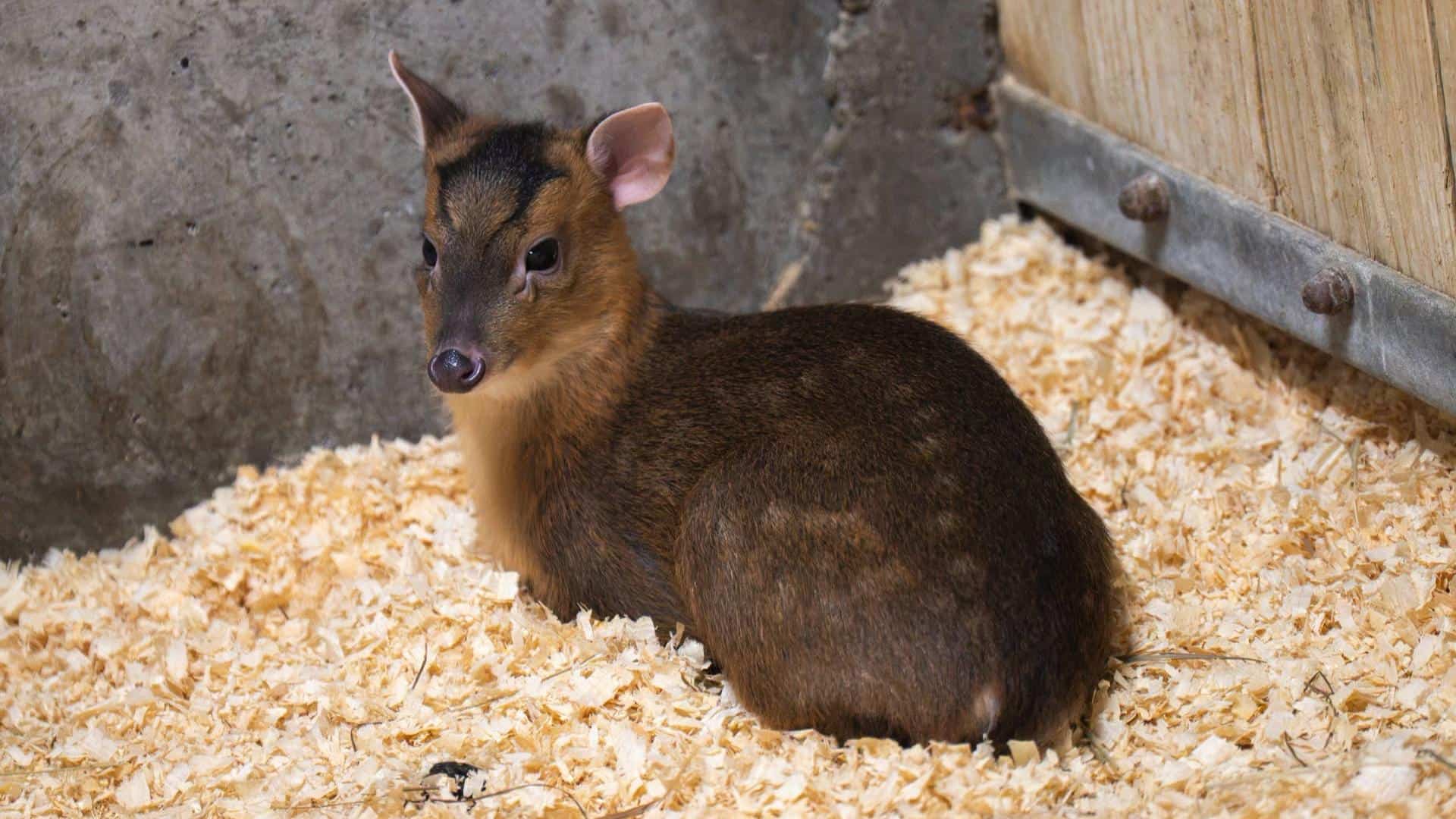
The Columbus Zoo and Aquarium has a new muntjac fawn. In a social media post reported by 10TV, the zoo said the female was born Sept. 30 to her mother, Blossom, and weighed about 1.6 pounds at birth.
She will stay small by deer standards. Depending on sex and species, a muntjac stands 15 to 25 inches tall at the shoulder, about the same as a medium-sized dog breed. Muntjacs are also called barking deer for the loud alarm call they give when something disturbs them.
The birth followed a breeding recommendation through the Association of Zoos and Aquariums’ Species Survival Plan for muntjacs, the zoo said in its post, according to 10TV. A muntjac mother carries her young for around six to eight months and usually has one fawn at a time.
Why are keepers staying away from her?
The fawn is doing “very well” and continuing to bond with Blossom, the zoo said, according to 10TV. The fawn is reportedly quite skittish, so the animal care team has stayed hands-off apart from a successful first veterinary check, 10TV reported. Zoo teams are monitoring her from a distance in the Asia Quest region, the station reported.
Keepers check on the fawn and Blossom each day and are confident she will become more comfortable as time goes on, NBC4 reported.
Muntjacs are primarily forest and woodland deer of South and Southeast Asia. They are typically solitary and intensely territorial, while many larger deer form herds.
A muntjac mother devotes a lot of time early on to feeding, protecting, and teaching her fawn how to survive.
Why are muntjacs called barking deer?
The alarm call is very loud, and muntjacs use it when they are on watch or disturbed. In South and Southeast Asia, people call them barking deer and treat the sound as a forest alarm.
In parts of South Asia and the Himalayan foothills, hunters and herders believe the sharp call warns that a tiger or leopard is nearby. They may stop or bring their livestock in when they hear it.
How big will she get?
Across the muntjac genus, adults weigh from about 18 pounds in the smallest species to 77 pounds or more in the largest. Even the smallest adults weigh roughly 11 times what this fawn did at 1.6 pounds.
She will get there fast. Muntjac fawns are weaned quickly, develop rapidly, and tend to reach sexual maturity after about a year. Muntjacs typically live 8 to 12 years in the wild and up to 15 to 20 years in captivity, depending on the species and their care.
Will she grow tusks and antlers?
Those belong to the males. Male muntjacs have enlarged upper canine teeth, called tusks, that they use in combat. They also often carry small antlers that sit on top of long, bony bases called pedicles.
Muntjacs also have large scent glands on the face, in front of the eyes, and they mark their territory often.
How old is the muntjac line?
According to the Columbus Zoo’s website, the muntjac is the oldest known deer and is believed to have appeared 15 to 35 million years ago, NBC4 reported.
DNA analysis and fossil evidence suggest the first true deer, which probably resembled the muntjac, arose some 15 to 30 million years ago from tusked ancestors. In other deer, the tusks gradually disappeared as antlers evolved. The muntjac kept both.
Muntjacs probably split from other types of deer around seven million years ago and have stayed mostly unchanged since, while other deer diversified greatly. Fossil remains found in France, Germany, and Poland suggest they may once have roamed Europe as well as Asia.