
Quick Take
- Your instinct to rescue a lone fawn could be the most dangerous thing that happens to it all day. Why leaving alone is safer →
- Fawns have a biological trick that makes them nearly invisible to predators, and this trick has nothing to do with their spotted coats. How fawns avoid predators →
- There are only a few situations where intervening is the right call. When to seek wildlife help →
- A mother deer can vanish for hours without abandoning her fawn, and there is a hidden logic behind that strategy. How mothers hide their fawns →
Every spring and summer, someone stumbles across a white-tailed deer fawn and desperately wants to do the right thing. Wildlife rescue organizations get numerous inquiries about so-called ‘abandoned’ fawns. Before you start to panic, have you considered that the fawn is not abandoned at all? Let us explain how white-tailed deer raise their young and why, in most cases, the best thing you can do is nothing.
All About White-Tailed Deer
White-tailed deer (Odocoileus virginianus) are found in most of southern Canada and throughout the mainland United States, except for two or three western states. They can also be found throughout Central America to Bolivia. When it comes to habitat, they are quite flexible. They can live in large forests, deep sawgrass, hammock swamps, farmland, and brushy areas. Ideally, they like dense thickets (where they can hide out) and forest edges (where they can find food).
These deer can reach weights of around 300 pounds, but most are not more than 3 feet tall. Their backs are a grayish-red color, but they have white coloring on the upper insides of their legs, parts of their face, and, of course, beneath the tail—hence their name!
White-Tailed Deer Feeding and Reproduction
White-tailed deer are very nervous and shy animals that primarily sense danger through their sense of smell. If a threat approaches, they bound away quickly, sometimes reaching speeds of up to 30 mph. They are preyed on by wolves, mountain lions, coyotes, bears, and jaguars. The deer feed on a variety of vegetation. Their diet includes buds and twigs, shrubs, yucca plants, and prickly pear cactus. In the winter, when food is scarce, they will eat conifers. Most feeding takes place before dawn and from late afternoon to dusk.

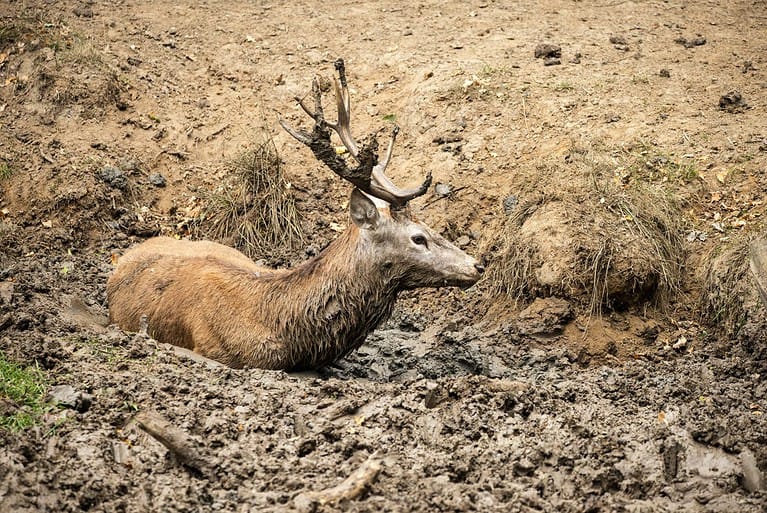
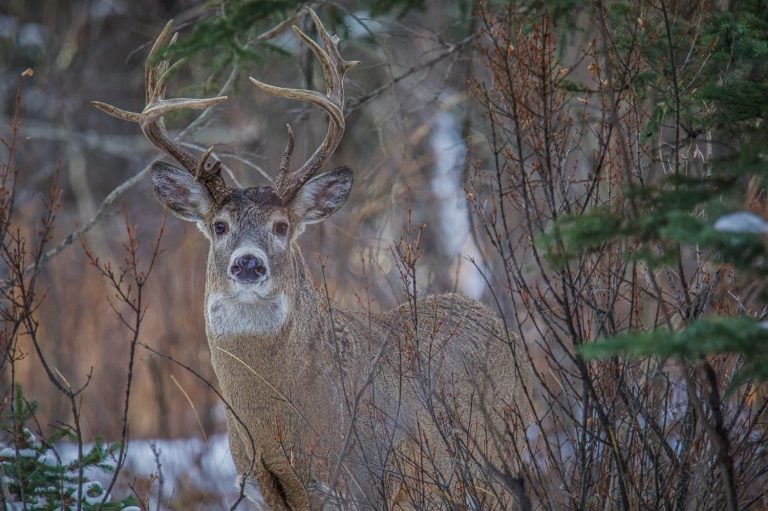
Male white-tailed deer rut in the fall.
©Tony Campbell/Shutterstock.com
Female deer usually come into heat in November, and this period lasts for just 24 hours. If she does not mate during this time, she will have a second estrus around 28 days later. The males compete for mating rights through a process called rutting. They grow antlers in April or May, losing their velvet in August or September.
White-tailed deer have a gestation period of around six and a half months. This means that most fawns are born between April and June, but some are born in early July. For her first breeding, most females have only one fawn. After that, she is most likely to have two fawns, although three or even four have been recorded. The fawns can walk at birth and start to nibble on vegetation within a few days.
How Do White-Tailed Deer Raise Their Fawns?
Female white-tailed deer are extremely protective of their fawns. So, it’s highly unlikely that you will find an abandoned fawn. However, mothers will leave their fawns in a hidden place while they go to look for food. This hiding place is usually among tall grass or brush. The fawn can be left for up to four hours.
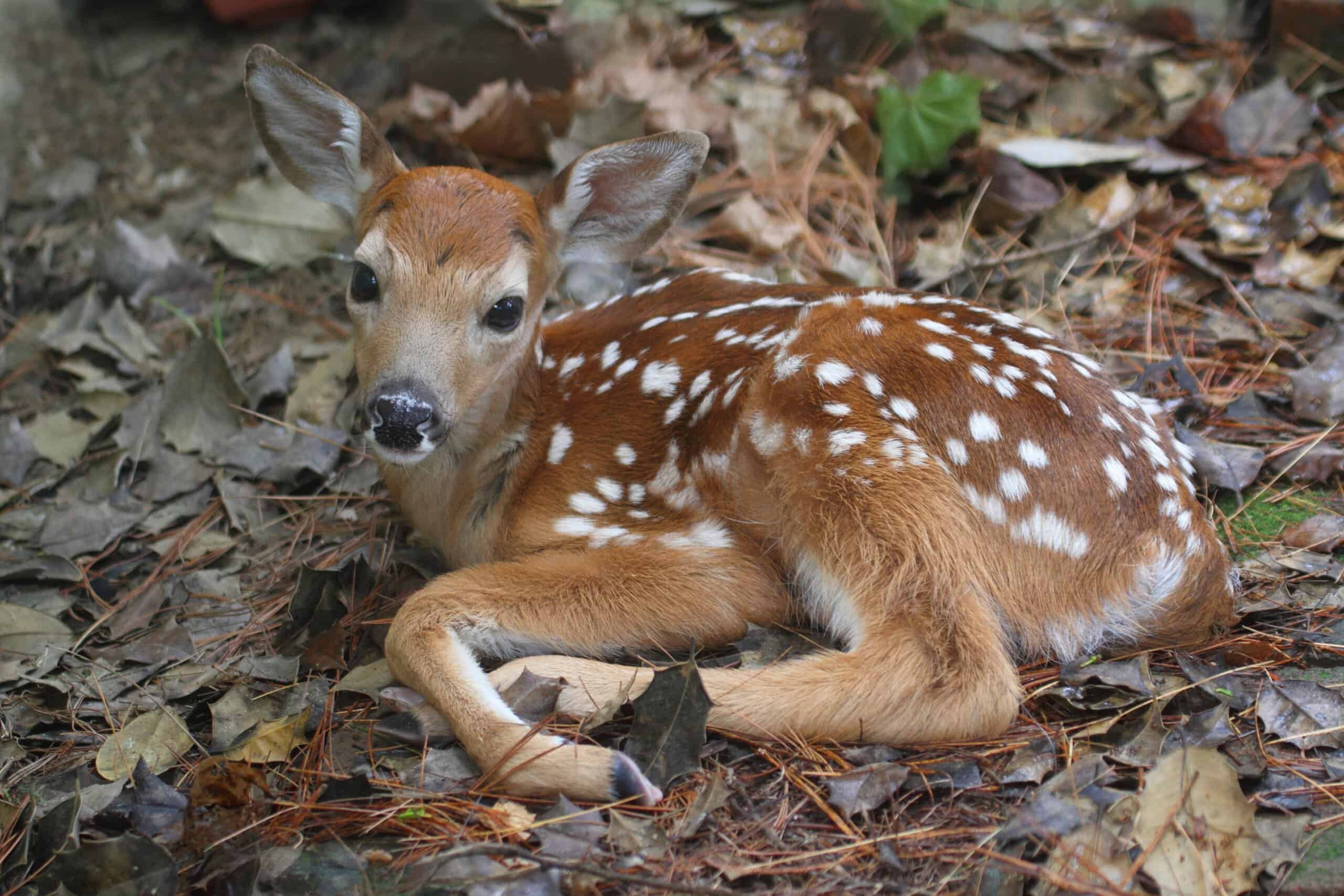
During this time, the fawns lie flat on the ground with their neck outstretched and stay perfectly still. This means that they are well camouflaged against the forest floor. Their spotted pelts look just like dappled sunlight on the ground. They do not have a strong natural scent for predators to detect. Also, the fawn does not defecate or urinate while the mother is away, which helps avoid alerting predators to its location.
Once the fawns reach about four weeks of age, they will start to accompany their mother on her foraging trips. By the time they are two months old, they can ruminate. The mother will continue to nurse them until they are around 10 weeks old. Female fawns stay with their mother for around two years, but males leave after a year.
What Should You Do With an Abandoned Fawn?
Most of the time, you should do nothing! It’s highly unlikely that the fawn is abandoned at all. Because white-tailed deer are commonly found in suburban areas, you may even find a fawn in your backyard!
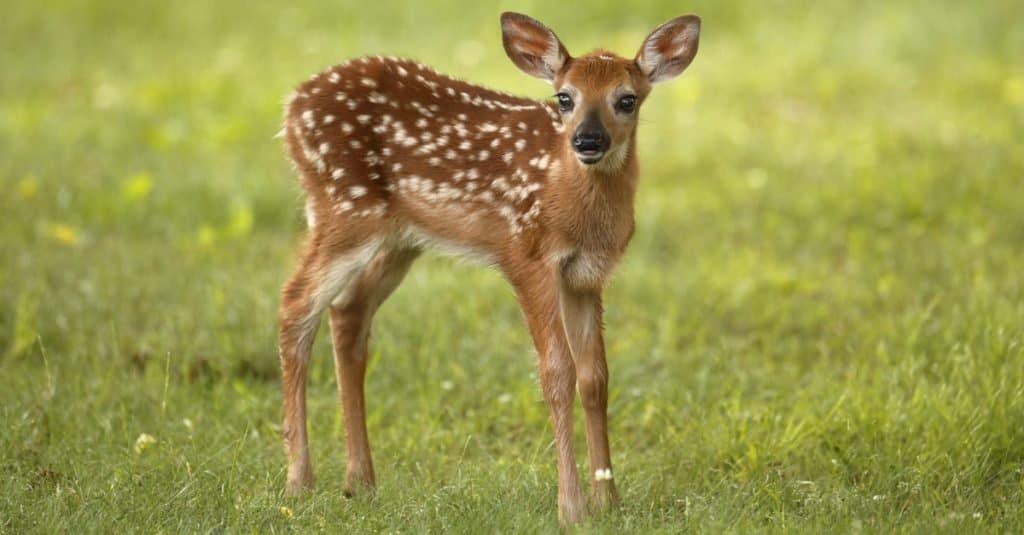
White-tailed deer fawns are not abandoned by their mothers.
©Paul Tessier/Shutterstock.com
Simply leave the fawn alone, and the mother will soon return to retrieve it. These wild animals do not make good pets, and the fawn is much safer back with its mother than with you! By removing the fawn from its hiding place, you are separating it from its mother, and you are not qualified to raise it successfully.
The only time you should get involved is if the fawn is clearly injured or if it is next to its deceased mother. Then, you should call in some professional help. Start with your local animal control department or nature center. They may come to collect the fawn themselves, or they may refer you to a licensed wildlife rehabilitator. While you are waiting for help to arrive, keep pets and children away from it.