
Quick Take
- The stags most likely to lose their harems are not the weakest ones. They are the ones who have been winning all season. How dominance becomes a burden →
- Before a single antler is locked, stags run through a surprisingly theatrical series of rituals designed to avoid fighting altogether. See the pre-fight rituals →
- A stag's body undergoes extreme physical changes every autumn, though the trigger is not temperature or calendar date. Explore the hormonal changes →
- Some stags enter the rut with no antlers at all, and this does not automatically put them at a disadvantage. Meet the antlerless hummels →
Europe’s red deer rut is an extraordinary natural spectacle. Thousands of people travel to forest clearings to witness the incredible power and energy of male deer (stags) competing for mating rights. As we approach the fall rutting season, we take an in-depth look at what governs the dramatic changes taking over a stag’s body and how a rut confrontation escalates!
Continue reading
Meet the Magnificent Red Deer
The European red deer (Cervus elaphus) is found in southwestern Asia, Anatolia, the Caucasus, North Africa, and Europe. The males are called stags (or harts) and the females are called hinds. They have also been introduced to other countries, such as the US, and their meat can be used as a food source (venison).
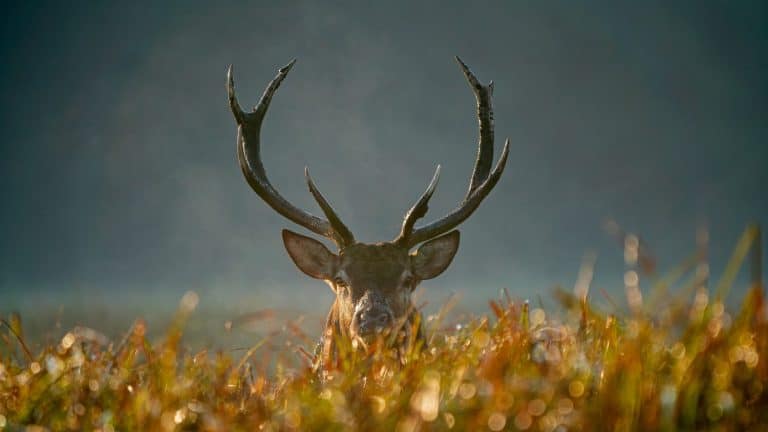
Red deer are the largest land mammals in the UK and are considered iconic animals there. Stags can reach 69 to 98 inches long from the nose to the base of the tail, weigh up to 530 pounds, and stand up to 51 inches tall. Only the stags have antlers, which start growing in the spring.
What Is the Deer Rut?
Red deer do not think about breeding during the spring and early summer; scientists call this a sexually quiescent period. In September, however, that all changes, and the resurgence of sexual activity is called the rut. The timing of the rut is driven by photoperiod, which means how many hours of darkness the deer experiences over 24 hours.
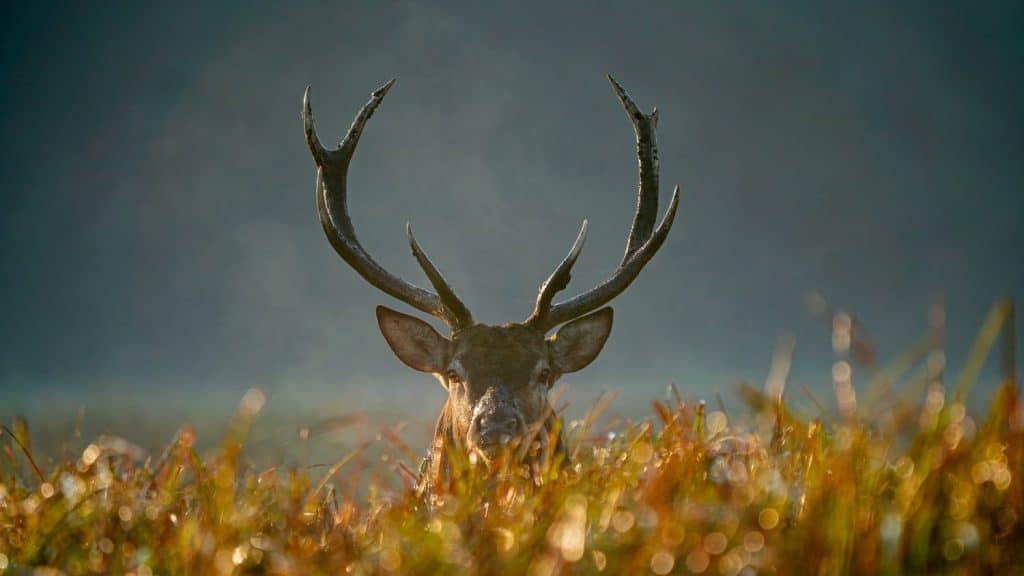
The timing of the red deer rut is controlled by daylight hours.
©matt_wiszniewski/Shutterstock.com
Most stags are sexually mature enough to mate at 16 months but do not do so until they are at least six years old. To participate successfully in the rut, they generally need an impressive set of antlers to challenge other males. These do not develop until they are six years of age. That said, juvenile stags will often practice their techniques and test themselves by clashing with each other or even with more mature stags.
A Year of Hormones
A red deer stag’s sexual state is controlled by hormones, particularly testosterone. This hormone influences pedicle (antler bud) development, antler growth, velvet shedding, and ultimately casting off the antlers.
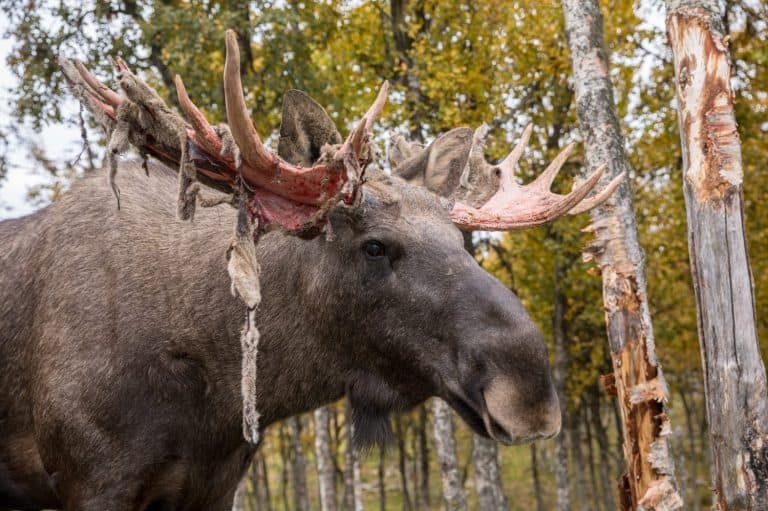
In July or August, day lengths start to shorten, triggering a rise in testosterone levels, which peak in the fall. The change profoundly affects the stag’s body and behavior. The velvet antler covering is cast, and their testes mature. At the same time, their necks double in thickness (thanks to hypertrophy of the neck musculature), and many develop a shaggy mane. The stags begin to emit a strong, goat-like odor. Their larynx becomes more prominent, and their tongue changes shape. Just as importantly, the bachelor group breaks down, and the males become more aggressive with each other. The competition for females has begun!
Where Do Stags Rut?
Around the middle of September, the stags move to traditional rutting stands and start wallowing and roaring. Red deer rutting runs from late September until early November, peaking during early October. However, the weather heavily influences rutting activity, and genetics also play a role.
Rutting stands are typically areas of nutritious grassland where the stags will find plenty of females. The hinds are attracted to these areas to feed and fatten up to get through the winter. A single stag claims a stand. The best stands are full of nutritious grasses and attract the most females. Before a stag can claim the stand, however, he must fight off all the other males who also want it! The male essentially creates a harem, and the females generally remain within it. The females get to mate with the prime stag and are protected from being hassled by other males.
Let the Fight Begin
The most impressive feature of the deer rut is the antler clash. However, red deer are powerful animals, so a physical confrontation takes up a lot of energy and carries risks! If they can possibly avoid physically clashing antlers, then they will.
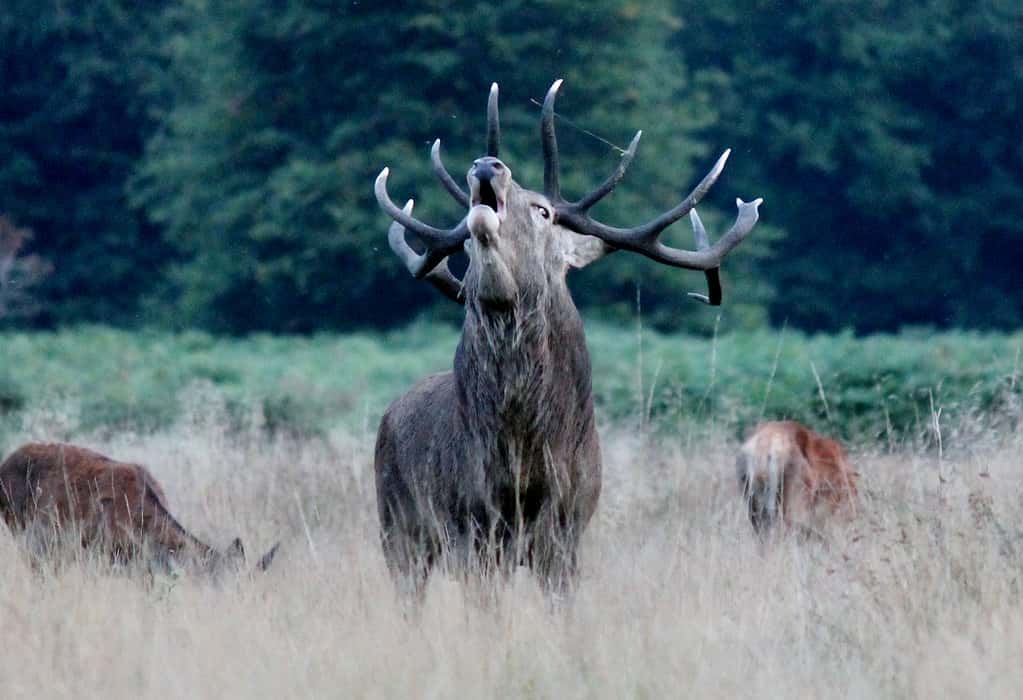
Red deer rutting begins with roaring.
©cheekylorns/iStock via Getty Images
Observational reports have shown that some rutting stags will only fight five times during a three-week rutting period. However, this is variable and depends on the competition as well as environmental factors. Stags have been maimed during a rutting season! For this reason, most free-ranging stags only rut for five seasons.
Rutting Challenge Escalation
When a male approaches another male’s harem, there will be a challenge. One will roar, and the other will respond, creating a roaring competition. If one stag clearly has a more magnificent roar than another, that could be the end of it, and the stag with the weaker roar will walk away. Roaring bouts can last an hour.
If the roars are closely matched, parallel walking is the next stage. This is a stiff-legged side-by-side strut which can last a few seconds up to a few minutes. The stags are a few feet apart, assessing each other’s size and condition. They may stop and repeatedly thrash vegetation, and spray a mixture of urine and semen onto themselves and the ground. The stags may also roll in muddy areas called wallows, into which they have urinated.
Thrashing the ground with their antlers leaves scent marks, and some vegetation also gets stuck on them. This is called adorning, and experts believe stags do this to make their antlers appear larger and more intimidating. Sadly, stags can also get wire and netting trapped in their antlers, and this can be deadly.
Rutting Turns Serious
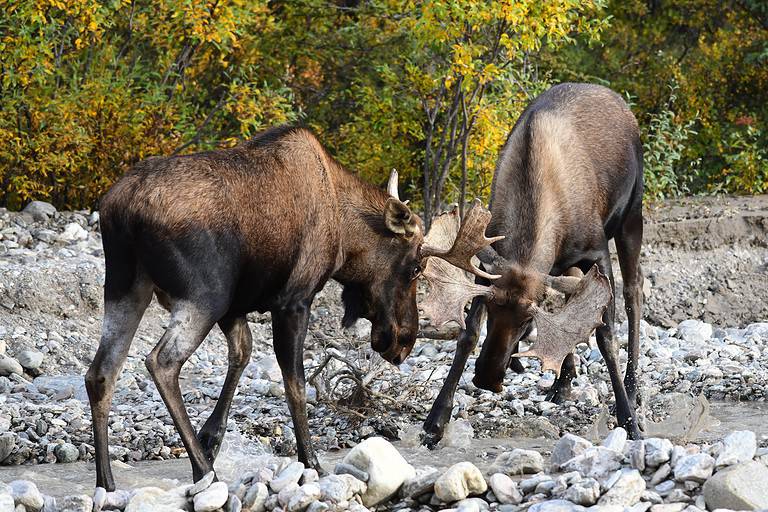
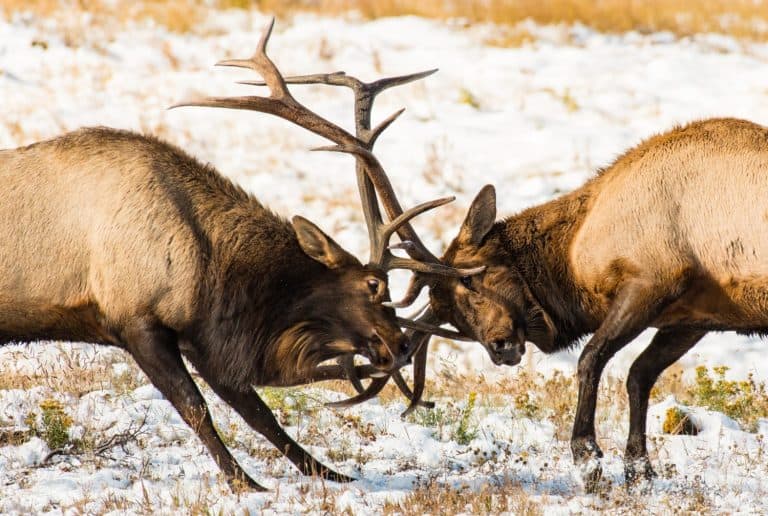
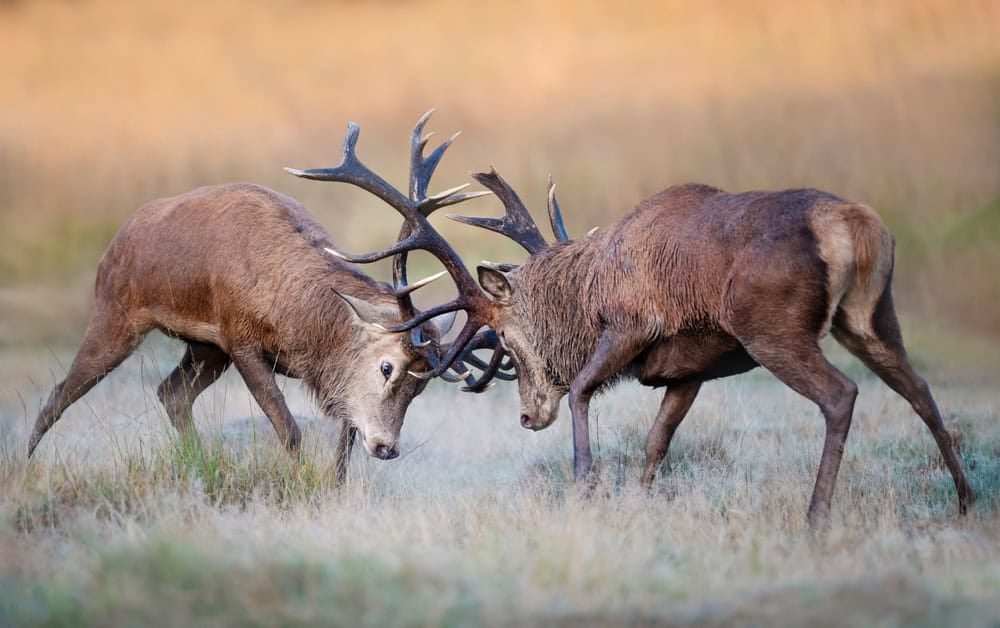
Even at this stage, the stags can still be evenly matched, and things need to get more serious. They turn to face each other and lock antlers. This is called clashing. The aim is to push the opponent off balance and injure him. It is essentially a shoving match that can last a few minutes and uses up a lot of energy.
The stags sense who is losing—it is the stag being driven backward. Clashes end with the dominant stag chasing the other away. Sometimes, the victor will even try to wound the defeated stag by driving his antlers into the latter’s rump. The victor often struts around the stand, roaring and announcing his victory!
What Are the Risks of Antler Clashes?
Clashing antlers during the rut is a high-risk activity for stags. Severe rutting injuries can include gouged eyes, broken bones, slashes, and deep puncture wounds. Around five percent of rutting stags receive permanent injuries.
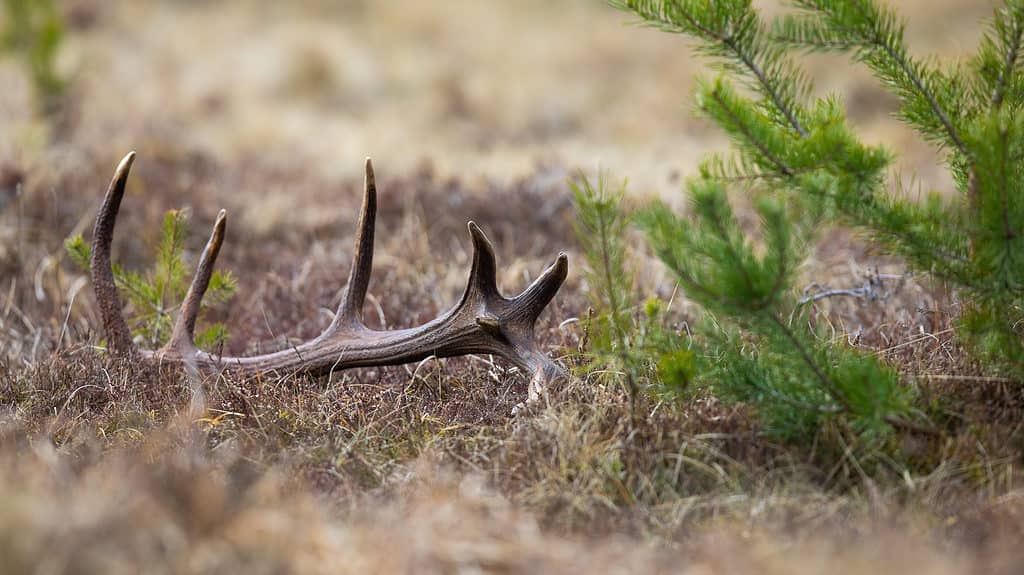
Antlers can get snapped off.
©Wild Media/Shutterstock.com
Occasionally, two stags get their antlers locked together. If they cannot get themselves untangled, they will both die. Three-way clashes have even been recorded in both red deer and fallow deer. Experts are not entirely sure why this happens but suggest that a third male may attempt to break up a fight between two other males. He does this to make himself appear more attractive to the females, as it seems he has dominated two other males.
Whilst antlers are clearly important for rutting, they are not essential. Some red deer, called hummels, do not grow antlers at all. Instead, they use their energy to put on weight. An eight-year-old hummel has been recorded fighting with a five-year-old antlered stag!
Reaching Exhaustion
The process of rutting takes its toll on the stag. He can lose a fifth of his weight during this intense activity. Ironically, it is the dominant stags who have had to constantly defend their harems that get most exhausted. This makes them more likely to be overthrown as the rut progresses. Even though the entire rutting season lasts for around six weeks, a stag will hold a harem for a lot less than this. Some only manage a few minutes! For others, it is a couple of weeks.
Interestingly, the action continues well into the night. Roaring, parallel walking, clashing, and rounding up the females have all been recorded taking place in pitch darkness. However, peak rutting activity is during the three hours after dawn and before dusk.
Dominant Males and the Importance of Being Clever
Winning a rut is not just about antler size and brute force. Mature and more experienced stags often convey stability to the rut because they also have the best technique. When they are finally beaten by a younger stag, it upsets an established order. Lots of other stags, who would never have dared to challenge the old master, are happy to arrive and take on the newcomer. This can mean that the new victor must face multiple challengers in a short period. Clever contenders will notice that the new harem holder is now exhausted, making it the ideal time to try their luck.
Additionally, stags have been seen continuing to fight even when one of their antlers has snapped during the fight! Sometimes, they even win. This shows that strategy and determination are very important attributes during the rut.
Other Rutting Deer
It’s not just red deer that rut in the fall. Fallow deer and sika deer are also exciting to watch during their rut. These are large deer species and their rutting can be very intense! Fallow deer rutting varies greatly depending on habitat, timing of the rut, and deer density. Their fighting is similar to red deer. Rutting sika deer make a characteristic high-pitched whistle. When Muntjac deer stags fight, however, they click their cheek teeth, scrape the ground, and parallel walk. Then they use their long pedicles (bony stalks around the antler base) and antlers to shove and twist their opponents, trying to throw them off-balance.
If you get the chance to see a deer rut, it is an impressive sight. However, it can also be dangerous, so keep your distance at all times!