
Every November, Connecticut’s woodlands and fields come alive with the drama of the white-tailed deer breeding season, called the rut. With some of the highest deer densities in the Northeast, the state offers a front-row view of the action: bucks shadowing does, antlers clashing, and lightning-fast chases through the trees. The rut is a great opportunity to watch deer when they are more visible and active than normal, but at the same time, they are also more unpredictable and aggressive. For homeowners, drivers, or hikers, extra awareness is definitely called for.
White-Tailed Deer (Odocoileus virginianus)
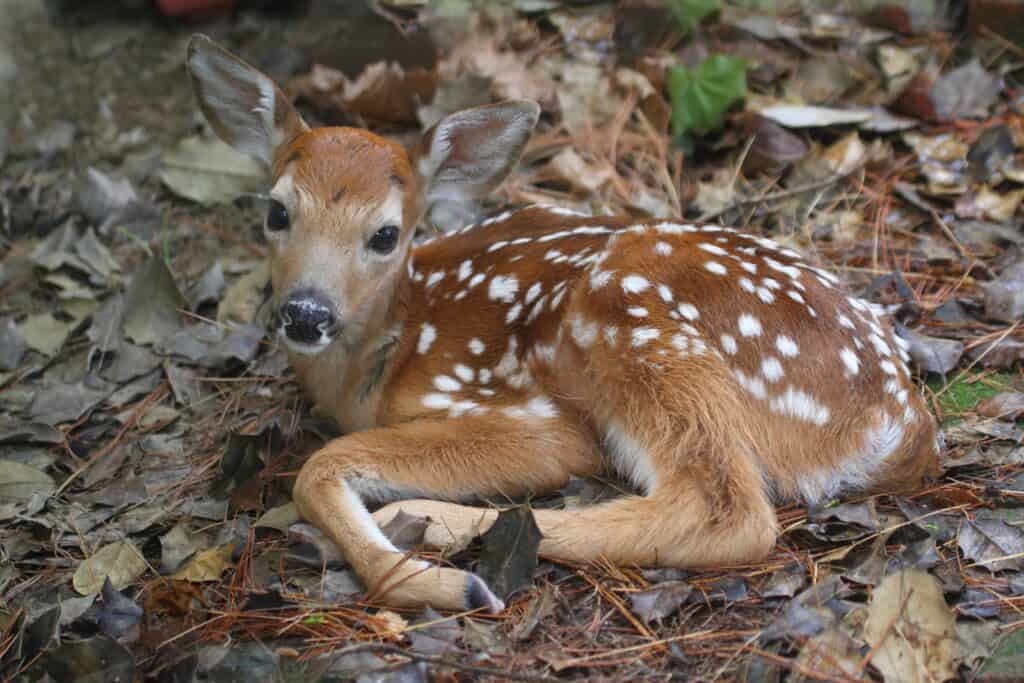
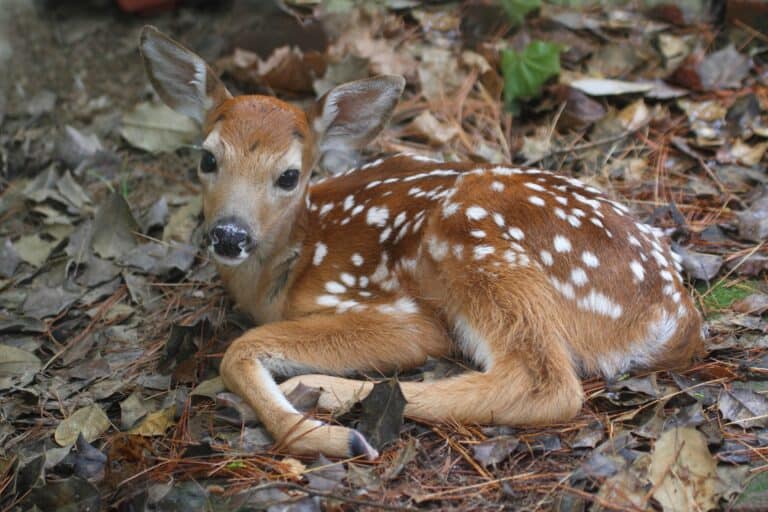
White tailed deer fawns lie quietly where their mother leaves them, hiding from predators.
©Steve Byland/Shutterstock.com
White-tailed deer (Odocoileus virginianus) are one of the most familiar wild animals in North America. They live almost everywhere on the continent—from the forests of the Canadian high north to the swamps of Florida and Louisiana, the mountains and deserts of Arizona, all the way down to the jungles of Central America.
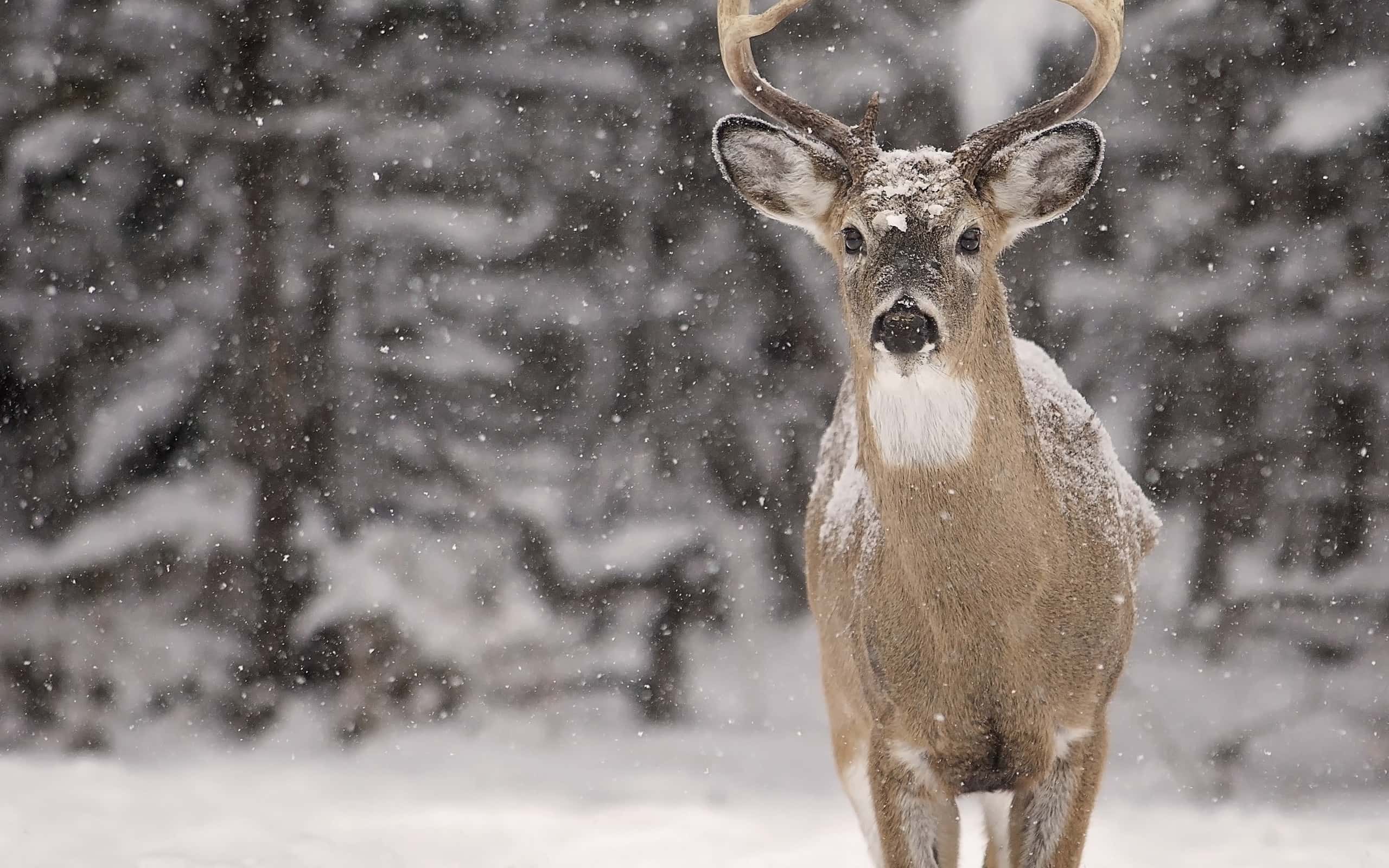
The deer get their name from the bright white underside of their tail, which they flip up like a flag when alarmed. Bucks grow antlers each year, shedding them in winter and regrowing them in spring. Bucks and does are mainly tawny brown, aside from their white undersides and markings around the face and throat. Fawns have white spots that look like they got a little too close to a messy painter. It’s all by design, to help them stay camouflaged in the dappled light that filters through tree canopies to the forest floor.
Habitat for Deer in Connecticut
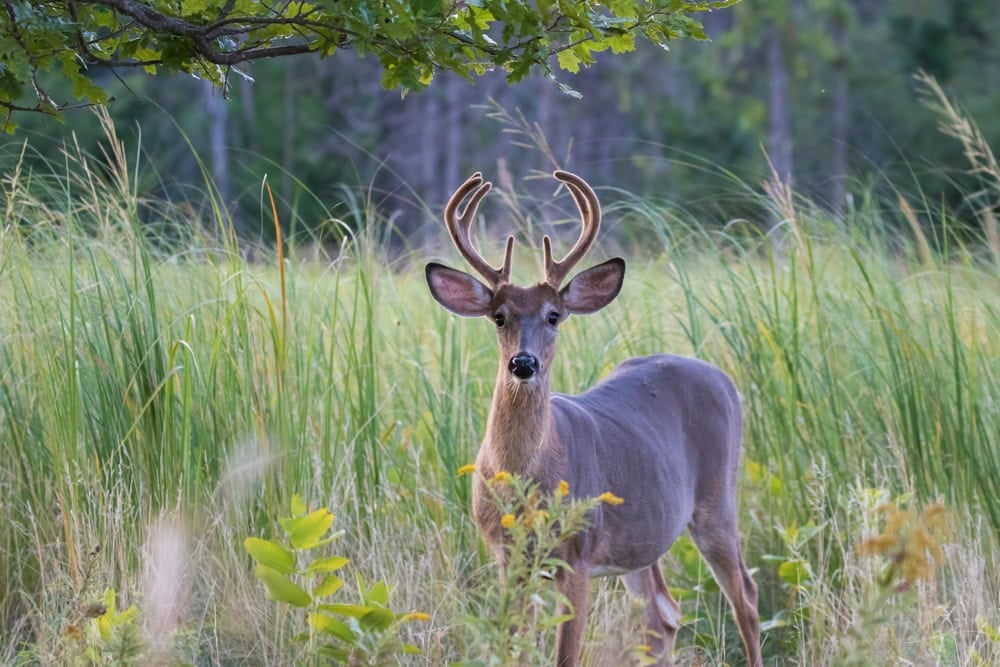
Though Connecticut is small and well-developed, it still has a great deal of rural space for deer.
©Mircea Costina/Shutterstock.com
White-tailed deer are incredibly adaptable and make themselves at home all across Connecticut. You can find them wandering through suburbs and small towns, grazing in farm fields, or gliding silently through the state’s forests. Even though much of Connecticut is developed, there are still plenty of woodlands, parks, and nature preserves that give deer the food and shelter they need. Coastal marshes, river valleys, and upland forests all support healthy herds. It’s common to see deer moving back and forth between wild areas and neighborhoods. Today, the state’s deer population is estimated at around 100,000.
Deer Rut Behavior

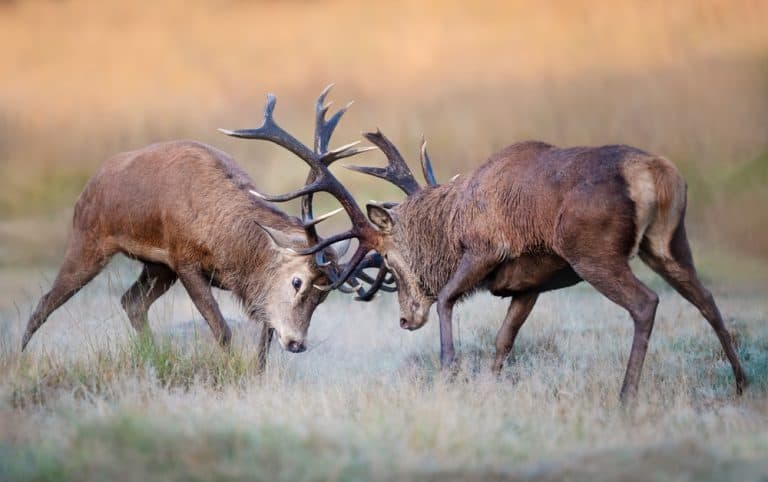
One of the most thrilling spectacles of breeding season is to watch bucks sparring over does.
©Jim Cumming/Shutterstock.com
The breeding season for deer is called the rut. During this time, normally wary bucks throw caution to the wind. They establish territories by making rubs on trees and scrapes on the ground, leaving scent and visual cues for rivals and does. Dominant bucks chase rivals, herd females, and engage in fierce antler clashes. All of this presents some of the most dramatic wildlife viewing opportunities of the year.
Daphne Carlson is Chief Conservation Officer at Conservation X Labs and former head of the Division of International Conservation at the U.S. Fish and Wildlife Service. She emphasizes the risks that come with this intensity.
“Bucks can show more aggressive behaviors during breeding season when they compete with other males for mates,” Carlson says. “Generally, deer are not aggressive towards humans, but may become aggressive in specific situations, like when does (females) are present, if they perceive a threat from dogs, or if a buck perceives they need to protect their territory.”
Connecticut Deer Rut Timing
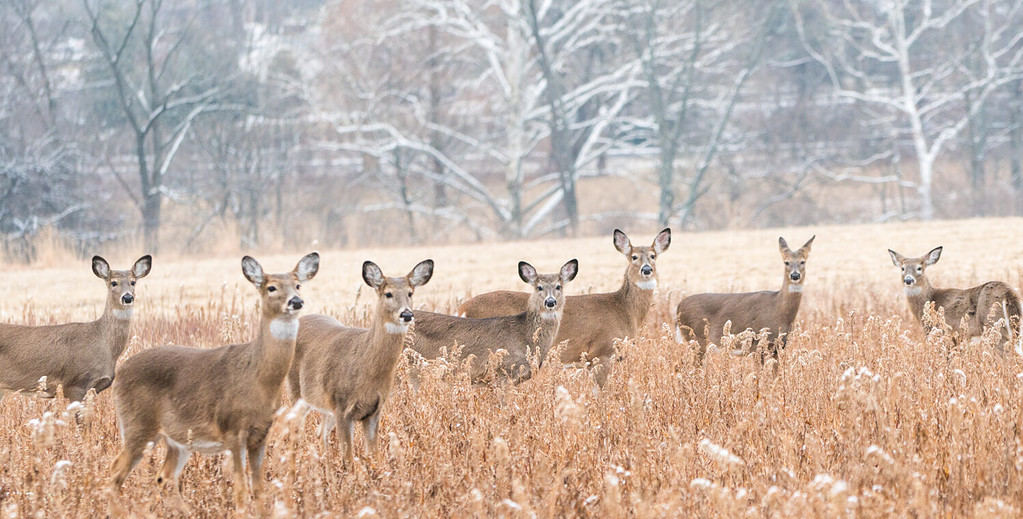
Late fall and early winter are prime time for the Connecticut deer rut.
©Amy Lutz/Shutterstock.com
Connecticut’s whitetail rut begins in late October and stretches into early January. The peak occurs in the final two weeks of November, when bucks are most active and visible. For those eager to watch the rut, the best window is typically mid-November, especially during the last two weeks of the month. Early mornings and late afternoons are prime times for activity, when bucks patrol open meadows, chase does across fields, or spar at forest edges. Midday sightings are more common during peak rut than at other times of the year, when they usually remain hidden. For wildlife watchers, this window provides the best chance to see behavior that is very uncharacteristic at other times of the year.
Best Deer Watching Spots
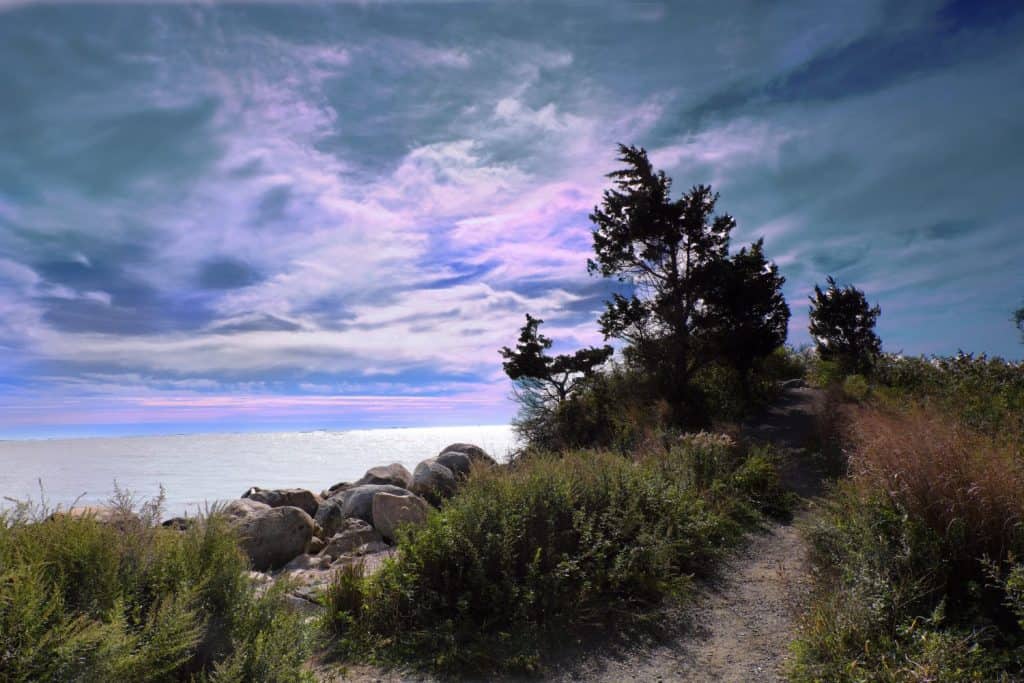
Hammonasset Beach State Park is a gorgeous location to observe deer in Connecticut.
©Khort Esther Tatiana/Shutterstock.com
Prime viewing locations for deer in Connecticut include state forests and parks across the state. Peoples State Forest and Nassahegon State Forest in Litchfield County provide excellent opportunities to see deer in mixed hardwood stands and open meadows. Sleeping Giant State Park near New Haven and Meshomasic State Forest in central Connecticut are known for consistent deer activity. Along the coast, Hammonasset Beach State Park supports visible deer populations that move between marshes and woodlands. In the east, Pachaug State Forest, the largest in Connecticut, offers broad habitat diversity and some of the state’s best deer viewing during the rut.
Local preserves and open-space lands, many managed by towns or land trusts, also provide reliable opportunities. In suburban areas, deer are often seen in early morning or evening hours near golf courses, orchards, and field edges.
Deer In Your Yard

Deer can be a major problem in Connecticut suburbs, damaging landscaping and gardens, and carrying disease.
©Frankie Calkins/Shutterstock.com
As cities and towns expand, suburbs become increasingly shared spaces with wild animals like foxes, coyotes, raccoons, and deer.
“Deer browse on plants and trees, which can cause damage to the environment but also creates conflict with residents trying to maintain property and landscaping,” Carlson says.
These animals are also linked to serious public health concerns. “Deer are part of the life cycle for the transmission of Lyme disease, a bacterial disease carried by ticks that can cause serious illness in people,” Carlson explains. This is a particular concern in Connecticut, one of the states hardest hit by Lyme.
The rut compounds the problems of deer coming into proximity to people. Bucks can be unpredictable and sometimes aggressive, especially around does. Homeowners are advised to keep pets indoors during high-activity hours, particularly at dawn, dusk, and night. Fencing, repellents, and motion-activated sprinklers can help keep deer out of gardens and landscaping. And by all means, residents are discouraged from feeding deer, as this can make them less wary of people, depending on humans for their food, increase traffic accidents, and spread disease.
Deer browse on plants and trees, which can cause damage to the environment but also creates conflict with residents trying to maintain property and landscaping.
Daphne Carlson, Chief Conservation Officer at Conservation X Labs
Deer On the Road
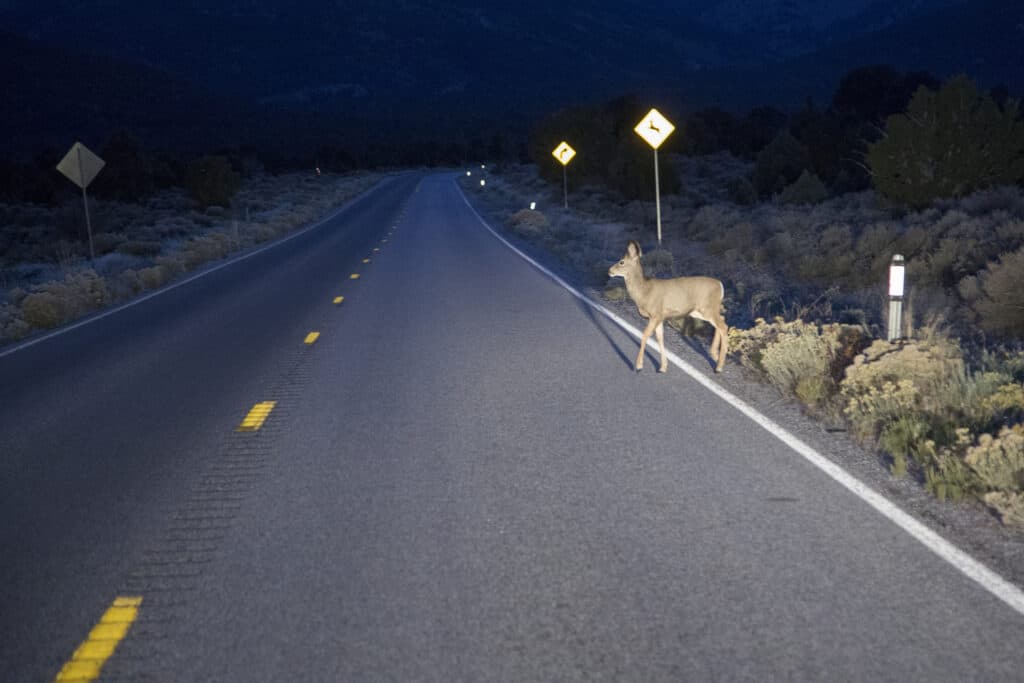
Deer-vehicle collisions are a greater risk during breeding season, when deer are often less cautious.
©iStock.com/frontpoint
Rut-fueled deer movement greatly increases the chance of car accidents in autumn and winter. Collisions are most common at dawn and dusk, when deer are active and visibility is low. Rural and suburban roads near woods or fields are particularly high-risk. Drivers should reduce speed in deer zones, watch roadsides carefully, and remember that if one deer crosses, others are often close behind. Faced with a sudden deer in the road, experts recommend braking firmly in a controlled collision rather than swerving into oncoming traffic or off the shoulder of the road. Statistically, this approach is often safer for the occupants of the vehicle, who are the first priority.
Sharing the Woods During Hunting Season
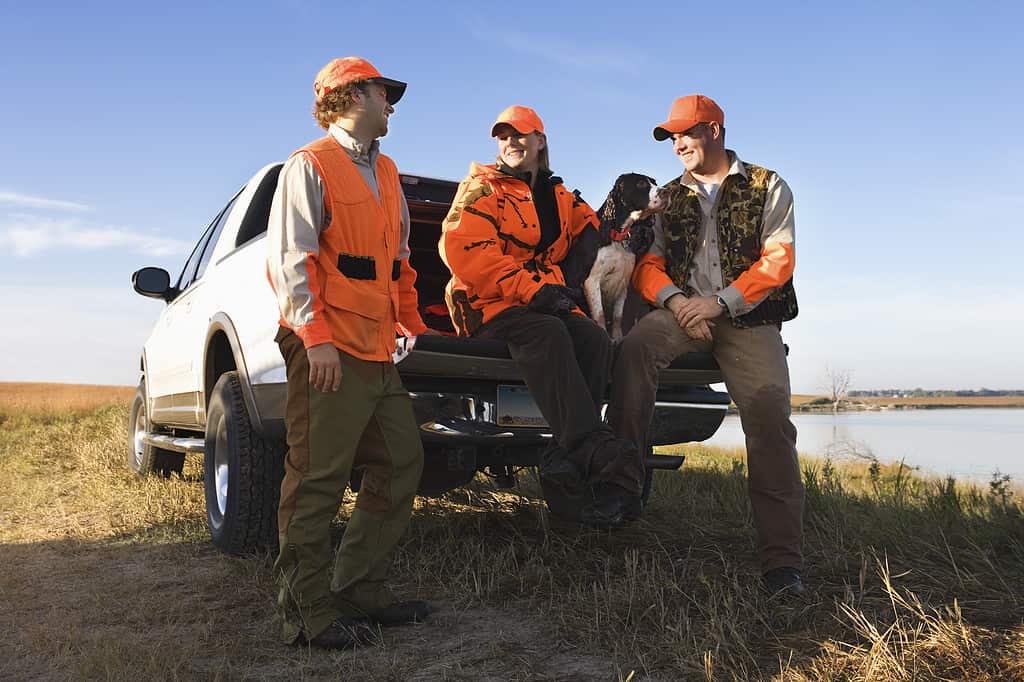
Wearing orange during hunting season makes you visible to people but not deer; they cannot distinguish this color from brown.
©© Getty Images/Stockbyte via Getty Images
Hunting is central to Connecticut’s deer management strategy. Humans have largely removed apex predators from the environment because of the danger they pose to livestock and people. So this means either humans take over the predatory role in the ecosystem to keep it in balance, or allow overpopulation, which can result in over-grazing, overpopulation, disease, and starvation among deer and other prey species.
In Connecticut, deer hunting is allowed by archery or firearms. The archery season begins September 20 and runs through November 7, 2025, with additional dates for private lands. The firearms season on private lands is November 19–December 9, 2025. Always check current CT DEEP regulations for exact dates and zones.
For non-hunters sharing the forest with hunters, it is essential safety practice to wear blaze orange or other bright colors. Sticking to marked trails and avoiding active hunting zones minimizes risk. Respecting posted property boundaries is also essential, as much of Connecticut’s forested land is privately owned.
Conclusion
The deer rut in Connecticut is a marvel and a challenge: thrilling for nature lovers, vital for deer survival, and a time of heightened risk for drivers, homeowners, and people enjoying the outdoors. By taking precautions on the road, respecting wildlife around homes, and following safety rules during hunting season, residents and visitors can witness this dramatic natural event while helping preserve the balance of Connecticut’s wild places.