
Quick Take
- Until recently, southern flying squirrels (Glaucomys volans) were not found west of the Missouri River in Nebraska.
- Thanks to sightings at the University of Nebraska, southern flying squirrels are now known from Lincoln, NE, from 50-70 miles west of the Missouri River.
- A sighting in broad daylight of these nocturnal mammals surprised the university ecology community.
- The Lincoln Flying Squirrel Squad builds and monitors specialized nest boxes to keep track of this rare species.
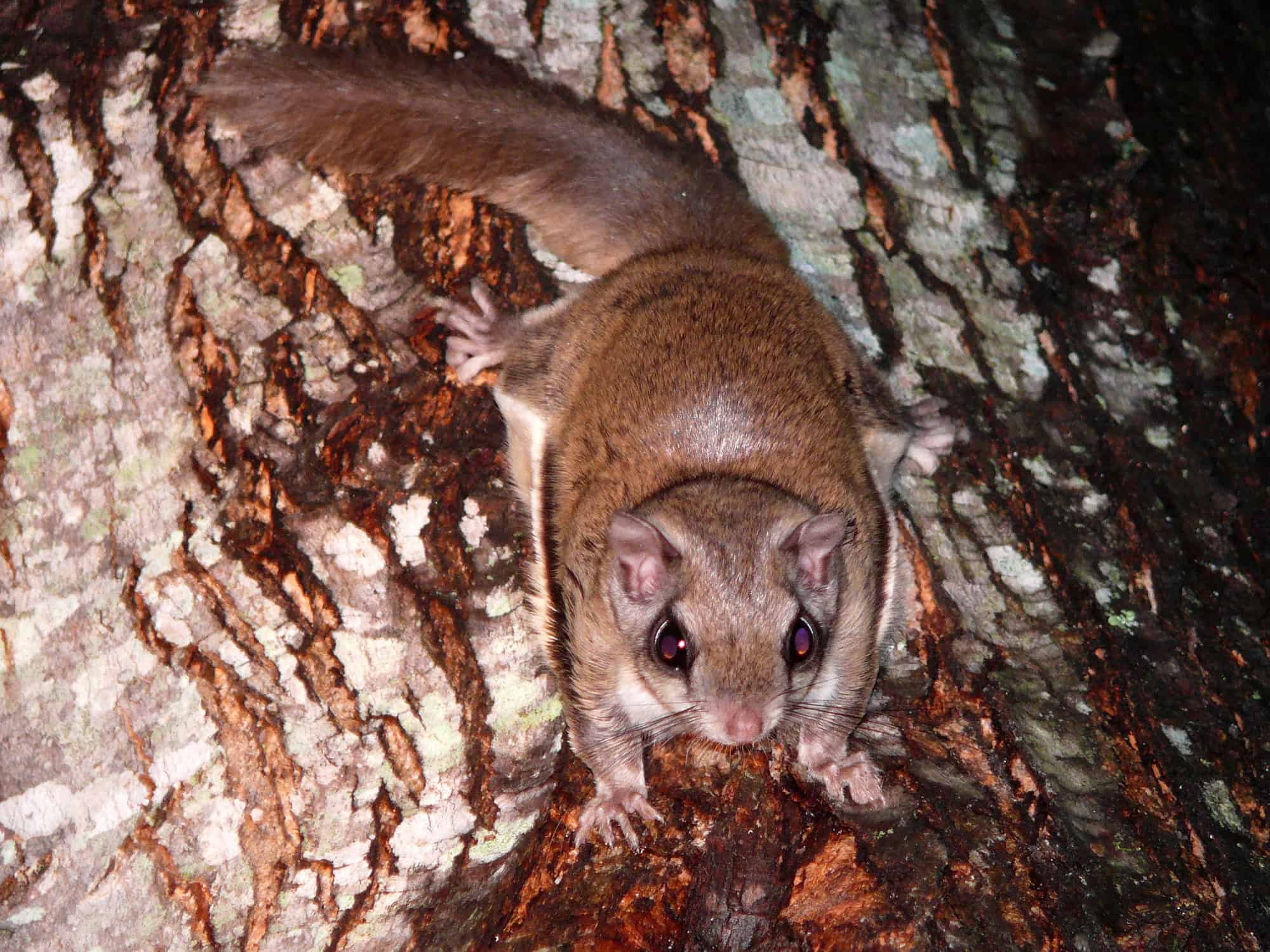
In Nebraska, an elusive mammal that looks like your garden-variety tree squirrel but has strikingly large eyes and a rudder-like tail has recently created a stir. The southern flying squirrel (Glaucomys volans), although relatively common in some other states, is considered threatened in Nebraska. Until recently, it was known only from counties bordering the Missouri River.
Because flying squirrels are nocturnal, they’re not easily spotted. While bats are the only mammals capable of true flight, flying squirrels use their specialized skin flaps (“patagium”) to glide from tree to tree. They favor maple-oak-hickory forests with mature trees where they enjoy a diet of tree nuts, supplemented with insects and an occasional hatchling bird. Their large eyes help them see well enough to forage using only moonlight and starlight.
In 2021, a daytime landscaping crew working at the University of Nebraska, Lincoln, campus unexpectedly came across a squirrel gliding from a tree. The university ecology community was excited when ecology professor John Carroll, working with former student Don Althoff, designed nesting boxes to attract squirrels and encourage them to stay. A grant from the Nebraska Game and Parks Commission supported the construction of the boxes.
Normally, flying squirrels nest in cavities in mature oak and hickory trees. The trees must be old enough to support the sort of decay that, after an injury to the tree, gradually leads to a cavity. Although they don’t hibernate, flying squirrels rely on such tree cavities for warmth during the winter months and for shelter during the nesting season. Their babies, which are born completely blind and hairless, spend about two months in the tree cavity before weaning and becoming independent. Therefore, the University of Nebraska nesting boxes were intended to mimic natural tree cavities.
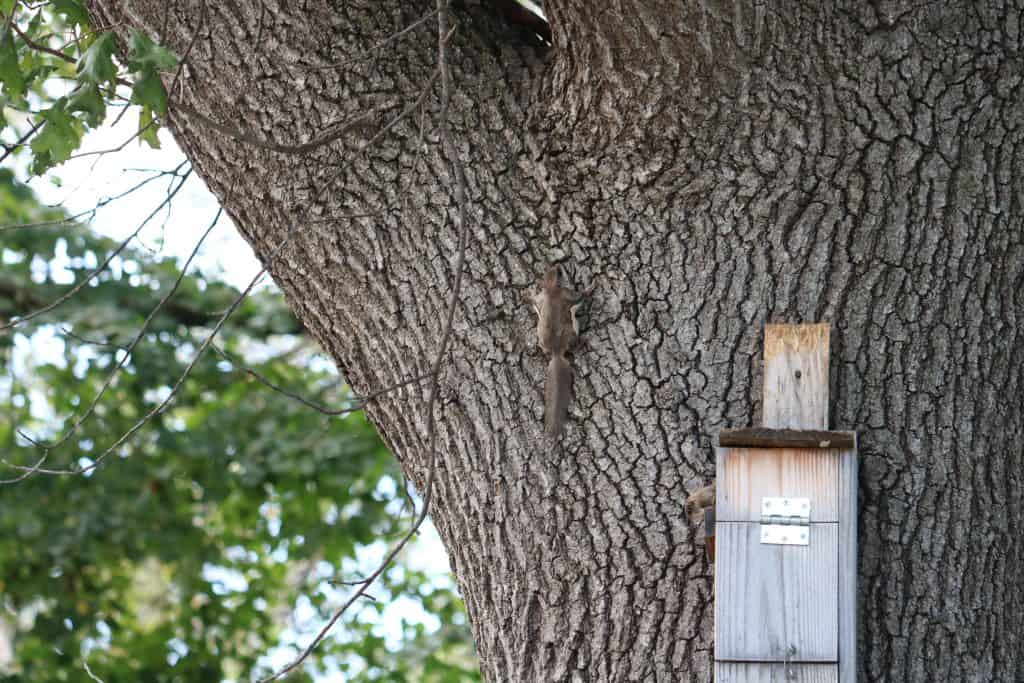
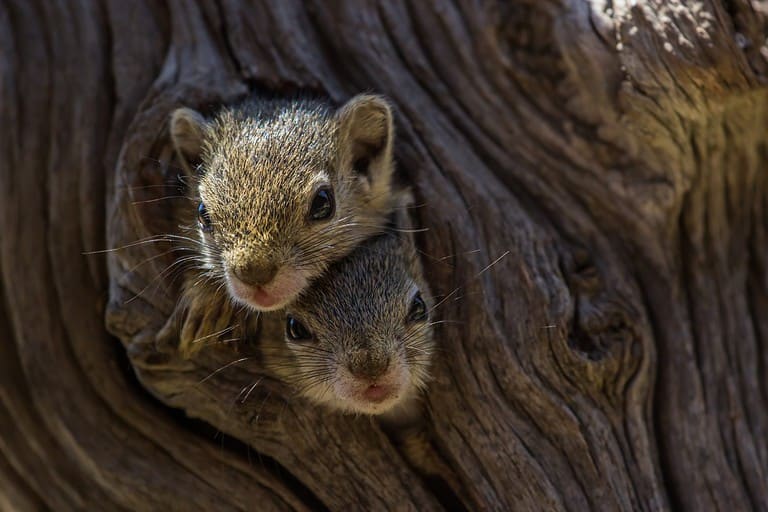
Here, you can see a flying squirrel clinging to the tree while another peeks out of a manmade nest box.
©Josh Palik, University of Nebraska/CC-BY – Original / License
“Flying squirrels often have several cavities that they use, so use of our boxes might be for some specific purposes,” Carroll says via email. “There is also the issue of tradeoffs between making our campus more flying squirrel-friendly while making sure that the landscape trees remain safe. We work with our landscape services to make sure that in areas where they need to remove unsafe trees, because they have cavities, we can replace them with boxes in the area.”
The 2021 flying squirrel sighting also inspired the formation of the Lincoln Flying Squirrel Squad, a project to engage the community in documenting any additional squirrel activity, while spreading the word about these and other native wildlife through education.
However, after the nesting boxes were installed in the trees, the flying squirrels on the University of Nebraska campus disappeared. Ecologists found that the nest boxes contained a few leaves and sticks, but no flying squirrels.
Finally, years later, a fisheries and wildlife student spotted them in broad daylight in February 2026. While filming for a journalism class, Josh Palik got photos of a flying squirrel perched on a tree near a nesting box, while another one peeked out of the box.
“That was the first confirmed record of southern flying squirrels using one of our campus boxes,” Carroll said in a news release. “I was pretty excited.”
Afterward, the university’s flying squirrel enthusiasts set up a system to resume regular surveys of all the nesting boxes and to install a few more. “Among the boxes we have put out, we are mainly just checking them for activity. We have found several that are obviously being used, and just placed our first camera trap a few weeks ago,” continues Carroll via email. “We expect over time that more of the boxes will be adopted.”
Another student, Jeremy White, wrote his undergrad thesis in biology on survey methods for southern flying squirrels. His thesis compared two survey techniques: ultrasonic detectors and trail cameras. He found that the detectors were more effective at recording the presence of squirrels.
White noted in the abstract that it’s not known how these squirrels ended up in Lincoln, NE, on the university campus. There’s evidence that they gradually migrated westward from Missouri. A 2022 study published in the Transactions of the Nebraska Academy of Sciences reported incidences of flying squirrels turning up between the river and Lincoln. For example, in 2018, a Lincoln resident called the Nebraska Game and Parks Commission to report a dead flying squirrel in their yard about 50-70 miles west of the river, and several other sightings were reported.
This region 100 years ago had few to no trees. As the city has grown up, lots of trees have been planted and are now mature, providing lots of good habitats for flying squirrels.
John Carroll, ecology professor at the University of Nebraska
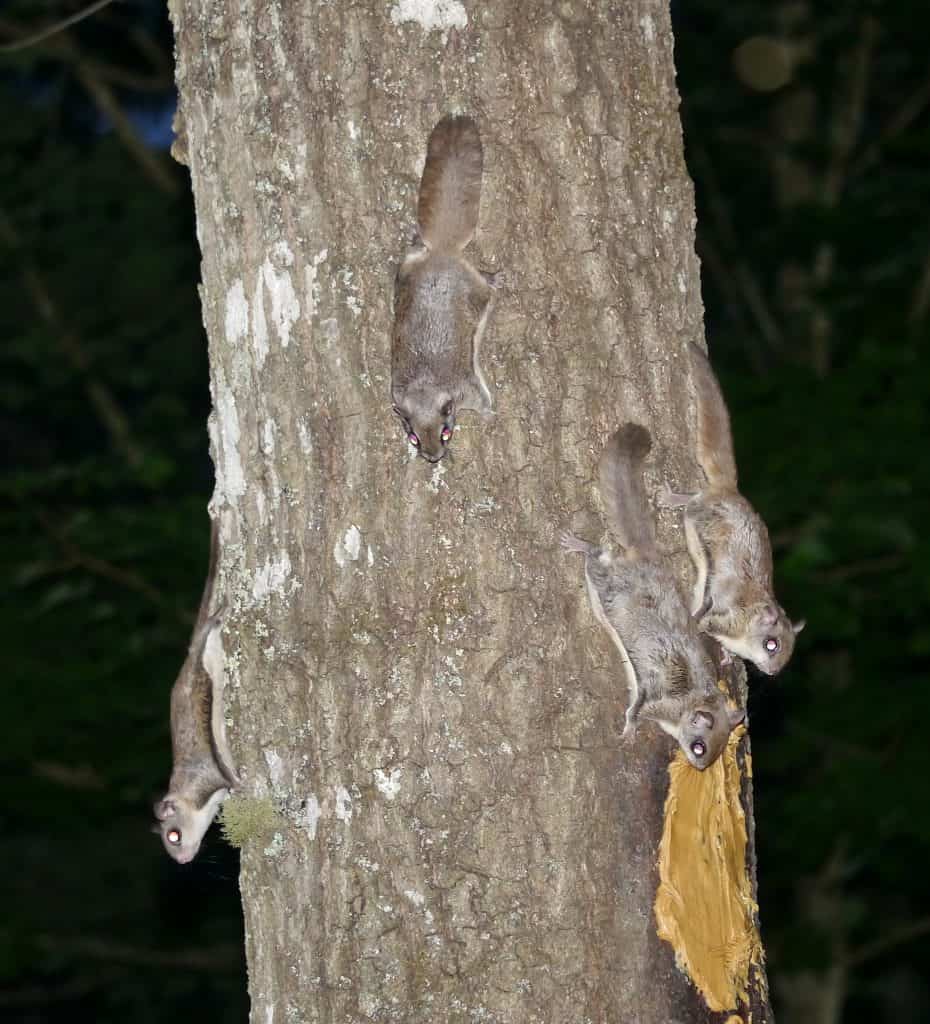
Peanut butter is smeared on a tree as bait to attract southern flying squirrels if they’re living in the area.
Because older trees with decayed spots are often removed in many settings, including landscaped areas, the presence of these colonizing squirrels has prompted new priorities for the university community. The Flying Squirrel Squad can now advocate for the protection of oak and hickory trees, which provide essential cavities and natural seed crops that are the main food source for flying squirrels.
“I think this is an example of ‘make it, and they will come,’” Carroll says. “This region 100 years ago had few to no trees. As the city has grown up, lots of trees have been planted and are now mature, providing lots of good habitats for flying squirrels.”
Continuing to offer customized boxes and encouraging others to do likewise also supports efforts to monitor and potentially increase the presence of flying squirrels in the Lincoln area, where they remain rare and threatened. “It is a nice little urban wildlife project for our students’ learning. We are finding that our neighbors around Lincoln also like seeing flying squirrels—just not in their attics,” Carroll says. “So we have provided some boxes for alternative housing, and we have put plans for making your own boxes on our website.”
If you’re ever in eastern Nebraska and see a big-eyed squirrel with a baggy midriff, you can put on your citizen science hat and report it to the University flying squirrel team here. You could also listen for their characteristic trills and whistling sounds on campus at night.
“It is also hard to beat seeing flying squirrels—they are pretty neat little animals,” Carroll says.