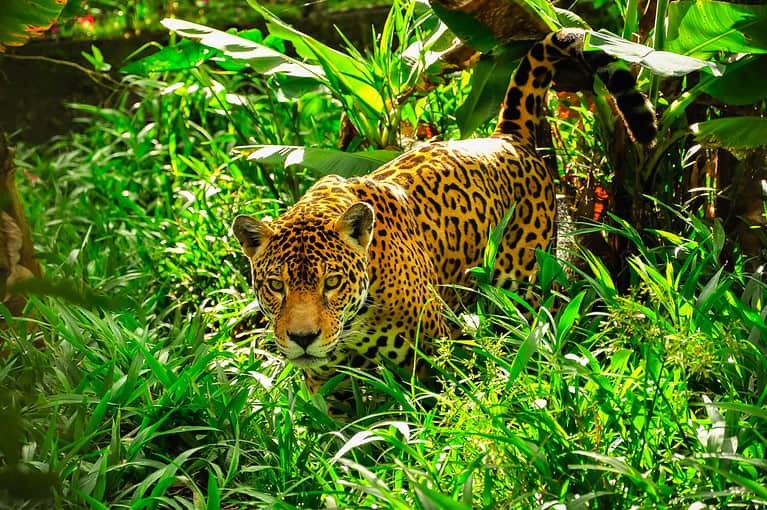

The mighty jaguar (Panthera onca) is the largest big cat species in the Americas. They are powerful animals that can drag large prey for long distances and can bring down a tapir or a deer. Recently, however, a jaguar has been spotted on an island in Brazil that it could only have accessed via a long stretch of water. Read on to find out more about this jaguar and its record-breaking swim.
Jaguars and Water
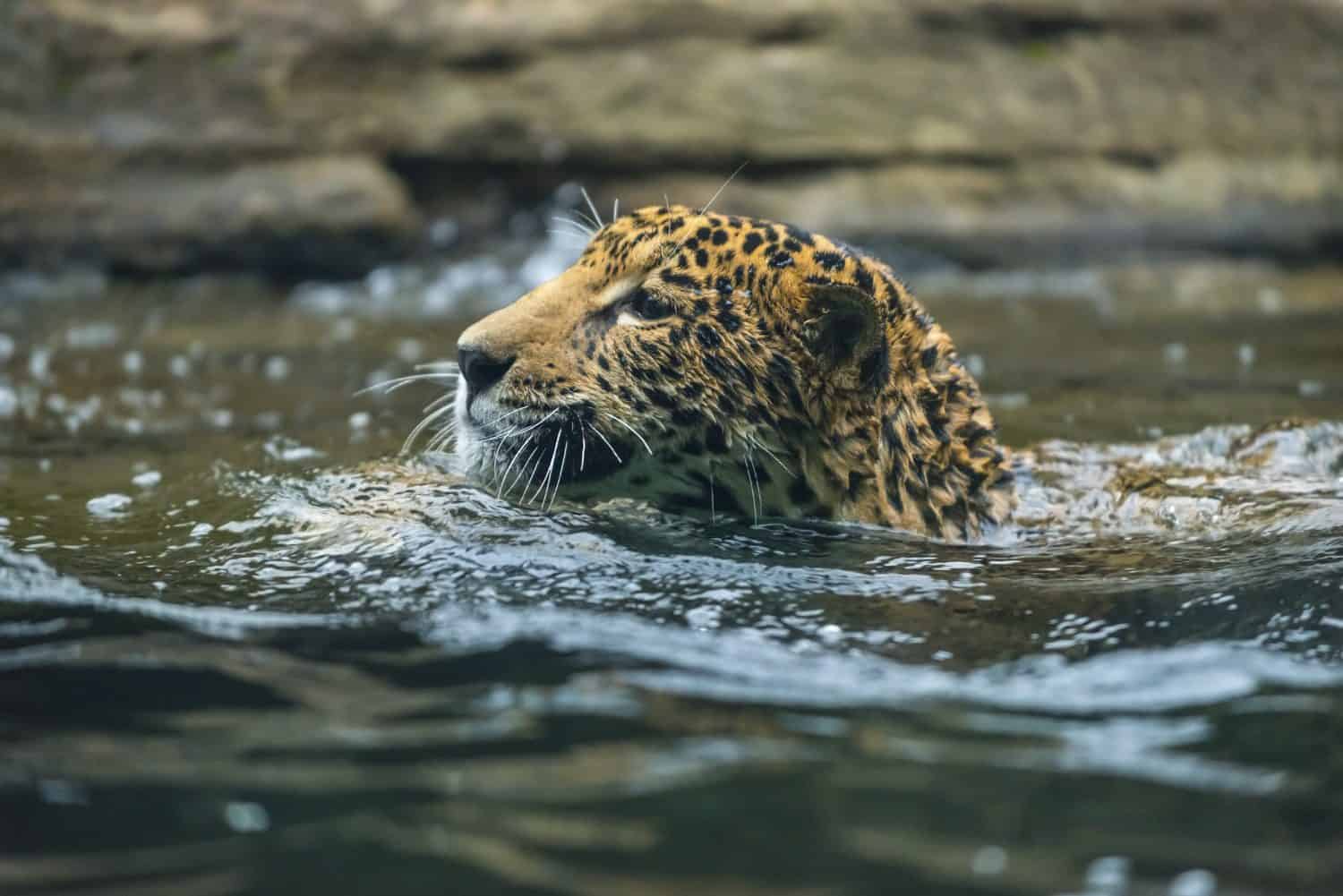
Unlike domestic cats, jaguars like water. They inhabit tropical moist lowland forests and are frequently found in swamps. These big cats are excellent swimmers and seek out habitats near water, including rivers, lagoons, and streams. Jaguars hunt aquatic creatures such as turtles and fish by pouncing on them from a concealed spot. They also hunt terrestrial animals, including peccaries, deer, and snakes. Thanks to human developments, there are now man-made bodies of water in habitats occupied by jaguars. The extent to which these large rivers and reservoirs get in the way of jaguars moving around their territory is not known. On the other hand, they may also help jaguars travel long distances.
Flooded Jaguar Territory

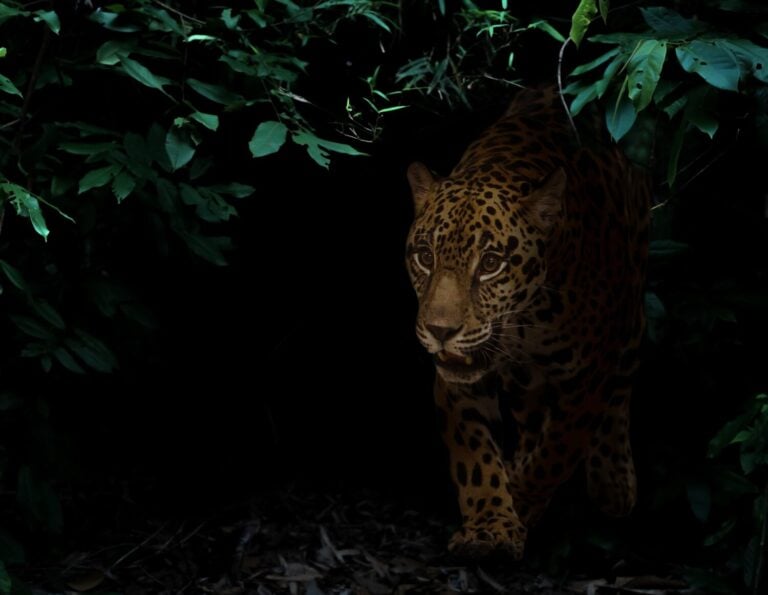
Jaguars hunt in the water and on land.
©Thomas Fuhrmann / CC BY-SA 4.0 / Wikimedia Commons – Original / License
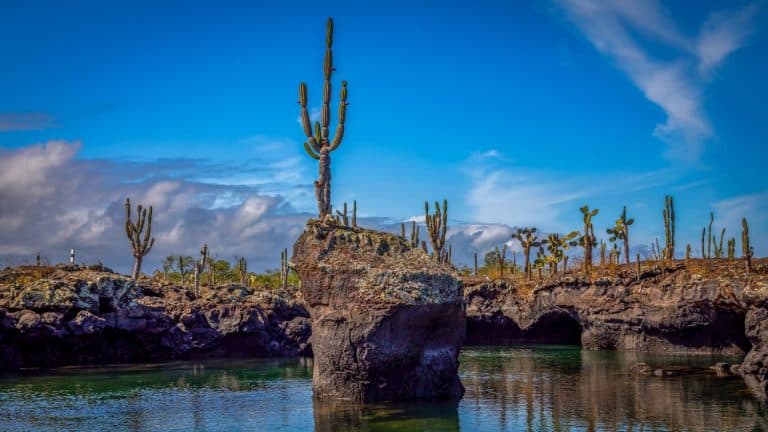
To try to evaluate the impact of manmade water courses on jaguars, an exploratory jaguar survey was carried out from April 2020 around the Serra da Mesa reservoir associated with a hydroelectric dam in northern Goiás State, Brazil. This area is in the upper Tocantins River basin. It is made up of vegetation ranging from open grasslands to dense forests around streams. However, when the dam was erected in 1996, the area was flooded, creating hundreds of islands.
Caught on Camera
The survey was conducted using camera traps stationed on the mainland and on one of the islands. The stations had passive infrared cameras positioned around 20 inches off the ground and operating 24 hours a day. If a jaguar wandered past, it would be caught on camera! Researchers have written up their findings on the preprint server bioRxiv, which, as of September 2025, has not yet been peer-reviewed.
Record-Breaking Jaguar Swim
On May 2nd, 2020, an adult male jaguar was photographed for the first time on the northern shore of the reservoir. The field experts described him as a robust male with an age of three years or more and an estimated body weight of around 170 pounds. However, it was not until August 8th, 2024, that he was captured somewhere remarkable! He was photographed by a camera trap on Island X in the flooded reservoir. To get there, he must have swum at least 0.79 miles. We know he was the same individual spotted on the mainland a few years earlier, based on his unique rosette markings.
How Did He Get to the Island?
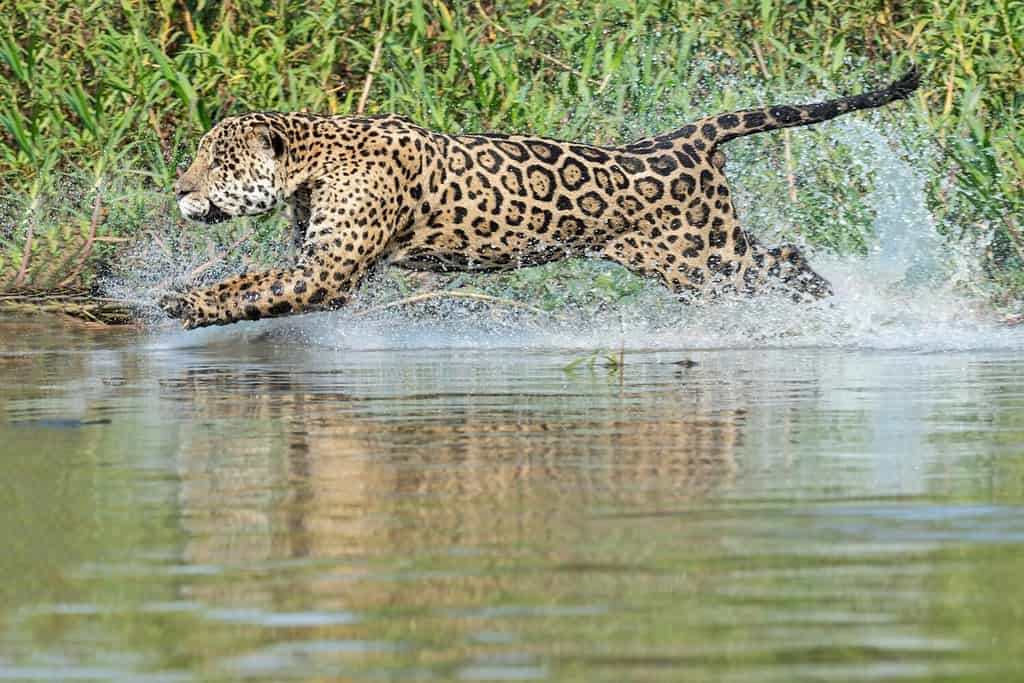
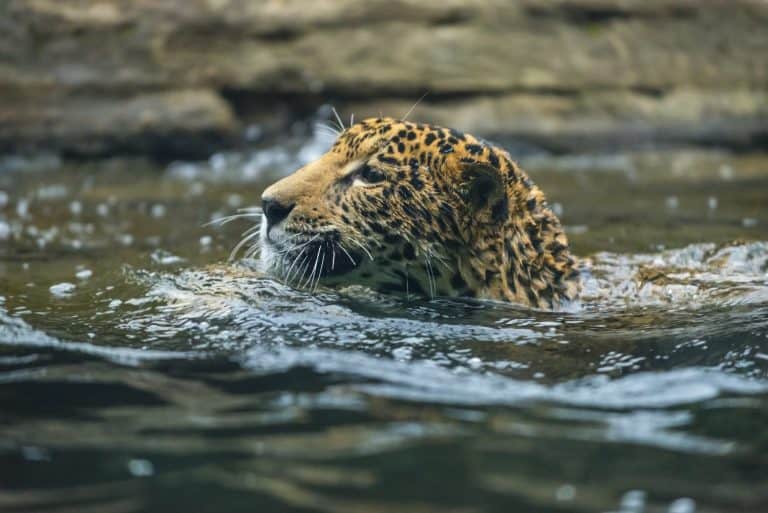
Reservoirs don’t have to be a barrier for jaguars.
©imageBROKER.com/Shutterstock.com
There are a few ways in which this male could have traveled from the mainland to this island. He may have first swum from the mainland to a small islet. This is a distance of 0.66 miles. Then, he could have re-entered the water and traveled from there to Island X, covering a total of 0.79 miles. The alternative is that he swam directly from the mainland to Island X, which is a distance of 1.54 miles. Importantly, the researchers confirmed that there were no land corridors or bridges he could have used to cross. There are very few documented long open-water swims by jaguars, and this is currently the longest on record. However, just because we have not recorded them does not mean that they are not happening.
Why Did He Swim That Far?
Of course, only the jaguar knows the answer to that question, but there are a few possibilities. We know that jaguars are remarkably good at adapting their behavior to cope with changing environments. For example, they adopt an amphibious lifestyle in the Amazon region during the flooding season. It would therefore be expected that a jaguar could cope with swimming distances of 0.79 miles. African lions have also been known to swim long distances when they need to.
There may be some characteristics of this swim that encouraged the jaguar to take the risk of such an adventure. The water is relatively warm, there is little boat traffic, and there are stepping-stone islets. Animals like this are always weighing the risks against the benefits. He may have been searching for prey or for a particular prey species he preferred. Alternatively, he may have been seeking a mate or simply wishing to expand his territory. Whatever the explanation, this shows that not all reservoirs present a barrier to all jaguars. Humans may be able to help jaguars cross these bodies of water by providing features such as gentle shore gradients, riparian vegetation, and maintaining islets that can serve as stepping stones for longer journeys.