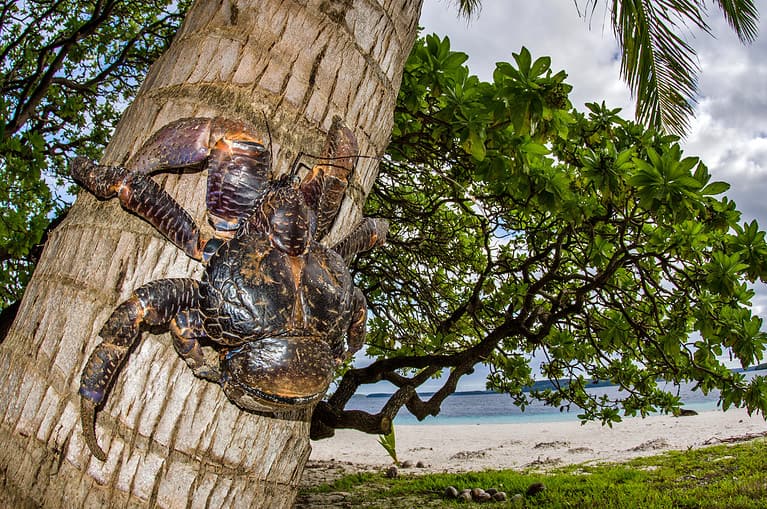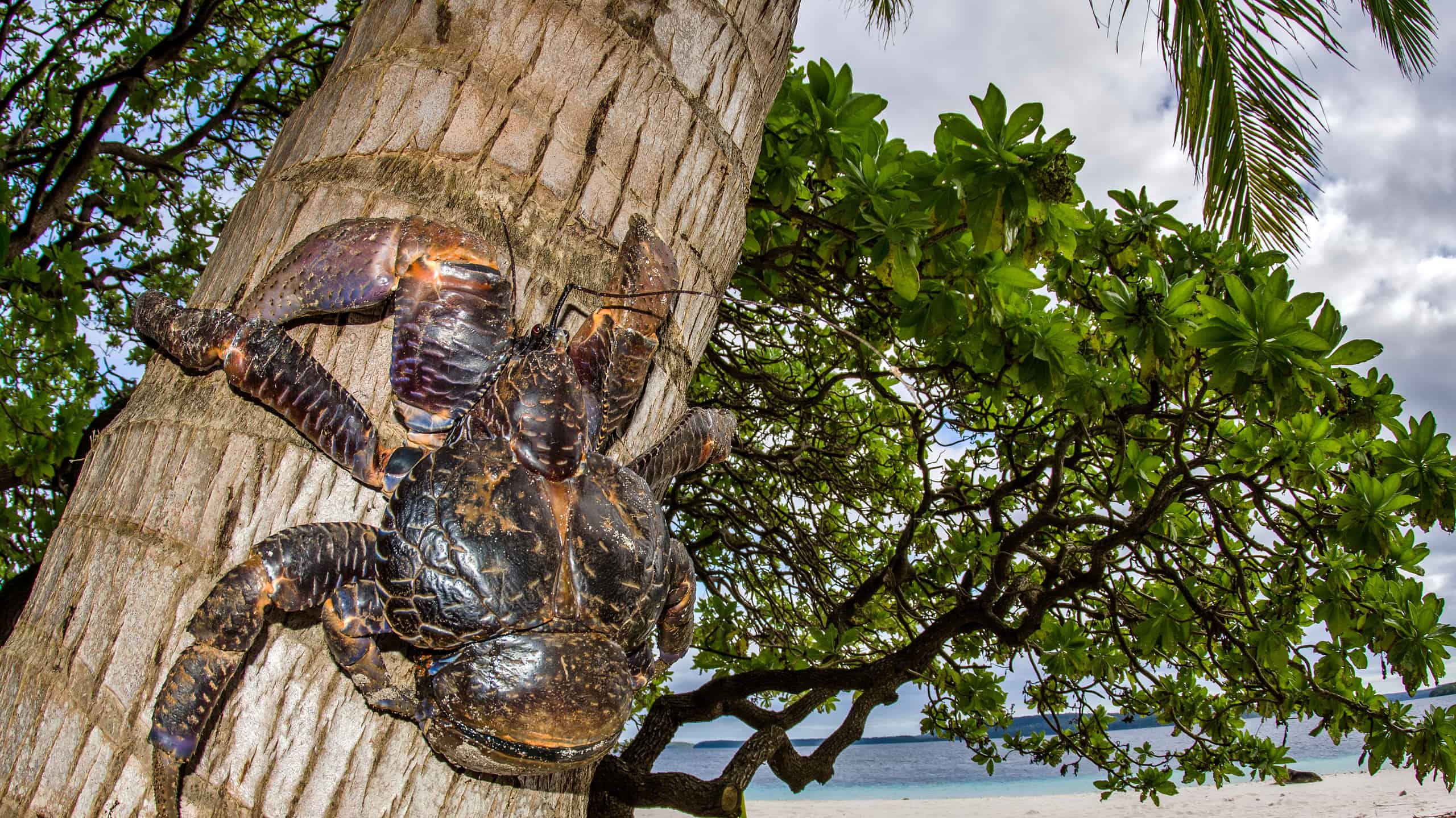

There are some pretty large animals in the world. Giraffes are notable for their long necks, and whales for their sheer size, but have you ever seen the biggest crab in the world? Coconut crabs are the largest living terrestrial invertebrates on Earth. This video by BBC Earth shows off these amazing crabs. Read below to learn more about the coconut crab.
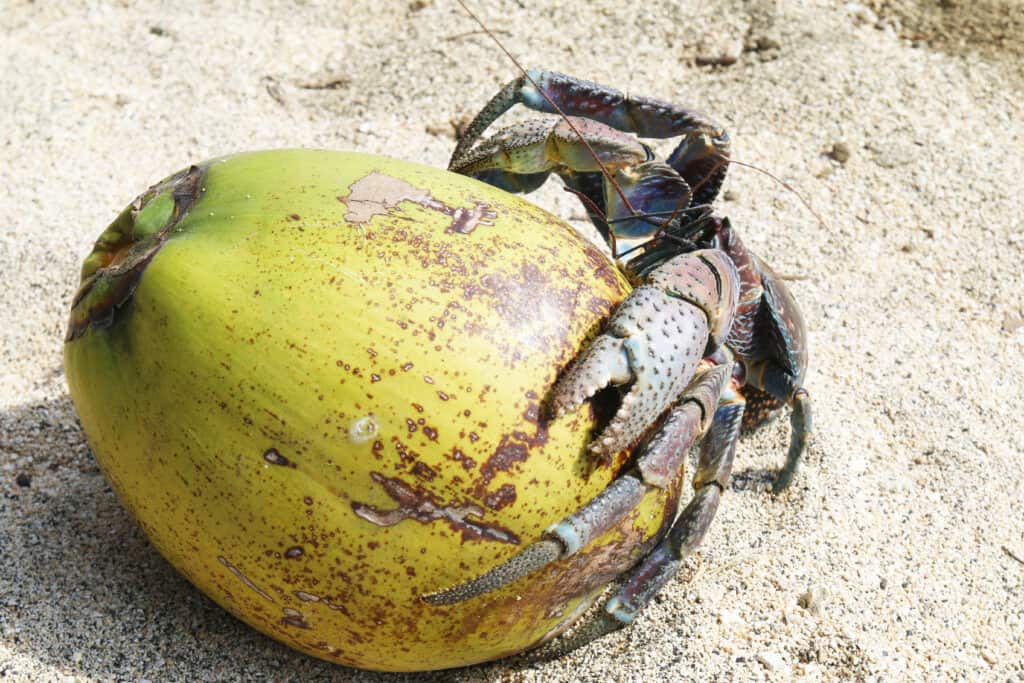
The coconut crab is renowned for its pinch strength. In fact, this crab is capable of cracking open coconuts.
©KYTan/Shutterstock.com
All About the Coconut Crab
Coconut crabs are the largest land-dwelling arthropod on Earth. Known scientifically as Birgus latro, and more commonly as robber crabs, these crabs are native to different tropical islands across the Indian and Pacific oceans. Some of the islands include Christmas Island, the Cocos Islands, Fiji, and Tonga. The crab’s size is what it’s famous for, with an adult typically weighing between 5 and 9 pounds. Their leg span can reach up to about 3 feet (1 meter), while their body (carapace) is usually much smaller. Their large size also gives them great strength. These crabs are amazing climbers that use their long legs to traverse different terrains. Their claws are extremely strong and can pinch with a force of up to 3,300 newtons, making them among the strongest of any animal relative to their size.
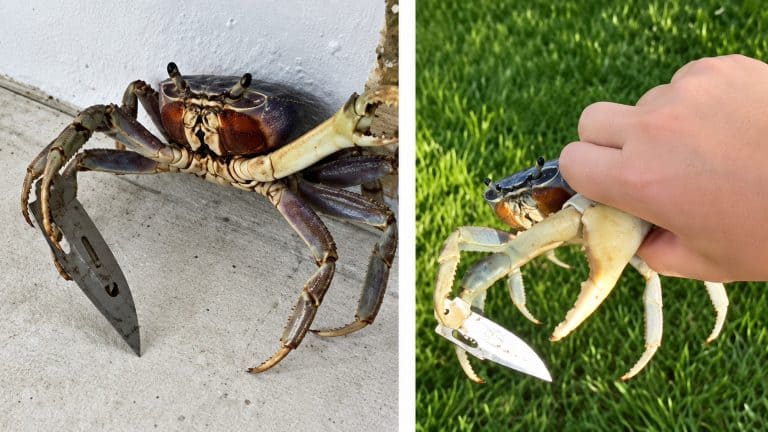
Coconut crabs are omnivores and scavengers, meaning they feed on a variety of foods. These include nuts, fruit, small live animals, insects, and seeds. They get their nickname, “robber crab,” from their affinity for shiny or smelly items. They steal items from the trash, as well as silverware, thinking these objects are edible or interesting. They get their other name from the coconuts they eat, which they crack open using their powerful claws. After cracking a coconut with their claws, they peel away the outer husk to reach the meat inside. While they may be good at cracking coconuts, it often takes them hours to eat one.
Why Are They So Big?
Coconut crabs are so large as a result of a biological phenomenon called island gigantism. Island gigantism results from several environmental factors. First, on islands without predators, having a large body is not a disadvantage, so there is no evolutionary pressure against growing large. Second, islands often have an abundance of food for the animals on them. Third, creatures like coconut crabs have slow metabolisms and long lifespans, which contribute to their large size. This results in slow growth over decades and increasing sizes across generations. Lastly, niche evolution is unique for each animal experiencing island gigantism. For coconut crabs, the lack of competition for food on their islands has made them the primary scavengers. On other islands, these roles are often filled by raccoons or wild pigs.
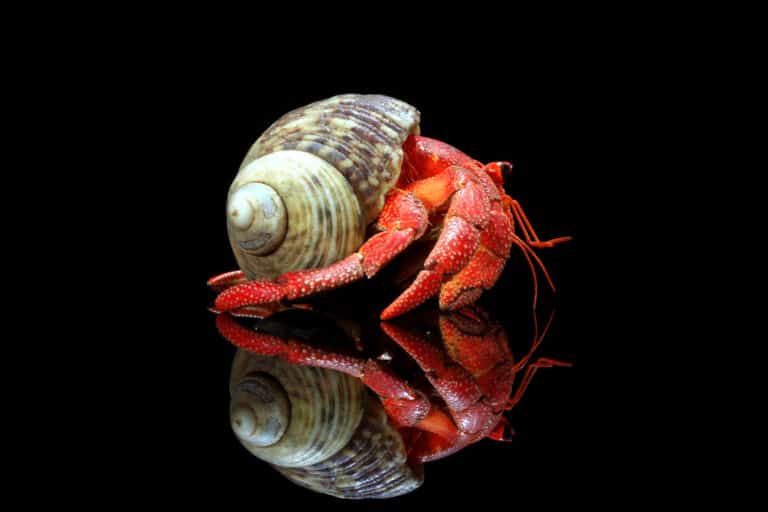
These crabs can live a very long life as well. Coconut crabs are estimated to live around 40 to 60 years. Mating happens on land for these crabs as they are terrestrial. Female crabs will release their fertilized eggs into the ocean, where the larvae will hatch. After hatching, the larvae will grow for a few weeks before crawling onto land and beginning their life as terrestrial organisms. As juveniles, coconut crabs live in mollusk shells to protect their soft-skinned abdomen. They abandon these shells when they outgrow them, and an exoskeleton develops over its once soft-skinned abdomen, providing the protection the shell previously offered. Coconut crabs will molt repeatedly over decades, getting bigger and bigger each time until they die. During their lives, coconut crabs act as scavengers, consuming dead and decaying plant and animal matter. This behavior helps maintain their ecosystem. Notably, it contributes greatly to plants, as coconut crabs disperse seeds and aerate the soil.