
Quick Take
- The hoatzin is the only bird on Earth that digests food like a cow,. See the cow comparison →
- Its chicks are born with something no other modern bird has, a unique trait that solves a life-or-death problem in a completely unexpected way. Learn about wing claws →
- The hoatzin's bizarre diet gives it an evolutionary advantage no other bird can compete for, though this benefit comes at a serious physical cost. See the dietary trade-offs →
- Why does this bird earn the nickname 'stink bird'? The answer traces back to a digestive process shared with livestock. Find out about the smell →
Birds are a varied group of creatures, but most have similar anatomy, diet, and odor. The exception is the Hoatzin of the Amazon. This unusual avian has claws on its wings, a wheezing call, struggles to fly, and eats like a cow. For years, it has had scientists scratching their heads as they tried to figure out its origins. Thanks to its cow-like digestion, it also has a very pungent odor. Let’s find out more about this incredible bird.
Where Do Hoatzins Live?
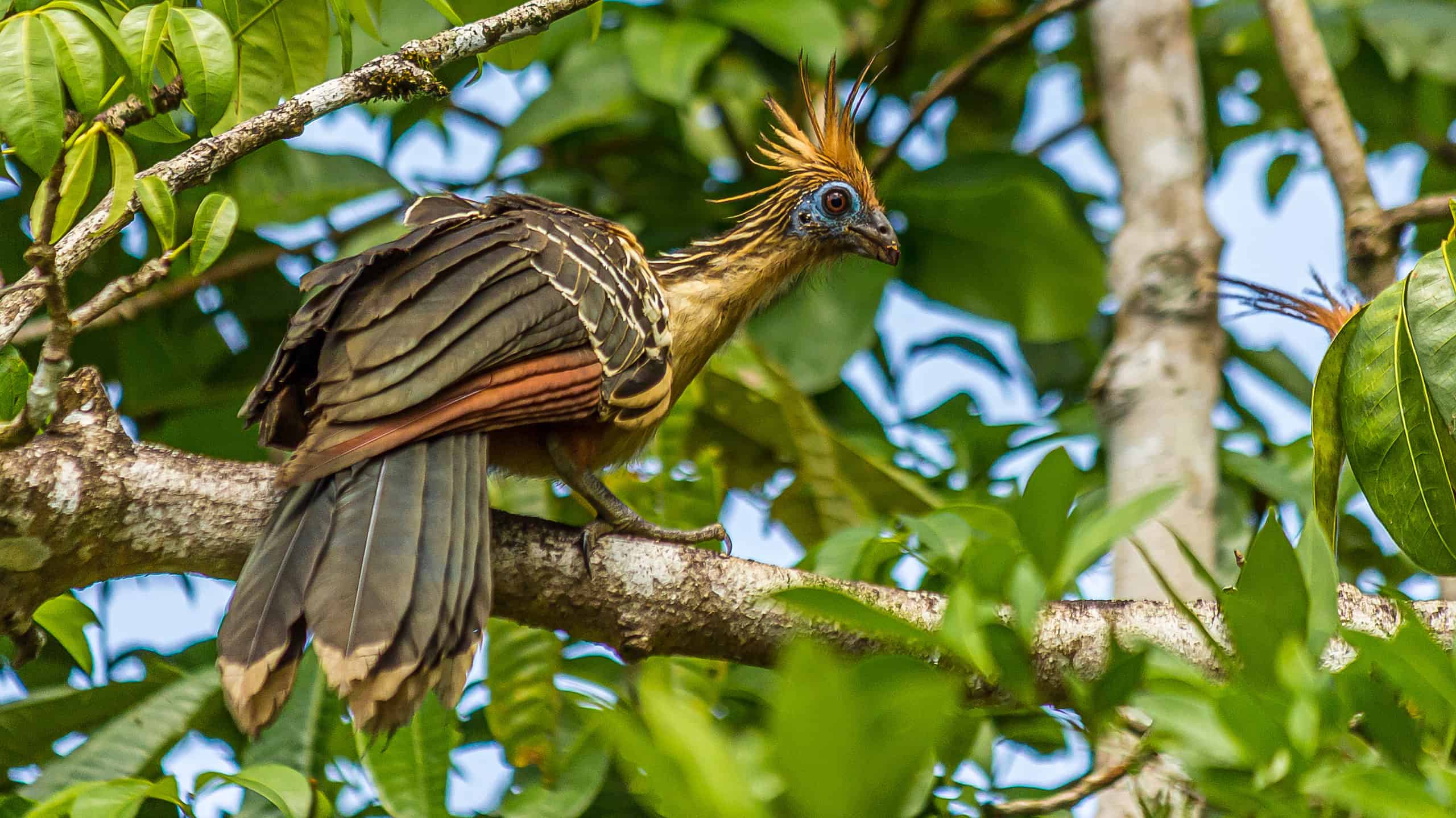
The hoatzin (Opisthocomus hoazin) is a substantial bird measuring 24 to 26 inches in length and weighing around 1.5 pounds. You will find them clinging to tree branches in swamps, freshwater marshes, gallery forests, and the banks of rivers, lakes, and streams. They live in the Amazon rainforest in northern and central South America.
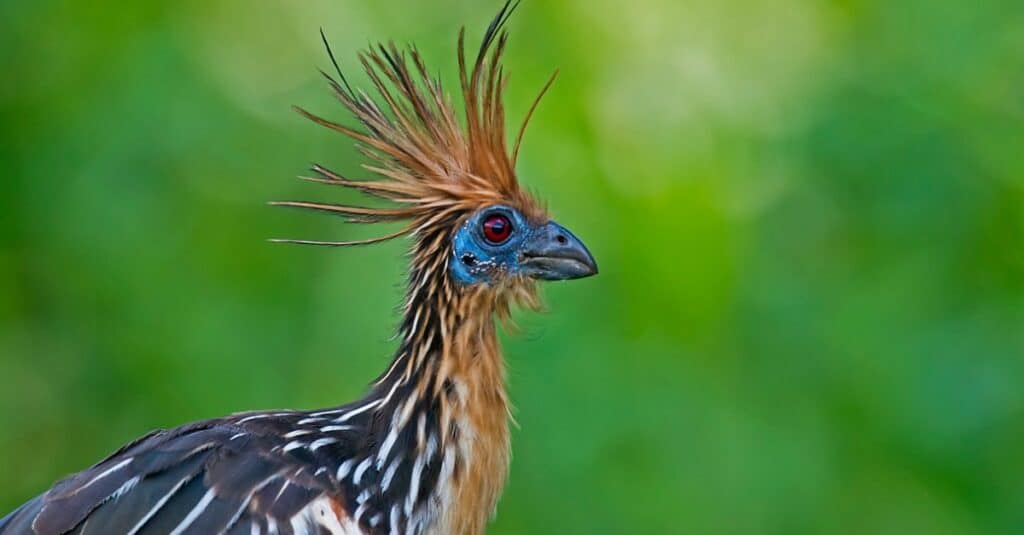
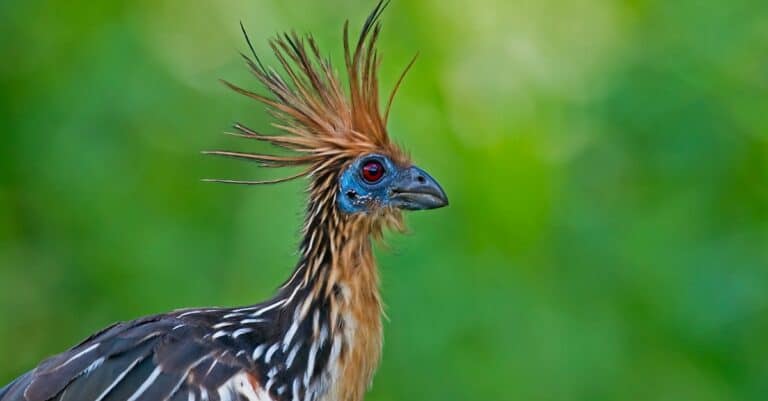
The Hoatzin is known not only for its unusual appearance but also for its strong, unpleasant odor.
©iStock.com/webguzs
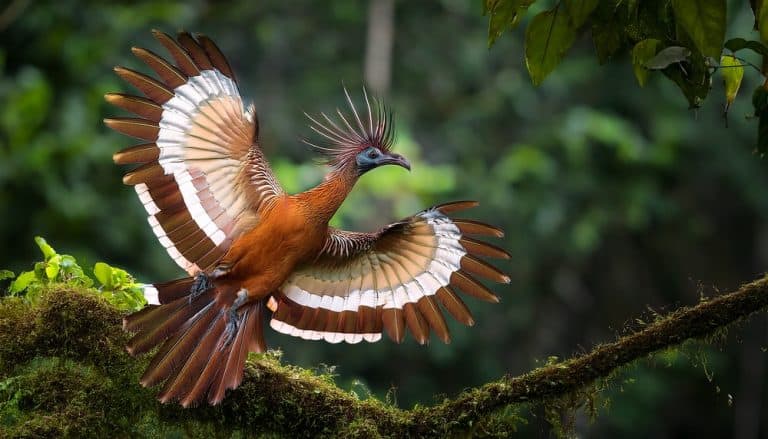
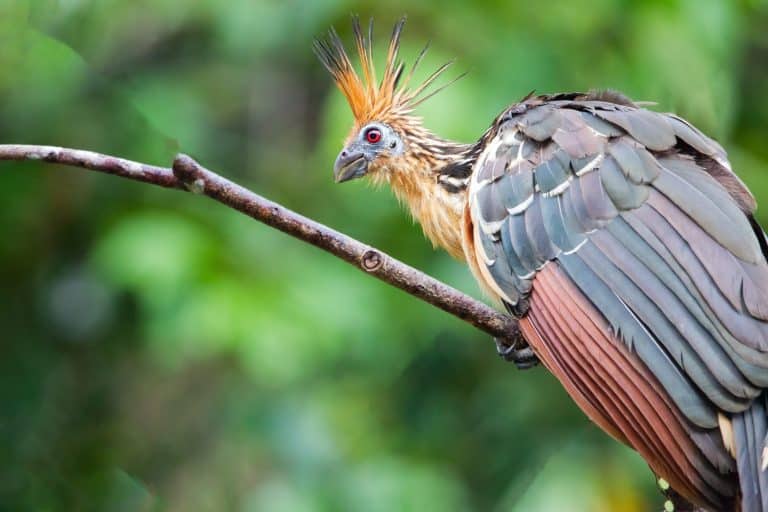
Their faces stand out thanks to blue skin, red eyes, a reddish-brown feathered crest, and a permanently startled expression. Most of their outer feathers are chestnut-brown. The young are born with no feathers but do have wing claws, which are located on the first and second fingers at the ends of their wings. These claws serve an important purpose. If the chicks fall or need to dive out of the nest to escape a predator, they often land in water, as the nests are built in trees and bushes near bodies of water. The claws allow them to climb out of the water and back to the safety of the nest. As the chicks grow, the wing claws disappear.
Hoatzin Feeding and Digestion
These are unique birds in that they are primarily folivores, meaning they feed on the leaves of plants. Typically, they rely on just 12 plant species, but they can eat others if they need to, even though some of these leaves are toxic to other birds. So, their diet consists mostly of tropical legume plants, with the occasional flower or fruit if available. This, however, presents the bird with a problem.
Plant leaves are made up mainly of cellulose. This is the building block of plant matter, but it is hard to digest. Cellulose is made up of chains of glucose molecules arranged in microfibrils. The chains are held together by special bonds called beta-acetal linkages. They can only be broken up by a particular enzyme. Most birds lack those enzymes and lack a portion of their gut where cellulose can be broken down. The Hoatzin is different. Furthermore, foliage is very low in nutrients, so animals have to eat a lot of it to survive. Therefore, the Hoatzin’s gut must also be able to cope with larger volumes of food than those of other birds.
The Bird With Cow-Like Digestion
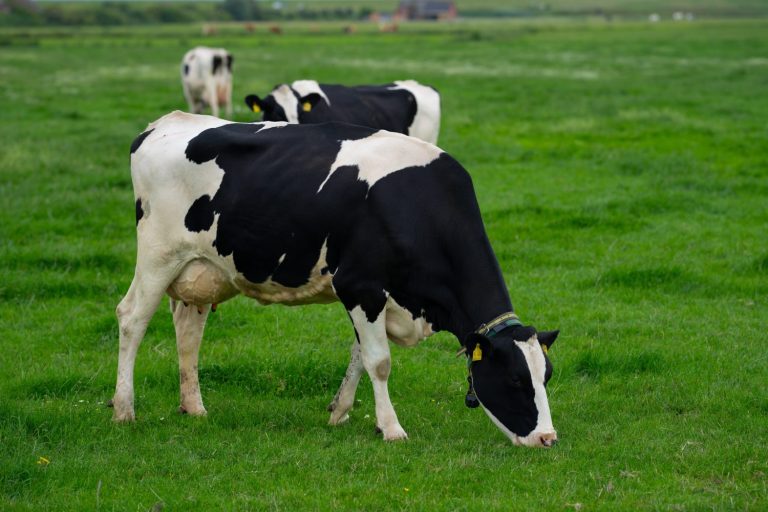
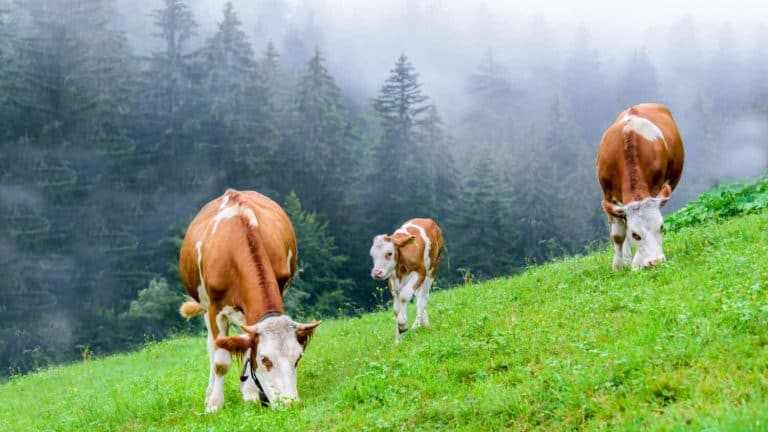
Bovines (cows) also have a diet of mainly foliage and have evolved a digestive tract to cope with it. Their gut functions like a large food processor; the scientific name is foregut fermentation. They have several stomach compartments, and one called the rumen contains millions of tiny organisms (mainly bacteria) that can break down cellulose. The nutrients resulting from the broken-down cellulose are released into the small intestine, where they are absorbed.
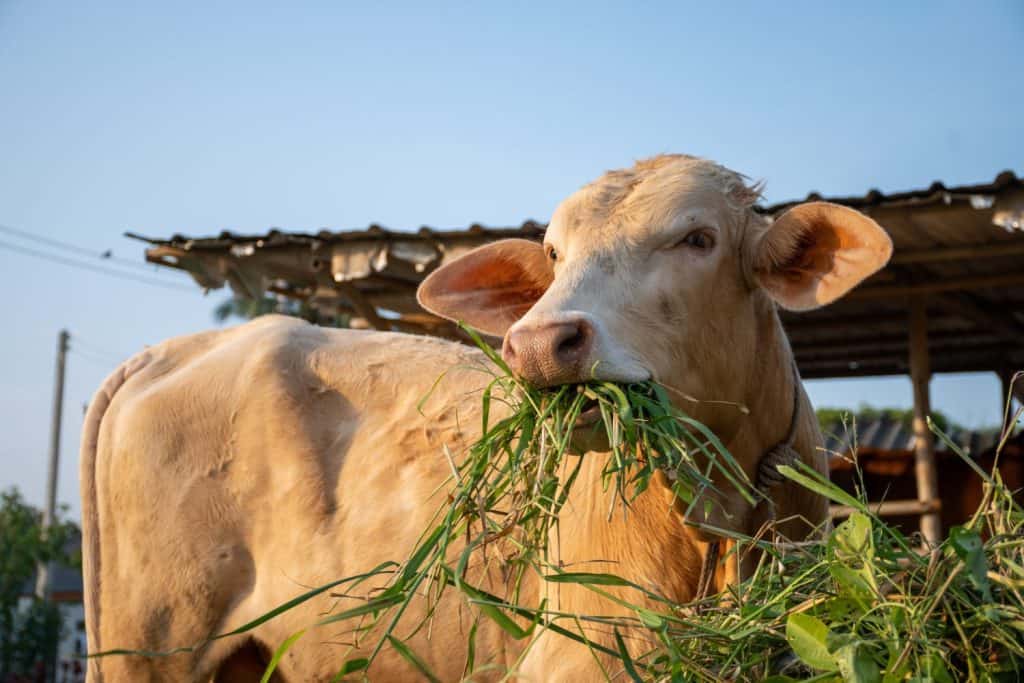
Cows have bacteria in their stomach to break down cellulose.
©amfroey/Shutterstock.com
The Hoatzin has a remarkably similar digestive system to deal with the same type of food. They are the only birds on the planet known to have a digestive system that uses foregut fermentation. Instead of extra stomach compartments, their esophagus and enlarged crop serve as a fermentation chamber. Here, special bacteria produce the enzyme needed to break down the cellulose. Sometimes, these bacteria are also passed into the intestine, where they help further increase nutrient absorption.
Additionally, the birds actually chew the leaves in the same way cows do. They also have ridges inside their crops that help break down the leaf bulk. These are similar to the ridges in a cow’s rumen.
The Price to Pay for Digesting Leaves
Having such a unique food source clearly gives the Hoatzin an evolutionary advantage. It gets all this foliage to itself because no other bird wants it! However, there is a price to pay.
Because they have such an enlarged crop, there is little room for their flight muscles. Therefore, their ‘flight’ is little more than an ungainly hop from branch to branch. They have one of the slowest digestive passage rates among birds, with food remaining in their system for an unusually long time compared to other avian species. They are relatively inactive while this digestion is taking place.
Then, there is the issue of their odor. They are not called the ‘stink bird’ for nothing. The cellulose-munching bacteria produce methane, which the bird belches up. Their droppings also smell much like cow manure!