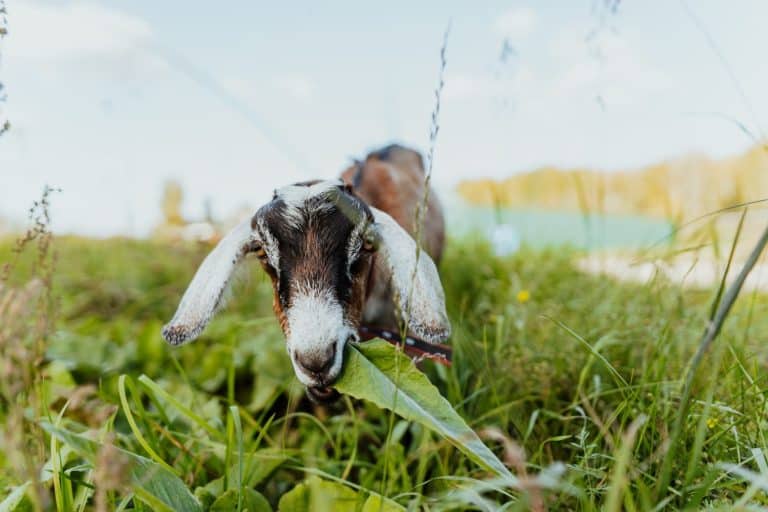

Goats have iron stomachs that can seemingly digest anything. Their stomachs are made up of four chambers, each with its own unique role in digestion. These stomachs allow goats to eat a wide variety of foods. If you’re curious to learn about the four stomachs of goats, keep reading below!
©Carol Hamilton/Shutterstock.com
What are the four stomachs?
Goats’ stomachs are divided into four chambers: the rumen, reticulum, omasum, and abomasum.
Rumen
The rumen is also called the fermentation vat. This is the largest chamber of the stomach. The main role of this chamber is to break down fibrous plants through fermentation. This section of the stomach produces fatty acids, providing the goat with the energy it needs throughout the day. This stomach has a somewhat gross role as well. Goats regurgitate something called cud, or partially digested food, to chew. The cud comes from this stomach, allowing the goat to extract even more nutrients when digesting.
Reticulum
The reticulum has a honeycomb-like structure and is crucial for a few reasons. This chamber works alongside the rumen, specifically in forming the cud for re-chewing. The reticulum is extremely important to the health of the goat as it acts like a sorter. The structure of this chamber helps to sort out foreign objects, such as nails or other metals. Larger food particles that cannot be sent to the next chamber are sent back to the rumen for further digestion.
Omasum
The omasum is like a filter in the chambers. This part of the stomach has folds, or “leaves,” that filter the nutrients after digestion. This section also absorbs water. This section is simple in nature but essential for distributing nutrients from food throughout the body. The omasum grinds the food up a bit more before it is sent to the final chamber.
Abomasum
The abomasum, or the true stomach, is the most similar to a human’s stomach. This chamber of the stomach uses acids and enzymes to digest the proteins in food. This digestive process sends nutrients to the intestines for absorption, supporting the goat’s health. So what foods can goats eat that other animals can’t?
©Annabell Gsoedl/Shutterstock.com
Iron Stomachs
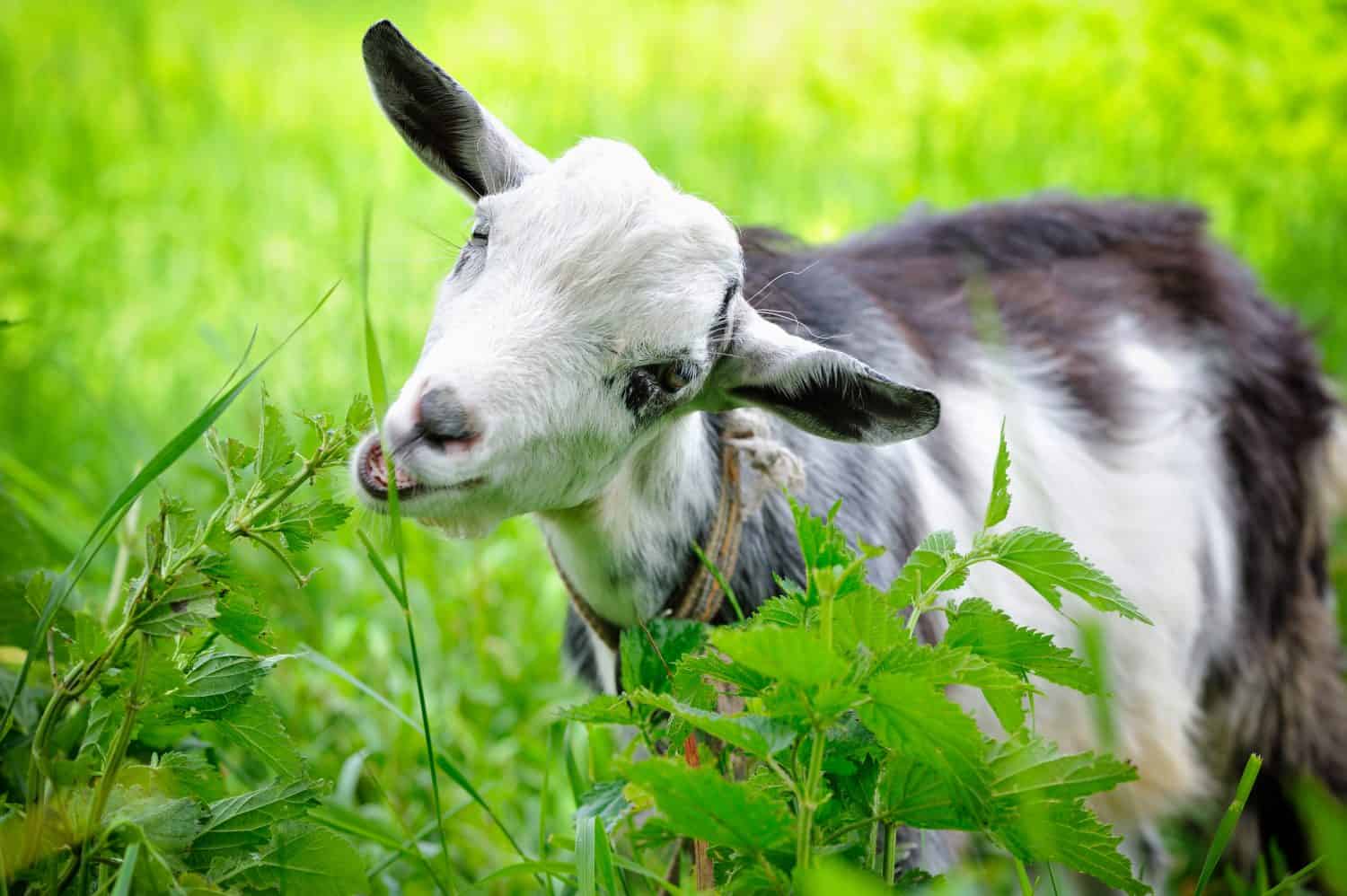
There are a few specific things that goats can digest that other animals cannot. Goats commonly digest rich plants such as grasses, hay, and bark. They can also eat leaves and woody shrubs, unlike other animals that graze solely on grass. Goats can eat some plants that are toxic to other animals, such as poison ivy, but there are many poisonous plants that are dangerous or even deadly to goats. They can eat plants such as poison ivy, which is toxic to many animals but generally safe for goats. Goats are able to eat these thanks to their microbiome. Their gut flora helps break down some plant toxins, allowing goats to safely eat certain plants that are harmful to other animals.